
Why This Camera & Lens Are Great for Panoramas
If you want to learn how to shoot panorama with Nikon Z6 II & Sony FE 12-24mm f/4 G, you’re pairing a strong low-light, high-dynamic-range full-frame body with an ultra-wide rectilinear zoom. The Nikon Z6 II’s 24.5MP BSI full-frame sensor (35.9 × 23.9 mm) delivers excellent tonal range (about 14 EV at base ISO) and clean files up to ISO 1600–3200, plus 5-axis IBIS for handholding when needed. The Sony FE 12–24mm f/4 G, meanwhile, gives you a sweeping rectilinear field of view with low distortion and good corner sharpness at f/5.6–f/8—ideal for architecture, real estate, and landscape panoramas.
Important note: the lens is Sony E-mount and the Z6 II is Nikon Z-mount. You’ll need a reliable E-to-Z adapter such as the Megadap ETZ21 Pro or Techart TZE-01. For panoramas we typically focus manually and lock exposure, so even if autofocus performance via the adapter is slower or inconsistent, it won’t hold you back. IBIS still works with adapted lenses; if EXIF focal length isn’t passed through, set the focal length manually for VR (or turn IBIS off on a tripod to avoid micro-vibrations). Since this is a rectilinear zoom (not fisheye), you’ll shoot more images than with a fisheye, but you’ll enjoy straighter lines and more natural-looking interiors.
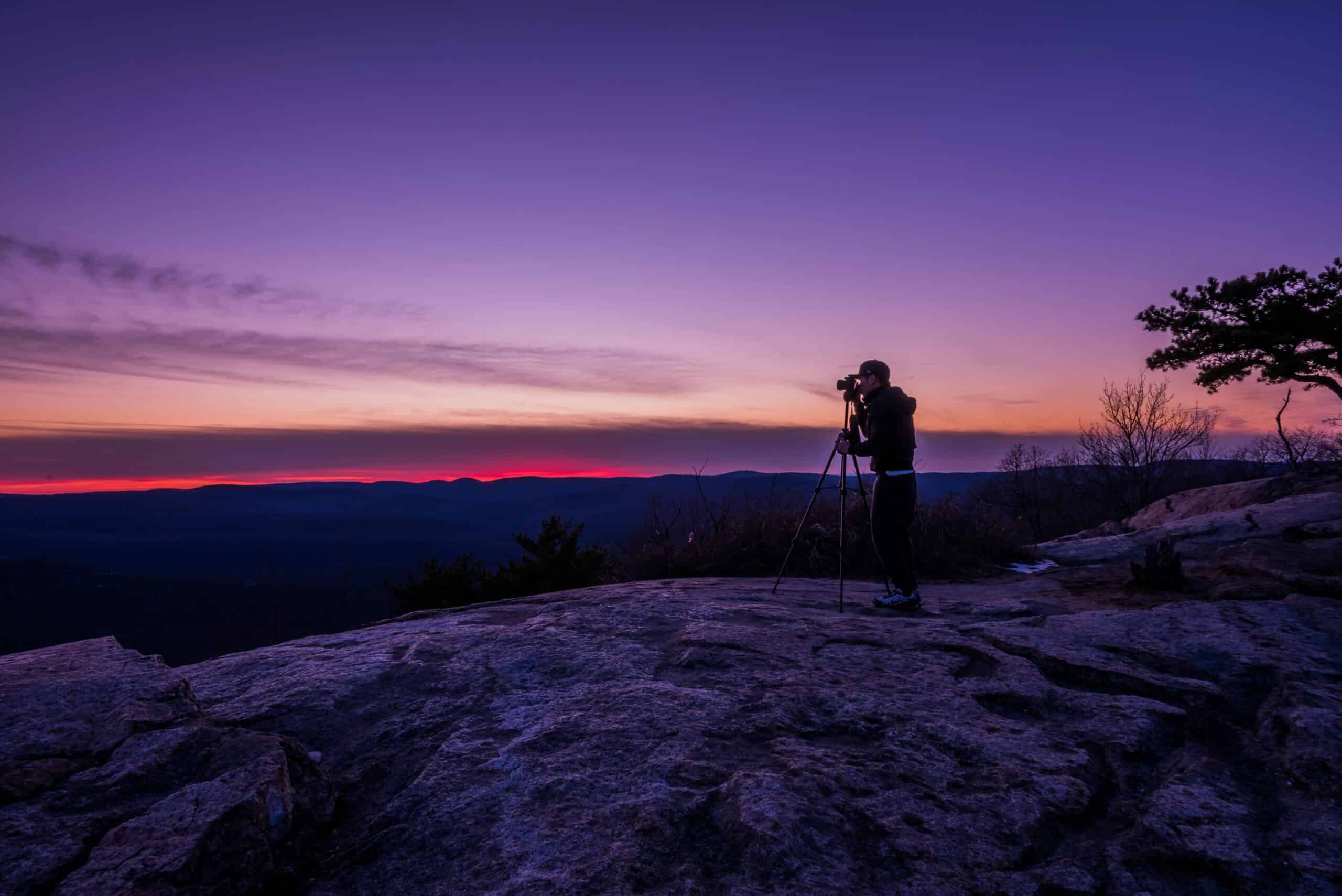
Quick Setup Overview
- Camera: Nikon Z6 II — Full-frame 24.5MP BSI CMOS, ~5.94 µm pixel pitch, ~14 EV DR at ISO 100, native ISO 100–51,200, 5-axis IBIS.
- Lens: Sony FE 12–24mm f/4 G — Ultra-wide rectilinear zoom, constant f/4, bulbous front element (no front filter thread), best sharpness at f/5.6–f/8, mild barrel distortion at 12mm, some vignetting wide open.
- Mounting: Use a Megadap ETZ21 Pro or Techart TZE-01 adapter; prefer manual focus for panos.
- Estimated shots & overlap (tested guidelines, 25–30% overlap):
- At 12mm: 2 rows × 5 around (±35° pitch) + 1 zenith + 1 nadir ≈ 12 shots total for a clean 360×180.
- At 16–18mm: 3 rows × 6 around (+45°, 0°, −45°) + zenith + nadir ≈ 20 shots.
- At 24mm: 3 rows × 8 around (+50°, 0°, −50°) + zenith + nadir ≈ 26 shots.
- Difficulty: Intermediate (rectilinear requires precise nodal alignment and multi-row discipline).
Planning & On-Site Preparation
Evaluate Shooting Environment
Scan for reflective glass, moving crowds, strong backlight, and tight spaces. If shooting through windows, place the front element close to the glass (1–2 cm without touching) to reduce reflections; shade the lens with your hand or a black cloth outside the frame. Avoid direct sun in the frame with rectilinear lenses when possible—ultra-wide angles can flare, especially with a bulbous front element. Watch for nearby foreground objects; if they are within 0.5–1 m, parallax demands perfect nodal alignment.
Match Gear to Scene Goals
The Nikon Z6 II’s clean files and strong dynamic range help retain interior shadows and bright exteriors in one HDR panorama. For interiors at base to ISO 400–800, you’ll get clean results with long exposures. The Sony 12–24mm’s rectilinear rendering keeps architecture straight and is forgiving for multi-row capture. Compared to a fisheye, you’ll shoot more frames but avoid extreme distortion at the edges—great for real estate and high-end virtual tours.
Pre-shoot Checklist
- Charge batteries, format cards, and clean the front element and sensor.
- Level the tripod; verify panoramic head nodal settings for 12, 16, 18, and 24mm marks.
- Safety check: secure straps, check wind conditions (especially on rooftops/poles), tether when appropriate.
- Backup workflow: shoot a second full round at key rows to safeguard against stitching gaps or motion.
Essential Gear & Setup
Core Gear
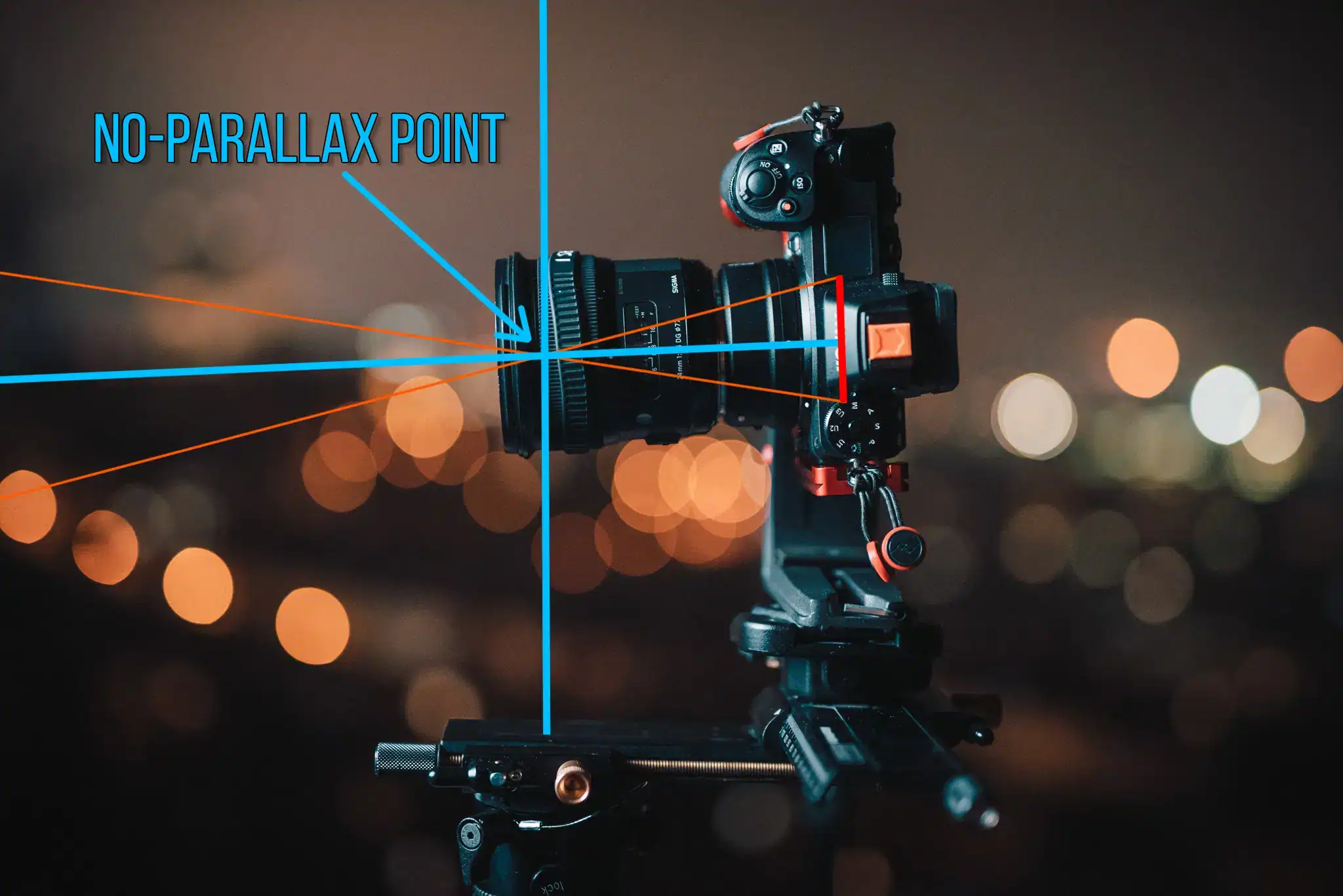
- Panoramic head: Use a head with fore-aft and lateral rails to place the lens’s entrance pupil (no-parallax point) exactly over the rotation axis. This eliminates parallax so overlapping frames stitch cleanly—even with close foregrounds.
- Stable tripod with leveling base: A leveling base lets you level once, rotate freely, and keep the horizon stable across rows.
- Remote trigger or app: Use a self-timer or remote to prevent shake, particularly for bracketed HDR or long exposures.
Optional Add-ons
- Pole or car mount: Great for elevated or moving viewpoints, but always tether your gear. Monitor wind; ultra-wide lenses and adapters add leverage that increases vibration risk.
- Lighting aids: Small LED panels or bounced flash can fill dark corners in interiors. Keep lighting consistent across frames.
- Weather protection: A rain cover and microfiber cloth are essential for outdoor panoramas.
Step-by-Step Shooting Guide
Standard Static Scenes
- Level and align: Level the tripod using the base. On the pano head, slide the camera so the lens’s entrance pupil aligns over the rotation axis. Verify by placing two vertical objects (one near, one far) and rotating—if they don’t shift relative to each other, you’re aligned.
- Exposure and WB: Switch to Manual mode. Meter the brightest part you must retain detail in (e.g., sunlit window) and set shutter/ISO so highlights aren’t clipped. Lock white balance to Daylight/Tungsten to avoid color shifts between frames.
- Focus: Manual focus at or near hyperfocal. At 12mm and f/8 on full-frame, hyperfocal is roughly 0.6 m; focus slightly beyond that and confirm with magnified live view.
- Capture with overlap:
- 12mm: Shoot two rows of 5 around at ±35° pitch with 25–30% overlap. Add 1 zenith (straight up) and 1 nadir (straight down, often tilting or removing the column briefly).
- 16–18mm: Three rows of 6 around (+45°, 0°, −45°), plus zenith and nadir.
- 24mm: Three rows of 8 around (+50°, 0°, −50°), plus zenith and nadir.
Use a consistent yaw increment—for example, 360/5 ≈ 72° steps for a 5-shot row.
- Nadir shot: After the main set, take a dedicated nadir with the tripod moved or using an offset arm. This eases patching out the tripod in post.
HDR / High Dynamic Range Interiors
- Bracket ±2 EV (3–5 frames): The Z6 II supports 14-bit RAW; use AEB or manual exposure changes. Keep aperture constant and step shutter speed.
- Lock WB and focus: Keep everything fixed across brackets and rows. Even small changes can complicate stitching and blending.
Low-Light / Night Scenes
- Tripod + long exposure: Use f/4–f/5.6, ISO 100–400 for the cleanest files. Don’t hesitate to go 1–8 seconds per frame if the scene is static.
- Safe ISO on the Z6 II: 100–800 yields excellent quality; 1600 is still clean; 3200 is usable with noise reduction; 6400 is a last resort if motion demands shorter exposures.
- Disable IBIS on tripod: Turn VR off to prevent micro-blur during long exposures.
Crowded Events
- Two passes per row: First pass quickly captures composition; second pass waits for gaps in motion. This gives you “clean plates” for masking in post.
- Faster shutter: Use 1/200 s or faster with ISO 400–800 at f/5.6–f/8 to curb motion blur.
Special Setups (Pole / Car / Rooftop)
- Pole: Keep total weight low. Tether the camera, pre-mark yaw increments on the pole clamp, and avoid high winds. Use higher shutter speeds to reduce motion blur.
- Car-mounted: Use rigid suction mounts on clean metal/glass. Plan a route with smooth surfaces, keep shutter speeds fast (1/500 s+), and consider frame doubling to remove passing cars in post.
- Rooftop/windy spots: Hang a stabilizing weight from the tripod center column. Shorten exposures or increase ISO to reduce wind-induced blur.
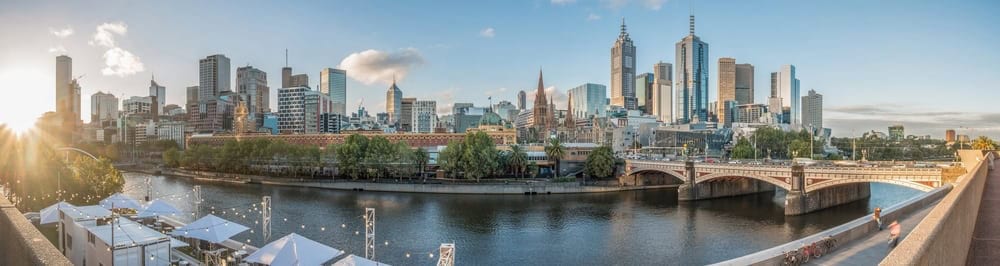
Recommended Settings & Pro Tips
Exposure & Focus
| Scenario | Aperture | Shutter | ISO | Notes |
|---|---|---|---|---|
| Daylight outdoor | f/8–f/11 | 1/100–1/250 | 100–200 | Lock WB (daylight) |
| Low light/night | f/4–f/5.6 | 1/30–1/60 | 400–800 | Tripod & remote; avoid push ISO too far |
| Interior HDR | f/8 | Bracket ±2 EV | 100–400 | Balance windows & lamps |
| Action / moving subjects | f/5.6–f/8 | 1/200+ | 400–800 | Freeze motion, double pass |
Critical Tips
- Manual focus at hyperfocal: At 12mm f/8 on full-frame, ~0.6 m keeps foreground to infinity acceptably sharp.
- Nodal calibration: Mark your rail positions for 12, 16, 18, and 24mm. Recheck if you change the adapter or quick-release plate.
- White balance lock: Use Kelvin or a fixed preset to ensure color consistency across rows and brackets.
- RAW always: 14-bit RAW on the Z6 II gives headroom for highlight recovery and WB shifts in post.
- IBIS off on tripod: Prevent micro-corrections during long exposures; re-enable when shooting handheld scouting frames.
Stitching & Post-Processing
Software Workflow
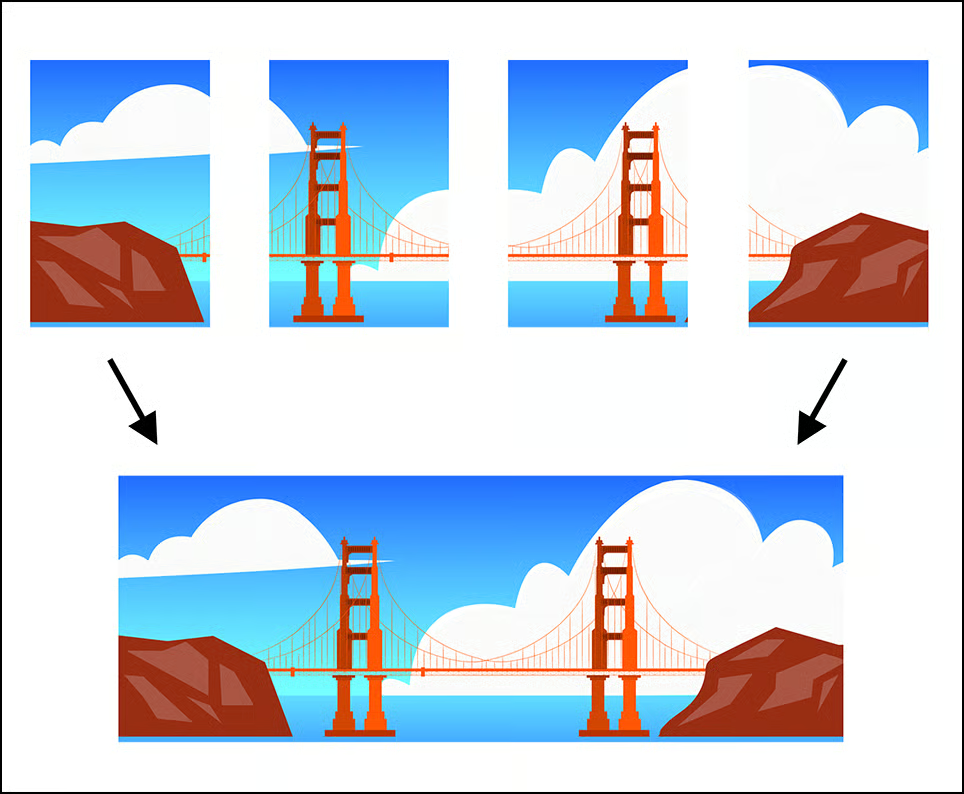
Ingest RAW files, apply consistent lens corrections and color profile, then stitch in a dedicated panorama app. PTGui is fast and reliable for multi-row 360×180 panos with rectilinear lenses; Hugin is an excellent open-source alternative. Rectilinear lenses typically want 20–25% overlap per frame; fisheyes can tolerate 25–30% with fewer shots. After stitching, level the horizon, set the center, and output an equirectangular 2:1 image (e.g., 12k–16k width for high-quality tours). For a deep dive on PTGui’s capabilities, see this review of PTGui’s panorama toolset. PTGui review at Fstoppers
Cleanup & Enhancement
- Nadir patch: Use a dedicated nadir shot. Patch with a logo plate or clone stamp in Photoshop/Affinity.
- Noise reduction: For ISO 1600–3200 frames, apply moderate luminance NR and keep detail retention high; consider masking NR more in shadows.
- Color consistency: Sync WB and tone curves across rows, especially in mixed lighting interiors.
- Final export: Save a high-quality JPEG (quality 90–100) or 16-bit TIFF. For VR, export equirectangular JPG at 8k–16k based on delivery platform.
If you’re new to panoramic heads and no-parallax workflow, the following resources are concise and trustworthy. Panoramic head tutorial (360 Rumors)
Useful Tools & Resources
Software
- PTGui — fast, robust stitching with powerful masking and viewpoint correction.
- Hugin — open-source panorama stitching for all platforms.
- Lightroom / Photoshop — RAW development, retouching, and nadir patching.
- AI tools — for tripod removal and denoising when needed.
Hardware
- Panoramic heads: Nodal Ninja, Leofoto, or similar 2-rail systems.
- Carbon fiber tripods: lighter for travel, stiff in wind.
- Leveling bases: speed up setup and maintain horizon.
- Wireless remotes: reduce vibration, speed bracketing.
- Pole extensions / car mounts: elevated or mobile viewpoints with safety tethers.
Disclaimer: brand names for search reference; verify compatibility with Nikon Z6 II and Sony FE 12–24mm f/4 G via your chosen adapter.
For a clear end-to-end DSLR/mirrorless 360 shooting primer (capture and stitching), this step-by-step guide from Meta’s developer docs is helpful. Using a DSLR or mirrorless camera to shoot and stitch a 360 photo
Real-World Scenarios: Field-Proven Advice
Indoor Real Estate (Bright Windows)
Use 12–16mm for broad coverage with minimal vertical convergence. Shoot at f/8, ISO 100–200, tripod-mounted. Bracket ±2 EV for each position to retain exterior window detail. Keep WB fixed (Tungsten/Daylight depending on lights), and avoid flickering LEDs by using longer shutter speeds rather than high ISO. Capture a clean nadir after the main set for quick tripod removal.
Outdoor Sunset Landscape
Arrive early to lock in nodal alignment. Use 12mm for dramatic sky coverage with two 5-shot rows (±35°), plus zenith/nadir. Expose for the highlights and consider a 3–5 frame HDR if the foreground is dark. Windy? Raise ISO to 200–400 and keep shutter at least 1/60–1/125 s to prevent trees and grass from becoming mushy between frames.
Event Crowds
At 18–24mm, plan 3 rows to control overlap and minimize edge stretching of subjects. Use 1/200 s or faster at ISO 400–800. Shoot a second pass for each row and later mask-in clean plates to remove awkward motion artifacts.
Rooftop or Pole Shooting
Keep the pole short if windy; elevated positions magnify sway. The 12–24mm rectilinear will benefit from faster shutter speeds. For a rooftop, hang a weight from the center column, and try to shield the lens from crosswinds with your body when possible. Always tether the camera and adapter—safety first.
Adapter Considerations (Sony FE 12–24mm on Nikon Z6 II)
E-to-Z adapters have matured, but ultra-wide zooms are demanding. Practical tips:
- Firmware: Update the Megadap ETZ21 Pro or Techart TZE-01 to the latest firmware for best compatibility.
- Manual focus: For panos, switch to MF and use magnified live view; focus and forget. Consider focus peaking on low/medium settings.
- IBIS settings: If EXIF focal length isn’t passed, manually set the VR focal length closest to your zoom position or disable IBIS on a tripod.
- Lens hood/front element: The 12–24mm f/4 G has a fixed, petal-style hood and a bulbous front element. Be mindful around glass and tight interiors to avoid bumps and flare.
If you’re exploring more on best practices for DSLR/mirrorless panoramic capture setups, this panoramic head walkthrough is a concise reference. How to set up a panoramic head (360 Rumors)
Common Mistakes & How to Avoid Them
- Parallax error → Align the entrance pupil precisely; recalibrate after changing focal length or plate position.
- Exposure flicker → Manual mode, fixed ISO and shutter; for HDR, fix WB and aperture; vary only shutter speed.
- Tripod shadows and nadir mess → Plan a clean nadir shot; use an offset arm if needed.
- Ghosting people/cars → Shoot double passes; use masks in PTGui/Photoshop to combine clean plates.
- Night noise or blur → Prefer longer exposures at low ISO over pushing ISO; IBIS off on tripod; use remote release.
- Lens flare → Avoid direct strong light near frame edges; shade the lens or re-angle slightly to keep contrast high.
Frequently Asked Questions
- Can I shoot handheld panoramas with the Nikon Z6 II?
Yes for simple cylindrical panos, but for full 360×180 with the Sony 12–24mm, a tripod and panoramic head are strongly recommended. Handheld multi-row sets often suffer from parallax and inconsistent overlap, especially indoors.
- Is the Sony FE 12–24mm f/4 G wide enough for a single-row 360?
For a full spherical 360×180, single-row isn’t enough with a rectilinear lens. Plan on two rows at 12mm (5 around × 2) plus zenith and nadir; or three rows at 16–24mm.
- Do I need HDR for interiors with bright windows?
Usually yes. Bracket ±2 EV (3–5 shots) to preserve both window highlights and interior shadows. The Z6 II’s 14-bit RAW helps, but HDR reduces noise in shadow recoveries.
- How do I avoid parallax issues with this lens and adapter?
Use a two-rail panoramic head. Calibrate the entrance pupil for 12, 16, 18, and 24mm and mark the rails. Recheck after any plate or adapter change. Keep near objects at least 0.5–1 m away when possible.
- What ISO range is safe on the Z6 II in low light?
ISO 100–800 is excellent; 1600–3200 is workable with minimal NR; 6400 is acceptable for action or wind-limited exposures but expect more grain. Prefer long exposures at lower ISO on a tripod.
- Can I save a custom panorama setup on the Z6 II?
Yes. Use U1/U2/U3 custom modes to store manual exposure, MF, fixed WB, self-timer or remote, and IBIS off. You’ll speed up your on-site workflow significantly.
- Best tripod head for this setup?
A compact 2-rail panoramic head with an indexed rotator is ideal (e.g., Nodal Ninja or Leofoto). Ensure enough fore-aft travel to align the entrance pupil with the added adapter length.
Safety, Data Integrity & Trust Tips
Always tether your camera when working on rooftops, balconies, or poles. Keep a microfiber handy for sudden sprays or drizzles; the Sony 12–24’s front element is exposed. On the data side, create a second card backup in-camera (if using dual slots) or back up to a phone/tablet on location. After each row, review thumbnails to confirm overlap and exposure consistency. When in doubt, shoot an extra safety pass. For additional perspective on focal length choices and pano methods, see this panoramic and focal length overview. Panoramas, focal lengths & Photoshop (B&H)