
Why This Camera & Lens Are Great for Panoramas
If you’re wondering how to shoot panorama with Nikon Z6 II & Sigma 15mm f/1.4 DG DN Diagonal Fisheye Art, you’re pairing a highly capable full-frame body with a purpose-built fisheye that covers a huge field of view in very few frames. The Nikon Z6 II offers a 24.5MP FX-format BSI CMOS sensor (approx. 35.9 × 23.9 mm) with a pixel pitch of about 5.9 μm, excellent dynamic range near 14 stops at base ISO 100, and robust high-ISO performance. Its 5-axis in-body stabilization (IBIS) helps when shooting handheld tests and low-light compositions; for tripod panoramas, you’ll typically switch IBIS off to avoid micro-blur.
The Sigma 15mm f/1.4 DG DN Diagonal Fisheye Art is a modern diagonal fisheye designed for mirrorless. A diagonal fisheye renders approximately 180° across the frame diagonal on full-frame, giving you massive coverage per shot. That means fewer images to stitch, faster capture in changing light or around moving people, and more reliable horizon continuity. Being an f/1.4 lens, it’s also unusually bright for night sky or low-light interiors, though you’ll generally stop down to f/5.6–f/8 for best sharpness and consistent stitching.
Mount compatibility note: at the time of writing, Sigma’s DG DN fisheyes are commonly available for Sony E and L Mount, not native Nikon Z. Many creators successfully adapt the Sony E-mount version to Nikon Z bodies via E-to-Z adapters (e.g., Megadap ETZ21 Pro or similar). Autofocus and EXIF can work, but performance may vary by adapter firmware; manual focus is often recommended for panoramas anyway. Always test your adapter for mechanical fit, infinity focus, and firmware stability before client work.
Quick Setup Overview
- Camera: Nikon Z6 II — full-frame (FX) 24.5MP BSI CMOS, ~14 EV DR at ISO 100, dual card slots (CFexpress/XQD + SD UHS-II), 5-axis IBIS.
- Lens: Sigma 15mm f/1.4 DG DN Diagonal Fisheye Art — diagonal fisheye, approx. 180° diagonal FOV; very fast aperture; excellent central sharpness stopped down; typical fisheye CA is well-controlled and corrected easily in PTGui/Hugin.
- Estimated shots & overlap (tested guidelines on full-frame 15mm diagonal fisheye):
- 6 shots around at 60° yaw spacing (0° pitch) + 1 zenith + 1 nadir (30–40% overlap)
- Or 8 around for extra safety in busy/complex scenes
- High-res multi-row: 6 around at 0°, 6 around at +30° (optional), plus zenith and nadir
- Difficulty: Easy–Medium (fisheye reduces frame count; nodal alignment still required)
Planning & On-Site Preparation
Evaluate Shooting Environment
Before you set the tripod down, scan for moving subjects, reflective glass, strong backlight, and potential hazards. In interiors with glass or mirrors, keep the camera as far from reflective surfaces as possible and shoot with consistent angles to minimize flare and ghosting. Outdoors, note sun position: with fisheye coverage, the sun can easily enter the frame—compose your rotation plan to avoid direct flare where possible.
Match Gear to Scene Goals
Why the Z6 II & Sigma 15mm fisheye shine: the Z6 II’s dynamic range and low-noise full-frame sensor let you keep ISO low (ISO 100–400 in daylight, 400–1600 in low light) and recover shadows cleanly. The diagonal fisheye drastically cuts shot count, which is invaluable at sunset, in crowds, or on rooftops in wind. The trade-off is pronounced fisheye distortion in individual frames—stitchers handle this well, but composing rectilinear output views later may require careful defishing or projection changes.
Pre-shoot Checklist
- Charge batteries; use the Z6 II’s dual slots to write RAW to both cards for immediate backup.
- Clean the fisheye’s large front element and the Z6 II sensor; even tiny dust specs are obvious in a 360 photo.
- Level the tripod (use a leveling base) and pre-calibrate your panoramic head for the lens’s no-parallax point.
- Safety: check wind loads on rooftops/poles; tether the camera; avoid car mounting in traffic or unstable surfaces.
- Backup workflow: after one full rotation, do a quick second pass in case of motion/ghosting or stitching surprises.
Essential Gear & Setup
Core Gear
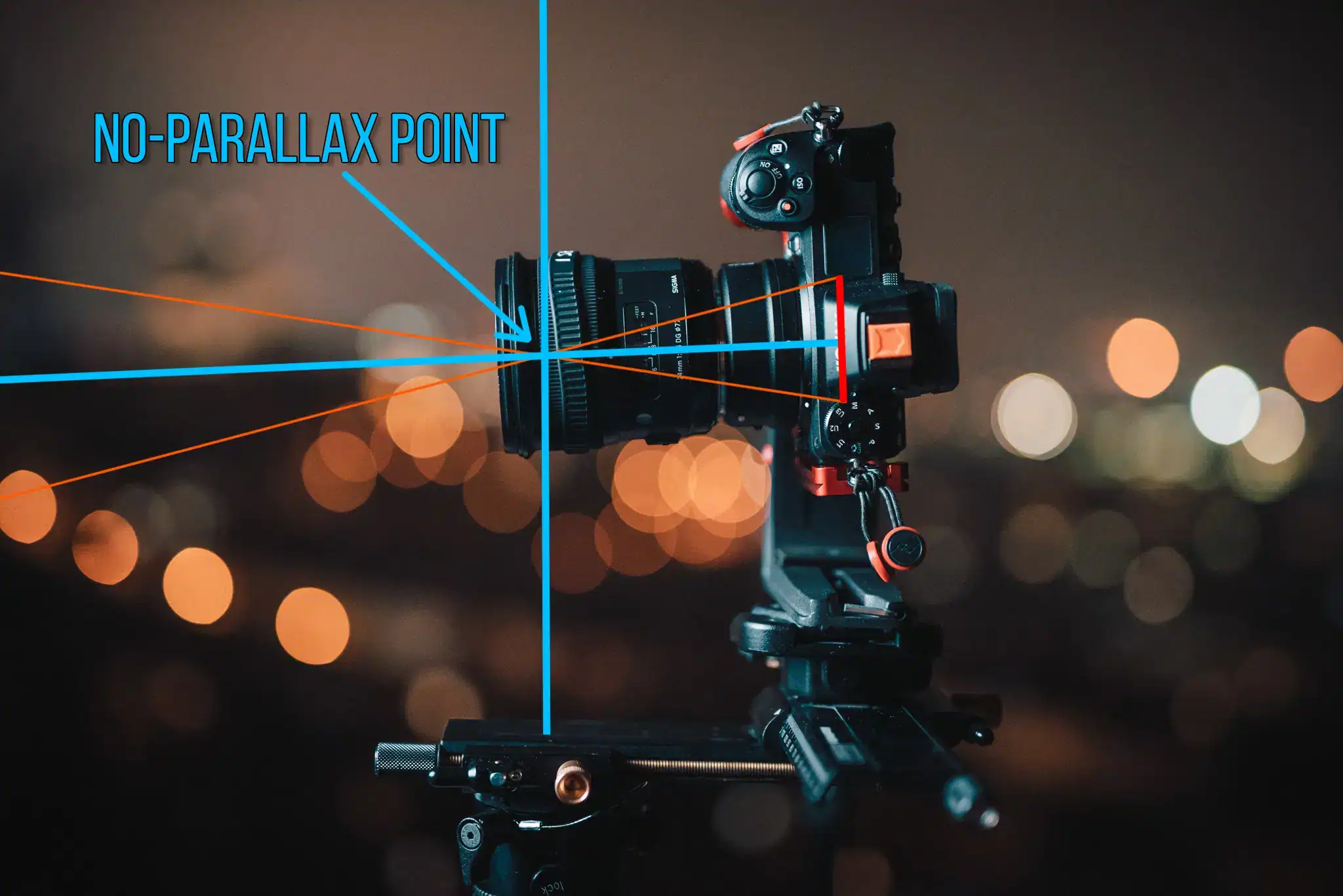
- Panoramic head: Enables rotation around the lens’s entrance pupil (nodal point) to eliminate parallax between near/far objects. A two-axis head (e.g., Nodal Ninja, Leofoto geared pano heads) simplifies zenith/nadir capture.
- Stable tripod with leveling base: Faster leveling yields consistent horizons and smoother stitching.
- Remote trigger or app: Use a cable release or Nikon SnapBridge on phone to avoid touching the camera. A 2s self-timer is a solid fallback.
Optional Add-ons
- Pole or car mount: Great for elevated viewpoints or moving platforms. Use safety tethers, check wind rating, and avoid high speeds. Vibration can blur long exposures—keep shutter speeds up or shoot multiple passes for masking.
- Lighting aids: Small LEDs or bounced flash for dark interiors (usually unnecessary with HDR, but helpful for detail shots).
- Weather gear: Rain covers and microfiber cloths for the fisheye’s exposed front element; avoid raindrops on glass.
Step-by-Step Shooting Guide
Standard Static Scenes
- Level the tripod and align the nodal point. Place two vertical objects (one near, one far) overlapping in frame. Rotate the camera—adjust the fore-aft rail until their relative position stays fixed.
- Set manual exposure and lock white balance. Disable Auto ISO. Consistency across frames prevents exposure flicker and WB shifts in the stitch.
- Focus: Switch to manual focus, then set near the hyperfocal distance. At 15mm and f/8 on full-frame, hyperfocal is about 0.95 m; setting focus around 1 m gives near-to-infinity sharpness.
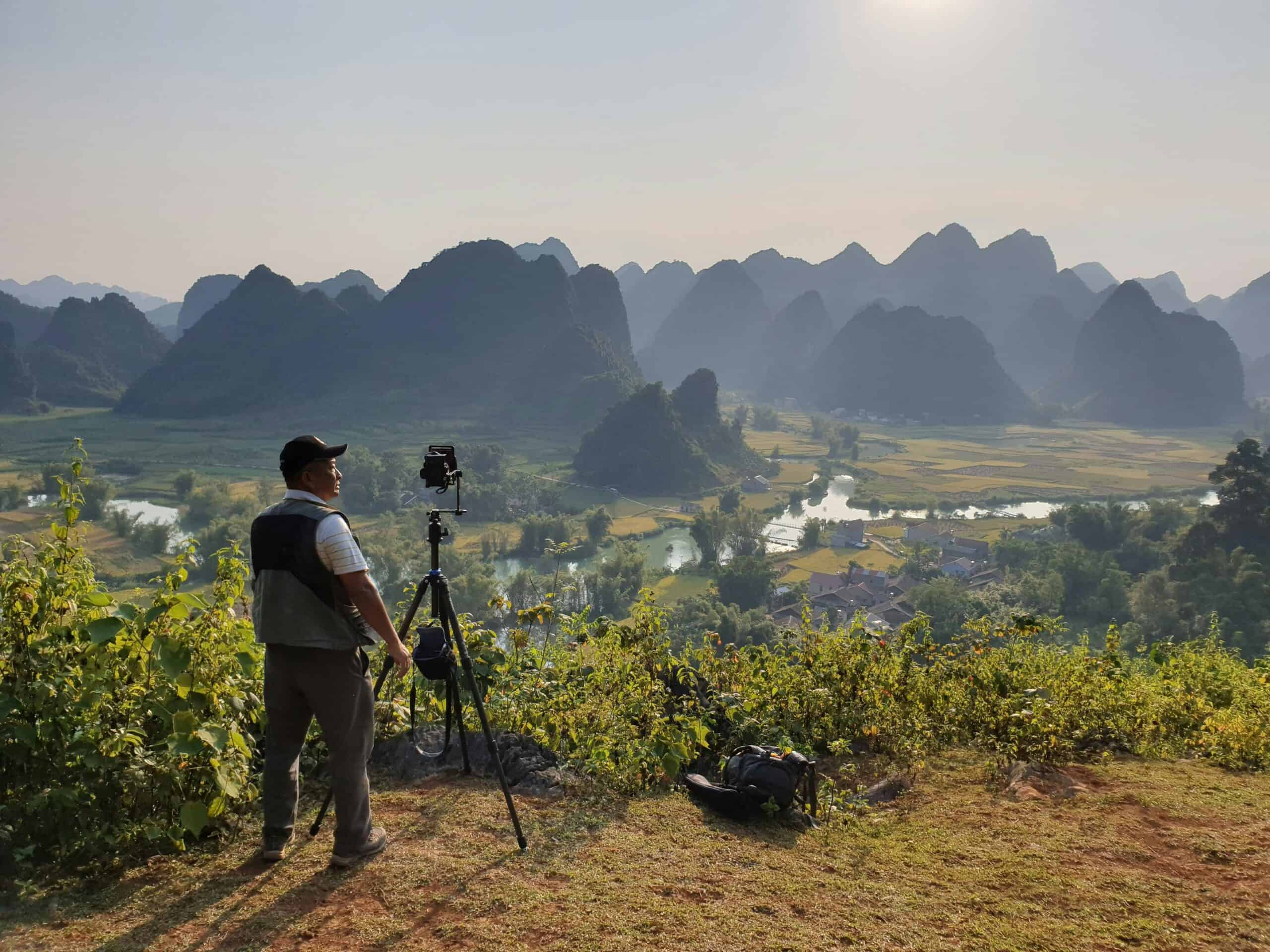
- Capture the rotation. For this lens: 6 frames around at 60° yaw intervals is a reliable baseline. Add 1 zenith and 1 nadir. Use 30–40% overlap.
- Take a nadir shot for tripod removal. Either shift the tripod slightly and shoot down, or take an offset handheld shot for clean texture.
HDR / High Dynamic Range Interiors
- Bracket ±2 EV (3 to 5 exposures). With sunlit windows, consider ±3 EV if your scene is extremely contrasty. Keep WB locked.
- Use a consistent bracket order (e.g., 0, -2, +2) for every position. The Z6 II’s bracketing makes this easy. Keep people out of the frame or mask in post.
Low-Light / Night Scenes
- Use tripod, remote, and disable IBIS on tripod to avoid micro-vibrations. Start at f/4–f/5.6, ISO 400–800, and adjust shutter to maintain clean exposures. The Z6 II handles ISO 1600–3200 decently if needed.
- Enable Electronic Front-Curtain Shutter to reduce shutter shock on long exposures. Watch for LED banding; if present, choose mains-friendly shutter speeds (1/50 or 1/60).
Crowded Events
- Two-pass method: first pass quickly for coverage; second pass wait for gaps or favorable subject positions.
- In post, mask moving people between passes. The fisheye’s wide coverage helps you capture each sector quickly before the scene changes.
Special Setups (Pole / Car / Drone)
- Pole: Secure with a guy-line or assistant. Keep rotations smooth, and consider 6 around only to minimize time aloft. Expect more parallax if the head isn’t perfectly centered.
- Car: Only on closed roads or controlled environments. Use short shutter speeds (1/200+) to fight vibration, or shoot bursts and median-stack for noise reduction later.
Mini Case Studies
Indoor Real Estate
Bracketed 6-around + zenith + nadir at f/8, ISO 100–200. Keep the camera away from mirrors and windows. The Z6 II’s DR lets you keep shadows clean; the fisheye reduces time in each room and ensures doorways align well in the stitch.
Outdoor Sunset
Work fast: meter for highlights, shoot 6-around immediately, then repeat with a second exposure for the foreground if needed. The Z6 II is ISO-invariant enough that lifting shadows 1–2 stops in RAW is viable if you want to avoid full HDR complexity.
Rooftop Wind
Use a heavier tripod and minimal sail area. If gusty, grab 8-around for redundancy. Keep the center column down and shoot with shorter exposures at slightly higher ISO (400–800) to reduce wind blur.
Recommended Settings & Pro Tips
Exposure & Focus
| Scenario | Aperture | Shutter | ISO | Notes |
|---|---|---|---|---|
| Daylight outdoor | f/8–f/11 | 1/100–1/250 | 100–200 | Lock WB to Daylight; protect highlights |
| Low light/night | f/4–f/5.6 | 1/30–1/60 (or longer on tripod) | 400–800 (1600–3200 if needed) | IBIS off on tripod; use EFCS/remote |
| Interior HDR | f/8 | Bracket ±2 EV (3–5 frames) | 100–400 | Match WB and bracket order per position |
| Action / moving subjects | f/5.6–f/8 | 1/200+ | 400–800 | Faster shutter; consider two-pass strategy |
Critical Tips
- Manual focus at hyperfocal: with 15mm at f/8, set ~1 m to cover near-to-infinity.
- Nodal point calibration: mark your fore-aft rail scale once dialed in for this combo; recheck if you change the adapter or quick-release plate.
- White balance lock: pick Daylight or a specific Kelvin; avoid Auto WB which can shift between frames.
- RAW over JPEG: the Z6 II’s RAW files give you latitude for HDR merges, denoising, and color balancing.
- IBIS and VR: turn off IBIS for tripod work; it can introduce micro-movements during long exposures.
- Dual card backup: write RAW to both slots for field redundancy.
Stitching & Post-Processing
Software Workflow
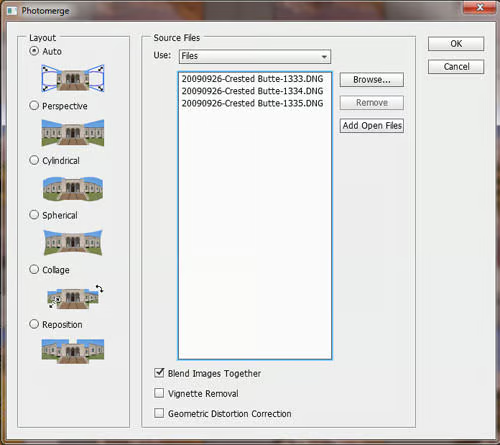
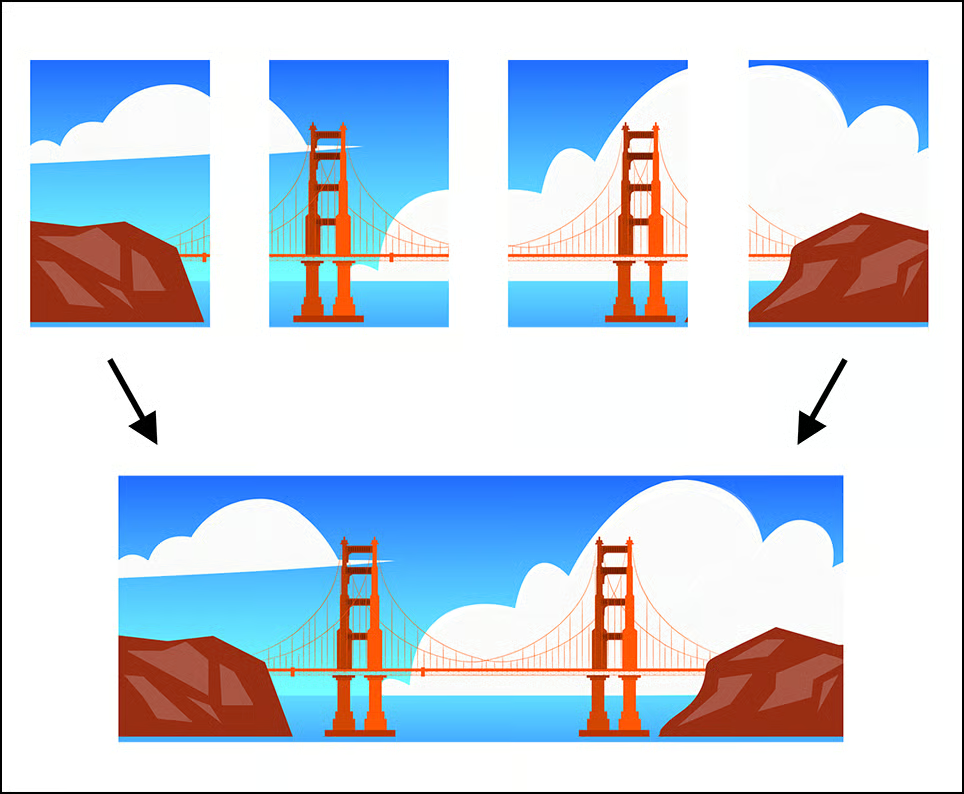
For fisheye panoramas, dedicated stitchers like PTGui or Hugin excel. Import all frames, set lens type to fisheye, and let the optimizer place control points. With a diagonal fisheye, you’ll use fewer frames, which generally reduces errors—but parallax from misalignment will still show. As a rule of thumb: 25–30% overlap for fisheye and 20–25% for rectilinear lenses is the industry baseline. Export a 2:1 equirectangular at 8192×4096 (8K) or higher if you shot multi-row. For VR or web viewers, JPEG quality 90–95 is typical; keep a 16-bit TIFF master when possible.
Cleanup & Enhancement
- Nadir patch: use content-aware fill or dedicated AI tools to remove the tripod. Capture an offset nadir or a clean floor texture to speed this up.
- Color and noise: match color casts between brackets; apply selective noise reduction to darker zenith areas or night skies.
- Leveling: correct yaw/pitch/roll to level horizons; most stitchers have an “align to horizontal” option.
- Output: export equirectangular for VR platforms or cubic faces if needed for specific engines/viewers.
For a deeper dive on high-end head setup and pro 360 workflows, see this panoramic head guide and VR creator docs at the end of the article. Always verify the latest software documentation—interfaces change and new features appear often.
Video: Panorama Capture Fundamentals
Prefer learning visually? This video walks through panorama fundamentals that pair well with the Z6 II and a fisheye lens.
Useful Tools & Resources
Software
- PTGui (fast, robust fisheye handling; good mask/optimizer tools). See an in-depth review for context at the end of this section.
- Hugin (open source; excellent control but steeper learning curve).
- Lightroom / Photoshop (RAW development, HDR merges, finishing touches).
- AI tripod removal and sky enhancement tools for faster cleanup.
Hardware
- Panoramic heads: Nodal Ninja or Leofoto geared options make nodal alignment repeatable.
- Carbon fiber tripods: lighter for hikes, less vibration than aluminum in wind.
- Leveling bases: speed up setup; accurate horizons help the stitch and viewer experience.
- Wireless remotes or phone apps: minimize touch and vibration.
- Pole extensions / car mounts: plan for tethers and safety margins.
If you’re new to pano heads, this tutorial provides a solid conceptual foundation: Panoramic head tutorial (360 Rumors).
For a thorough look at PTGui’s capabilities and why many pros rely on it: PTGui review and best practices (Fstoppers).
For high-end VR capture basics and head setup from a platform perspective: Set up a panoramic head for high-end 360 photos (Meta/Oculus Creator).
Common Mistakes & How to Avoid Them
- Parallax error: always align the nodal point; verify with near/far object tests before the real shoot.
- Exposure flicker: shoot full manual; lock WB and disable Auto ISO.
- Tripod shadows and cluttered nadir: capture a dedicated nadir frame and patch in post.
- Ghosting from moving subjects: use two-pass capture and mask selectively in PTGui/Hugin.
- High-ISO noise at night: favor longer tripod exposures and lower ISO; use denoising on the finished stitch.
- Adapter surprises: test E-to-Z adapter AF and metadata; prefer manual focus and verify infinity before client work.
Frequently Asked Questions
- Can I shoot handheld panoramas with the Nikon Z6 II?
Yes for quick tests, but a tripod and panoramic head dramatically improve consistency and reduce parallax. If handheld, keep exposure and WB locked, overlap generously (50%+), and shoot fast. Expect more cleanup and possible stitching compromises.
- Is the Sigma 15mm f/1.4 DG DN Diagonal Fisheye Art wide enough for single-row 360?
Yes. On full-frame, 6 shots around plus zenith and nadir is a solid one-row spherical workflow. For extra detail, add a second tilted row or increase to 8-around.
- Do I need HDR for interiors with bright windows?
Often yes. Bracket ±2 EV (3–5 frames) to balance window highlights and interior shadows. The Z6 II’s DR helps, but true window pulls usually need HDR or a second exposure blended into the stitch.
- How do I avoid parallax issues with this fisheye?
Use a panoramic head and calibrate the entrance pupil. Start by aligning near/far objects and adjust the fore-aft rail until there’s no relative shift while panning. Mark that rail position for this lens/adaptor plate combo.
- What ISO range is safe on the Z6 II for low light panoramas?
For client-grade virtual tours, aim for ISO 100–400 on tripod. If needed, ISO 800–1600 remains very usable; 3200 is workable with good denoising. Prefer longer exposures over very high ISO.
Safety, Maintenance & Backup Workflow
Rooftops and poles require tethers and common-sense limits; avoid shooting in strong gusts or near edges without permits. Keep a microfiber cloth handy for the fisheye’s bulbous element—fingerprints and dust are highly visible. On the Z6 II, record RAW to both cards, and after each location, verify a quick stitch or at least preview coverage before moving on. If you’re adapting the Sigma, keep the adapter firmware updated and test AF/manual focus behavior in advance.
Final Thoughts
Mastering how to shoot panorama with Nikon Z6 II & Sigma 15mm f/1.4 DG DN Diagonal Fisheye Art hinges on two things: precise nodal alignment and consistent exposure/white balance. With the Z6 II’s dependable sensor and the fisheye’s massive coverage, you can capture clean 360 photos quickly—ideal for real estate, events, or fast-changing light outdoors. Calibrate once, mark your rails, and your workflow becomes repeatable, fast, and client-proof.