
Why This Camera & Lens Are Great for Panoramas
If you’re wondering how to shoot panorama with Nikon Z6 II & Pentax DA 10-17mm f/3.5-4.5 ED Fisheye, you’re combining a highly capable full-frame mirrorless body with a compact, ultra-wide fisheye zoom. The Nikon Z6 II’s 24.5MP BSI CMOS full-frame sensor (35.9 × 23.9 mm) delivers excellent low-light performance, roughly 14+ stops of dynamic range at base ISO, and clean files to ISO 1600–3200. Pixel pitch is about 5.9 μm, which helps with noise control and tonality—great for HDR panoramas in interiors or night scenes. The in-body 5-axis stabilization (IBIS) is very useful off-tripod and can be turned off for tripod work.
The Pentax DA 10-17mm is a diagonal fisheye designed for APS-C. Mounted on a Nikon Z6 II via a Pentax K-to-Nikon Z adapter, you’ll typically shoot in DX crop mode to avoid heavy vignetting, effectively using the central, designed image circle. At 10mm (DX), you get about 180° diagonal field of view, which means fewer frames are needed to cover a full 360—ideal for fast capture in changing light or crowds. The lens is sharpest around f/8–f/11; chromatic aberration and purple fringing can appear near the edges at wider apertures, but are manageable in post or minimized by stopping down.
Important compatibility notes: most Pentax DA lenses have no aperture ring. To stop down on the Z6 II, use a K-to-Z adapter with a mechanical aperture control lever. You’ll also be in manual focus and manual aperture, which is actually preferred for consistent pano stitching. Enable DX crop on the Z6 II for clean coverage, and note that metadata for aperture won’t be recorded.
Quick Setup Overview
- Camera: Nikon Z6 II — Full-frame 24.5MP BSI CMOS, ~14+ EV DR at base, excellent high ISO, IBIS, EFCS/silent shutter support.
- Lens: Pentax DA 10-17mm f/3.5-4.5 ED Fisheye — diagonal fisheye zoom for APS-C; sharpest around f/8–f/11; can show CA at edges wide open; requires K-to-Z adapter with mechanical aperture control.
- Estimated shots & overlap:
- At 10mm (DX crop): 6 around (60° steps) + 1 zenith + 1 nadir, ~30% overlap. Tilt up 5–7° if you want to avoid a dedicated zenith in open sky.
- At 12–14mm (DX crop): 8 around (45° steps) + zenith + nadir for safer coverage.
- Difficulty: Intermediate — easy capture once the nodal point is calibrated and the adapter workflow is set.
Planning & On-Site Preparation
Evaluate Shooting Environment
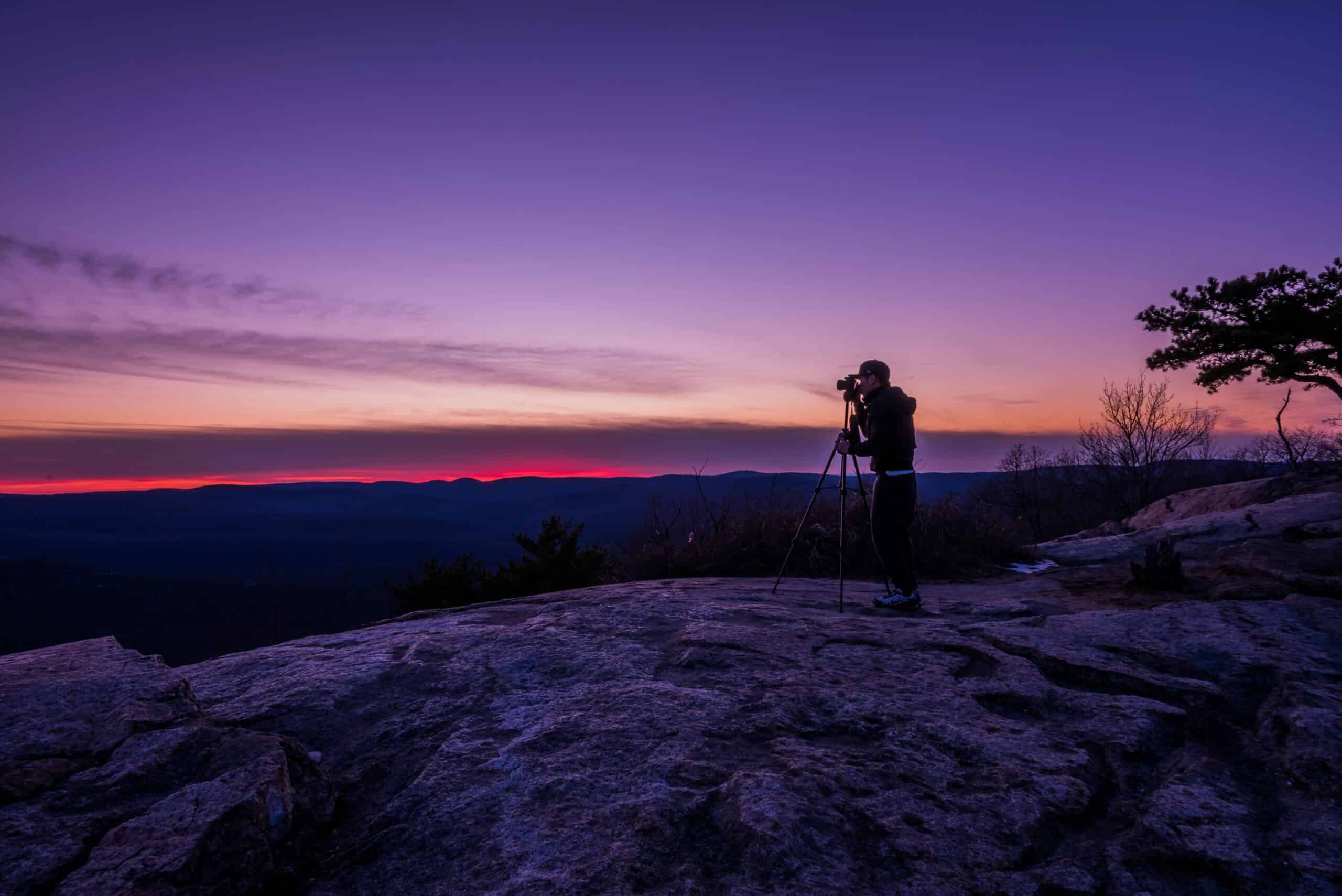
Scan for reflective surfaces (glass, polished floors), moving elements (people, trees, traffic), and bright light sources that can flare a fisheye. If shooting through glass, get the front element as close as safely possible (2–5 cm) and shoot at a slight angle to reduce reflections, while shading with a cloth or hood. For outdoor sunsets, plan your rotation so the sun position is handled in a single frame (bracketed if needed) to minimize seam challenges.
Match Gear to Scene Goals
The Z6 II’s dynamic range lets you recover shadows efficiently; it’s a strong base for HDR panoramas when windows and interior lamps push contrast. ISO 100–400 is ideal for clean files, ISO 800–1600 is still very usable for low-light panoramas. The fisheye advantage—fewer shots—reduces parallax conflicts in scenes with motion. The trade-off is distortion, which is normal for fisheye and handled in stitching. For maximum edge quality in architecture, stop down and avoid the long end (17mm) if your frame count allows.
Pre-shoot Checklist
- Power & storage: two batteries minimum; fast UHS-II card(s). Clean front element; bring a microfiber cloth.
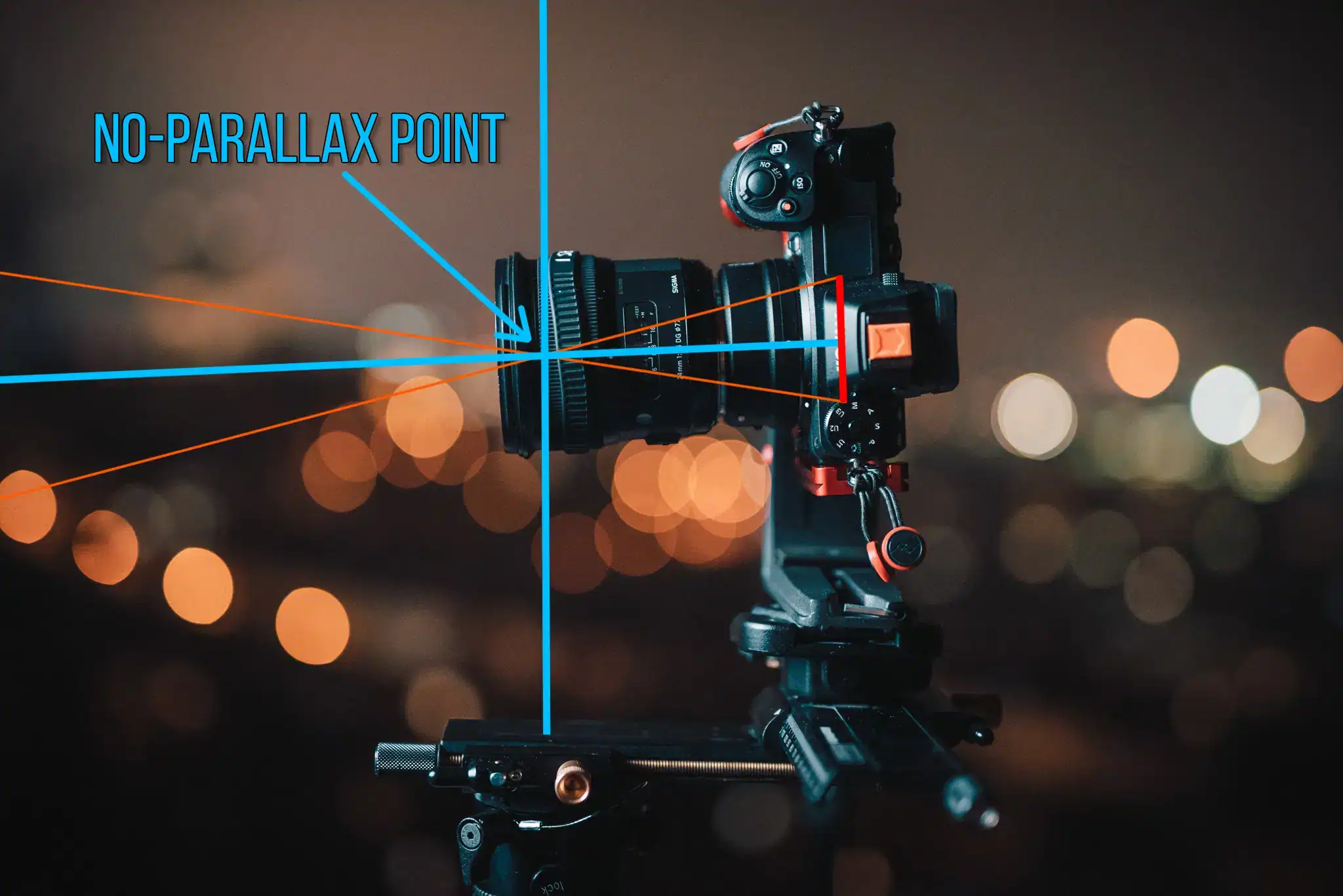
- Tripod & head: leveling base, calibrated panoramic head with nodal (no-parallax) alignment for this lens at chosen focal length.
- Adapter: K-to-Z with mechanical aperture control; test the lever positions to approximate f/8–f/11.
- Safety: watch wind on rooftops and poles; use a safety tether; avoid overhanging the head in crowded areas.
- Backup capture: do a second full pass if the scene allows; it saves projects when a seam misaligns or someone walks through.
Essential Gear & Setup
Core Gear
- Panoramic head: Lets you place the lens’ entrance pupil on the rotation axis (nodal alignment) to eliminate parallax between near and far objects. This is critical for clean stitches in tight interiors and with railings or furniture.
- Stable tripod with leveling base: A level platform speeds capture and minimizes pitch/roll corrections in post. Carbon fiber reduces vibration outdoors.
- Remote trigger or SnapBridge app: Fire the shutter without touching the camera. Combine with exposure delay mode to fully damp vibrations.
Optional Add-ons
- Pole or car mount: Use a safety line and mind wind loads. Rotate slower; micro-vibrations are amplified at the top of a pole.
- Lighting aids: Small LED panels to lift deep shadows in interiors if HDR isn’t allowed or practical.
- Rain cover and lens hooding: Fisheyes love to catch stray light and rain droplets—both ruin stitches.
For a deeper primer on panoramic heads and setup, see this concise panoramic head tutorial. Panoramic head basics
Step-by-Step Shooting Guide
Standard Static Scenes
- Level and align: Level the tripod via the leveling base. Mount the panoramic head. Slide the camera forward/backward until the entrance pupil sits over the vertical axis of rotation. With the DA 10-17 at 10mm, a good starting point is to place the rotation axis roughly under the front edge of the zoom ring; then fine-tune using the parallax test (align a near object against a distant object and rotate ±30°—adjust rail until there’s no relative shift).
- Manual exposure and WB: Set Manual mode. Choose aperture roughly f/8–f/11 via the adapter’s lever. Pick a shutter speed for mid-tones and ISO 100–400. Lock white balance (daylight/tungsten/kelvin) to avoid color shifts between frames. Disable Auto ISO.
- Capture sequence: For 10mm (DX), shoot 6 frames around at 60° yaw increments; tilt slightly upward 5–7° if you want to minimize a dedicated zenith frame outdoors. Then shoot a zenith and a nadir with the head offset, or plan a patch. Keep 25–35% overlap.
- Nadir shot: Use the vertical rail to offset the camera over one tripod leg and shoot the floor plate (or capture a handheld nadir after moving the tripod). This makes tripod removal easy.
HDR / High Dynamic Range Interiors
- Bracket exposures: Use ±2 EV (3–5 frames) for scenes with bright windows. Keep the aperture fixed and change shutter speed only. The Z6 II’s low base ISO plus bracketing covers bright highlights cleanly.
- Lock WB: Set a fixed Kelvin or preset so each bracket aligns in color. Mixed lighting benefits from shooting RAW for later correction.
Low-Light / Night Scenes
- Long exposures on tripod: Use f/4–f/5.6 if your adapter limits stopping down precisely; otherwise aim for f/8 if stars aren’t a priority. Start ISO 200–800; push to 1600 if necessary—Z6 II handles it well with modest noise reduction.
- Stability: Turn off IBIS on a locked-down tripod. Enable Exposure Delay (1–3 s) or use the self-timer/remote to kill vibrations. EFCS helps at moderate shutter speeds.
Crowded Events
- Two-pass approach: First pass quickly for coverage; second pass pausing for gaps. In post, mask moving subjects to keep clean seams.
- Use the fisheye advantage: Fewer frames mean fewer moving parts to manage during stitching.
Special Setups (Pole / Car / Drone)
- Pole: Secure everything and use a tether. If shooting off-tripod, IBIS can help micro-shakes; use faster shutter speeds (1/250 s+ if possible).
- Car mount: Avoid long exposures; plan routes with smooth pavement; shoot at stops when possible.
Recommended Settings & Pro Tips
Exposure & Focus
| Scenario | Aperture | Shutter | ISO | Notes |
|---|---|---|---|---|
| Daylight outdoor | f/8–f/11 | 1/100–1/250 | 100–200 | Lock WB (daylight) |
| Low light/night | f/4–f/5.6 (or f/8 if feasible) | 1/30–1/60 (tripod) or 1/200+ (handheld/pole) | 200–1600 | Tripod & remote; keep ISO moderate for cleaner stitches |
| Interior HDR | f/8 | Bracket ±2 EV | 100–400 | Balance windows & lamps |
| Action / moving subjects | f/5.6–f/8 | 1/200+ | 400–800 | Freeze motion; consider two-pass capture |
Critical Tips
- Manual focus: Use magnified live view; focus about 1–1.5 m away at 10mm and stop down to f/8 for near-to-infinity sharpness (hyperfocal-like behavior on fisheye).
- Nodal calibration: Tape your rail positions for 10mm and 12mm. Re-check if you change aperture significantly, as pupil shift on zooms/fisheyes can be non-zero.
- White balance lock: Mixed lighting? Choose a Kelvin value (e.g., 3200–4000 K indoors) and fix it for all frames.
- RAW capture: Gives you headroom for highlight recovery and CA correction; helpful when the fisheye sees bright edges of frame.
- IBIS behavior: Off on tripod; On for handheld or pole work at faster shutter speeds.
- Zoom discipline: Pick a focal length (10 or 12mm) and tape the zoom ring to prevent drift between frames.
Stitching & Post-Processing
Software Workflow
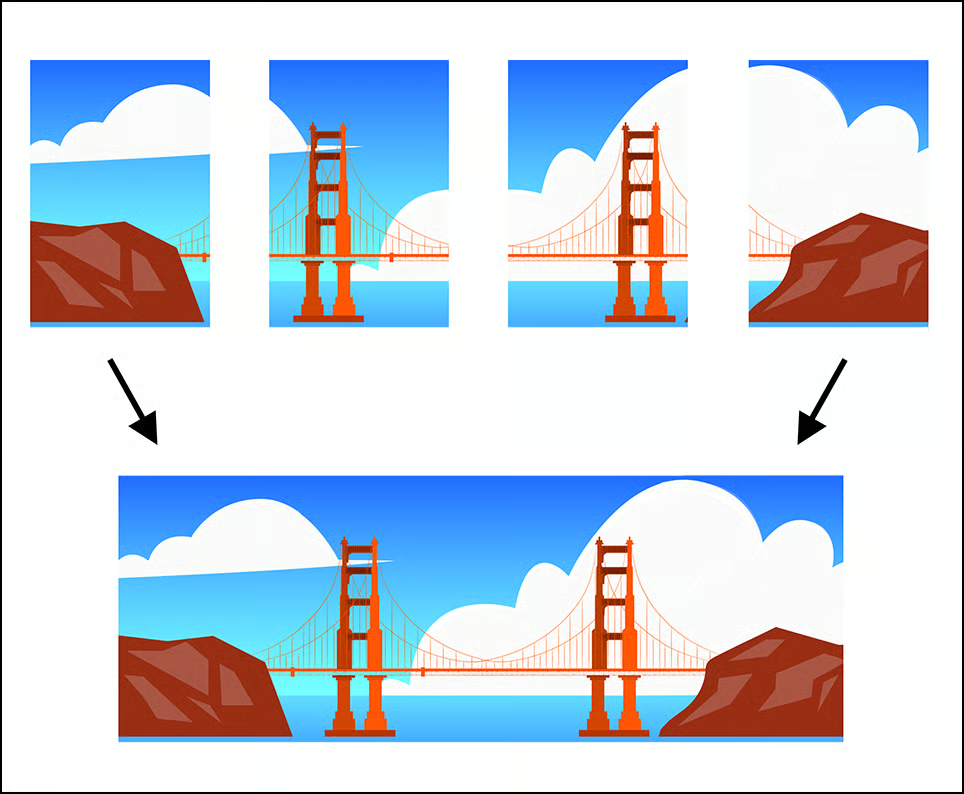
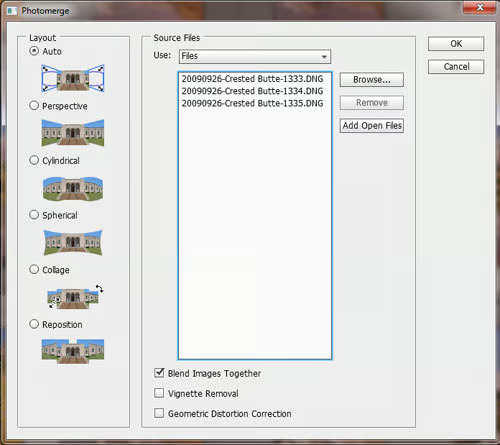
For diagonal fisheye panoramas, PTGui and Hugin are top choices. Import your fisheye frames, set the correct lens type (fisheye), and let the optimizer find control points. Because you’re using fewer images with a fisheye, ensure 25–35% overlap for robust control point distribution. If you bracketed, merge HDR per viewpoint first (Exposure Fusion or HDR merge in PTGui), then stitch. Export to an equirectangular 2:1 panorama for VR. For more on why PTGui excels at complex panos, this review is helpful. PTGui review and strengths
If you’re publishing to VR platforms, Oculus provides a succinct DSLR/mirrorless 360 pipeline overview, covering equirectangular requirements and metadata cues. DSLR/mirrorless 360 workflow for VR
Cleanup & Enhancement
- Nadir patch: Shoot a clean floor tile with the tripod moved or use AI-based tripod removal tools.
- Chromatic aberration: Apply fisheye CA correction; Pentax 10-17 benefits noticeably at edges.
- Noise reduction: Use a moderate Luminance NR for ISO 1600+ night shots; avoid smearing fine detail.
- Leveling: Use horizon/verticals tools to correct roll and pitch. Verify the horizon in architecture scenes.
- Export: Save 8-bit JPEG for web pano players or 16-bit TIFF for archival. Typical sizes are 8k to 12k on the long edge depending on your capture and stitch quality.
Recommended Video
Want to see nodal alignment and capture flow in action? This short video on panoramic head setup is a great visual companion:
If you’re curious about how focal length affects pano coverage and resolution trade-offs, this resource provides a quick perspective. Panoramas, focal lengths, and coverage
Disclaimer: Always check your chosen software’s latest manuals—features evolve and shortcuts change with updates.
Useful Tools & Resources
Software
- PTGui panorama stitching
- Hugin (open source stitching)
- Lightroom / Photoshop for RAW and cleanup
- AI tripod removal and sky replacement tools (various)
Hardware
- Panoramic heads: Nodal Ninja, Leofoto, or similar with fore-aft and lateral rails
- Carbon fiber tripods with leveling base
- Wireless remote shutters or app control
- Pole extensions / car suction mounts with safety tethers
- Pentax K-to-Nikon Z adapter with mechanical aperture control lever
Note: Product names are for search reference—verify compatibility on official sites.
Common Mistakes & How to Avoid Them
- Parallax error: Calibrate the nodal point at the exact focal length used; tape your rail marks.
- Exposure flicker: Manual mode, fixed ISO and WB. Avoid changing aperture mid-sequence.
- Tripod shadows/legs: Shoot a dedicated nadir and patch it cleanly.
- Ghosting from motion: Use two-pass shooting; mask in post; increase shutter speed outdoors.
- Soft corners or CA: Stop down via adapter control; correct CA in post.
- Adapter surprises: Test the aperture lever scale before a paid job; note that EXIF aperture won’t be recorded.
Field-Proven Scenarios with This Combo
Indoor Real Estate (Bright Windows)
Use 10mm (DX) for fast coverage. Bracket ±2 EV, f/8 target, ISO 100–200. Six around + zenith + nadir. Avoid pointing the fisheye directly at bright fixtures if you can—slight reframing reduces flares. In PTGui, merge HDR per viewpoint then stitch; check verticals with the Viewpoint optimizer if you shot the nadir offset.
Outdoor Sunset Panorama
Lock WB at 5600–6000 K for warm hues. Expose for highlights; do a quick second pass slightly brighter in case the sun dips. With wind, set Exposure Delay and weight the tripod center column hook. Expect to use 1/125 s, ISO 200, f/8.
Crowded Event or Festival
Leverage the fisheye’s low frame count. Shoot 6 around quickly at 1/250 s, f/5.6–f/8, ISO 400–800. If someone blocks a seam, wait a few seconds and reshoot that angle for an easy mask later.
Rooftop / Pole Shooting
Mount the Z6 II on a sturdy pole; keep the camera orientation consistent and rotate smoothly. Use 1/250 s+ and ISO 400–800 to beat vibrations. Safety first: tether the pole; watch for overhead lines and gusts. Consider a second pass at slightly different yaw angles to patch any stitching gaps from sway.
Technical Notes for Searchers
This guide focuses on how to shoot panorama with Nikon Z6 II & Pentax DA 10-17mm f/3.5-4.5 ED Fisheye in DX crop. Expect roughly 10MP stitched inputs per frame from the Z6 II’s DX mode—plenty for 8k equirect outputs with clean technique. If you need higher pixel density for gigapixel work, switch to a longer rectilinear lens and multi-row capture. For an excellent overview of DSLR/ML 360 best practices and gear selection, this FAQ is a helpful companion. DSLR/ML 360 virtual tour FAQ
Visual Inspirations
Frequently Asked Questions
- Can I shoot handheld panoramas with the Nikon Z6 II?
Yes, especially with a fisheye at 10mm. Use 1/250 s+, IBIS on, and overlap generously (35–40%). However, for critical interiors and tight spaces, a panoramic head with nodal alignment is strongly recommended for perfect stitches.
- Is the Pentax DA 10-17mm wide enough for a single-row 360?
At 10mm in DX crop, yes. Six shots around plus a zenith and nadir is a reliable, field-tested pattern. You can sometimes skip the zenith outdoors with a slight upward tilt and good overlap.
- Do I need HDR for interiors with bright windows?
Usually. Bracket ±2 EV (3–5 frames) to protect highlights; the Z6 II’s dynamic range helps, but windows can be 8–12 stops brighter than interiors. Merge HDR per view, then stitch.
- How do I avoid parallax issues with this lens and adapter?
Use a panoramic head and align the entrance pupil at the focal length you choose (e.g., 10mm). Start with the rotation axis under the front of the zoom ring, then fine-tune with a near/far parallax test. Tape the rail positions for consistency.
- What ISO range is safe on the Z6 II for low light panoramas?
ISO 100–400 for the cleanest results on tripod. ISO 800–1600 remains very usable; ISO 3200 is acceptable with careful noise reduction. For pole/handheld, prioritize shutter speed and accept a slightly higher ISO.
- Any gotchas using a Pentax DA lens on a Nikon Z body?
Use a K-to-Z adapter with a mechanical aperture lever or you’ll be stuck wide open. Expect no electronic aperture or AF, and EXIF for aperture won’t be recorded. Enable DX crop to avoid heavy vignetting on full-frame.
Safety, Reliability & Backup Workflow
Tether your camera on rooftops and poles. Avoid extending center columns in wind. Keep silica gel and a rain cover for sudden weather. After each pano, review the histogram and edges for coverage and exposure consistency. When time allows, shoot a second full pass at the same settings—this is the simplest and most reliable “backup” you can have on location.
If you’re new to the discipline or want a structured refresher, this panoramic head setup walkthrough is concise and practical. Set up a panoramic head for high-end 360 photos