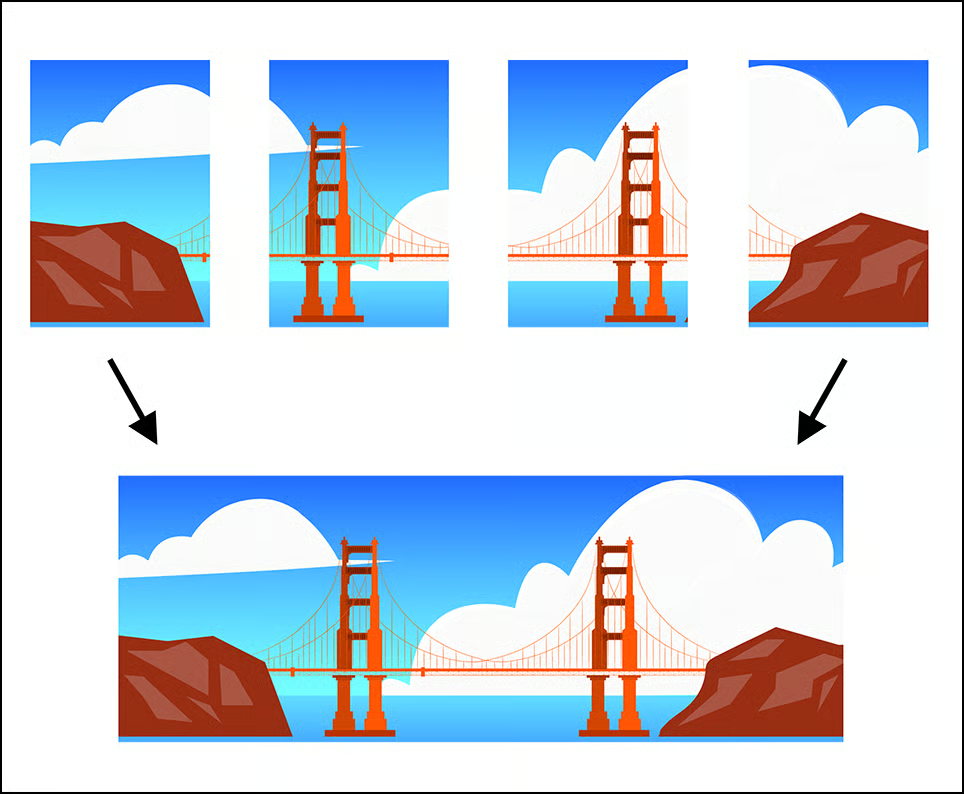
Why This Camera & Lens Are Great for Panoramas
The Nikon Z6 II paired with the Nikon AF-S 8–15mm f/3.5–4.5E ED Fisheye is a fast, reliable combo for 360° panoramas and creative ultra-wide scenes. The Z6 II’s 24.5MP full-frame BSI sensor (35.9 × 23.9 mm) delivers excellent dynamic range at base ISO (~14 stops) and strong high-ISO performance. With large ~5.9 µm pixels, it holds fine detail and smooth tonality—ideal for stitching where micro-contrast and color consistency matter. In-body 5-axis stabilization helps handheld frames, while the electronic level, focus peaking, and customizable controls streamline pano work. Autofocus is quick and accurate, and manual focus is easy thanks to a bright EVF and magnified live view.
The AF-S 8–15mm is a flexible fisheye zoom. On full frame, 8mm produces a circular fisheye image with a 180° field of view in all directions; 15mm gives a diagonal fisheye with a 180° diagonal field. That means fewer shots per panorama compared to rectilinear lenses, faster capture in changing light or crowds, and a robust stitch with generous overlap. Stopped down to f/5.6–f/8, the lens is sharp center-to-edge for pano needs, and chromatic aberration is well-controlled for a fisheye. Distortion is by design (fisheye projection), which pano software handles natively. Because it’s an F-mount lens, you’ll use an FTZ or FTZ II adapter on the Z6 II—AF and electronic diaphragm work properly, and the adapter’s added length simply factors into nodal alignment.
Bottom line: The Z6 II’s clean files and dynamic range reduce HDR bracketing needs outdoors, and the 8–15mm fisheye gives you speed and consistency with fewer frames, making this kit excellent for 360 photos, virtual tours, and creative panoramic landscapes.
Quick Setup Overview
- Camera: Nikon Z6 II — Full Frame (FX), 24.5MP BSI sensor, ~14 stops DR at ISO 100, excellent color depth, 5-axis IBIS.
- Lens: Nikon AF-S 8–15mm f/3.5–4.5E ED Fisheye — fisheye zoom; at 8mm: circular fisheye (180°), at 15mm: diagonal fisheye (180° diagonal). Sharpest around f/5.6–f/8. Some CA possible but well-managed in software.
- Estimated shots & overlap (tested guidance for full 360×180°):
- 8mm (circular): 3–4 shots around (120°–90° yaw) + zenith + nadir (total 5–6). Overlap target: ~30–35%.
- 10–12mm: 5–6 shots around + zenith + nadir (7–8 total). Overlap: ~30%.
- 15mm (diagonal): 6 shots around + zenith + nadir (8 total). Overlap: ~30%.
- Difficulty: Beginner-friendly to Intermediate (fisheye simplifies capture; nodal alignment still required for perfect results).
Planning & On-Site Preparation
Evaluate Shooting Environment
Start by reading the light and the environment. For interiors, watch for mixed color temperatures (daylight windows with warm tungsten) and reflective surfaces like glass and polished floors. Keep a few feet off glass to reduce reflections and flare, and shade the lens from direct light sources when possible. Outdoors, consider sun position—backlight can cause flare with fisheyes. In crowds or windy conditions, plan a quicker capture sequence (fewer shots at 8–10mm) to minimize motion artifacts, and use a stable tripod footprint.
Match Gear to Scene Goals
The Z6 II offers robust dynamic range and relatively clean high-ISO, so it handles bright exteriors and lower-light interiors well. For interior real estate, plan to bracket ±2 EV at ISO 100–200 to preserve window views. For night cityscapes, ISO 400–800 on this body is a safe working range on tripod, with long exposures countering noise buildup. The 8–15mm fisheye’s strength is speed: fewer frames mean fewer parallax risks and less time for people or clouds to move between shots. The trade-off is fisheye projection; however, modern stitchers ingest fisheye data directly, so there’s no net penalty in a spherical output.
Pre-shoot Checklist
- Power & storage: fully charged batteries, ample cards; the Z6 II’s dual slots add resilience—consider RAW+RAW or RAW+JPEG for parallel workflows.
- Clean optics & sensor: fisheyes see everything; dust spots will show.
- Tripod leveling: a leveling base saves time and reduces stitching errors.
- Pano head calibration: verify nodal (no-parallax) settings for this body + FTZ + lens before critical jobs.
- Safety: in wind or on rooftops, tether your rig; for car mounts, verify rated load and speed limits, and avoid public roads without permits.
- Backup workflow: shoot an extra full round at the end—insurance against blinkers, motion, or stitching misses.
Essential Gear & Setup
Core Gear
- Panoramic head: A proper panoramic head lets you align the lens’ entrance pupil (often called the nodal point) over the rotation axis, eliminating parallax so overlapping frames stitch cleanly. Use fore/aft and vertical sliders to position the Z6 II + FTZ + 8–15mm precisely.
- Stable tripod with leveling base: Leveling gets your pitch/roll close to zero, making the stitcher’s job easier and improving horizon consistency.
- Remote trigger or SnapBridge app: Trigger without touching the camera to avoid vibrations. Alternatively, use Exposure Delay Mode.
Optional Add-ons
- Pole or car mount: Great for elevated or vehicle-based panoramas. Always add a safety tether; check wind loads and avoid sudden movements—fisheyes have big frontal area and catch gusts.
- Lighting aids: Small LED panels or bounced flash for dark interiors; keep lighting consistent across frames.
- Weather protection: Rain covers and microfiber cloths—fisheye front elements are exposed and prone to droplets.
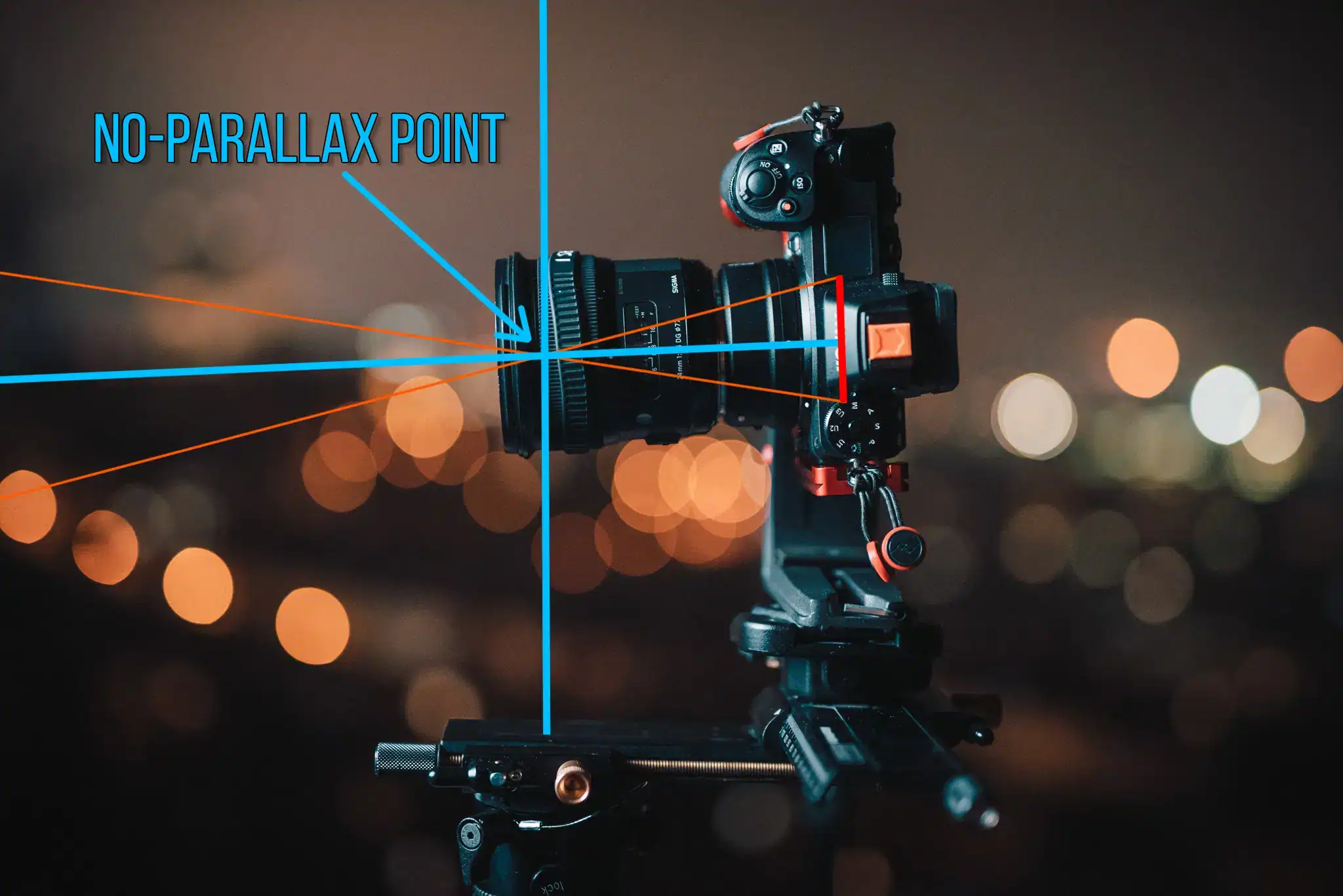
For in-depth pano head setup theory and examples, this panoramic head tutorial is an excellent reference: How a panoramic head works and how to set it up.
Step-by-Step Shooting Guide
Standard Static Scenes
- Level and lock: Level your tripod using the leveling base. Mount the panoramic head and ensure the yaw axis is plumb.
- Align the nodal point: With the Z6 II + FTZ + 8–15mm mounted, aim at two vertical objects (one near, one far). Rotate left/right; slide the camera forward/back until the near object stays aligned with the far object through the rotation. Record your slider markings for 8mm, 10–12mm, and 15mm positions.
- Set manual exposure and WB: Switch to M mode. Meter a mid-tone area and set exposure so highlights aren’t blown (use zebras or histogram). Lock White Balance (e.g., Daylight, 5200K) to avoid color shifts between frames.
- Focus and lock: Use manual focus. At 8–10mm, focusing at ~0.4–0.5 m at f/8 typically yields sharpness from near foreground to infinity. Turn off AF to prevent refocus between frames.
- Capture sequence: For 8mm circular, shoot 3–4 frames around (120°–90° steps) and add a zenith and a nadir. For 15mm diagonal, shoot 6 frames around (60° steps) plus zenith and nadir. Pan smoothly; use a click-stop rotator if available.
- Nadir shot for tripod removal: Tilt down and shoot the ground. You can also offset the rig slightly and take a clean floor plate for easier patching.
HDR / High Dynamic Range Interiors
- Bracket for windows: Use ±2 EV bracketing (3–5 frames) at f/8 and ISO 100–200. The Z6 II supports up to 9 frames of AE bracketing—use what you need, but 3–5 frames often suffice.
- Lock WB and focus: Keep WB fixed and focus manual to avoid micro-shifts. Use a remote or Exposure Delay Mode to prevent vibration between brackets.
- Shoot methodically: Capture bracketed stacks at each yaw position before rotating. Maintain your overlap and tempo consistently.
Low-Light / Night Scenes
- Exposure strategy: Use f/4–f/5.6 at ISO 400–800 as a starting point, adjusting shutter speed for a clean histogram. The Z6 II handles ISO 800–1600 well, but prefer lower ISO with longer shutter on tripod.
- Stability settings: Turn off IBIS for tripod work, enable Electronic Front-Curtain Shutter (EFCS), and use a 1–3 s Exposure Delay Mode or remote trigger to eliminate vibrations.
- Reduce flare: Avoid direct bright sources in-frame when possible. A small hand or flag can shade the lens between shots (just keep the flag out of frame).
Crowded Events
- Two-pass approach: First, shoot a quick full rotation for coverage. Second, wait for gaps and reshoot problem frames with fewer people for later masking.
- Short focal end: Use 8–10mm to reduce number of frames and minimize subject displacement. Keep rotations brisk and predictable.
- Mask in post: Blend the best frames for each sector in your stitcher to minimize ghosting.
Special Setups (Pole / Car / Drone)
- Pole safety: Secure clamps and add a leash tether. Limit extension in wind; rotate slowly to reduce oscillations. For rooftops, keep the center of gravity over the parapet and always use a safety line.
- Car mounts: Use rated suction mounts and safety cables. Parked-car shots are preferred. If moving, do so in a controlled environment and mind local laws.
- Drone note: This lens/body combo is not drone-friendly due to weight; consider a native 360 camera for aerials.
Recommended Settings & Pro Tips
Exposure & Focus
| Scenario | Aperture | Shutter | ISO | Notes |
|---|---|---|---|---|
| Daylight outdoor | f/8–f/11 | 1/100–1/250 | 100–200 | Lock WB (Daylight 5200K). Avoid CPL on fisheyes—uneven polarization. |
| Low light / night | f/4–f/5.6 | 1/30–multi-second | 400–800 | Tripod + remote; IBIS off; use EFCS and Exposure Delay Mode. |
| Interior HDR | f/8 | Bracket ±2 EV (3–5 frames) | 100–400 | Balance windows and lamps; consistent WB and focus. |
| Action / moving people | f/5.6–f/8 | 1/200+ | 400–800 | Freeze motion; do a second pass for masking. |
Critical Tips
- Manual focus at hyperfocal: At 8–10mm and f/8, focusing ~0.4–0.5 m yields near-to-infinity sharpness. Use magnified live view to confirm.
- Nodal point calibration: Record fore/aft slider marks for your Z6 II + FTZ + 8–15mm at 8, 10–12, and 15mm. Recheck after transport. Typical entrance pupil positions for fisheyes are close to the front element; your measured value is what matters.
- White balance lock: Mixed lighting can shift colors frame to frame. Lock WB or use a custom Kelvin value and shoot RAW for easy correction.
- RAW vs JPEG: Shoot RAW for maximum dynamic range, color latitude, and better CA correction. JPEG can be fine for speed but leaves less room for blending and repair.
- IBIS and tripod: Turn IBIS off on tripod to avoid micro-oscillations. Leave it on only if you are shooting handheld and need stabilization.
- Lens hood: Remove the hood for 8mm circular use to avoid vignetting. Keep front element spotless—fisheyes show everything.
Stitching & Post-Processing
Software Workflow
Import your frames into a dedicated panorama stitcher like PTGui or Hugin. Both understand fisheye projections and can automatically detect control points. With fisheye captures, you’ll usually need fewer shots; aim for ~30% overlap for robust matching. Rectilinear lenses often need more shots and ~20–25% overlap. For HDR, you can either pre-merge bracketed stacks (into HDR DNG/TIFF) and then stitch, or let PTGui handle bracketed stacks directly (often preferable). After alignment, let the optimizer refine yaw/pitch/roll, lens parameters, and vignetting. A well-leveled rig means fewer corrections later.
PTGui is widely used for high-end pano work and handles fisheyes, bracketed stacks, and nadir patching efficiently: Why PTGui is a top choice for complex panoramas. For a broader, camera-agnostic 360-photo workflow, see this guide: Using a DSLR or mirrorless camera to shoot and stitch a 360 photo.
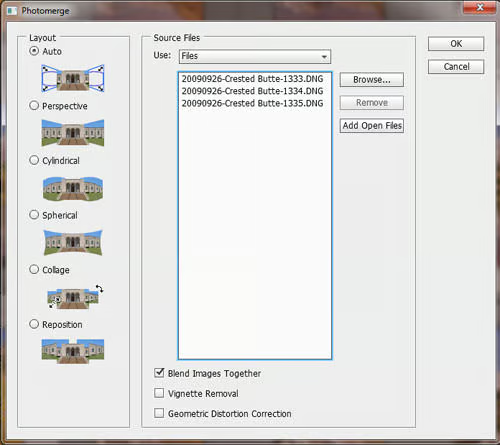
Cleanup & Enhancement
- Nadir/tripod removal: Use a patch from your nadir plate or clone/heal. PTGui and Photoshop both work well; AI tools can speed this up.
- Color and noise: Apply global color correction first, then selective HSL. For night shots, apply gentle noise reduction; keep detail in textures like asphalt or brick.
- Level the horizon: Use roll/pitch/yaw adjustments to level and center. Check verticals in interiors; fisheye content can exaggerate lean.
- Export: For VR, export equirectangular 2:1 at your desired resolution. With a 24.5MP sensor and 8mm circular workflow, expect ~8–12K wide final output depending on overlap and sharpening. Panotools’ spherical resolution notes can help you plan targets: Spherical resolution with DSLRs.
Disclaimer: Every software updates frequently—verify current features and best practices in official manuals or release notes.
Useful Tools & Resources
Software
- PTGui panorama stitching
- Hugin (open source)
- Adobe Lightroom Classic / Photoshop
- AI tools for tripod removal and cleanup
Hardware
- Panoramic heads: Nodal Ninja, Leofoto, Really Right Stuff
- Carbon fiber tripods with leveling bases
- Wireless remote shutters or app control
- Pole extensions, car mounts, and safety tethers
Want an at-a-glance gear and technique refresher across DSLR/mirrorless pano options? This overview is handy: DSLR/mirrorless virtual tour gear and lens guide.
Disclaimer: Software/hardware names provided for search reference; check official sites for details.
Common Mistakes & How to Avoid Them
- Parallax error → Always align the entrance pupil. Recheck after moving locations or changing focal length on the 8–15mm.
- Exposure flicker → Use full Manual mode, fixed ISO, fixed aperture, and locked White Balance.
- Tripod shadows or feet → Capture a nadir or a clean plate for easy patching later.
- Ghosting from moving subjects → Use a two-pass approach and mask in post.
- Night noise and banding → Keep ISO moderate (400–800), use longer shutter on tripod, and apply gentle noise reduction in post.
- Using a CPL on a fisheye → Avoid circular polarizers; they cause uneven sky polarization in ultra-wide fields of view.
Frequently Asked Questions
-
Can I shoot handheld panoramas with the Nikon Z6 II?
Yes, especially at 8–10mm because fewer frames are needed and IBIS helps. Use high shutter speeds (1/200+), fixed manual exposure/WB, and shoot quickly with ~30% overlap. For professional results (especially interiors), a tripod and pano head are strongly recommended.
-
Is the AF-S 8–15mm wide enough for a single-row 360?
Absolutely. At 8mm (circular fisheye), you can cover a full sphere with 3–4 shots around plus zenith and nadir. At 15mm (diagonal), plan on 6 around plus zenith and nadir. The fisheye projection is ideal for fast, reliable 360 capture.
-
Do I need HDR for interiors with bright windows?
Often, yes. Bracket ±2 EV (3–5 frames) to retain window detail while keeping interiors clean. The Z6 II’s base-ISO dynamic range is strong, but HDR helps avoid blown highlights in high-contrast rooms.
-
How do I avoid parallax issues with this combo?
Use a panoramic head and align the entrance pupil for the exact focal length you’re shooting. Recheck nodal alignment if you change from 8mm to 15mm. Mark your pano sliders for repeatability. A concise primer on pano head setup is here: Set up a panoramic head for high-end 360 photos.
-
What ISO range is safe on the Z6 II in low light?
For tripod-based panoramas, ISO 100–800 yields excellent quality. ISO 1600 is still usable with careful exposure and noise reduction. Favor longer shutter speeds over pushing ISO, and use EFCS plus Exposure Delay Mode to keep files clean.
Field-Proven Scenarios
Indoor Real Estate (Mixed Light)
Use 10–12mm to balance speed and resolution. Shoot 5–6 around + zenith + nadir with ±2 EV brackets at ISO 100–200 and f/8. Lock WB to a custom Kelvin (e.g., 4200–4800K) to harmonize daylight and warm bulbs. In post, stitch bracketed stacks, then fine-tune white balance per room and patch the nadir.
Outdoor Sunset (High Contrast)
At 8mm, shoot 4 around + zenith + nadir. Bracket 3 frames ±2 EV to preserve sky colors and foreground detail. Keep ISO 100–200, f/8, vary shutter. Rotate quickly as light changes. In post, blend for the sky, then grade highlights gently to retain saturation.
Event Crowds (Motion Control)
At 8–10mm, shoot a quick first pass at 1/200, f/5.6–f/8, ISO 400–800. Then wait for openings and reshoot specific sectors. Mask in post to reduce ghosting. If people are close to the lens, keep the camera at a constant height and rotate on the entrance pupil to avoid stitching artifacts.