
Why This Camera & Lens Are Great for Panoramas
The Nikon Z6 II paired with the Laowa 4mm f/2.8 Circular Fisheye is a specialist combo that can create full 360° panoramas with an extremely small number of shots. The Z6 II’s 24.5MP full-frame BSI-CMOS sensor (approx. 36 × 24 mm) offers excellent low-light performance and around 14 stops of dynamic range at base ISO, while its large 5.9 µm pixel pitch and 5-axis in-body stabilization help keep images clean and sharp when light falls. The camera’s dual processors and fast, responsive interface make it reliable for field work, and dual card slots (CFexpress/XQD + SD UHS-II) support safe, redundant capture on demanding shoots.
The Laowa 4mm f/2.8 Circular Fisheye is an ultra-wide, manual-focus lens with a circular projection and a quoted 210° field of view. Compared to rectilinear wide angles or even diagonal fisheyes, this circular fisheye sees “behind” itself, which lets you complete a full 360×180° sphere with just two opposing shots on a panoramic head. That means faster shooting, fewer stitch seams, and smaller chances for moving subjects to cause ghosting. Distortion is extreme by design, but fisheye distortion is predictable and easy for stitching software to model. On the Z6 II’s full-frame sensor, the circular image will not fill the frame; using DX crop mode (about 10.3MP) maximizes efficiency for stitching and may yield better circle coverage relative to frame size.
Mount compatibility is straightforward: the Laowa 4mm is available in Nikon Z mount, and manual operation (focus and aperture) is actually an advantage for panoramas because everything remains consistent across frames. The tradeoffs: lower final resolution than multi-row rigs and greater susceptibility to flare from that bulbous front element. Still, for fast, reliable 360 photos—especially for web and VR—the combo is a proven, efficient solution.
Quick Setup Overview
- Camera: Nikon Z6 II — Full-frame 24.5MP BSI-CMOS, ~5.9 µm pixel pitch, excellent dynamic range at base ISO, IBIS 5-axis stabilization, dual card slots.
- Lens: Laowa 4mm f/2.8 Circular Fisheye — manual focus and aperture, ~210° FOV, circular projection, very close-focus capability, predictable fisheye distortion; slight lateral CA may appear at edges but is easily corrected.
- Estimated shots & overlap: With a true circular 210° fisheye, you can complete a sphere with 2 shots (yaw 0° and 180°) plus an optional nadir patch for tripod removal. Aim for ~25–35% overlap. If you want extra margin for moving subjects, capture a third safety frame.
- Difficulty: Easy to Moderate (easy capture, careful nodal alignment and flare control required).
Planning & On-Site Preparation
Evaluate Shooting Environment
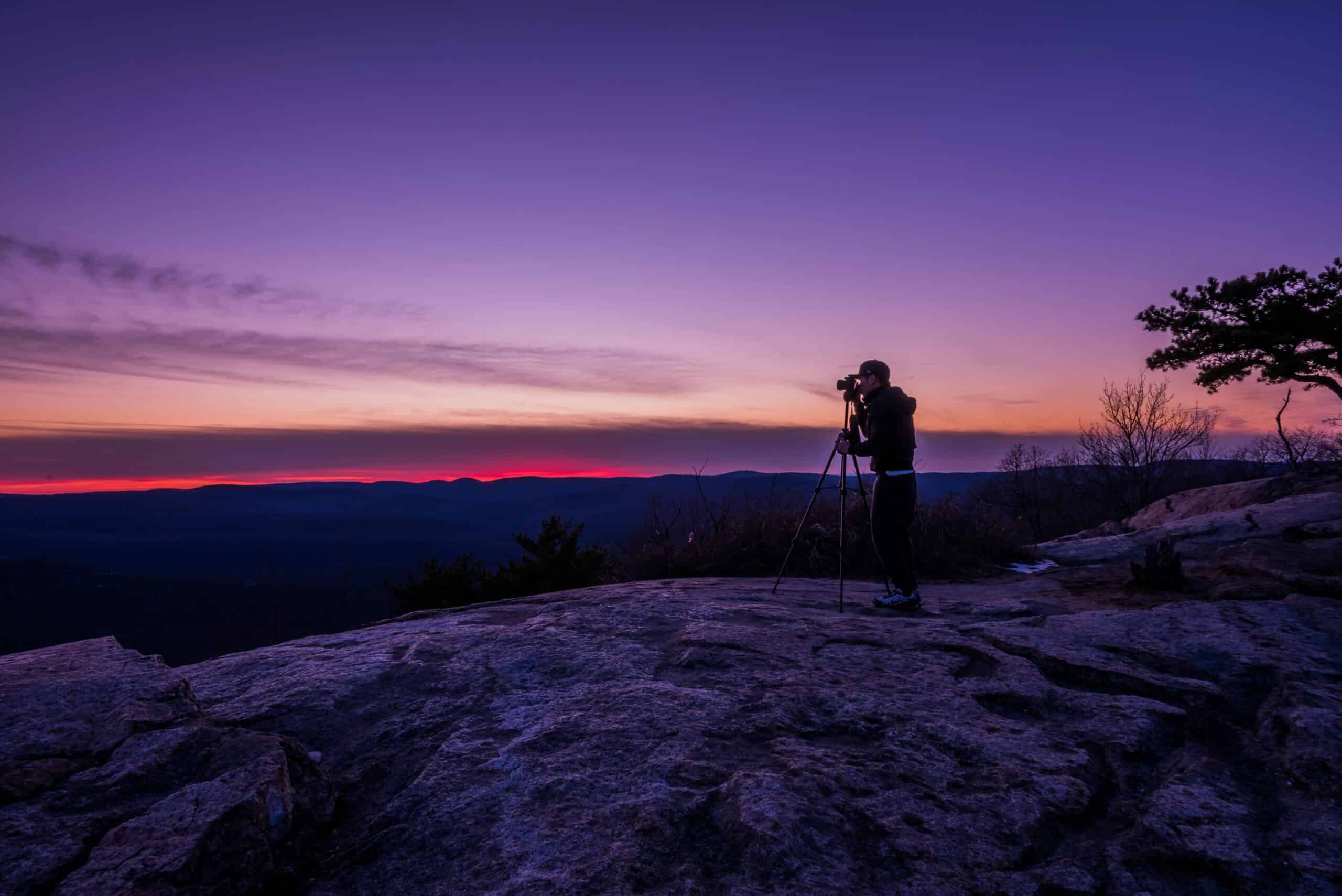
Look at light direction, reflective surfaces, and anything that moves (people, trees, cars, flags). With a circular fisheye, the front element is exposed and prone to flare and glare—watch for bright sun or strong point lights near the frame edges. If you’re shooting through glass, try to get the lens as close as safely possible (a few centimeters) and shade it with your hand or a flag to reduce reflections. In tight interiors, note that ultra-close foregrounds (furniture corners, rails) demand perfect nodal alignment to avoid parallax errors during stitching.
Match Gear to Scene Goals
The Z6 II’s dynamic range and low-noise performance make it strong in high-contrast scenes and low-light interiors—use bracketing for HDR when needed. The Laowa 4mm fisheye dramatically reduces shot count (2–3 frames instead of 6–12), making it ideal for events, street, quick real-estate turnovers, or windy rooftops where speed matters. The tradeoff is lower final resolution than multi-row approaches; expect 6K–8K equirectangular outputs suitable for web/VR. If you require 12K+ print-ready gigapixel panoramas, consider a multi-row head and a rectilinear or diagonal fisheye instead.
Pre-shoot Checklist
- Power and storage: Charge EN‑EL15c batteries, consider USB‑C PD power for long sessions, format cards, enable backup to second slot.
- Clean optics and sensor: That huge fisheye front element shows dust and smudges—blow and wipe carefully.
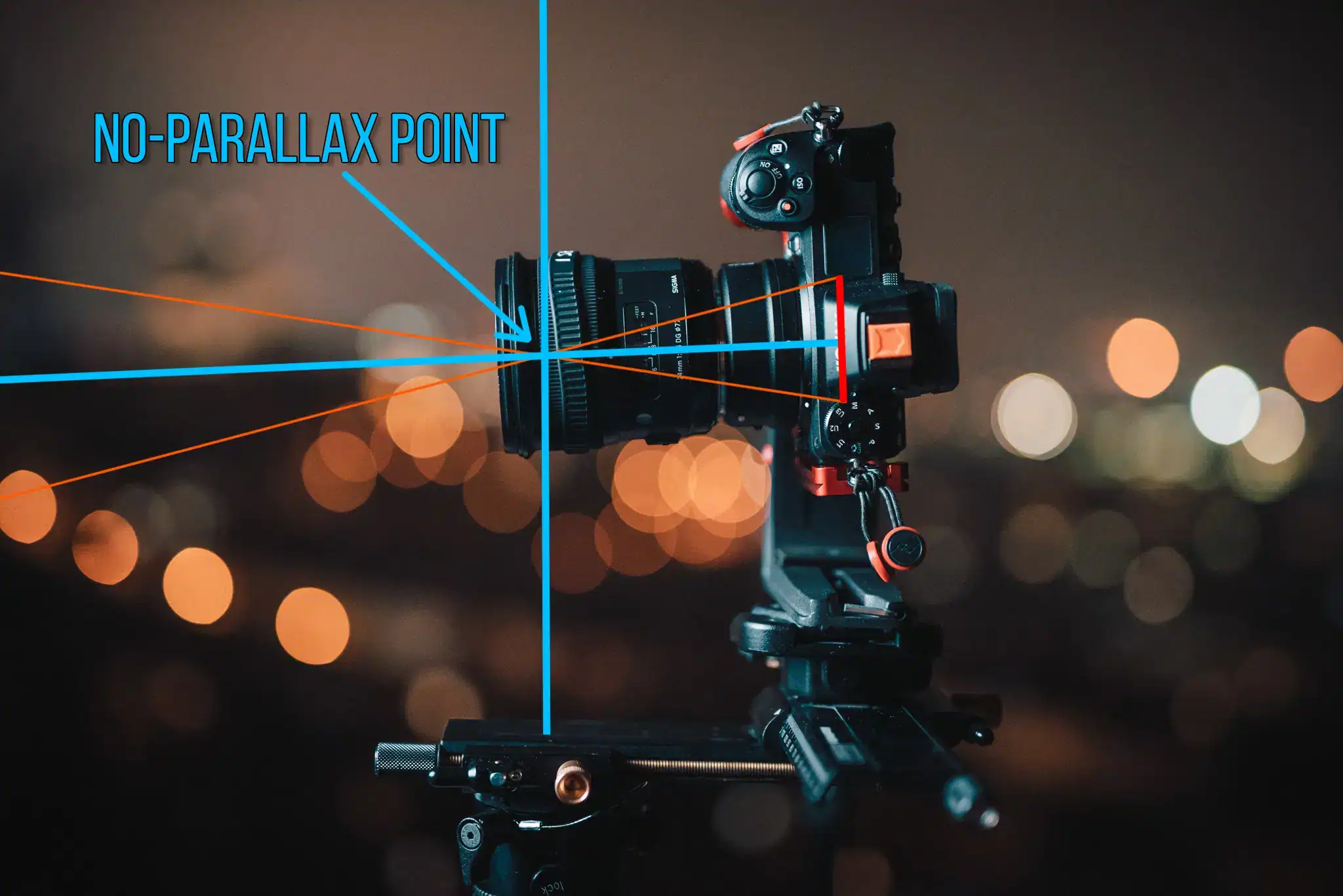
- Tripod leveling and pano head calibration: Level at the base; confirm nodal (no-parallax) alignment for this lens.
- Environmental safety: On rooftops or poles, tether the camera, monitor wind, tighten clamps, and work with a spotter when possible.
- Backup workflow: Shoot a second pass if the scene is important or crowded. Insurance saves post time.
Essential Gear & Setup
Core Gear
- Panoramic head: A rotator with vertical and horizontal rails lets you place the lens’s entrance pupil over the axis of rotation. This eliminates parallax, ensuring edges overlap cleanly and preventing stitching ghosts in near/far objects.
- Stable tripod with leveling base: A leveling base speeds set-up and keeps yaw rotation true—crucial with only two shots to cover the sphere.
- Remote trigger or SnapBridge app: Fire the shutter without touching the camera to minimize vibration. Enable a 2 s self-timer if needed.
Optional Add-ons
- Pole or car mount: The 2-shot workflow is perfect on poles or vehicle mounts. Use guy-lines or safety tethers, watch wind loads, and avoid sudden acceleration. Vibrations blur long exposures.
- Lighting aids: Small LED panels or bounced flash help even out interiors. Keep lighting consistent for both shots.
- Weather protection: A rain cover or microfiber to handle mist. Keep a lens hood ring or a flag handy to block flare.
For a deeper dive into panoramic head theory and setup, see this panoramic head tutorial that covers entrance pupil alignment and best practices. Read the panoramic head tutorial
Recommended Video: Panoramic Head Setup
Step-by-Step Shooting Guide
Standard Static Scenes
- Level the tripod and align the nodal point. With the Laowa 4mm, the entrance pupil sits very close to the front element. Mount the lens on the pano rail so the rotation axis passes through that point. Test by placing two vertical objects (one near, one far) and rotating: if there’s no relative shift, you’re aligned.
- Set manual exposure and lock white balance. Manual exposure prevents flicker or seams. For daylight, start at ISO 100, f/8, 1/125 s; WB Daylight (around 5200K). Shoot RAW for flexibility.
- Capture the two shots. Rotate 180° between frames. Keep overlaps consistent—this lens’s 210° FOV gives generous coverage. If you suspect motion or want safety, shoot a third frame with a slight pitch up or down.
- Take a nadir (ground) shot for tripod removal. Either shoot handheld looking straight down from the same nodal position or lift the camera slightly off the head and shoot the uncovered ground to patch later.
HDR / High Dynamic Range Interiors
- Bracket ±2 EV at each of your two yaw angles to balance bright windows and interior shadows. The Z6 II’s bracketing menu can automate 3–5 frames per angle.
- Lock white balance and focus for all brackets. Merge the HDR stacks per angle before stitching, or stitch first using exposure fusion. Keep the workflow consistent across both angles.
Low-Light / Night Scenes
- Use a tripod and remote release; disable IBIS when on tripod to avoid micro-corrections. The Z6 II handles ISO 800–1600 well; if you need very clean skies, prefer longer shutter times over pushing to ISO 3200+.
- Use Electronic Front-Curtain Shutter to minimize vibrations. Avoid fully electronic shutter under flickering artificial lights; it can band.
Crowded Events
- Shoot two passes. First pass quickly captures geometry; second pass waits for gaps in movement. This gives you clean plates to mask in post.
- Politely ask nearby subjects to pause a second during each frame. With only two frames, you can time it between flows of people.
Special Setups (Pole / Car / Drone)
- Secure gear and use a safety tether. On poles, keep rotations slow and deliberate; let vibrations dampen before firing.
- Plan for wind. With a circular fisheye, your exposures can be short; prioritize faster shutter (1/250 s+) to counter pole movement.
Recommended Settings & Pro Tips
Exposure & Focus
| Scenario | Aperture | Shutter | ISO | Notes |
|---|---|---|---|---|
| Daylight outdoor | f/8–f/11 | 1/100–1/250 | 100–200 | Lock WB (Daylight ~5200K). Use EFCS to reduce vibration. |
| Low light/night | f/4–f/5.6 | 1/30–1/60 | 400–1600 | Tripod + remote; turn IBIS off on tripod; watch for flicker under LEDs. |
| Interior HDR | f/8 | Bracket ±2 EV | 100–400 | Merge HDR per angle or exposure fuse in the stitcher; keep WB locked. |
| Action / moving subjects | f/5.6–f/8 | 1/200+ | 400–800 | Freeze motion; consider a second pass for clean plates. |
Critical Tips
- Manual focus near hyperfocal: At 4mm, depth of field is enormous. At f/8, focusing around 0.3–0.5 m keeps everything sharp to infinity. Use magnified live view to set once and don’t touch it.
- Nodal point calibration: Mark your rail position for this lens once you’ve found the no-parallax point. Tape and a grease pencil save time on repeat shoots.
- White balance consistency: Use a fixed Kelvin value rather than Auto WB to avoid color shifts between the two frames.
- RAW preferred: The Z6 II’s RAW files give you the full dynamic range and color latitude needed for clean seams and accurate color.
- IBIS on/off: Handheld or on a pole, IBIS helps. On a locked tripod with a pano head, turn IBIS off to avoid micro-blur.
- Flare control: Keep the sun just outside the frame if possible, and shade the lens with your hand or a flag. Check both angles.
Stitching & Post-Processing
Software Workflow
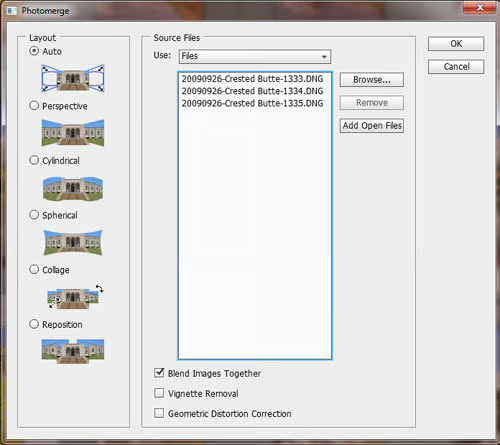
For circular fisheye panoramas, PTGui and Hugin handle the optics very well. In PTGui, select “fisheye” and, if needed, set the lens FOV close to 210° for the Laowa 4mm. Import your two frames, assign approximate yaw angles (0° and 180°), run control point detection, and optimize. For HDR, either pre-merge each angle to a 16-bit TIFF or use exposure fusion within the stitcher. Industry guidelines suggest ~25–30% overlap for fisheye lenses; with a 210° circular fisheye, you’ll have ample overlap even with just two frames. Read a practical review of PTGui for panoramas
If you’re new to DSLR/mirrorless 360 workflows, Oculus’ technical guide gives a solid overview from capture to stitching and export for VR platforms. Using a DSLR or mirrorless camera to shoot and stitch a 360 photo
Cleanup & Enhancement
- Nadir patch: Replace tripod footprints using a patched shot, content-aware fill, or an AI nadir patch tool. Keep textures aligned.
- Color and noise: Match color between frames before final export; apply gentle noise reduction for night scenes.
- Leveling: Use the horizon tool to correct pitch and roll; verify the verticals in interiors.
- Export: Output an equirectangular JPEG/TIFF at 6K–8K for fast-loading web VR. If you captured in DX mode, expect around 6–7K typical outputs, depending on circle size and overlap.
Tip: The spherical resolution you achieve depends on sensor resolution, circle size, and stitch overlap. For theory-minded readers, the Panotools wiki has a detailed explanation of DSLR spherical resolution. Understanding DSLR spherical resolution
Disclaimer: Software evolves—verify the latest features and steps in current PTGui or Hugin documentation.
Useful Tools & Resources
Software
- PTGui panorama stitching (fast, mature optimizer for fisheye workflows)
- Hugin (open-source alternative with excellent control)
- Lightroom / Photoshop for RAW development and cleanup
- AI tripod/nadir removal tools for faster patching
Hardware
- Panoramic heads: Nodal Ninja, Leofoto geared rails
- Carbon fiber tripods with a leveling base
- Wireless remote shutters or smartphone control
- Pole extensions / car mounts with safety tethers
Disclaimer: brand names for search reference only—check official sites for specs and compatibility.
Real-World Scenarios: What Works Best
Indoor Real Estate
Interiors often mix tungsten and daylight. Lock WB around 4000–4800K to balance both, bracket ±2 EV for bright windows, and keep the pano head dead-level to maintain straight verticals. The two-shot workflow speeds up room-to-room capture but watch for close furniture—double-check your no-parallax alignment and, if needed, step the tripod a little farther from corners to ease stitching.
Outdoor Sunset
Sunset skies are contrasty. Shoot at ISO 100–200, f/8, and bracket ±2 EV on both angles. Shade the lens from direct sun when possible to avoid veiling flare; consider sequencing your two frames so the shot nearest the sun is captured when the brightness drops a touch, providing more balanced exposures.
Event Crowds
With only two frames to manage, you can time exposures between foot traffic. Capture the first pano to lock geometry, then wait for a lull and capture a second pass. In post, you’ll have clean plates for masking moving people or signage changes.
Rooftop or Pole Shooting
High winds amplify vibrations. Use higher shutter speeds (1/200–1/500 s) and ISO 400–800. Take a breath between rotations so the pole settles. A circular fisheye’s generous overlap lets you get away with a little movement, but sharpness still benefits from steady technique.
Car-Mounted Capture
Keep the vehicle stationary; idling engines can induce vibrations. If you must shoot quickly, favor faster shutter speeds and avoid long HDR stacks. Confirm mounting hardware torque specs and add a safety tether from camera to the rack.
Visual References
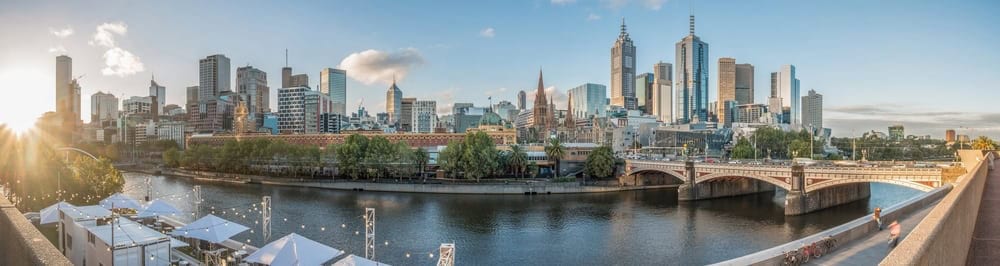
Below are a couple of visuals that help clarify key steps during capture and stitching.
Common Mistakes & How to Avoid Them
- Parallax error → Align the entrance pupil carefully; test with near/far objects before serious work.
- Exposure flicker → Use full manual exposure and locked white balance.
- Tripod shadows and footprints → Capture a nadir patch or plan to clone/AI-patch later.
- Ghosting from moving subjects → Shoot two passes and mask in post.
- Night noise → Prefer longer exposures over excessively high ISO; the Z6 II is clean to ISO 1600, usable to 3200 with gentle NR.
- Flare artifacts → Block stray light and clean the front element meticulously.
Frequently Asked Questions
- Can I shoot handheld panoramas with the Nikon Z6 II?
Yes, in a pinch. Use IBIS on, fast shutter (1/200 s+), and consistent framing 180° apart. However, a tripod and pano head yield far more reliable stitches—especially indoors with close foregrounds.
- Is the Laowa 4mm f/2.8 wide enough for single-row 360?
Yes. Its circular 210° FOV covers a full sphere with just two opposing shots. That’s the strength of this lens: minimal frames, fast capture, and reliable overlap.
- Do I need HDR for interiors with bright windows?
Often, yes. Bracket ±2 EV on both angles. Merge HDR per angle or use exposure fusion in PTGui/Hugin to retain both window detail and clean shadows.
- How do I avoid parallax issues with this combo?
Align the lens’s entrance pupil over the rotation axis using a panoramic head with fore-aft adjustment. With a 4mm circular fisheye, the entrance pupil is very close to the front element; test alignment with near/far objects and mark your rail position for repeatability.
- What ISO range is safe on the Z6 II in low light?
For best quality, ISO 100–800. The Z6 II remains quite clean at ISO 1600 and acceptable at 3200 with light noise reduction. When possible, prefer longer shutter times over higher ISO if your rig is stable.
- Can I set up custom modes for fast pano shooting?
Yes. Assign a custom mode with manual exposure, fixed WB, EFCS enabled, IBIS off (for tripod), self-timer or remote, and your preferred bracketing. That way, your pano-ready setup is one dial turn away.
- How can I reduce flare on a circular fisheye?
Avoid direct bright light sources inside the frame when possible. Use your hand or a small flag to shade the lens edge. Clean the front element often; smudges amplify flare.
- Which tripod head is best for this setup?
Any panoramic head that allows entrance pupil alignment will work. A compact two-axis head (e.g., Nodal Ninja or a geared rail system) with a click-stop rotator makes 0°/180° capture fast and repeatable.
More Learning
For a deeper, end-to-end primer on DSLR/mirrorless 360 workflows, the Oculus Creator guide is comprehensive and vendor-neutral. DSLR/Mirrorless 360 capture and stitch guide