
Why This Camera & Lens Are Great for Panoramas
The Nikon Z6 II is a 24.5 MP full-frame mirrorless body with a back-side illuminated sensor, excellent dynamic range (~14 EV at base ISO), and strong high-ISO performance thanks to its ~5.9 μm pixel pitch. For panoramic and 360 photography, that means clean shadows, flexible tone mapping, and reliably sharp detail even when you bracket exposures or work in dim interiors.
The Canon RF 14–35mm f/4L IS USM is an ultra-wide rectilinear zoom designed for full-frame coverage. It offers crisp center performance and very usable corners from f/5.6–f/11, with manageable chromatic aberration and vignetting. At 14 mm, the horizontal field of view is about 104°, which is excellent for single- and multi-row panoramas, architecture, and real-estate interiors where straight lines matter.
Important mount compatibility note: Canon RF lenses cannot be mounted on Nikon Z bodies with a simple adapter. The Canon RF flange distance (≈20 mm) is longer than Nikon Z (≈16 mm), which makes RF→Z adaptation physically impractical without optics, and there are currently no broadly available adapters that provide full aperture/AF control for RF lenses on Nikon Z. If your goal is to use the exact Canon RF 14–35mm f/4L, you’ll need a Canon RF-mount body. If you’re shooting with the Nikon Z6 II, use a Nikon Z-mount rectilinear alternative (e.g., NIKKOR Z 14–30mm f/4 S) for identical workflow and field of view. Everything below applies directly to a 14–35 mm class rectilinear ultra-wide on the Z6 II.
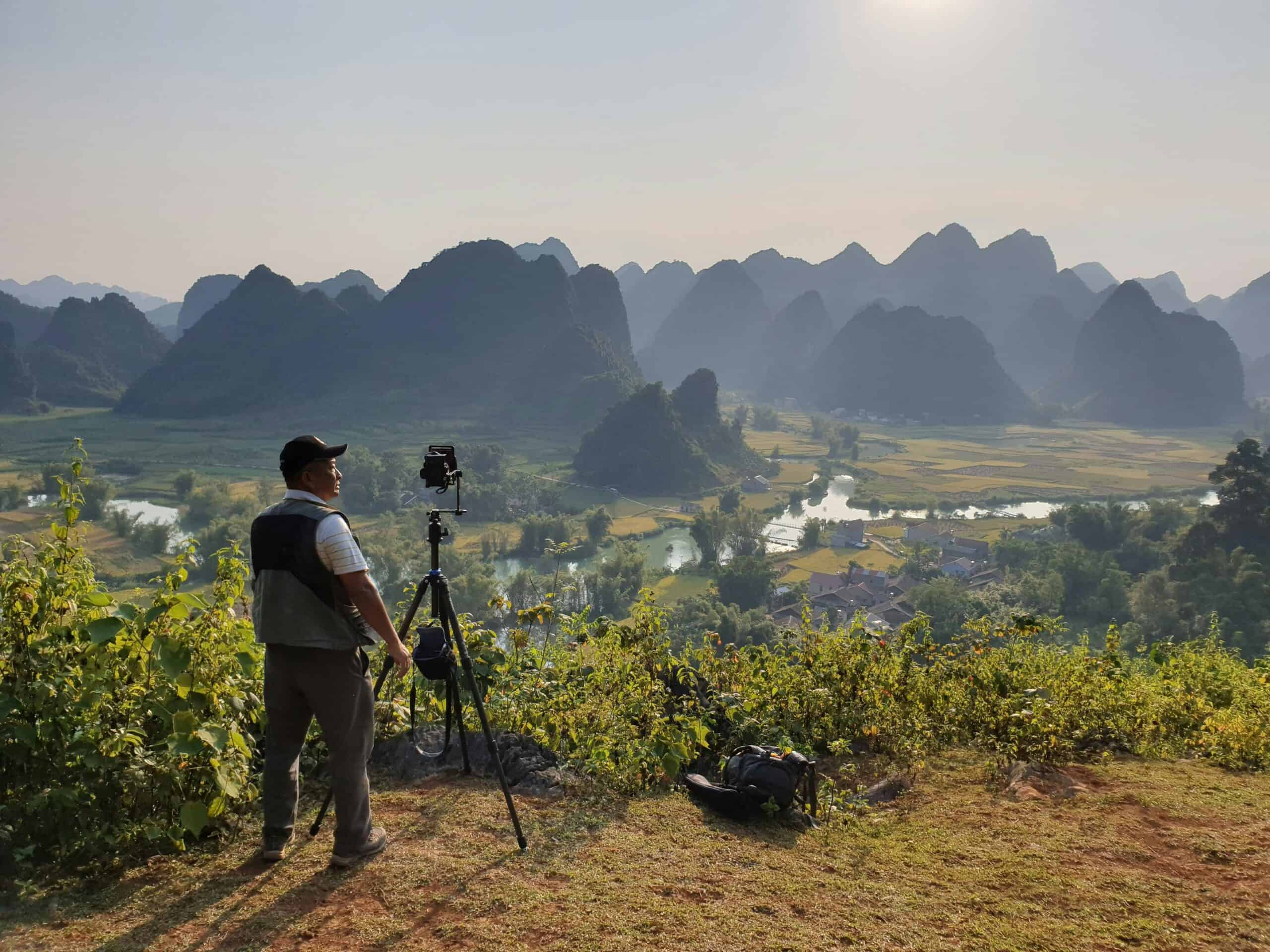
Quick Setup Overview
- Camera: Nikon Z6 II — Full-frame (35.9×23.9 mm), 24.5 MP BSI CMOS, excellent DR at ISO 100, strong high-ISO up to 1600–3200 for web use.
- Lens: Canon RF 14–35mm f/4L IS USM (rectilinear ultra-wide). For Nikon Z6 II users, use a Z-mount equivalent like NIKKOR Z 14–30mm f/4 S to match this workflow. Sharpest around f/8–f/11; expect stronger geometric distortion at 14 mm and improved behavior by ~16–18 mm.
- Estimated shots & overlap (full-frame, rectilinear):
- At 14 mm: 8 shots around at 0° + 4 at +60° + 4 at −60° + nadir patch (≈17–18 frames). 30–35% overlap.
- At 20 mm: 10–12 around + 4–6 up + 4–6 down + nadir (≈20–26 frames). 25–30% overlap.
- At 35 mm: multi-row (e.g., 3 rows × 12 around) + nadir for high-res gigapixel-style coverage.
- Difficulty: Intermediate (easy once nodal point is calibrated).
Planning & On-Site Preparation
Evaluate Shooting Environment
Scan for moving elements (people, vehicles, trees in wind), reflective surfaces (glass, polished floors), and strong backlights. If shooting through windows, keep the front element close to the glass (1–3 cm) to reduce reflections and ghosting. Note where the sun will be during your sweep to minimize flare and exposure jumps.
Match Gear to Scene Goals
The Nikon Z6 II’s strong dynamic range and low noise floor let you bracket aggressively without penalty. Indoors, ISO 100–400 yields clean files with deep shadow recovery; outdoors at sunset, ISO 100–200 preserves highlights with room to lift shadows. A 14–35 mm class rectilinear lens minimizes fisheye distortion and keeps architecture straight, though you’ll need more frames than with a fisheye. The payoff: crisp, natural-looking lines and easier vertical correction.
Pre-shoot Checklist
- Charge batteries; bring spares. Fast UHS-II cards recommended for bracketed bursts.
- Clean lens and sensor; a speck at 14 mm can become visible in sky gradients.
- Level your tripod using a leveling base; pre-calibrate your panoramic head for nodal alignment.
- Safety: secure straps/tethers on rooftops or poles; monitor wind gusts; avoid placing a tripod where passersby can bump it.
- Backup workflow: shoot a second safety round or an extra nadir patch for insurance.
Essential Gear & Setup
Core Gear
- Panoramic head: Allows rotation around the lens’s no-parallax (nodal) point, eliminating parallax between foreground and background edges. This is critical for seamless stitching.
- Stable tripod with leveling base: Faster setup and level sweep, reducing warps in stitching.
- Remote trigger or camera app (Nikon SnapBridge): Vibration-free exposures and convenient bracketing control.
Optional Add-ons
- Pole or car mount: Great for crowds or elevated viewpoints. Always safety-tether the camera; avoid high winds; watch for vibration resonance at certain pole heights.
- Portable LED panels or bounce flash: For low-light interiors, use continuous light to reduce bracket extremes.
- Weather protection: Rain covers, silica gel, and lens hoods to fight flare and precipitation.
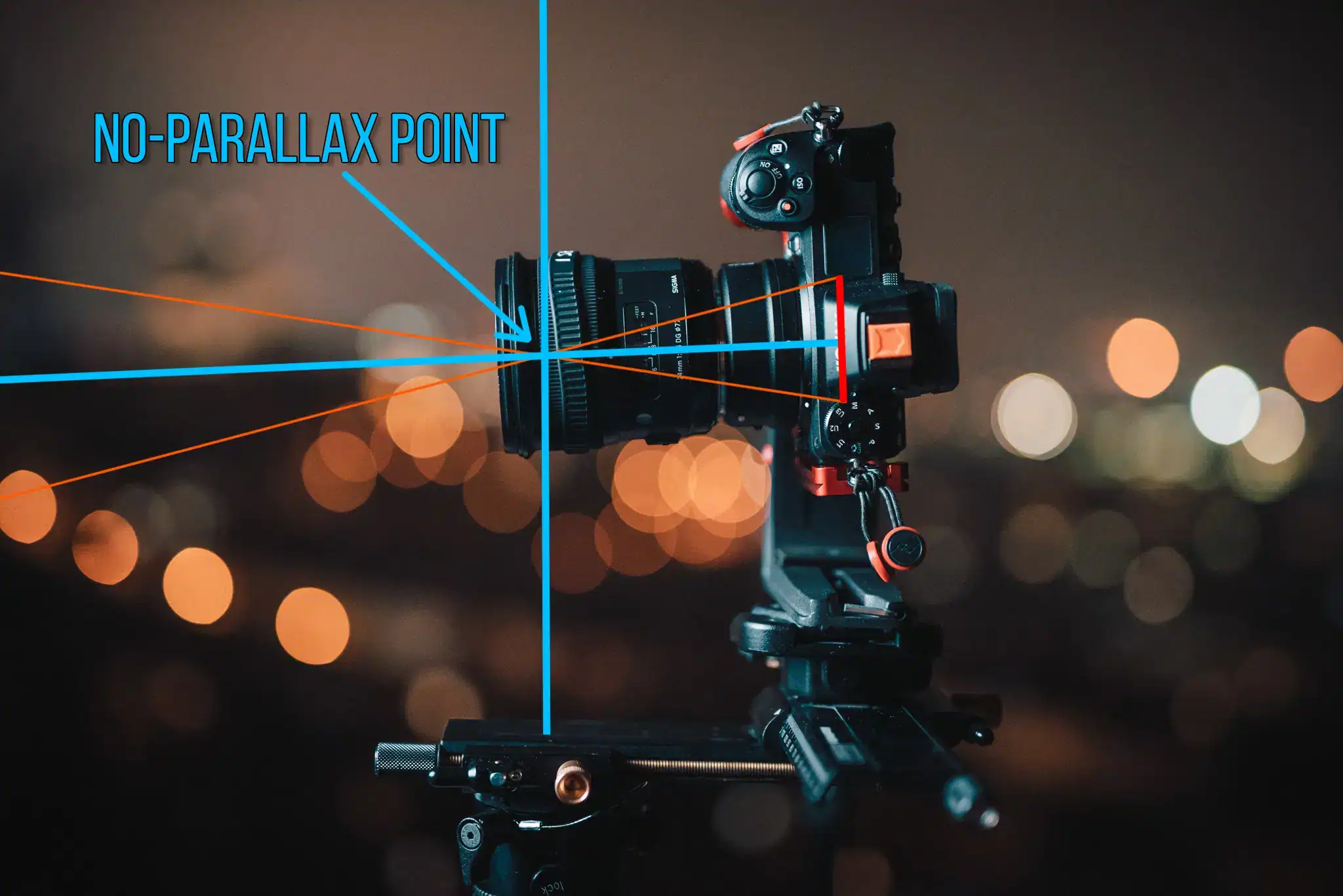
Video: Panoramic Head Setup (Recommended)
Visualizing the nodal alignment routine makes a huge difference. This video complements the steps below.
Step-by-Step Shooting Guide
Standard Static Scenes
- Level the tripod and head. Use a bubble level or the Z6 II’s virtual horizon. A perfectly level yaw axis keeps the horizon straight in the stitch.
- Align the nodal point. Place a light stand or pole 1–2 m in front of the camera and a vertical line far behind. Pan left/right while sliding the lens forward/back on the rail until the near and far edges don’t shift relative to each other. Mark and record this rail position for your 14–20–35 mm focal lengths.
- Switch to Manual exposure. Set a single exposure for the brightest part you need to retain detail in (often just below clipping for skies), or prepare to bracket. Turn off Auto ISO. Lock white balance (Daylight for sun, Tungsten for warm interiors, or set a Kelvin value).
- Focus: Use manual focus and focus peaking. Focus about one third into the scene or set to the hyperfocal distance for your chosen aperture (f/8–f/11 at 14–20 mm usually covers near to infinity).
- IBIS and lens IS: On a solid tripod, turn stabilization off to prevent micro-drift during long exposures.
- Capture sequence with consistent overlap. At 14 mm, shoot 8 frames around at 0°, then a row at +60°, then −60°, and finally a nadir patch. Use a remote to avoid touching the camera.
- Take a dedicated nadir shot. Tilt down or move the tripod slightly and shoot a clean ground patch to replace the tripod area in post.
HDR / High Dynamic Range Interiors
- Bracket ±2 EV (3–5 frames) to balance bright windows and interior shadows. The Z6 II handles bracket sequences well; consider 3 frames at ±2 EV for efficiency.
- Keep white balance locked across all brackets to avoid color shifts frame-to-frame.
- Use a 2-second timer or remote with exposure delay to prevent vibrations.
Low-Light / Night Scenes
- Prefer longer shutters at ISO 100–400 for maximum dynamic range. If necessary, ISO 800–1600 is still very clean on the Z6 II for web-sized 360 photos.
- Use the exposure delay mode (e.g., 1–3 s) and remote trigger to eliminate shake.
- Watch for light flicker (LEDs). If you see banding, adjust shutter speed away from mains frequency multiples.
Crowded Events
- Do two passes: the first quickly for coverage, the second waiting for gaps in moving subjects. This gives you clean plates for masking.
- Keep overlap slightly higher (35–40%) to give your stitcher more options for control points.
- Use faster shutters (1/200 s+) to freeze movement when possible.
Special Setups (Pole / Car / Drone)
- Pole: Safety-tether the camera. Use 14–18 mm to reduce the shot count. Keep shutter 1/250–1/500 s to minimize motion blur from sway.
- Car-mounted: Triple-suction mounts on clean panels, safety tether to tow hook. Plan routes with minimal traffic; shoot bursts at stoplights. Shutter 1/500–1/1000 s; avoid IBIS.
- Drone: When possible, prefer a native drone pano mode. If lifting a mirrorless (specialized rigs), balance precisely and keep the frame count modest.
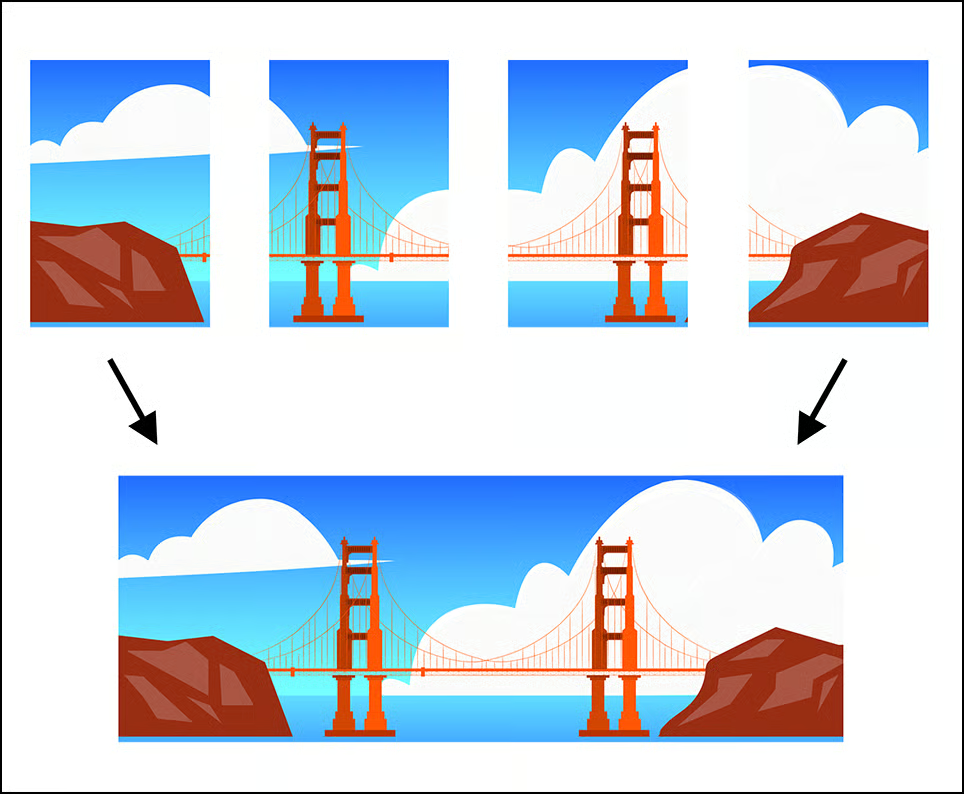
Recommended Settings & Pro Tips
Exposure & Focus
| Scenario | Aperture | Shutter | ISO | Notes |
|---|---|---|---|---|
| Daylight outdoor | f/8–f/11 | 1/100–1/250 | 100–200 | Lock WB (Daylight); start sweep away from the sun to minimize flare accumulation. |
| Low light/night | f/4–f/5.6 | 1/30–1/60 (tripod) | 400–800 (1600 if needed) | Turn off IBIS on tripod; use exposure delay or remote. |
| Interior HDR | f/8 | Bracket ±2 EV | 100–400 | Balance windows and lamps; avoid mixed WB where possible. |
| Action / crowds | f/5.6–f/8 | 1/200+ | 400–800 | Two-pass method for clean plates; higher overlap for safety. |
Critical Tips
- Manual focus at or near the hyperfocal distance keeps everything sharp. At 14–18 mm and f/8, you’ll usually cover from ~1–1.5 m to infinity.
- Nodal calibration: Repeat for 14, 20, and 35 mm and write down rail marks. Expect the no-parallax point to shift with focal length.
- White balance lock: Avoid auto WB in panoramas. Use a Kelvin value or a fixed preset, and shoot RAW.
- RAW vs JPEG: RAW provides headroom for HDR blending and color correction. Stick to RAW for professional pano work.
- Stabilization: Turn off both IBIS and lens IS on a tripod to prevent micro-wobble during long exposures.
- Lens corrections: For consistent geometry, apply distortion/vignetting corrections uniformly during post, not in-camera across frames.
Stitching & Post-Processing
Software Workflow
Import your sequence to a dedicated stitcher like PTGui or Hugin. Rectilinear ultra-wide sequences benefit from consistent overlap (20–30%) and good control point distribution. For bracketed sets, either pre-merge HDR per camera angle or let PTGui handle exposure fusion. PTGui’s optimizer and masking tools are industry favorites for tricky corners, nadir blending, and moving subjects. See this in-depth look at PTGui’s strengths for complex panoramas at Fstoppers’ PTGui review.
New to panoramic heads and control-point strategy? A strong primer with diagrams and examples is available here: Panoramic head tutorial (360 Rumors).
For end-to-end 360 workflows targeting VR platforms, the stitching/export principles discussed by Meta’s creator docs are practical and relevant: Using a DSLR/mirrorless to shoot and stitch a 360 photo.
Cleanup & Enhancement
- Nadir patch: Use PTGui’s Viewpoint Correction, a second offset frame, or manual clone/heal in Photoshop. AI content-aware tools can speed this up.
- Color and noise: Apply global WB, gentle noise reduction for high-ISO night shots, and lens-specific CA correction.
- Leveling: Set the horizon by defining verticals/horizontals in your stitcher to correct yaw/roll/pitch.
- Export: For web-based 360 viewers, export equirectangular 2:1 at 8000–12000 px width (JPEG). Keep a 16-bit TIFF master for archival and re-editing.
Disclaimer: software evolves—always check the latest PTGui/Hugin documentation for updated workflows.
Useful Tools & Resources
Software
- PTGui panorama stitching
- Hugin (open-source)
- Lightroom / Photoshop for RAW, color, and retouch
- AI-based tripod/nadir removal tools
Hardware
- Panoramic heads: Nodal Ninja, Leofoto, or equivalent with fore/aft and vertical sliders
- Carbon fiber tripod with a leveling base
- Wireless remote shutter or app control
- Pole extensions and car mounts with safety tethers
Disclaimer: brand names for reference only—verify compatibility and specifications on official sites.
Common Mistakes & How to Avoid Them
- Parallax error → Always rotate around the no-parallax point; recalibrate if you change focal length or lens.
- Exposure flicker → Use full Manual exposure and locked white balance; avoid Auto ISO.
- Tripod shadows in the nadir → Shoot an offset nadir patch or plan for a patch logo/clone later.
- Ghosting from movement → Use masks in PTGui/Hugin; shoot a second clean pass to provide “empty” plates.
- Noise at night → Favor long exposures at low ISO on a tripod; apply gentle denoise in post.
- Lens compatibility assumptions → RF lenses don’t mount on Z bodies; use a Z-mount 14–30mm f/4 for the same technique.
Field-Proven Scenarios
Indoor Real Estate (Bright Windows)
Use 14–18 mm to minimize frame count and keep lines straight. Set f/8, ISO 100, and bracket ±2 EV for each angle. Keep lights consistent (turn off mixed LEDs if possible). Lock daylight WB if the primary light is window light. Stitch with exposure fusion and apply vertical constraints for perfectly straight walls.
Outdoor Sunset
Start your sweep near the sun while it’s still above the horizon to capture highlight detail, then move away. Shoot RAW at ISO 100, f/8, and bracket ±2 EV if needed. Expect flare at 14 mm; shade the lens with your hand or body just outside the frame and keep overlap ≥30% in the bright sky.
Event Crowds
Go 14–20 mm at f/5.6–f/8 and 1/200–1/320 s, ISO 400–800. Do a quick coverage pass, then a slower pass to catch gaps. In post, mask people between passes for clean seams. If a performer is central, frame them mid-sequence to keep them consistent across transitions.
Rooftop or Pole Capture
At height, wind becomes your enemy. Use 14–18 mm to reduce required frames, keep shutter speeds at 1/250–1/500 s, and add safety tethers. If the pole flexes, shoot in shorter bursts and re-center between rows. Consider a single-row set with a nadir patch to limit time aloft.
Car-Mounted 360
Use multiple suction cups with a safety lanyard. Keep to smooth roads; avoid cobblestones. Shutter at 1/500–1/1000 s, ISO 400–800, f/5.6–f/8. Stop at safe pull-offs to capture static nadir/zenith patches for cleaner retouching later.
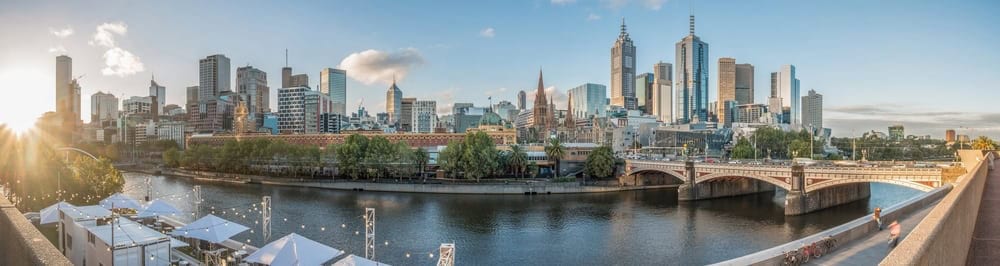
Frequently Asked Questions
-
Can I shoot handheld panoramas with the Nikon Z6 II?
Yes for simple single-row panos in bright light, but for 360×180° with clean seams, a tripod and pano head are strongly recommended. Handheld introduces parallax and horizon drift that complicate stitching.
-
Is the Canon RF 14–35mm f/4L wide enough for single-row 360?
At 14 mm on full-frame, you can cover a lot of sky, but a full 360×180° generally needs more than one row plus a nadir patch. A two- or three-row approach ensures full coverage. Note: this lens does not mount on a Nikon Z6 II—use a Z-mount 14–30mm f/4 S for the same field of view.
-
Do I need HDR for interiors with bright windows?
Usually, yes. Bracket ±2 EV (3–5 shots) to capture highlights outdoors and interior shadows. Merge HDR before or during stitching for smooth tonality.
-
How do I avoid parallax issues?
Use a panoramic head and align rotation around the no-parallax point for your focal length. Re-check after any height or focal change, and keep overlap consistent (25–35%).
-
What ISO range is safe on the Z6 II in low light?
For tripod work, stay at ISO 100–400 and lengthen shutter. For events or poles where you need speed, ISO 800–1600 is still very clean for 8–12K equirectangular outputs.
Safety, Limitations, and Trust Notes
Always prioritize stability—one bump can misalign a full sequence. On rooftops or poles, use tethers and avoid gusty conditions. Keep cables tidy to prevent snags. The Canon RF 14–35mm f/4L is not physically compatible with Nikon Z bodies; rely on a Nikon Z-mount ultra-wide for this workflow. Keep redundant captures (a second sweep or extra nadir patch) to safeguard against stitching surprises and data loss. Back up cards on-site and label sequences clearly.