
Why This Camera & Lens Are Great for Panoramas
If you want to know how to shoot panorama with Nikon D850 & Tamron 17-28mm f/2.8 Di III RXD, you’re pairing one of the most capable high-resolution DSLRs ever made with a compact, sharp ultra‑wide zoom. The Nikon D850’s 45.7MP full‑frame sensor delivers class‑leading detail, wide dynamic range at base ISO 64, and excellent color depth—ideal for seamless stitching and clean sky gradients. The Tamron 17–28mm f/2.8 Di III RXD, a rectilinear ultra‑wide, provides straight lines (no fisheye distortion), fast f/2.8 for low light, and a lightweight build that’s great on a pano head.
Important compatibility note: the Tamron 17–28mm f/2.8 Di III RXD is designed for Sony E‑mount mirrorless and is not natively compatible with the Nikon D850’s F‑mount. Due to flange distance, there is no practical adapter that preserves infinity focus and autofocus. If you’re shooting on a D850, use a comparable F‑mount ultra‑wide (e.g., Tamron 15–30mm f/2.8 G2, Tamron 17–35mm f/2.8–4, Nikon 14–24mm f/2.8, Nikon 16–35mm f/4). All focal‑length‑based guidance below (shot counts, overlaps, nodal workflow) remains valid for a 17–28mm rectilinear on full‑frame.
With that cleared up, this guide focuses on field‑tested, practical steps to capture clean, stitchable 360° panoramas using a D850‑class full‑frame body and a 17–28mm rectilinear zoom, including HDR interiors, low‑light scenes, crowded environments, and special pole/car setups.
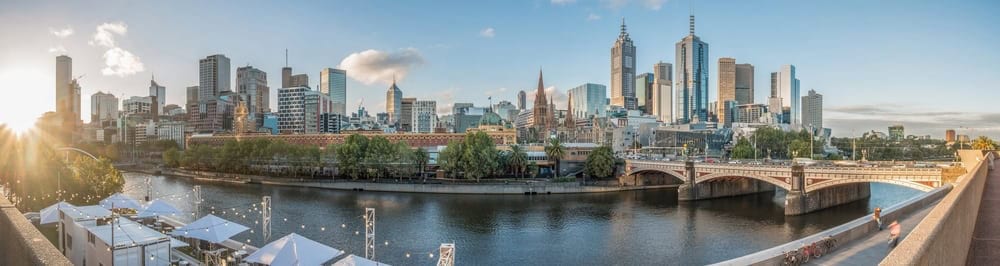
Quick Setup Overview
- Camera: Nikon D850 — Full‑frame (FX) 35.9×23.9 mm, 45.7 MP BSI CMOS, base ISO 64, excellent dynamic range (~14.8 EV at base), pixel pitch ~4.35 µm.
- Lens: Tamron 17–28mm f/2.8 Di III RXD — rectilinear ultra‑wide zoom (constant f/2.8), 67 mm filters, low weight, good corner sharpness stopped down; note mild barrel distortion at 17 mm and vignetting wide open.
- Estimated shots & overlap (full 360×180 on full‑frame, rectilinear, ~30% overlap):
- At 17 mm: 3 rows × 6 around = 18 + zenith + nadir ≈ 20 frames
- At 24 mm: 3 rows × 8 around = 24 + zenith + nadir ≈ 26 frames
- At 28 mm: 3 rows × 10 around = 30 + zenith + nadir ≈ 32 frames
- Difficulty: Moderate (requires nodal alignment and a panoramic head for reliable 360° stitches).
Planning & On-Site Preparation
Evaluate Shooting Environment
Before you unpack, scan the scene for strong light sources, reflective surfaces (glass, polished floors), and moving elements (trees, people, traffic). In interiors with windows, plan for HDR to tame contrast. If shooting near glass, keep the lens as close as safely possible (a few centimeters) and use a rubber lens hood to minimize reflections; angle the camera slightly to move reflections out of the frame. For sunset or night, avoid bright point sources entering the frame at steep angles; flare is the enemy of clean stitches.
Match Gear to Scene Goals
The D850’s ISO 64 and high dynamic range make it superb for landscapes and architectural panoramas with deep shadows and bright skies. Its files are resilient to tone mapping and color correction. The 17–28mm rectilinear field of view preserves straight lines—ideal for real estate and architecture—at the cost of more frames than a fisheye. Expect clean results at ISO 64–400; ISO 800–1600 remains usable with careful noise reduction. For ultra‑low‑light, open to f/2.8, lock everything down on a tripod, and consider bracketing rather than pushing ISO.
Pre-shoot Checklist
- Power & storage: charged batteries, plenty of fast cards; set RAW lossless compressed 14‑bit.
- Optics clean: blow off dust on lens and sensor; check for smudges that can streak across multiple frames.
- Tripod leveling: use a leveling base; confirm your panoramic head is calibrated for the lens’s nodal (no‑parallax) point at the chosen focal length.
- Safety checks: if on rooftops or in wind, use a weight on the center column, keep a safety tether, and never leave the rig unattended. For car mounts, double‑check suction cups, add safety cords, and avoid high speeds.
- Backup workflow: when in doubt, shoot a second full pass; it can save a session if one frame is soft or blocked by a passerby.
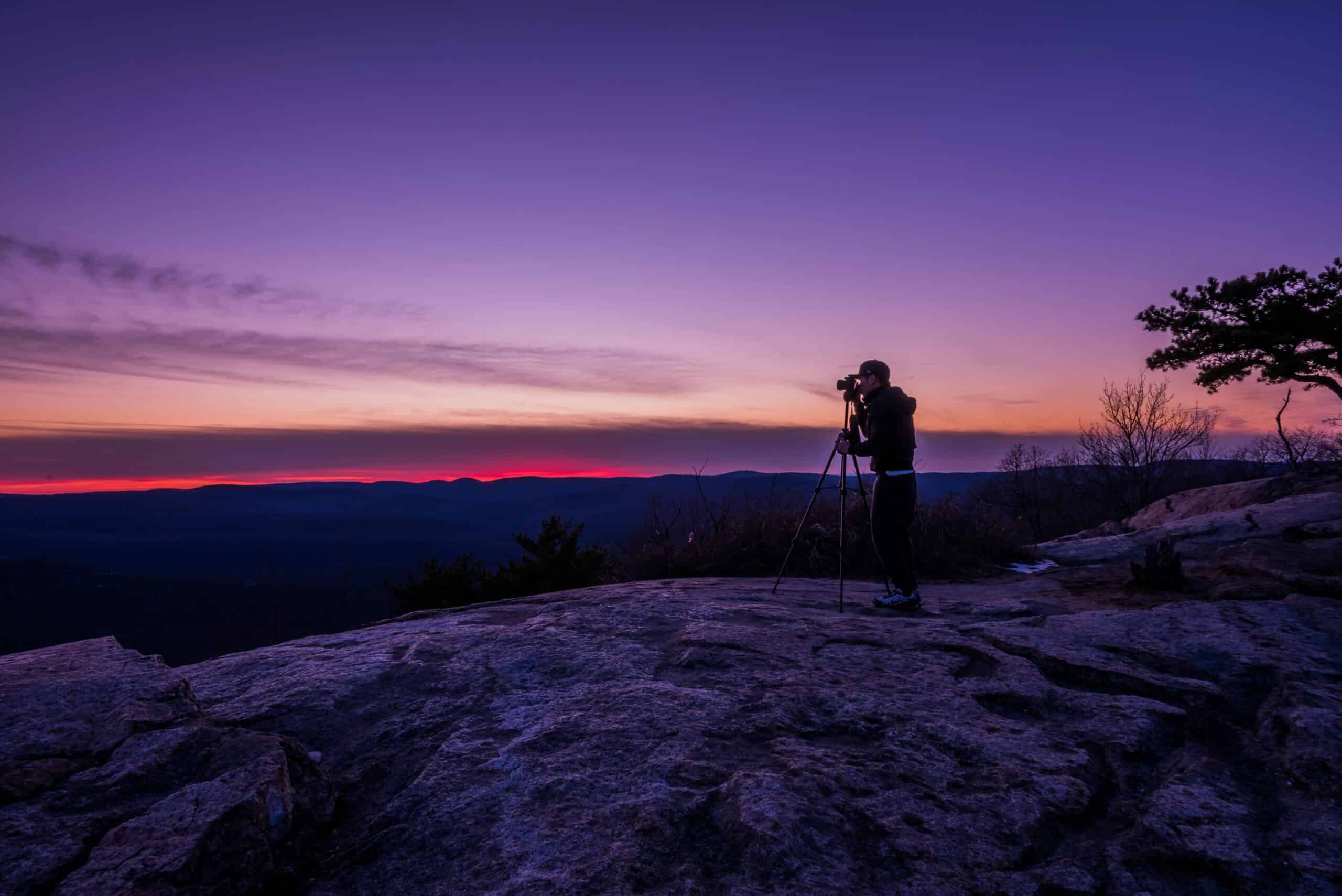
Essential Gear & Setup
Core Gear
- Panoramic head: allows rotating around the lens’s no‑parallax point (NPP) to minimize parallax. Multi‑row heads (e.g., Nodal Ninja/Leofoto) let you pitch up/down for full 360×180 coverage.
- Stable tripod with a leveling base: fast horizon leveling regardless of terrain; avoid extending the center column.
- Remote trigger or app: use a cable release or the D850’s self‑timer/Exposure Delay to eliminate vibrations.
Optional Add-ons
- Pole or car mount: great for elevated or vehicle‑based captures; always tether your gear, watch wind loads, and rotate more slowly to reduce vibrations.
- Lighting aids: small LED panels or bounced flash for dim interiors (keep lighting consistent across frames).
- Weather protection: rain covers and lens hoods; moisture can ruin multiple frames in a set.
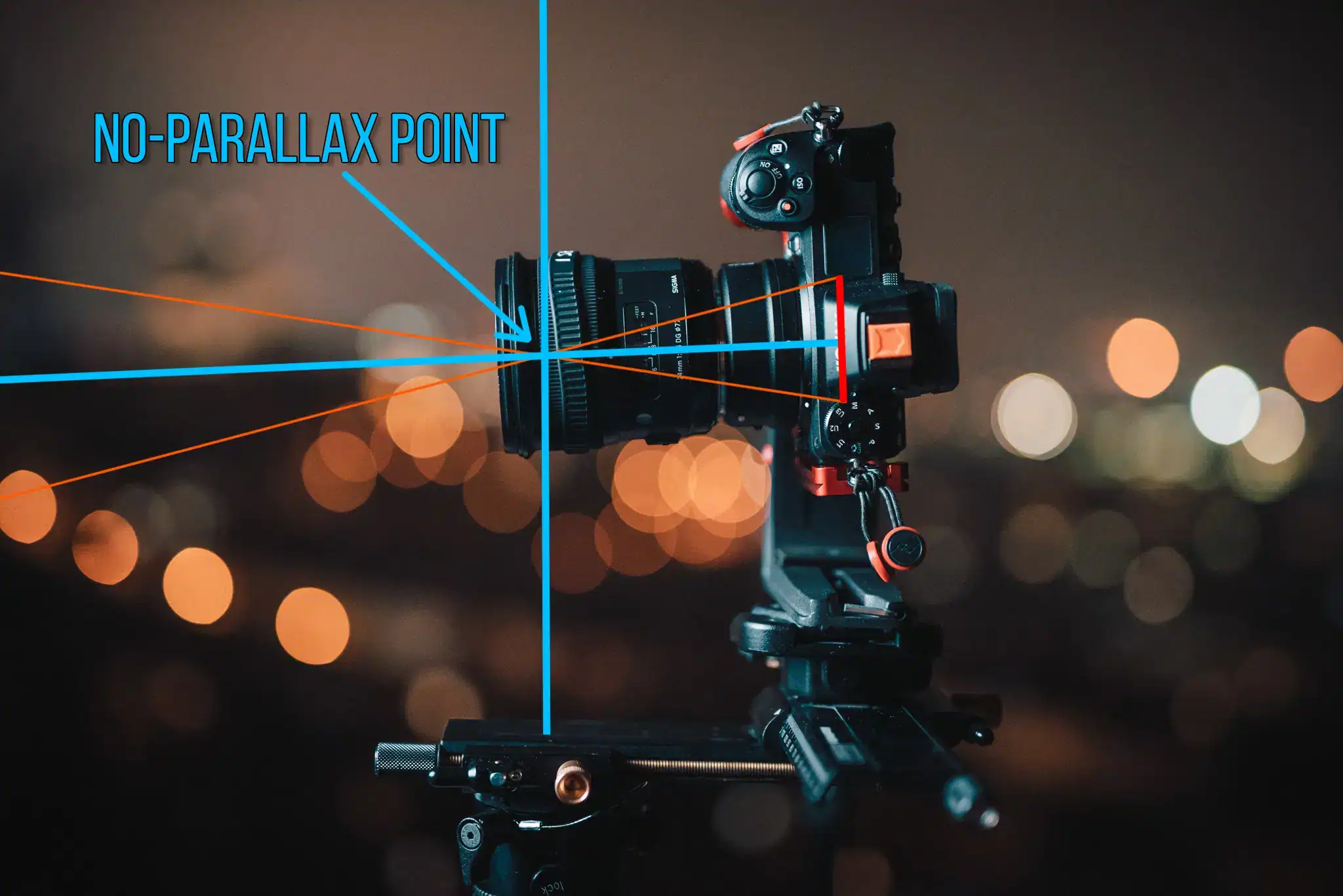
New to nodal setup? A concise primer on panoramic heads and NPP is invaluable. See this panoramic head tutorial for visuals and step‑by‑step logic. Panoramic head tutorial
Step-by-Step Shooting Guide
Standard Static Scenes
- Level and calibrate: level your tripod, then set the panoramic head so the rotation axes are perfectly vertical and horizontal. Adjust the rail so the rotation passes through the lens’s NPP. A quick test: align two vertical objects (near and far) and rotate—if they shift relative to each other, adjust the rail until they don’t.
- Manual exposure and WB: switch to Manual mode; meter the brightest mid‑tone area you want to preserve, then set a single exposure for the entire set. Lock white balance (Daylight outdoors, custom WB indoors) to avoid color banding in the stitch.
- Focus and stabilize: use Live View to nail focus, then switch to manual focus. For full‑frame at f/8, hyperfocal is ~1.2 m at 17 mm and ~3.3 m at 28 mm—focus there to keep everything sharp. Turn off stabilization if your lens has it; the D850 body has no IBIS.
- Capture with overlap: at 17 mm, shoot 6 frames around at 0° pitch, then 6 at +45°, 6 at −45°, plus a zenith (+90°) and a nadir (−90°). Use 30% horizontal overlap and 25–30% vertical overlap. Rotate consistently (e.g., clockwise) to stay organized.
- Nadir shot: after the main set, tilt down to capture the ground for tripod removal. If needed, shoot a handheld “patch” by moving the tripod out and shooting the floor from roughly the same NPP position.
HDR / High Dynamic Range Interiors
- Bracket exposures: use 3 to 5 frames at ±2 EV (e.g., −2/0/+2) to balance bright windows and interior shadows. Keep WB locked and focus manual.
- Timing: in dynamic scenes, shoot the whole panorama at one exposure set first, then repeat for the next bracket to minimize moving subject inconsistencies. Alternatively, enable the D850’s exposure bracketing to fire bursts per position via a remote.
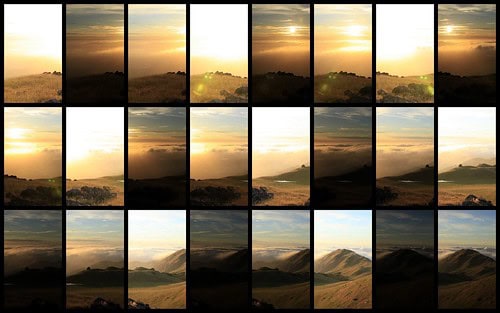
- Merge after stitching or before: either HDR‑merge brackets per view first then stitch, or stitch per exposure layer and HDR‑merge afterward in a 32‑bit workflow. PTGui supports both approaches—pick the one you know best.
Low-Light / Night Scenes
- Use a solid base: add weight to the tripod and avoid extending the center column. Use Exposure Delay mode (e.g., 2–3 s) or Mirror‑Up with a remote to suppress vibrations.
- Exposure strategy: start at f/4–f/5.6, ISO 100–400, and lengthen shutter. On the D850, ISO 800–1600 is still clean; go beyond only if motion blur is unacceptable.
- Watch for light pollution and flare: flag bright light sources out of the frame with a hand or hood, and consider a lens hood even on UWA to reduce veiling glare.
Crowded Events
- Two‑pass method: shoot a fast first pass to lock in your panorama, then repeat slowly, waiting for gaps in moving crowds per segment. Blend in post with masks.
- Higher shutter speed: aim for 1/200 s or faster at f/5.6–f/8, ISO 400–800 to freeze motion while maintaining depth of field.
Special Setups (Pole / Car / Elevated)
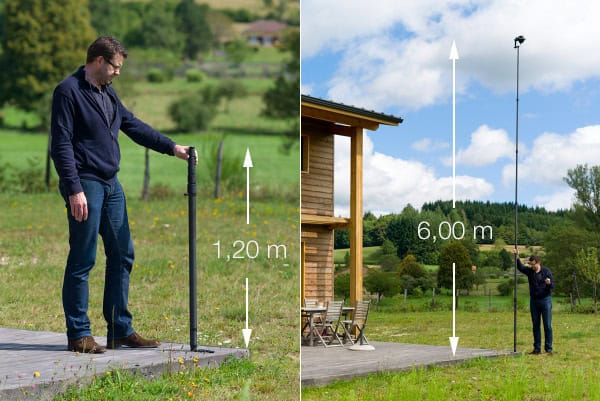
- Secure and tether: use a safety line on the camera and head. Keep rotations smooth and deliberate. For pole shots, keep extensions minimal in wind and consider a guy‑line.
- Vibration management: at speed or in wind, increase shutter speed and overlap more (35–40%) to help the stitcher cope with micro‑blur between frames.
Recommended Settings & Pro Tips
Exposure & Focus
| Scenario | Aperture | Shutter | ISO | Notes |
|---|---|---|---|---|
| Daylight outdoor | f/8–f/11 | 1/100–1/250 | 64–200 | Lock WB (Daylight). Use ISO 64 for max DR on D850. |
| Low light/night | f/4–f/5.6 | 1/30–1/60 (longer on tripod) | 100–800 | Tripod + Exposure Delay; avoid excessive ISO if possible. |
| Interior HDR | f/8 | Bracket ±2 EV | 64–400 | Bracket for windows; keep WB constant across brackets. |
| Action / moving subjects | f/5.6–f/8 | 1/200+ | 400–800 | Freeze motion; consider two‑pass capture. |
Critical Tips
- Manual focus at hyperfocal: roughly 1.2 m at 17 mm f/8; ~3.3 m at 28 mm f/8 on full‑frame. Tape the focus ring to prevent drift.
- Nodal point calibration: mark the rail positions for 17, 20, 24, 28 mm on your head. Recalibrate if you change focus distance significantly; internal focusing shifts the NPP slightly.
- White balance lock: never leave WB on Auto in a pano—mixed lighting can create colored seams.
- RAW over JPEG: the D850’s 14‑bit RAW at ISO 64 gives huge latitude for stitching and HDR tone mapping.
- Stabilization: D850 has no IBIS; the Tamron 17–28 has no VC, so rely on a steady tripod. If using a different VR lens on a tripod, switch VR/IS off.
- File management: shoot in a consistent sequence (zenith last, nadir patch last‑last) and use voice memos or hand signals to mark takes for efficient post.
Stitching & Post-Processing
Software Workflow
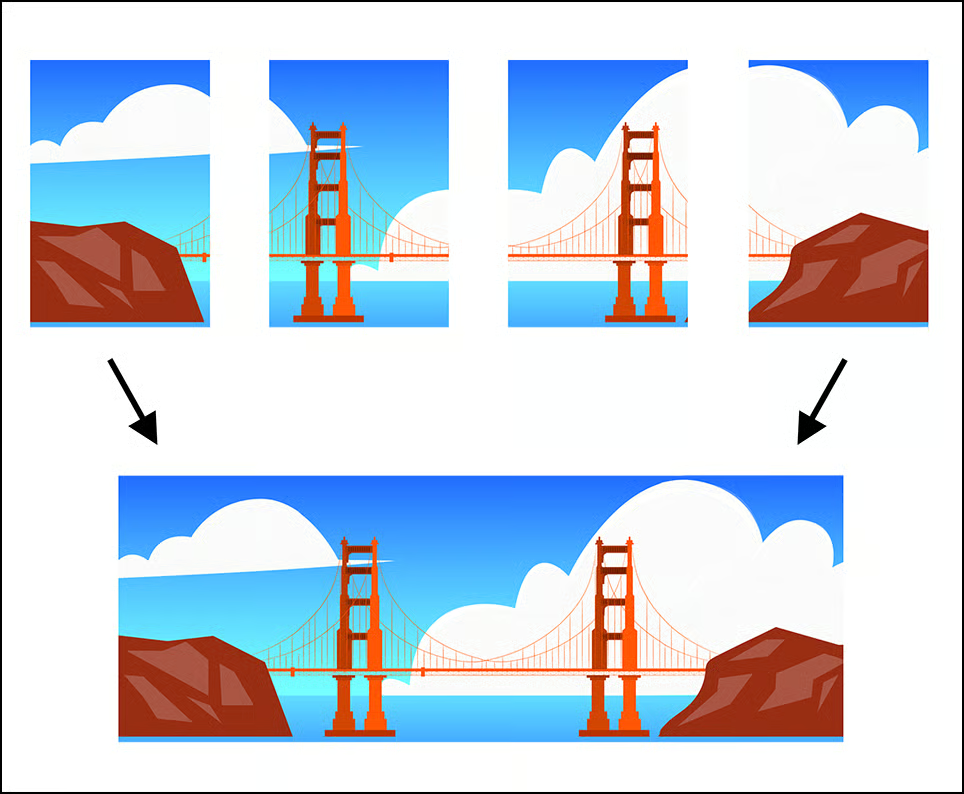
Import and sort your sets in Lightroom or Photo Mechanic. For rectilinear ultra‑wide lenses, target ~25–30% overlap horizontally and vertically. Stitch in PTGui or Hugin using lens type “rectilinear,” and let the optimizer estimate lens distortion parameters. Rectilinear lenses need more frames than fisheyes but yield straight lines—great for architecture. For HDR sets, either pre‑merge exposure brackets before stitching, or use PTGui’s built‑in HDR fusion for consistent tone mapping. A detailed review of PTGui’s strengths for complex panoramas is here: PTGui for high‑end panoramas
Cleanup & Enhancement
- Nadir patching: export a layered file from PTGui with a masked nadir, or patch with a clean handheld floor shot. Clone/heal in Photoshop or use AI fill sparingly.
- Color and noise: match color temperature across frames before stitching if needed. Apply noise reduction on a separate layer; avoid over‑NR which can cause banding in skies.
- Leveling: use the horizon/verticals tool to correct roll/pitch/yaw. Verify verticals in architecture.
- Export: for VR, export equirectangular 2:1 at 12k–16k on the D850 for maximum detail; for web, 8k is a solid balance. Keep a 16‑bit master (TIFF/EXR) for future edits and a high‑quality JPEG for delivery.
If you want a concise overview of DSLR/ML 360 capture and stitch considerations from a platform-agnostic standpoint, this guide is helpful: Using a DSLR or mirrorless to shoot and stitch a 360 photo
Watch: Panoramic Head Setup (Video)
Visualizing nodal alignment and rotation strategy helps immensely. Here’s a short video you can watch before your next shoot:
Useful Tools & Resources
Software
- PTGui panorama stitching
- Hugin (open‑source)
- Lightroom / Photoshop for RAW and cleanup
- AI tools for tripod/nadir removal
Hardware
- Panoramic heads: Nodal Ninja, Leofoto, Sunwayfoto multi‑row rigs
- Carbon fiber tripods with leveling bases
- Wireless remote shutters or intervalometers
- Pole extensions and vehicle mounts with safety tethers
Further reading on pano technique and planning: Best techniques to take 360 panoramas
Disclaimer: software/hardware names provided for search reference; check official sites for details.
Common Mistakes & How to Avoid Them
- Parallax error: always rotate around the lens’s NPP; recalibrate after changing focal length or focus distance.
- Exposure flicker: Manual mode + locked WB + fixed ISO across the entire set; don’t use Auto ISO for pano.
- Tripod shadows or footprints: shoot a nadir patch and replace the floor cleanly in post.
- Ghosting from movement: use the two‑pass method and blend masks; increase shutter speed outdoors.
- Flare and veiling glare: use a hood, avoid pointing at strong light, shade the lens with your hand if needed.
- Insufficient overlap: target 25–30% with rectilinear UWA; add more overlap if wind or vibration is present.
Mini Case Studies
Indoor Real Estate at 17 mm
Set the head for the 17 mm NPP, level the base, and use f/8, ISO 64–200. Meter for mid‑tones and bracket ±2 EV for windows. Capture 3 rows × 6 shots with a zenith and nadir. Merge HDR before stitching if room light changes per angle; otherwise, stitch first and tone map a 32‑bit master. The rectilinear look preserves straight walls and ceilings for professional spaces.
Outdoor Sunset at 24 mm
Use f/8, ISO 64, 1/100–1/200 s, and 3 rows × 8 shots. Lock WB to Daylight for consistent sky color. Start opposite the sun to preserve highlight detail, then complete the circle quickly. Use a second pass if clouds are evolving fast, then blend the best sky segments in post to avoid seams.
Event Crowd at 20–28 mm
Prioritize shutter speed (1/200+) and slightly higher ISO (400–800). Shoot a clean background pass first, then a second pass waiting for people to separate. In PTGui, mask to keep single instances of moving subjects and remove duplicates.
Frequently Asked Questions
- Can I shoot handheld panoramas with the Nikon D850?
Yes for simple single‑row panos, but for 360×180 spheres, a tripod and panoramic head are strongly recommended. The D850’s resolution makes even small parallax or tilt errors obvious, so handheld is best reserved for quick, non‑critical stitches.
- Is the Tamron 17–28mm f/2.8 wide enough for single‑row 360?
For a full 360×180 sphere on full‑frame with a rectilinear lens, you typically need multiple rows. At 17 mm, plan for three rows plus zenith and nadir. A fisheye could do it in fewer shots, but lines won’t be rectilinear.
- Do I need HDR for interiors with bright windows?
Usually, yes. Bracket ±2 EV (3–5 frames) to preserve window detail and clean interior shadows. Keep WB fixed and exposure consistent per bracket to prevent stitching artifacts.
- How do I avoid parallax issues?
Use a panoramic head and align rotation to the lens’s no‑parallax point. Mark rail positions for common focal lengths. Re‑check after changing focus distance or zoom settings.
- What ISO range is safe on the D850 in low light?
ISO 64–400 is pristine; ISO 800–1600 is very usable with careful noise reduction. For 360 work on a tripod, favor longer shutters over ISO 3200+ to keep detail and DR.
- Can I set up custom modes for pano on the D850?
The D850 lacks C1/C2 dials, but you can save banks (Shooting/Custom Settings Banks) with Manual exposure, fixed ISO, WB preset, and disabled Auto ISO to speed up setup.
- What’s the best tripod head for this setup?
A multi‑row panoramic head (Nodal Ninja, Leofoto) with fine fore‑aft and left‑right adjustments, indexed rotator, and a leveling base. Make sure it supports the D850’s weight with your lens.
- Can I mount the Tamron 17–28 Di III RXD on the D850?
No. It’s a Sony E‑mount lens and cannot be adapted to Nikon F with infinity focus. Use an F‑mount alternative (e.g., Tamron 15–30 G2) or shoot the Tamron 17–28 on a compatible mirrorless body. All focal‑length guidance here still applies to a 17–28 rectilinear on full‑frame.
Trust & Safety Notes
All recommendations are based on field use of full‑frame ultra‑wide rectilinear lenses and high‑resolution bodies. The D850’s base ISO 64 and high DR are ideal for panoramas; its lack of IBIS means tripod discipline matters. For rooftop/pole/car work, always tether gear, avoid gusty conditions, and add overlap to cover for small vibrations.
For additional background on DSLR pano workflows and resolution planning, see this reference on spherical resolution planning: Panotools: DSLR spherical resolution