Why This Camera & Lens Are Great for Panoramas
If you’re wondering how to shoot panorama with Nikon D850 & Sigma 8mm f/3.5 EX DG Circular Fisheye, this combo is a proven workhorse for high-end 360 photos and virtual tours. The Nikon D850’s 45.7MP full-frame sensor (35.9 × 23.9 mm) delivers exceptional base-ISO dynamic range (around 14.8 EV at ISO 64), deep color depth, and clean shadow recovery—perfect for HDR panorama work and low-light interiors. The robust DSLR body, tactile controls, and reliable battery life (EN‑EL15 series) make it comfortable for long sessions, while features like 14‑bit RAW, exposure bracketing up to 9 frames, Exposure Delay mode, and Live View with electronic front‑curtain shutter help control micro‑vibration on the tripod.
The Sigma 8mm f/3.5 EX DG Circular Fisheye covers a full 180° field of view and projects a circular image on full frame. That ultra‑wide capture means fewer shots, faster rotations, and less chance of stitching errors in busy environments. Distortion is intentional with a fisheye; while straight lines bend, modern stitchers (PTGui, Hugin) handle fisheye projection natively, making stitching both fast and accurate when the lens is properly aligned over the nodal point (entrance pupil). On the D850, this lens is light, focuses easily (though you’ll typically use manual focus), and stays sharp across the frame by f/5.6–f/8—ideal for consistent 360° coverage.
Quick Setup Overview
- Camera: Nikon D850 — Full-frame (FX), 45.7MP, native ISO 64–25,600 (Lo 32, Hi 102,400), excellent dynamic range at base ISO, 14‑bit RAW, Exposure Delay mode, electronic front‑curtain shutter in Live View.
- Lens: Sigma 8mm f/3.5 EX DG Circular Fisheye — Circular fisheye with 180° FOV, best at f/5.6–f/8, minimal CA when stopped down, easy manual focus with huge depth of field.
- Estimated shots & overlap (field-tested):
- Safe coverage: 4 around at 90° yaw (0° tilt) + zenith + nadir (6 shots total) with ~30% overlap.
- Fast capture: 3 around at 120° yaw (tilt +5° to +10°) + zenith + nadir (5 shots total) with ~25–30% overlap.
- Nadir patch: 1 extra handheld nadir for clean floor plate if needed.
- Difficulty: Easy to Moderate (easy shooting; requires careful nodal calibration for perfect stitches).
Planning & On-Site Preparation
Evaluate Shooting Environment
Scan for light extremes (bright windows vs dark corners), reflective surfaces (glass, mirrors), and moving elements (people, foliage, traffic). For glass, keep the lens close (2–5 cm) and shoot slightly off-axis to minimize reflections; use a black cloth behind the lens if needed. Avoid pointing the fisheye directly into harsh lights unless you intend a sunstar—flare can be prominent. In outdoor scenes, note wind conditions and tripod stability; in interiors, look for flicker or mixed lighting that might require a custom white balance.
Match Gear to Scene Goals
The D850’s base ISO 64 gives pristine files; for interiors, ISO 200–800 remains very clean, and even ISO 1600 is acceptable if you expose to the right. The Sigma 8mm’s fisheye FOV means fewer shots—great for events or locations where movement is constant—but you must accept fisheye geometry during capture. Because PTGui/Hugin understand fisheye projections, this is usually a non-issue in the final equirectangular result. If extreme resolution is required (gigapixel), switch to a longer focal length and multi-row—otherwise this 8mm is ideal for fast, robust 360 capture.
Pre-shoot Checklist
- Charge batteries and bring spares; format fast cards (XQD/CFexpress Type B firmware-enabled + UHS‑II SD).
- Clean the fisheye front element; dust shows easily with wide FOV.
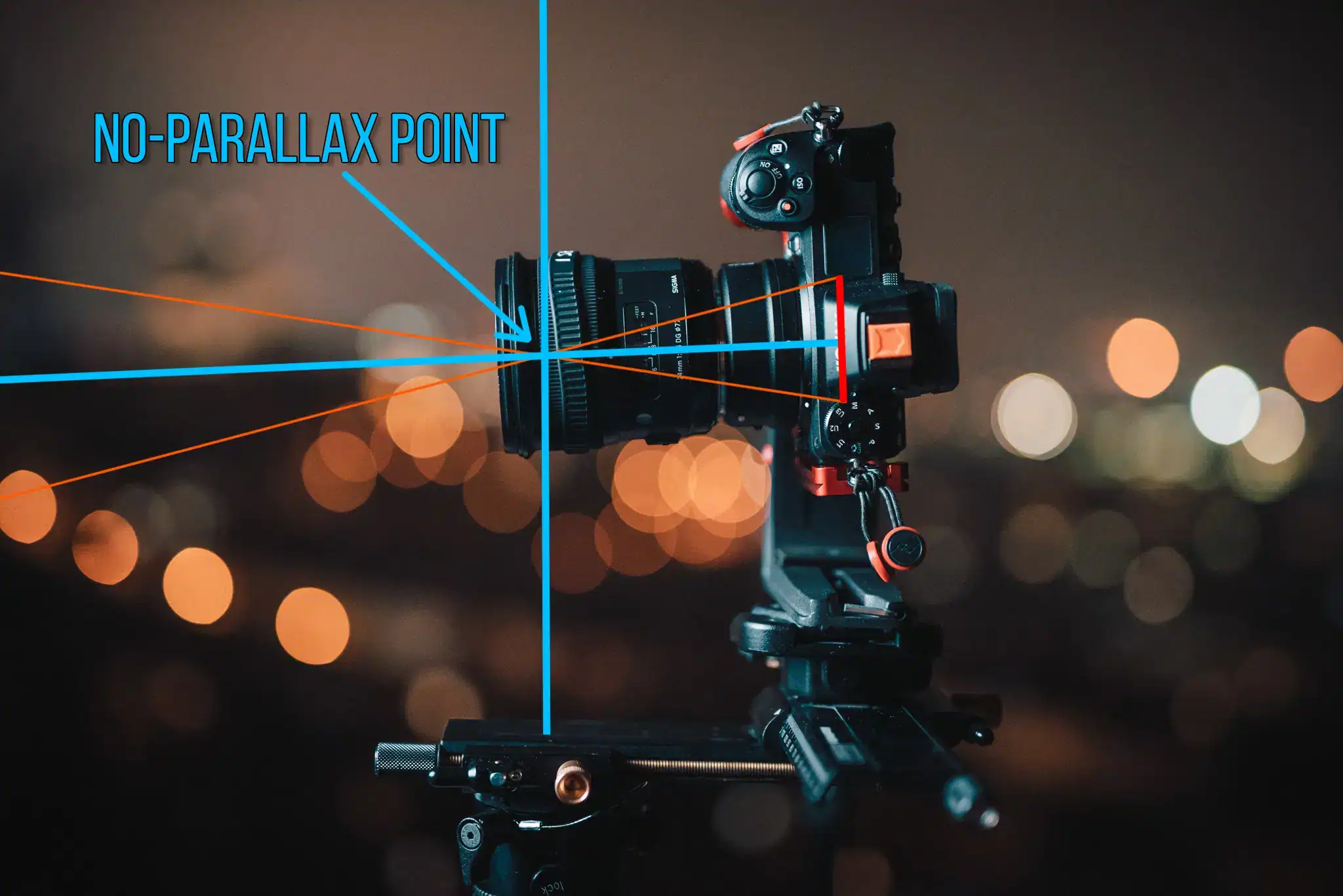
- Level your tripod; verify pano head calibration over the lens’s no‑parallax point.
- Safety: check wind loading on rooftops; tether poles; use safety lines for car mounts; keep distance from power lines.
- Backup workflow: shoot a second full round if time allows; bracket HDR when dynamic range is high.
Essential Gear & Setup
Core Gear
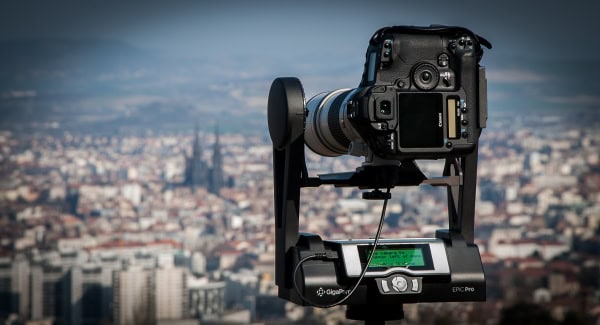
- Panoramic head: Lets you rotate the camera around the lens’s entrance pupil (nodal point) to eliminate parallax. Calibrate once, then mark your rail positions for the D850 + Sigma 8mm combo.
- Stable tripod with leveling base: A leveling base speeds setup and maintains level rotation.
- Remote trigger or app: Use a wired MC‑DC2 remote or SnapBridge. For maximum sharpness, combine with Exposure Delay mode or Live View EFCS.
Optional Add-ons
- Pole or car mount: Excellent for elevated or moving viewpoints. Always tether gear, watch wind, and drive slowly on smooth surfaces to limit vibration.
- Lighting aids: LED panels for dim interiors; keep color temperature consistent to avoid WB headaches.
- Weather protection: Lens rain cover, microfiber cloths, silica packs. Fisheyes are flare-prone; use a flag or your hand to block stray light when possible.
For an in-depth primer on panoramic head setup and alignment theory, see this panoramic head tutorial by 360 Rumors. Panoramic head tutorial
Step-by-Step Shooting Guide
Standard Static Scenes
- Level and align: Level the tripod, then align the panoramic head so the rotation axis is vertical. Set the camera to portrait orientation if your head expects that, and position the lens so it rotates around the entrance pupil. Perform a quick parallax check: line up a near object against a far object; rotate left/right. If the alignment shifts, adjust the fore-aft rail until parallax disappears.
- Manual exposure & white balance: Set M mode; meter for midtones and protect highlights. Lock white balance (e.g., Daylight outdoors, custom Kelvin indoors) to avoid color shifts across frames. Shoot RAW, 14‑bit.
- Focus and aperture: With an 8mm fisheye, set manual focus to around 0.8–1.0 m and stop down to f/5.6–f/8. This nets near‑to‑infinity depth of field and consistent sharpness.
- Capture sequence:
- Safe: 4 shots around at 0° tilt, yawing 90° each step.
- Add a zenith (tilt up ~90°) and a nadir (tilt down ~90°). If the tripod blocks the nadir, shoot a handheld nadir plate after moving the tripod.
- Vibration control: Use a remote; enable Exposure Delay (e.g., 1–3 s) or Live View with EFCS. Mirror-up also helps if not using LV.
HDR / High Dynamic Range Interiors
- Bracket ±2 EV (3–5 frames): Windows vs interior often exceed single‑exposure DR. The D850 supports up to 9‑frame bracketing; 5 frames at ±2 EV is a robust starting point.
- Lock WB and focus: Maintain consistent color across brackets. Don’t refocus between shots.
- Shoot quickly: Use continuous bracketing with a remote to limit subject movement between exposures.
Low-Light / Night Scenes
- Use tripod and longer shutter: At ISO 64–200, expose as long as needed. If wind or vibration is present, prefer ISO 400–800 and a faster shutter (1/30–1/60 s) to avoid blur.
- Minimize shake: Remote trigger + Exposure Delay; consider sandbags on the tripod.
- Avoid hot pixels: Keep Long Exposure NR off for speed; fix hot pixels in post if needed.
Crowded Events
- Two-pass strategy: First pass quickly for coverage; second pass time your shots as people clear key seams (doorways, edges of frames).
- Use the 3‑around method: Fewer shots mean less ghosting from moving subjects.
- Post blending: Mask or blend frames in the stitcher to remove ghosting.
Special Setups (Pole / Car / Drone)
- Pole shooting: Tether the pole; keep total height reasonable in wind. Spin slower and shoot higher shutter speeds (1/250–1/500) to freeze sway.
- Car-mounted: Use lockdown suction mounts with safety lines. Drive on smooth roads at low speed; aim for 1/500–1/1000 s, ISO 400–800.
- Drone proxy: For drone-like views where drones aren’t allowed, a tall pole from a rooftop can work—check regulations and safety first.
Field Cases
- Indoor real estate: 4 around + zenith + nadir with 5‑frame HDR ±2 EV. ISO 64–200, f/8, shutter as needed. Lock WB to a custom Kelvin that matches the interior lights.
- Outdoor sunset: Meter for highlights, bracket 3–5 exposures. Use f/8, ISO 64–200. Watch for flare; block the sun with your hand just out of frame or time shots when sun is behind an object.
- Event crowds: 3 around + nadir; single exposure at 1/250–1/500, f/5.6–f/8, ISO 400–800. Expect some masking in post.
- Rooftop/pole: 3 around can be safer; higher shutter speed, avoid strong wind. Always tether and keep clear of edges.
- Car-mounted: 4 around at 1/500–1/1000, ISO 400–800. Consider shooting multiple spins and pick the sharpest set.
Recommended Settings & Pro Tips
Exposure & Focus
| Scenario | Aperture | Shutter | ISO | Notes |
|---|---|---|---|---|
| Daylight outdoor | f/8–f/11 | 1/100–1/250 | 64–200 | Lock WB to Daylight; shield lens from flare |
| Low light/night | f/4–f/5.6 | 1/30–1/60 | 400–800 | Tripod + remote; Exposure Delay to reduce shake |
| Interior HDR | f/8 | Bracket ±2 EV (3–5 frames) | 64–400 | Balance windows and lamps; 14‑bit RAW |
| Action / moving subjects | f/5.6–f/8 | 1/200+ | 400–800 | Freeze motion; prefer 3‑around method |
Critical Tips
- Manual focus at ~1 m and use f/5.6–f/8 to keep everything sharp. With an 8mm, depth of field is extremely forgiving.
- Nodal calibration: Use the foreground/background alignment test. Mark your rail positions with tape or a paint marker for the D850 + Sigma 8mm so you can repeat them quickly.
- White balance lock: Mixed lighting creates color shifts across frames. Lock WB or shoot a gray card and set WB consistently in post.
- RAW over JPEG: The D850’s 14‑bit RAW files preserve highlight detail and shadow latitude that make HDR and color work cleaner.
- Stabilization: The D850 body has no IBIS, and the Sigma 8mm has no VR—great for tripod work. Use Exposure Delay or Live View EFCS to avoid micro‑shake.
- Safe ISO ranges: ISO 64–800 is effectively noise-free on the D850 for 360s; ISO 1600 remains good; ISO 3200 is usable with proper exposure and denoising.
Stitching & Post-Processing
Software Workflow
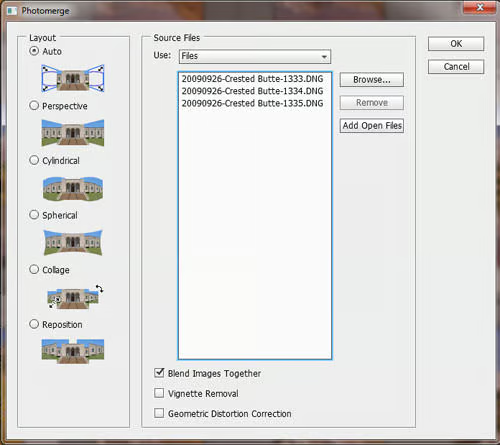
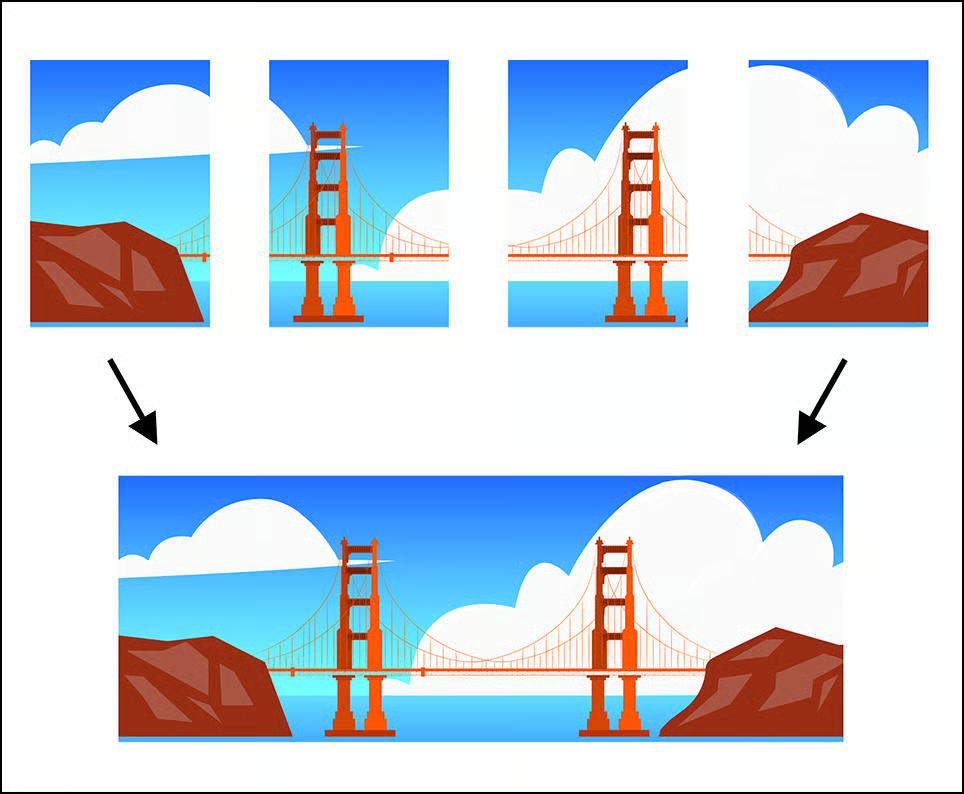
Import RAWs into Lightroom or your RAW processor of choice. Apply identical settings per scene (WB, tone, lens profile off for fisheye unless your stitcher recommends otherwise) and export 16‑bit TIFFs to your stitcher. In PTGui or Hugin, select fisheye lens type and let the optimizer find control points. Use yaw increments that match your capture (e.g., 0°, 90°, 180°, 270°), add zenith/nadir, then optimize and check seams. Fisheye panoramas require fewer shots and stitch quickly, but ensure at least ~25–30% overlap. Rectilinear lenses need more frames and rows; the Sigma 8mm avoids that complexity. For a deep dive on PTGui from a pro perspective, see this review by Fstoppers. Why PTGui excels at complex panoramas
Cleanup & Enhancement
- Nadir patch: Export a layered output or nadir view; use a logo plate or heal/clone to remove the tripod. AI tools can accelerate tripod removal.
- Color and noise: Match WB across frames first. Use moderate noise reduction for ISO 800–3200 night scenes; be careful not to smear detail.
- Leveling: Set horizon via roll/yaw/pitch adjustments in PTGui/Hugin; fine-tune in your editor if needed.
- Export: For VR players, export equirectangular 2:1 at 10,000–16,000 px width for high quality. Keep a 16‑bit master TIFF for revisions and deliver a high‑quality JPEG for web.
For platform-specific guidance on DSLR 360 capture and publishing, Meta’s Creator documentation provides a clear overview. Using a DSLR to shoot and stitch a 360 photo
Video: Visualizing the Process
Watch a concise walkthrough to connect the dots from capture to stitch (concepts apply directly to the D850 + 8mm fisheye workflow):
If you want to understand how field of view and sensor resolution affect final pano resolution, the Panotools wiki is a valuable reference. DSLR spherical resolution explained
Useful Tools & Resources
Software
- PTGui (fast, powerful optimizer and masking)
- Hugin (open-source, capable with fisheye inputs)
- Lightroom / Photoshop (RAW prep, retouching, nadir patch)
- AI tripod removal tools (content-aware fill, generative AI)
Hardware
- Panoramic heads (Nodal Ninja, Leofoto, Fanotec)
- Carbon fiber tripods (stability-to-weight, dampening)
- Leveling bases (3/8″ mount, ±15° range)
- Wireless/wired remote shutters (SnapBridge, MC‑DC2)
- Pole extensions / car mounts with safety tethers
Disclaimer: brand names are for search reference. Verify compatibility and specs on official sites.
Common Mistakes & How to Avoid Them
- Parallax error → Recalibrate the entrance pupil; verify with near/far alignment before every important shoot.
- Exposure flicker → Manual exposure, fixed ISO, locked WB across the whole sequence.
- Blur from vibration → Remote trigger + Exposure Delay or Live View EFCS; sandbag tripod in wind.
- Tripod in the nadir → Shoot a dedicated nadir frame and patch; try a nadir adapter or handheld nadir technique.
- Ghosting from moving subjects → Use fewer shots (3‑around), time your frames, and mask in the stitcher.
- Flare and veiling glare → Block direct sun with your hand (just outside the frame), clean the front element, and adjust angle.
Frequently Asked Questions
- Can I shoot handheld panoramas with the Nikon D850?
You can for casual 360s, but expect alignment issues with a circular fisheye if you don’t rotate around the entrance pupil. For professional results, use a panoramic head. If you must go handheld, shoot 3 around with generous overlap and keep the camera as close to a fixed pivot as possible.
- Is the Sigma 8mm f/3.5 wide enough for single-row 360?
Yes. On full frame it’s designed for circular fisheye capture. A single row of 3–4 around plus zenith and nadir covers a full 360×180. Many pros rely on 4‑around + Z + N for safety.
- Do I need HDR for interiors with bright windows?
Usually. Even with the D850’s excellent DR, windows often clip. Bracket ±2 EV (3–5 frames). Keep WB and focus fixed and fire brackets quickly to minimize motion artifacts.
- How do I avoid parallax issues with this combo?
Mount the D850 + 8mm on a panoramic head, then slide the camera along the fore‑aft rail until near/far objects stay aligned during rotation. Mark the rail position so you can repeat it. Re-check if you change QR plates or L‑brackets.
- What ISO range is safe on the D850 for low light panoramas?
ISO 64–800 is virtually clean. ISO 1600 is still excellent; ISO 3200 is usable with careful exposure and denoising. Use a tripod and longer shutter before raising ISO unnecessarily.
Safety, Reliability & Backup Practices
Always tether on rooftops, poles, and car mounts. Keep your setup away from edges, power lines, and crowds. On windy days, shorten the pole, add weight to the tripod, and reduce your rotation speed. Build a redundant capture habit: perform a second rotation if time allows and bracket in high‑contrast scenes. Maintain a simple backup workflow in the field: dual card writing (RAW to XQD/CFexpress, backup to SD), or offload to a laptop or SSD between locations. A short refresher on professional panoramic head setup can prevent most stitching headaches. Set up a panoramic head for high‑end 360 photos
Inspiration & Additional Visuals