
Why This Camera & Lens Are Great for Panoramas
The Nikon D850 is a full-frame DSLR with a 45.7MP BSI CMOS sensor (8256×5504 pixels, ~4.35µm pixel pitch) and exceptional base-ISO dynamic range (~14.8 EV at ISO 64). That makes it a powerhouse for panoramic and 360 photo capture where fine detail, clean shadows, and consistent color matter. Its tilting screen, robust weather sealing, SnapBridge remote control, and tools like Exposure Delay Mode, Mirror-Up, Silent Live View, and focus peaking (in Live View) make tripod-based panorama workflows smooth and dependable.
Important mount note: the Sigma 14–24mm f/2.8 DG DN Art is designed for mirrorless mounts (Sony E / L-Mount) and is not directly compatible with the Nikon D850’s F-mount. There is no practical adapter to mount DG DN on the D850. If your intent is to shoot with this focal range on the D850, use the Sigma 14–24mm f/2.8 DG HSM Art (Nikon F-mount) instead. The guidance below applies to the field of view and behavior of a 14–24mm rectilinear ultrawide on the D850; wherever mount-specific behavior differs, it’s noted. If you truly need the DG DN version, consider a mirrorless body.
Why a 14–24mm rectilinear zoom (vs fisheye)? Rectilinear lenses keep straight lines straight, a big plus for architecture and real estate. They do require more shots to complete a full 360 sphere compared with a fisheye, but the stitching is clean when you nail the no-parallax point. At f/5.6–f/8, the Sigma is crisp center-to-edge with well-controlled coma and CA; for razor-edge corners in big prints or VR, stop to f/8–f/11.
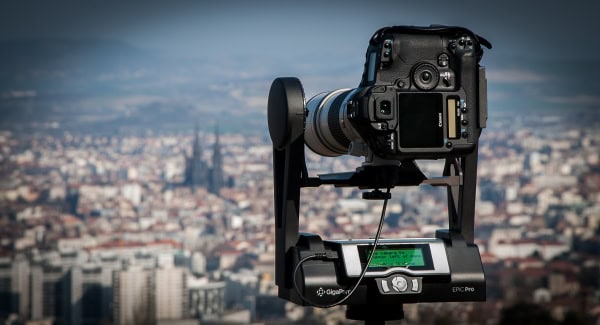
Quick Setup Overview
- Camera: Nikon D850 — Full Frame (36×24mm), 45.7MP, base ISO 64, excellent DR and color depth.
- Lens: Sigma 14–24mm f/2.8 DG DN Art — rectilinear ultrawide, sharp across frame stopped down; note: DG DN is mirrorless-only. For D850, use the DG HSM Art (Nikon F-mount) as the practical equivalent.
- Estimated shots & overlap (rectilinear, vertical orientation, ~30% overlap):
- At 14mm: 8 shots per row × 3 rows (+ zenith + nadir) ≈ 26–30 frames.
- At 18mm: 10 shots per row × 3 rows (+ zenith + nadir) ≈ 32–36 frames.
- At 24mm: 12 shots per row × 3 rows (+ zenith + nadir) ≈ 38–42 frames.
- Difficulty: Intermediate (requires nodal calibration and multi-row capture).
Planning & On-Site Preparation
Evaluate Shooting Environment
Survey light direction, dynamic range (windows vs interior shadows), reflective surfaces (glass, polished floors), and moving elements (people, cars, foliage). In glass-heavy spaces, keep the front element 30–60 cm from glass and shoot slightly off-axis to minimize glare and your reflection. Watch for sun flare at 14–18mm; shade the lens with your hand or a flag if needed.
Match Gear to Scene Goals
The Nikon D850 excels at base ISO detail with wide dynamic range—perfect for HDR panoramas in interiors and sunsets. Indoors, you can safely work ISO 64–400 for pristine files; for night exteriors, ISO 400–800 is a safe zone if your tripod is solid. A 14–24mm rectilinear lets you keep architecture straight with fewer defishing artifacts. Compared with a fisheye, you’ll shoot more frames but get cleaner lines and higher overall resolution in the stitched panorama.
Pre-shoot Checklist
- Battery charged and spare ready; high-speed, high-capacity cards (UHS-II, XQD) formatted.
- Clean front element and sensor; carry a blower and microfiber cloth.
- Level tripod; verify panoramic head calibration (no-parallax point) for 14mm and 24mm marks.
- Safety: weigh down tripod in wind; tether on rooftops; double safety lines for pole/car mounts; mind traffic and bystanders.
- Backup workflow: shoot a second safety round and a plain nadir patch for insurance.
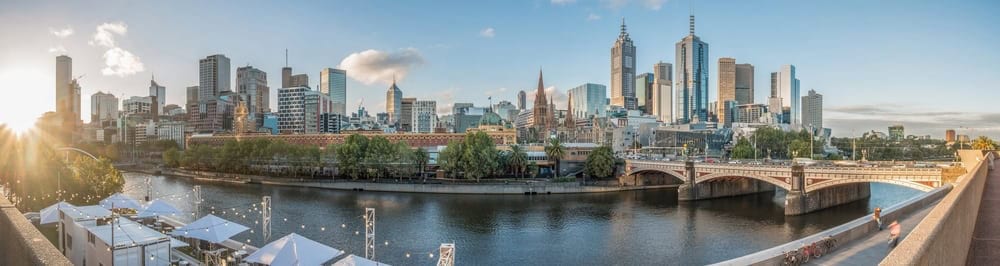
Essential Gear & Setup
Core Gear
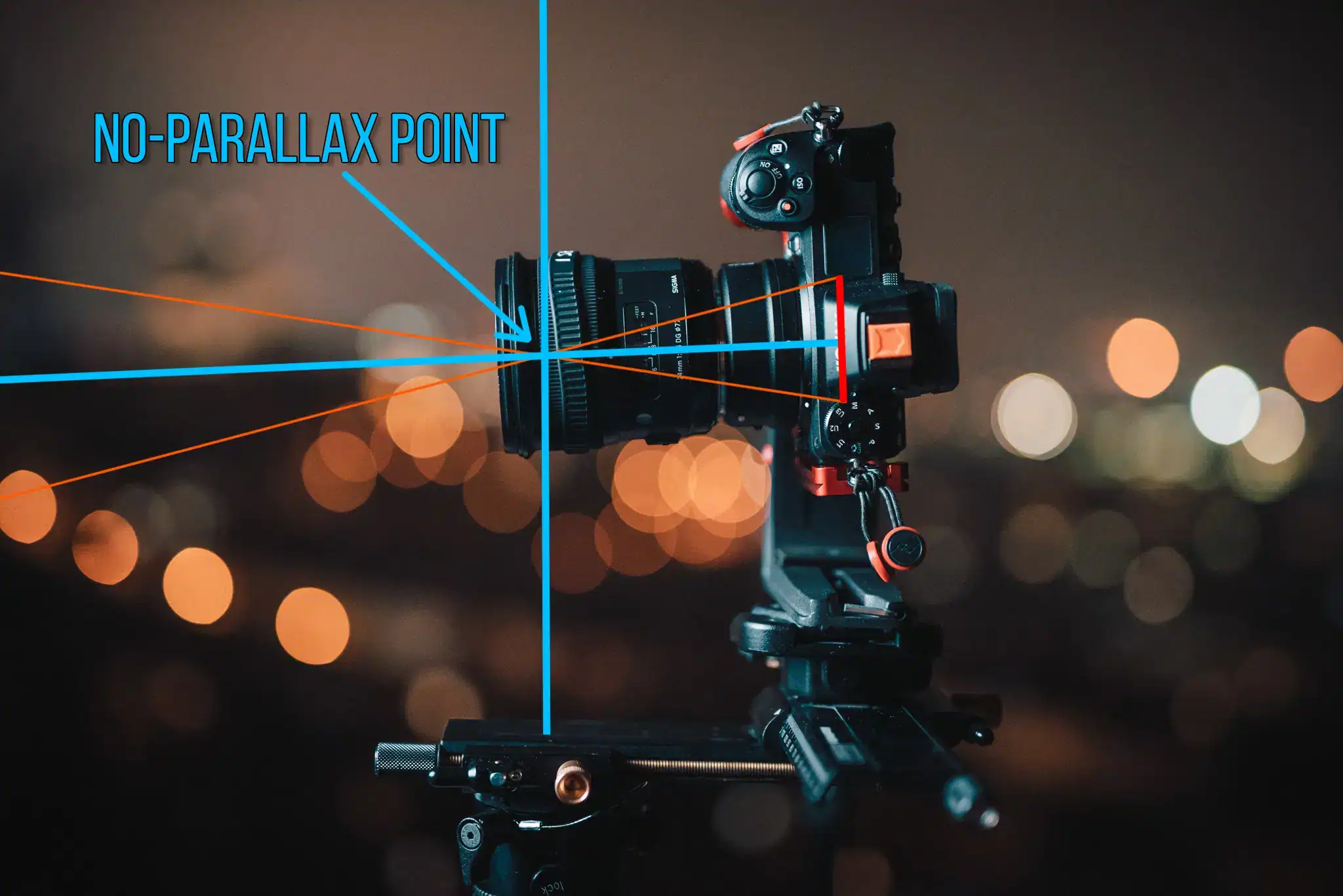
- Multi-row panoramic head: Align the lens to its no-parallax point so foreground and background don’t shift between frames. This eliminates stitching errors near close objects.
- Stable tripod with leveling base: A leveling base speeds up setup and keeps rows concentric, reducing pitch/roll corrections later.
- Remote trigger or SnapBridge app: Trigger without touching the camera; combine with Exposure Delay Mode to eliminate vibrations.
Optional Add-ons
- Pole or car mount: Use tethers and secondary safety lines. In wind, keep exposures short and rotate slowly to dampen sway.
- Continuous lights for interiors: Small LED panels to lift shadows where HDR would otherwise get noisy.
- Rain cover and lens hood/flag: Protect from spray and manage flare at ultrawide angles.
Step-by-Step Shooting Guide
Standard Static Scenes
- Level tripod and align the no-parallax point. Place two light stands (or sticks) at near and far distances. Rotate the camera; adjust the panoramic head’s fore-aft slider until the near object stays aligned with the far object across the rotation.
- Set manual exposure and lock white balance. Meter the brightest area you need to preserve (e.g., near a window) and expose to protect highlights. Use Kelvin WB (e.g., 5600K daylight). Disable Auto ISO.
- Focus manually at hyperfocal. At 14mm and f/8 on full frame, hyperfocal is about 0.8–1.0 m; set focus there for front-to-back sharpness. Use Live View and peaking for precision.
- Capture with overlap. For 14mm, shoot 8 frames around per row at ~45° yaw increments with 25–30% overlap. Do three rows: tilt +45°, 0°, and −45°. Finish with a zenith (+90°) and a nadir (−90°) shot.
- Take an offset nadir. If your tripod blocks the nadir, shoot an extra handheld nadir frame with the camera positioned over the footprint; use viewpoint correction in PTGui later.
HDR / High Dynamic Range Interiors
- Bracket ±2 EV (3–5 frames). The D850’s bracketing can do up to 9 frames, but ±2 EV in 3–5 shots usually balances window highlights and interior shadows.
- Lock WB and focus. Keep WB fixed and don’t refocus between brackets. Use a 2-second exposure delay and remote trigger to avoid micro-blur.
- Shoot the full pano sequence per bracket. Complete the entire panorama at each exposure level for best stitching consistency.
Low-Light / Night Scenes
- Use tripod discipline. ISO 400–800 is a good noise/detail balance on the D850; lengthen shutter as needed. Aim for f/5.6–f/8 for sharp corners.
- Enable Exposure Delay or Mirror-Up + Remote. In Live View, enable Silent Live View Photography to minimize vibrations on long exposures; avoid fast motion due to rolling shutter.
- Mind star trailing. If you include the sky, keep shutter within 15–20s at 14mm to limit streaking, or capture a separate sky row.
Crowded Events
- Two-pass method. Do a fast pass to capture coverage, then a second pass timing gaps in traffic/people to fill holes.
- Mask in post. Blend the clean frames in PTGui’s masks. Slightly increase overlap (35%) to give yourself more options.
Special Setups (Pole / Car / Drone)
- Secure and tether everything. For poles, keep the rig vertical and rotate slowly; for car mounts, use redundant suction and a safety tether, and avoid high speeds.
- Shorten exposures. Favor ISO increases over long shutters to reduce motion blur and sway.
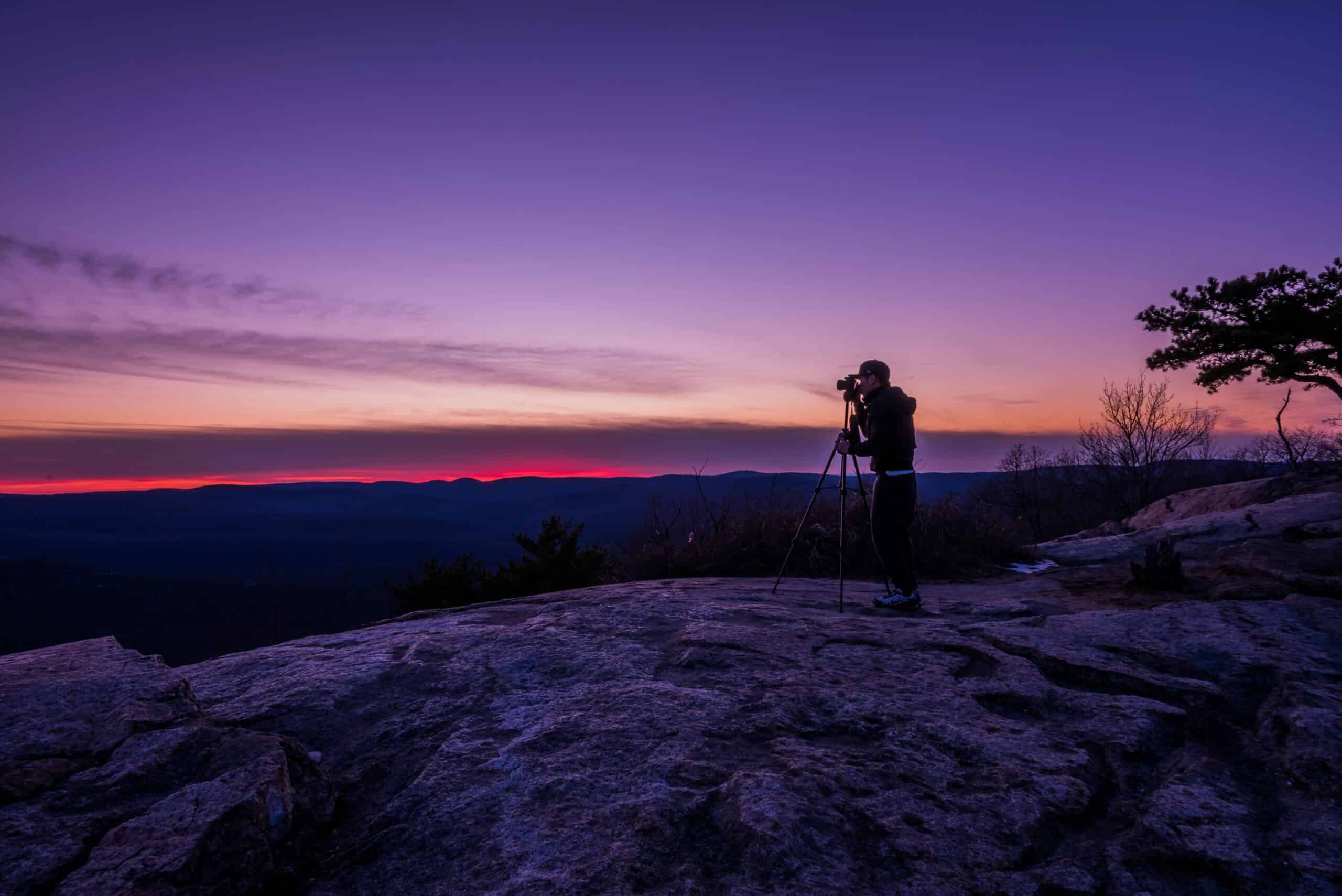
Recommended Settings & Pro Tips
Exposure & Focus
| Scenario | Aperture | Shutter | ISO | Notes |
|---|---|---|---|---|
| Daylight outdoor | f/8–f/11 | 1/100–1/250 | 64–200 | Lock WB (Daylight 5200–5600K); base ISO 64 maximizes DR |
| Low light/night | f/4–f/5.6 | 1/10–1/60 (tripod) | 400–800 | Remote trigger + Exposure Delay; beware wind |
| Interior HDR | f/8 | Bracket ±2 EV | 64–400 | Balance windows vs lamps; keep WB fixed |
| Action / moving subjects | f/5.6–f/8 | 1/200+ | 400–1600 | Faster shutter to freeze motion; consider two-pass method |
Critical Tips
- Manual focus at hyperfocal. At 14mm f/8, set roughly 0.8–1.0 m; confirm with magnified Live View.
- Nodal point calibration. Mark two slider positions on your pano head for 14mm and 24mm; these will differ by a few cm. Keep a pocket card with your offsets.
- White balance lock. Set a Kelvin value or custom preset to avoid stitching seams from mixed WB.
- Shoot RAW. The D850’s 14-bit RAW at ISO 64 provides huge recovery latitude; perfect for HDR blending and color grading.
- Stabilization. The Sigma 14–24 Art (HSM/DN) has no optical stabilization; on tripod that’s ideal—nothing to disable, and zero risk of VR-induced blur.
Stitching & Post-Processing
Software Workflow
Ingest and cull in Lightroom, then stitch in PTGui or Hugin. Rectilinear ultrawides need more frames than fisheyes but keep architecture straight. Aim for ~25–30% overlap with rectilinear lenses; consistent overlap and nodal alignment reduce control-point errors. PTGui handles multi-row HDR panoramas, viewpoint correction for nadirs, and precise horizon leveling with speed and reliability. For a deeper look at PTGui’s capabilities, see this review on Fstoppers at the end of this paragraph. PTGui review: one of the best tools for complex panoramas
Cleanup & Enhancement
- Nadir patch. Use PTGui’s Viewpoint Correction with your offset nadir shot, or patch with a logo/clone in Photoshop.
- Color and noise. Equalize color casts across rows, and apply luminance noise reduction carefully to shadow brackets.
- Leveling. Use automatic horizon detection, then fine-tune yaw/pitch/roll to keep verticals true.
- Export. For VR, export 2:1 equirectangular JPEG/TIFF; 16384×8192 is a common high-quality size. For web tours, consider 8k or 12k to balance detail and load time.
If you’re new to setting up a panoramic head, this tutorial provides an excellent foundation. Panoramic head setup and alignment best practices
For end-to-end DSLR/ML 360 workflows including publishing to VR, Oculus’ guide is concise and practical. Using a DSLR or mirrorless to shoot and stitch a 360 photo
Useful Tools & Resources
Software
- PTGui panorama stitching
- Hugin (open source)
- Lightroom / Photoshop
- AI-powered tripod/nadir removal tools
Hardware
- Panoramic heads: Nodal Ninja, Leofoto, Really Right Stuff multi-row systems
- Carbon fiber tripods and leveling bases
- Wireless remote shutters (Nikon WR-R10/WR-T10 or 3rd party)
- Pole extensions and vehicle mounts with safety tethers
Disclaimer: brand names are provided for research; verify current specs and compatibility on official sites.
Real-World Scenarios and Field Advice
Indoor Real Estate
Use ISO 64–200, f/8, and HDR ±2 EV (3–5 brackets). Shoot multiple rows at 14–18mm to keep walls straight and minimize perspective stretch. Turn off all auto lighting compensation in-camera. Cover reflective surfaces last and angle slightly to avoid the camera reflecting in mirrors—take an extra frame for masking if needed.
Outdoor Sunset Landscape
Bracket ±2 EV at base ISO 64; consider an extra +3 EV exposure for deep foreground shadows. Manage flare by shading the lens with a flag. Capture a second zenith exposure after the sun drops for a cleaner sky to blend if necessary.
Event Crowds
Use 1/200s+ at ISO 800–1600 and f/5.6–f/8. Increase around-the-row shots to 10–12 for more overlap and masking options. Keep the rotation consistent and shoot quick sequences before crowds change drastically.
Rooftop or Pole Shooting
Safety first: tether the rig, add weight to the base, and keep exposures short. If the pole sways, increase ISO to maintain 1/125–1/250s. Rotate slower and allow the system to settle before each exposure.
Watch: Panorama Setup and Workflow
If you prefer learning visually, here’s a concise walk-through on practical panorama shooting and stitching concepts. Use it as a complement to the step-by-step guide above.
For additional background knowledge and advanced tips, the Photo StackExchange community wiki on spherical resolution is a handy reference. Understanding DSLR spherical resolution
Common Mistakes & How to Avoid Them
- Parallax errors: Not aligning the no-parallax point causes impossible seams near foreground objects. Calibrate and mark your pano head settings for 14mm and 24mm.
- Exposure/WB shifts: Auto modes create visible seams. Use full manual exposure and fixed WB across all frames.
- Tripod shadows or footprints: Plan the sun angle; capture a clean nadir for patching.
- Wind blur: In gusts, lower your shutter time by raising ISO modestly; add weight to the tripod.
- Insufficient overlap: With rectilinears, target 25–30% overlap. Too little overlap creates stitching gaps, especially at the edges.
Frequently Asked Questions
- Can I shoot handheld panoramas with the Nikon D850?
Yes for simple cylindrical panos, but for 360×180 spheres—especially with foreground objects—use a tripod and panoramic head to align the no-parallax point. Handheld can work for distant landscapes if you keep overlap generous and rotate around the lens as best you can.
- Is the Sigma 14–24mm f/2.8 DG DN Art wide enough for a single-row 360?
No. At 14mm rectilinear you’ll need multiple rows to cover zenith and nadir. Plan on three rows plus zenith and nadir shots. If you want fewer frames, consider a fisheye lens.
- Does the DG DN version fit the Nikon D850?
No—DG DN is for mirrorless mounts (Sony E/L). For the D850 use the Sigma 14–24mm f/2.8 DG HSM Art in Nikon F-mount, which provides equivalent focal coverage and optical behavior.
- Do I need HDR for interiors with bright windows?
Usually yes. The D850 has excellent base-ISO DR, but windows are often 6–10 EV brighter than interiors. Bracketing ±2 EV across 3–5 frames preserves both highlights and shadows for a natural composite.
- What ISO range is safe on the D850 in low light?
For tripod-based panoramas, ISO 64–400 keeps the cleanest tonal transitions. In wind or with moving subjects, ISO 800–1600 is still very usable; prioritize sharpness over slight noise, which you can reduce in post.
- How do I avoid parallax issues with a 14–24?
Use a multi-row pano head and align the lens to its no-parallax point. Mark separate fore-aft positions for 14mm and 24mm; even a 5–10 mm mismatch can cause stitching headaches near close objects.
- Best tripod head choice for this setup?
A multi-row panoramic head with precise fore-aft and vertical sliders (e.g., Nodal Ninja, Leofoto, RRS) and a leveling base. It should support the D850’s weight and allow repeatable angle stops (e.g., 30°, 45°).
Safety, Limitations, and Backup Workflow
The D850 and a 14–24mm ultrawide are heavy. On rooftops, poles, or vehicle mounts, redundancy is non-negotiable: use two tethers, test suction mounts, and avoid high winds. Don’t leave the rig unattended. On beaches or near spray, cover the camera between shots and clean the front element often—salt and mist will ruin contrast and make stitching artifacts more likely.
Always shoot an extra coverage pass if time allows, plus a plain nadir patch. Back up cards to a secondary device before leaving the site. Keep a small field log noting row counts, tilt angles, and any frames to reshoot—this is invaluable when stitching later.