
Why This Camera & Lens Are Great for Panoramas
If you want uncompromising resolution, tonal depth, and edge-to-edge clarity for high-end panoramas, the Nikon D850 and Nikon Z 14–24mm f/2.8 S are both top-tier tools. The D850’s 45.7MP full-frame BSI sensor (FX) provides exceptional detail and roughly ~14.8 EV of dynamic range at ISO 64, letting you capture shadow and highlight detail in difficult light. Its pixel pitch is about 4.35 μm, which balances resolution with low-noise performance for large stitched images and 360 photos.
The Nikon Z 14–24mm f/2.8 S is one of the sharpest ultra-wides available: rectilinear projection, low distortion, minimal lateral CA, and strong corner performance by f/4–f/5.6. It’s ideal for single- and multi-row panoramas where you want straight lines (architecture/real estate) without fisheye bowing. That said, there’s a critical compatibility note:
Compatibility warning: The Z 14–24mm f/2.8 S is a Z-mount lens and cannot be mounted on the D850 (an F-mount DSLR). There is no Nikon adapter that allows Z lenses on F-mount bodies. To use this specific lens, you need a Nikon Z body (e.g., Z7 II). If you are committed to the D850, use the AF‑S NIKKOR 14–24mm f/2.8G (F-mount) instead. The guidance below focuses on how to shoot panorama with Nikon D850 & Nikon Z 14–24mm f/2.8 S conceptually and highlights the workable paths for this combo.
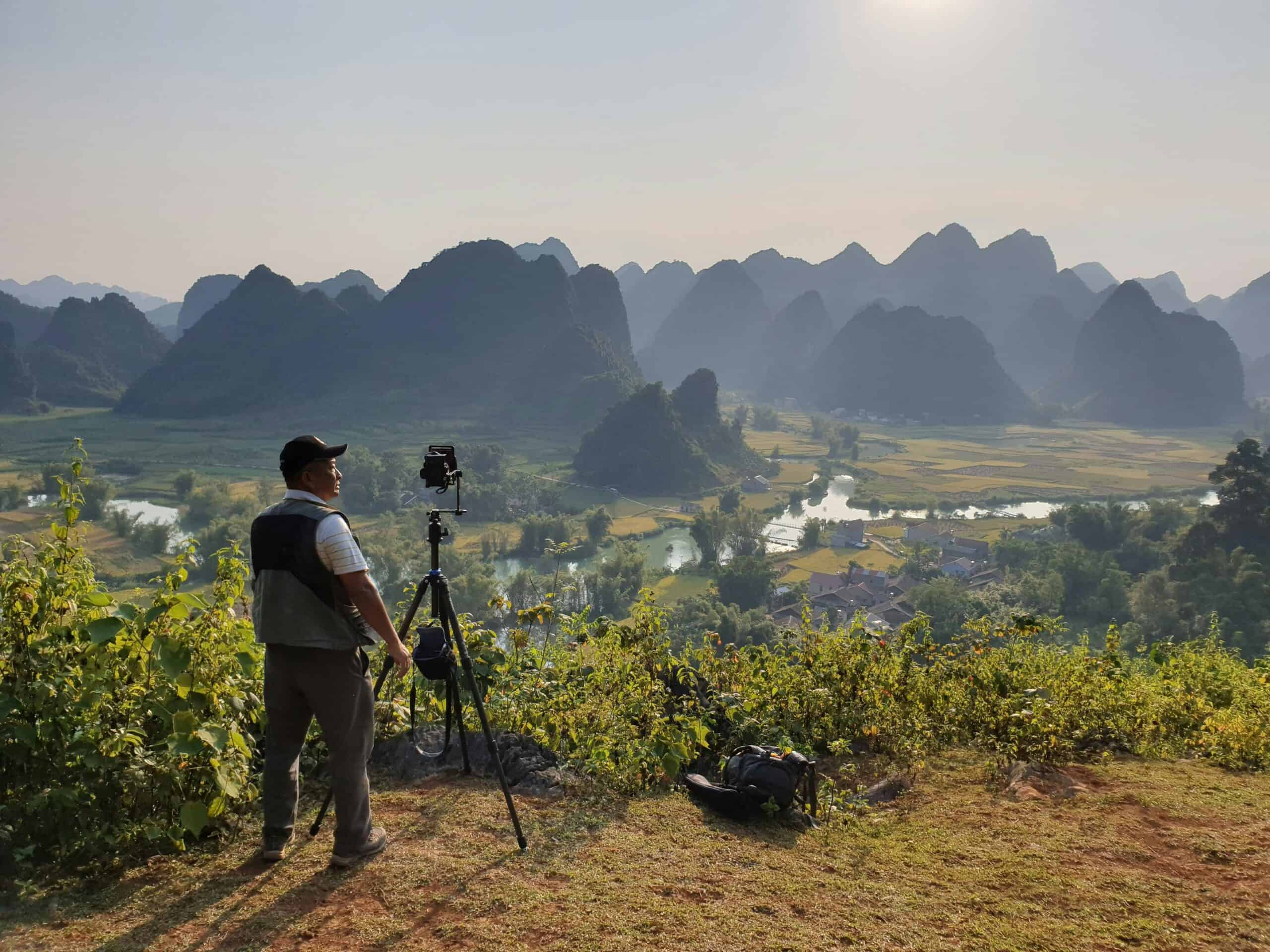
Quick Setup Overview
- Camera: Nikon D850 — Full Frame (FX), 45.7MP BSI CMOS, base ISO 64, excellent DR (~14.8 EV at base), robust bracketing and mirror-up features.
- Lens: Nikon Z 14–24mm f/2.8 S — Rectilinear ultra-wide, extremely sharp, low distortion/CA, best at f/4–f/8. Note: Z-mount, not compatible with D850 without switching to a Z body. F-mount alternative: AF‑S 14–24mm f/2.8G.
- Estimated shots & overlap (rectilinear, full-frame):
- 14mm: 6–8 shots around with 25–30% overlap for a cylinder; for full 360×180, plan multi-row: 8 around at 0°, 8 at +35°, 8 at −35°, plus zenith/nadir (approx. 26–28 frames).
- 18mm: 8–10 around per row; similar two- or three-row workflow based on coverage.
- 24mm: 10–12 around per row; for high-res “gigapano,” 2–3 rows + zenith/nadir (30–38 frames).
- Difficulty: Intermediate to Advanced (nodal alignment and multi-row technique required).
Bottom line: for the D850, pair it with an F-mount ultra-wide (e.g., AF‑S 14–24mm f/2.8G). If you must use the Z 14–24mm f/2.8 S, switch to a Z body while following the same panorama workflow below.
Planning & On-Site Preparation
Evaluate Shooting Environment
Survey light direction and range. For interiors, identify high-contrast zones such as windows vs. rooms (plan HDR brackets). Note reflective surfaces like glass and polished floors—shoot at an angle to reduce flare/ghosting and keep the front element clean. If shooting through glass, get as close as possible (1–3 cm) and shield with a cloth to avoid reflections. Outdoors, consider wind and tripod stability, especially on rooftops or near traffic.
Match Gear to Scene Goals
The D850’s low base ISO and wide dynamic range make it perfect for sunrise/sunset panoramas and interior HDR sets. The 14–24 rectilinear view is ideal for architecture and real estate, preserving straight lines. Indoors, the D850 is clean to ISO 800–1600 with good noise reduction; prefer ISO 64–400 when on a tripod. Although a fisheye lens requires fewer shots, this rectilinear zoom yields cleaner edges and more natural-looking walls.
Pre-shoot Checklist
- Charge batteries, empty/format high-speed cards; the D850’s 45.7MP RAWs add up fast.
- Clean lens and sensor; dust spots are amplified in big sky gradients.
- Level the tripod; calibrate panoramic head for the lens’ entrance pupil (no-parallax point).
- Safety: assess wind loads (especially if using a pole), tether gear on rooftops, avoid overhead wires; if car-mounted, secure with redundant straps.
- Backup: shoot a second safety round (especially for HDR) in case of movement between frames.
Essential Gear & Setup
Before You Begin: Compatibility Path
Because the Nikon Z 14–24mm f/2.8 S cannot be mounted on the D850, choose one of these paths:
- Stay with D850: use AF‑S 14–24mm f/2.8G (F‑mount) or another rectilinear F‑mount ultra-wide.
- Use the Z 14–24mm f/2.8 S: switch to a Nikon Z body (Z7/Z7 II/Z8). The panorama workflow is the same; only body controls differ slightly.
Core Gear
- Panoramic head with sliding rails: align the lens’ entrance pupil to eliminate parallax when rotating. This is mandatory for interiors and near objects.
- Stable tripod with leveling base: a half-ball or leveling base speeds up leveling and keeps pano rows aligned.
- Remote trigger or self-timer: reduce vibration. On the D850, consider Exposure Delay Mode and Mirror-Up for extra stability.
Optional Add-ons
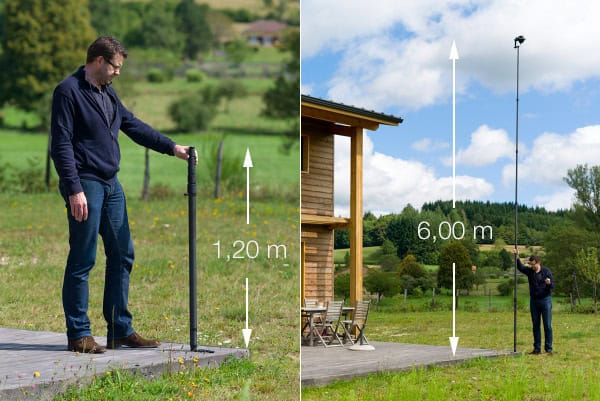
- Pole or car mount: great for elevated or drive-by panoramas; always tether, mind wind, and limit speed/rotation.
- LED panels or bounce flash: lift dark corners in interiors without changing WB across frames.
- Rain covers and lens hoods: keep front element dry and flare-free.
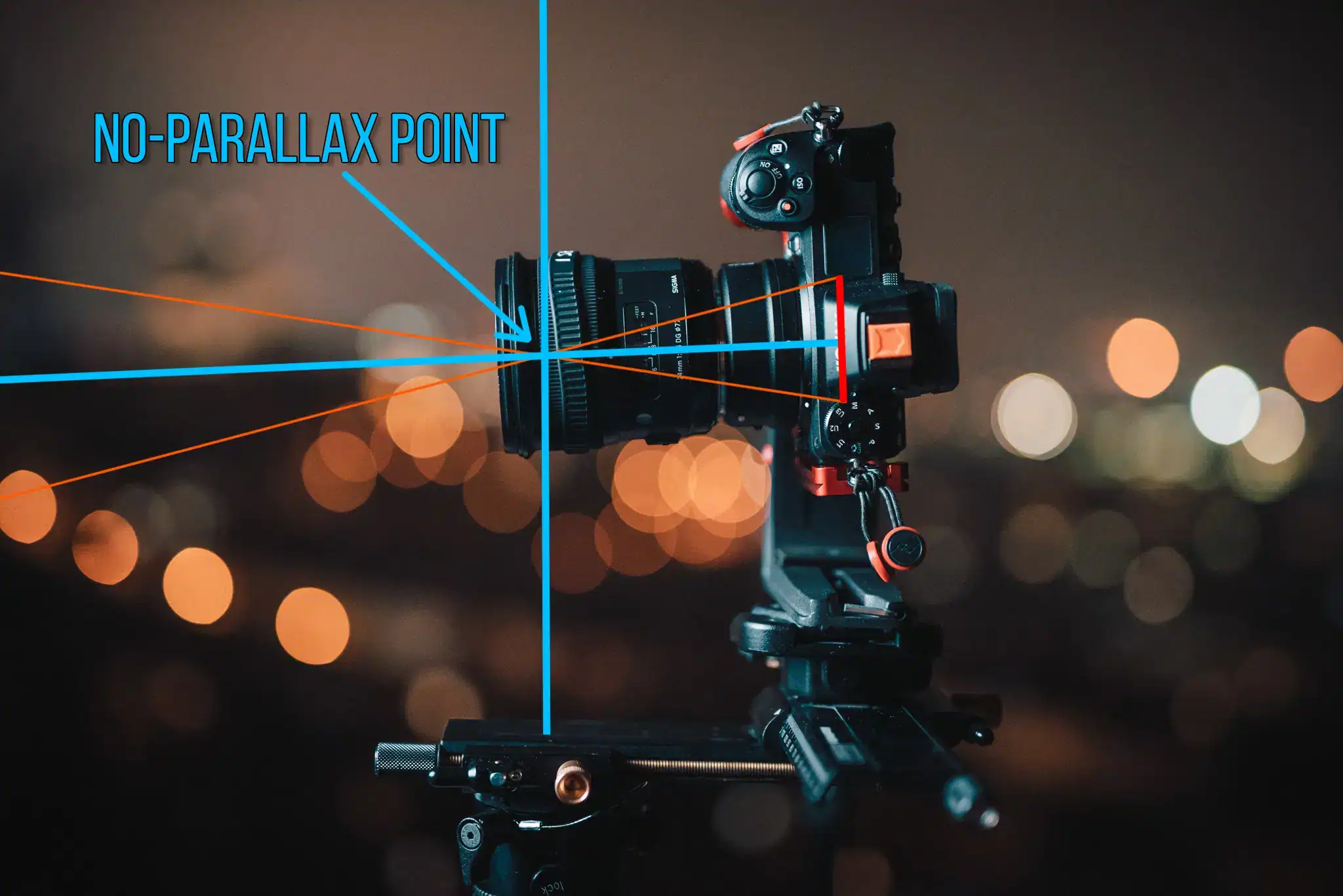
Watch: Set up a panoramic head for perfect 360 photos
For a deeper primer on panoramic heads and how to avoid parallax, this panoramic head tutorial is a solid foundation. Read the panoramic head tutorial
Step-by-Step Shooting Guide
Standard Static Scenes
- Level tripod & align entrance pupil: On the pano head, use a foreground object against a distant background and rotate the camera. Slide the lens forward/back until there’s no relative shift. Mark the rail positions for 14, 18, and 24mm for repeatability.
- Manual exposure & locked white balance: Meter the brightest part you must retain (e.g., sky or window), then set Manual mode. Lock WB to Daylight (outdoor) or a fixed Kelvin (interior) to avoid color shifts across frames.
- Capture with tested overlap: At 14mm, aim for 25–30% overlap and consistent pitch between rows (e.g., −35°, 0°, +35°). Rotate smoothly; use detents if your head has click-stops.
- Nadir shot: After the main set, tilt down and shoot the ground for tripod removal. A second nadir from a slightly offset position can make patching easier.
HDR / High Dynamic Range Interiors
- Bracket ±2 EV (3 or 5 frames) to balance bright windows and interior shadows. The D850 supports robust AEB; consider 5 frames in 1 EV steps for smooth tonemapping.
- Keep WB and aperture fixed. Change only shutter speed between brackets to maintain consistent depth of field.
- Use a remote or Exposure Delay Mode to avoid vibration between brackets, especially in mirror-up or Live View.
Low-Light / Night Scenes
- Use longer exposures on a solid mount. Start around f/4–f/5.6 to stay sharper in corners; shutter 1–5 seconds is common at ISO 64–200 under city light.
- Safe ISO ranges on D850: 64–400 is ideal; 800–1600 is still very usable with modern denoise. Avoid pushing beyond 3200 unless necessary for moving subjects.
- Trigger via remote or SnapBridge app; enable Exposure Delay. Wind can creep into long exposures—shield the tripod if needed.
Crowded Events
- Shoot two passes. First pass for coverage, second pass for clean plates when gaps appear in moving crowds.
- Mask in post to remove moving subjects. If people are close to the camera, precise nodal alignment is critical to avoid ghosting.
Special Setups (Pole / Car / Elevated)
- Pole: Only extend as far as wind conditions allow. Use a safety tether and a remote trigger. Shoot fewer, faster frames (e.g., a single row at 14mm) to minimize sway.
- Car mount: Park or move very slowly on closed property. Secure with two independent mounts and watch for vibrations. Use higher shutter speeds (1/250s+).
- Elevated rooftops: Sandbag your tripod. Use a lanyard on the camera body and lens.
Recommended Settings & Pro Tips
Exposure & Focus
| Scenario | Aperture | Shutter | ISO | Notes |
|---|---|---|---|---|
| Daylight outdoor | f/8–f/11 | 1/100–1/250 | 100–200 | Lock WB to Daylight; use base ISO 64 if shutter allows |
| Low light/night | f/4–f/5.6 | 1/30–5s | 64–400 (up to 1600) | Tripod + remote; enable Exposure Delay to reduce vibration |
| Interior HDR | f/8 | Bracket ±2 EV | 64–400 | Fix WB/aperture, vary shutter only |
| Action / moving subjects | f/5.6–f/8 | 1/200+ | 400–800 | Double-pass technique for clean plates |
Critical Tips
- Manual focus at hyperfocal: Prefocus using Live View at ~2–3 m at 14mm (stopped to f/8) to keep near-far sharp. Disable AF to avoid refocus between frames.
- Nodal point calibration: With ultra-wides, the entrance pupil is usually forward in the lens; mark your rail positions for 14/18/24mm after test alignment.
- White balance lock: Mixed lighting can shift color between frames; fix WB to a single Kelvin to ease stitching.
- Shoot RAW: The D850’s 14-bit RAW files provide headroom for highlight recovery and smooth tonemaps.
- Stabilization: The Z 14–24 S has no VR and the D850 has no IBIS—no stabilization benefits on tripod. If you use a VR F‑mount lens, turn VR off on tripod to prevent micro-blur.
- Use mirror-up or Live View: Minimizes mirror shock; Enable Electronic Front-Curtain Shutter in LV for critical sharpness.
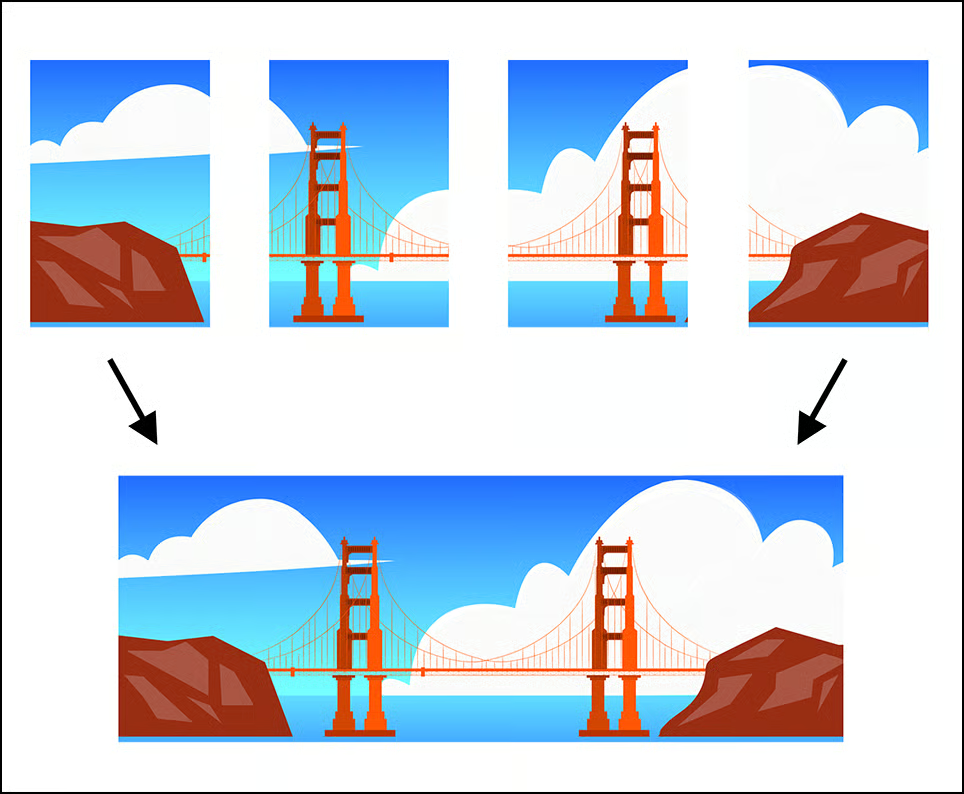
Stitching & Post-Processing
Software Workflow
Import RAWs into Lightroom for basic corrections (lens profile, WB sanity, exposure normalization), then export to your stitching app. PTGui is the industry workhorse for complex multi-row sets and HDR panoramas. Hugin is a solid open-source alternative. Rectilinear zooms require more frames than fisheyes but yield straight lines—a big win for architecture. Aim for ~20–25% overlap for rectilinear and keep rows consistent. Why PTGui excels for large panoramas
If you intend to publish to VR/360 platforms, export equirectangular 2:1 images (e.g., 16000×8000 JPEG/TIFF). Follow platform guidelines for file size and metadata. DSLR-to-360 VR publishing tips
Cleanup & Enhancement
- Nadir patch: Clone or use an AI tool to remove the tripod. Capture a dedicated nadir frame to make this easier.
- Color consistency: Equalize exposure and tint across frames before stitching to minimize seams.
- Noise reduction: Apply luminance NR to night scenes; don’t over-smooth textures.
- Horizon leveling: Use automatic level or adjust pitch/roll in PTGui/Hugin; true verticals matter in architecture.
- Export: Keep a master 16-bit TIFF and deliver optimized JPEG for web; embed proper metadata for 360 viewers.
For reference on expected resolution from various lenses and sensor pairings, see the panotools spherical resolution notes. Spherical resolution reference
Useful Tools & Resources
Software
- PTGui panorama stitching
- Hugin (open source)
- Lightroom / Photoshop / Affinity Photo
- AI tripod removal/cleanup tools
Hardware
- Panoramic heads (Nodal Ninja, Leofoto, Really Right Stuff)
- Carbon fiber tripods + leveling bases
- Wireless remote shutters / intervalometers
- Pole extensions / suction car mounts with safety tethers
Disclaimer: examples for search reference only; check official sources for current specs and compatibility.
Common Mistakes & How to Avoid Them
- Parallax error: Always align the entrance pupil on the pano head—especially with near foregrounds.
- Exposure flicker: Use Manual mode and a fixed WB; don’t use auto ISO for panoramas.
- Tripod shadows in sunny scenes: Capture an offset nadir or return at a different sun angle.
- Ghosting from moving subjects: Shoot double passes and mask clean plates during post.
- High ISO noise: Prefer base ISO with longer shutter on a tripod; denoise only as needed.
- Incompatible gear: Remember Z lenses don’t mount on F bodies; plan accordingly before the shoot.
Frequently Asked Questions
-
Is the Nikon Z 14–24mm f/2.8 S compatible with the Nikon D850?
No. The Z 14–24 S is a Z‑mount lens and cannot be adapted to the F‑mount D850. Use an F‑mount ultra-wide (e.g., AF‑S 14–24mm f/2.8G) on the D850, or switch to a Nikon Z body to use the Z 14–24 S.
-
Can I shoot handheld panoramas with the D850?
Yes for simple single-row panos with distant subjects, but expect alignment challenges and potential parallax. For 360×180 or interiors, use a tripod, leveling base, and pano head for reliable stitching.
-
Is 14mm wide enough for a single-row 360?
Not for a full 360×180. At 14mm rectilinear you’ll typically need multiple rows (e.g., −35°, 0°, +35°) plus zenith and nadir. Single-row can cover a cylindrical panorama but won’t capture the entire sky/ground.
-
Do I need HDR for interiors with bright windows?
Usually yes. Bracket ±2 EV (3–5 frames) to capture window view and interior detail. The D850’s dynamic range is strong, but bracketing makes blending cleaner and avoids noisy shadow lifts.
-
What ISO is safe on the D850 for low-light panoramas?
ISO 64–400 yields the cleanest results on a tripod. ISO 800–1600 is still excellent with moderate denoise. Try not to exceed 3200 unless you must freeze motion.
-
How do I avoid parallax issues with an ultra-wide zoom?
Use a pano head with fore/aft sliding rails. Calibrate the entrance pupil at 14, 18, and 24mm by aligning a near object against a distant background while rotating—no relative shift means you’re aligned. Save the marks for repeat setups.
-
Can I set custom modes to speed up pano shooting?
On Nikon DSLRs, you can store settings in user banks (A/B) or recall “My Menu” quickly. Save Manual exposure, fixed WB, bracketing pattern, and exposure delay to minimize setup time.
-
What’s the best tripod head for this setup?
A dedicated panoramic head with indexed rotator and vertical arm (e.g., Nodal Ninja/RSS/Leofoto) makes consistent overlap easy and eliminates parallax, especially critical for interiors and close subjects.
For a broader overview of DSLR/ML panorama workflows and gear selection, this DSLR virtual tour FAQ is a worthwhile read. DSLR virtual tour FAQ and gear guide