
Why This Camera & Lens Are Great for Panoramas
If you’re exploring how to shoot panorama with Nikon D850 & Fujifilm XF 10-24mm f/4 OIS WR, here’s the first thing you should know: these two products are not natively compatible. The D850 is a full-frame Nikon F-mount DSLR, while the XF 10–24mm is a Fujifilm X-mount APS-C lens with an image circle designed for smaller sensors. There is no practical adapter that provides full coverage, aperture control, and infinity focus from XF to Nikon F. Using this specific pair will result in severe vignetting and loss of control, so it’s not recommended.
That said, the technique, settings, and workflow in this guide absolutely apply to a Nikon D850 paired with an equivalent rectilinear ultra-wide zoom on full-frame—think Nikon AF-S 16–35mm f/4G VR, Nikon 14–24mm f/2.8G, Sigma 14–24mm f/2.8 Art, or Tamron 15–30mm f/2.8 G2. If you truly need fewer shots for 360° work, a full-frame fisheye (e.g., 8–10.5 mm) will speed capture dramatically. We’ll proceed with a rectilinear UWA workflow that mirrors what you intended with the Fujifilm XF 10–24mm: clean lines, minimal distortion for architecture, and high detail.
Why the Nikon D850? It’s a 45.7MP full-frame DSLR (35.9 × 23.9 mm) with a back-side illuminated sensor, no AA filter, and exceptional dynamic range. At base ISO 64, you get class-leading shadow recovery and color depth—perfect for HDR panoramas of interiors and sunsets. With ~4.35 µm pixel pitch and ~14.8 EV dynamic range at base ISO, the D850 holds highlight detail and cleans up shadows when stitched as a large equirectangular.
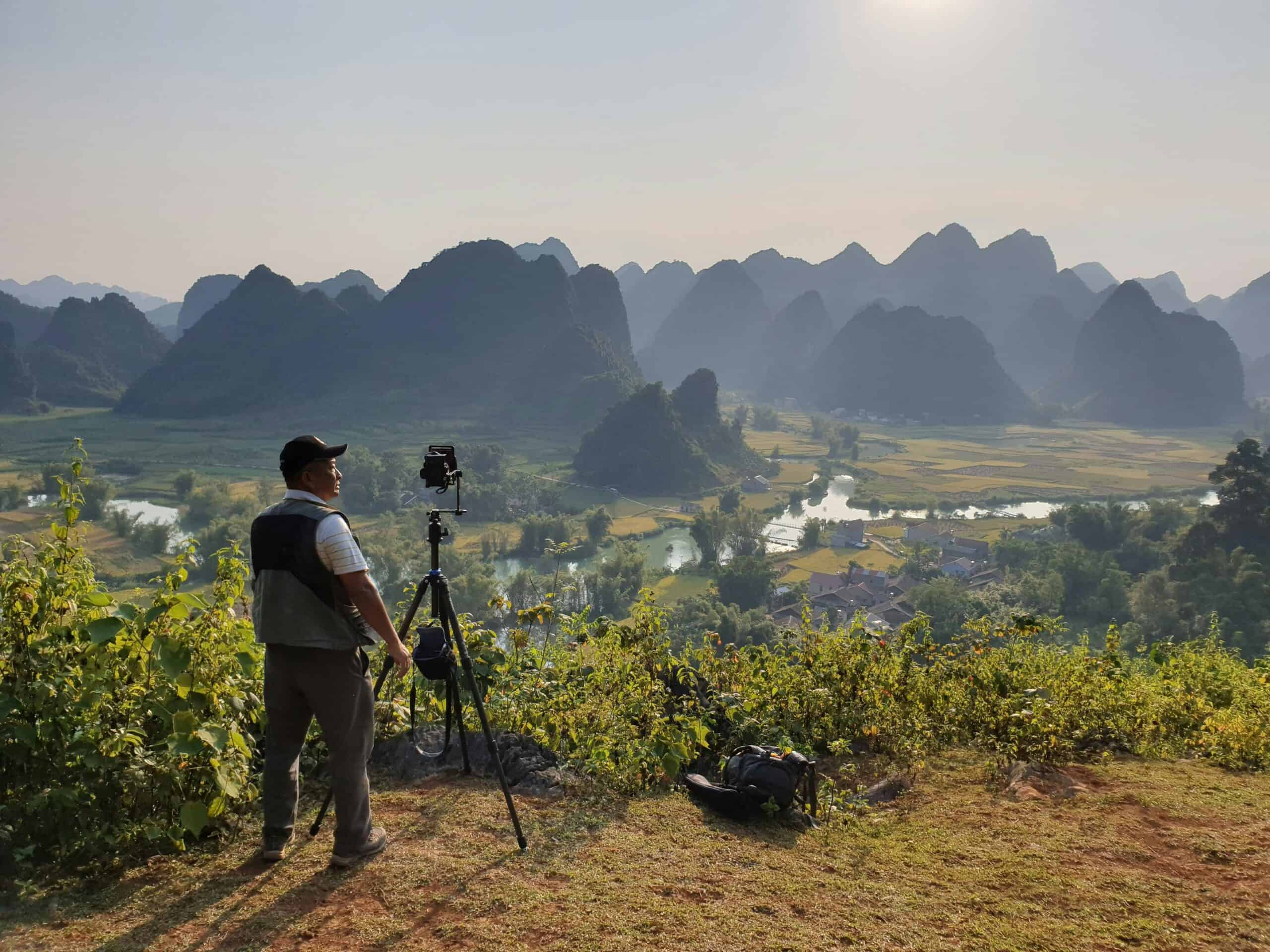
Quick Setup Overview
- Camera: Nikon D850 — full-frame 45.7 MP BSI CMOS, base ISO 64, excellent DR, no AA filter.
- Lens: Fujifilm XF 10–24mm f/4 OIS WR — rectilinear APS-C UWA zoom. Important: not compatible with Nikon F-mount full-frame; use a Nikon F-mount equivalent (e.g., 16–35mm f/4 or 14–24mm f/2.8) for the workflow below.
- Estimated shots & overlap (rectilinear UWA on full-frame):
- At ~14–16mm: 2 rows of 8 around (±30° pitch) + 1–2 zenith + 1–2 nadir = ~18–20 frames with 30–35% overlap.
- At ~24mm: 2 rows of 10–12 around (±35°) + 2 zenith + 2 nadir = ~24–28 frames with ~30% overlap.
- Difficulty: Intermediate (requires nodal alignment, consistent exposure, and careful stitching).
Planning & On-Site Preparation
Evaluate Shooting Environment
Walk the scene for light, reflections, moving elements, and tight spaces. For interiors with glass or mirrors, position the camera at least 60–100 cm away from large reflective surfaces and angle slightly to avoid catching yourself or the tripod in reflections. Note strong light sources (windows, spotlights, street lamps) and plan for HDR bracketing to prevent blown highlights. Outdoors, watch for wind (especially for pole work), tripod shadows, and moving clouds that can complicate stitching.
Match Gear to Scene Goals
The D850’s base ISO 64 and deep dynamic range make it a powerhouse for HDR panoramas and clean, low-noise night shots on a tripod. With a rectilinear UWA, you’ll preserve architectural lines better than with a fisheye, but you’ll shoot more frames. Expect to work at f/8–f/11 for consistent sharpness across the frame. The D850 handles ISO 100–400 effortlessly for tripod work; for events or handheld passes, ISO 800–1600 is safe with careful exposure.
Pre-shoot Checklist
- Charge batteries and carry spares. High-resolution bracketing burns power.
- Use fast, high-capacity cards (UHS-II SD or XQD/CFexpress) and consider backing up in-camera (dual slot).
- Clean lens and sensor; dust becomes painfully obvious in blue skies and flat walls once stitched.
- Level tripod, calibrate your panoramic head for the lens’ entrance pupil (no-parallax point).
- Safety: on rooftops/poles, tether the camera, beware wind gusts, and use sandbags or a weight hook.
- Backup workflow: capture at least one extra pass around the horizon and one extra nadir for insurance.
Essential Gear & Setup
Core Gear
- Panoramic head: Lets you rotate around the lens’ entrance pupil to eliminate parallax. This is mandatory for interiors, architecture, and near foreground objects.
- Stable tripod with leveling base: A leveling base speeds setup; keeping the rotator perfectly level avoids horizon warps.
- Remote trigger or SnapBridge app: Prevents vibration and allows timed exposures. On the D850, Exposure Delay Mode or Mirror Up further reduces shutter shock.
Optional Add-ons
- Pole or car mount: Only for experienced users. Always tether, mind wind loads, and avoid traffic hazards and legal issues.
- Small LED panels/flash for interiors: Subtle fill on dark corners; avoid mixed color temps when possible.
- Weather protection: Rain covers or plastic sleeves; keep desiccant packs to fight condensation on cold-to-warm transitions.
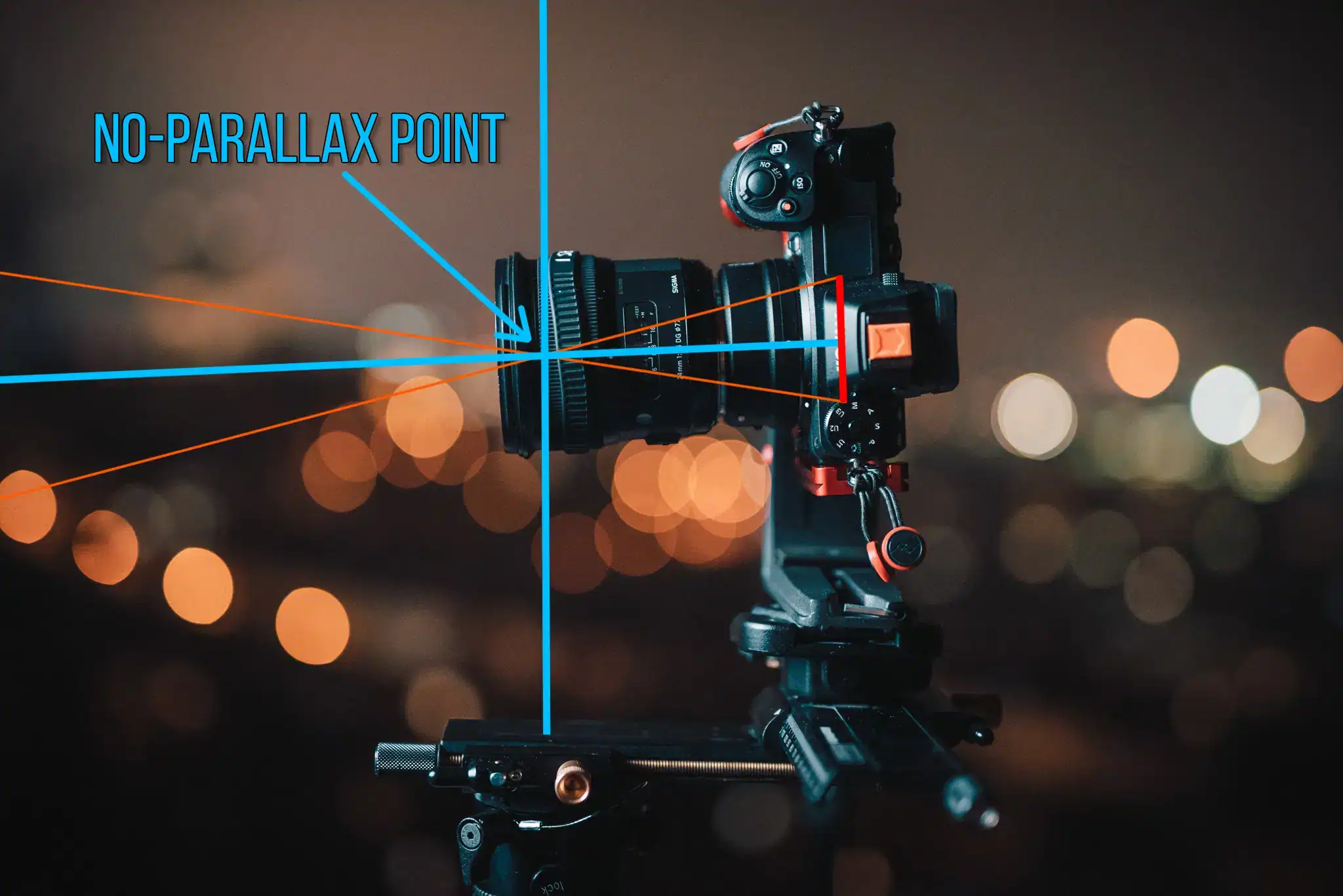
For a deeper dive into panoramic heads and alignment principles, see this panoramic head tutorial by 360Rumors. Learn more about panoramic head setup.
Step-by-Step Shooting Guide
Standard Static Scenes
- Level tripod and align the nodal point: With your chosen rectilinear UWA (e.g., 16–35mm), use a vertical rail and fore-aft slider. Place near and far objects at the frame edges and rotate the camera: adjust the rail until there’s no relative shift. Mark this setting on your rail for repeatability.
- Manual exposure and locked white balance: Meter the brightest part you must retain (usually window highlights) and set exposure manually. Lock WB (Daylight, Tungsten, or a custom Kelvin) to avoid color shifts between frames.
- Capture pattern and overlap:
- At ~16mm: Two rows at ±30° pitch. Shoot 8 around per row (every 45°) with 30–35% overlap. Then 1–2 zenith frames and 1–2 nadir frames.
- At ~24mm: Two rows at ±35°. Shoot 10–12 around per row (every 30–36°). Then 2 zenith and 2 nadir frames.
- Nadir capture: Either shoot a dedicated nadir by tilting down after the main rows or use a nadir adapter to swing the tripod out of view. Capture extra angles for easier patching.
HDR / High Dynamic Range Interiors
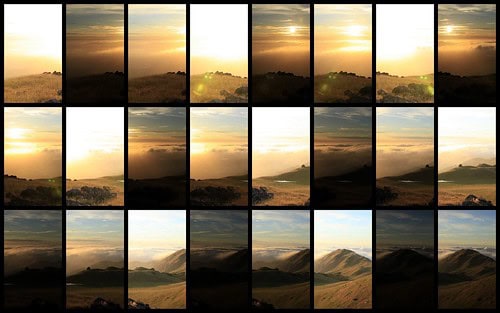
- Bracket ±2 EV (3–5 frames): The D850’s DR is excellent, but interiors with bright windows need brackets to avoid clipped highlights. Use auto-bracketing in Manual mode so shutter speed changes while aperture and ISO remain locked.
- Lock WB across brackets: Ensures consistent tonality when stitching. Apply lens corrections and HDR merge consistently before stitching or merge per-pose in your stitching app.
Low-Light / Night Scenes
- Longer exposures, low ISO: Start at ISO 64–200 on tripod for the cleanest files. Use f/4–f/5.6 and expose 1/5–2 s per frame if the wind allows. For starry skies, keep shutter short enough to avoid star trails on each frame.
- Use the remote trigger and Exposure Delay: On the D850, enable Exposure Delay Mode (1–3 s) or Mirror Up with a remote to minimize vibration. Turn off any lens VR when on a tripod.
Crowded Events
- Two-pass strategy: First pass fast to lock coverage, second pass waiting for gaps in movement. You can later mask the clean bits from the second pass into the first.
- Faster shutter helps: Aim for 1/200 s or faster at f/5.6–f/8 and ISO 800–1600 on the D850 to freeze motion.
Special Setups (Pole / Car / Drone)
- Secure gear & tether: Use safety lines and dual clamps. On poles, avoid gusty conditions; rotate slowly and allow vibrations to dampen before each shot.
- Car-mounted: Use rated suction mounts on clean glass or roof panels; build in redundancy. Keep speeds low and plan around traffic. Turn stabilization off on rigid mounts.
Recommended Settings & Pro Tips
Exposure & Focus
| Scenario | Aperture | Shutter | ISO | Notes |
|---|---|---|---|---|
| Daylight outdoor | f/8–f/11 | 1/100–1/250 | 64–200 | Lock WB (Daylight); use Exposure Delay Mode |
| Low light/night | f/4–f/5.6 | 1/5–2 s (tripod) | 64–400 | Remote trigger; VR off on tripod |
| Interior HDR | f/8 | Bracket ±2 EV | 64–200 | Protect window highlights; merge consistently |
| Action / moving subjects | f/5.6–f/8 | 1/200+ | 800–1600 | Two-pass strategy; mask later |
Critical Tips
- Manual focus at hyperfocal distance: At 16mm and f/8 on full-frame, focusing ~1 m keeps near-to-infinity acceptably sharp. Use Live View magnification to confirm.
- Nodal point calibration: The entrance pupil for most rectilinear UWA lenses sits near the front group. Calibrate once and mark your rail; expect the setting to vary slightly by focal length.
- White balance lock: Mixed lighting can vary by angle. Pick a Kelvin value or create a custom WB; keep it identical for the whole set.
- RAW over JPEG: The D850’s 14-bit RAW at ISO 64 gives huge latitude for HDR and color grading. Only export JPEG at the final delivery stage.
- Stabilization: The D850 body has no IBIS. If your lens has VR, turn it off on a tripod; use it only for handheld capture.
Stitching & Post-Processing
Software Workflow
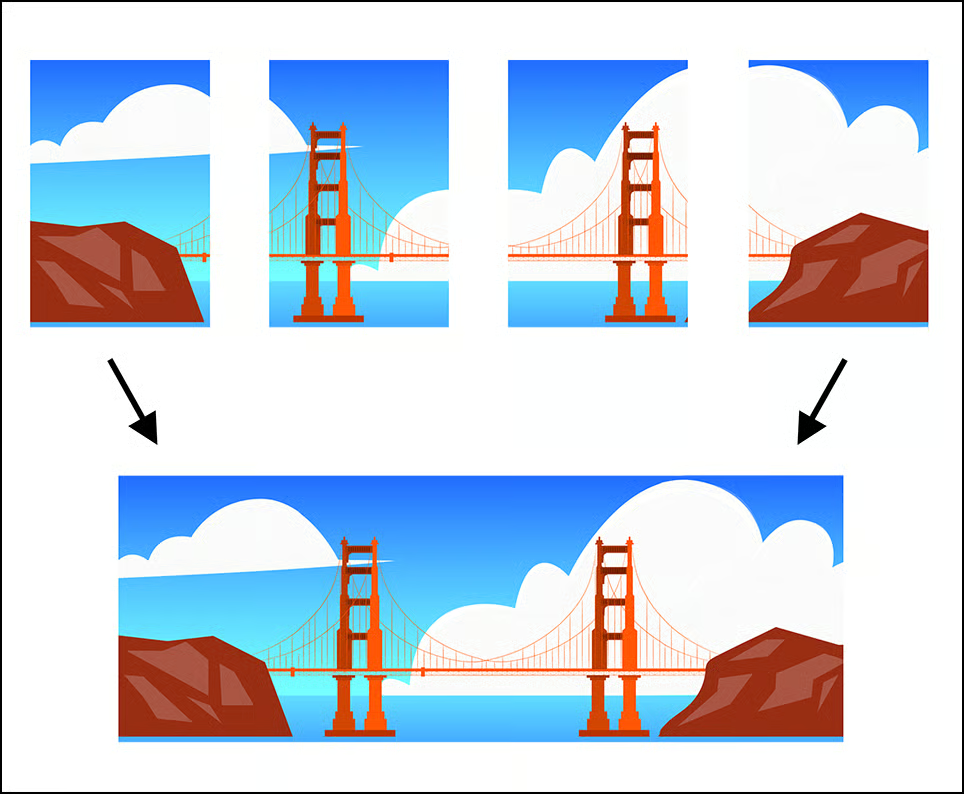
For rectilinear UWA panoramas, PTGui and Hugin are industry standards. Import all images (or HDR-merged brackets), detect control points, set lens type to rectilinear, and choose equirectangular output. Start with 30–35% overlap for reliable control point generation. Rectilinear lenses require more frames than fisheye but preserve straight lines—great for real estate and architecture. For a thorough look at PTGui’s capabilities, this review breaks down why it remains a favorite among pano pros. Read a PTGui pro review.
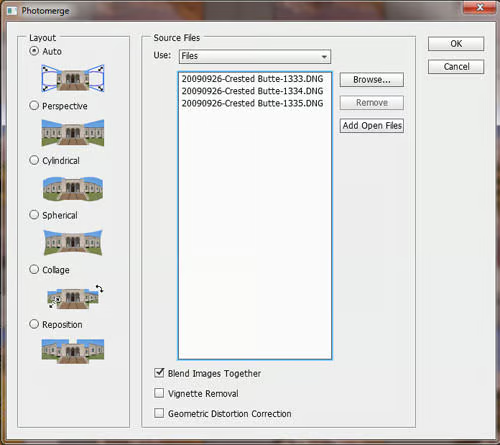
If you’re new to building a high-end pano head workflow, Meta’s Creator guide concisely documents best practices for DSLR/mirrorless 360 capture and stitching. See a panoramic head setup guide.
Cleanup & Enhancement
- Nadir cleanup: Patch the tripod with a dedicated nadir shot or clone in Photoshop. Some AI tools can auto-fill floor patterns convincingly.
- Color and noise: Match color across rows; reduce noise selectively in shadow regions to preserve detail.
- Leveling: In equirectangular view, adjust yaw/pitch/roll so the horizon is level and verticals are straight.
- Export: Save a 16-bit TIFF master and a downscaled JPEG. For VR, export equirectangular 2:1 (e.g., 12,000 × 6,000 px) per your platform’s requirements.
Curious about the resolution you can expect with different lenses and sensors? The PanoTools wiki offers a solid overview of DSLR spherical resolution. Understand spherical pano resolution.
Video Walkthrough: From Capture to Stitch
Prefer to watch a workflow? This video helps visualize capture patterns, overlap, and the stitching process:
Useful Tools & Resources
Software
- PTGui for precise control points and complex HDR panos
- Hugin as a capable open-source alternative
- Lightroom / Photoshop for RAW development and cleanup
- AI tripod removal / inpainting tools for fast nadir patches
Hardware
- Panoramic heads: Nodal Ninja, Leofoto, or similar with fore-aft and vertical rails
- Carbon fiber tripod with a leveling base
- Wireless remote shutters or intervalometers
- Pole extensions / car mounts (use only with proper safety measures)
Disclaimer: Names are for search reference; check official sites for the latest specifications and compatibility.
For a wide-angle/virtual tour planning overview and lens selection context, 360Rumors’ FAQ is a practical companion to this guide. Explore DSLR virtual tour guidance.
Common Mistakes & How to Avoid Them
- Parallax error: Always align the entrance pupil. Even small misalignment causes ghosting on near objects.
- Exposure flicker: Shoot in full Manual mode, lock WB, and keep aperture constant across frames.
- Tripod shadows and holes: Capture extra nadir frames or move slightly to patch the floor cleanly.
- Ghosting from movement: Use the two-pass method and mask clean sections in post.
- High ISO noise at night: Favor longer exposures at ISO 64–200 with a steady tripod and remote trigger.
Real-World Case Studies
1) Interior Real Estate (Daylight + Window Views)
Mount the D850 on a panoramic head with a 16–35mm set to 16–20mm. Shoot two rows at ±30° with 8–10 frames per row, then 1–2 zenith and 2 nadir frames. Use 5-shot bracketing at ±2 EV to balance window highlights. Lock WB to a fixed Kelvin. Merge HDR per-pose, then stitch. Patch the nadir, correct verticals, and export a 10–12k equirectangular.
2) Outdoor Sunset Panorama
Arrive early to set nodal alignment and test overlaps. Shoot at ISO 64–100, f/8–f/11, and vary shutter speed to hold highlight detail. As the light drops, take a second pass to capture the post-sunset glow for smoother gradients, then blend passes selectively in post.
3) Event Crowd
Work faster: 1/200 s, f/5.6–f/8, ISO 800–1600. Do two passes, keeping the camera rotation consistent. In post, use masks to remove people moving through seams. Consider a slightly higher vantage point to reduce parallax with moving subjects.
4) Rooftop Pole
Only if trained and permitted. Clamp, tether, and keep the payload balanced. Shoot fewer, slightly longer exposures at low ISO when the wind is calm. Rotate slowly and pause before each frame to let vibrations settle.
5) Car-Mounted Drive-by
Use rated suction mounts with redundant safety. Plan a quiet route. Turn off VR. Increase shutter speed to 1/500–1/1000 s if moving. This is advanced—expect masking and manual control points during stitching.
Important Compatibility Note on the XF 10–24mm
The Fujifilm XF 10–24mm f/4 OIS WR is an X-mount APS-C lens and does not mount or cover full-frame on a Nikon D850. There is no fully functional adapter to make this pairing practical. If your goal was the look/coverage of a 10–24mm on APS-C, the closest full-frame equivalents on the D850 are lenses in the 14–24mm or 15–30mm range. For architectural 360° panos, the Nikon 16–35mm f/4G VR at 16–20mm is an excellent, lightweight, and sharp choice. For faster capture with fewer shots, consider a full-frame fisheye (e.g., 8–16mm) with a dedicated panoramic head.
Frequently Asked Questions
- Can I shoot handheld panoramas with the Nikon D850?
You can, but it’s best for simple cylindrical panos. For full 360×180 with nearby objects, use a tripod and panoramic head to avoid parallax. If handheld, use a single-row approach, lock exposure/WB, and expect more cleanup.
- Is the Fujifilm XF 10–24mm f/4 wide enough for single-row 360?
On a Fuji APS-C body, it’s wide but still usually needs multi-row for a full spherical pano. On a Nikon D850, the lens is incompatible—use a 14–24mm or 16–35mm and plan on multi-row capture for full coverage.
- Do I need HDR for interiors with bright windows?
Yes, most of the time. Bracketing ±2 EV (3–5 frames) preserves window highlights and clean interior shadows. The D850’s base ISO 64 and 14-bit RAW files give excellent HDR merging latitude.
- How do I avoid parallax issues?
Align the entrance pupil on a panoramic head. Use near/far alignment checks at the frame edges, adjust your fore-aft rail until relative motion disappears. Mark the setting for your focal length.
- What ISO range is safe on the D850 in low light?
On a tripod, ISO 64–200 is ideal for the cleanest files. For events or handheld passes, ISO 800–1600 is workable with careful exposure. Always favor proper exposure over pushing shadows later.
Safety, Data Integrity, and Workflow Trust
Use a tether line for elevated or windy captures, keep hands clear of rotating rails, and never leave a rig unattended on rooftops or near crowds. Ingest files to two separate drives immediately after the shoot; on critical jobs, back up to the cloud the same day. Keep a simple naming convention and note gear settings (focal length, rail position, and overlap) for repeatability. The approach in this guide follows widely accepted best practices shared by the pano community and professional software makers, including PTGui and Hugin. For more foundational tips, see this community Q&A on panorama techniques. Review community panorama best practices.