
Why This Camera & Lens Are Great for Panoramas
This guide focuses on how to shoot panorama with Nikon D850 & Canon RF 14-35mm f/4L IS USM. First, an essential truth: the Canon RF 14–35mm f/4L IS USM (Canon RF mount) does not natively or practically adapt to the Nikon D850 (Nikon F mount DSLR). The RF mount’s very short flange distance and fully electronic aperture/focus make a passive adapter impossible, and no reliable electronic adapter exists for RF-to-F. That said, the techniques below absolutely apply to the D850 with an equivalent Nikon F-mount ultra-wide rectilinear zoom (e.g., AF-S 14–24mm f/2.8G, 16–35mm f/4G VR, Tamron 15–30mm, etc.) or to the Canon RF 14–35mm used on a Canon EOS R-series body.
Why this “combo” still makes sense conceptually: the Nikon D850’s 45.7MP full-frame sensor (35.9 × 23.9 mm, ~4.35 µm pixel pitch) delivers superb detail and dynamic range (~14.5–14.8 EV at base ISO 64). An ultra-wide rectilinear zoom like a 14–35mm or 14–24mm gives flexible framing for multi-row 360 photos, architecture, and gigapixel panoramas while keeping straight lines straight (rectilinear rendering). While a fisheye lens reduces shot count, rectilinear glass preserves edge geometry—ideal for real estate, interiors, and urban scenes.
If you already own the Canon RF 14–35mm f/4L, pair it with a Canon EOS R body for the shoot. If you own a Nikon D850, use a comparable Nikon F-mount ultra-wide. The shooting workflow, overlap targets, and post-processing steps are the same.
Quick Setup Overview
- Camera: Nikon D850 — Full-frame (35.9 × 23.9 mm), 45.7MP, base ISO 64, excellent dynamic range and color depth; robust weather sealing and reliable manual controls.
- Lens: Canon RF 14–35mm f/4L IS USM (rectilinear) — very sharp stopped down, controlled CA, strong distortion at 14mm corrected by profiles; 5.5-stop IS on RF bodies (not applicable on D850). If using D850, pick a similar Nikon F-mount rectilinear ultra-wide (e.g., 14–24mm/2.8, 16–35mm/4).
- Estimated shots & overlap (full-frame, rectilinear):
- At ~14mm: 2 rows × 8 around (yaw 45°) + zenith + nadir = ~18–20 shots with 30–35% overlap.
- At ~20–24mm: 3 rows × 10–12 around + Z/N = ~32–38 shots with 30% overlap.
- At ~35mm (for gigapixel): 3–4 rows × 16–20 around + Z/N = 50–80+ shots depending on overlap.
- Difficulty: Intermediate (requires a leveled tripod, panoramic head, and careful exposure discipline).
Planning & On-Site Preparation
Evaluate Shooting Environment
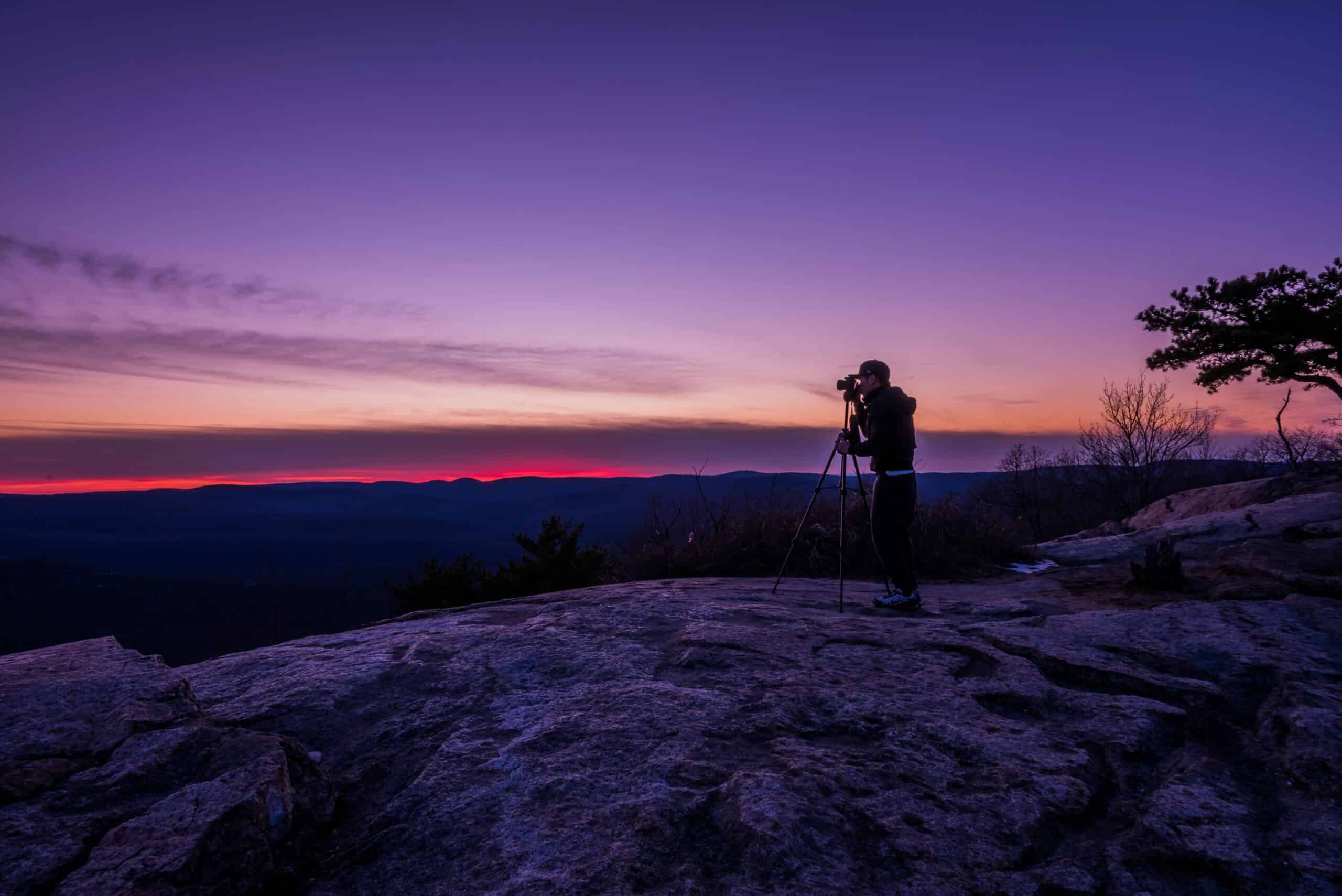
Walk the scene first. Identify reflections (glass, polished stone), mixed lighting (tungsten + daylight), and moving elements (people, traffic, leaves). For glass, get close (2–5 cm) with a rubber lens hood to reduce internal reflections. Note sun angle and potential flare. Check for vibrations (bridges, rooftop in wind) and the space needed for full rotation without obstructions.
Match Gear to Scene Goals
The Nikon D850’s dynamic range at ISO 64–100 supports deep shadows and highlights in complex lighting. For interiors with windows, bracket HDR. Outdoors, stick to base ISO for the cleanest files. A rectilinear ultra-wide (like the RF 14–35 or a Nikon 14–24) preserves straight lines and is excellent for architecture and real estate. It requires more shots than a fisheye but gives truer geometry and less defishing. Safe ISO for the D850 is typically 64–800; ISO 1600 is okay with careful noise reduction, but tripod-based long exposures at ISO 64–200 yield best results.
Pre-shoot Checklist
- Charge batteries, clear fast cards, clean lens front element and D850’s sensor if needed.
- Level the tripod and confirm your panoramic head’s nodal alignment for the chosen focal length.
- Safety: Check wind on rooftops; use a weight bag and tether. For car mounts, double-tether and avoid highways. For poles, use a guy-line and spotter.
- Backup workflow: Shoot an extra full rotation at the end. If crowds are present, capture two passes to help with ghost removal in post.
Essential Gear & Setup
Core Gear
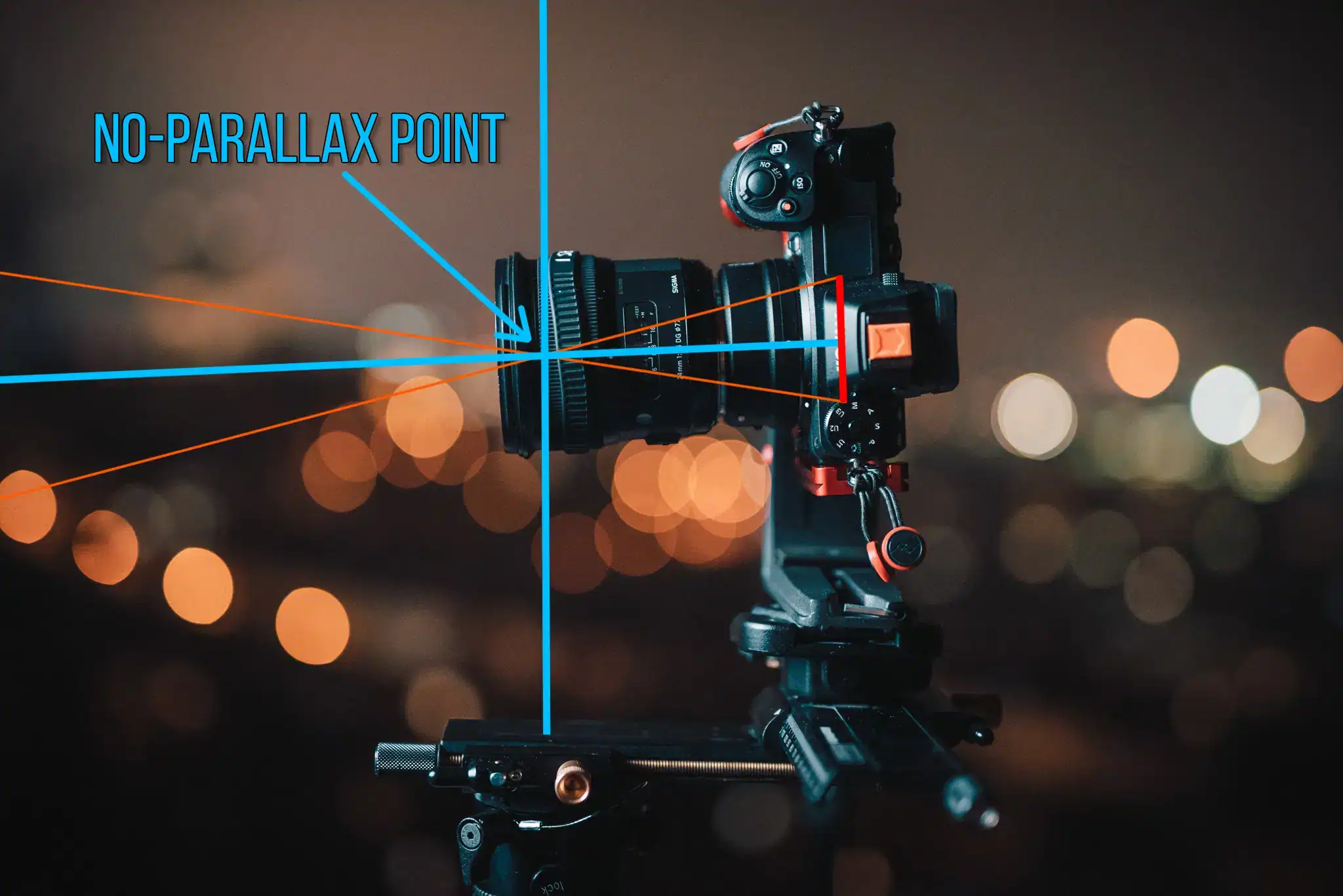
- Panoramic head: Aligns the rotation around the lens’s entrance pupil (nodal point) to eliminate parallax. This is non-negotiable for clean 360 stitches in tight spaces or near objects.
- Stable tripod with leveling base: A leveling base speeds setup and reduces horizon errors. Carbon fiber helps in wind and reduces vibrations.
- Remote trigger or app: Trigger via cable release or app to minimize vibrations. Mirror-up or electronic front-curtain shutter (D850) helps.
Optional Add-ons
- Pole or car mount: Use only with safety tethers. Watch wind loads; rotate slower to avoid blur. Avoid long exposures on flexible poles.
- Lighting aids: Small LED panels or bounced flash for interior fill (keep lighting consistent across the set to avoid stitch seams).
- Weather protection: Rain covers, silica gel packs, and a microfiber cloth for lens dewdrops at night.
For a deeper primer on panoramic heads and nodal alignment, see this panoramic head tutorial. Panoramic head fundamentals
Step-by-Step Shooting Guide
Standard Static Scenes
- Level tripod & align nodal point: Use your panoramic head’s rails to position the camera so near and far objects don’t shift relative to each other when you pan. Mark your rail scale for common focal lengths (e.g., 14, 20, 24, 35mm). If you’re unsure, start with the lens front element roughly above the rotation axis and refine by observing parallax between two verticals, one near and one far.
- Manual exposure & locked white balance: Meter the scene’s mid-tones and switch to full manual (M). Lock WB (daylight for sun, tungsten for interiors, or a custom Kelvin value). Disable Auto ISO. This prevents exposure and color shifts that break stitches.
- Capture with tested overlap:
- At ~14mm rectilinear on full frame: 2 rows at pitch +30° and -30°, with 8 shots each around every 45° yaw. Add 1–2 zenith shots (+90°) and 1–2 nadir shots (-90° or offset for tripod removal).
- Keep at least 30% overlap horizontally and vertically. More overlap helps with complex textures.
- Take a nadir shot: Either remove the camera, handhold directly above the tripod footprint, or offset on the rail to capture ground texture cleanly for patching.
HDR / High Dynamic Range Interiors
- Bracket ±2 EV (3–5 frames): Windows vs interior shadows often exceed sensor DR in one shot. The D850’s base ISO 64 helps, but bracketing is still best for window detail.
- Keep WB locked: Mixed lighting will cause bracket-to-bracket color shifts if WB is on Auto. Lock WB or set Kelvin.
- Use a consistent bracket for the entire panorama: Don’t change brackets mid-rotation. You can merge HDR per angle first, then stitch the merged set.
Low-Light / Night Scenes
- Use longer exposures at low ISO: Try ISO 64–200 at f/5.6–f/8; let shutter lengthen to 5–30 seconds as needed. The D850 files remain extremely clean.
- Mirror-up or exposure delay mode: Combine with a remote trigger to avoid vibrations. On rigid ground, turn off lens VR/IS.
- Avoid moving elements if possible: Shoot quickly between frames to reduce star trailing, waves, or cloud ghosting across overlaps.
Crowded Events
- Two passes strategy: On the first pass, capture the full set for geometry. On the second, wait for clear gaps in crucial zones you plan to mask in post.
- Use faster shutter: Aim for 1/200s or faster at f/5.6–f/8 and ISO 400–800 to freeze motion while keeping depth.
Special Setups (Pole / Car / Drone)
- Secure and tether: A primary clamp plus a secondary safety tether. For poles, guy-lines; for cars, double straps and slow speeds.
- Compensate for vibration: Increase shutter speed or use burst mode and pick the sharpest frame later. Minimize rotation speed and avoid long exposures on flexible supports.
Recommended Settings & Pro Tips
Exposure & Focus
| Scenario | Aperture | Shutter | ISO | Notes |
|---|---|---|---|---|
| Daylight outdoor | f/8–f/11 | 1/100–1/250 | 64–200 | Lock WB (daylight). Lowest ISO for max DR on D850. |
| Low light/night | f/4–f/5.6 | 1/30–30s | 64–400 | Tripod + remote; turn off VR/IS on tripod. |
| Interior HDR | f/8 | Bracket ±2 EV | 64–400 | Consistent bracket set for all angles. |
| Action / moving subjects | f/5.6–f/8 | 1/200+ | 400–800 | Freeze motion; consider two passes. |
Critical Tips
- Manual focus at the hyperfocal distance: For 14–20mm at f/8 on full-frame, focusing ~1–1.5 m often keeps infinity sharp. Use live view magnification to confirm.
- Nodal point calibration: Place two vertical objects (one near, one far). Pan the head. Adjust the fore-aft rail until the near object does not shift relative to the far. Mark the rail scale for your 14, 20, 24, and 35mm positions.
- White balance lock: Use a fixed WB or custom Kelvin to avoid stitch banding from color shifts.
- RAW over JPEG: RAW provides latitude for HDR merging, noise reduction, and profile-based distortion correction (helpful at ultra-wide focal lengths).
- Stabilization: On tripod, turn off VR/IS (and IBIS on mirrorless) to prevent micro-blur. Handheld panos can keep stabilization on.
Stitching & Post-Processing
Software Workflow
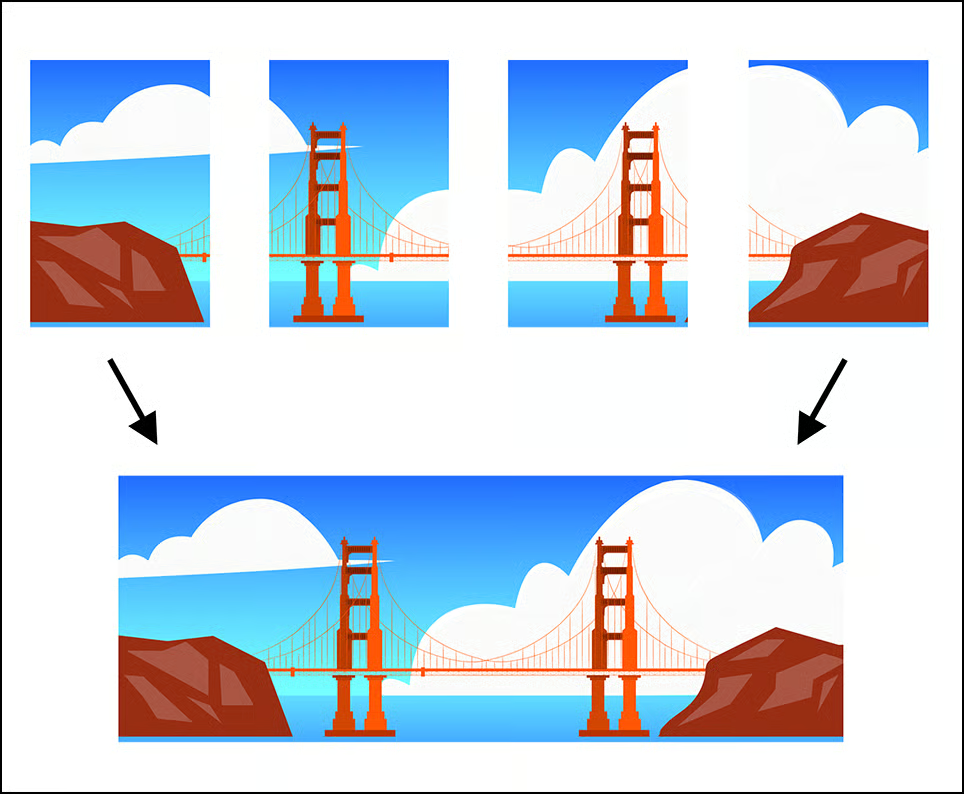
Import RAW files, apply basic corrections (lens profile, chromatic aberration, neutral WB), and optionally pre-merge HDR brackets into 32-bit files before stitching. PTGui is the industry workhorse for 360—fast, accurate control points, masking, and horizon tools. Hugin is a powerful open-source option. Lightroom and Photoshop can stitch partial panos; for spherical 360 and virtual tours, PTGui or Hugin are recommended. For rectilinear lenses, aim for ~25% overlap minimum (30–35% safer). PTGui overview and review
Cleanup & Enhancement
- Tripod/nadir patch: Use a dedicated nadir shot and mask it in PTGui, or export and clone in Photoshop. AI content-aware tools can speed this up.
- Color and noise: Match color balance across the set; apply selective noise reduction to shadows (especially night scenes).
- Geometry: Use the optimizer to level the horizon; correct yaw/pitch/roll. For architectural work, preserve verticals.
- Export: For VR platforms, export equirectangular 2:1 at 8K–12K wide (or more, depending on your row count and focal length). For print, create a rectilinear crop at the target size.
For a structured DSLR-to-360 workflow, the Oculus Creator guide is a solid reference. DSLR/mirrorless 360 pipeline
Video Walkthrough
Prefer video? Here’s a practical pano shooting and stitching walkthrough.
Useful Tools & Resources
Software
- PTGui panorama stitching (masking, control points, batch HDR pano)
- Hugin open source
- Lightroom / Photoshop for RAW and finishing
- AI tripod removal tools for nadir patching
Hardware
- Panoramic heads (Nodal Ninja, Leofoto, Really Right Stuff)
- Carbon fiber tripods + leveling bases
- Wireless remote shutters
- Pole extensions / car mounts (with safety tethers)
For additional background on pano techniques and best practices, see this Q&A resource. Techniques to take 360 panoramas
Field-Tested Scenarios
Indoor Real Estate
Set the D850 to ISO 64–100, f/8, and bracket ±2 EV. Use 2 rows × 8 at 14–16mm for full coverage, then a clean nadir. Lock WB around 3800–4200K for warm interiors or use a gray card. Avoid moving ceiling fans and ask people to step out during each row. Use profile corrections for edge straightness.
Outdoor Sunset
Base ISO, f/8–f/11, 1/60–1/200s. Consider a two-pass strategy: one just before sun dips for bright foreground detail, another after for rich sky color, then blend selectively. Shield the lens from flare at 14mm; your hand just out of frame can help. Shoot extra overlap near the sun.
Event Crowds
Increase shutter to 1/250s at f/5.6–f/8 and bump ISO to 400–800. Capture two complete rotations: one fast, one patient. In PTGui, use masks to keep clean sections from the second pass and reduce ghosting.
Rooftop or Pole Shooting
Wind is your main enemy. Add a weight bag, keep the center column down, and shorten exposures. On poles, limit to 14–20mm and spin gently. If the horizon wobbles, take multiple frames per angle and pick the sharpest in post.
Car-Mounted Capture
Only on closed roads or where permitted. Double-tether, keep speeds low, and avoid ultra-long exposures. Consider 20–24mm for less perspective stretch and more forgiving overlap if the car shifts.
Compatibility Note: Nikon D850 vs Canon RF 14–35mm
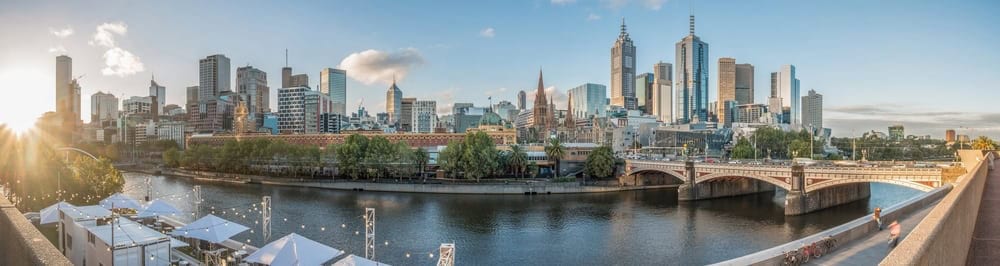
To reiterate, there’s no practical adapter to mount Canon RF lenses on Nikon F-mount DSLRs like the D850. If your lens is the Canon RF 14–35mm f/4L IS USM, pair it with a Canon EOS R-series body for this workflow. If your camera is the Nikon D850, use a Nikon F-mount ultra-wide rectilinear zoom instead. Technique, shot counts, and post-processing are identical in practice. For spherical resolution guidance and planning shot counts, see the PanoTools resource. DSLR spherical resolution reference
Common Mistakes & How to Avoid Them
- Parallax error: Always align around the lens’s entrance pupil. Mark your pano head once calibrated.
- Exposure flicker: Manual mode, fixed ISO, and locked WB keep frames consistent.
- Tripod shadows and footprints: Capture a separate nadir shot and patch in post.
- Ghosting from motion: Use masks in PTGui/Hugin and consider the two-pass approach.
- Night noise: Favor low ISO and longer shutter on a stable tripod; apply selective noise reduction later.
Frequently Asked Questions
- Can I shoot handheld panoramas with the Nikon D850?
Yes for partial panos and distant subjects, but for 360×180 scenes near foreground objects you’ll get parallax without a pano head. Handheld works best outdoors at 14–20mm with 40–50% overlap and fast shutter speeds.
- Is the Canon RF 14–35mm f/4L wide enough for a single-row 360?
No. At 14mm rectilinear you’ll typically need at least two rows plus zenith/nadir for full spherical coverage. A fisheye (e.g., 8–12mm) can do single-row 360 with far fewer shots, but at the cost of fisheye geometry.
- Do I need HDR for interiors with bright windows?
Usually yes. Even with the D850’s strong DR, windows often clip. Bracket ±2 EV (3–5 frames), merge to HDR, then stitch. Keep WB locked and brackets consistent across all angles.
- How do I avoid parallax issues with ultra-wide rectilinear lenses?
Use a panoramic head and calibrate the entrance pupil for each focal length you plan to use. Test with a near/far alignment target and adjust the fore-aft rail until there’s no relative shift when panning.
- What ISO range is safe on the D850 in low light?
For tripod work, ISO 64–200 is ideal; 400–800 is acceptable if you need more shutter speed. At ISO 1600 you’ll see more noise but it remains workable with careful denoising.
- Can I set up custom modes to speed pano shooting?
On the D850, save settings to banks (Photo Shooting Menu/Custom Settings). Store Manual exposure, fixed WB, base ISO, and exposure delay/mirror-up so you can recall them quickly.
- What’s the best tripod head for this setup?
A multi-row panoramic head with fore-aft and lateral adjustment (e.g., Nodal Ninja, Leofoto, RRS). For gigapixels at 35mm, a robust, indexed rotator and leveling base improve workflow.
Safety, Care, and Data Integrity
Always tether on rooftops and poles. Keep fingers clear of rotators and avoid rotating near crowded edges. Turn off stabilization on tripod to prevent feedback blur. After shooting, back up to two locations (card + SSD) and keep a second full rotation as insurance for stitching issues. For a deeper dive on DSLR 360 quality standards and head setup, this industry guide is helpful. High-end 360 pano head setup