Why This Camera & Lens Are Great for Panoramas
If you want a reliable, repeatable workflow for 360° photography, the Nikon D850 paired with the AstrHori 12mm f/2.8 Fisheye is a capable combination. The D850’s 45.7MP full-frame BSI sensor delivers excellent detail and broad dynamic range (around 14.8 EV at base ISO 64), giving you clean skies, recoverable shadows, and fine texture—key for high-end panos and VR tours. Its robust body, long battery life, and pro controls (mirror-up, exposure delay, custom banks) make it dependable in the field.
The AstrHori 12mm f/2.8 is a manual-focus full-frame fisheye offering an ultra-wide diagonal field of view near 180°. That extreme coverage means fewer shots per panorama, faster capture, and fewer stitching seams—a big win in interiors or crowds. As a manual lens, it’s simple, predictable, and consistent across frames. Expect some fisheye curvature by design and mild lateral chromatic aberration; stopping down to f/5.6–f/8 controls edges and boosts corner sharpness.
Mount note: ensure you have the Nikon F-mount version of the lens that fits the D850 directly. If you own a different mount version, verify compatibility before shooting; Z-mount lenses cannot be adapted to F-mount bodies.
Quick Setup Overview
- Camera: Nikon D850 — Full-frame 35.9×23.9mm sensor, 45.7MP, pixel pitch ~4.35µm, base ISO 64 (native 64–25,600, expanded 32–102,400).
- Lens: AstrHori 12mm f/2.8 Fisheye — full-frame fisheye, manual focus, pronounced fisheye projection, sharper edges at f/5.6–f/8, minor lateral CA typical for this class.
- Estimated shots & overlap: With a 12mm full-frame fisheye, 6 around (60° increments) + 1 zenith + 1 nadir at ~30% overlap works well. For very demanding interiors, use 8 around for extra coverage.
- Difficulty: Moderate — easy number of shots, but requires nodal alignment and consistent exposure for best stitching.
Planning & On-Site Preparation
Evaluate Shooting Environment
Survey the space for reflective surfaces (glass, polished floors, glossy tables), moving subjects, and light extremes (windows vs deep shadows). In glass-heavy rooms, avoid standing too close to reflections; give at least 1–2 m when possible to reduce ghosting and flare. Outdoors, note sun position—placing the sun entirely in one frame reduces stitch stress and flare arcs across seams.
Match Gear to Scene Goals
The D850’s dynamic range lets you hold sky highlights while preserving interior detail, especially when shooting at ISO 64–200 and bracketing for HDR. The AstrHori 12mm fisheye reduces the number of shots required for a full 360, speeding up capture in time-sensitive situations (event floors, rooftops in wind). Indoors, fewer frames means fewer blend seams across door frames and window mullions—less chance for parallax-related artifacts if your nodal point is dialed in.
Pre-shoot Checklist
- Power and storage: Fully charge EN‑EL15 series batteries; pack spares. Use fast, reliable XQD/CFexpress + SD cards and enable backup recording if possible.
- Optics clean: Clean front/rear elements; bring microfiber cloth and blower. Check the sensor—dust will multiply across frames.
- Tripod and pano head: Level the base; verify your panoramic head’s nodal alignment marks for this lens.
- Safety and stability: On rooftops or poles, tether your gear. Confirm wind conditions; keep center of gravity over the legs.
- Backup workflow: Shoot a second safety round. If crowds or cars interrupt, do another pass for patching.
Essential Gear & Setup
Core Gear
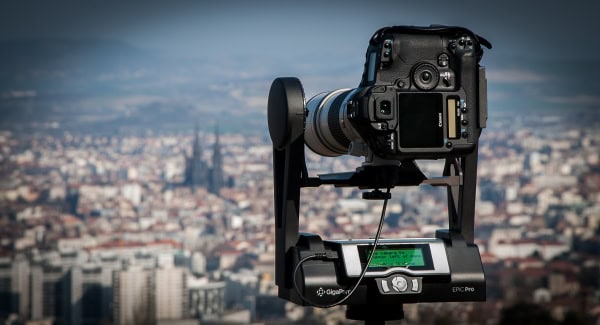
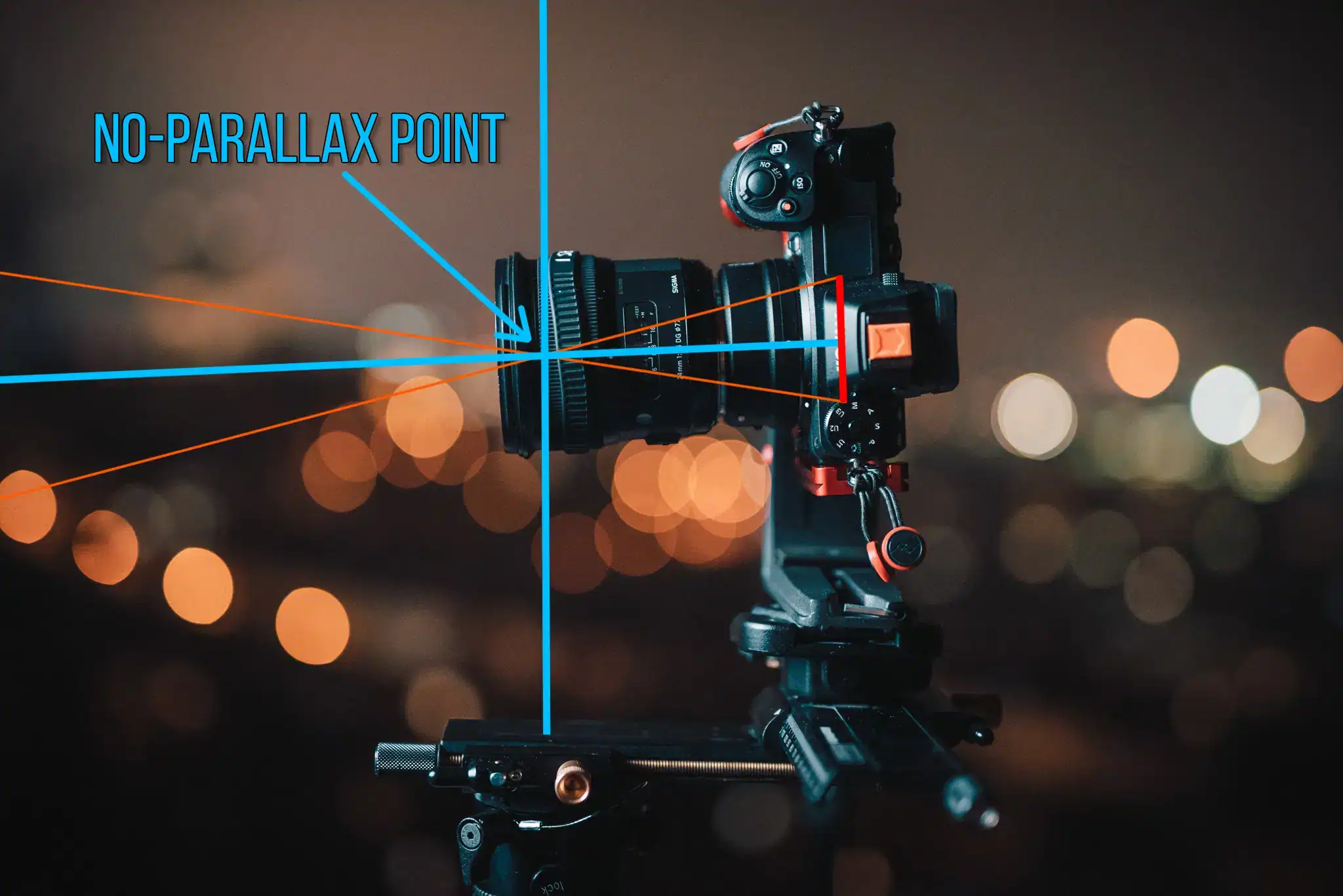
- Panoramic head: A quality panoramic head lets you rotate around the lens’s entrance pupil (nodal point) to eliminate parallax. This is essential for clean stitching when near objects intersect seams.
- Stable tripod with leveling base: A leveling base speeds setup and keeps the horizon true, reducing post corrections and preserving resolution.
- Remote trigger or app: Use a cable release or wireless remote. On the D850, combine with exposure delay or mirror-up to suppress vibration.
Optional Add-ons
- Pole or car mount: Only in controlled conditions. Use safety tethers and avoid strong winds. Increase shutter speeds to combat vibration.
- Lighting aids: Small LED panels or flashes for dark interiors; keep lighting consistent across frames.
- Weather protection: Rain covers, lens hoods, and microfiber cloths to manage drizzle and sea spray.
New to panoramic heads and alignment? This concise panoramic head tutorial is a helpful reference at the end of this section. Panoramic head setup guide
Step-by-Step Shooting Guide
Standard Static Scenes
- Level tripod & align nodal point: Mount the D850 + AstrHori on your panoramic head. Set the camera so the rotation axis passes through the lens’s entrance pupil. If you haven’t calibrated yet, place two vertical objects (one near, one far) and rotate the camera slightly; adjust the fore-aft rail until near and far objects stay aligned with no relative shift.
- Manual exposure & white balance: Switch to M mode. Meter a representative part of the scene (avoid clipping highlights), then lock settings. Fix white balance (e.g., Daylight outdoors or 3200–4000K for tungsten interiors). Consistency ensures smooth stitching.
- Capture with overlap: With a 12mm fisheye on the D850, shoot 6 around at 60° intervals with ~30% overlap. Add 1 zenith (tilt up ~60–90°) and 1 nadir (tilt down ~60–90°). For interior architecture, consider 8 around for extra safety.
- Nadir shot for tripod removal: Either shoot a dedicated nadir with the tripod shifted out of the way (viewpoint shot) or capture a clean floor tile to patch later.
HDR / High Dynamic Range Interiors
- Bracket exposures: Use auto-bracketing or manual exposure shifts to capture 3–5 frames per angle, often around ±2 EV coverage to balance window highlights and interior shadows.
- Lock WB and focus: Keep white balance fixed and focus manual to maintain consistent color and sharpness across brackets and angles.
- Merge before stitch: Either pre-merge HDR stacks per angle, or feed brackets into your stitcher that supports HDR panoramas (e.g., PTGui).
Low-Light / Night Scenes
- Use a tripod and long exposure: On the D850, start around f/4–f/5.6, ISO 100–400, and drag the shutter as needed. Engage exposure delay (1–3 s) or mirror-up with a remote to eliminate shake.
- ISO guidance: ISO 64–400 is ideal; ISO 800 is still quite clean. ISO 1600 can work with noise reduction if needed, but try to prioritize longer exposures over high ISO.
- Check star and light flare: Fisheyes can catch stray streetlights and glare—shade the lens as you rotate if practical.
Crowded Events
- Two passes: Shoot a normal pass, then a second pass to fill frames where moving people created gaps or overlap issues.
- Masking in post: In PTGui or your editor, mask out ghosts and choose the cleaner exposure from the two passes.
- Keep the camera stationary: Never move the tripod between passes; only rotate.
Special Setups (Pole / Car / Drone)
- Pole and rooftop: Tether the camera; watch wind. Use faster shutter speeds (e.g., 1/200–1/500) even in daylight to counter sway. Keep ISO at 200–400 if needed.
- Car-mounted: Use rigid suction mounts, safety cables, and short exposure times. Avoid busy roads. Expect to fix vibrations in post via deghosting and masking.
- Drone notes: The D850 is too heavy for common drones—this scenario is generally impractical with this body. Use a lighter system if aerial is required.
Recommended Settings & Pro Tips
Exposure & Focus
| Scenario | Aperture | Shutter | ISO | Notes |
|---|---|---|---|---|
| Daylight outdoor | f/8–f/11 | 1/100–1/250 | 100–200 | Lock WB to Daylight; keep sun in a single frame if possible |
| Low light/night | f/4–f/5.6 | 1/30–several s | 64–400 (800 if needed) | Tripod + exposure delay or mirror-up with remote |
| Interior HDR | f/8 | Bracket ±2 EV | 64–400 | Merge HDR stacks before stitching or use HDR pano mode |
| Action / moving subjects | f/5.6–f/8 | 1/200+ | 200–800 | Freeze motion; do a second pass for clean masks |
Critical Tips
- Focus: Switch to manual focus. For a 12mm at f/8 on full frame, a hyperfocal setting around 0.5–0.7 m keeps near-to-infinity acceptably sharp. Take a test frame at 100% to confirm.
- Nodal point calibration: Mark the fore-aft rail position on your pano head once dialed in for the D850 + AstrHori 12mm. Use the same plate every time and tape-mark the clamp for repeatability.
- White balance lock: Avoid auto WB—mixed lighting across frames will stitch with visible color shifts.
- RAW capture: Shoot 14-bit lossless compressed RAW for maximal dynamic range and color flexibility.
- Stabilization: The D850 has no IBIS. If your lens had VR, you would turn it off on a tripod. Use exposure delay mode (1–3 s) or mirror-up + remote to minimize mirror shock.
- Shutter type: Enable electronic front-curtain shutter (EFCS) when possible to reduce vibration at slower speeds.
Stitching & Post-Processing
Software Workflow
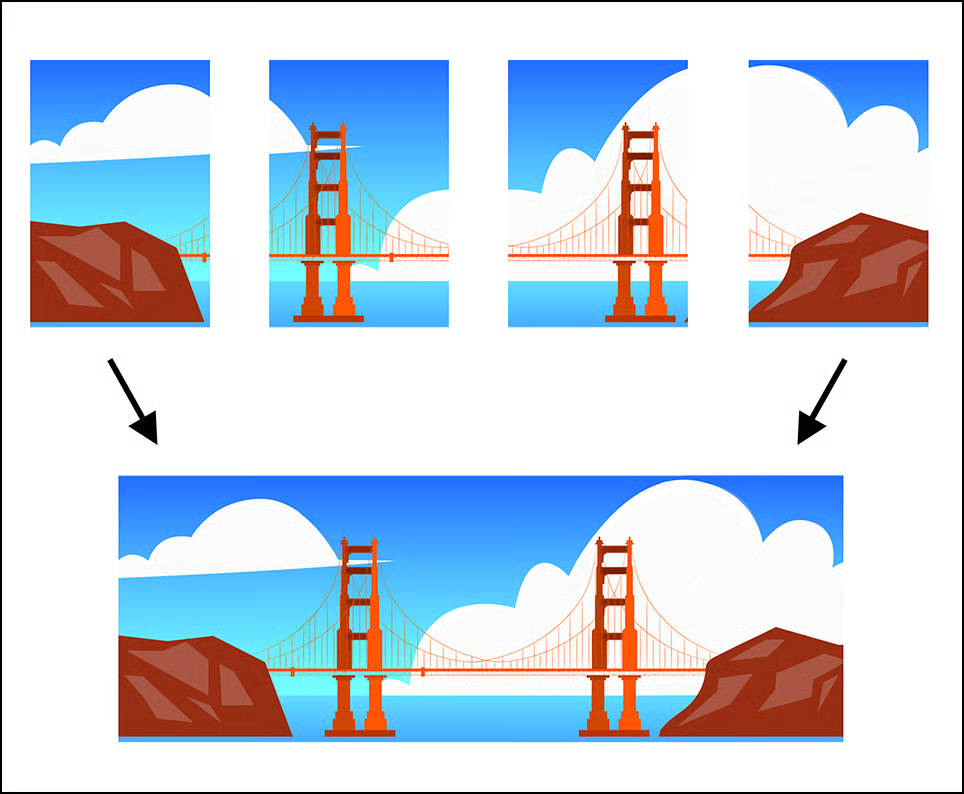
Load your images into a specialist stitcher such as PTGui or Hugin. With a full-frame fisheye, set the lens type to “full-frame fisheye” at 12mm. Typical overlap targets are ~25–35% for fisheyes; your 6-around pattern with added zenith and nadir should be robust for most scenes. Fisheye shots stitch more easily and require fewer shots; rectilinear ultrawides demand more frames but flatten edges. For professional VR publishing pipelines, see this overview on using DSLR cameras for 360 photos. DSLR 360 capture workflow
Cleanup & Enhancement
- Nadir patch: Use a viewpoint-corrected nadir shot or clone/heal the tripod area. Many editors and AI tools can simplify this patch.
- Color correction & noise: Apply global WB tweaks and gentle noise reduction for high-ISO or shadow areas, especially in night scenes.
- Level the horizon: Adjust roll/pitch/yaw in the stitcher to create a level horizon and correct verticals as needed.
- Export: For VR platforms, export an equirectangular JPEG/PNG at 8K–12K on the long side. With the D850 and a 6–8 shot fisheye workflow, expect final resolutions roughly in the 100–200MP range depending on overlap and rows.
PTGui is widely regarded for speed and control point handling; here’s a practical review for deeper evaluation. PTGui review and recommendations
Video: From Capture to Stitch
Watch a concise overview of panorama creation principles, useful even if you use different software. It reinforces key habits: consistent exposure, nodal alignment, overlap, and clean post-work.
For an additional perspective on choosing camera/lens combos and a broader FAQ for virtual tours, this resource is helpful. DSLR virtual tour gear guide
Disclaimer: Always check your software’s latest documentation for updated features and workflows.
Useful Tools & Resources
Software
- PTGui panorama stitching
- Hugin (open-source)
- Lightroom / Photoshop for RAW and retouching
- AI tripod removal / patching tools
Hardware
- Panoramic heads: Nodal Ninja, Leofoto, or similar
- Carbon fiber tripods with a leveling base
- Wireless remote shutters or intervalometers
- Pole extensions or car mounts (with safety tethers)
Disclaimer: Names are provided for research; verify specs and compatibility with your camera mount before purchase.
Field-Tested Scenarios With the D850 & AstrHori 12mm
Indoor Real Estate (Windows + Mixed Light)
Plan for 6 around + zenith + nadir, bracketed 3–5 exposures around ±2 EV. Keep ISO 64–200 and f/8 for edge-to-edge detail; shutter speeds will vary. Turn off auto WB; set a fixed Kelvin temperature or use a gray card in the space to nail consistency. If windows clip, consider a second window-focused pass to mask in crisp exterior detail.
Sunset Rooftop (High DR & Wind)
Wind is your enemy. Lower the center column, widen the tripod stance, and tether the camera. Use 1/100–1/200 at ISO 100–200 and f/8. Bracket for the sun and skyline. If flare appears, shade the lens with your hand just outside the frame as you rotate. Keep the sun in one frame; this reduces seam complexity.
Event Floor (Moving People)
Time your rotation during natural lulls. Use 1/200 at f/5.6–f/8, ISO 400–800. Do two complete passes so you can mask motion later. The fisheye’s lower shot count makes this practical.
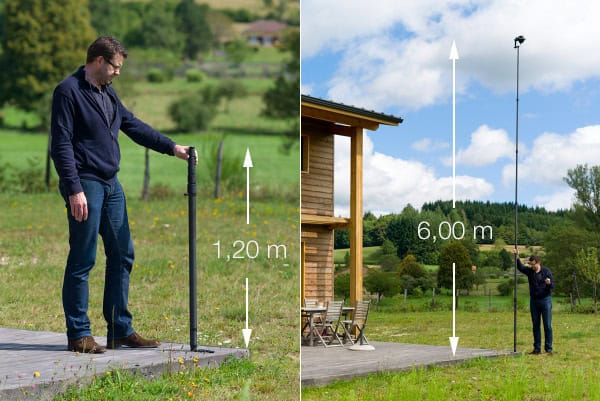
Pole Capture (Overhead View)
Use a lightweight pole rated for the load, plus a safety tether. Lock exposure and focus, shoot quickly with 1/250–1/500 s to counter sway, and consider 4–6 around if your nodal alignment is solid. Be mindful of overhead lines and permissions.
Common Mistakes & How to Avoid Them
- Parallax error: Always rotate around the lens’s entrance pupil. Recheck your pano head’s fore-aft setting if you see misalignments near seams.
- Exposure flicker: Manual exposure and locked WB are mandatory. Avoid Auto ISO.
- Tripod shadows or footprints: Shoot a clean nadir and patch it. Move a foot or two and shoot a viewpoint shot if needed.
- Ghosting from movement: Do second passes or time your rotation to minimize moving subjects. Mask in post.
- High ISO noise: Favor longer exposures over high ISO on the D850; ISO 800 is fine, but 1600+ needs careful noise reduction.
- Fisheye flare: Keep bright light sources within a single frame as you rotate, and consider using your hand as a flag just outside the frame.
Frequently Asked Questions
- Can I shoot handheld panoramas with the Nikon D850?
Yes for simple panos, but for 360×180° virtual tours, use a tripod and pano head. Handheld rotation rarely aligns with the lens’s nodal point, causing parallax and stitching errors—especially near foreground objects.
- Is the AstrHori 12mm f/2.8 fisheye wide enough for single-row 360?
Yes. On full-frame, 6 around + zenith + nadir is a reliable single-row pattern. In tight interiors or for safety, shoot 8 around for extra overlap.
- Do I need HDR for interiors with bright windows?
Often yes. The D850 has excellent dynamic range, but bracketing 3–5 frames around ±2 EV will preserve exterior views and interior detail. Merge per angle, then stitch, or let PTGui handle HDR pano stacks.
- How do I avoid parallax issues?
Calibrate the nodal point using a pano head with a fore-aft rail. Align near and far verticals while rotating; adjust until there’s no relative shift. Mark that position and reuse it for this camera/lens combo.
- What ISO range is safe on the D850 in low light?
ISO 64–400 is optimal. ISO 800 remains clean. ISO 1600 is usable with noise reduction, but if the tripod allows, favor longer shutter speeds instead of pushing ISO.
- Can I create custom modes for pano shooting?
While the D850 doesn’t have C1/C2 like some mirrorless, you can register shooting banks. Save a “Pano” bank with manual exposure, fixed WB, RAW, exposure delay, and mirror-up settings to speed setup.
- How can I reduce flare with a fisheye?
Keep strong light sources fully within a single frame as you rotate, shade the lens with your hand just out of frame, and stop down to f/8 if needed. Clean the front element to minimize ghosting.
- What tripod head is best for this setup?
A multi-row panoramic head with precise fore-aft adjustment (e.g., Nodal Ninja or a geared Leofoto solution) makes nodal alignment easy. A leveling base under the head speeds setup and helps keep horizons perfect.
Quality, Safety, and Data Management
Always secure your gear in public or elevated spaces—use a safety tether and keep a hand on the tripod when people are nearby. In wind, shorten the center column and widen the stance. For data integrity, enable dual recording if you’re using both slots; back up to a laptop or SSD at breaks. After shooting, quickly review for completeness (no missed frames), flare, or soft focus before leaving the site.
Wrap-up: How to Shoot Panorama with Nikon D850 & AstrHori 12mm f/2.8 Fisheye
This combo is fast, clean, and dependable for 360° work: the D850 provides top-tier RAW files with excellent dynamic range, and the AstrHori 12mm fisheye minimizes shot count. Nail nodal alignment, lock exposure and WB, and use a disciplined capture pattern (6 around + Z + N). For interiors or sunset skies, bracket exposures and merge cleanly. In post, lean on software like PTGui or Hugin and keep your equirectangular exports level and color-consistent. With practice, you’ll deliver professional 360 photos and virtual tours with fewer headaches and more keepers.
For deeper technique discussions and problem-solving approaches from many photographers, this Q&A thread remains a solid reference. Techniques to take 360 panoramas