Why This Camera & Lens Are Great for Panoramas
The Nikon D750 paired with an ultra‑wide rectilinear zoom like the Sony FE 12–24mm f/4 G gives you immense coverage, high dynamic range, and reliable image quality for large, detailed 360° and gigapixel panoramas. The D750’s full-frame 24.3MP sensor (36×24mm, ~5.97µm pixel pitch) delivers excellent dynamic range at base ISO (around 14+ EV), clean shadows up to ISO 800–1600, and consistent color—ideal for stitching. The Sony FE 12–24mm f/4 G is a sharp, low‑distortion rectilinear lens with a constant f/4 aperture and good corner performance when stopped to f/5.6–f/8, which helps keep edges clean where stitches happen.
Important compatibility note: the Sony FE 12–24mm f/4 G is a Sony E‑mount lens and cannot be directly mounted on a Nikon D750 (F‑mount) due to flange distance and mount differences; there is no practical adapter that maintains infinity focus. If your goal is specifically “how to shoot panorama with Nikon D750 & Sony FE 12–24mm f/4 G,” you have two workable paths:
- Use a Sony E‑mount body with the FE 12–24mm for capture, then apply the D750 techniques/settings analogously; or
- Use a Nikon F‑mount 12–24mm‑class rectilinear alternative on the D750 (e.g., Sigma 12–24mm Art, Nikon 14–24mm f/2.8, Tamron 15–30mm f/2.8) and follow the same shooting workflow below. The pano math and setup are identical for a rectilinear ultra‑wide on full frame.
In this guide, we’ll focus on the Nikon D750 body and a 12–24mm rectilinear behavior set (matching the Sony FE 12–24mm’s field of view) so you can execute reliable single‑ and multi‑row 360° captures for real estate, landscape, events, and pole/rooftop work.

Quick Setup Overview
- Camera: Nikon D750 — Full‑Frame (FX) 24.3MP, ~5.97µm pixel pitch, excellent DR at ISO 100, clean up to ISO 1600–3200 with careful exposure.
- Lens: Sony FE 12–24mm f/4 G (rectilinear ultra‑wide). On a compatible body it’s sharpest around f/5.6–f/8; minimal CA when stopped down; no front filter thread. For D750, use a similar full‑frame 12–24mm‑class rectilinear lens.
- Estimated shots & overlap (full‑frame, portrait orientation, ~30% overlap):
- At 12mm: 8–10 shots per row × 2 rows + zenith + nadir (≈20–24 total).
- At 16–18mm: 10–12 shots per row × 2 rows + zenith + nadir (≈24–28 total).
- At 24mm: 12–16 shots per row × 2 rows + zenith + nadir (≈28–36 total).
For partial cylindrical panos (not full sphere), a single row often suffices.
- Difficulty: Moderate. Ultra‑wide rectilinear lenses are forgiving, but precise nodal alignment and overlap still matter.
Planning & On-Site Preparation
Evaluate Shooting Environment
Look for moving subjects (people, cars, foliage), reflective glass, bright windows, and light sources in frame. Identify strong backlights that can cause flare with ultra‑wides. If shooting through glass, get as close as possible (within a few centimeters) to minimize reflections and ghosting, and consider using a rubber lens hood against the glass. In tight interiors, note repeating patterns and edges (tiles, cabinets); they expose parallax errors if your nodal point is off.
Match Gear to Scene Goals
The D750 offers strong dynamic range for sunrise/sunset and interior‑with‑window scenes; bracketed HDR panos are very clean at ISO 100–400. For darker interiors, the D750 stays usable at ISO 800–1600 with tripod support. Rectilinear 12–24mm framing preserves straight lines, which is crucial for architecture and real estate. Expect more shots than a fisheye solution, but cleaner geometry for walls and ceilings.
Pre-shoot Checklist
- Charge batteries, carry spares; format fast, reliable SD cards.
- Clean the front element; dust shows in skies and bright walls.
- Level your tripod; verify panoramic head calibration.
- Safety: mind wind on rooftops; tether pole setups; check car mount bolts; never leave gear unattended near edges.
- Backup workflow: shoot a second pass if time allows, especially for client work.
Essential Gear & Setup
Core Gear
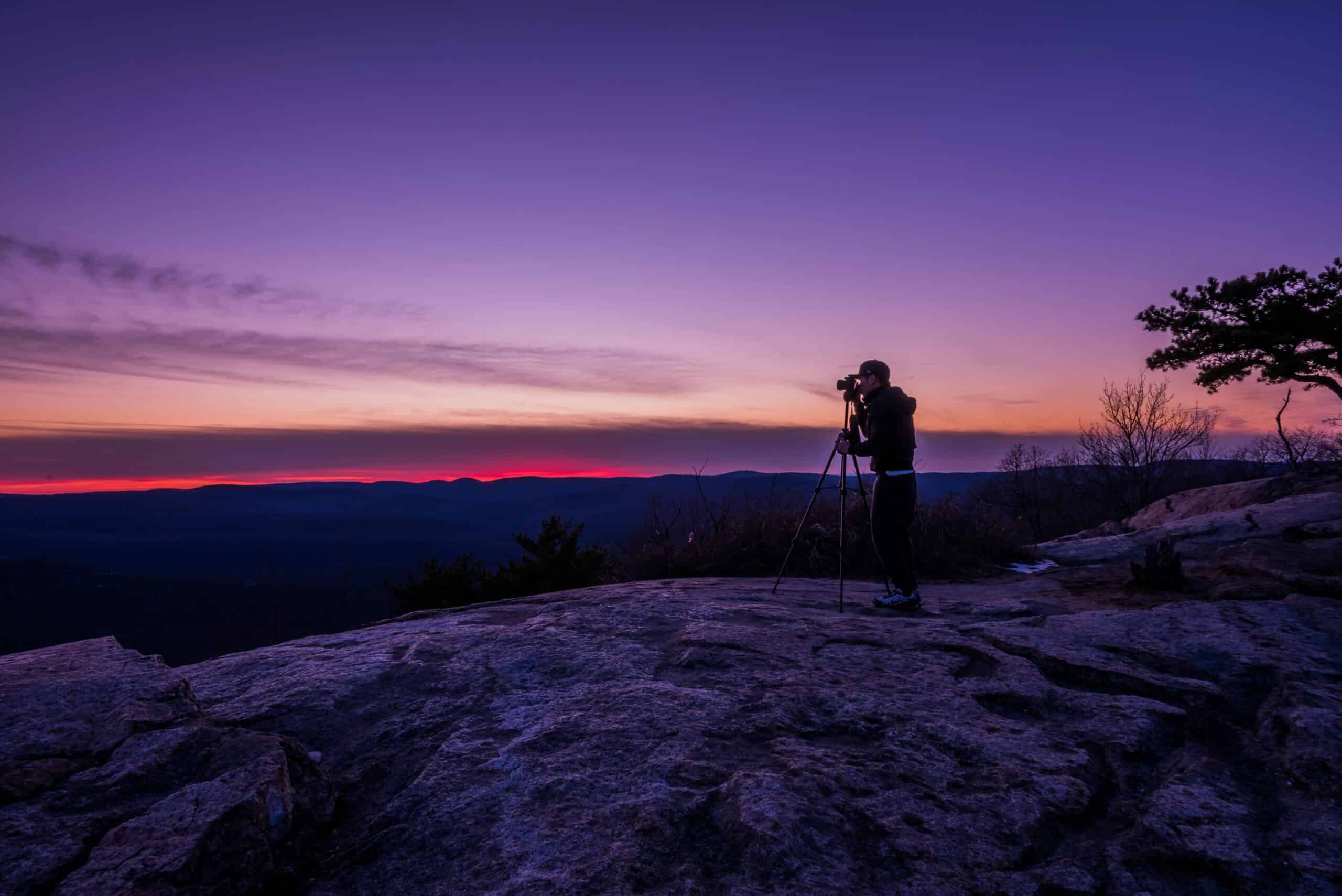
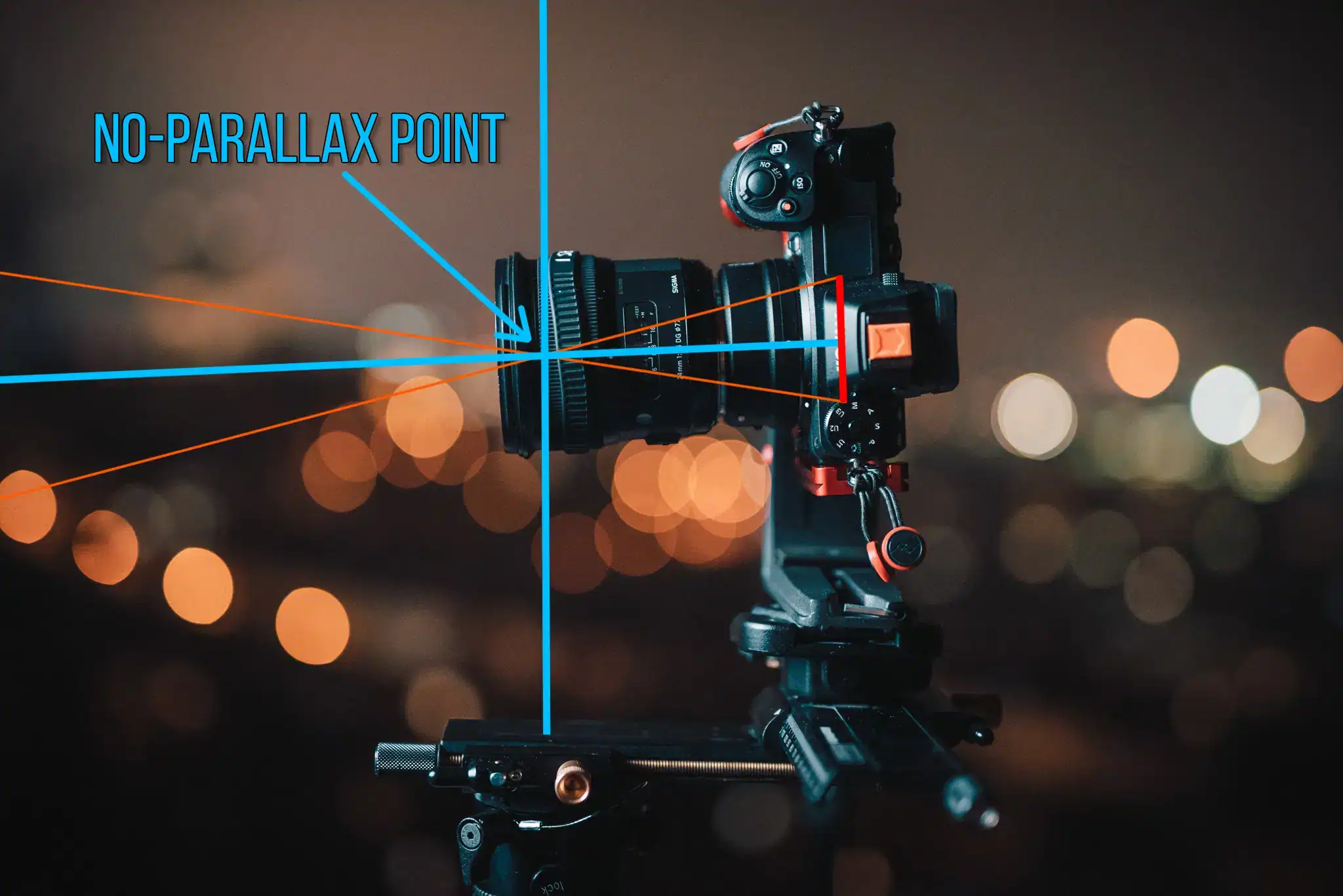
- Panoramic head: Allows rotation around the lens’s entrance pupil (nodal point) to eliminate parallax, critical for interiors and near‑field objects.
- Stable tripod with leveling base: Speeds setup and keeps your horizon level through a full rotation.
- Remote trigger or self‑timer: Prevents vibrations; the D750’s exposure delay mode is also helpful.
Optional Add-ons
- Pole or car mount: Great for crowds or elevated views. Use safety tethers, check wind loads, and limit speed/rotation to reduce vibration.
- Lighting aids: Small LED panels or bounced flash for dark interiors; keep lighting consistent across frames.
- Weather protection: Rain covers and microfiber cloths; ultra‑wides are more flare‑prone with droplets on the glass.
Step-by-Step Shooting Guide
Standard Static Scenes
- Level and align: Level the tripod and set your panoramic head so the lens rotates around its entrance pupil. Start with the camera in portrait orientation to maximize vertical coverage.
- Manual exposure and WB: Meter the brightest portion you need to retain detail (e.g., sky or window), then set manual exposure. Lock white balance (Daylight, Cloudy, or a measured Kelvin) to keep frames consistent.
- Focus: Switch to manual focus, set near the hyperfocal distance at f/8 (for 12–18mm this is typically under a meter on full frame), then tape the ring if needed. Take a test shot and zoom in to verify edge sharpness.
- Capture with planned overlap: For 12mm, shoot 8–10 frames per row at ~30% overlap. Do two rows (tilt up and tilt down), then add a zenith and nadir shot for a full sphere.
- Nadir (ground) shot: After the main set, move the tripod slightly or shoot a hand‑held plate to patch out the tripod in post.
HDR / High Dynamic Range Interiors
- Bracketing: Use ±2 EV (3 or 5 frames depending on scene contrast). Keep aperture fixed (e.g., f/8), vary shutter speed, and keep ISO low (100–200).
- Consistency: Lock WB and focus. Use a remote or the D750’s exposure delay mode to avoid micro‑shake between brackets.
- Workflow: Either pre‑merge each bracket set to HDR and then stitch, or stitch bracketed sets in PTGui/Hugin directly—both workflows are valid.
Low-Light / Night Scenes
- Exposure: Open to f/4–f/5.6, use longer shutter speeds (1–10s as needed). Keep ISO 100–800 when possible; the D750 tolerates ISO 1600–3200 but protect highlights.
- Stability: Use a solid tripod, remote trigger, and the D750’s exposure delay (1–3s). Turn off lens VR if present; the D750 has no IBIS.
- Flare control: Shade the lens from direct street lamps; check frames at 100% for ghosts and adjust your angle if needed.
Crowded Events
- Two passes: Do a fast pass to secure coverage, then a second pass waiting for gaps in traffic. Mark frames with your hand in front of the lens to separate passes in post.
- Post blending: In your stitcher, use masks to select cleaner people/positions across overlapping frames.
Special Setups (Pole / Car / Rooftop)
- Secure everything: Tether the camera, lock clamps, and check wind. On a car mount, test at low speeds and avoid rough roads.
- Rotation strategy: Fewer, deliberate rotations reduce motion blur. Increase overlap to 35–40% to help your stitcher handle micro‑movement.
- Safety first: Never prioritize the shot over personal safety or public safety—especially on rooftops and near traffic.
Field‑Tested Mini Case Studies
Indoor Real Estate with Bright Windows
Shoot at 12–16mm, f/8, ISO 100. Bracket ±2 EV, lock WB to 4500–5000K if mixed daylight/tungsten. Aim for two rows plus Z/N. Keep the panoramic head’s entrance pupil aligned to avoid parallax on furniture edges.
Sunset Landscape
Meter for the sky highlights; expose to preserve color in the sunlit clouds. Use ISO 100–200, f/8–f/11, 1/60–1/125s. Consider a second darker pass for sun disk detail and blend in post.
Rooftop Cityscape
Wind is the enemy. Weight your tripod, shorten the center column, and consider 1/100–1/200s at ISO 200–400 with f/8 to avoid blur. Increase overlap to 35% to help the stitcher with subtle frame‑to‑frame shifts.
Recommended Settings & Pro Tips
Exposure & Focus
| Scenario | Aperture | Shutter | ISO | Notes |
|---|---|---|---|---|
| Daylight outdoor | f/8–f/11 | 1/100–1/250 | 100–200 | Lock WB (Daylight); enable exposure delay |
| Low light/night | f/4–f/5.6 | 1/30–2s+ | 100–800 | Tripod and remote; turn off stabilization |
| Interior HDR | f/8 | Bracket ±2 EV | 100–400 | Balance windows and lamps; keep WB locked |
| Action / moving subjects | f/5.6–f/8 | 1/200+ | 400–800 | Freeze motion; shoot two passes for masking |
Critical Tips
- Manual focus at or near hyperfocal for 12–18mm to keep everything sharp. Verify edges at 100% before committing.
- Nodal alignment: For a 12–24mm rectilinear, the entrance pupil is typically near the front element at the wide end. Start with the rotation axis roughly under the front element and fine‑tune using a near/far alignment test.
- White balance: Lock a Kelvin value or a preset; avoid Auto WB across frames to prevent color shifts that complicate stitching.
- RAW capture: Always shoot RAW for more recoverable highlights/shadows and consistent color matching.
- Stabilization: Disable VR/IS on a tripod. The D750 has no IBIS; rely on solid support and exposure delay.
Stitching & Post-Processing
Software Workflow
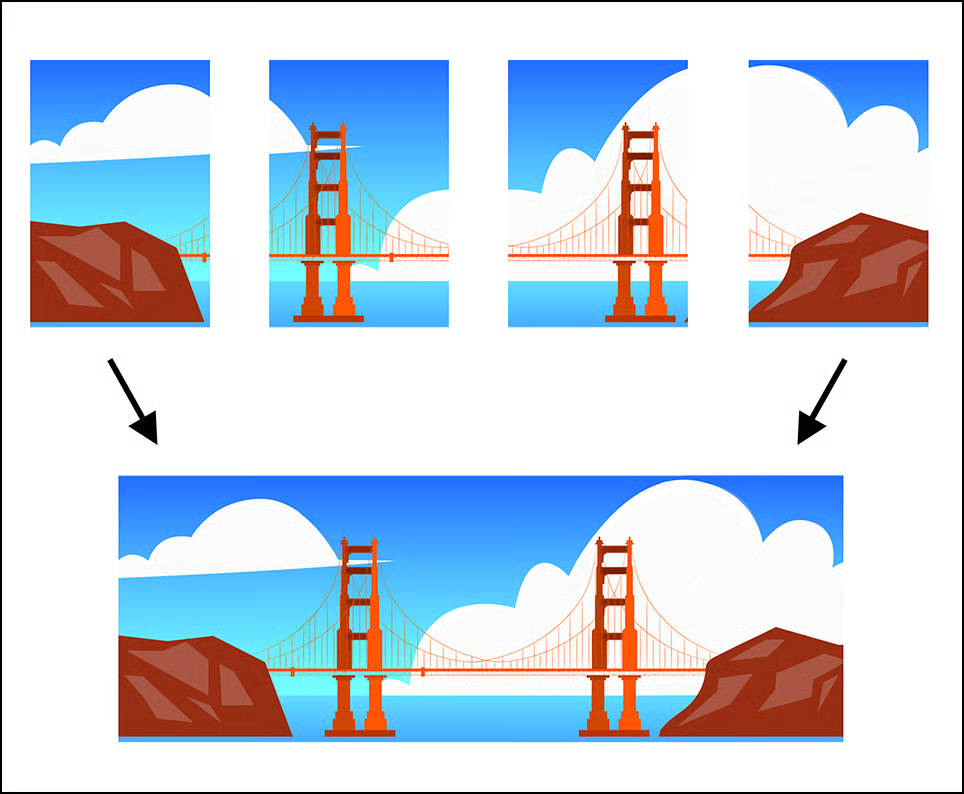
Import RAWs and apply consistent lens corrections and WB in Lightroom or Capture One. For stitching, PTGui is industry‑standard for reliability and speed, while Hugin is a powerful open‑source option. Rectilinear ultra‑wides need more frames than fisheyes but yield straighter architecture lines. Aim for 25–35% overlap in every direction for robust control point placement. After stitching, export an equirectangular TIFF/JPEG for finishing and delivery. For more background on panoramic stitching choices, see this review of PTGui. PTGui review and why many pros use it.
Cleanup & Enhancement
- Nadir patch: Capture a clean floor plate and patch manually, or use AI removal tools when appropriate.
- Color and noise: Balance color temperature across the seam lines; apply gentle noise reduction for high‑ISO night shots.
- Leveling: Correct yaw/pitch/roll and ensure a straight horizon; most stitchers have “straighten horizon” tools.
- Export: For VR platforms, export 2:1 equirectangular at 8K–16K if your frame count and optics support it.
Want a visual walk‑through? This concise video helps you understand multi‑row pano steps end‑to‑end:
For a high‑level guide to DSLR 360 capture and stitching best practices, the Oculus Creator docs are an excellent reference. Using a DSLR or mirrorless camera to shoot and stitch a 360 photo.
Useful Tools & Resources
Software
- PTGui panorama stitching
- Hugin open source
- Lightroom / Photoshop for RAW and finishing
- AI tripod removal tools for nadir cleanup
Hardware
- Panoramic heads (Nodal Ninja, Leofoto, Sunwayfoto)
- Carbon fiber tripods with leveling bases
- Wireless remotes and L‑brackets for portrait orientation
- Pole extensions and car suction‑cup rigs with safety tethers
For nodal head setup fundamentals, this illustrated tutorial is very approachable. Panoramic head setup explained.
Disclaimer: product names are for search/reference; confirm specs and compatibility on manufacturers’ sites.
Common Mistakes & How to Avoid Them
- Parallax error → Always rotate around the entrance pupil using a calibrated panoramic head.
- Exposure flicker → Use manual exposure and locked white balance; avoid auto ISO.
- Tripod shadows/footprints → Shoot a nadir patch and clone out the tripod in post.
- Ghosting from movement → Take two passes and mask moving people/vehicles during stitching.
- Night noise and blur → Keep ISO moderate and use longer shutter on a stable tripod with a remote trigger.
- Flare with ultra‑wides → Shield the lens, avoid direct point light sources when possible, and check frames at 100%.
Frequently Asked Questions
- Can I physically mount the Sony FE 12–24mm f/4 G on a Nikon D750?
No. Sony FE is E‑mount with a much shorter flange distance than Nikon F. There’s no practical adapter that preserves infinity focus. Use a Nikon‑F ultrawide alternative on the D750, or use a Sony E‑mount body with the FE 12–24 and apply the same pano techniques.
- Is 12mm wide enough for a single‑row 360 on full frame?
Not for a full 360×180 sphere. At 12mm rectilinear in portrait orientation you’ll typically need two rows plus zenith and nadir. For cylindrical panos (no zenith/nadir), one row is often fine.
- Do I need HDR for interiors with bright windows?
Yes, usually. Bracket ±2 EV (3–5 frames) at ISO 100–200 and f/8 to keep highlights in the windows and detail in shadows. Merge to HDR before or during stitching.
- How do I avoid parallax issues with furniture and door frames?
Calibrate the panoramic head to the lens’s entrance pupil. Use a near/far alignment test and adjust the fore‑aft slider until foreground and background features don’t shift relative to each other when panning.
- What ISO range is safe on the D750 for low‑light panos?
Stick to ISO 100–800 on a tripod for best quality. ISO 1600–3200 is usable with careful exposure and gentle noise reduction, but prioritize long shutter speeds over high ISO whenever possible.
Visual Aids for Clarity
Safety, Care, and Data Integrity
Use a weight bag on windy rooftops, tether pole rigs, and keep fingers clear of rotating heads. Protect your front element—ultra‑wides are sensitive to flare and smears. After the shoot, back up cards immediately in two locations. Consider shooting a second pass as insurance for critical scenes. When in doubt about advanced techniques or gear configuration, consult official manuals and reputable panoramic resources before field work.