
Why This Camera & Lens Are Great for Panoramas
If you want to learn how to shoot panorama with Nikon D750 & Sigma 14-24mm f/2.8 DG DN Art, you’re starting with a proven full-frame body and an ultra-wide rectilinear zoom that excels in detail and edge control. The Nikon D750’s 24.3MP FX sensor (35.9 × 24.0 mm, ~5.97 µm pixel pitch) delivers excellent dynamic range at base ISO (~14 EV at ISO 100) and clean files through ISO 800–1600. That headroom lets you preserve shadow detail in interiors and sunsets without resorting to excessive noise reduction later. The body’s Exposure Delay Mode and mirror lock options help reduce vibration for tack-sharp panoramas on a tripod.
About the lens: the Sigma 14-24mm f/2.8 DG DN Art is an optically superb, rectilinear ultra-wide notable for high corner sharpness, well-controlled coma, and relatively low distortion for its class. However, there’s an important compatibility note: the DG DN version is made for mirrorless mounts (e.g., Sony E, L-mount). It will not mount on the Nikon D750 (F-mount) without an appropriate camera change. For the D750, the equivalent is the Sigma 14-24mm f/2.8 DG HSM Art (F-mount). Technique and settings in this guide apply identically to either version—DN or HSM—because the field of view and optical behavior are the same. If you own the DG DN lens, use it on a compatible mirrorless body; if you’re on a D750, use the DG HSM F-mount version or a similar 14–24mm rectilinear.
Rectilinear ultra-wide zooms like the 14–24mm are excellent for high-resolution 360 photos and gigapixel panos because they maintain straight lines, reduce edge stretching compared to fisheyes, and let you choose a shot count that balances speed with final resolution. The trade-off versus a fisheye is more frames per sphere and more careful nodal alignment, but the stitching pays off with cleaner architecture and natural-looking horizons.
Quick Setup Overview
- Camera: Nikon D750 — Full-Frame (FX), 24.3MP, base ISO 100, excellent DR (~14 EV), strong ISO up to 1600 for panos.
- Lens: Sigma 14-24mm f/2.8 DG DN Art (mirrorless) / DG HSM Art (Nikon F) — rectilinear ultra-wide zoom; sharp by f/5.6–f/8; low coma; mild complex distortion; bulbous front element, no front filters.
- Estimated shots & overlap (spherical 360, full-frame):
- 14mm: 6 shots per row × 3 rows (−45°, 0°, +45°) + zenith + nadir = ~20 frames (30–35% overlap).
- 18mm: 8 shots per row × 3 rows + Z + N = ~26 frames.
- 24mm: 10 shots per row × 3 rows + Z + N = ~32 frames.
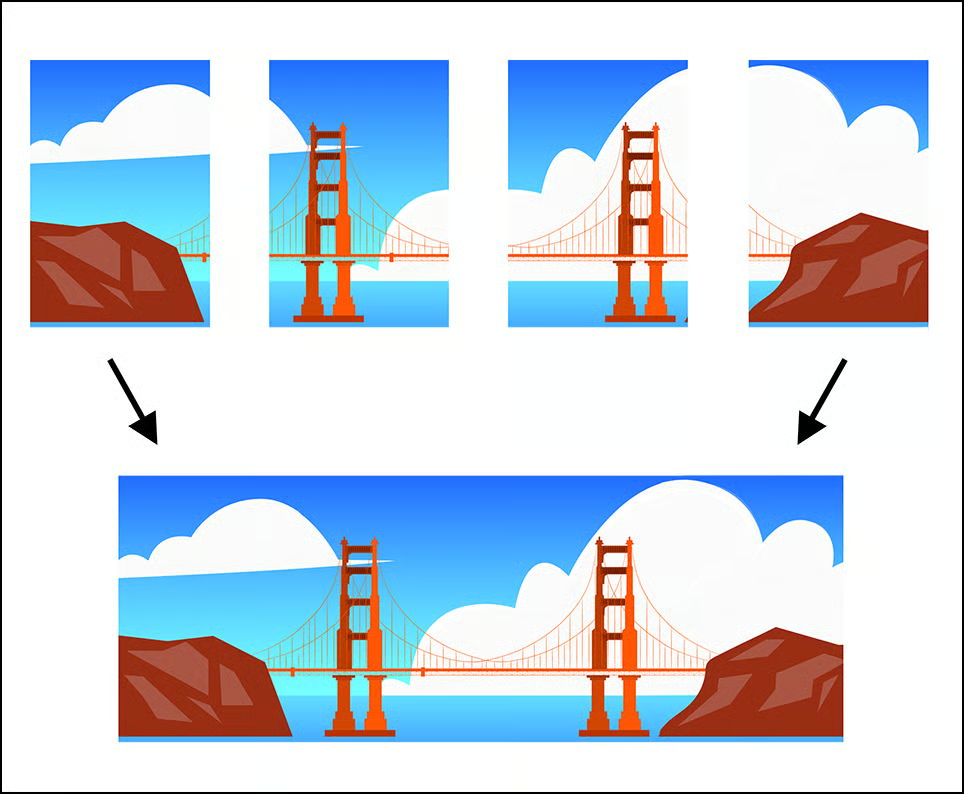
- Single-row cylindrical at 14mm: 6–8 frames for a 180–220° sweep.
- Difficulty: Intermediate — requires nodal alignment and consistent manual exposure/white balance for flawless stitches.
Planning & On-Site Preparation
Evaluate Shooting Environment
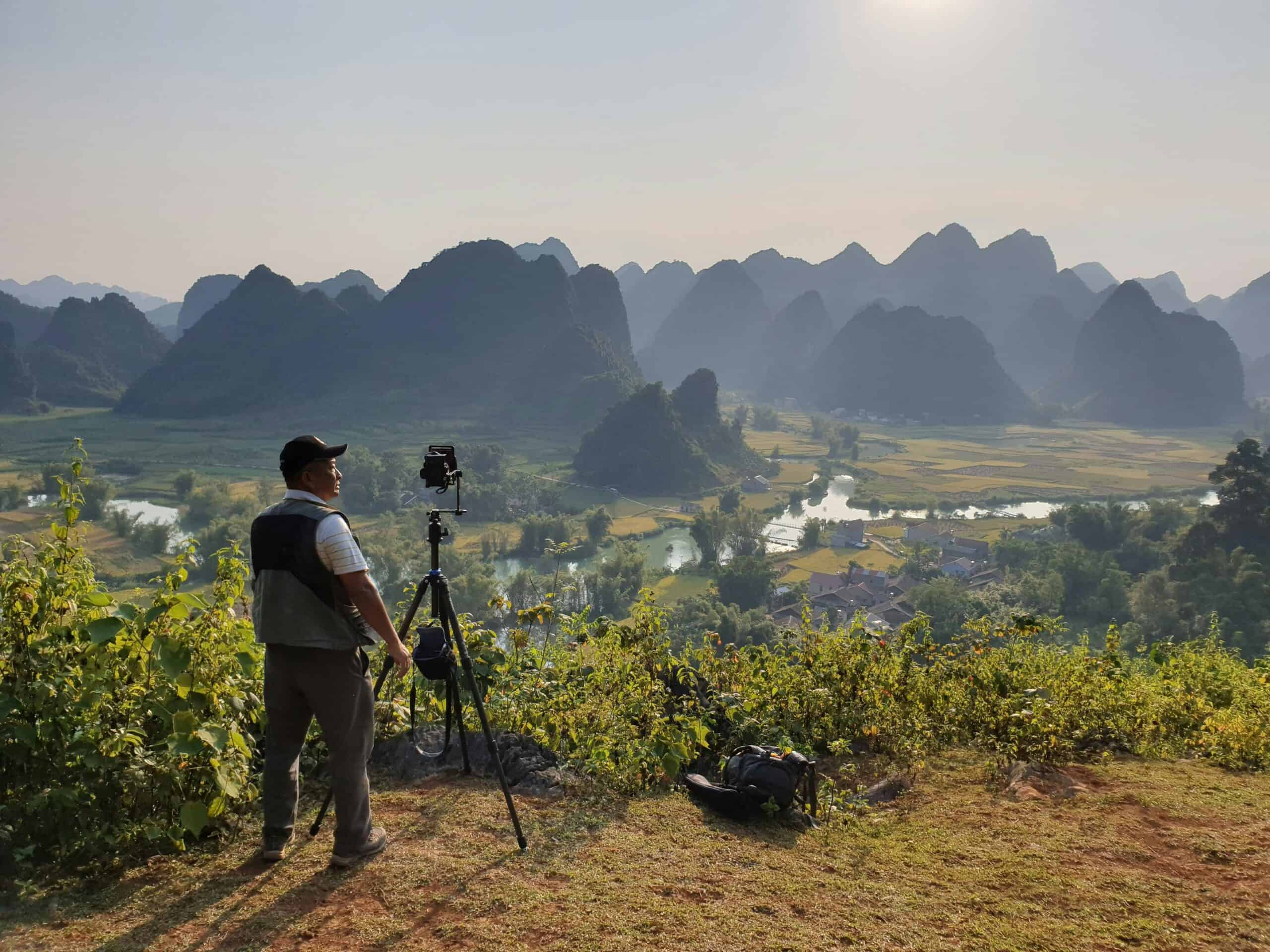
Scan the scene for moving subjects, reflective surfaces (glass, polished floors), and strong light sources. If you must shoot through glass, position the front element close (1–3 cm) and shoot at a slight angle to minimize reflections; use a black cloth to block stray light. For exteriors, note sun position—shooting the sun inside the frame can cause flare and stitching mismatches; consider starting a row with the sun behind you and finish quickly to keep light consistent.
Match Gear to Scene Goals
The Nikon D750’s strong dynamic range and low ISO noise floor make it ideal for HDR panoramas of interiors and twilight scenes. Keep ISO at 100–200 for daylight, and 400–800 for dim interiors or blue hour; 1600 remains usable with careful noise reduction. With a 14–24mm rectilinear, you’ll take more frames than with a fisheye, but you’ll get straighter architecture and less edge stretching—great for real estate and cityscapes. For fast-moving scenes, consider shooting at 14mm to reduce shot count and stitching risk.
Pre-shoot Checklist
- Charge batteries and carry spares; format a fast SD card and bring a backup.
- Clean front/rear elements; check sensor dust (f/16 test shot on sky/wall).
- Level your tripod using a leveling base; verify your panoramic head’s nodal alignment for 14mm and 24mm and mark positions.
- Safety: weigh down your tripod in wind; on rooftops and poles, use a tether; avoid overreaching when rotating the head.
- Backup workflow: when time allows, capture a second complete round for safety; if doing HDR, do a quick non-HDR pass as an emergency backup.
Essential Gear & Setup
Core Gear
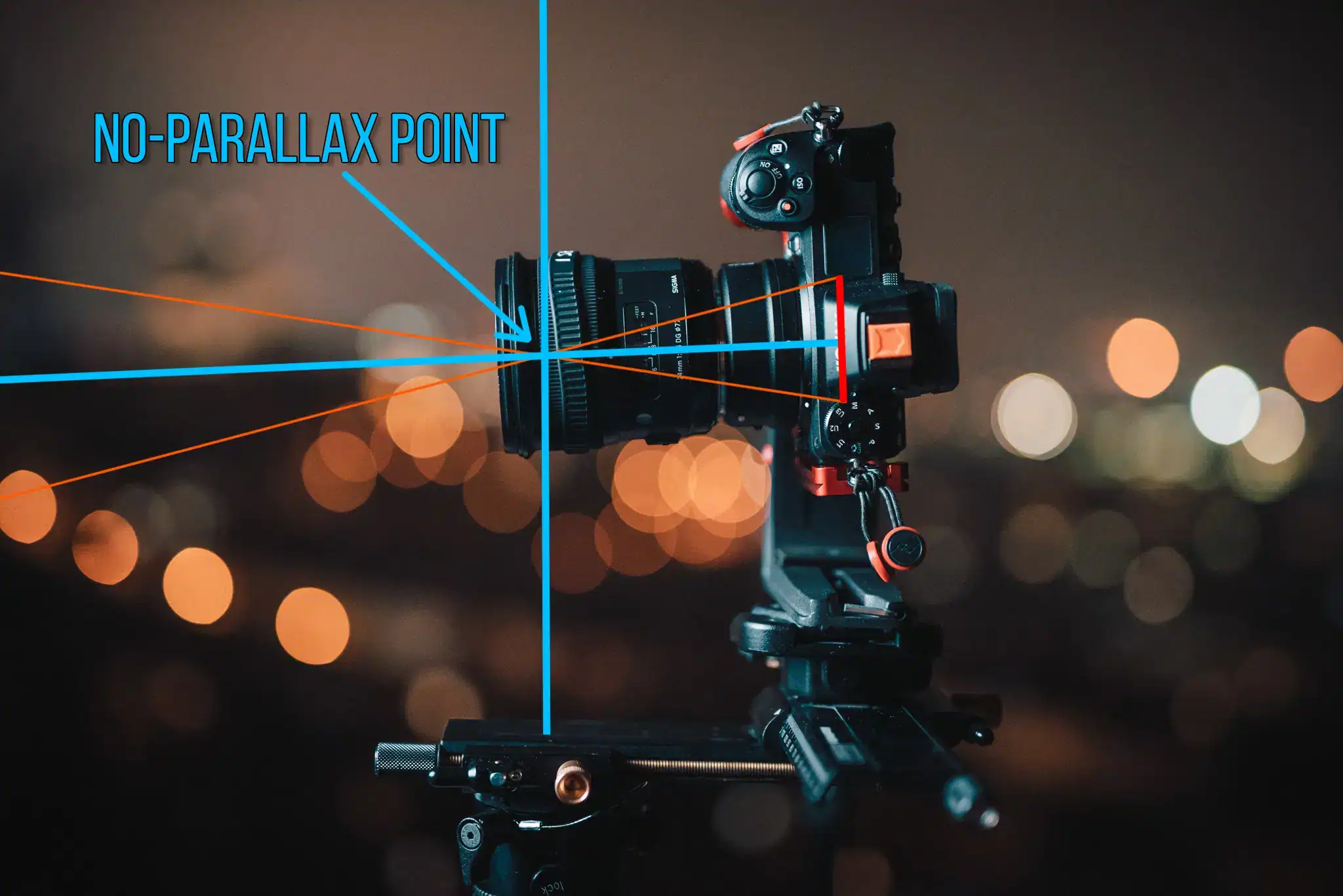
- Panoramic head: A proper pano head allows no-parallax (nodal) alignment so foreground and background don’t shift between frames. Align the entrance pupil of the lens over the rotation axis to eliminate parallax.
- Stable tripod with leveling base: Leveling greatly speeds multi-row shooting and avoids horizon errors.
- Remote trigger or app: Use a cable release or self-timer/Exposure Delay Mode to avoid vibrations. Live View helps reduce mirror shock on the D750.
Optional Add-ons
- Pole or car mount: Use a safety tether. Wind and vibration are real—shoot faster shutter speeds and pause between frames to let vibrations settle.
- Lighting aids: Small LED panels for dim interiors; avoid mixing color temperatures unless you plan to correct in post.
- Weather protection: Rain covers and lens cloths keep the bulbous front element clean—drops and smudges are very visible at 14mm.
For a deeper primer on panoramic heads and alignment, see this panoramic head tutorial. Panoramic head basics and setup
Step-by-Step Shooting Guide
Standard Static Scenes
- Level tripod and align nodal point: On your pano head, slide the camera forward/back until nearby and far vertical objects stay aligned when you pan. Mark positions for 14mm and 24mm. Expect the entrance pupil near the front element; a ballpark for many 14–24s is ~110–120 mm in front of the sensor plane at 14mm—verify with your own test.
- Manual exposure and white balance: Switch to M mode. Meter the brightest part you must keep (windows/sky) and set exposure so highlights aren’t clipped. Set a fixed white balance (Daylight/Tungsten/Custom) to avoid color shifts across frames.
- Focus and lock: Use Live View to focus at or slightly beyond hyperfocal. At 14mm and f/8 on full-frame, the hyperfocal distance is about 0.83 m; set focus ~0.9 m and switch to manual focus. Turn off autofocus and image stabilization (if your lens has VR—this Sigma does not).
- Capture with overlap: At 14mm, shoot 3 rows (−45°, 0°, +45°). Take 6 shots per row at 60° yaw increments. Add a zenith shot (tilt up) and a nadir shot (tilt down). Maintain 30–35% overlap.
- Nadir (ground) shot: After the main sequence, remove the camera and hand-hold a clean nadir frame over the tripod position, or use an offset arm. This helps you patch out the tripod.
HDR / High Dynamic Range Interiors
- Bracket ±2 EV: Use 3 or 5 frames per angle depending on contrast. Keep shutter speed as the only changing variable—lock aperture and ISO.
- Lock WB: Keep a fixed WB preset across the entire pano so HDR merges don’t shift color from frame to frame.
- Workflow tip: Either HDR-merge each angle first, then stitch, or stitch exposure stacks in PTGui/Hugin. Consistency is key—don’t mix methods within one pano.
Low-Light / Night Scenes
- Use a sturdy setup: Tripod, leveling base, and remote release. Enable the D750’s Exposure Delay Mode (1–3 s) or use Live View to mitigate mirror slap.
- Exposure: Start around f/4–f/5.6, ISO 400–800, and shutter 1/30–1/60. If starscape or city lights demand lower ISO, lengthen shutter—just watch for moving cars/people that might ghost.
- Noise: The D750 files handle ISO 1600 well; ISO 3200 is workable with careful noise reduction.
Crowded Events
- Two passes: Do a quick full pass to get coverage, then a second pass waiting for gaps in traffic at key angles. You’ll mask the best bits later.
- Use faster shutter speeds (1/200+) at f/5.6–f/8 and ISO 400–800 to freeze motion where needed.
Special Setups (Pole / Car / Drone)
- Pole: Use a safety tether and watch wind. Shorter exposures help. Pre-mark yaw angles on the rotator to minimize time aloft.
- Car mount: Park on solid ground; let vibrations settle between shots. Increase shutter speed; consider 14mm to reduce frame count.
- Rooftops: Add sandbags to the tripod; avoid getting too close to edges while rotating. Safety first.
Field-Proven Mini Case Studies
Indoor real estate
At 14mm, f/8, ISO 100–200, bracket ±2 EV. Three rows of 6 + Z + N. Lock WB to 4000–5000K to neutralize mixed lighting; patch tripod later. Results: clean straight lines and window detail retained.
Outdoor sunset
At 18mm, f/8, ISO 100, single exposure or mild bracket (±1 EV) if sun is in frame. Shoot fast across the sky first to avoid rapid exposure changes, then finish foreground rows.
Event crowds
At 14mm, f/5.6, 1/200, ISO 800. Two passes. In post, mask out blurred legs and choose the sharper bits from pass two.
Recommended Settings & Pro Tips
Exposure & Focus
| Scenario | Aperture | Shutter | ISO | Notes |
|---|---|---|---|---|
| Daylight outdoor | f/8–f/11 | 1/100–1/250 | 100–200 | Lock WB (Daylight); shoot sky-facing frames first in fast-changing light |
| Low light/night | f/4–f/5.6 | 1/30–1/60 | 400–800 | Tripod, remote, Exposure Delay Mode; ISO 1600 OK if needed |
| Interior HDR | f/8 | Bracket ±2 EV | 100–400 | Window control; HDR-merge per-angle or stitch stacks consistently |
| Action / moving subjects | f/5.6–f/8 | 1/200+ | 400–800 | Double pass and mask motion in post |
Critical Tips
- Manual focus at hyperfocal: At 14mm and f/8 on full-frame, focus ~0.9 m; at 24mm, focus ~2 m.
- Nodal point calibration: Use two vertical objects (near/far). Pan left/right and adjust fore–aft until they don’t shift. Mark your pano rail for 14mm and 24mm.
- White balance lock: Avoid auto WB; use a preset or custom value. Mixed lighting? Set a neutral target and correct globally later.
- RAW over JPEG: Preserve highlight detail and color latitude for HDR and complex stitches.
- Stabilization: The D750 body has no IBIS; your Sigma 14–24 has no OS. If you ever use a stabilized lens for panos, turn VR off on a tripod.
- Vibration control: Enable Exposure Delay Mode (1–3 s) or use Live View and a remote release.
Stitching & Post-Processing
Software Workflow
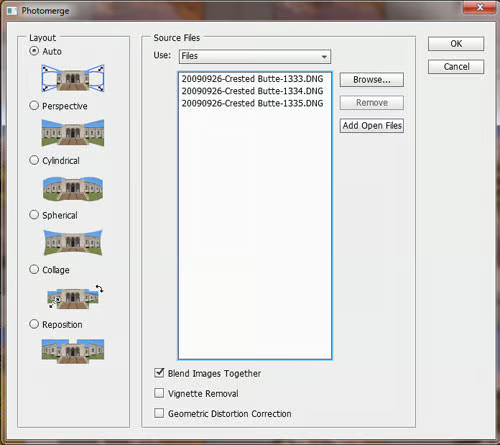
PTGui is the industry-favorite for multi-row spherical stitches with rectilinear ultra-wides. Hugin is a powerful open-source option. Lightroom or Photoshop can stitch single-row panos, but for multi-row 360 photos, PTGui/Hugin provide superior control points, masking, and horizon leveling. With rectilinear lenses, aim for 20–30% overlap; fisheyes often need 25–35% but fewer frames. A clean nodal setup reduces manual control-point cleanup dramatically. For a reviewer’s perspective on PTGui, see this in-depth review. Why PTGui remains a top choice for complex panoramas
Cleanup & Enhancement
- Nadir patch: Export a layered panorama, clone out the tripod in Photoshop, or use an AI tripod-removal tool. A dedicated hand-held nadir frame simplifies the patch.
- Color and noise: Apply global WB correction first, then targeted HSL changes. Use moderate noise reduction for ISO 1600+ night scenes.
- Level horizon and correct roll/pitch/yaw: Adjust the panorama’s viewing parameters until verticals are straight and the horizon is true.
- Export: For VR players, export 2:1 equirectangular JPEG/TIFF; typical sizes are 12000 × 6000 or higher depending on your frame count and overlap.
Meta best practices for DSLR/mirrorless 360 capture are summarized in platform guidelines as well. Using a DSLR or mirrorless to shoot and stitch a 360 photo
Video: Mastering Panoramic Head Setup
Visual learners will appreciate a concise demonstration of finding and using the no-parallax point and setting up multi-row sequences:
For broader pano technique discussion, this community Q&A also offers solid fundamentals. Best techniques to take 360 panoramas
Disclaimer: software evolves—verify controls and workflows in current manuals and release notes.
Useful Tools & Resources
Software
- PTGui panorama stitching
- Hugin (open source)
- Lightroom / Photoshop for RAW and finishing
- AI tripod/nadir removal tools
Hardware
- Panoramic heads: Nodal Ninja, Leofoto, and similar multi-row heads
- Carbon fiber tripods with leveling base
- Rotators with click stops at 6/8/10 positions per 360°
- Wireless remote shutters or intervalometers
- Pole extensions and vehicle-safe suction/car mounts with tethers
Disclaimer: brand names are examples; confirm compatibility and specs on official sites.
Common Mistakes & How to Avoid Them
- Parallax error → Use a pano head and align the entrance pupil for each focal length; test with near/far verticals.
- Exposure flicker → Manual mode; fixed ISO, aperture, shutter; lock WB; avoid auto ISO and auto WB.
- Tripod shadows and clutter → Shoot a clean nadir; patch later with your dedicated nadir frame.
- Ghosting from motion → Two-pass method; in post, mask moving subjects from the cleaner pass.
- Night noise → Keep ISO low when possible; use tripod, remote, and Exposure Delay Mode; apply gentle noise reduction later.
- Lens flare → Shade the lens from direct sun; plan your shooting order to minimize flare-prone angles first.
Frequently Asked Questions
- Can I shoot handheld panoramas with the Nikon D750?
Yes, for single-row cylindrical panos in good light. Use high shutter speeds (1/250+), overlap 40–50%, and rotate around your body’s center. For multi-row 360 photos, a tripod and pano head are strongly recommended to avoid parallax.
- Is the Sigma 14-24mm f/2.8 DG DN Art wide enough for a single-row 360?
For a full spherical 360 photo, you’ll typically need multi-row at 14mm on full-frame (e.g., 3 rows of 6 plus zenith/nadir). A single-row can cover a wide horizontal sweep but won’t capture the entire sphere. Note: DG DN is mirrorless; on the D750, use the DG HSM Art F-mount version.
- Do I need HDR for interiors with bright windows?
Usually yes. Bracket ±2 EV (3–5 shots per angle) to preserve window highlights and interior shadows. Merge per angle or stitch exposure stacks—keep the method consistent throughout the pano.
- How do I avoid parallax issues with this lens?
Use a pano head and align the lens’s entrance pupil over the rotation axis. At 14mm, the entrance pupil is close to the front element; mark the rail once calibrated. Verify with near/far verticals and adjust until there’s no relative shift when panning.
- What ISO range is safe on the D750 in low light for panoramas?
ISO 100–200 for best dynamic range; 400–800 for dim interiors and blue hour; ISO 1600 remains clean with modest noise reduction. ISO 3200 is usable but expect more NR during post.
Important Compatibility Note
The Sigma 14-24mm f/2.8 DG DN Art is designed for mirrorless mounts and won’t mount on a Nikon D750 (F-mount). If your camera is the D750, use the Sigma 14-24mm f/2.8 DG HSM Art (Nikon F) or a comparable F-mount ultra-wide rectilinear. All techniques, shot counts, and settings in this guide apply the same to the HSM version.
Bonus Visuals
Below is an extra behind-the-scenes type of visual that pairs with nodal setup and gear layout described above.
Further Reading
Build on these fundamentals with structured tutorials and platform guidelines:
Panoramic head tutorial,
DSLR/mirrorless 360 shooting tips,
PTGui review for advanced stitching.