Why This Camera & Lens Are Great for Panoramas
If you’re looking for how to shoot panorama with Nikon D750 & Nikon Z 20mm f/1.8 S, there’s one crucial note up front: the Nikon Z 20mm f/1.8 S is a Z-mount lens designed for Nikon’s mirrorless bodies (Z6/Z7/Zf, etc.) and does not mount on the Nikon D750 (F-mount) via any standard adapter. There is no practical adapter that allows a Z lens on an F-mount DSLR. Two practical paths:
- Use a Z-series body with the Z 20mm f/1.8 S (ideal if you already own Z gear); or
- Use the Nikon AF-S 20mm f/1.8G (F-mount) on the D750. Its field of view and use in panoramas are directly comparable to the Z 20mm S.
In this guide, we’ll focus on the workflow for a 20mm rectilinear prime on a full-frame body—everything applies whether you’re using the D750 with the AF-S 20mm f/1.8G or a Z body with the Z 20mm f/1.8 S. We’ll call out D750-specific tips where helpful.
Why this combo is strong for panoramas: the Nikon D750’s 24.3 MP full-frame sensor (~35.9 × 24 mm) offers excellent dynamic range (about 14+ EV at base ISO) and large ~6.0 µm pixels that remain clean through ISO 800–1600, which is great for low-noise stitching. The 20mm f/1.8 (rectilinear) gives a natural perspective with minimal distortion and excellent corner sharpness stopped down to f/5.6–f/8. Compared to a fisheye, it requires more frames but ensures straighter lines—ideal for architecture, interiors, and virtual tours.
Quick Setup Overview
- Camera: Nikon D750 — Full-frame 24.3 MP, ~6.0 µm pixel pitch, strong 14+ EV dynamic range at ISO 100, reliable at ISO 100–800 for high-detail panoramas.
- Lens: Nikon Z 20mm f/1.8 S (rectilinear) or Nikon AF-S 20mm f/1.8G (F-mount equivalent). Best sharpness around f/5.6–f/8, low coma and chromatic aberration, slight barrel distortion easily corrected in post.
- Estimated shots & overlap (portrait orientation on full-frame, 25–30% overlap):
- 360° cylindrical (no zenith/nadir): ~9 shots around.
- Full 360×180 spherical: 3 rows of 8–9 shots (at -45°, 0°, +45°) + 1–3 zenith frames + 1–3 nadir frames = ~27–34 frames total.
- Difficulty: Moderate. More frames than fisheye, but straighter lines and cleaner architecture.
Planning & On-Site Preparation
Evaluate Shooting Environment
Walk the scene to locate reflective glass, mirrors, moving people, and bright light sources. For interiors with glass, shoot perpendicular to reduce glare and keep the front element a bit farther (30–60 cm) from glass to minimize internal reflections. In crowded places, anticipate movement and plan two passes to capture clean seams. At sunset or city night scenes, note the brightest highlights to plan exposure brackets and reduce blown windows or neon signs.
Match Gear to Scene Goals
The D750’s dynamic range and clean low ISOs make it ideal for detailed 360 photo work where shadow lifting is common. Indoors, ISO 200–800 remains very clean; outdoors, ISO 100–200 preserves maximum detail. The 20mm rectilinear’s straight lines are excellent for real estate and architecture; you’ll shoot more frames than with a fisheye, but the result requires less warping and yields higher resolution.
Pre-shoot Checklist
- Charge batteries; carry spares and ample fast storage (RAW files add up when bracketing).
- Clean the front/rear elements and the D750’s sensor (dust shows up aggressively in skies and walls).
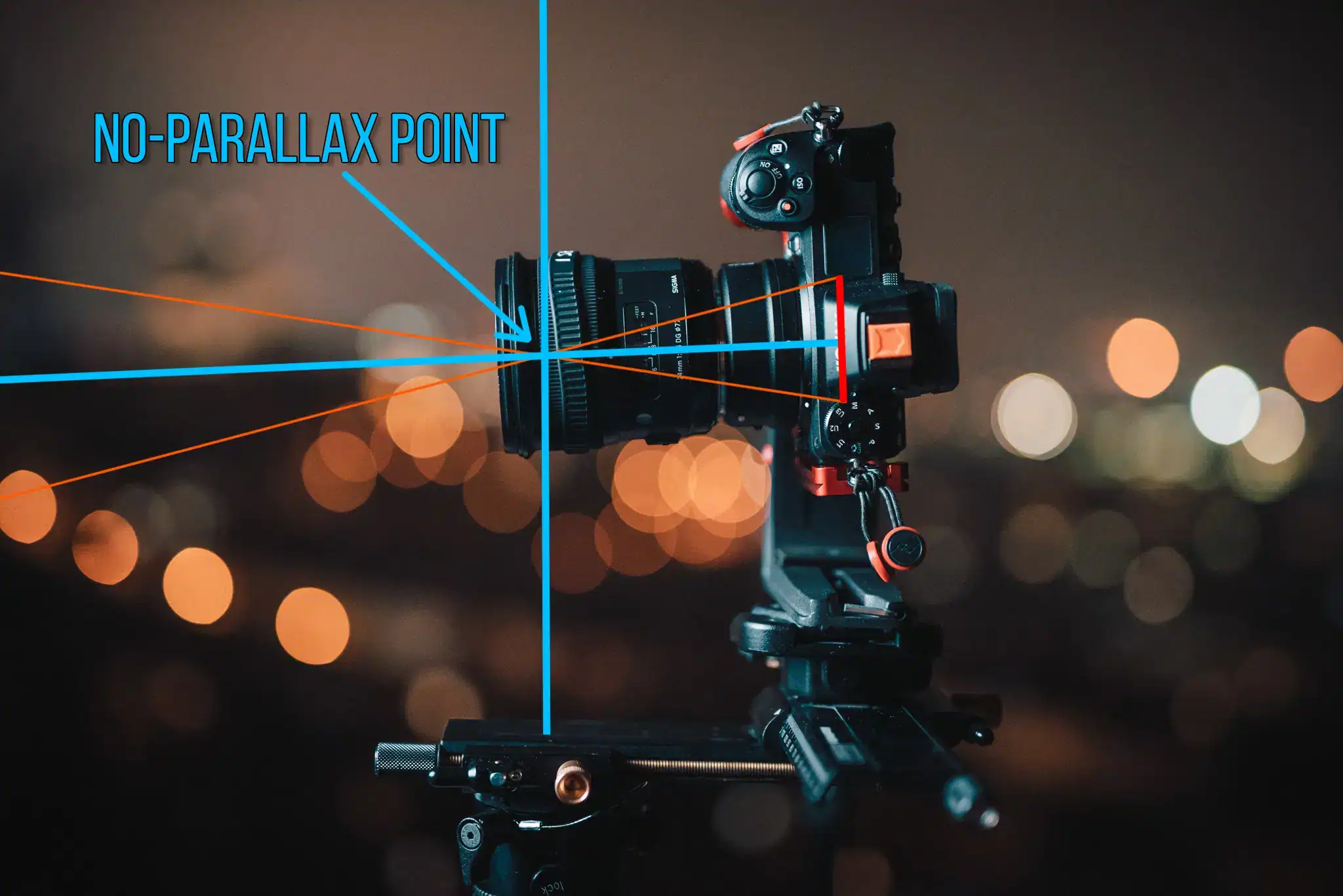
- Level the tripod; verify your panoramic head’s nodal alignment (no-parallax point) before client work.
- Safety: on rooftops or near edges, tether your camera; avoid high-wind exposure, especially on poles.
- Backup workflow: capture an extra safety round or a second nadir plate in case of stitching issues.
Essential Gear & Setup
Core Gear
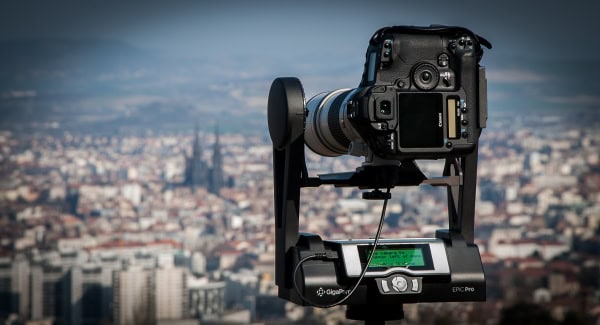
- Panoramic head: Enables rotation around the lens’s entrance pupil (no-parallax point), minimizing parallax and making stitches stronger and faster. A multi-row head is recommended for 20mm full-sphere 360s.
- Stable tripod with a leveling base: A bubble or half-ball leveling base speeds up setup and keeps rows even.
- Remote trigger or app: On the D750, use a cable release, Exposure Delay Mode, or self-timer to prevent vibrations.
Optional Add-ons
- Pole or car mount: Only for experienced users; secure with safety tethers and minimize vibrations. Avoid pole work in strong winds.
- Lighting aids: Small LED panels for dark corners; stay consistent to avoid mixed-light color casts.
- Weather protection: Rain covers and microfiber cloths; moisture on the front element will destroy stitch quality.
Step-by-Step Shooting Guide
Standard Static Scenes
- Level and anchor: Level the tripod using the leveling base. Engage the panoramic head’s detents if available (e.g., 45°).
- Find and set the nodal point: Place a near object (1–2 m) against a far background line; pan left/right and adjust the fore-aft rail until the near object doesn’t shift relative to the background. For 20mm primes, the entrance pupil typically falls roughly 60–80 mm in front of the sensor plane—use this range as a starting point and fine-tune.
- Manual exposure and white balance: Meter the brightest panel (e.g., window). Set Manual mode. Lock WB (Daylight, Tungsten, etc.) to avoid color shifts across frames.
- Manual focus: Use Live View, magnify, and set focus slightly beyond hyperfocal at your working aperture (f/8 is a good target). Then switch to MF to lock.
- Capture sequence and overlap:
- Row plan for full 360×180: -45°, 0°, +45°; 8–9 shots per row at ~30% overlap.
- Zenith: 2–3 frames around +90° to ensure coverage.
- Nadir: 1–3 frames, including a shifted or handheld nadir to replace the tripod footprint.
- Metadata & notes: If shooting multiple rooms or scenes, keep a small log or voice memo to tag sets—this speeds up post-production.
HDR / High Dynamic Range Interiors
- Bracket ±2 EV (3–5 shots): Interiors with windows typically need 3-frame (−2/0/+2) or 5-frame brackets for clean highlights and shadow detail.
- Lock WB and focus: Never change WB or focus mid-bracket; it causes alignment and color issues.
- Shoot the entire panorama at the same bracket pattern and step angle to keep overlap consistent.
Low-Light / Night Scenes
- Use a tripod and trigger: On the D750, enable Exposure Delay Mode (1–3 s) to reduce mirror slap, or use Mirror Up (MUP) with Live View for minimal vibration.
- ISO strategy: ISO 100–200 if you can support longer shutter speeds; ISO 400–800 remains clean on the D750; ISO 1600 is workable with good noise reduction.
- Shutter speeds: Expect 1–8 s at f/5.6–f/8 for city night scenes; don’t rush—clean base frames are worth the time.
Crowded Events
- Two-pass method: First pass for composition, second pass waiting for gaps in foot traffic at seam locations.
- High shutter: Use 1/200–1/500 to freeze motion where possible and mask selectively in post.
- Watch for repetitive patterns: People or flags halfway into frame edges can cause ghosting—time your shots to avoid overlaps with moving subjects.
Special Setups (Pole / Car / Drone)
- Pole: Secure a tether, keep the pole vertical, and rotate slowly. Avoid strong wind; even small oscillations can ruin overlap.
- Car mount: Use a vibration-damped clamp; shoot at lower speeds or when stationary. Plan for fewer, faster exposures.
- Drone: Not applicable to D750 directly, but the multi-row method still applies with similar overlap principles.
Recommended Settings & Pro Tips
Exposure & Focus
| Scenario | Aperture | Shutter | ISO | Notes |
|---|---|---|---|---|
| Daylight outdoor | f/8–f/11 | 1/100–1/250 | 100–200 | Lock WB to Daylight; keep overlap consistent |
| Low light/night | f/4–f/5.6 | 1/30–8s | 400–800 (1600 if needed) | Tripod + remote; on D750 use Exposure Delay Mode |
| Interior HDR | f/8 | Bracket ±2 EV | 100–400 | Preserve highlights in windows; keep WB fixed |
| Action / moving subjects | f/5.6–f/8 | 1/200+ | 400–800 | Shorter exposures reduce ghosting |
Critical Tips
- Manual focus near hyperfocal: At 20mm and f/8, focusing a few meters out keeps near-to-far sharpness.
- Nodal calibration: Mark your rail once dialed in; a piece of tape with the lens name saves minutes on location.
- White balance lock: Mixed lighting? Pick a Kelvin value (e.g., 3600–4200 K for warm interiors) and stick with it.
- RAW over JPEG: Gives you the headroom to match exposures and white balance across the set.
- Stabilization: D750 and 20mm lenses here have no IBIS/VR; if you ever use the Z 20mm S on a Z body, disable IBIS on tripod.
Stitching & Post-Processing
Software Workflow
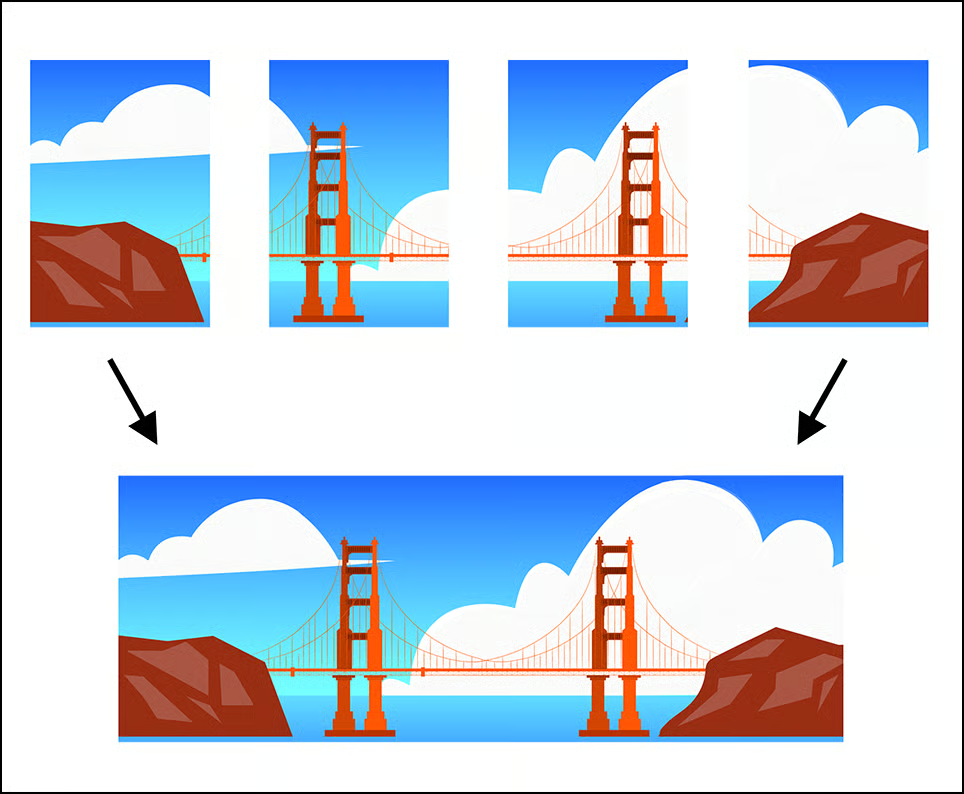
Import all RAW files, synchronize basic settings (WB, lens profile if applicable), and export to 16-bit TIFFs for the stitcher if you want maximum quality. PTGui is a gold-standard stitcher with robust control-point generation, HDR fusion, and masking tools; Hugin is a powerful open-source alternative. With a rectilinear 20mm, use ~25–30% overlap for reliable control points. After stitching, output an equirectangular 2:1 image (e.g., 12000×6000 or 16000×8000 for high-res tours). Consider cube map exports if targeting specific viewers. See a detailed PTGui review and strengths.
Cleanup & Enhancement
- Nadir patch: Shoot an offset nadir with the tripod moved, or patch using content-aware/AI tools. Clone carefully along grout lines and textures.
- Color uniformity: Match color across frames; small WB differences can show as seams. Local HSL tweaks can unify wall paint under mixed lighting.
- Noise reduction: Apply before sharpening; night stitches benefit from luminance NR while preserving edges.
- Horizon and level: Use the stitcher’s Optimize features and straighten tools to correct roll/pitch/yaw.
- Export formats: Save a master 16-bit TIFF and deliver a compressed JPEG (quality 10–12). For VR platforms, export standard equirectangular JPEGs and test on the target viewer. Meta’s DSLR 360 photo guide has good viewer-specific notes.
Want a deeper walkthrough on multi-row panos and head setup? This tutorial covers the fundamentals of entrance pupil alignment and why it matters for clean stitches. Panoramic head setup for high-end 360s.
Useful Tools & Resources
Software
- PTGui panorama stitching
- Hugin (open source)
- Lightroom / Photoshop / Affinity Photo
- AI tripod/nadir removal tools
Hardware
- Panoramic heads (Nodal Ninja, Leofoto, Sunwayfoto) with multi-row capability
- Carbon fiber tripods with a leveling base
- Wireless remote shutters or intervalometers
- Pole extensions and car mounts with safety tethers
Disclaimer: Brand names are provided as search references; verify current specs on official sites.
Common Mistakes & How to Avoid Them
- Parallax error: Always rotate around the no-parallax point; calibrate the rail for your 20mm.
- Exposure flicker: Manual exposure and locked WB keep frames consistent.
- Tripod shadows or footprints: Shoot a dedicated nadir and patch later.
- Ghosting from movement: Use the two-pass method and mask in post.
- High ISO noise: Favor longer exposures on tripod instead of pushing ISO.
- Inconsistent overlap: Use detents or mark degrees; keep 25–30% overlap.
Field-Proven Scenarios
Indoor Real Estate
At f/8, ISO 100–200, bracket ±2 EV for windows. Use 8–9 shots per row (3 rows) plus zenith/nadir. Lock WB (e.g., 4000 K) to avoid color shifts across mixed lighting. The D750’s dynamic range lets you lift shadows cleanly if your mid exposure is well-exposed. Keep the camera height consistent room-to-room (typically 140–150 cm) for a natural viewpoint.
Outdoor Sunset
Meter highlights near the sun, then bracket. Shoot faster near the sun to reduce flare and use your hand or the lens hood to flag direct rays between frames. The 20mm rectilinear keeps horizons straight, and the D750’s base ISO files grade beautifully without banding.
Event Crowds
Use 1/250–1/500 at f/5.6–f/8, ISO 400–800. Shoot two passes to avoid collisions at seams. In post, mask the cleaner pass into the master; PTGui’s masking makes this straightforward.
Rooftop/Pole Shooting
Attach a safety tether. Shorten exposure times to counter sway (raise ISO to 800–1600 if needed). Rotate slower and allow movement to settle between frames. Never operate a pole near power lines or in high winds.
Frequently Asked Questions
-
Can I mount the Nikon Z 20mm f/1.8 S on the Nikon D750?
No. The Z 20mm f/1.8 S is Z-mount and only works on Nikon mirrorless bodies. There’s no practical adapter to put a Z lens on an F-mount DSLR. For the D750, use the Nikon AF-S 20mm f/1.8G or another F-mount 20mm. All techniques in this guide still apply because the field of view and usage are equivalent.
-
Is 20mm wide enough for a single-row full 360×180?
For a full sphere, you’ll need multi-row coverage with a 20mm rectilinear. Plan three rows (−45°, 0°, +45°) with 8–9 shots per row, plus zenith and nadir frames. Single-row at 20mm only covers a cylindrical panorama (the full 360° around but not straight up/down).
-
Can I shoot handheld panoramas with the D750?
Yes for quick cylindrical panos or when parallax isn’t critical. For precise 360×180 work (especially indoors with nearby objects), use a tripod and panoramic head to eliminate parallax and ensure reliable stitching.
-
Do I need HDR for interiors with bright windows?
Usually yes. Bracket ±2 EV (3–5 frames) to retain window highlights and interior detail. Merge brackets per camera angle before stitching, or use a stitcher that supports HDR merging at stitch time.
-
What ISO range is safe on the D750 in low light?
ISO 100–400 is ideal; ISO 800 is still very clean. ISO 1600 can be used when necessary with careful noise reduction. Prefer longer exposures over pushing ISO too high when on a tripod.
-
Can I use custom modes to speed up pano shooting?
Yes. The D750’s U1/U2 are perfect for storing a “Pano” setup (Manual exposure, fixed WB, RAW, MF, Exposure Delay Mode, self-timer/remote). This saves setup time on location.
-
How do I avoid flare with a wide rectilinear lens?
Use a lens hood, flag with your hand just outside the frame, and sequence shots so the sun is not near frame edges during critical overlaps. Clean the front element to reduce ghosts.
-
What’s the best panoramic head for this setup?
Any sturdy multi-row head with fore–aft and lateral rails for exact entrance pupil alignment. Look for detents, easy degree markings, and a reliable clamp. Nodal Ninja and Leofoto make popular options. For a deeper primer on head setup, see this panoramic head tutorial. Panoramic head setup guide.
Further Reading
To dive deeper into gear selection for DSLR/ILC virtual tours, these field-tested resources provide strong overviews and decision frameworks: PTGui strengths and review and DSLR to 360 workflow overview.