Why This Camera & Lens Are Great for Panoramas
If you want fewer shots, faster capture, and reliable stitching, pairing the Nikon D750 with a full-frame fisheye zoom like the Laowa 8–15mm f/2.8 FF Zoom Fisheye is a winning combo. The D750’s 24.3MP full-frame sensor (35.9 × 24.0 mm) provides excellent dynamic range for difficult lighting, clean low-ISO files with robust 14-bit RAW latitude, and dependable battery life for long sessions. Its pixel pitch of roughly 6 µm helps preserve detail and control noise, and features such as Exposure Delay Mode and bracketing make tripod-based panoramic work smoother. The tilting LCD is handy for low or high angles, and the body’s ergonomics and U1/U2 custom modes keep pano settings at your fingertips.
The Laowa 8–15mm f/2.8 FF Zoom Fisheye is purpose-built for panoramic and VR shooters: at 8mm it delivers a circular 180° field of view that lets you complete a full 360° sphere with very few images; toward 15mm it becomes a diagonal fisheye with 180° corner-to-corner FOV across the frame. A constant f/2.8 aperture helps in low light, and fisheye geometry (while distorted in a rectilinear sense) is exactly what stitching software expects for efficient coverage. On a calibrated panoramic head, this lens minimizes parallax issues and enables rapid, consistent results whether you’re working indoors for real estate or outside at golden hour.
Quick Setup Overview
- Camera: Nikon D750 — Full-Frame (35.9 × 24.0 mm), 24.3MP, ~14+ stops of dynamic range at base ISO, 14-bit RAW.
- Lens: Laowa 8–15mm f/2.8 FF Zoom Fisheye — full-frame fisheye zoom; circular FOV at 8mm, diagonal 180° FOV at 15mm; good center sharpness wide open, edges improve around f/5.6–f/8; typical fisheye lateral CA that’s easy to correct in post.
- Estimated shots & overlap (field-tested ranges):
- 8mm circular: 4 around (90° apart) + 1 zenith + 1 nadir (safe, clean coverage). Advanced users may do 3 around + Z + N in uncluttered scenes.
- 10–12mm diagonal: 6 around (60° apart) + Z + N with ~25–30% overlap.
- 15mm diagonal: 8 around (45° apart) + Z + N for highest margin indoors/complex scenes.
- Difficulty: Easy–Moderate (fisheye means fewer frames, but nodal calibration matters).
Planning & On-Site Preparation
Evaluate Shooting Environment
Before setting up, walk the scene. Look for moving elements (crowds, traffic, foliage), reflective surfaces (glass, glossy floors), and light sources that may cause flare. If shooting through glass, press the lens hood close to the pane and block side light with a cloth to eliminate reflections. For interiors, note mixed lighting (daylight + tungsten) that can cause color shifts; plan a manual white balance.
Match Gear to Scene Goals
The D750’s dynamic range is excellent at ISO 100–200, giving you clean latitude to recover shadows while keeping highlights from clipping. Indoors, ISO 400–800 remains very clean; ISO 1600–3200 is usable when necessary but aim to use a tripod and longer shutter speeds to stay lower. The fisheye’s biggest advantage is coverage: fewer frames reduce alignment errors and speed up shooting—critical for real estate walkthroughs, rooftop captures in wind, or busy events. Just remember that fisheye geometry stretches edges; keep straight architectural lines away from frame borders when possible.
Pre-shoot Checklist
- Power & storage: fully charged EN-EL15 batteries; large, fast SD cards; format in-camera.
- Optics clean: blow dust off sensor/lens; wipe front element (fisheye fronts collect fingerprints easily).
- Tripod & head: level the tripod, verify panoramic head clamps are tight, and confirm nodal alignment marks.
- Safety: check wind strength; tether gear on rooftops or poles; mind foot traffic and secure tripod legs.
- Backup workflow: shoot one extra full rotation (or bracket set) before leaving—saves reshoots.
Essential Gear & Setup
Core Gear
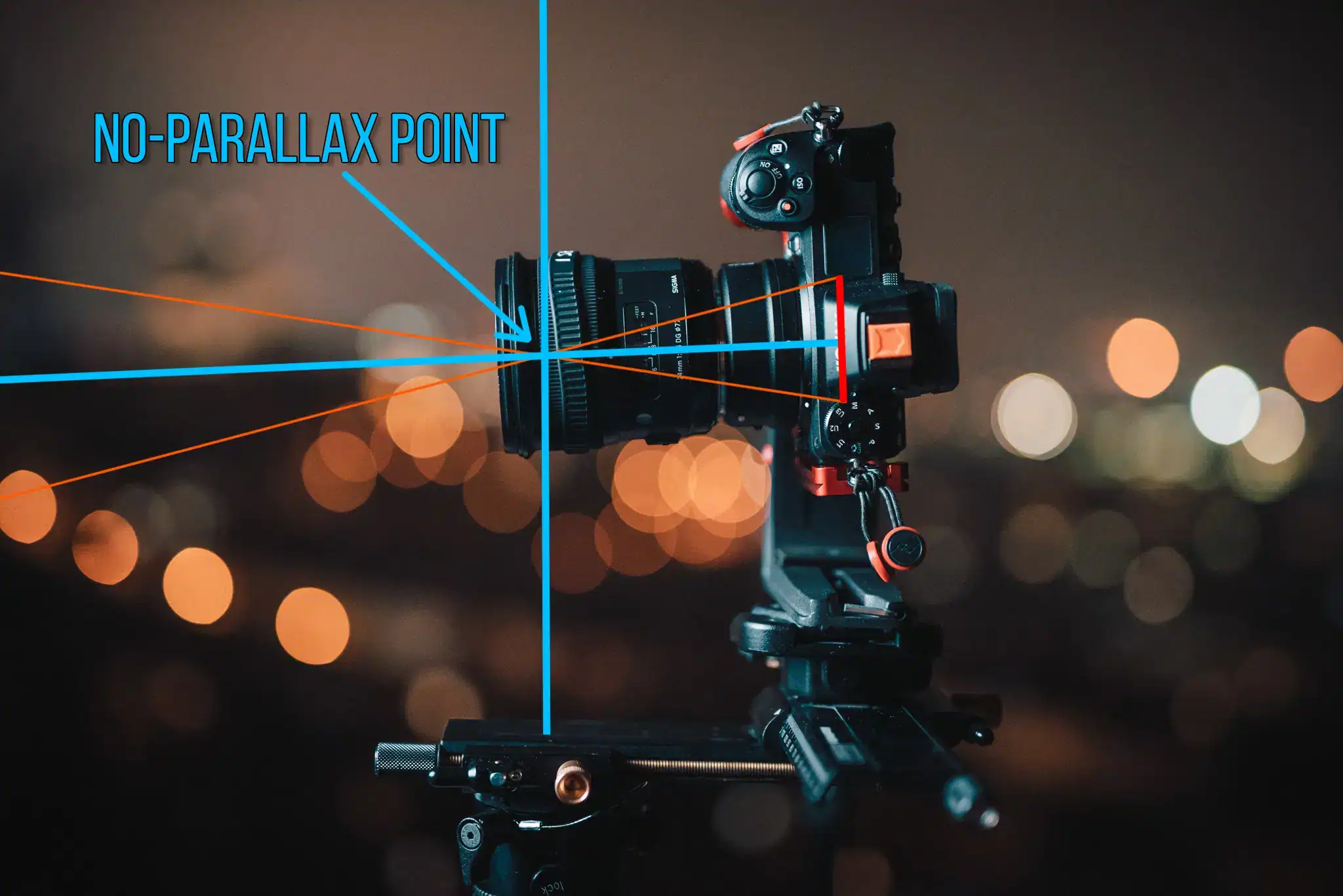
- Panoramic head: Align the lens’s entrance pupil (no-parallax point) to the rotation axis so foreground and background don’t shift between frames, preventing stitching errors.
- Stable tripod with a leveling base: Leveling ensures level horizons and consistent overlaps; a half-ball or leveling base speeds your setup.
- Remote trigger or app: Use a shutter release, self-timer, or the D750’s Exposure Delay to avoid vibrations.
Optional Add-ons
- Pole or car mount: Use safety tethers and avoid high winds; keep speeds low and rotations slower to reduce vibration blur.
- Lighting aids: Small LEDs or bounced flash to lift dark corners indoors; keep lighting consistent across the rotation.
- Weather protection: Rain cover, microfiber cloths, and gaffer tape for windy or dusty environments.
Step-by-Step Shooting Guide
Standard Static Scenes
- Level the tripod and align the nodal point. Mount the D750 on your panoramic head, set the fore-aft rail so the lens’s entrance pupil sits exactly over the yaw axis. A practical starting point for many FF fisheyes is to position the rail so the front element sits slightly ahead of the rotation axis at 8mm and a touch further back at 15mm. Fine-tune using two vertical sticks (near and far): rotate left/right—if parallax shifts, adjust the rail until the near and far subjects stay aligned.
- Set manual exposure and white balance. Meter the brightest part of the scene you need detail in (e.g., windows), then expose to protect highlights. Lock WB (e.g., Daylight or a custom Kelvin value) so color stays consistent across frames.
- Focus manually and lock. Use Live View to focus about one-third into the scene or at the hyperfocal distance. Switch AF off to prevent focus jumps mid-rotation. For maximum sharpness, stop down to f/5.6–f/8.
- Capture the rotation with consistent overlap. For 8mm circular, shoot 4 around at 90° yaw. Add a zenith (tilt up) and a nadir (tilt down) frame to complete the sphere.
- Take a clean nadir. If the tripod occupies the nadir, shoot a handheld nadir patch from the same position (camera placed over the tripod point) to replace the tripod in post.
HDR / High Dynamic Range Interiors
- Bracket exposures: Use ±2 EV (3 or 5 frames) to balance bright windows and dark interiors. The D750 supports 2–9 frame bracketing; 5 frames at 1 or 2 EV spacing is a strong starting point.
- Keep everything locked: manual exposure base, fixed WB, and manual focus across the rotation. Avoid changing aperture between brackets to keep vignetting uniform.
- Sequence efficiently: For each yaw position, fire all brackets before rotating. Label or keep a consistent cadence to simplify post-processing.
Low-Light / Night Scenes
- Use tripod discipline: Enable Exposure Delay Mode (e.g., 1–3 s) to damp mirror slap, or use Mirror Up. Trigger with a remote or 2s timer.
- Keep ISO sensible: ISO 100–800 produces the cleanest files on the D750; ISO 1600–3200 is usable if shutter speeds become impractical. Plan for longer exposures at f/4–f/5.6.
- Watch light sources: Shield the fisheye front from stray light to minimize flare; slightly angle away from direct bulbs or use your hand as a temporary flag (ensure it stays out of frame).
Crowded Events
- Shoot two passes: Do a fast rotation first to capture a full sphere, then a second slower pass to fill gaps when people move away from key areas.
- Mask in post: Use layer masks to blend clean patches from the second pass. The fisheye’s wide coverage minimizes the time crowds can change the scene between frames.
Special Setups (Pole / Car / Elevated)
- Secure the rig: Use safety lines on the camera and head. Avoid extending the pole fully in gusty wind. Balance the pole by holding under the center of mass.
- Slow rotations: Longer shutter speeds demand steadiness; spin slower and consider slightly faster shutter or higher ISO (up to 1600) to reduce motion blur.
- Car-mounted: Keep speeds low, use rubber isolation mounts, and plan short bursts at stops to avoid blur.
Recommended Settings & Pro Tips
Exposure & Focus
| Scenario | Aperture | Shutter | ISO | Notes |
|---|---|---|---|---|
| Daylight outdoor | f/8–f/11 | 1/100–1/250 | 100–200 | Lock WB (Daylight or 5600K); avoid clipping clouds |
| Low light/night | f/4–f/5.6 | 1/30–multiple seconds | 100–800 (1600–3200 if needed) | Tripod + Exposure Delay; remote or 2s timer |
| Interior HDR | f/8 | Bracket ±2 EV (3–5 frames) | 100–400 | Windows + interior detail balanced in merge |
| Action / moving subjects | f/5.6–f/8 | 1/200+ | 400–800 | Freeze motion; do a second pass for clean plates |
Critical Tips
- Manual focus at or near hyperfocal: With a fisheye at f/8, you can keep everything from ~0.5–1 m to infinity acceptably sharp. Check Live View for confirmation.
- Nodal alignment: Mark rail positions for 8mm and 15mm on your panoramic head once calibrated—this saves minutes on every shoot.
- White balance lock: Mixed lighting? Pick a Kelvin value (e.g., 4000–4800K indoors with window light) to avoid stitch seams from color shifts.
- RAW capture: Shoot 14-bit RAW on the D750 to maximize dynamic range and color depth for HDR and de-ghosting.
- Stabilization: The D750 has no IBIS. If your lens has VR, turn it OFF on a tripod to avoid micro-blur; enable it only when shooting handheld.
- U1/U2 presets: Store “Daylight Pano” (Manual, ISO 100, f/8, WB Daylight) on U1 and “Interior HDR Pano” (Manual base + bracketing, WB custom) on U2 for instant recall.
Stitching & Post-Processing
Software Workflow
For this fisheye setup, PTGui and Hugin both handle fisheye projections and optimize control points very well. Import images, set lens type to fisheye, and let the optimizer estimate FOV and distortion. Fisheye means fewer frames and faster matching, which helps on complex scenes. Aim for ~25–30% overlap with fisheyes; you can get away with less overlap than rectilinear lenses, but more overlap is safer in interiors with clutter. PTGui’s auto-masking and viewpoint correction are handy for nadir patches and dynamic scenes. For a detailed overview of PTGui’s strengths and interface, see this review of PTGui’s panorama tooling at Fstoppers: Why PTGui is a top choice for complex panoramas.
Cleanup & Enhancement
- Nadir patch: Export a layered panorama and clone out the tripod or use a separate nadir patch frame aligned via Viewpoint optimization.
- Color consistency: Apply global WB and tone curve first, then localized corrections. For HDR merges, de-ghost areas with movement.
- Leveling: Use horizon/vertical lines in the stitching software to correct roll, yaw, and pitch; enable straight-line constraints for architecture.
- Export: Output a 2:1 equirectangular TIFF/JPEG for virtual tour platforms (typically 12–16k wide if you bracketed and used 6–8 frames; 8–12k for 4-around workflows). For platform guidelines on DSLR 360 photos, consult Meta’s best practices: Using a DSLR to shoot and stitch a 360 photo.
For background on pano head setup and theory, this walk-through offers clear fundamentals: Panoramic head setup tutorial. For expected spherical resolutions by lens/focal length, see the reference tables at PanoTools: DSLR spherical resolution.
Video: From Capture to Stitch
Prefer to watch a concise overview? The video below demonstrates a practical capture and stitching flow. Pair the guidance with the D750 and Laowa fisheye specifics above.
Useful Tools & Resources
Software
- PTGui — industry-standard stitching with robust fisheye support.
- Hugin — open-source alternative with control point editing.
- Lightroom / Photoshop — RAW development, retouching, and nadir patching.
- AI tripod removal tools — quickly patch tripod and shadow artifacts.
Hardware
- Panoramic heads — Nodal Ninja, Leofoto, or equivalent with fore-aft and lateral adjustments.
- Carbon fiber tripods — reduce vibrations and weight, add a leveling base for speed.
- Wireless remote shutters — reduce shake; consider intervalometers for timelapse pano series.
- Pole extensions / car mounts — always tether and check wind ratings.
Disclaimer: software/hardware names are for search reference; check official documentation for current versions and specifications.
Common Mistakes & How to Avoid Them
- Parallax error: Align the entrance pupil over the rotation axis; don’t skip nodal calibration.
- Exposure flicker: Use manual exposure and locked white balance across every frame.
- Tripod shadows or feet: Capture a dedicated nadir frame and patch in post.
- Ghosting from movement: Shoot a second pass and mask clean regions during stitching.
- Night noise: Keep ISO low (100–800 when possible), use longer shutter speeds, and employ Exposure Delay Mode.
- Flare on fisheye: Shield the front element from direct light; re-frame to avoid bright sources at the edge.
Frequently Asked Questions
-
Can I shoot handheld panoramas with the Nikon D750?
Yes, for partial panos or quick 360s outdoors with distant subjects. Set high shutter speeds (1/200+), lock exposure and WB, and overlap generously. However, without a panoramic head you’ll get parallax in close interiors—use a tripod and nodal alignment for reliable, pro-quality 360s.
-
Is the Laowa 8–15mm f/2.8 wide enough for single-row 360 capture?
Absolutely. At 8mm circular fisheye, 4-around plus zenith and nadir completes a full sphere. At 10–12mm diagonal, 6-around + Z + N works well. At 15mm diagonal, plan for 8-around + Z + N for maximum safety in complex scenes.
-
Do I need HDR for interiors with bright windows?
Often yes. Bracketing ±2 EV over 3–5 frames per yaw position lets you balance sunlit windows and interior shadows. The D750’s 14-bit RAW gives good latitude, but HDR remains the most consistent method for real estate and hospitality work.
-
How do I avoid parallax issues with this setup?
Calibrate the entrance pupil on your panoramic head. Start with the lens at your chosen focal length (e.g., 8mm), align two vertical sticks (near/far), rotate, and adjust the fore-aft rail until relative movement disappears. Mark that rail setting for repeatability.
-
What ISO range is safe on the D750 in low light?
For critical quality, ISO 100–800 is ideal. ISO 1600–3200 is usable when you need to protect shutter speeds on poles or around crowds. Prefer longer exposures on a tripod before pushing ISO unless subject motion requires it.
Field-Proven Scenarios
Indoor Real Estate
Mount the D750 on a leveled tripod with the Laowa at 10–12mm diagonal fisheye. Set f/8, ISO 100–200, and bracket ±2 EV. Shoot 6-around + Z + N with doors and curtains kept steady between frames. In post, merge brackets first (or let PTGui handle HDR), stitch, patch the nadir, and apply soft contrast and color balance to neutralize mixed lighting.
Outdoor Sunset
At 8mm circular, shoot 4-around + Z + N quickly as light fades. Expose for highlights at ISO 100–200 and f/8, letting shadows lift later thanks to the D750’s dynamic range. Consider a second pass a minute later to blend in richer sky color or to remove transient people.
Event Crowds
Use 8mm or 10mm to minimize total frames, working fast between gaps in traffic. Raise shutter to 1/200–1/320 at ISO 400–800, f/5.6–f/8. Shoot two rotations: one for coverage, one for clean plates to mask motion in post.
Rooftop / Pole Shooting
With a light carbon-fiber pole, keep the Laowa at 8mm to reduce both frames and exposure time. Shoot at 1/250–1/500 where possible, ISO 400–800, and time rotations during lulls in wind. Always tether the camera and avoid overextending the pole in gusts.
Safety, Limitations & Trustworthy Workflow
Fisheye fronts are exposed—use a lens cap whenever you’re not shooting and avoid wiping grit dry (blow it off first). On rooftops or poles, always tether the camera and wear a harness where appropriate. The D750’s mirror and shutter can cause vibration; rely on Exposure Delay Mode or a remote trigger for critical sharpness. Finally, a trustworthy workflow includes redundancy: shoot a backup rotation, back up cards before leaving site, and keep an extra battery and body cap in your kit.
If you’re new to panoramic heads or want a refresher on the fundamentals, this concise explainer is an excellent companion to practicing at home: How to set up a panoramic head and why it matters.
Inspiration & Process
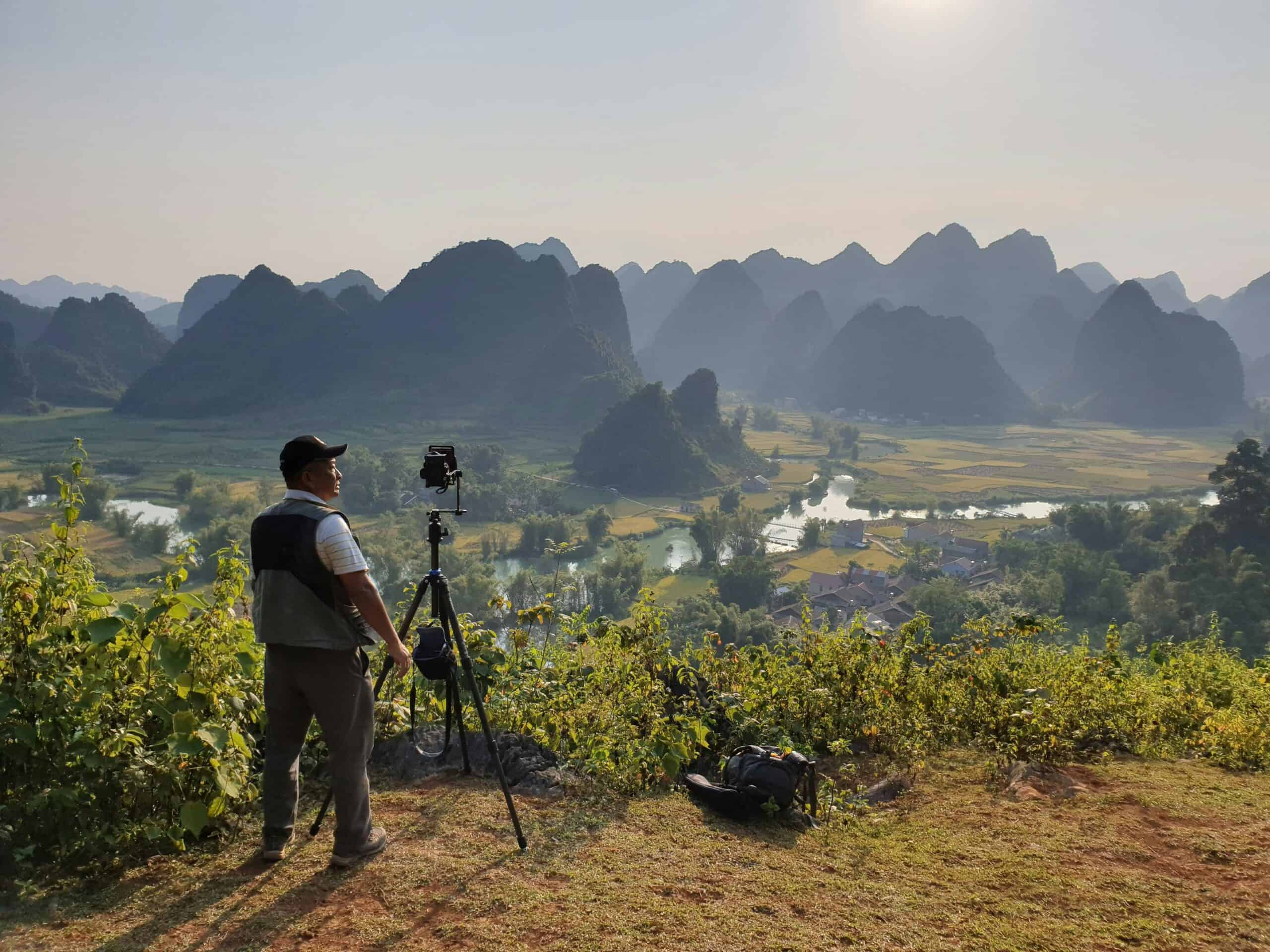
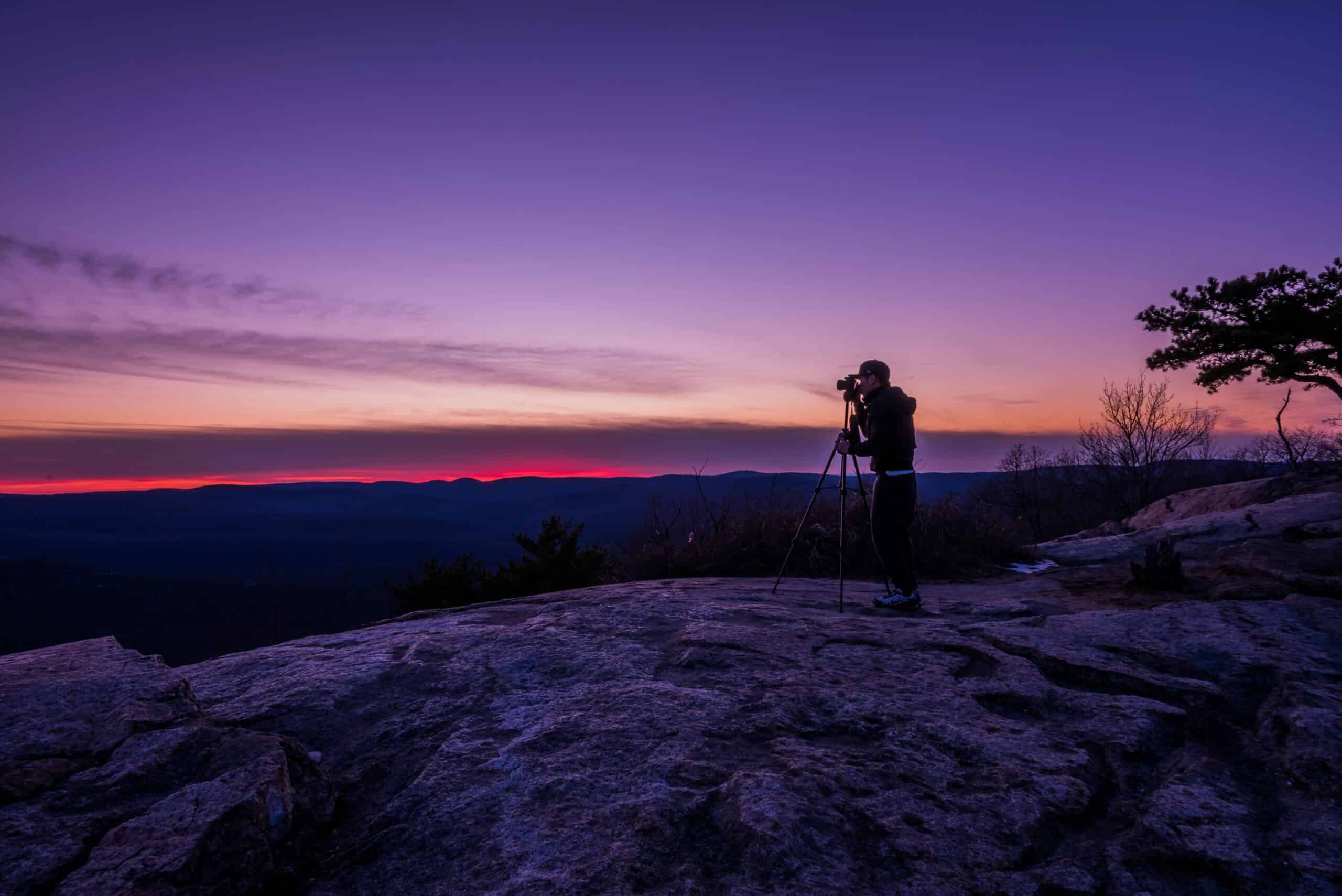
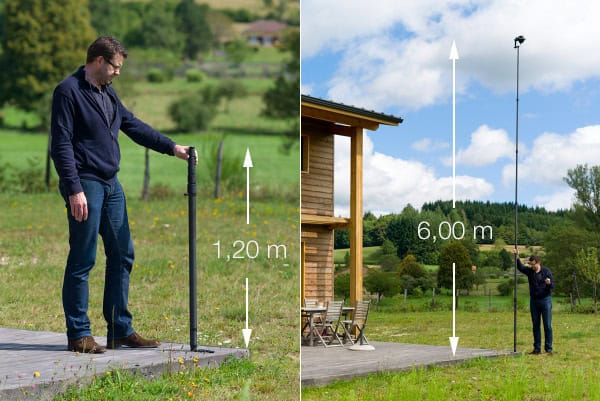
A few visuals that match the workflow described above—level, align, shoot, and elevate your vantage point when the scene calls for it.