Why This Camera & Lens Are Great for Panoramas
The Nikon D750 is a reliable full-frame DSLR (24.3MP, 35.9 × 24mm) known for its excellent dynamic range (~14.5 EV at ISO 100), forgiving highlight recovery, and clean low-ISO files. With a pixel pitch of about 5.97 µm, it delivers smooth tonality and strong shadow detail—ideal for HDR panoramas and low-light scenes. The body’s sturdy build, exposure delay mode, and support for wired/IR remotes make it a stable platform for fuss-free 360 photo capture.
The Laowa 4mm f/2.8 Circular Fisheye is an ultra-ultra-wide specialty lens that projects a circular image with a field of view up to ~210°. That “super circular” coverage dramatically reduces the number of shots you need for a full 360° panorama. Being fully manual (aperture and focus), it’s also simple to lock down exposure and focus for consistent frames.
Important compatibility note: The Laowa 4mm f/2.8 Circular Fisheye is made for mirrorless/compact mounts (e.g., MFT, Fuji X, Sony E) and does not natively fit Nikon F-mount DSLRs like the D750. If you want the same single-row, low-shot-count workflow on a D750, use a functionally equivalent circular fisheye for full frame (e.g., Sigma 8mm f/3.5 EX DG Circular Fisheye or the vintage Nikon 8mm f/2.8). The shooting method, overlaps, and stitching guidance in this article are identical for any circular fisheye on the D750. If you do obtain a custom mount conversion for the Laowa 4mm, the steps below still apply.
Quick Setup Overview
- Camera: Nikon D750 — Full Frame (24.3MP), ~14.5 EV DR at base ISO, clean ISO 100–800, usable up to 1600–3200 for pano work.
- Lens: Laowa 4mm f/2.8 Circular Fisheye — Circular fisheye, manual focus, ~210° FOV, minimal CA for the class, best sharpness at f/5.6–f/8.
- Estimated shots & overlap (circular fisheye workflow):
- 2 around at 180° yaw + 1 nadir patch (fastest, relies on precise nodal alignment).
- 3 around at 120° yaw + optional zenith + nadir (safest coverage, generous overlap).
- If using an 8mm 180° circular fisheye on full frame: 3–4 around + nadir is typical.
- Difficulty: Easy–Moderate (fast capture, requires careful nodal calibration).
Planning & On-Site Preparation
Evaluate Shooting Environment
Before you set up, analyze light direction, contrast, and motion. Reflective surfaces (glass, polished floors, cars) amplify parallax and ghosting if you move between frames or if your nodal point is off. For glass-view scenes, get as close to the glass as possible (1–3 cm) and shade the lens with your hand or a rubber hood to reduce reflections and flare. Avoid placing bright point light sources near the edge of the frame with a circular fisheye—they can cause streaks and flare artifacts.
Match Gear to Scene Goals
The D750’s wide dynamic range and clean low-ISO files are perfect for high-contrast skies and interior HDR work. In interiors, you can typically keep ISO 100–400 with a tripod and bracket; outdoors, ISO 100–200 is ideal. The circular fisheye advantage is speed: fewer frames per 360 means less stitching complexity and fewer moving-subject conflicts. The trade-off is heavy fisheye distortion and a visible circular frame; your stitcher will remap it to equirectangular, but small seams can appear if overlap is too tight or nodal alignment is off.
Pre-shoot Checklist
- Charge batteries, clear/storage cards, clean front element (fisheye glass shows smudges easily).
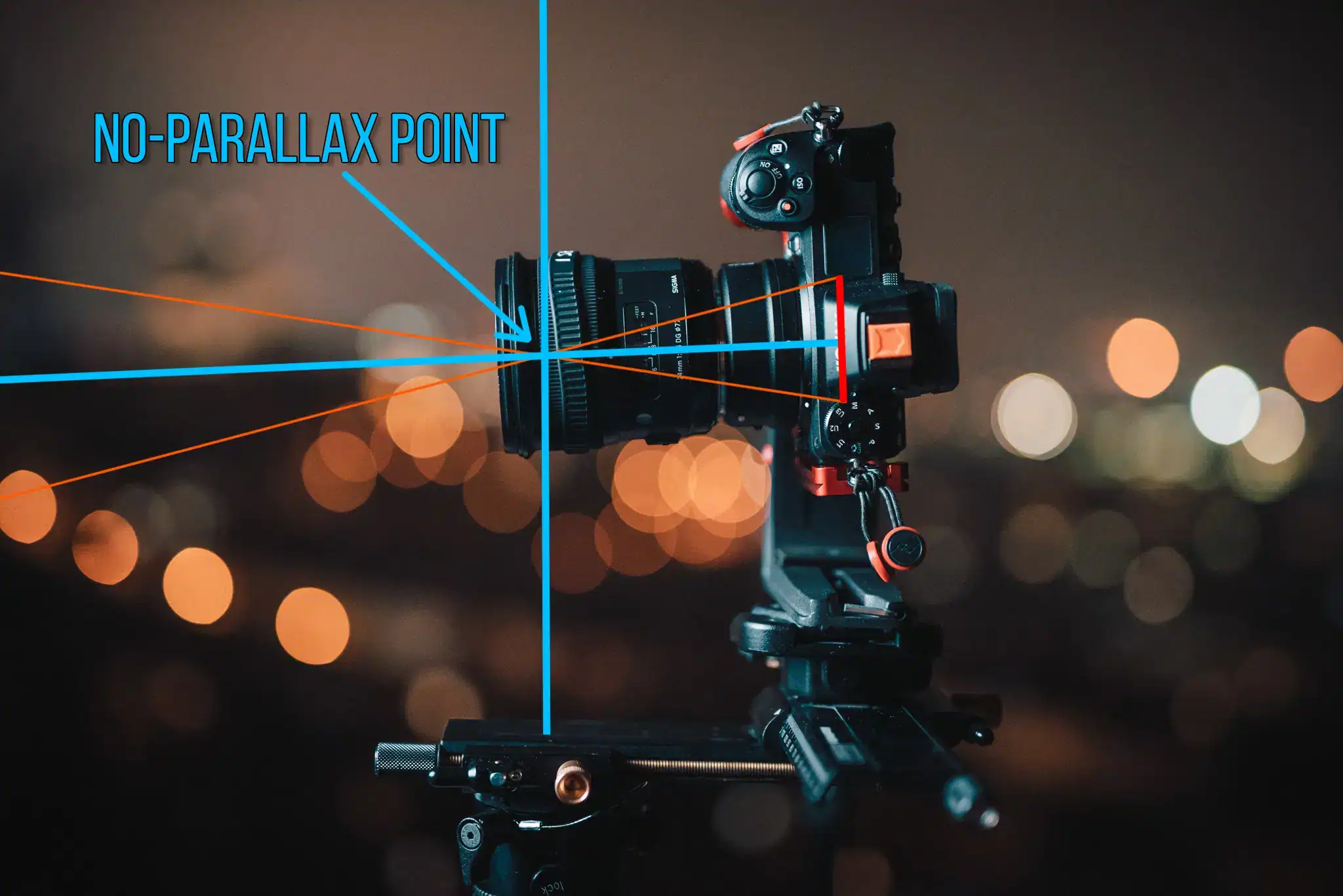
- Level your tripod and calibrate your panoramic head to the lens’s no-parallax (entrance pupil) point.
- Safety checks: weigh down the tripod in wind, use a tether on rooftops/pole setups, inspect car mounts thoroughly.
- Backup workflow: shoot a second “safety” round (especially for commercial work) and keep a bracketed set for HDR.
Essential Gear & Setup
Core Gear
- Panoramic head: Lets you rotate precisely around the lens’s entrance pupil (nodal point) to eliminate parallax. This is critical for interiors and near-field detail.
- Stable tripod with leveling base: Fast, precise leveling ensures your horizon is true and stitching control points are cleaner.
- Remote trigger or self-timer/exposure delay: The D750 offers Exposure Delay Mode (e.g., 1–3 sec), which is excellent to minimize mirror/shutter vibration.
Optional Add-ons
- Pole or car mount: Great for elevated or moving perspectives, but always add a safety tether. Beware of wind loading and vibration; keep exposures short.
- Lighting aids: Small LED panels or bounced flash for dark interiors. Keep lighting consistent across frames.
- Weather protection: Rain sleeves and microfiber cloths; fisheye domes catch droplets easily.
Step-by-Step Shooting Guide
Standard Static Scenes
- Level tripod and align nodal point: Place a vertical object a few feet in front of the camera and a distant background object. Rotate the camera; adjust the fore-aft position on your pano head until the near object doesn’t shift against the background. Mark the rail scale for this lens to repeat quickly.
- Manual exposure and locked white balance: Set M mode, meter a mid-tone, then lock WB (Daylight, Tungsten, or a measured Kelvin) to maintain color consistency across frames.
- Capture sequence with planned overlap:
- Fastest: 2 shots around at 0° and 180° yaw. Add a careful nadir patch for tripod removal.
- Safest: 3 shots around at 0°, 120°, 240° yaw for generous overlap. Add zenith if needed and a nadir patch.
- Nadir (ground) shot: Tilt the camera down with the pano head or move the tripod slightly and shoot a clean floor plate for tripod removal during editing.
HDR / High Dynamic Range Interiors
- Bracket ±2 EV (3 or 5 frames) to balance bright windows and interior shadows. Keep aperture fixed; change shutter speed only.
- Lock White Balance and focus; avoid any change between brackets or shots. Keep the camera in full manual mode for consistency.
Low-Light / Night Scenes
- Use longer exposures on a stable mount. On the D750, ISO 100–400 gives the best quality; ISO 800–1600 is still very usable for 360s. Go to ISO 3200 only if necessary.
- Use Exposure Delay Mode or a remote to prevent shake. Turn off lens VR when on a tripod (the D750 body has no IBIS).
Crowded Events
- Do two passes: one quick rotation for coverage, then a second pass waiting for gaps in the crowd at key frames.
- In post, blend/mask the frames with fewer people into the base panorama. The fewer frames required by a circular fisheye really helps here.
Special Setups (Pole / Car / Drone)
- Secure gear with a safety tether and use a short exposure time to combat vibration. Keep the pole vertical and rotate slowly to avoid sway.
- For car mounts, avoid direct sun flicker on the lens. Drive smoothly and plan the shortest possible exposure to freeze motion.
Recommended Settings & Pro Tips
Exposure & Focus
| Scenario | Aperture | Shutter | ISO | Notes |
|---|---|---|---|---|
| Daylight outdoor | f/8–f/11 | 1/100–1/250 | 100–200 | Lock WB (Daylight); ensure ample overlap |
| Low light/night | f/4–f/5.6 | 1/30–1/60 | 400–800 (up to 1600) | Tripod & remote; exposure delay to reduce vibration |
| Interior HDR | f/8 | Bracket ±2 EV | 100–400 | Balance windows and interior lamps; keep settings locked |
| Action / moving subjects | f/5.6–f/8 | 1/200+ | 400–800 | Freeze motion; consider 3-around capture for extra overlap |
Critical Tips
- Manual focus near hyperfocal: With a 4–8mm fisheye at f/8, set focus just short of infinity. Test once; tape the ring to avoid drift.
- Nodal point calibration: Start with the camera plate slid so the lens’s entrance pupil is a little behind the front element. Rotate against a near/far object pair and fine-tune until parallax disappears. Mark the rail scale for repeatability.
- White balance lock: Avoid auto WB shifts between frames—these cause stitching seams and color casts.
- Shoot RAW: Maximizes dynamic range and color latitude; helpful for highlight recovery on the D750.
- Disable stabilization on tripod: Turn off lens VR. Use Exposure Delay Mode on the D750 to reduce mirror/shutter shock.
Stitching & Post-Processing
Software Workflow
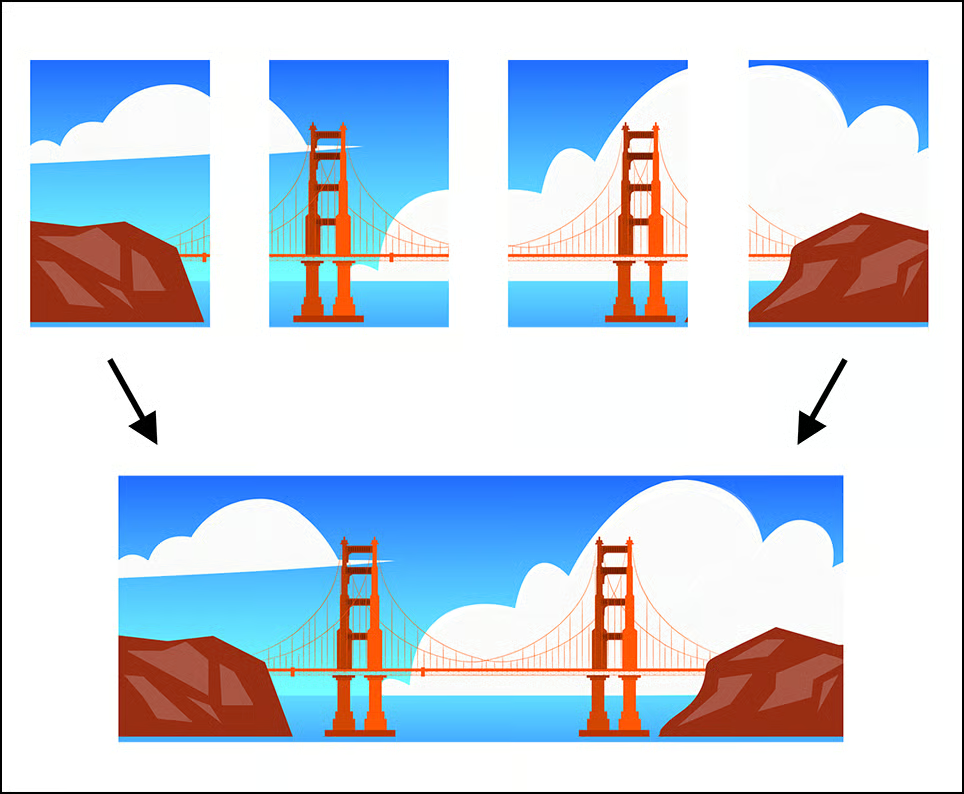
Import your RAW files and apply global adjustments (lens corrections off for circular fisheyes, consistent WB, modest noise reduction). Stitch in PTGui or Hugin with “circular fisheye” selected and the correct FOV. Circular fisheyes are easier to stitch because they require fewer shots but need careful remapping; aim for ~25–40% overlap between frames for solid control points. Rectilinear lenses need more images but can show fewer edge distortions. For many professionals, PTGui’s optimizer and masking tools make it the most efficient choice for spherical 360s. For a deeper look at PTGui in real-world use, see this review from Fstoppers at the end of this paragraph. Fstoppers: PTGui review and workflow
Cleanup & Enhancement
- Nadir patch: Replace the tripod footprint with a clean plate shot or logo patch using PTGui’s Viewpoint correction or Photoshop cloning.
- Color balance and NR: Match color across brackets, then apply masked noise reduction to shadows. The D750 handles shadows well at ISO 100–400.
- Level the horizon: Adjust roll, pitch, and yaw in your stitcher to achieve a level horizon and true verticals.
- Export: Save a 16-bit TIFF master and deliver an 8-bit equirectangular JPEG (2:1 aspect) for VR platforms or virtual tour software.
Recommended Learning Video
Understanding how to set up and use a panoramic head is foundational for perfect stitches. The following video offers a clear, practical walk-through you can follow alongside this guide.
For additional best practices on panoramic heads and minimizing parallax, this practical guide is helpful: Panoramic head setup tutorial (360 Rumors). If you are new to DSLR-based 360 capture workflows for VR, Meta’s Creator docs provide a concise overview: Using a DSLR to shoot and stitch a 360 photo.
Disclaimer: Always confirm the latest documentation for your chosen software; interfaces and features evolve over time.
Useful Tools & Resources
Software
- PTGui panorama stitching
- Hugin open source
- Lightroom / Photoshop
- AI tripod/nadir removal tools
Hardware
- Panoramic heads (Nodal Ninja, Leofoto, Really Right Stuff)
- Carbon fiber tripods with leveling base
- Arca-type L-plates and rail systems
- Wireless remote shutters or intervalometers
- Pole extensions / car mounts with safety tethers
Disclaimer: product names are for reference only; verify specifications on official sites.
Field-Proven Scenarios with the D750 + Circular Fisheye Workflow
Indoor Real Estate (Windows + Mixed Lighting)
Use a 3-around sequence at f/8, ISO 100–200, and 5-frame brackets at ±2 EV to ensure window detail. Lock WB to a custom Kelvin or shoot a custom preset. Turn off all auto features (AF, AWB, Auto ISO). Use the nadir patch for clean floors. The D750’s shadow handling lets you keep ISO low and bracket for highlights—clients notice clean window views.
Outdoor Sunset (High DR, Wind)
Weigh down the tripod and enable Exposure Delay Mode. Shoot 3-around for safety; the extra overlap makes clouds easier to blend. Keep ISO 100–200, f/8–f/11, varying shutter speeds. Consider a quick second pass 30–60 seconds later to blend moving people or traffic.
Event Crowds
Two passes are essential. Do a fast 2-around for base coverage, then wait for gaps and shoot replacement frames. Use faster shutter speeds (1/200+) and ISO 400–800 to freeze motion. During stitching, mask in frames with fewer people at problem areas.
Rooftop / Pole Shooting
Use a lightweight setup, short exposures, and a guy-line/safety tether. The circular fisheye’s speed helps minimize sway-related misalignments. If wind is strong, use 3-around at faster shutter speeds and consider raising ISO to 800–1600 to keep exposure times short.
Visual Aids: Setup and Workflow
Common Mistakes & How to Avoid Them
- Parallax error → Carefully align the entrance pupil; verify with near/far objects before the shoot.
- Exposure flicker → Use full manual exposure and locked white balance across all frames.
- Tripod shadows and footprints → Capture a nadir plate; clone or use viewpoint correction in post.
- Ghosting from moving subjects → Shoot multiple passes and mask frames in the stitcher.
- Night noise and blur → Keep ISO conservative on the D750 (100–800), use tripod, remote, and exposure delay.
- Flare with fisheyes → Shade the lens, avoid strong backlights at the frame edges, and clean the front element.
Frequently Asked Questions
- Can I shoot handheld panoramas with the Nikon D750?
Yes, but it’s not ideal for interiors or near-field scenes. Handheld 2-around with a circular fisheye can work outdoors, yet you’ll risk parallax and stitching errors. A leveled tripod and panoramic head yield much more reliable results.
- Is the Laowa 4mm f/2.8 wide enough for a single-row 360?
Absolutely. With ~210° FOV, you can often cover a full sphere with 2 shots around (180° apart) plus a nadir patch. For maximum safety and overlap, shoot 3-around at 120° increments. Note the Laowa 4mm isn’t natively compatible with Nikon F; use a circular fisheye that mounts to the D750 (e.g., Sigma 8mm) for the same workflow.
- Do I need HDR for interiors with bright windows?
Yes, in most cases. Bracketing ±2 EV (3–5 frames) captures both window highlights and interior shadows. The D750’s base ISO dynamic range is excellent, but HDR ensures clean, professional results without clipped highlights.
- How do I avoid parallax issues with a circular fisheye?
Use a panoramic head and calibrate the entrance pupil. Place a near and far object in the frame; rotate the camera and adjust the rail until the near object doesn’t shift relative to the far object. Mark that rail position so you can reproduce it every time.
- What ISO range is safe on the D750 in low light?
For critical-quality 360s, ISO 100–800 is the sweet spot. ISO 1600 remains usable with careful noise reduction; 3200 is the upper edge for commercial delivery. Use a tripod and longer exposures whenever possible.
- Can I set up custom modes for pano on the D750?
The D750 doesn’t have C1/C2 dials like some cameras, but you can store banks (Shooting Menu and Custom Settings banks). Save a “Pano” bank with manual exposure, fixed WB, RAW, exposure delay, and AF off to speed setup.
- How do I reduce flare with a circular fisheye?
Keep the front element spotless, shade the lens with your hand off-frame, and avoid placing the sun or strong lights near the frame edge. Slight changes in yaw can move flare out of critical areas; capture a second frame and mask if necessary.
- What panoramic head works best for this setup?
Look for an Arca-compatible, two-axis head with a vertical rotator and precise fore-aft rail (e.g., Nodal Ninja or Leofoto). A leveling base under the head speeds setup and improves stitching accuracy.
Safety, Quality, and Reliability
Always secure gear in crowded or elevated locations. Use a tether on rooftops and pole rigs, and weigh down tripods in wind. Back up cards during breaks and shoot a second full rotation for redundancy. Test your nodal alignment and HDR exposure in the field before committing to a big scene—5 minutes of testing can save hours of rework.
For deeper reading on DSLR 360 methods and lens choices, this practical FAQ offers helpful context: DSLR virtual tour camera & lens guide.