Why This Camera & Lens Are Great for Panoramas
If you’re researching how to shoot panorama with Nikon D750 & Fujifilm XF 10-24mm f/4 OIS WR, here’s the first critical note: the Fujifilm XF 10–24mm f/4 OIS WR (X-mount, APS‑C) is not physically compatible with the Nikon D750 (F‑mount, full-frame). There is no practical adapter that preserves infinity focus from Fuji X to Nikon F due to flange distance differences. However, the XF 10–24mm is an excellent rectilinear ultra-wide zoom conceptually, and you can achieve the same field-of-view on the D750 with a Nikon F-mount UWA zoom such as the AF‑S 16–35mm f/4G VR, AF‑S 18–35mm f/3.5–4.5G, or Sigma 14–24mm f/2.8 DG. Throughout this guide, we’ll translate the workflow to the D750 using a rectilinear UWA in the 16–24mm range—functionally equivalent to the XF 10–24’s 15–36mm full-frame FOV.
Why the D750 shines for panoramas: a 24.3MP full-frame sensor (35.9×24.0 mm) gives generous pixel pitch (~5.97 µm), excellent base ISO dynamic range (about 14.5 EV at ISO 100), and clean files through ISO 800–1600 when needed. The body offers reliable bracketing (2–9 frames), exposure delay mode, and a tilting screen—useful for zenith/nadir framing. Rectilinear UWA zooms like a 16–35mm f/4 keep straight lines straight (handy for interiors), with less distortion than fisheyes but requiring more frames to complete a 360×180.
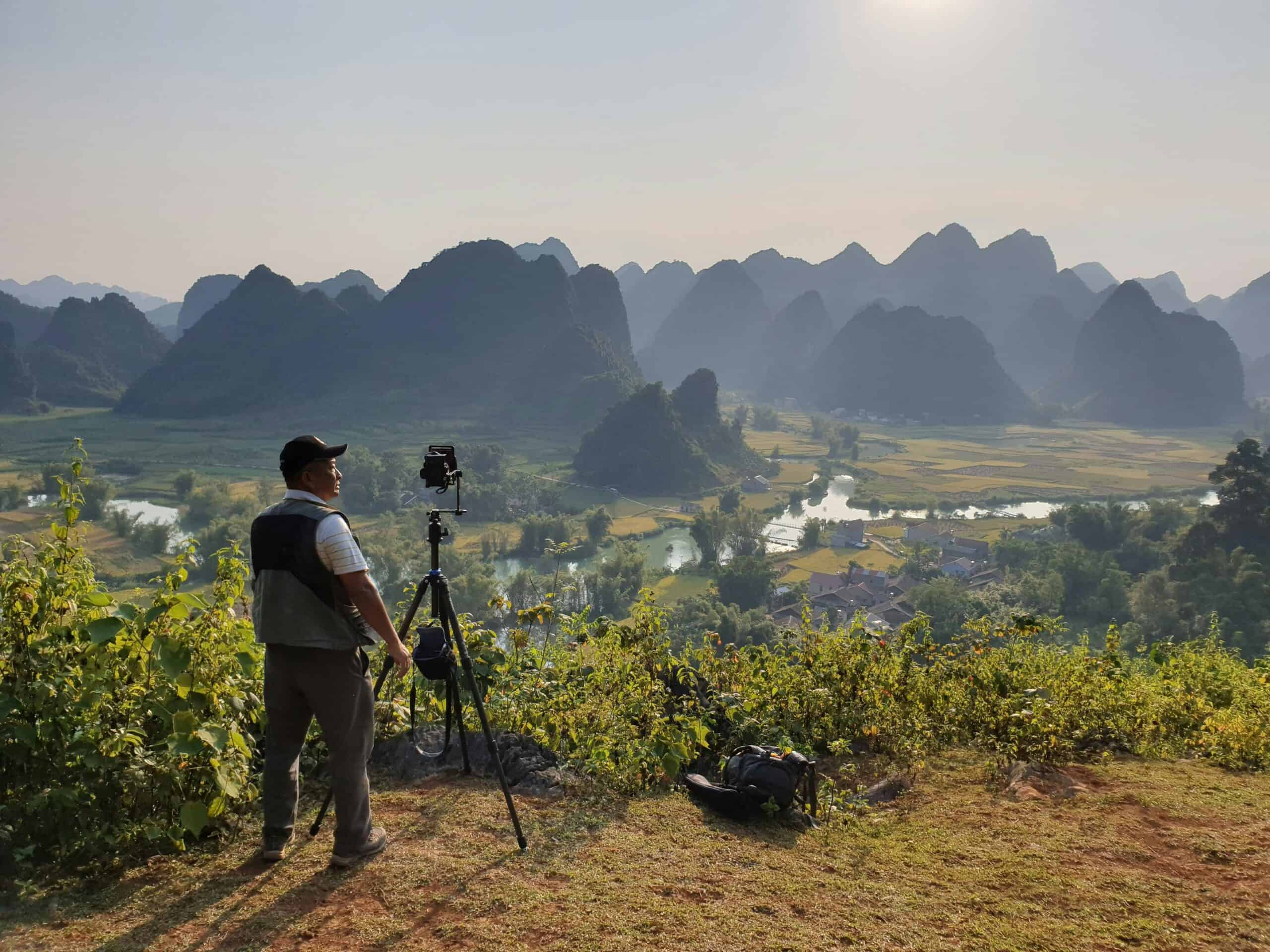
Quick Setup Overview
- Camera: Nikon D750 — Full-frame (FX) 24.3MP, ~14.5 EV DR at ISO 100, excellent ISO 100–800 for clean pano bases.
- Lens: Fujifilm XF 10–24mm f/4 OIS WR (rectilinear, constant f/4, weather-sealed) — not mount-compatible with D750. Use a comparable Nikon F-mount rectilinear UWA such as 16–35mm f/4 VR at 16–24 mm to mirror the XF’s coverage and behavior.
- Estimated shots & overlap (rectilinear on full frame):
- At 16mm FF (HFOV ≈ 96°, VFOV ≈ 74°): 10–12 shots around (0° tilt) with 30% overlap + 5–6 shots at +45° + 5–6 shots at −45° + 1 zenith + 1 nadir. Total ≈ 22–26 frames.
- At 24mm FF (HFOV ≈ 74°, VFOV ≈ 53°): 14–16 shots around + 8 up + 8 down + 1 zenith + 1 nadir. Total ≈ 31–35 frames.
- Difficulty: Moderate (rectilinear pano requires precise nodal alignment and consistent exposure).
Planning & On-Site Preparation
Evaluate Shooting Environment
Assess light direction and contrast, movement (people/traffic), reflective surfaces (glass, polished floors), and wind. In glass-heavy environments (offices, observation decks), keep the lens hood close to the glass (1–2 cm) and shoot at slight angles to reduce flare/ghosting. If you must shoot through glass, switch off any rear LCDs nearby and use a black cloth around the lens hood to block reflections.
Match Gear to Scene Goals
For dynamic-range-heavy scenes (sunset cityscapes, interiors with bright windows), the D750’s DR at base ISO makes it forgiving—start at ISO 100–200 and bracket ±2 EV. For low light, ISO 400–800 keeps noise in check; ISO 1600 is usable with careful exposure. A rectilinear UWA (16–24 mm on FF) minimizes distortion for real estate lines, but requires more frames than a fisheye. The XF 10–24mm f/4 equivalent look can be achieved on the D750 with a 16–24 mm setting on a 16–35mm lens.
Pre-shoot Checklist
- Power & storage: Fully charge EN‑EL15 batteries; carry spares. Use fast UHS‑I SD cards; bring backups.
- Optics clean: Clean front/rear elements and sensor; wide angles make dust specs more visible in skies.
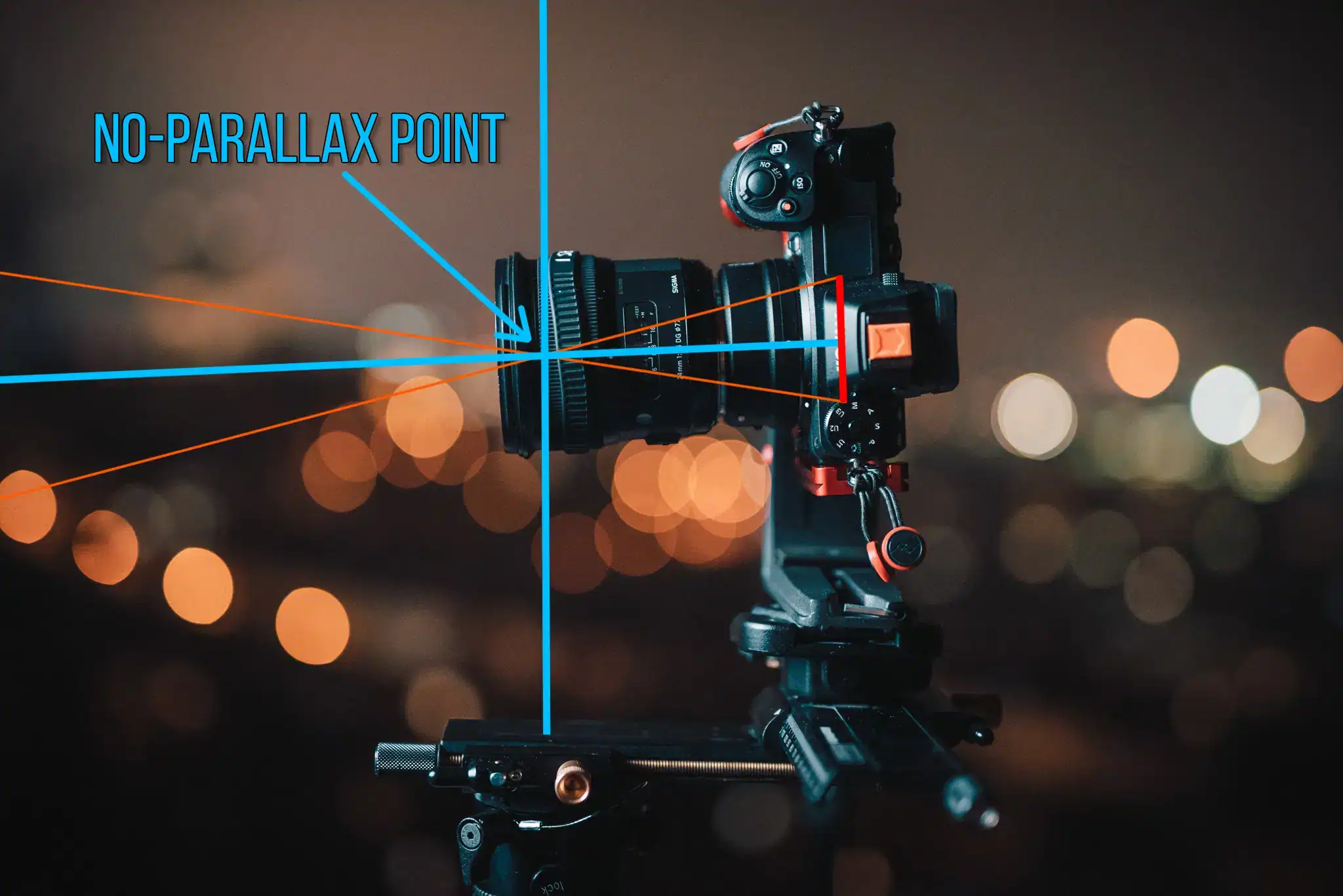
- Tripod leveling & head calibration: Level at the base; ensure your panoramic head is aligned to the lens’s no-parallax point.
- Safety checks: On rooftops or windy sites, tether the tripod, hang a weight, and avoid edges. For car mounts, use redundant straps and stay within legal/safe speed limits.
- Backup workflow: After your main pass, shoot a second pass. If crowds or clouds moved, that extra coverage saves the stitch.
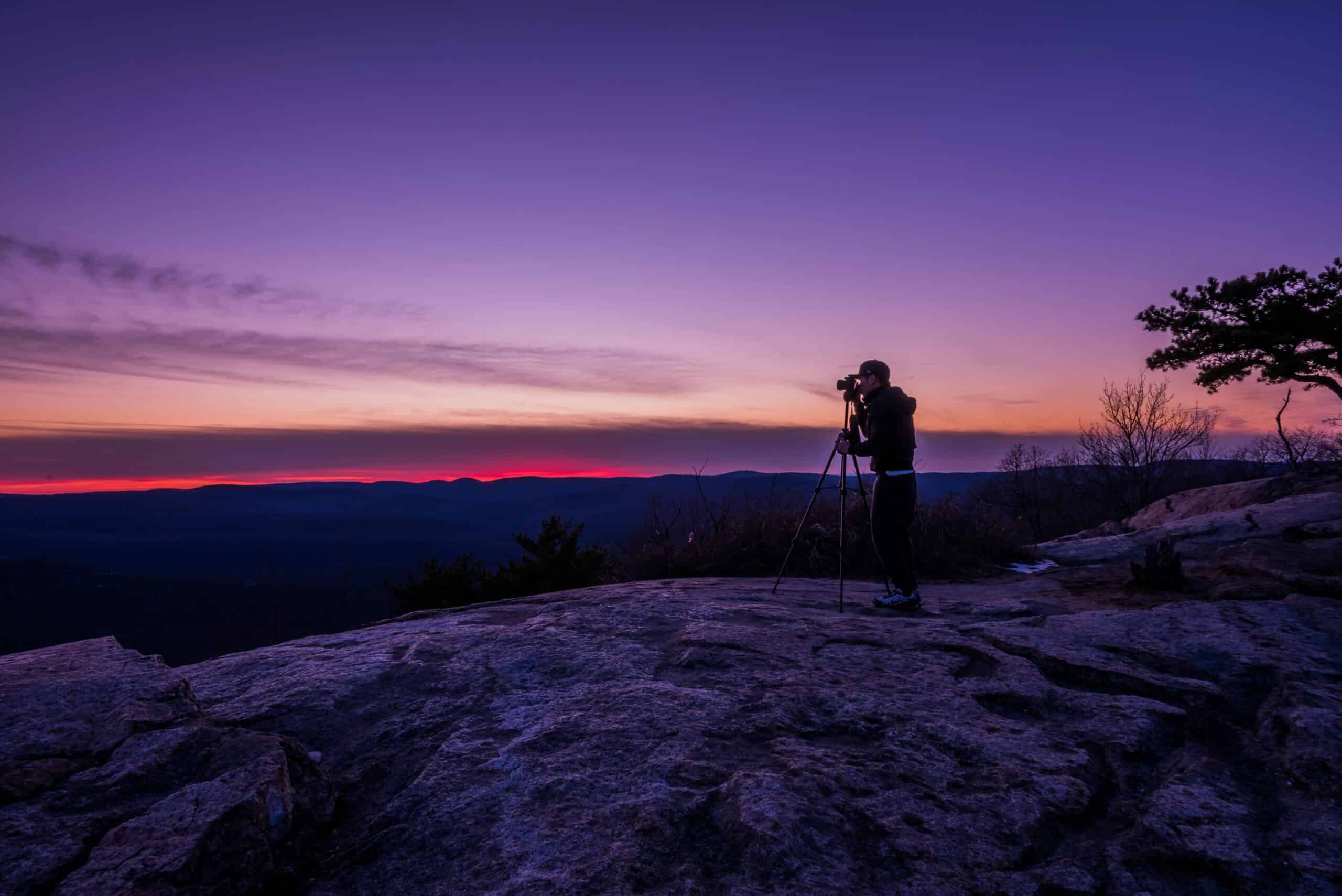
Essential Gear & Setup
Core Gear
- Panoramic head: Enables rotation around the lens’s entrance pupil (no-parallax point). This minimizes parallax between foreground and background so PTGui/Hugin can place control points reliably.
- Stable tripod with leveling base: Faster leveling and repeatable results. A bubble level or built-in base level helps.
- Remote trigger or app: Use a cable release or the D750’s self-timer/exposure delay to prevent vibration. Mirror-up mode is helpful for critical sharpness.
Optional Add-ons
- Pole or car mount: Great for crowds or elevated views. Safety first—always tether, limit exposure time in wind, and mind overhead lines.
- Lighting aids: Small LED panels or bounce flash for interiors (use with care to avoid multi-directional shadows across frames).
- Weather protection: Rain covers and silica gel. The D750 is well-built; pair with a weather-sealed lens if rain threatens.
For an in-depth primer on setting up a panoramic head and no-parallax alignment, this tutorial is a solid reference at the end of your setup prep. Panoramic head setup guide (360 Rumors)
Step-by-Step Shooting Guide
Standard Static Scenes
- Level tripod and align nodal point: On your pano head, slide the camera along the rail until foreground and background elements don’t shift relative to each other when you pan. Mark this position on the rail for 16 mm and 24 mm. Expect the entrance pupil to sit several centimeters ahead of the lens mount on most UWAs.
- Manual exposure and locked white balance: Set M mode. Meter the brightest frame (e.g., toward the sun or a window), then expose to protect highlights. Set white balance to a fixed preset (Daylight/Tungsten) or Kelvin to keep colors consistent across frames.
- Capture with consistent overlap: At 16 mm full frame, shoot 10–12 frames around at 0°, stepping roughly 30–36°. Then tilt +45° and −45° for sky and ground coverage (5–6 shots each). Finish with a dedicated zenith (straight up) and a nadir (straight down).
- Take a nadir for tripod removal: If your head allows, offset the camera and shoot a clean ground plate. Otherwise, shoot multiple nadir angles to make patching easier in post.
HDR / High Dynamic Range Interiors
- Bracket ±2 EV: The D750’s bracketing can do 3–5 frames comfortably for interiors. For bright windows, a 5-shot bracket at 1 or 2 EV steps often captures full tonal range. Keep aperture constant (e.g., f/8).
- Lock WB and focus: Set a fixed WB (e.g., 4000–4500K for mixed interiors) and manual focus at or near the hyperfocal distance to keep depth consistent across brackets.
Low-Light / Night Scenes
- Use longer exposures on a stable mount: At f/4–f/5.6, expect shutter speeds from 1–8 seconds at ISO 100–400 in city night scenes. Use exposure delay or mirror-up plus a remote/intervalometer.
- ISO guidance: The D750 files are excellent up to ISO 800–1600. If wind is moving your rig, raise ISO to keep shutter at or above 1/2–1 sec for sharpness, but prefer base ISO when you can.
Crowded Events
- Two passes: Shoot a fast baseline pass first (short exposure) to lock in your stitch, then a second pass waiting for subject gaps in each direction.
- Blend later: In PTGui or Photoshop, mask moving subjects using the best frame from your two passes.
Special Setups (Pole / Car / Drone)
- Secure and tether: Double-strap poles and car rigs, and avoid high winds. Use a safety line to your tripod collar or camera body.
- Mind vibrations: On vehicles, increase shutter speeds (1/200–1/500) and consider electronic first curtain to reduce shock. Rotate slower to let vibrations settle between frames.
Recommended Settings & Pro Tips
Exposure & Focus
| Scenario | Aperture | Shutter | ISO | Notes |
|---|---|---|---|---|
| Daylight outdoor | f/8–f/11 | 1/100–1/250 | 100–200 | Lock WB (Daylight) and shoot RAW |
| Low light/night | f/4–f/5.6 | 1/2–8 sec (tripod) | 100–800 | Exposure delay/mirror-up, remote trigger |
| Interior HDR | f/8 | Bracket ±2 EV | 100–400 | Blend HDR before stitching or as stacks in PTGui |
| Action/moving subjects | f/5.6–f/8 | 1/200+ | 400–800 | Two-pass method; mask in post |
Critical Tips
- Manual focus near hyperfocal: At 16 mm and f/8 on full frame, focusing ~1.2–1.5 m keeps most of the scene sharp. Use Live View magnification to confirm.
- Mark your nodal settings: For each focal length you plan to use (16, 20, 24 mm), mark the rail positions. This speeds up field setup and reduces parallax risk.
- White balance lock: Mixed lighting can shift by frame; fix WB to avoid color inconsistencies that complicate blending.
- RAW over JPEG: Gives you latitude to fix vignetting, white balance, and dynamic range—especially for HDR or twilight scenes.
- Stabilization: Turn off VR/OIS when on a tripod to prevent micro-blur. On a pole or car, stabilization can help—test both ways.
- Use Exposure Delay Mode: The D750’s 1–3 s delay reduces mirror slap; combine with a remote for tack-sharp frames.
Stitching & Post-Processing
Software Workflow
PTGui is the industry standard for precision 360 stitching with rectilinear lenses; Hugin is a capable open-source alternative. With rectilinear UWAs you’ll shoot more frames than with a fisheye, but straight lines (walls/windows) will stitch cleaner. As a starting point, use ~25–30% overlap for fisheye and ~20–30% overlap for rectilinear, ensuring enough control points. Many pros pre-merge HDR brackets (exposure fusion or tone-mapped) before stitching, while others feed bracket stacks directly to PTGui and let it blend per view. For a hands-on perspective, see this review of PTGui’s strengths. PTGui in professional workflows (Fstoppers)
Cleanup & Enhancement
- Nadir patch: Capture a clean ground plate and clone/patch it in Photoshop. AI-based removal tools can speed this up.
- Color and noise: Harmonize WB and tint across rows; apply mild noise reduction for high-ISO or night frames.
- Horizon leveling: Use PTGui’s optimizer or the straight line tool; correct roll, yaw, pitch to remove lean.
- Export formats: For VR/virtual tour platforms, export an equirectangular at 8K–12K on a 24MP base. Save a 16-bit TIFF master and a compressed JPEG copy for web.
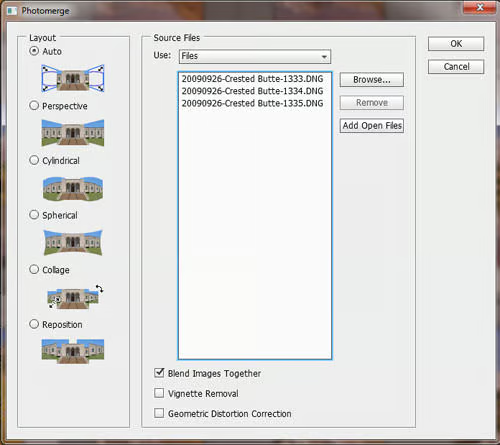
For platform-specific publishing guidance, the Oculus creator docs provide a practical overview for DSLR-based 360 workflows. Using a DSLR to shoot and stitch a 360 photo (Oculus Creator)
Want to dig even deeper into head setup theory and choices? This comprehensive FAQ covers gear selection and trade-offs for virtual tour work. DSLR virtual tour gear FAQ (360 Rumors)
Disclaimer: Always review the latest documentation for your stitching software; interfaces and features evolve.
Useful Tools & Resources
Software
- PTGui panorama stitching
- Hugin (open source)
- Adobe Lightroom / Photoshop
- AI tripod/nadir removal tools
Hardware
- Panoramic heads (Nodal Ninja, Leofoto, Sunwayfoto)
- Carbon fiber tripods with leveling bases
- Wireless remote shutters or intervalometers
- Pole extensions and car mounts with safety tethers
Disclaimer: brand names are provided for search reference; verify specs and compatibility before purchase.
Common Mistakes & How to Avoid Them
- Parallax errors: Not aligning to the no-parallax point causes double edges. Calibrate for each focal length and mark the rail.
- Exposure flicker: Auto exposure/WB creates brightness and color jumps. Use manual exposure and fixed white balance.
- Tripod shadows and nadir clutter: Shoot a dedicated nadir frame and patch later.
- Ghosting from moving subjects: Use two-pass capture; mask in post to select clean regions.
- Night noise and blur: Keep ISO low when possible, use a solid tripod, wind-damping, and exposure delay/mirror-up.
Real-World Case Studies
Indoor Real Estate (Bright Windows)
At 16–20 mm on a D750 with a rectilinear zoom, set f/8, ISO 100–200, and bracket 5 shots at 2 EV steps. Place the tripod mid-room; keep it away from furniture edges to reduce parallax stress. Lock WB at 4000–4500K for mixed light. In PTGui, either feed bracket stacks directly or pre-merge to 16-bit TIFFs for a consistent tonality.
Outdoor Sunset Overlook
Scout the spot, level your tripod, and meter the sun-facing direction to avoid clipping. Set ISO 100, f/8, vary shutter from 1/250 to 1/30 for a single exposure sequence or use 3-shot ±2 EV brackets. Windy? Weigh down the tripod and consider 1/125 minimum shutter to avoid micro-shake in long lens barrel rotations.
Crowded Event Floor
To reduce subject mismatch, shoot a fast baseline row first at 1/200, ISO 400–800, f/5.6. Then wait for micro-gaps and shoot a second pass for clean areas. In post, use masks to replace busy overlaps with cleaner frames while preserving a consistent stitch seam.
Rooftop or Pole Capture
Use a compact 16–20 mm setting for fewer shots. On a pole, increase shutter speed to 1/200–1/500 and shoot in short bursts between wind gusts. Tether the rig and keep a spotter. Expect to patch the nadir aggressively due to the pole/footprint.
Frequently Asked Questions
- Can I shoot handheld panoramas with the Nikon D750?
Yes for casual single-row panos, but for a 360×180 with rectilinear UWA, a pano head is strongly recommended. Handheld multi-row is possible with fast shutters and generous overlap, but expect more stitching errors and ghosting.
- Is the Fujifilm XF 10–24mm f/4 OIS WR wide enough for single-row 360 on the D750?
The XF 10–24 is not mount-compatible with the D750. On a Fuji X body it’s great, but on D750 use a Nikon F-mount UWA (e.g., 16–35mm). A single row at 16–24 mm won’t cover the full 360×180; plan on multi-row capture plus zenith and nadir shots.
- Do I need HDR for interiors with bright windows?
Usually yes. Bracket ±2 EV (3–5 frames) to hold window detail and interior shadows. The D750 handles HDR stacks cleanly; blend before or during stitching.
- How do I avoid parallax issues with a rectilinear UWA?
Set up a pano head and align the rotation axis to the lens’s entrance pupil (no-parallax point). Use two vertical reference objects (near/far) and adjust the rail until their relative position doesn’t shift as you pan.
- What ISO range is safe on the D750 in low light?
ISO 100–800 is very clean; ISO 1600 is still good with careful exposure. Prefer longer shutter times on a tripod over pushing ISO whenever possible for the cleanest stitch.
- Can I set up custom modes for pano on the D750?
Yes. Assign a user setting with manual exposure, fixed WB, mirror-up or exposure delay, and disabled VR. This speeds repeatable pano setups.
- Best tripod head choice for this setup?
A two-axis panoramic head with a sliding rail (e.g., Nodal Ninja, Leofoto) is ideal for nodal alignment and multi-row capture with rectilinear lenses.
Visual Reference: Stitching Flow
In multi-row rectilinear workflows, keep overlap consistent and ensure at least two rows straddle the horizon for robust control point placement. The illustration below summarizes the core stitching concept you’ll apply in PTGui or Hugin.
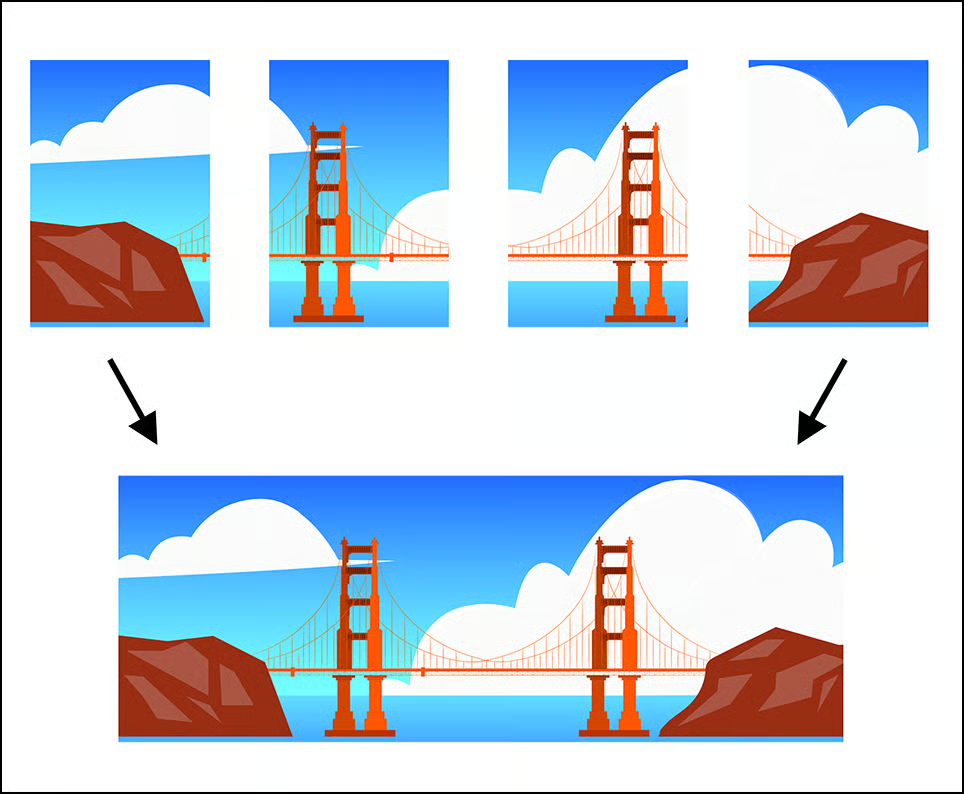
For more on how focal length affects required shot counts and spherical coverage, see the community-maintained tables. DSLR spherical resolution (PanoTools Wiki)
Safety, Limitations & Trustworthy Workflow
Limitations: The Fujifilm XF 10–24mm f/4 OIS WR cannot be used directly on the Nikon D750. Select a comparable Nikon F-mount UWA to replicate the shooting plan. For long exposures, disable lens VR on a tripod; with wind, add weight to the center column and keep the legs low for stability. Always tether rigs on rooftops or vehicles. In your data workflow, keep a verified backup set (on-location dual cards or a portable SSD), and shoot a second capture pass for safety coverage.