Why This Camera & Lens Are Great for Panoramas
The Nikon D750 paired with the AstrHori 12mm f/2.8 Fisheye is a proven, budget-friendly combo for fast, high-coverage 360 photography. The D750’s 24.3MP full-frame (FX) sensor delivers excellent dynamic range at base ISO (around 14.5 EV) and stable high-ISO performance. With a pixel pitch of roughly 6 µm, it tolerates deep shadows and gentle pushes in post without breaking down. The body is a rugged DSLR with a tilting screen, long battery life (EN‑EL15), mirror-up and exposure delay modes—useful for vibration-free work on a tripod.
The AstrHori 12mm f/2.8 is a manual-focus diagonal fisheye that covers full frame with an approximately 180° diagonal field of view. For panoramas, a fisheye lens is an efficiency king: fewer shots are required to complete a full sphere, which reduces chances of stitching errors in dynamic scenes. At f/5.6–f/8 the AstrHori is surprisingly sharp across most of the frame, and while chromatic aberration and flare can appear around bright edges, they are manageable with careful shooting and basic corrections in post. The lens is typically available in Nikon F mount (check your specific version) and features a protruding front element, so filters are not practical—another reason to be mindful of stray light and fingerprints.
In short, if you want to learn how to shoot panorama with Nikon D750 & AstrHori 12mm f/2.8 Fisheye quickly and reliably—whether for real estate, landscapes, or virtual tours—this setup balances image quality, speed, and cost.
Quick Setup Overview
- Camera: Nikon D750 — Full-Frame (35.9 × 24 mm), 24.3MP (6016 × 4016), excellent DR at ISO 100, robust bracketing, mirror-up + exposure delay.
- Lens: AstrHori 12mm f/2.8 — diagonal fisheye, manual focus and aperture, best stopped to f/5.6–f/8, moderate CA wide open, strong flare if sun near frame.
- Estimated shots & overlap: At 12mm diagonal fisheye on FF, plan 6 shots around at 60° yaw with 25–35% overlap, plus 1 zenith and 1 nadir. For maximum safety indoors: 8 around + zenith + nadir. HDR multiplies total frames.
- Difficulty: Easy–Intermediate. Fast on a leveled tripod with a panoramic head; manageable handheld outdoors with care.
Planning & On-Site Preparation
Evaluate Shooting Environment
Scout the scene for moving subjects, wind, and reflective surfaces. Indoors, note window brightness vs interior shadows—this dictates whether you’ll need HDR bracketing. Around glass, shoot as perpendicular as possible and keep the front element 10–30 cm away to reduce reflections and ghosting. Outdoors, check for sun position; a fisheye sees a lot, so flare can creep in from surprising angles.
Match Gear to Scene Goals
The D750’s large sensor and strong base DR let you keep ISO 100–200 for clean files in daylight and ISO 400–800 indoors without visible banding or blotchy color. For night or dim interiors, ISO 1600–3200 remains workable if you expose to the right and denoise carefully. The AstrHori 12mm fisheye minimizes shot count: 6 around is often enough, which is invaluable in crowds or wind. The trade-off is natural fisheye distortion, but stitching software understands fisheye lenses well, so you don’t need to “defish” first.
Pre-shoot Checklist
- Charge two batteries; bring ample storage (shoot RAW; HDR can multiply image count quickly).
- Clean the front element thoroughly; fisheyes show smudges easily. Clean sensor if needed.
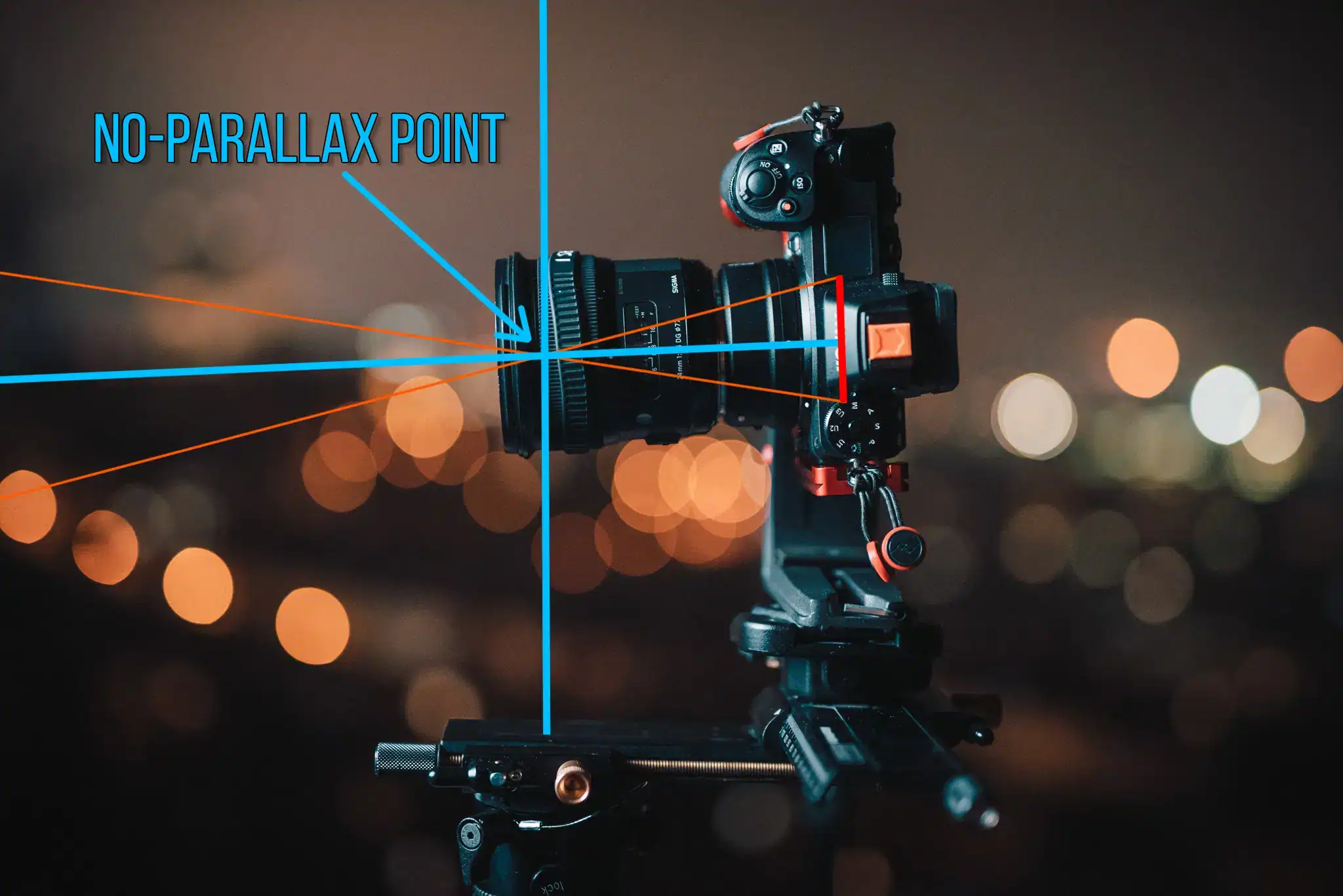
- Level the tripod; calibrate your panoramic head for the lens’ entrance pupil (no-parallax point).
- Safety: on rooftops, tether camera and tripod; avoid edges and strong winds. Car mounts: use secondary safety straps and keep speeds conservative.
- Backup workflow: after your main sweep, shoot a second safety round from the same position. If you’ll patch the tripod later, grab extra nadir frames.
Essential Gear & Setup
Core Gear
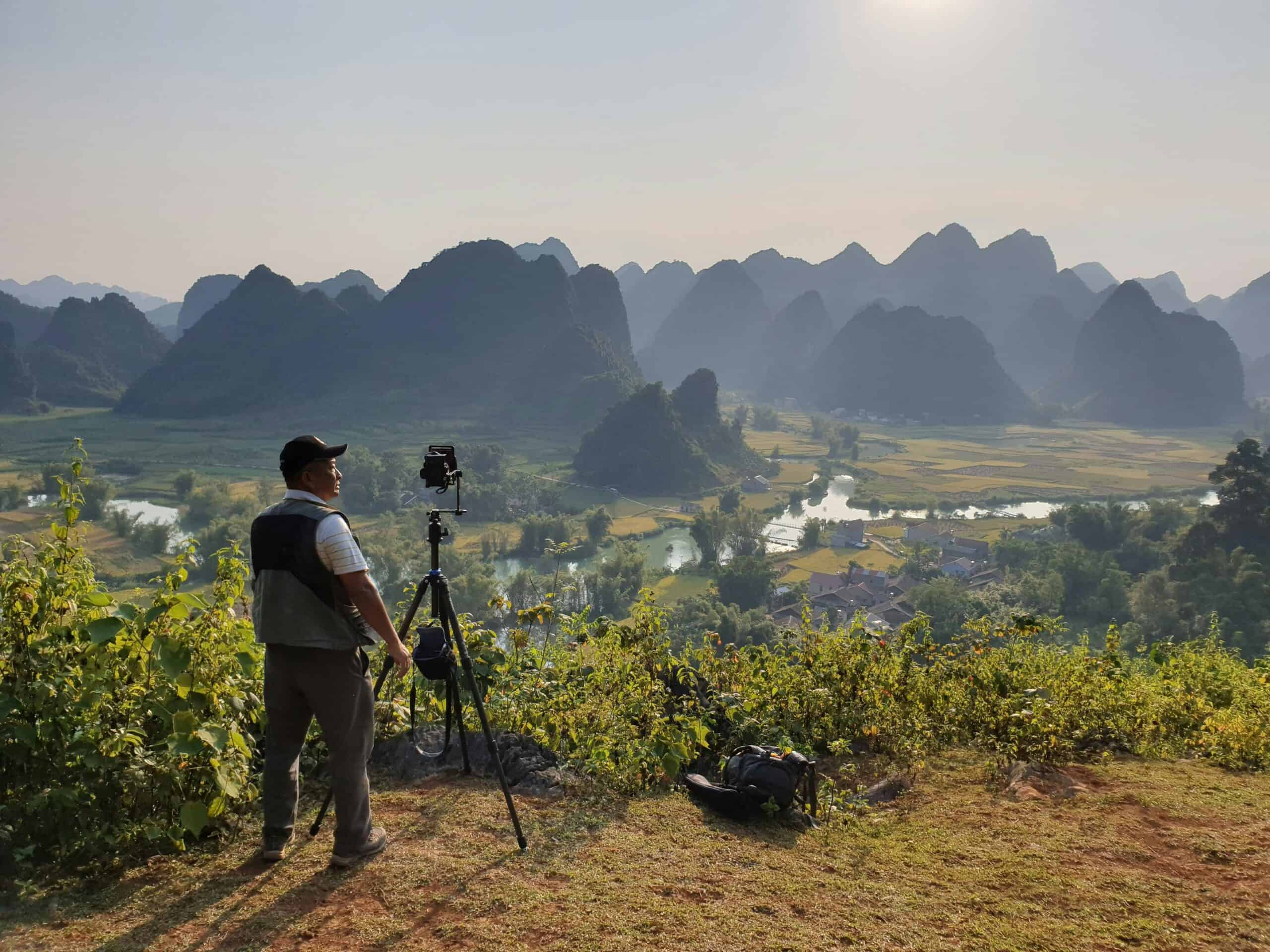
- Panoramic head: Lets you rotate around the entrance pupil (nodal point) to eliminate parallax. This is critical when foreground objects are close or you’re indoors. Label your rail once you find the correct position for the AstrHori 12mm to speed up future shoots.
- Stable tripod with leveling base: A simple bubble level or a half-ball leveling base will save time and improve stitching consistency.
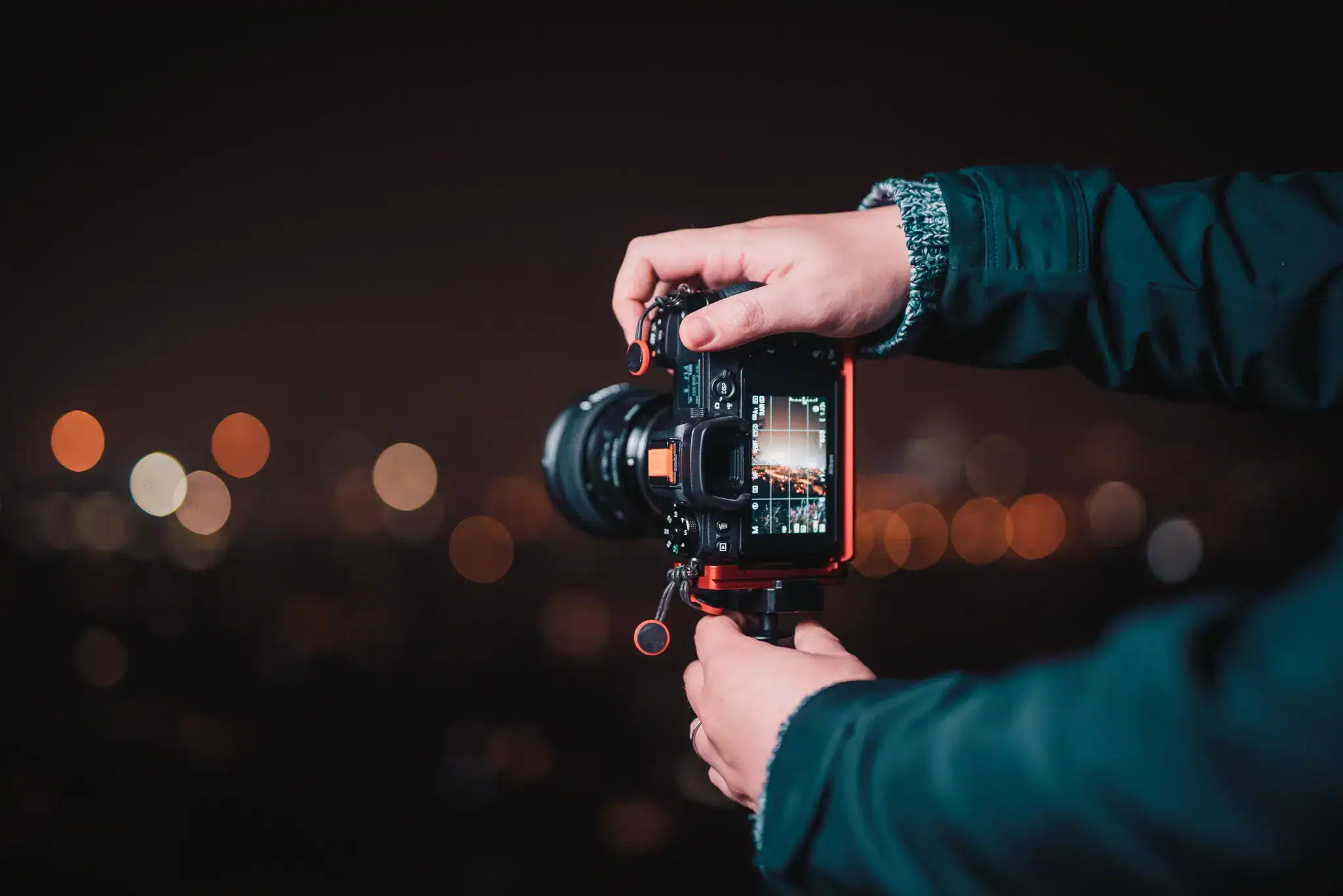
- Remote trigger or app: Use a cable release or Nikon’s app/Wi‑Fi to shoot without touching the camera. Also enable exposure delay (1–3 s) on the D750 for extra stability.
Optional Add-ons
- Pole or car mount: Great for elevated perspectives and car interiors; secure with a safety tether. Beware wind and vibration—shoot at faster shutter speeds and with extra overlap.
- Lighting aids: Small LED panels can even out interior contrast and reduce HDR needs.
- Weather protection: A rain cover and microfiber cloths are essential; fisheye front elements invite droplets and flare.
Step-by-Step Shooting Guide
Standard Static Scenes
- Level the tripod and align nodal point: Use the panoramic head’s fore-aft rail to position the lens so that near and far verticals don’t shift relative to each other while panning. Mark the stop for the AstrHori 12mm once found.
- Manual exposure and WB: Set M mode and a fixed white balance (Daylight for sun, Tungsten for warm interiors, or custom). Locking exposure and WB prevents flicker and color shifts across frames.
- Capture sequence: At 12mm on the D750, shoot 6 images around at 60° yaw with 25–35% overlap. Add 1 zenith (tilt up) and 1 nadir (tilt down) for tripod removal or clean floors/ceilings.
- Nadir coverage: If the tripod is large or the floor has patterns, capture 2–3 nadir frames with slight offsets to give yourself patching options.
HDR / High Dynamic Range Interiors
- Bracket ±2 EV: The D750 supports multi-shot exposure bracketing; three frames at −2/0/+2 EV usually balance windows and interiors. In extreme contrast, use 5 frames from −4 to +4 EV if you prefer manual bracketing.
- Lock WB and picture style: Keep WB and picture control consistent across brackets and views. In-camera Active D-Lighting off; you’ll manage tonal range in RAW.
Low-Light / Night Scenes
- Use a tripod, exposure delay, and remote: Set exposure delay to 1–3 s in the D750 menu to eliminate mirror slap. For static scenes, do longer exposures at ISO 100–200 when possible.
- ISO guidance: Safe ISO on the D750 is 100–800 for critical work; 1600–3200 is acceptable with careful noise reduction. Prefer fewer, cleaner frames to excessive bracketing at high ISO.
Crowded Events
- Two-pass method: First pass quickly for coverage; second pass wait for subject gaps. You’ll mask in post to remove ghosting.
- Faster shutter speeds: Use 1/200 s or faster and ISO 400–800 to freeze motion when people are close to the camera.
Special Setups (Pole / Car / Drone)
- Pole: Secure a guy-line, avoid strong winds, and keep rotations slow. Extra overlap (35–40%) helps with micro-movements.
- Car: Use adhesive mounts plus a tether; shut off the engine to reduce vibration during capture. Watch reflections on glossy surfaces.
- Drone: The D750 is heavy; if aerial is needed, consider a lighter mirrorless body or a drone with built-in 360 workflows.
Field Case Studies
Indoor Real Estate
Use f/8, ISO 100–200, tripod, and 3-shot ±2 EV brackets to balance windows. Take extra nadir frames for clean floor patching on patterned tiles.
Outdoor Sunset
Set a base exposure for the highlights with ISO 100 and bracket 0/−2/+2 EV. Shade the lens with your hand just outside the frame when the sun is near the edge to reduce flare. Rotate quickly; the sky changes fast.
Rooftop or Pole
Prioritize safety: sandbag the tripod, tether the camera, and avoid gusty conditions. Use 6 around to minimize time and the chance of wind-induced blur.
Event Crowds
Go 8 around for extra overlap, shoot multiple passes, and mask moving subjects later. Keep shutter at 1/200+ and bump ISO if needed to freeze motion.
Recommended Settings & Pro Tips
Exposure & Focus
| Scenario | Aperture | Shutter | ISO | Notes |
|---|---|---|---|---|
| Daylight outdoor | f/8–f/11 | 1/100–1/250 | 100–200 | Lock WB (Daylight). Use exposure delay 1–3 s. |
| Low light/night | f/4–f/5.6 | 1/30–1/60 (tripod) or longer | 400–800 (up to 1600–3200) | Remote or self-timer; noise reduction in post. |
| Interior HDR | f/8 | Base shutter for 0EV, bracket ±2 EV | 100–400 | Windows vs lamps balanced with 3–5 brackets. |
| Action / moving subjects | f/5.6–f/8 | 1/200+ | 400–800 | Freeze motion; shoot two passes for clean masks. |
Critical Tips
- Manual focus and hyperfocal: On a 12mm at f/8, focusing around 0.5–0.7 m yields near-to-infinity sharpness. Use live view at 100% to confirm.
- Nodal calibration: Place two vertical objects, one near and one far. Pan left/right while adjusting the rail until relative alignment stays constant. Mark the exact rail stop for the AstrHori 12mm.
- White balance lock: Avoid auto WB across frames—mixed lighting will produce stitching seams. Set a custom Kelvin or preset.
- RAW over JPEG: The D750’s RAW files carry exceptional DR at base ISO; you’ll recover windows and shadows more cleanly.
- Stabilization: The D750 has no IBIS. Use exposure delay and a remote. If your tripod is light, hang a weight from the center column.
- Non-CPU lens data: Enter 12mm f/2.8 in the D750’s Non-CPU Lens Data menu. This enables proper metering and more useful EXIF.
Stitching & Post-Processing
Software Workflow
PTGui is the workhorse for fisheye panoramas: it models fisheye distortion directly, finds control points reliably, and exports equirectangular 2:1 images for VR. Hugin is a capable open-source alternative. With a 12mm fisheye, aim for 25–35% overlap; rectilinear lenses usually need 20–25% overlap but far more frames. A typical 6-around + zenith + nadir set from a 24MP D750 produces equirectangulars in the 10k–14k pixel width range, depending on your stitch settings and crop. For a deeper overview of pano workflows with DSLRs, see the Oculus Creator guide at the end of this paragraph. Using a DSLR to shoot and stitch a 360 photo.
Cleanup & Enhancement
- Nadir patch: Export a layered PSD from PTGui or Hugin and patch with the classic clone/heal method, or use AI-based tripod removal tools.
- Color balance: Apply a consistent profile and unify color temperature. Correct CA and purple fringing along high-contrast edges.
- Leveling: Use the optimizer’s horizon tools; correct yaw/pitch/roll so the horizon is flat and verticals are upright.
- Output: Export 8-bit or 16-bit TIFF for archiving. For web/VR, JPEG 10k–12k wide is a good balance; larger for gigapixel viewing.
PTGui’s speed and masking are highlights; Fstoppers’ review covers practical considerations well. PTGui: one of the best tools for creating panoramas.
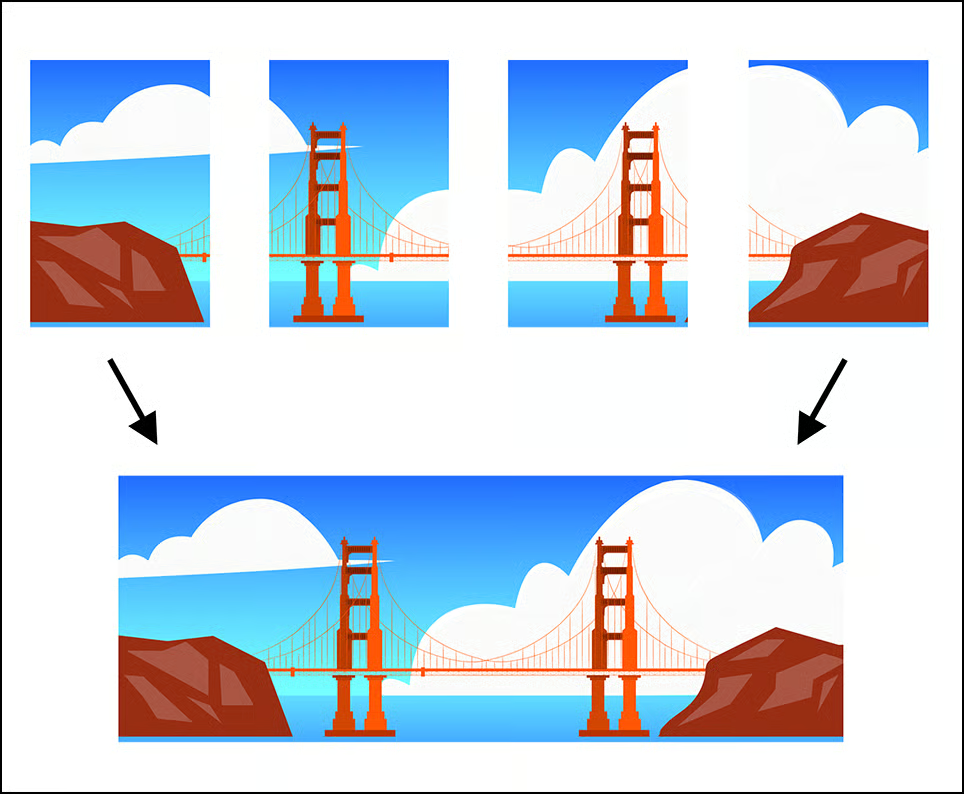
If you’re new to panoramic heads and want a deeper dive on alignment and technique, this tutorial provides a solid foundation. Panoramic head setup tutorial.
Useful Tools & Resources
Software
- PTGui panorama stitching (masking, optimizer, batch HDR)
- Hugin (open source alternative)
- Lightroom / Photoshop for RAW processing and cleanup
- AI tripod removal and content-aware fill tools
Hardware
- Panoramic heads: Nodal Ninja, Leofoto, or equivalent
- Carbon fiber tripods with leveling bases
- Wireless remote shutters and intervalometers
- Pole extensions and secure car mounts with safety tethers
Disclaimer: software/hardware names provided for search reference; verify current specifications and availability on official sites.
Common Mistakes & How to Avoid Them
- Parallax error: Not aligning the entrance pupil causes stitching seams—calibrate your rail carefully.
- Exposure flicker: Auto exposure/WB will produce visible seams—lock both in manual mode.
- Tripod shadows and footprints: Plan the nadir shot and patch later. Move feet and cables away before the nadir.
- Ghosting from movement: Use extra overlap and two-pass shooting; mask in post.
- High-ISO noise: Favor longer exposures and low ISO on a tripod; denoise gently to preserve detail.
- Flare: Shield the fisheye from direct light; adjust your rotation so the sun lands near the overlap, not mid-frame.
Frequently Asked Questions
-
Can I shoot handheld panoramas with the Nikon D750?
Yes, outdoors in bright light you can do a quick single row with the AstrHori 12mm. Use 8 around for extra overlap, 1/250 s or faster, ISO 200–400. Handheld works best when foreground objects are distant; for interiors or close foregrounds, use a tripod and a panoramic head to avoid parallax.
-
Is the AstrHori 12mm f/2.8 wide enough for a single-row 360?
For full spherical coverage, plan at least 6 shots around plus a zenith and a nadir. The diagonal fisheye covers a lot, but you’ll still need top and bottom frames for clean ceilings and floors. In low-ceiling rooms or tight spaces, 8 around provides safer overlap.
-
Do I need HDR for interiors with bright windows?
Often yes. The D750 has strong base DR, but interiors with sunlit windows usually benefit from ±2 EV bracketing (3–5 frames). This preserves views outside without crushing interior shadows, and PTGui can merge brackets before stitching.
-
How do I avoid parallax issues with this lens?
Mount the D750 on a panoramic head and slide the lens on the fore-aft rail until nearby and distant verticals keep alignment while panning. Mark that rail position for the AstrHori 12mm and reuse it every time. Use a bubble level to keep the horizon consistent.
-
What ISO range is safe on the D750 in low light?
For critical quality, stay at ISO 100–800. ISO 1600–3200 is usable with careful exposure and modern denoising. Prefer longer tripod exposures at low ISO to maintain detail, especially for architectural work.
Further Reading
For an end-to-end DSLR 360 workflow and best practices, the Oculus Creator guide is highly actionable. Set up a panoramic head to shoot high-end 360 photos.
Resolution and shot-count planning for different lenses and sensors are discussed here. DSLR spherical resolution (PanoTools Wiki).