
Why This Camera & Lens Are Great for Panoramas
If you’re wondering how to shoot panorama with Hasselblad X1D-50c & Tokina ATX-i 11-20mm f/2.8, here’s the short answer: the X1D-50c’s 50MP 44×33 mm medium-format sensor delivers outstanding dynamic range and color depth for clean, high-resolution 360 photos, while the Tokina ATX-i provides a sharp, rectilinear ultrawide field of view that’s well-behaved for stitching. This combo can produce luxurious detail and smooth tonal transitions, ideal for premium virtual tours, fine art prints, and commercial panoramas.
Important caveat: the Tokina ATX-i 11–20mm f/2.8 is an APS-C DSLR lens (typically Nikon F or Canon EF-S) and is not natively compatible with the Hasselblad XCD mount. You’ll need a suitable adapter. For Nikon F, a “G-type” adapter with a mechanical aperture control ring is recommended; for Canon EF-S, electronic control is uncommon on XCD, so aperture control may be limited. Because the Tokina is designed for APS-C, it doesn’t fully cover the 44×33 mm sensor; expect heavy vignetting at wider focal lengths. For 360° panoramas, this is manageable because you’ll shoot multi-row and crop/overlap the useful, sharp central area. Also note that adapted lenses on the X1D use the electronic shutter, which is excellent for static scenes but can introduce rolling shutter artifacts with fast motion or banding under certain LED lighting.
Bottom line: use the Tokina near the long end (16–20 mm) for cleaner coverage and reduced vignetting, shoot multi-row with good overlap, and lean on the X1D’s huge dynamic range and 14-bit RAW files for stunning results.
Quick Setup Overview
- Camera: Hasselblad X1D-50c — 44×33 mm medium-format sensor, ~50MP, pixel pitch ~5.3 µm, ~14 stops DR at base ISO, electronic shutter for adapted lenses.
- Lens: Tokina ATX-i 11–20mm f/2.8 — rectilinear APS-C zoom; best sharpness typically around f/5.6–f/8; good control of distortion for UWA; some CA at edges (correctable in post).
- Estimated shots & overlap (tested safe ranges):
- At 11mm: three rows of 6 around (≈0°, +50°, −50°) + 1 zenith + 2 nadir (≈21–23 images) at ~30% overlap. Expect strong vignetting; use central area.
- At 16mm: 8 around at 0°, 6 around at +45°, 6 around at −45°, + 1 zenith + 1–2 nadir (≈22–24 images).
- At 20mm: 10–12 around at 0°, 8 around at +45°, 8 around at −45°, + 1 zenith + 2 nadir (≈29–31 images).
- Difficulty: Intermediate (due to adapter, electronic shutter, and nodal calibration on a zoom).
Planning & On-Site Preparation
Evaluate Shooting Environment
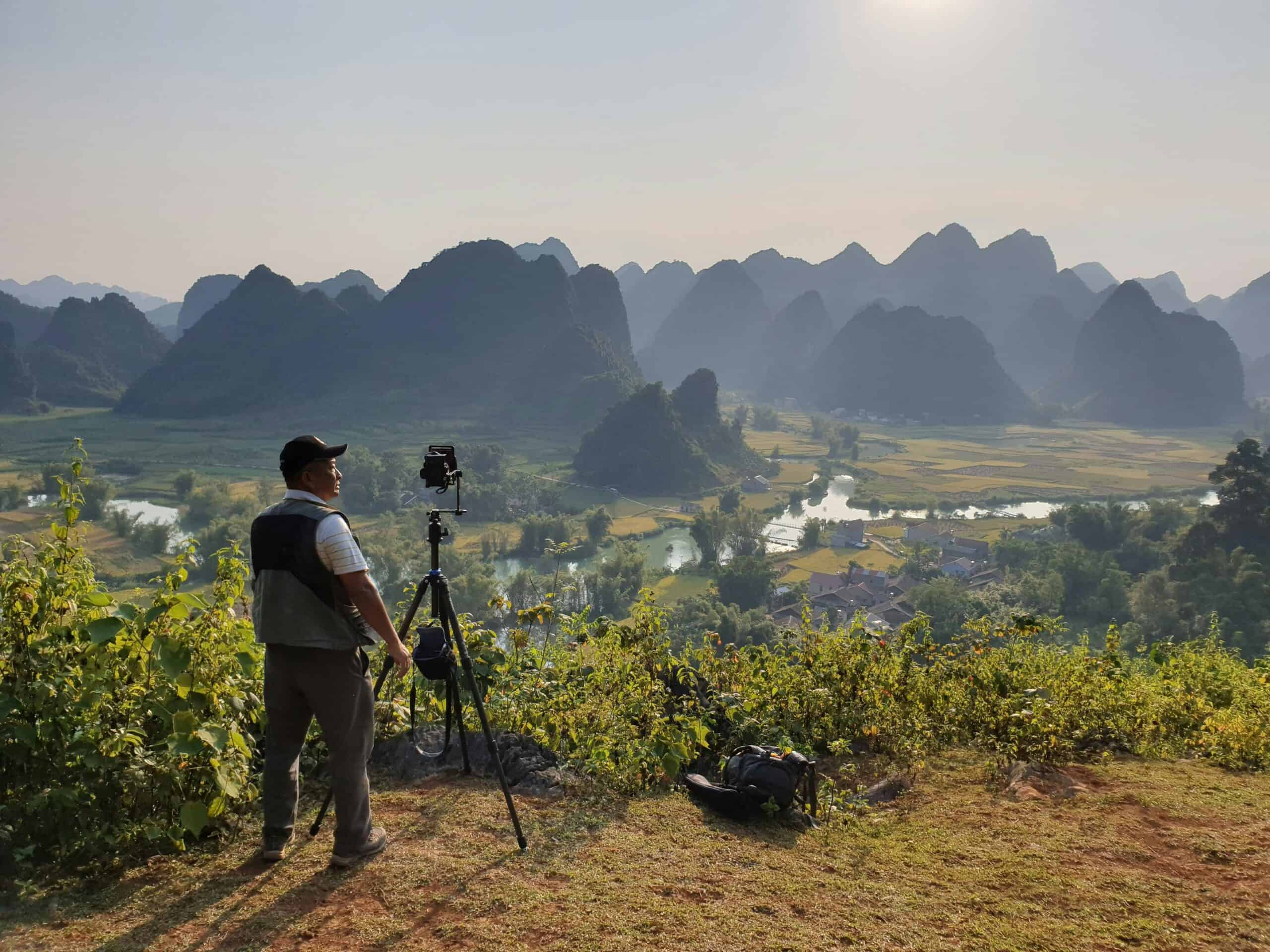
Assess light, reflections, and movement before you deploy. Outdoors, watch the sun’s position to prevent flare and uneven exposures. Indoors, reflective glass and glossy floors demand careful positioning and polarization control (if used—note that polarizers can cause uneven skies in wide panoramas). If shooting through glass, place the front element very close (1–2 cm) to the glass to minimize reflections; shield stray light with your hand or a rubber lens hood.
Electronic shutter caution: under LED or fluorescent lighting, ES can band. If you notice banding, lower shutter speed (1/60–1/125), avoid dimmed LEDs, or reshoot when lighting is steady. For moving crowds or vehicles, remember ES has rolling shutter—minimize rapid motion during exposure.
Match Gear to Scene Goals
The X1D-50c’s dynamic range is superb—shoot at ISO 100–200 for best DR in high-contrast daylight. Indoors, ISO 400–800 is safe; ISO 1600 remains usable with careful noise reduction. The Tokina’s rectilinear rendering keeps straight lines straight, important for architecture and interiors. While a fisheye reduces the number of shots, rectilinear panoramas from the Tokina yield cleaner geometry for real estate and design work—at the cost of more frames.
Pre-shoot Checklist
- Charge batteries, format dual SD cards (use fast UHS-I/U3); clean lens front/rear and camera sensor.
- Level tripod; pre-calibrate your panoramic head for the Tokina at your chosen focal length (e.g., 18 mm).
- Confirm adapter fit: secure lock, no wobble; set mechanical aperture ring if using a Nikon F G adapter.
- Check wind load on rooftops/poles; safety tether everything. In cars, use rated suction mounts and a secondary strap.
- Backup workflow: shoot a second pass or backup nadir for safety; keep a spare set of brackets for HDR scenes.
Essential Gear & Setup
Core Gear
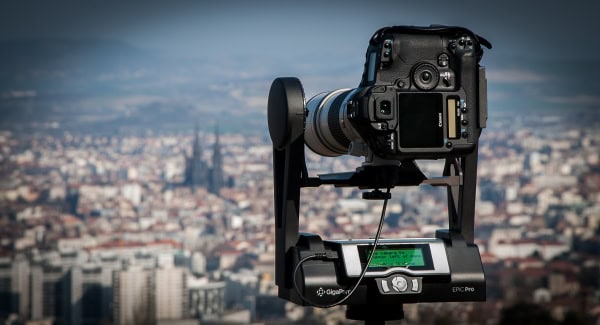
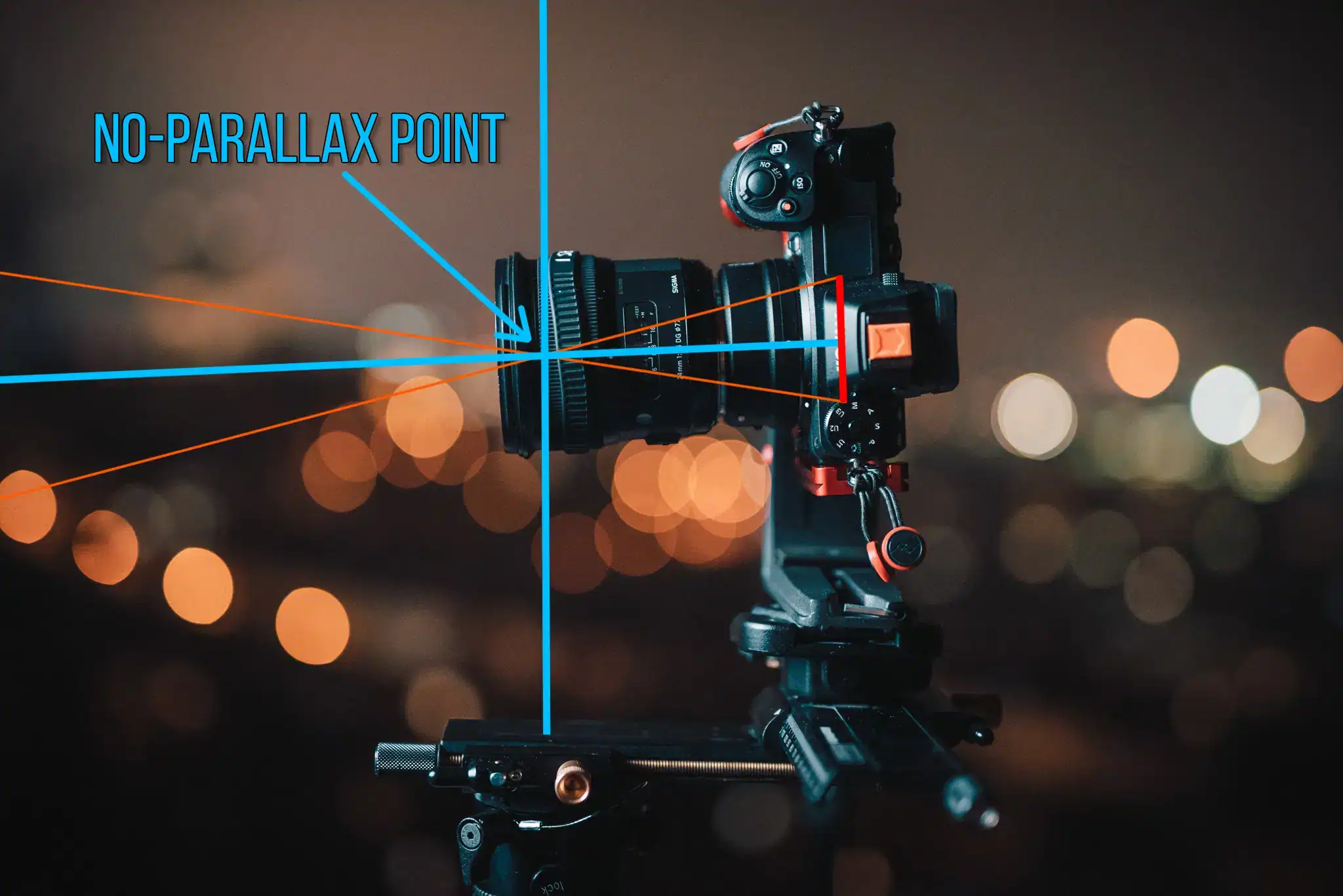
- Panoramic head: Lets you align the entrance pupil (nodal point) of the Tokina with the rotation axis to eliminate parallax. This is crucial when objects are close (interiors, tight alleys).
- Stable tripod with leveling base: A leveling base simplifies getting the head level, so every rotation stays flat—fewer stitching distortions.
- Remote trigger or app: Use a cable release or camera app to avoid vibrations. With ES on the X1D, the absence of mechanical shutter motion helps, but stability is still key.
Optional Add-ons
- Pole or car mount: For rooftops or vehicle rigs, use a safety tether and account for wind torque. Slow your rotation and consider faster shutter speeds to mitigate sway and rolling shutter.
- Lighting aids: Small LED panels for interiors, bounced indirectly to avoid hotspots. Avoid PWM-dimmed LEDs to reduce banding with ES.
- Weather protection: Rain cover, microfiber cloths, silica packs, and a weighted hook on your tripod to resist gusts.
Want a deeper primer on panoramic head setup and best practices? See this panoramic head tutorial that covers alignment fundamentals and field use. Panoramic head tutorial
Step-by-Step Shooting Guide
Standard Static Scenes
- Level tripod and align the nodal point: Mount the Tokina and slide the camera forward/backward on the rail until foreground and background objects stay aligned while you pan. For the Tokina, expect the no-parallax point to move with zoom. Typical starting guesses:
- 11 mm: entrance pupil relatively close to the front element; start with the lens’ front approximately 35–45 mm ahead of the rotation axis.
- 18–20 mm: entrance pupil shifts rearward; start around 55–70 mm forward of the mount. Fine-tune by testing with two vertical objects.
Note: record your exact rail marks once dialed in.
- Set manual exposure and lock white balance: Meter the brightest patch you must retain detail in (e.g., sky near sun), then expose to protect highlights. Fix WB (e.g., daylight 5500K outdoors, custom Kelvin indoors) to avoid color shifts during stitching.
- Capture with overlap: For 16–20 mm, use ~30% overlap; for 11–14 mm, ~30–35% is safer due to stronger perspective stretch near edges. Follow the shot counts from the Quick Setup section.
- Take a nadir: Tilt down for one or two shots to capture clean floor/ground for tripod removal in post.
HDR / High Dynamic Range Interiors
- Bracket ±2 EV (3 or 5 frames). Interior windows against darker rooms often need 5-frame brackets for clean highlights and shadow detail.
- Keep WB locked and exposure mode manual across all frames to keep stitching seamless.
- Sequence per angle: shoot all brackets before rotating to the next angle to ease batch processing.
Low-Light / Night Scenes
- Use a sturdy tripod, remote trigger, and turn off IBIS/IS (not present on X1D body; if using a stabilized adapter or lens, disable stabilization on tripod).
- ISO on the X1D-50c: 100–200 for maximum DR; 400–800 is clean; 1600 still usable with careful NR. Prefer longer shutter times to avoid pushing ISO too high.
- Beware ES banding under LED streetlights; test a frame and adjust shutter to sync with lighting or choose locations with steady light sources.
Crowded Events
- Shoot two passes: a fast “layout” pass for coverage, then a second pass waiting for clean gaps to capture the same angles with fewer people.
- In post, mask and blend the clean sections over busy ones to remove duplicates and ghosts.
- Use faster shutter speeds (1/200–1/500) to freeze motion; this helps reduce rolling shutter artifacts during ES capture.
Special Setups (Pole / Car / Drone)
- Secure gear with a rated clamp and a safety tether. Keep the center of gravity low; test at low height first.
- Mind wind. On poles or moving vehicles, plan slower, deliberate rotations and faster shutters. Consider shooting fewer rows and more overlap to improve stitch tolerance.
- For car-mounted captures, avoid rough roads and high speeds; vibrations plus ES increase the risk of skew. Short exposures are your friend.
Recommended Settings & Pro Tips
Exposure & Focus
| Scenario | Aperture | Shutter | ISO | Notes |
|---|---|---|---|---|
| Daylight outdoor | f/8–f/11 | 1/100–1/250 | 100–200 | Lock WB to daylight; expose for sky highlights |
| Low light/night | f/4–f/5.6 | 1/30–1/60 (or longer on tripod) | 400–800 (1600 max) | Use remote; test for ES banding under LEDs |
| Interior HDR | f/8 | Bracket ±2 EV (3–5 frames) | 100–400 | Sequence brackets per angle; keep WB fixed |
| Action / moving subjects | f/5.6–f/8 | 1/200+ | 400–800 | Freeze motion; consider double-pass capture |
Critical Tips
- Manual focus at hyperfocal: For 18–20 mm at f/8, focusing around 1–1.5 m typically keeps everything sharp to infinity. Confirm with magnified live view and focus peaking.
- Nodal point calibration: Use two vertical objects (one near, one far). Pan left/right and adjust the rail until their relative position doesn’t shift. Mark the rail for 11, 16, 20 mm.
- White balance lock: Avoid auto WB shifts that cause stitching seams, especially under mixed lighting.
- RAW over JPEG: The X1D’s 14-bit RAW gives you the DR you paid for—use it for better highlight recovery and smoother color.
- Stabilization off on tripod: Any stabilization (if present via adapter) can add micro-blur when mounted solidly.
Stitching & Post-Processing
Software Workflow
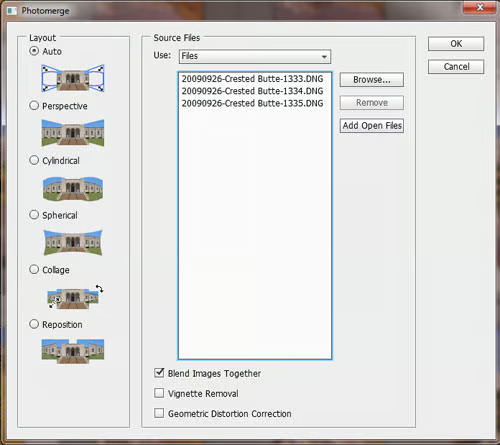
Stitch with PTGui, Hugin, Lightroom/Photoshop, or Affinity Photo. Rectilinear ultrawides require careful control points but deliver straight lines and architectural fidelity. Industry norms suggest ~25–30% overlap for fisheyes and ~20–30% for rectilinear—lean toward 30% with ultrawides to improve control point robustness. Calibrate focal length and crop out the Tokina’s extreme corners if vignetting is severe from APS-C coverage. Many pros prefer PTGui for its optimizer and masking tools. Why PTGui is a top choice for panoramas
Cleanup & Enhancement
- Nadir patch: Export a viewpoint-corrected patch, clone in Photoshop, or use AI-based tripod removal tools. If you shot a dedicated clean floor plate, blend it in PTGui or Photoshop.
- Color and noise: Apply lens-profile corrections where available, fine-tune WB, and run noise reduction at ISO 800–1600. The X1D files handle grading gracefully.
- Leveling: Use horizon tools in PTGui/Hugin; correct roll/yaw/pitch until the horizon and verticals look natural in equirectangular preview.
- Export: For VR, export 2:1 equirectangular JPEG or TIFF (e.g., 12000×6000 px). Follow the platform’s specs for metadata and max dimensions. DSLR/mirrorless 360 export guidelines
Deep Dive: Panorama Fundamentals (Video)
Watch a concise overview of panorama shooting and stitching concepts to reinforce the steps above.
Want to go beyond? Understanding spherical resolution helps predict output size from different lenses and frame counts. Spherical resolution reference
Useful Tools & Resources
Software
- PTGui panorama stitching
- Hugin (open source)
- Adobe Lightroom Classic / Photoshop
- AI-based tripod removal tools and object cleanup utilities
Hardware
- Panoramic heads (Nodal Ninja, Leofoto, or similar with fore-aft and lateral rails)
- Carbon fiber tripods with leveling bases
- Wireless remote shutters or intervalometers
- Safety tethers; pole extensions; car mounts with rated load
Disclaimer: Names are provided for search reference; verify current specs and compatibility with the Hasselblad X1D-50c and your adapter.
For a practical overview of camera/lens choices in virtual-tour work (applies conceptually even to medium format), see this expert guide. Virtual tour camera & lens guide
Common Mistakes & How to Avoid Them
- Parallax error: Always calibrate the nodal point for the Tokina at the focal length you’ll use.
- Exposure flicker: Manual mode, fixed ISO, and locked WB for the entire set.
- Tripod shadows and missing floor: Shoot a nadir and/or a clean floor plate for patching.
- Ghosting from motion: Shoot double passes and mask in post or plan for faster shutter speeds.
- LED banding with ES: Test a frame, adjust shutter, or reschedule under steadier lighting.
- Adapter surprises: Ensure your adapter provides aperture control (for Nikon G versions) and a tight fit—recheck before every session.
Field Notes & Case Studies
Indoor Real Estate (Bright Windows)
Use 18–20 mm to keep architecture straight and edges cleaner. Bracket 5 frames ±2 EV. Focus about 1–1.5 m at f/8, WB at 4000–4500K for mixed daylight/tungsten, and keep ISO 100–200 to preserve DR. Shoot three rows: 10–12 around at 0°, 8 at +45°, 8 at −45°, then nadir. In PTGui, prioritize window exposures in blending masks to prevent gray highlights, then lift shadows with the base or darker frames.
Outdoor Sunset
Set the base exposure to preserve the sunlit sky (ETTR without clipping). Consider a quick second exposure one stop brighter for foreground lift in post. Flare can creep in at wide focal lengths; use your hand as a flag just out of frame. ISO 100–200, f/8–f/11, 1/60–1/200. The X1D’s color depth shines here—avoid heavy gradients from polarizers.
Event Crowds
Leverage faster shutters (1/200–1/500), ISO 400–800, f/5.6–f/8. Do a “coverage pass” first, then a “cleanup pass” capturing gaps. In post, use layer masks to replace busy sections with cleaner moments. Be extra careful with electronic shutter skew if people move rapidly across the frame.
Rooftop / Pole Shooting
Balance the setup low on the pole, use a safety tether, and keep rotations slow. Overlap more (35%) to compensate for minor sway. Use higher shutter speeds to freeze motion. If wind gusts, take multiple takes per angle and choose the sharpest in post.
Frequently Asked Questions
-
Can I shoot handheld panoramas with the Hasselblad X1D-50c?
Yes for simple cylindrical panos, but for full 360×180° spheres, a tripod and panoramic head are strongly recommended—especially since the X1D uses electronic shutter with adapted lenses, which is less forgiving of movement. Handheld multi-row spheres are possible but require high overlap and impeccable technique.
-
Is the Tokina ATX-i 11–20mm f/2.8 wide enough for single-row 360?
Not as a true 360×180° sphere with rectilinear optics. You’ll typically need multi-row captures. At 11–14 mm you can reduce the number of rows, but plan on at least two rows plus zenith and nadir for full coverage.
-
Do I need HDR for interiors with bright windows?
Often yes. The X1D’s DR is excellent, but windows can exceed 14 stops. Bracket ±2 EV (3–5 frames). Merge exposure sets per angle before stitching, or let PTGui handle bracketed stacks.
-
How do I avoid parallax issues with this combo?
Use a panoramic head and align the entrance pupil. Calibrate at the exact focal length you’ll use (e.g., 18 mm). Mark your rail positions so you can repeat them reliably.
-
What ISO range is safe on the X1D-50c in low light?
ISO 100–200 for best DR; 400–800 is very clean; ISO 1600 is usable with careful noise reduction. Prefer longer shutters on a tripod over cranking ISO.
-
Can I set custom modes for pano on the X1D?
The X1D doesn’t use Canon-style C1/C2 slots, but you can store User Profiles. Save a “Pano” profile with manual exposure, fixed WB, ES enabled, and key display settings (grid, level, peaking) to speed setup.
-
Will the Tokina cover the X1D sensor without vignetting?
No—this is an APS-C lens. Expect significant vignetting, especially at 11–14 mm. For panoramas, shoot multi-row with generous overlap and crop to the clean central area. Using ~18–20 mm reduces the unusable corners.
-
What panoramic head should I choose for this setup?
Pick a compact, precise head with fore-aft and lateral rails (e.g., Nodal Ninja or Leofoto), plus a leveling base. Ensure the rails can place the Tokina’s entrance pupil over the rotation axis at your chosen focal lengths.
Safety, Limitations & Honest Advice
The X1D-50c with an adapted Tokina 11–20 mm is a non-standard pairing. It can produce outstanding panoramas, but it demands discipline: a secure adapter with aperture control, electronic-shutter awareness, and careful nodal calibration. In fast-changing or LED-heavy environments, a native XCD lens (with leaf shutter) or another body that supports the Tokina natively may be more practical. If you commit to this combo, keep a tight workflow: test frames for banding, lock down exposure/WB, overshoot overlap, and run a backup pass. Protect your investment with tethers and weather covers in risky setups.
For more hands-on panoramic head setup principles, this guide is a solid supplement. Panoramic head setup principles