
Why This Camera & Lens Are Great for Panoramas
If you want rich, high-resolution 360 photos that grade beautifully, the Hasselblad X1D-50c is an outstanding platform. Its 44×33 mm medium-format CMOS sensor (approx. 50 MP, ~5.3 µm pixel pitch) delivers excellent dynamic range at base ISO (about 14 stops), clean color with 16‑bit depth, and smooth tonal transitions—perfect for sky gradients, interior HDR panoramas, and subtle architectural textures. The camera’s ergonomics and clear menus make it straightforward to set manual exposure and white balance and to focus precisely.
The Tamron 17–28mm f/2.8 Di III RXD is a sharp, lightweight rectilinear ultra-wide zoom well-known for low distortion and good corner performance at f/5.6–f/8, with only modest lateral chromatic aberration at the wide end. As a rectilinear zoom, it preserves straight lines—a major benefit for architectural and real-estate 360 photography—at the cost of needing more frames compared to a fisheye.
Important compatibility note: this Tamron is a Sony E-mount full-frame lens and is not natively compatible with the X1D-50c’s XCD mount. There is no widely available smart adapter that provides full electronic control on X1D, and the lens’s 36×24 mm image circle would vignette a 44×33 mm sensor even if adapted. In practice, you have two workable paths:
- Use the X1D-50c with an equivalent XCD or adapted H lens (e.g., XCD 21mm or 30mm) and follow the techniques below (recommended).
- Use the Tamron 17–28mm on a compatible Sony body to capture the tiles, then stitch with the same workflow described here (technique is identical for a rectilinear 17–28mm).
Throughout this guide on how to shoot panorama with Hasselblad X1D-50c & Tamron 17–28mm f/2.8 Di III RXD, we’ll give field-tested capture patterns for rectilinear ultra-wide focal lengths (17/20/24/28 mm), along with medium-format equivalents (e.g., XCD 21mm ≈ 17mm full-frame). Where relevant, we call out the practical differences and any limitations.
Quick Setup Overview
- Camera: Hasselblad X1D-50c — 44×33 mm medium-format CMOS, 50 MP (~5.3 µm pixel pitch), excellent DR at ISO 100, 16-bit color, no IBIS (use tripod).
- Lens: Tamron 17–28mm f/2.8 Di III RXD (rectilinear, Sony E-mount) — sharpest around f/5.6–f/8, mild barrel distortion at 17 mm, low weight; not natively mountable on X1D.
- Estimated shots & overlap (rectilinear, vertical camera, 30–35% overlap):
- 17 mm FF or XCD 21 mm equiv: 8 shots @ 0°, 8 @ +45°, 8 @ −45°, plus zenith + nadir (≈ 26 total).
- 24 mm FF or ≈ XCD 30 mm equiv: 10–12 shots @ 0°, 10–12 @ +45°, 10–12 @ −45°, plus Z + N (≈ 32–38 total).
- 28 mm FF: 12–14 per row (three rows) + Z + N (≈ 38–44 total).
- Difficulty: Intermediate (rectilinear 360s require careful nodal alignment and consistent overlap).
Planning & On-Site Preparation
Evaluate Shooting Environment
Scan for moving subjects, reflective glass, and extreme contrast. If you must shoot through glass, place the front element as close as safely possible to reduce reflections (use a rubber lens hood if available) and keep the camera square to the surface to minimize flare and ghosting. For outdoor sunsets or city lights, plan to bracket exposures to preserve highlights while keeping your shadows clean.
Match Gear to Scene Goals
The X1D-50c’s dynamic range and 16-bit color are ideal for scenes that demand deep gradients and high color fidelity (interiors, architecture, dusk skylines). It is happiest in ISO 100–400; ISO 800 remains usable for prints and virtual tours with mild noise reduction; ISO 1600+ is possible but expect a noticeable DR drop. The Tamron 17–28mm’s rectilinear rendering maintains straight lines—better for real estate and architecture—but requires more frames compared to fisheye solutions. For medium-format XCD lenses, pick XCD 21 or 30 mm to mirror 17–24 mm FF coverage and follow the same overlap guidance.
Pre-shoot Checklist
- Charge batteries and carry spares; format multiple cards (redundancy beats re-shoots).
- Clean front/rear elements and sensor; dust in sky tiles is tedious to fix across a 360.
- Level your tripod, verify pano head calibration (no-parallax point), and set bubble/leveling base.
- Safety: tether gear on rooftops/poles; monitor wind; avoid close proximity to drop-offs and overhead hazards.
- Backup workflow: capture an extra full pass around; if someone walked through a tile, you’ll be glad you did.
Essential Gear & Setup
Core Gear
- Panoramic head: Lets you rotate the camera around the lens’s no-parallax (nodal) point so near/far objects don’t shift between tiles. This is critical with rectilinear lenses at 17–28 mm.
- Stable tripod with leveling base: Fast horizon setup and consistent pitch across rows.
- Remote trigger or camera app: Avoid vibration; with X1D-50c, a 2s self-timer also works well.
Optional Add-ons
- Pole or car mount: Always tether; avoid strong winds; use faster shutter speeds to combat vibration.
- Lighting aids: Small LEDs can lift corners in dim interiors; keep color temperature consistent.
- Weather protection: Rain covers, microfiber cloths, and silica packs for humid nights.

For a deeper understanding of why the nodal point matters and how to dial it in, this panoramic head primer is excellent reading at the end of your setup: Panoramic head setup tutorial.
Video: See the Head Setup in Action
Step-by-Step Shooting Guide
Standard Static Scenes
- Level tripod and calibrate nodal alignment. Slide the camera on the rail until near and far objects don’t shift relative to each other when you pan. Mark this rail position for 17, 20, 24, and 28 mm so you can recall quickly.
- Set manual exposure and lock white balance (Daylight for sun, Tungsten/Fluorescent or Kelvin for interiors). Shoot RAW for maximum DR and color latitude.
- Choose your capture pattern:
- 17 mm (or XCD 21 mm equiv): 3 rows of 8 around (−45°, 0°, +45°), then zenith and nadir. Aim for 30–35% overlap.
- 24 mm: 3 rows of 10–12 around, then zenith and nadir.
- 28 mm: 3 rows of 12–14 around, then zenith and nadir.
- Take a nadir (down) shot after moving the tripod slightly or using a nadir adapter. This makes tripod removal and floor patching easier.
HDR / High Dynamic Range Interiors
- Bracket ±2 EV (e.g., 5-frame or 3-frame brackets) to balance bright windows and shadowy interiors. Keep the sequence identical for every tile to maintain consistent tonality.
- Lock white balance to avoid color shifts across brackets; mixed lighting can be corrected uniformly in RAW.
- On the X1D-50c, ISO 100–200 produces the cleanest shadow detail; avoid raising ISO for HDR—let the shutter speed increase instead.
Low-Light / Night Scenes
- The X1D-50c has no IBIS—use a rigid tripod and remote/self-timer. Prefer ISO 100–400 and lengthen exposures to keep noise under control; ISO 800 is a practical upper limit for panorama tiles if you must.
- Use f/5.6–f/8 for better edge sharpness and keep shutter speeds in the 1–10 s range as needed. Wind or traffic vibrations? Add weight to the center column and use a sandbag.
- Disable lens stabilization if using a different body with the Tamron and a tripod; stabilization can introduce micro-blur on long exposures.
Crowded Events
- Shoot two passes: one continuous pass for coverage, then a second pass waiting for clean gaps in the crowd for critical tiles (entrances, signage).
- Keep shutter at 1/200 s or faster if you want to freeze people for easier masking. Use ISO 400–800 if necessary, accepting a bit of noise over motion blur.
- Mark your starting frame and direction to maintain consistency when blending later.
Special Setups (Pole / Car / Drone)
- Use a strong pole with a clamp-rated panoramic head and a safety tether. Balance the rig to reduce flex. Avoid gusty conditions.
- For car mounts, choose high shutter speeds (1/500–1/1000 s) and shoot in short bursts at stops. Rolling shutter artifacts are more likely on bumpy surfaces.
- Plan slower yaw between frames to increase overlap and reduce stitching stress.
Recommended Settings & Pro Tips
Exposure & Focus
| Scenario | Aperture | Shutter | ISO | Notes |
|---|---|---|---|---|
| Daylight outdoor | f/8–f/11 | 1/100–1/250 | 100–200 | Lock WB (Daylight). Use 30% overlap, tighter at 28 mm. |
| Low light/night | f/5.6–f/8 | 1/4–10 s | 100–400 (800 max) | Tripod, remote, mirrorless ES caution under flicker. |
| Interior HDR | f/8 | Bracket ±2 EV | 100–200 | Consistent bracket count per tile; mask windows last. |
| Action / moving subjects | f/5.6–f/8 | 1/200+ | 400–800 | Freeze motion; consider a second clean pass. |
Critical Tips
- Focus: Use manual focus near the hyperfocal distance. At 17 mm FF, f/8 hyperfocal is roughly 1–1.5 m; at medium-format 21 mm, it’s closer to ~1.5–2 m. Pre-focus and tape the ring if the lens allows.
- Nodal calibration: Place two vertical objects (one close, one far) and pan. Adjust the fore-aft rail until there’s no relative shift. Mark the rail for 17/20/24/28 mm positions.
- White balance lock: Set a fixed Kelvin or preset. Mixed lighting can be corrected globally; per-tile WB shifts cause visible seams.
- RAW over JPEG: The X1D-50c’s 16-bit RAW files give you huge headroom. JPEG compression can bake in tonal steps that show up as banding in skies.
- Stabilization: If your body/lens has stabilization and you’re on a tripod, turn stabilization off to avoid micro jitter during exposures.
Stitching & Post-Processing
Software Workflow
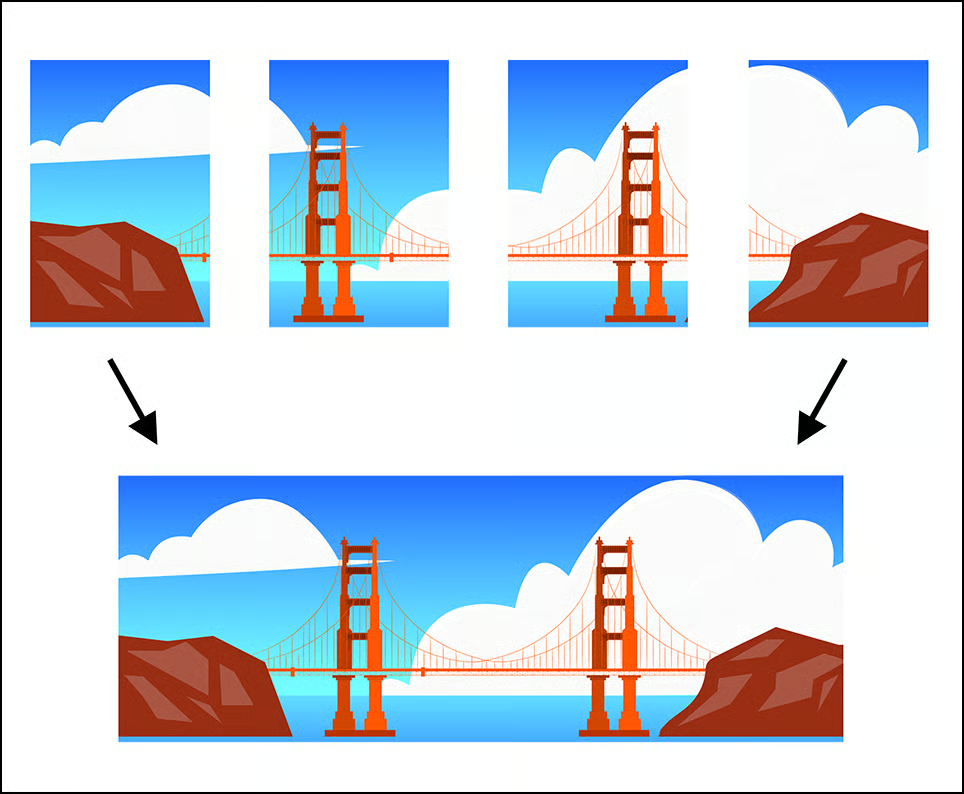
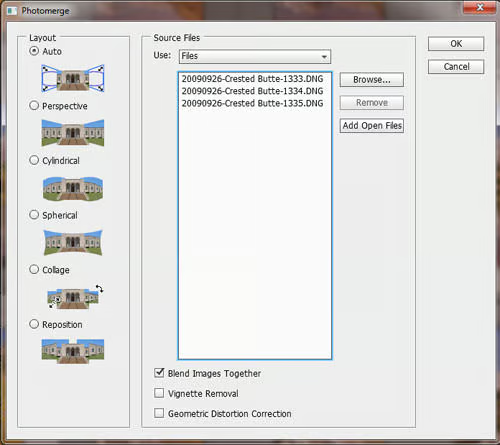
Import into your RAW editor (Phocus, Lightroom) for global exposure and WB sync, then send to a stitching app. PTGui is an industry standard for complex multi-row rectilinear sets and offers excellent control point generation and masking. Hugin is a capable free alternative, and Photoshop can handle simpler rows. Fisheye setups can sometimes get away with fewer shots and faster stitching, but rectilinear 17–28 mm delivers straighter lines with less geometric warping—perfect for interiors and architecture. Aim for 30–35% overlap at ultra-wide to help the stitcher place control points reliably. For more on why PTGui remains a pro favorite, see this review: PTGui review and best practices.
Cleanup & Enhancement
- Nadir patch: Capture a clean floor plate or use a logo patch. Some AI tools can remove tripods quickly; manual clone/heal remains the gold standard for perfect floors.
- Color and noise: Apply modest luminance noise reduction on night tiles; preserve detail. Match hues across mixed-light zones.
- Level horizon: Use the optimizer in PTGui/Hugin to level roll/pitch. Watch for verticals in architecture—use vertical control points if needed.
- Export: For virtual tours, export as 16384×8192 (16k) equirectangular JPEG for web or TIFF/EXR for archival and advanced grading pipelines.
New to 360 export considerations for VR players? Meta’s workflow overview is a good starting point: Using a DSLR or mirrorless to shoot and stitch a 360 photo.
For an in-depth look at focal length vs. resolution tradeoffs, this overview is helpful: Panotools: DSLR spherical resolution.
Disclaimer: check your stitching software’s current documentation for version-specific features and best practices.
Useful Tools & Resources
Software
- PTGui panorama stitching
- Hugin (open source)
- Lightroom / Photoshop / Hasselblad Phocus
- AI tools for tripod removal and sky cleanup
Hardware
- Panoramic heads (Nodal Ninja, Leofoto, Sunwayfoto)
- Carbon fiber tripods with leveling base
- Wireless remotes or smartphone shutter control
- Pole extensions and car mounts (with safety tethers)
Disclaimer: Product names are provided for search reference only. Verify current specs and compatibility on official sites.
Common Mistakes & How to Avoid Them
- Parallax error → Fix by aligning the no-parallax point; use a calibrated panoramic head.
- Exposure or WB flicker → Shoot in full manual and lock WB/Kelvin; sync settings across all tiles.
- Insufficient overlap → Keep 30–35% at ultra-wide; more if shooting handheld.
- Tripod shadows and footprints → Capture a nadir tile and plan a proper floor patch.
- Motion ghosting → Take a second pass or mask moving subjects in post.
- Night noise → Prefer longer exposures at low ISO over pushing ISO to 1600+.
Field-Tested Scenarios
Indoor Real Estate (Bright Windows)
Mount the X1D-50c on a leveled pano head with an XCD 21–30 mm to mirror the Tamron’s 17–24 mm range. Use 5-frame brackets at ±2 EV, f/8, ISO 100–200. Shoot three rows (−45°, 0°, +45°) with 10–12 shots per row at 24–30 mm equiv and add zenith/nadir. In PTGui, pre-merge brackets to HDR or load as stacks with Exposure Fusion. Mask windows where needed to avoid haloing, then export a 12–16k equirectangular.
Outdoor Sunset Cityscape
At 17–21 mm equiv, stick to ISO 100, f/8, and 0.5–2 s exposures as dusk deepens. If the sun is in frame, shield the lens between exposures to reduce flare, and consider a quick second pass after the sun dips for a cleaner sky to blend. Expect to retouch a few flare ghosts near the sun path.
Busy Event Hall
Raise shutter to 1/200 s at f/5.6–f/8, ISO 400–800. Two passes help you mask moving attendees. Prioritize frames where motion overlaps heavily (doorways, food stations). Use PTGui’s masking to prefer tiles with fewer people in key areas.
Rooftop / Pole
Choose 20–24 mm to keep shot count manageable while minimizing parallax risk at height. Tether your rig, watch wind, and keep shutter at 1/250 s+ if the pole flexes. Rotate slowly to maintain overlap; consider shooting double coverage around to guarantee control points.
Frequently Asked Questions
- Can I shoot handheld panoramas with the Hasselblad X1D-50c?
Yes for simple single-row panos, but for 360×180 with a rectilinear ultra-wide, a tripod and pano head are strongly recommended. The X1D-50c lacks IBIS, so handheld exposure times must be short, and parallax errors are likely without a nodal setup.
- Is the Tamron 17–28mm f/2.8 wide enough for single-row 360 captures?
For full spherical 360×180, no—single-row won’t cover zenith/nadir adequately with a rectilinear lens. Plan on three rows plus zenith and nadir. At 17 mm (vertical), 8 around per row works well; at 24–28 mm, expect 10–14 per row.
- Can I mount the Tamron 17–28mm on the X1D-50c?
Practically, no. It’s a Sony E-mount lens with an image circle for 35 mm full-frame; the X1D uses XCD mount and a larger 44×33 mm sensor. No mainstream adapter provides full control, and heavy vignetting would occur even if adapted. Use an XCD 21/30 mm instead to match the look and workflow.
- Do I need HDR for interiors with bright windows?
Usually yes. Bracketing ±2 EV preserves window highlights and interior shadows. Keep WB fixed and bracket consistently for every tile to avoid stitching artifacts.
- What ISO range is safe on the X1D-50c for low light?
ISO 100–400 is ideal; ISO 800 is acceptable with careful noise reduction. Above ISO 1600, expect notable DR loss and more visible noise in gradients.
- How do I avoid parallax issues with a rectilinear ultra-wide?
Use a panoramic head and align the no-parallax point. Calibrate once for each focal length (17/20/24/28 mm), then mark your rail. Keep consistent camera orientation and overlap.
- Can I save a custom pano setup on the X1D-50c?
While it doesn’t have C1/C2 dials like some DSLRs, you can store user presets. Save a “Pano” preset with manual exposure, fixed WB, self-timer, and RAW settings for quick recall.
- What’s the best tripod head for this setup?
A 2-axis panoramic head with fore–aft and lateral rail adjustments (e.g., Nodal Ninja, Leofoto) is ideal. Look for laser-etched scales, solid clamps, and a compatible leveling base.
Further Reading
If you want to go even deeper into capture technique and gear choices for 360 photography, these resources are battle-tested starting points: Virtual tour camera & lens guide.
Visual Examples
Safety, Limitations & Trust Notes
Always tether your camera when working at height or near traffic. The X1D-50c’s lack of IBIS makes a rigid support essential; a leveling base saves time and prevents lurching horizons. Be honest with limitations: the Tamron 17–28mm is not a practical lens choice for the X1D due to mount and image-circle incompatibilities. Instead, apply the same rectilinear workflow using XCD 21–30 mm or capture with the Tamron on a native Sony body and stitch identically. For a refresher on panoramic head fundamentals and why they matter for rectilinear lenses, the tutorial linked above is recommended. When in doubt, shoot a safety second pass; backups are cheaper than returns to location.
