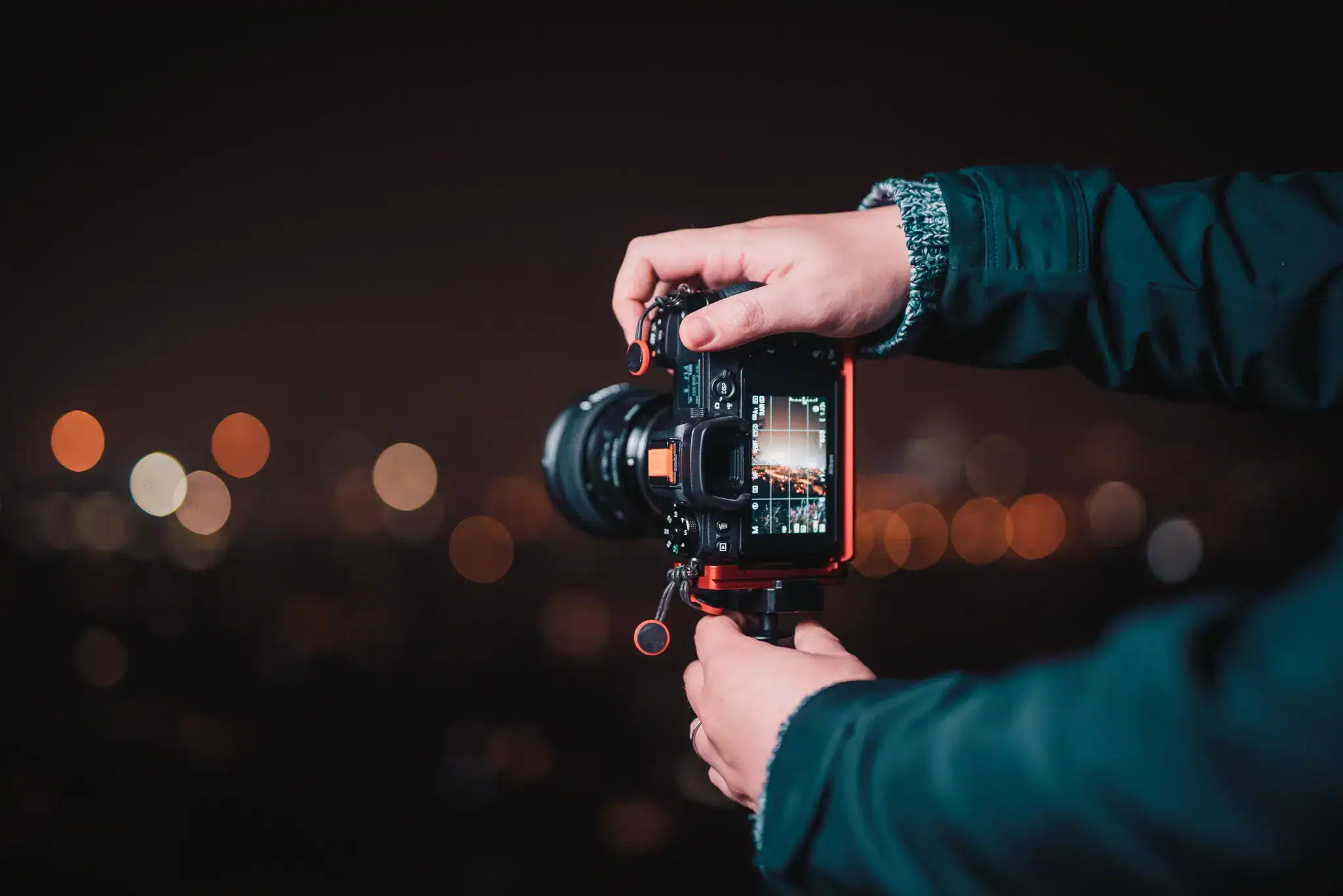
Why This Camera & Lens Are Great for Panoramas
The Hasselblad X1D-50c paired with a fast fisheye is a dream for high-end 360 photos: rich tonality, huge dynamic range, and fewer frames to stitch. The X1D-50c uses a 44×33 mm medium-format CMOS sensor (~50 MP, ~5.3 μm pixel pitch) known for smooth highlight roll-off and roughly 14 stops of usable dynamic range at base ISO—excellent for HDR panoramas and low-light shooting. The Olympus M.Zuiko Digital ED 8mm f/1.8 PRO Fisheye is a diagonal fisheye with a 180° field of view on Micro Four Thirds (MFT), exceptionally sharp by f/4–f/5.6, and fast enough (f/1.8) to help in dim spaces.
Important compatibility note: the Olympus 8mm f/1.8 is designed for MFT cameras and does not mount or electronically operate on the Hasselblad X1D-50c. Its image circle will not cover the X1D’s 44×33 mm sensor, and there is no practical adapter that preserves aperture control and infinity focus. If you want the X1D look with a fisheye, use an adapted full-frame fisheye designed for a larger image circle (for example, a manual Nikon F/Samyang fisheye via a dumb adapter) and the X1D’s electronic shutter; or shoot with the Olympus 8mm on an MFT body and apply the shooting and stitching workflow below—it remains the same. This guide covers both realities so you can decide which path suits your production and gear.
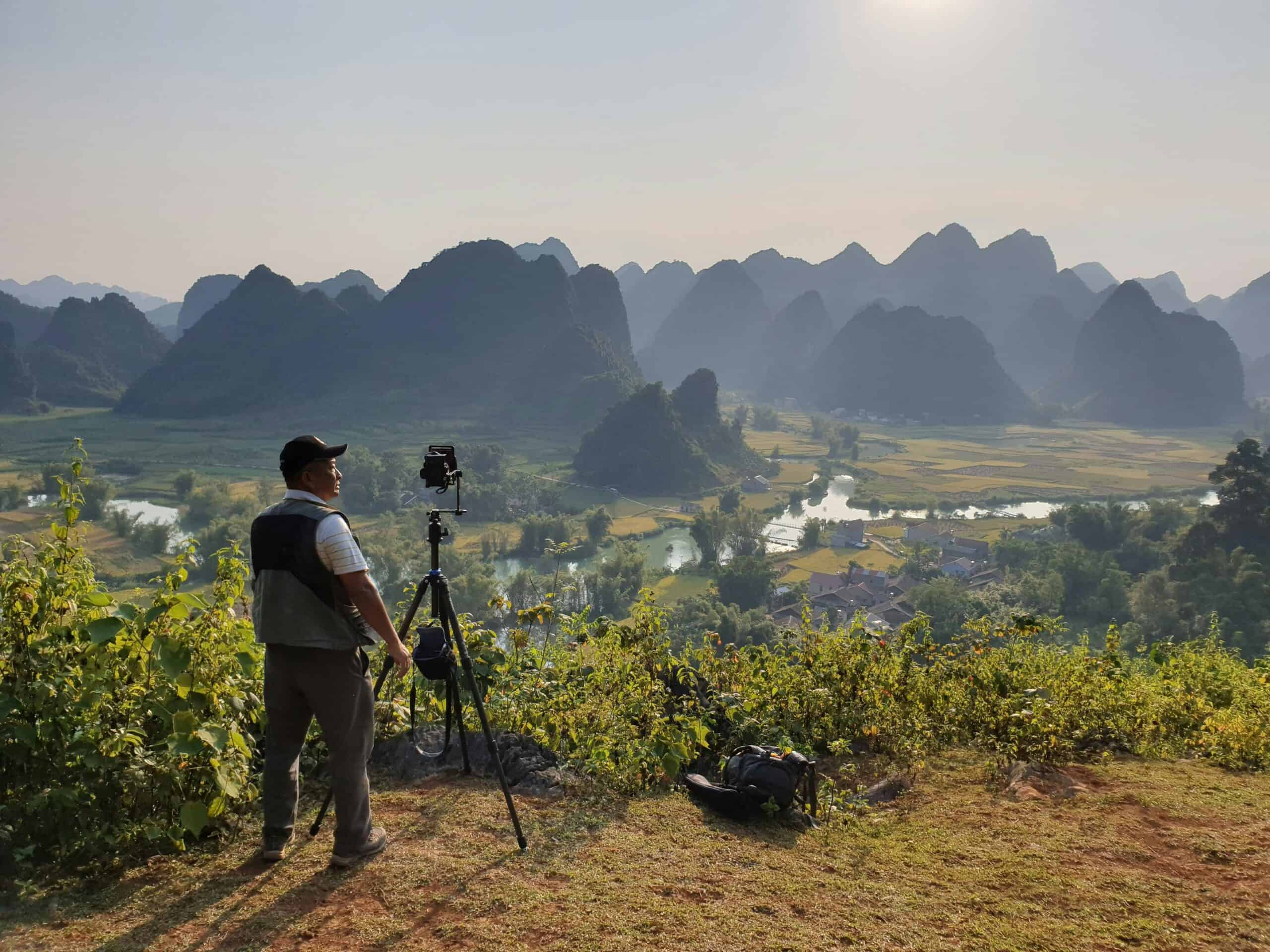
Quick Setup Overview
- Camera: Hasselblad X1D-50c — 44×33 mm medium format, ~50 MP, ~14 EV DR at base ISO, native ISO 100–25,600; no IBIS; leaf-shutter only with XCD lenses, otherwise use electronic shutter with adapted lenses.
- Lens: Olympus 8mm f/1.8 PRO Fisheye — diagonal fisheye for MFT (180° diagonal FOV). Extremely sharp by f/4–f/5.6; low coma, good control of CA when stopped down. Not physically compatible with X1D.
- Estimated shots & overlap:
- Using Olympus 8mm on MFT: 4 around (90° yaw steps) + zenith + nadir, ~30% overlap; add HDR brackets if needed.
- Using X1D with a diagonal fisheye adapted from full-frame (covers 36×24 mm): expect corner vignetting on 44×33; plan 6 around + zenith + nadir for safe coverage, 30–35% overlap.
- Using XCD 21–30 mm rectilinear lenses on X1D: 2–3 rows of 8–12 shots per row, 25% overlap, plus zenith/nadir.
- Difficulty: Moderate — easy with a calibrated panoramic head; more demanding if using electronic shutter and adapted lenses.
Planning & On-Site Preparation
Evaluate Shooting Environment
Walk the scene before you set up. Note sun direction, moving elements (people, traffic, trees in wind), reflective glass or polished floors, and tight spaces. For window shots, keep the lens as close to the glass as possible without touching to minimize flare and double reflections. In windy rooftops, lower the tripod, hang a weight from the center column, and keep the rotation smooth and deliberate.
Match Gear to Scene Goals
If your priority is top-end tonal quality and color for high-profile 360 tours, the Hasselblad X1D-50c delivers beautifully clean files with deep editing headroom. Its safe ISO range for professional results is ISO 100–800; ISO 1600 is workable with careful exposure; beyond that, noise and color shifts creep in. If you must work fast with fewer frames, a fisheye is ideal: the Olympus 8mm on MFT requires just 4 around plus zenith/nadir; an adapted fisheye for the X1D will typically need 6 around to avoid using vignetted edges. For minimal distortion in architecture, use a rectilinear lens on the X1D and accept more shots per pano.
Pre-shoot Checklist
- Charge batteries; bring spares. Hasselblad batteries can drain faster in cold—keep one warm in a pocket.
- Format fast UHS-II or XQD/CFast equivalents where applicable; for X1D, use high-speed SD cards to avoid buffer delays.
- Clean lens and sensor. Fisheye front elements are exposed—carry a microfiber cloth and a collapsible hood.
- Level the tripod; check the panoramic head’s nodal alignment (calibration notes below).
- Safety: On rooftops/poles, use tethers and wrist lanyards; avoid setups above crowds; monitor wind gusts.
- Backup plan: Shoot a second pass or an extra safety row to cover stitching gaps or ghosting.
Essential Gear & Setup
Core Gear
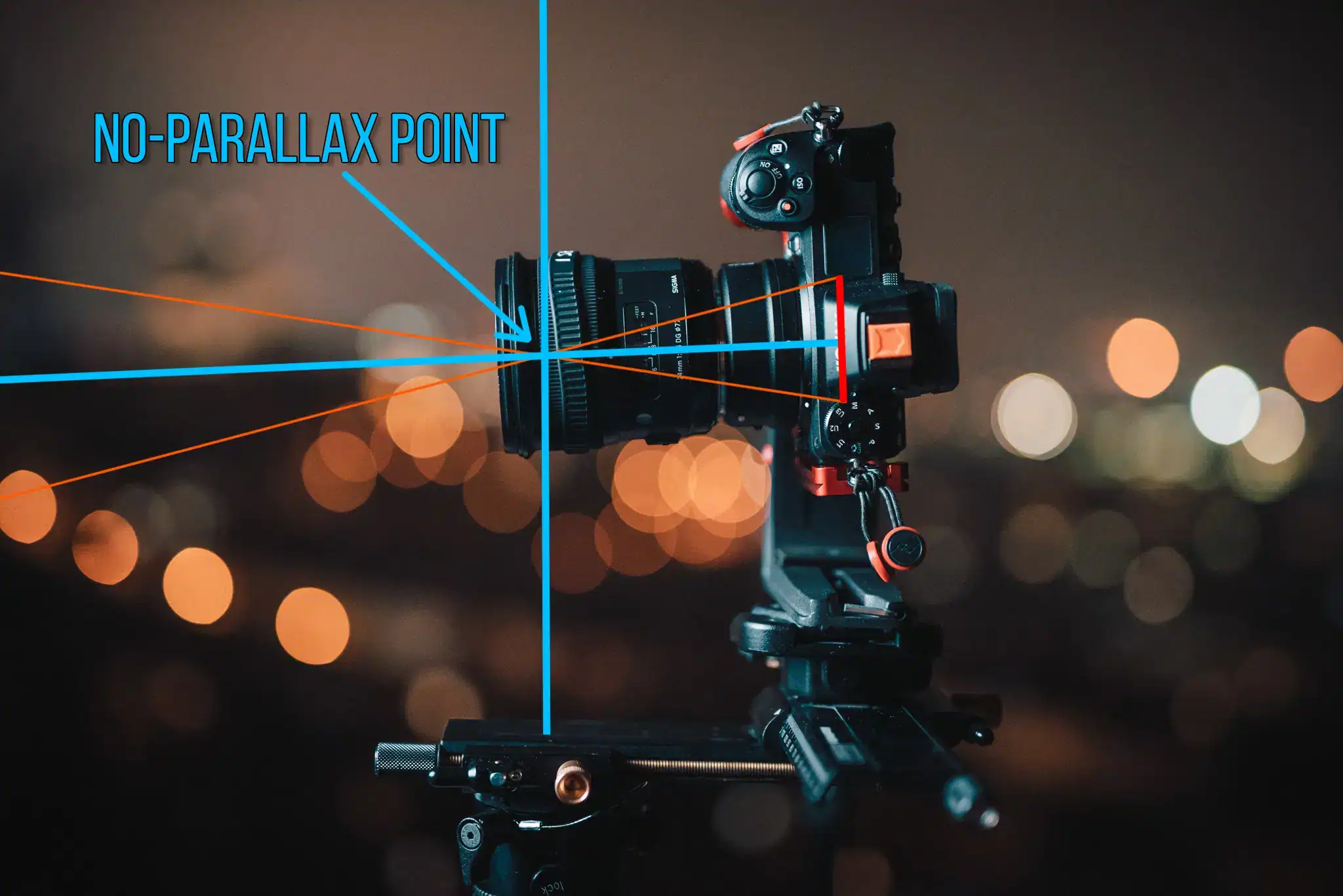
- Panoramic head with nodal sliders (e.g., Nodal Ninja/Leofoto): lets you place the optical entrance pupil over the rotation axis to eliminate parallax, critical when stitching near objects.
- Stable tripod with a leveling base or half-ball: speeds up setup and keeps horizons level in multi-row work.
- Remote trigger or camera app: avoid vibrations when using long exposures and when the panoramic head is at steep zenith angles.
Optional Add-ons
- Pole or car mount: clamp safely; tether everything; watch for wind-induced sway. At height, keep exposures short and rotation slower to avoid motion blur.
- LED panels or flash for interiors: even a small bounce fill can reduce HDR brackets and improve color balance.
- Rain cover and lens hood: fisheyes flare easily; a hood can help when the sun is near frame edges.
Step-by-Step Shooting Guide
Standard Static Scenes
- Level and calibrate: Level the tripod and lock the leveling base. Slide the camera along the nodal rail so that foreground and background objects stay aligned when you pan—no shifting equals correct nodal alignment.
- Manual exposure and white balance: Meter for the midtones and protect highlights; lock exposure in full manual (M). Set a fixed white balance (daylight/shade/tungsten or custom Kelvin) to prevent color shifts between frames.
- Capture sequence:
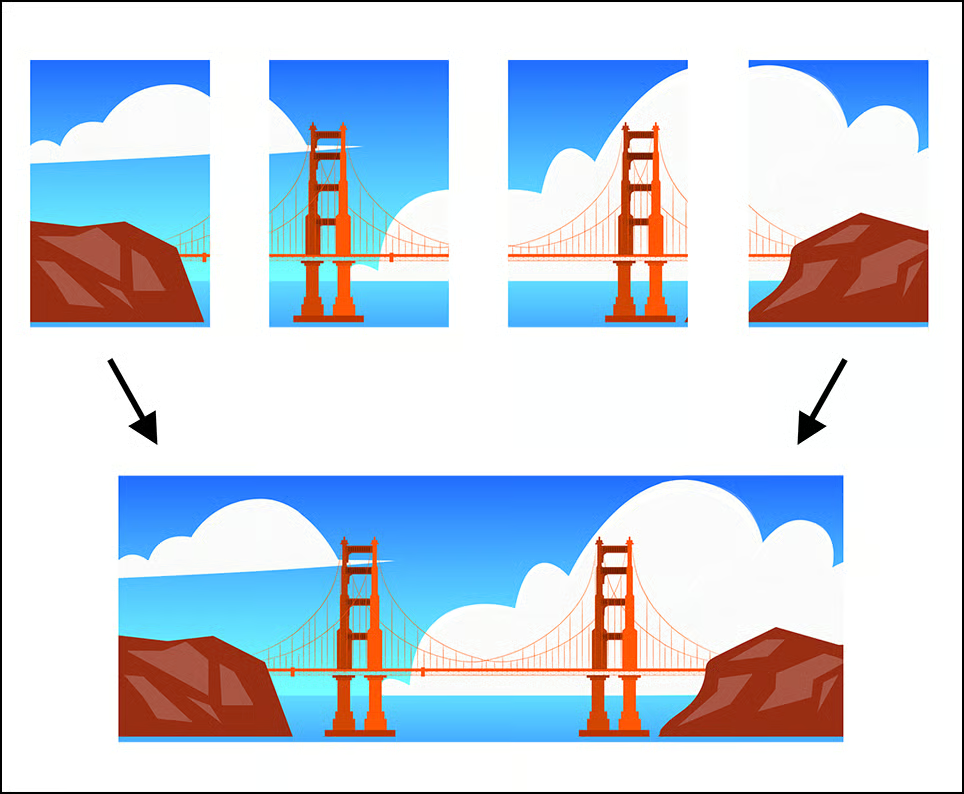
- Olympus 8mm on MFT: 4 shots around at 90° yaw spacing; then zenith (straight up) and nadir (down). Aim for ~30% overlap.
- X1D with adapted fisheye: 6 around at 60° yaw spacing; zenith and nadir; avoid using the extreme corners if the adapted lens vignettes on 44×33 mm.
- X1D with rectilinear: plan 2–3 rows (pitch +45°, 0°, −45°) with 8–12 shots per row; add zenith and nadir frames.
- Take a clean nadir: After the main sweep, lift the rig and shoot a handheld ground plate or use a nadir offset technique so you can patch out the tripod in post.
HDR / High Dynamic Range Interiors
- Bracket ±2 EV (3–5 frames): Enough to balance bright windows against interior shadows without posterizing.
- Lock white balance and focus: Keep color consistent across brackets; manual focus prevents refocus jitter between exposures.
- Watch for moving curtains/trees through windows: If movement is strong, consider fewer brackets and expose-to-the-right for a clean base, then pull shadows in post.
Low-Light / Night Scenes
- Use longer exposures at low ISO for the cleanest files. On the X1D-50c, ISO 100–400 is ideal; ISO 800–1600 remains workable if you cannot extend shutter safely.
- Stabilize: Tripod locked, remote trigger, 2 s shutter delay if needed. Disable stabilization if your lens provides it, as tripod use can confuse IS systems.
- Mind the electronic shutter (X1D with adapted lens): Rolling shutter can smear moving lights or passing cars—use shorter exposures to minimize artifacts.
Crowded Events
- Two passes: First pass quickly for coverage; second pass selectively when gaps open in the crowd.
- Masking: In post, blend cleaner regions from the second pass to remove duplicates or ghosting.
- Fisheye advantage: Fewer frames mean fewer moving seams—handy when people won’t hold still.
Special Setups (Pole / Car / Drone)
- Safety first: Use a tether and secure clamps. Never place heavy gear above pedestrians without redundant safety lines.
- Mitigate vibration: On poles and car rigs, use higher shutter speeds (1/200–1/500) and slightly higher ISO to keep frames sharp.
- Slower rotation: Give the rig time to settle between shots, especially at long extensions.
Recommended Settings & Pro Tips
Exposure & Focus
| Scenario | Aperture | Shutter | ISO | Notes |
|---|---|---|---|---|
| Daylight outdoor | f/8–f/11 | 1/100–1/250 | 100–200 | Lock WB (daylight); maximize micro-contrast on the X1D sensor. |
| Low light/night | f/4–f/5.6 | 1/30–1/60 (tripod) or 1/125–1/250 (pole) | 400–800 (to 1600 if needed) | Tripod & remote; prefer longer shutter over high ISO on X1D. |
| Interior HDR | f/8 | Bracket ±2 EV (3–5 frames) | 100–400 | Preserve window detail; merge to 32-bit before stitching if your workflow supports it. |
| Action / moving subjects | f/5.6–f/8 | 1/200+ | 400–800 | Freeze motion; consider a double pass to fix moving seams. |
Critical Tips
- Manual focus at hyperfocal: With fisheyes, set MF just before infinity; at f/8 most of the scene will be sharp. On MFT 8mm, hyperfocal at f/8 is very close—test and mark the ring.
- Nodal calibration: Place a light stand close to the lens and a vertical object farther away. Pan left/right; adjust the nodal rail until the two objects do not shift relative to each other. Mark your rail positions for this lens/body combo.
- White balance lock: Mixed lighting? Set a custom Kelvin (e.g., 3800–4200 K in tungsten interiors) to keep color stitching consistent.
- RAW capture: The X1D’s 16-bit RAWs grade beautifully; always shoot RAW for maximum dynamic range and clean highlight recovery.
- Stabilization: The X1D has no IBIS; if your adapted lens or MFT body has stabilization, turn it off on a tripod to avoid micro-blur.
Stitching & Post-Processing
Software Workflow
For professional control, PTGui remains an industry favorite. Fisheye images are generally the quickest to align: fewer shots and robust control points, though you’ll often “defish” or optimize projection for level horizons. Rectilinear sequences need more shots but can minimize stretching near the poles. Follow overlap recommendations of ~25–35% for fisheyes and ~20–30% for rectilinear frames. Consider merging HDR brackets to 32-bit first, then stitch, or let PTGui blend HDR internally, depending on your preferred color pipeline. For best practices on panoramic heads and alignment, see this panoramic head tutorial, and for a deep dive into PTGui’s capabilities, this review is helpful. Panoramic head basics. PTGui review and workflow notes.
Cleanup & Enhancement
- Nadir patch: Use a dedicated nadir shot or clone/AI tools to remove the tripod. Many virtual tour platforms accept a patched logo plate.
- Color and noise: Normalize WB, apply mild noise reduction for high-ISO night scenes, and retain micro-contrast—avoid over-smoothing medium-format detail.
- Level and horizon: Use roll/yaw/pitch controls to straighten the horizon and point the view where you want (set the “north”).
- Export: Save an equirectangular 2:1 image (e.g., 12,000×6,000 px) in 16-bit TIFF for mastering or high-quality JPEG for the web. For platform specs, see the Oculus creator guidance for DSLR/mirrorless 360 photos. DSLR/mirrorless 360 export tips.
Note: Always verify the latest instructions for your version of PTGui/Hugin/Lightroom/Photoshop as interfaces and recommended steps evolve.
Useful Tools & Resources
Software
- PTGui — fast, robust control points, HDR and masking tools.
- Hugin — open-source alternative; great for learning projections.
- Lightroom / Photoshop — RAW development and finishing touches.
- AI tripod removal tools — speed up nadir cleanup.
Hardware
- Panoramic heads: Nodal Ninja, Leofoto, or equivalent with fore-aft and lateral adjustment.
- Carbon fiber tripods for stiffness with lower weight.
- Leveling bases or half-balls to speed horizon setup.
- Wireless remotes and intervalometers.
- Pole extensions and vibration-damped car mounts.
Disclaimer: product names are for search/reference; confirm compatibility and specifications on official sites.
Field-Proven Scenarios
Indoor Real Estate with Windows
Mount the camera near room center, keep the lens away from reflective surfaces, and bracket ±2 EV. On the X1D, ISO 100–200 with longer exposures keeps textures pristine. If using the Olympus 8mm on MFT, 4 shots around + zenith + nadir covers quickly; add a second pass for clean window frames to avoid ghosting trees outside.
Outdoor Sunset
Expose for the highlights to avoid blown sun edges; add a +2 EV bracket for shadow recovery. Windy? Increase shutter to 1/200 and push ISO to 400–800 on the X1D—its DR still delivers clean shadows. Fisheye reduces total capture time, minimizing light change between frames.
Event Crowds
Pick a vantage point that sees over heads. Do two rotations and use the cleaner sections from each in post. If security allows, a short pole adds separation from moving bodies; keep shutter at 1/250 to freeze motion.
Rooftop/Pole Shooting
Use a safety tether, keep the pole vertical, and avoid very long exposures. A fisheye is ideal here: fewer frames while the rig sways less. If the X1D’s electronic shutter is used with an adapted lens, avoid panning during exposure to reduce rolling-shutter skew.
Video: Panoramic Head Setup Essentials
If you’re new to nodal alignment, this short video is a great place to start. It shows the practical steps to eliminate parallax for clean stitches.
For a deeper dive into maximizing spherical resolution with various lenses/sensors, this technical resource is excellent. PanoTools: DSLR spherical resolution.
Common Mistakes & How to Avoid Them
- Parallax error: Always calibrate the nodal point; re-check after changing lens or body.
- Exposure flicker: Use full manual exposure and locked white balance.
- Tripod shadows or footprints: Shoot a nadir frame and patch it during post.
- Ghosting from motion: Do a second pass and mask moving subjects later.
- Night noise: Prefer longer shutter at low ISO on the X1D; avoid pushing ISO past 1600 unless necessary.
- Rolling shutter artifacts (X1D electronic shutter with adapted lens): Keep shutter shorter and avoid rapid panning during exposure.
Frequently Asked Questions
- Can I shoot handheld panoramas with the Hasselblad X1D-50c?
You can for quick partial panos, but for full 360×180 with precise seams, a tripod and panoramic head are strongly recommended. The X1D’s large files deserve accurate overlap and alignment to avoid stitching errors.
- Is the Olympus 8mm f/1.8 PRO wide enough for a single-row 360?
On an MFT body, yes: 4 shots around plus zenith and nadir is typical. However, the lens does not mount or cover the X1D sensor; for the Hasselblad, use a compatible fisheye or shoot multi-row with a rectilinear lens.
- Do I need HDR for interiors with bright windows?
Usually, yes. Bracketing ±2 EV (3–5 frames) protects window highlights and lifts interior shadows cleanly, especially with the X1D’s excellent dynamic range.
- How do I avoid parallax issues in small rooms?
Center the rig, align the entrance pupil on the rotation axis, and avoid moving the tripod between frames. A properly calibrated panoramic head makes the biggest difference in tight spaces.
- What ISO range is safe on the X1D-50c in low light?
ISO 100–800 is the sweet spot; ISO 1600 is acceptable with careful exposure and noise reduction. Prefer longer exposures on a tripod instead of pushing ISO higher.
- Can I create custom presets for faster pano shooting?
Yes. Save a user profile with manual exposure, fixed WB, RAW format, and your preferred shutter delay or remote settings so you can recall them quickly on location.
- How do I reduce flare with a fisheye?
Shade the front element with your hand (kept out of frame), avoid pointing directly into strong lights, and consider timing outdoor shots when the sun is blocked or lower on the horizon.
- What’s the best tripod head for this setup?
A two-axis panoramic head with fine fore-aft and lateral adjustment. Ensure it supports your camera weight and allows accurate zenith/nadir positioning. Models from Nodal Ninja and Leofoto are popular among 360 shooters.
Compatibility and Practical Alternatives
Because the Olympus 8mm f/1.8 PRO is an MFT lens, it cannot be directly mounted or electronically controlled on the Hasselblad X1D-50c. Its image circle also will not cover the 44×33 mm sensor, leading to severe vignetting. Practical alternatives:
- Use the Olympus 8mm on an MFT body for the capture, then follow the stitching workflow here. This is the simplest way to benefit from a fisheye’s speed.
- For the X1D, consider an adapted manual fisheye designed for full-frame (e.g., Samyang/Rokinon diagonal fisheye) and use the X1D’s electronic shutter. Expect some vignetting; compensate by shooting more frames around and avoiding the extreme corners in your stitch.
- Use native XCD rectilinear glass (21, 30, 45 mm, etc.) and shoot multi-row. It’s slower, but delivers stunning medium-format sharpness corner to corner with no mount compromises.
If you are building a virtual tour pipeline and want a strategic overview of camera–lens options and trade-offs (fisheye versus rectilinear), this guide is a good reference. Virtual tour camera & lens guide.