Why This Camera & Lens Are Great for Panoramas
If you want to learn how to shoot panorama with Hasselblad X1D-50c & Laowa 8-15mm f/2.8 FF Zoom Fisheye, you’re pairing a high-fidelity medium-format sensor with an ultra-wide, dual-purpose fisheye zoom. The X1D-50c uses a 44 × 33 mm CMOS sensor at 50 MP (approx. 8272 × 6200 px) with ~5.3 µm pixels and roughly 14 stops of dynamic range at base ISO 100. That translates into clean shadows, subtle tonality, and great latitude when blending HDR brackets—exactly what you want for interiors, sunsets, and complex lighting. The Laowa 8-15mm is a manual-focus fisheye that can be circular at 8 mm (full 180° coverage in all directions) and diagonal at 15 mm (180° on the diagonal). For panoramic work this is advantageous because it drastically reduces the number of shots needed while staying sharp at practical apertures like f/5.6–f/8.
Important note for this combo: the Laowa 8-15mm is a full-frame (35 mm) lens. On the X1D-50c (larger than full-frame), you’ll use an adapter and the camera’s electronic shutter. You will capture a circular image at 8 mm comfortably within the X1D’s frame (with black borders around the circle). This is fine for panoramic stitching and is actually ideal for high-speed, minimal-shot 360° capture. Just be mindful of rolling-shutter artifacts and potential LED banding when using the electronic shutter—covered below.
Quick Setup Overview
- Camera: Hasselblad X1D-50c — 44×33 mm medium-format sensor, 50 MP, ~14 stops DR at ISO 100; no IBIS; electronic shutter required for adapted lenses.
- Lens: Laowa 8-15mm f/2.8 FF Zoom Fisheye — manual focus/aperture; circular fisheye at 8 mm, diagonal at 15 mm; best sharpness f/5.6–f/8; moderate CA at edges, easily corrected in post.
- Estimated shots & overlap:
- 8 mm (circular fisheye): 4 shots around (90° yaw steps) often sufficient; add 1 zenith and 1 nadir for safety in tricky scenes.
- 10–12 mm (strong fisheye): 6 shots around (60° steps) + zenith + nadir.
- 15 mm (diagonal fisheye): 8 shots around (45° steps) + zenith + nadir.
- Overlap target: 30–35% for fisheye (safer than 25% when using electronic shutter).
- Difficulty: Intermediate (adapter + electronic shutter + nodal alignment).
Planning & On-Site Preparation
Evaluate Shooting Environment
Start by assessing light quality, movement, and reflectivity. Outdoors at golden hour will benefit from the X1D’s dynamic range; interiors with mixed lighting may require HDR brackets to hold window highlights and interior shadow detail. Watch for reflective surfaces (glass, polished floors, glossy tiles) that can double subjects—use a lens cloth and shoot from slightly oblique angles to reduce flare and ghosting. If you must shoot against glass, keep the front element very close (1–2 cm) and use a black cloth around the lens to block reflections.
Match Gear to Scene Goals
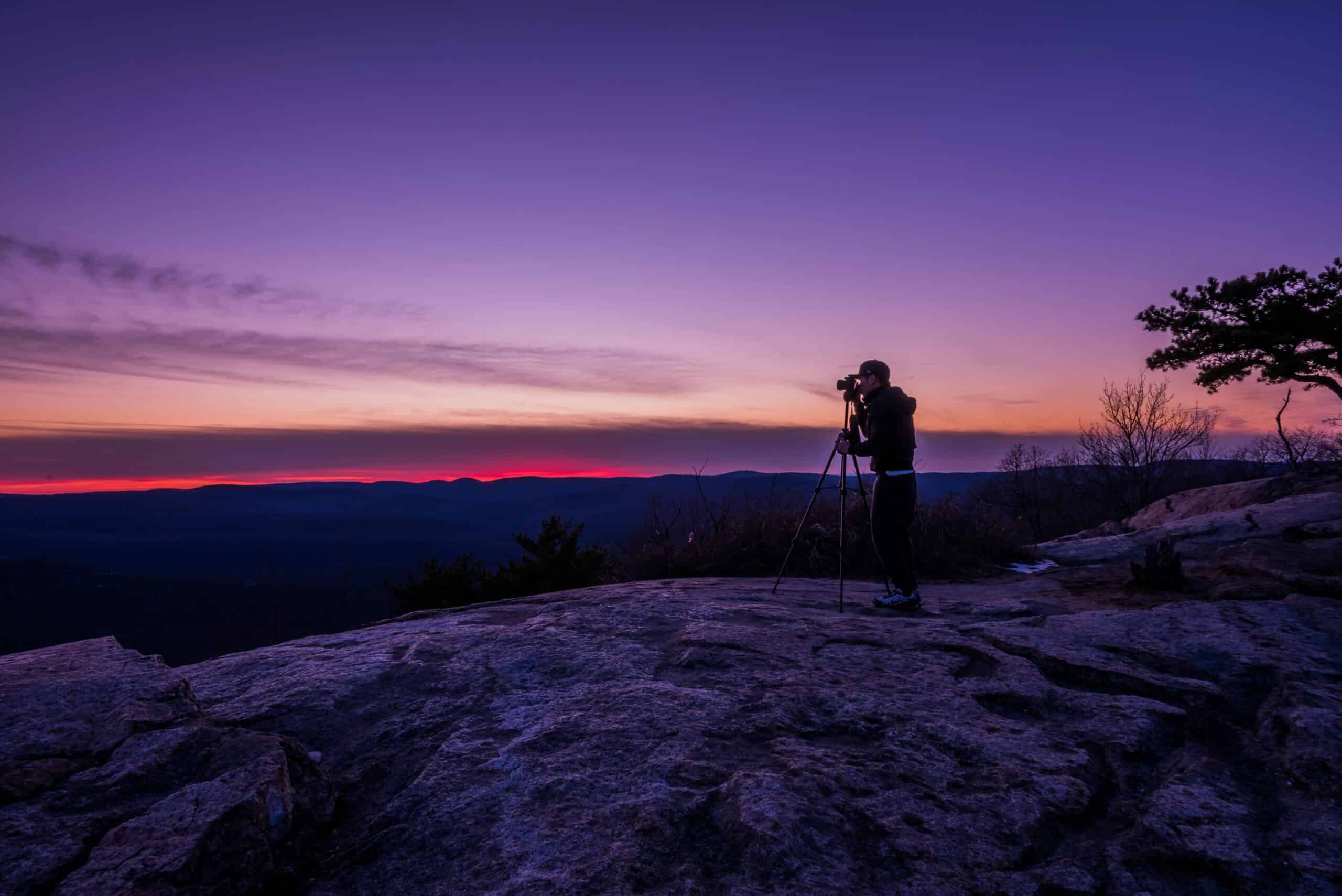
The X1D-50c’s color depth and DR are terrific for high-contrast scenes and HDR panoramas; think interior real estate with sunlit windows or rooftop sunsets. With this lens, 8 mm lets you complete a full 360° in very few frames—perfect for fast-changing light or crowds. In low light, keep ISO within 100–800 for the cleanest files; ISO 1600 is usable with careful noise reduction. Because you’ll be using electronic shutter for the adapted Laowa, avoid rapid camera/lens motion and be cautious under flickering LED or fluorescent lights.
Pre-shoot Checklist
- Charge batteries, clear fast cards, clean lens front element and sensor.
- Level the tripod and verify pano head calibration (nodal point alignment).
- Safety: secure straps, use a sandbag in wind, tether on rooftops or poles.
- Backup: shoot a second full round (especially for critical client work) in case of motion or blending issues.
Essential Gear & Setup
Core Gear
- Panoramic head: A proper pano head lets you rotate around the lens’s no-parallax point (NPP), eliminating parallax between foreground and background. This is crucial with near objects and for perfect stitching.
- Stable tripod with leveling base: Level once at the base so your yaw rotations stay flat; faster and more accurate than leveling the camera.
- Remote trigger or app: Minimize vibrations; the X1D’s self-timer (2 s) also works if you don’t have a remote.
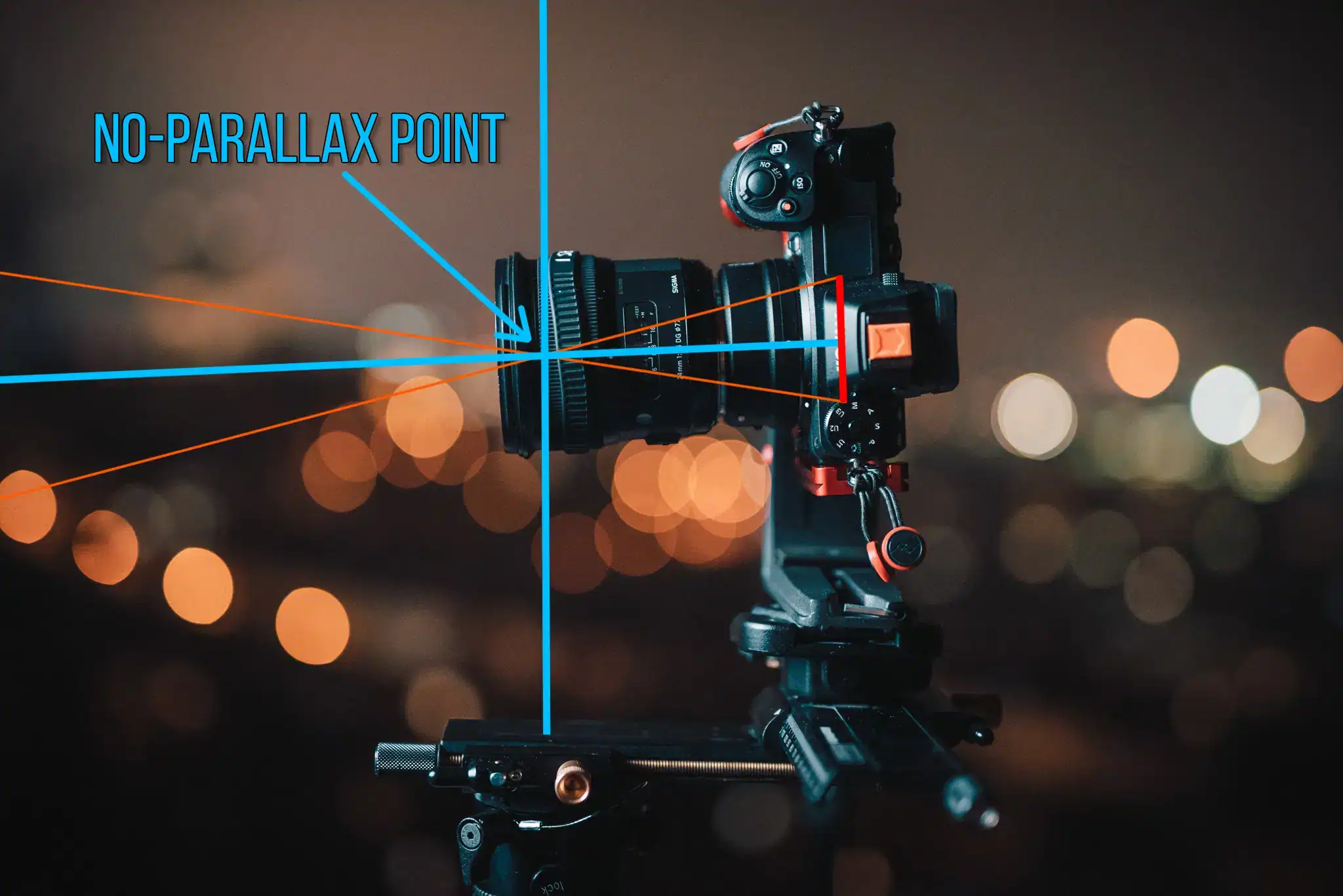
Need a refresher on panoramic heads and alignment? This thorough primer explains the mechanics and why it matters for clean stitches. Panoramic head tutorial
Optional Add-ons
- Pole or car mount: Use a safety tether and avoid high-wind conditions; rolling shutter + vibration can ruin frames. Slow your rotation and use faster shutter speeds.
- Lighting aids: Small LED panels or bounced flash for dark interiors (avoid harsh hotspots).
- Weather covers: Keep drizzle off the front element; water droplets on a fisheye are very hard to clone out.
Step-by-Step Shooting Guide
Before You Start: Adapter + Electronic Shutter Notes
Mount the Laowa with a simple mechanical adapter (no electronic control needed). Set the X1D-50c to electronic shutter. With electronic shutter, avoid rapid pans and watch for LED/fluorescent banding. Use shutter speeds synced with local mains frequency when indoors (e.g., 1/50, 1/100 in 50 Hz regions; 1/60, 1/120 in 60 Hz regions) to reduce banding risk.
Standard Static Scenes
- Level and align: Level the tripod via the base. On your pano head, slide the camera so the rotation passes through the lens’s NPP. Quick test: place a light stand 1 m in front and a building edge far behind; rotate left/right—adjust fore/aft until there’s no relative shift.
- Manual exposure + WB: Set Manual mode. Choose a mid-tone in the scene and expose to protect highlights (histogram). Lock white balance (e.g., Daylight, or Kelvin around 5200–5600 K outdoors). Consistency prevents stitching seams.
- Focus: The Laowa is manual—set around the hyperfocal distance. At 8–10 mm and f/8, focusing ~0.5–0.7 m keeps everything sharp from ~0.25–∞.
- Capture sequence:
- 8 mm (circular): Take 4 shots at yaw 0°, 90°, 180°, 270°. Add a zenith and a nadir if you have close ceilings or busy floors.
- 10–12 mm: 6 shots around at 60° steps; add zenith + nadir.
- 15 mm: 8 around at 45° steps; add zenith + nadir.
- Nadir shot: After the main round(s), lift the camera off the pano head and shoot a handheld “nadir patch” of the ground from the same location to remove the tripod in post.
HDR / High Dynamic Range Interiors
- Bracket ±2 EV (3 or 5 frames): The X1D handles auto bracketing well even with manual lenses since you’re varying shutter speed, not aperture.
- Keep WB locked across brackets to avoid color shifts between frames that can cause seam issues.
- Check window highlights: Expose at least one bracket frame to preserve exterior view; the X1D’s low-ISO shadow quality withstands lifting interiors later.
Low-Light / Night Scenes
- Aperture f/4–f/5.6 if needed; shutter 1/30–1/60 to limit movement blur; ISO 100–800 for best quality (1600 workable with noise reduction).
- Use a remote or 2-second timer. Turn off long-exposure NR unless you can afford the extra time—it doubles shot duration.
- Watch for flickering light banding with electronic shutter. If you see banding, adjust shutter to a safe multiple (1/50–1/100 or 1/60–1/120, depending on region).
Crowded Events
- Shoot two passes. First, get complete coverage quickly; second pass, wait for gaps in traffic for the frames that had overlaps with moving people.
- In post, mask people movement between the two passes to reduce ghosts.
Special Setups (Pole / Car / Rooftop)
- Secure everything: safety tether, locked clamps, check wind. On a pole, consider 8 mm circular mode so you need fewer frames at the top.
- Minimize vibration: faster shutter speeds and brief pauses between frames. Rolling shutter can skew verticals if you move too fast.
Recommended Settings & Pro Tips
Exposure & Focus
| Scenario | Aperture | Shutter | ISO | Notes |
|---|---|---|---|---|
| Daylight outdoor | f/8–f/11 | 1/100–1/250 | 100–200 | Lock WB to Daylight or fixed Kelvin |
| Low light/night | f/4–f/5.6 | 1/30–1/60 | 100–800 (1600 if needed) | Tripod + remote; watch LED banding on electronic shutter |
| Interior HDR | f/8 | Bracket ±2 EV | 100–400 | Preserve window highlights; blend shadows later |
| Action / moving subjects | f/5.6–f/8 | 1/200+ | 400–800 | Faster shutter reduces motion blur for stitching |
Critical Tips
- Manual focus at hyperfocal: With 8–10 mm at f/8, set ~0.6 m. Verify by magnified live view on the X1D before starting a round.
- Nodal point calibration: Mark your pano rail position for 8 mm and 15 mm once you find the no-parallax point—saves time on future shoots.
- White balance lock: Mixed lighting is common indoors; fixing WB prevents color seams that are tedious to correct later.
- RAW vs JPEG: Always RAW on the X1D to exploit its DR and color latitude. The difference is significant when merging HDR or color matching.
- IBIS: The X1D-50c has no IBIS; that’s fine—use a solid tripod and remote trigger.
Want a deeper look at expected output resolution and shot counts for fisheyes? This technical note is helpful: Estimating spherical panorama resolution.
Stitching & Post-Processing
Software Workflow
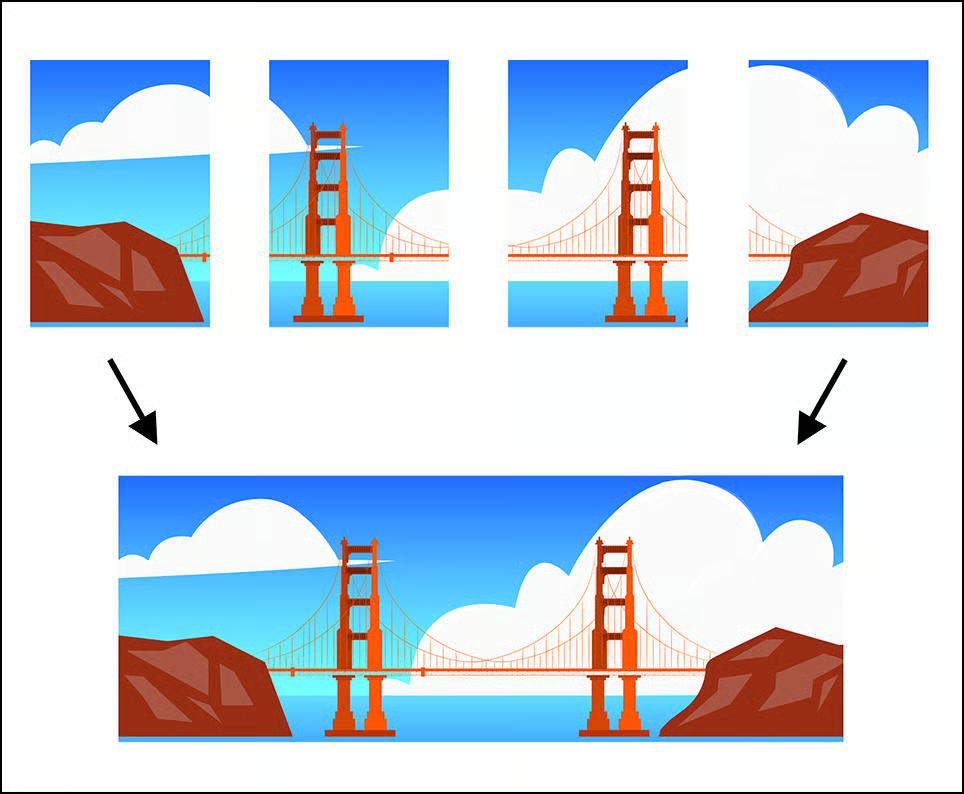
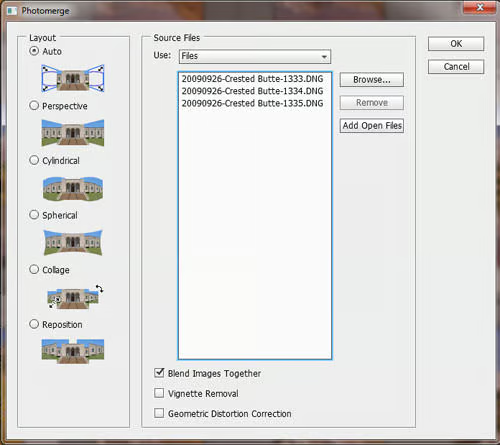
Import RAW files into Lightroom or Phocus for basic exposure/white balance unification. Export 16-bit TIFFs to PTGui or Hugin for stitching. Fisheye images from the Laowa are easy for PTGui’s optimizer—set lens type to fisheye, focal length to your selected zoom, and let the control point generator do its work. Circular fisheye sets typically require minimal intervention and can yield a high-resolution equirectangular (often 10–13k px wide from 4-around at 50 MP, depending on overlap). For a good overview of PTGui’s strengths and workflow, see this review: PTGui: best tool for creating incredible panoramas.
Cleanup & Enhancement
- Nadir patch: Export a layered panorama, then patch the tripod with your handheld nadir shot using masks in Photoshop. There are also AI-based removal tools that speed up the process.
- Color and noise: Apply gentle noise reduction for ISO 800-1600 images. Keep local contrast natural—fisheye edges can exaggerate micro-contrast.
- Level horizon: Use the “level” function in PTGui/Hugin to correct roll/pitch. Then fine-tune yaw to align key architectural lines.
- Output: Export equirectangular JPEG (quality 90–100) or 16-bit TIFF for retouching. For VR platforms and tours, keep width at 8k–12k for fast loading and high detail.
For a production overview of DSLR/mirrorless 360 capture and stitching, this guide from Meta’s Creator resources is concise and practical. Using a DSLR or mirrorless camera to shoot and stitch a 360 photo
Video: From Capture to Stitch
Prefer to watch the process? The following video complements the written workflow with visual steps for shooting and stitching panoramic images.
Useful Tools & Resources
Software
- PTGui panorama stitching
- Hugin (open source)
- Lightroom / Photoshop (RAW and retouch)
- AI tripod removal tools and content-aware fills
Hardware
- Panoramic heads (Nodal Ninja, Leofoto)
- Carbon fiber tripods with leveling bases
- Wireless remote shutters
- Pole extensions / car suction mounts with tethers
Disclaimer: software/hardware names provided for search reference; check official sites for compatibility and latest versions.
If you’re new to panoramic heads, this skills article walks through setup fundamentals step by step. Set up a panoramic head for high-end 360 photos
Real-World Case Studies with This Combo
Indoor Real Estate (Mixed Lighting)
Use 8 mm circular, 4-around + zenith. Bracket ±2 EV at ISO 100–400. Lock WB at 4000–4500 K if tungsten dominates; otherwise 5000–5500 K. The X1D’s shadow latitude makes interior lifts clean after window highlights are protected. Finish with a handheld nadir patch to remove tripod legs from glossy floors.
Outdoor Sunset Rooftop
At sunset, light changes quickly—another reason to prefer 8 mm (fewer frames). Shoot 4-around, then a safety second pass if the sky is changing. Keep ISO 100–200, f/8, and set shutter for the bright sky; pull up shadows later. Watch wind; add a sandbag to stabilize.
Event Crowds
Electronic shutter + moving people can produce partial rolling artifacts if someone zips through your frame while you pan. Use faster shutter speeds (1/200–1/400 if possible), two passes, and plan to mask. If you can elevate on a pole, even 1 m helps spread people out and reduce occlusions.
Car-Mounted Capture
Secure mount, safety tether, and keep speeds slow in safe areas. Minimize rotation while moving; instead, stop, shoot the set quickly at 8 mm, then move on. Vibrations + rolling shutter can skew verticals—test and adjust shutter speeds.
Common Mistakes & How to Avoid Them
- Parallax error: Not aligning the no-parallax point; fix via pano head calibration.
- Exposure flicker: Auto exposure or auto WB between frames; lock both.
- LED banding: Electronic shutter + indoor LEDs; use safe shutter multiples (1/50–1/100 or 1/60–1/120).
- Tripod in frame: Always capture a nadir patch or plan a clean clone area.
- Insufficient overlap: With fisheye, aim for 30–35% overlap for robust stitches.
For a broader overview of best practices and techniques debated by working photographers, see this community Q&A roundup. Techniques to take 360 panoramas
Frequently Asked Questions
- Can I shoot handheld panoramas with the Hasselblad X1D-50c?
You can, especially at 8 mm where coverage is generous, but expect reduced stitch reliability and potential rolling-shutter skew from hand movement. For critical results, use a leveled tripod and pano head.
- Is the Laowa 8-15mm wide enough for single-row 360°?
Yes. At 8 mm (circular fisheye) you can do 4 shots around for complete coverage. Adding zenith/nadir frames is recommended when you have close ceilings or foreground details.
- Do I need HDR for interiors with bright windows?
Usually yes. Bracket ±2 EV (3–5 frames). The X1D’s DR helps, but windows can be multiple stops brighter than interiors. HDR ensures clean window views without noisy shadow lifts.
- How do I avoid parallax issues with this lens?
Use a pano head and align the rotation with the lens’s no-parallax point. With the Laowa, it’s slightly forward of the aperture position—find it by aligning a close and distant object and adjusting until there’s no relative shift while rotating.
- What ISO range is safe on the X1D in low light?
ISO 100–800 is the sweet spot. ISO 1600 is usable with noise reduction and careful exposure. Try to stay at base ISO for HDR brackets whenever possible.
Bonus: Visual Guides to Calibrate and Stitch
Looking for a broad gear and lens overview for virtual tours (DSLR/mirrorless)? This article is a helpful reference when considering upgrades or alternatives to this setup. Virtual tour camera & lens guide