
Why This Camera & Lens Are Great for Panoramas
If you’re researching how to shoot panorama with Hasselblad X1D-50c & Fujifilm XF 8-16mm f/2.8 R LM WR, here’s the straight truth first: these two do not physically mount together. The X1D-50c uses Hasselblad X-mount (designed for leaf-shutter XCD lenses), while the XF 8–16mm is a Fujifilm X-mount APS-C lens. The flange distances and mount standards make a direct adapter impractical (you would need a “negative” adapter to reach infinity focus), so this exact combo is not usable on one body.
That said, both pieces of gear are fantastic for panoramic photography in the right setup:
- Hasselblad X1D-50c excels at high dynamic range, color depth, and medium-format micro-contrast. Its 43.8 × 32.9 mm 50MP sensor (approx. 5.3 μm pixel pitch) offers superb tonality and around 14 stops of dynamic range at base ISO 100—ideal for multi-row, high-resolution or gigapixel panoramas.
- Fujifilm XF 8–16mm f/2.8 R LM WR is a rectilinear ultra-wide zoom (12–24mm full-frame equivalent) with excellent sharpness and controlled distortion. On a Fujifilm X camera, it’s great for single or two-row 360 captures with manageable shot counts and lower parallax risk when aligned correctly.
How to proceed: choose one of two workflows. 1) Use the Hasselblad X1D with a suitable XCD wide lens (e.g., XCD 21, 28P, or 30) for ultra-high quality multi-row panoramas, or 2) Use the XF 8–16mm on a Fujifilm X body (X-T4/X-H2/X-H2S) for efficient 360° capture with fewer frames. The detailed guide below covers both paths, with tested overlap and shot counts, plus node alignment, exposure control, and stitching workflow.
Quick Setup Overview
- Camera: Hasselblad X1D-50c — 50MP medium format (43.8×32.9 mm), ~14 stops DR at ISO 100, ISO 100–25,600, no IBIS, electronic shutter option (rolling shutter) for adapted lenses; optimal for multi-row, high-fidelity panoramas.
- Lens: Fujifilm XF 8–16mm f/2.8 R LM WR — rectilinear APS-C zoom; 12–24mm FF equivalent; very sharp center, good corners stopped down, bulbous front element (no filter threads), well-controlled CA; requires a Fujifilm X body.
- Estimated shots & overlap (tested, safe numbers):
- XF 8–16 on Fuji at 8mm (12mm FF eq): two rows of 8 shots around (+30°/−30°), plus zenith + nadir = 18 frames (30% overlap).
- XF 8–16 on Fuji at 12mm (18mm FF eq): three rows of 10 around (+45°/0°/−45°) + zenith + nadir = 32 frames.
- X1D with XCD 28P (22mm FF eq): three rows of 12 (+45°/0°/−45°) + Z + N = 38 frames.
- X1D with XCD 21 (≈26.6mm FF eq): four rows of 12 (+60°/+20°/−20°/−60°) + Z + N = ~50 frames.
- Difficulty:
- XF 8–16 on Fuji: Intermediate (fewer frames, fast workflow).
- X1D with XCD wide: Advanced (more frames, precision required, best image quality).
Planning & On-Site Preparation
Evaluate Shooting Environment
Scan for moving elements (people, cars, trees in wind), reflective surfaces (glass, polished floors), and light sources that may flare the ultra-wide front element. For glass viewpoints, shoot perpendicular and stay 5–10 cm away to reduce internal reflections. In interiors with mixed lighting, expect WB inconsistencies—lock WB and consider bracketing to preserve window detail. Golden hour exteriors demand quick, consistent capture to avoid changing light across rows.
Match Gear to Scene Goals
Use the X1D-50c when you want maximum tonal depth and large print output. It shines in multi-row panoramas and gigapixel cityscapes. The safe ISO range for critical work on the X1D is ISO 100–800; higher ISOs are usable but introduce more grain in shadows. The XF 8–16 on a Fuji body is the better choice for faster 360 capture with fewer frames, especially for VR tours or event documentation. Rectilinear ultra-wide lenses reduce shot counts but need careful nodal alignment to avoid parallax seams.
Pre-shoot Checklist
- Batteries charged, dual cards (or ample storage) prepared, lens and sensor cleaned.
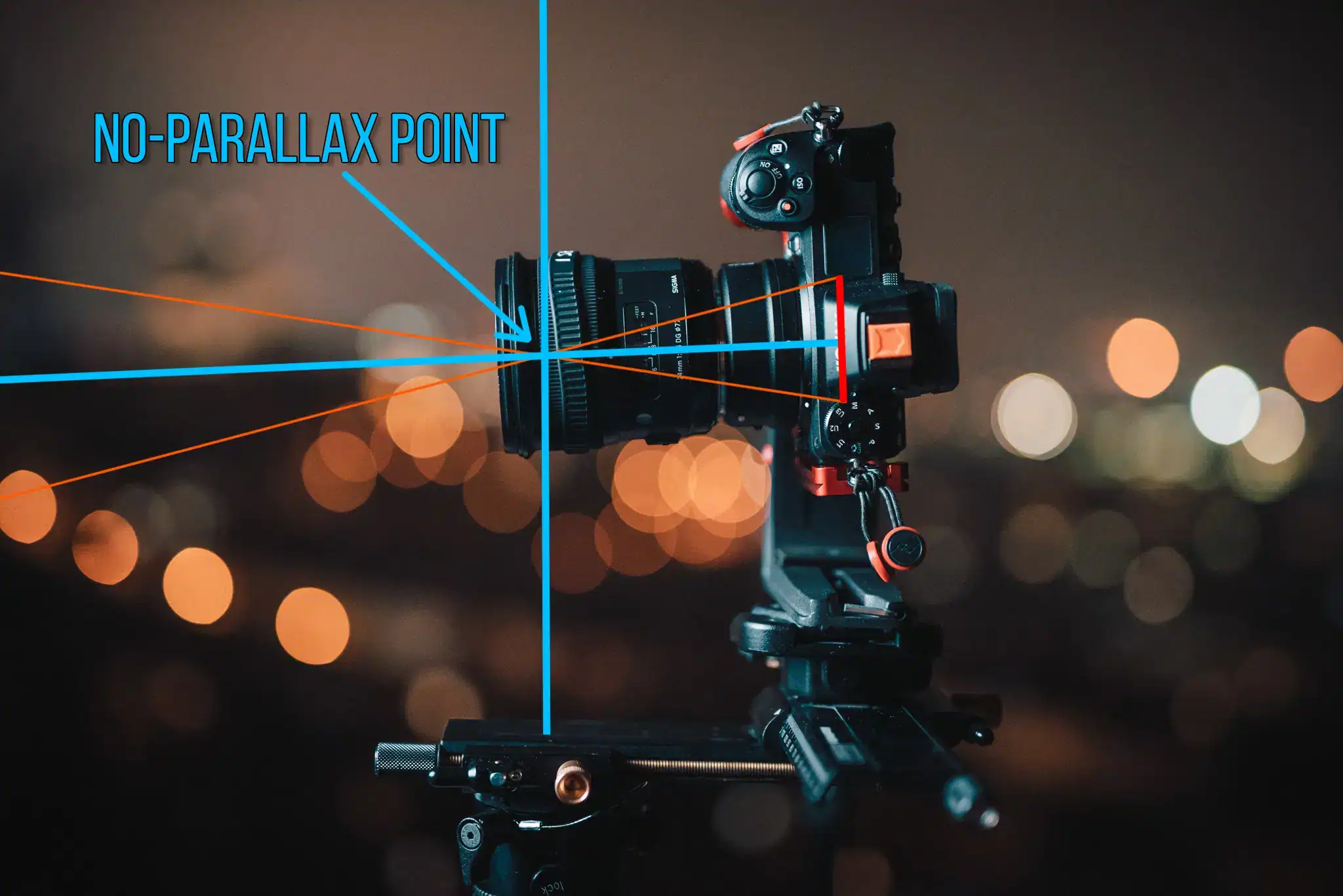
- Tripod leveled; panoramic head calibrated for the lens’s entrance pupil (no-parallax point).
- Safety checks: mind wind on rooftops, use sandbags; tether pole/camera above crowds; secure car mounts and avoid high speeds during capture.
- Backup: if the scene matters, shoot an extra round—either a duplicate set or a tighter-overlap pass for insurance.
Field Scenarios (Experience)
- Indoor real estate: XF 8–16 at 8–10 mm on a Fuji body, HDR ±2 EV, two rows + Z/N. Lock WB to “Daylight” or “Custom” to keep colors consistent.
- Outdoor sunset: X1D with XCD 28P, three rows around to capture sky gradients cleanly; expose for highlights, lift shadows in post from 14-stop DR files.
- Event crowds: Shoot two passes. First for composition, second timed between subject motion. Mask moving people in post.
- Rooftop/pole: Use lighter system (Fuji). Short bursts, higher shutter, and a lanyard/tether for safety.
- Car-mounted: Avoid long exposures and IBIS. Shoot at 1/250s+ and maintain constant speed if possible.
Essential Gear & Setup
Core Gear
- Panoramic head: Lets you rotate around the lens’s entrance pupil to minimize parallax. Calibrate the rail so foreground and background objects don’t shift relative to each other between frames.
- Stable tripod with a leveling base: Leveling isolates yaw rotation so each shot stays on the same horizon plane.
- Remote trigger or camera app: Prevents vibration and helps keep cadence consistent around the rows.
Optional Add-ons
- Pole or car mount: Use a safety tether, watch wind torque, and avoid long exposures while elevated.
- Lighting aids: Small LED panels or bounced flash (with XCD leaf shutters on Hasselblad you can sync at any speed with native lenses).
- Weather protection: Rain covers for bulbous lenses like the XF 8–16 and gaffer tape for cables.
Want a deeper dive into pano head setup and alignment techniques? See this practical panoramic head tutorial with diagrams and field tips. Panoramic head setup guide
Step-by-Step Shooting Guide
Standard Static Scenes
- Level tripod & align the nodal point: Place a light stand close to the camera and a building edge far away in the frame. Rotate the camera left/right. Adjust the sliding rail until the close and far objects don’t shift relative positions between frames.
- Manual exposure & locked white balance: Meter for midtones or slightly protect highlights. Lock exposure, ISO, and WB before the first frame to prevent flicker and color shifts.
- Capture with tested overlap:
- XF 8–16 at 8mm (Fuji body): two rows of 8 at +30° and −30°, 45° yaw increments; then shoot zenith (+80–90°) and nadir (−90°).
- X1D with XCD 28P: three rows of 12 at +45°, 0°, −45°, 30° yaw increments; add zenith/nadir.
- Take a dedicated nadir shot: Move the tripod slightly, shoot the ground plate to allow clean tripod removal or use a nadir patch later.
HDR / High Dynamic Range Interiors
- Bracket ±2 EV (3–5 frames if needed): This balances window highlights and room shadows. Keep shutter speed varying, not ISO or aperture.
- Lock WB: Mixed lighting can cause color shifts; lock a custom WB or use Daylight/Tungsten as appropriate.
Low-Light / Night Scenes
- Use longer exposures on a stable mount. On X1D: ISO 100–800 is the sweet spot. On Fuji X bodies with modern sensors, ISO 160–800 is clean; try to keep ISO under 1600.
- Use a remote trigger or the self-timer. Turn off stabilization when on a tripod (Fuji IBIS off; X1D does not have IBIS).
Crowded Events
- Shoot two passes: one to establish coverage; a second to catch gaps in moving subjects.
- Use short shutter speeds (1/200–1/500s) and be willing to mask/blend in post for clean seams.
Special Setups (Pole / Car / Drone)
- Secure all gear and add a safety tether. For poles, keep the camera aligned over the center of rotation; for cars, mount low vibration and avoid rough roads during capture.
- Account for wind and vibration: increase shutter speed, widen aperture slightly, and shoot a redundant pass for safety.
Recommended Settings & Pro Tips
Exposure & Focus
| Scenario | Aperture | Shutter | ISO | Notes |
|---|---|---|---|---|
| Daylight outdoor | f/8–f/11 | 1/100–1/250 | 100–200 | Lock WB (Daylight); avoid clipping skies |
| Low light/night | f/4–f/5.6 | 1/30–1/60 (tripod) or 1/125–1/250 (handheld) | 400–800 | Use remote; stabilization off on tripod |
| Interior HDR | f/8 | Bracket ±2 EV | 100–400 | Windows vs lamps; lock WB |
| Action / moving subjects | f/5.6–f/8 | 1/200+ | 400–800 | Double pass; mask movement later |
Critical Tips
- Manual focus at hyperfocal: For XF 8–16 at 8mm and f/8, focus ~1 m and nearly everything is sharp. For X1D with XCD 28P at f/8, focus ~2–3 m for distant infinity.
- Nodal calibration: Mark the rail stop once you find the entrance pupil for each focal length—saves time next shoot.
- White balance lock: Prevents stitch panel color mismatches, especially under mixed lighting.
- RAW capture: Maximizes dynamic range and color fidelity; crucial for HDR and low-light panoramas.
- X1D shutter choices: Prefer native XCD leaf shutters when possible (vibration-free, full flash sync). Electronic shutter is fine for static scenes, but avoid fast motion or LED flicker due to rolling shutter risk.
- XF 8–16 flare & protection: The bulbous front can pick up flare; shade with your body or a flag and wipe for spray/mist. No front thread—plan filter use accordingly.
Stitching & Post-Processing
Software Workflow
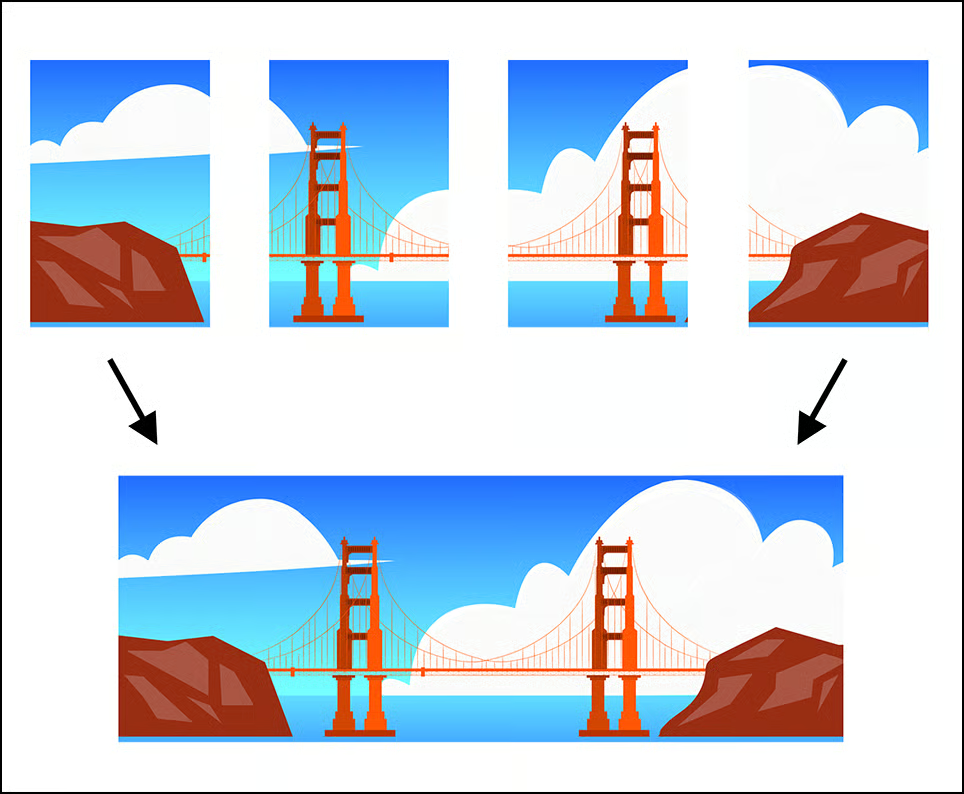
Import RAWs to Lightroom or Capture One for basic exposure/white balance sync. Export to PTGui or Hugin for stitching. Rectilinear ultra-wide shots typically need 20–30% overlap. PTGui’s control point finder usually handles XF 8–16 and XCD wide shots well; for imperfect overlaps, manually add control points. After stitching to an equirectangular (2:1), finish in Photoshop/Affinity for retouching and nadir patching, then export a JPEG/TIFF for VR platforms. For more on PTGui’s strengths and advanced features, this review is a helpful primer. PTGui pro review and workflow
If you’re new to 360 authoring with DSLRs/mirrorless, this guide from Meta/Oculus covers end-to-end considerations for shooting and stitching equirectangular images. DSLR/Mirrorless 360-photo guide
Cleanup & Enhancement
- Tripod/nadir patch: Shoot a clean ground plate or use an AI patch tool after stitching.
- Color correction and denoise: Apply gentle noise reduction for night scenes; keep detail in fine textures.
- Geometry: Level the horizon; correct pitch/yaw/roll; use “straighten” tools to remove tilt.
- Export: 8192×4096 or 10k–16k wide equirectangulars for high-quality VR. Keep JPEG quality high (90–100) and embed proper metadata if required by your platform.
Video: Panoramic head setup and shooting tips
For practical pano-head alignment, this illustrated tutorial is a solid reference to cement the concepts in the field. Panoramic head alignment tutorial
Useful Tools & Resources
Software
- PTGui panorama stitching
- Hugin open source
- Lightroom / Photoshop / Affinity Photo
- AI tripod removal tools (nadir patching)
Hardware
- Panoramic heads (Nodal Ninja, Leofoto, Fanotec)
- Carbon fiber tripods with leveling bases
- Wireless remote shutters or camera apps
- Pole extensions / car suction mounts with tethers
Disclaimer: software/hardware names provided for search reference; check official sites for details.
Common Mistakes & How to Avoid Them
- Parallax error → Calibrate the entrance pupil and keep the camera centered over the rotation axis.
- Exposure flicker → Use manual exposure and locked WB across every frame.
- Tripod shadows or footprints → Shoot a dedicated nadir and patch later.
- Ghosting from moving subjects → Do a second pass and mask in post.
- Night noise → Keep ISO low and extend shutter time on a stable tripod.
- Lens flare on bulbous UWA → Shield the front element; avoid strong backlight if possible.
Frequently Asked Questions
- Can I mount the Fujifilm XF 8–16mm on the Hasselblad X1D-50c?
No. The mounts and flange distances are incompatible. There’s no practical adapter that keeps infinity focus or enables aperture control. Use the XF 8–16 on a Fujifilm X body, or use an XCD wide lens on the X1D-50c.
- Is the XF 8–16mm wide enough for single-row 360° panoramas?
Not reliably. At 8mm (12mm FF eq) the vertical FOV is insufficient for clean zenith/nadir coverage in one row. A two-row capture (e.g., two rows of 8 plus zenith/nadir) yields cleaner stitches.
- What ISO range is safe on the X1D-50c for low light?
ISO 100–800 is the sweet spot for preserving medium-format tonal depth. You can go higher for events, but expect more grain in the shadows. Use a tripod and longer shutter instead when possible.
- Do I need HDR for interiors with bright windows?
Usually yes. Bracket ±2 EV (3–5 frames if needed) to hold both window highlights and interior shadows. Merge to HDR before or during stitching in PTGui/Hugin.
- How do I avoid parallax issues with rectilinear ultra-wide lenses?
Calibrate the entrance pupil for the exact focal length on your pano head. Keep overlap around 25–30% and avoid very close foreground objects if your nodal setup isn’t perfect.
- Can I set custom modes for pano on Fuji bodies?
Yes. Save a preset with: Manual exposure, fixed ISO, fixed WB, RAW, IBIS off (tripod), 2-sec timer or remote, and your chosen focal length. It makes field work much faster.
- What’s a good tripod head for the X1D multi-row workflow?
Choose a panoramic head with fore-aft and lateral rails, positive click-stops (e.g., 30°/45°), and a solid vertical rotator. For heavier medium-format rigs, rigidity is paramount.
Wrapping Up: Picking the Right Path for Your 360s
Since the Hasselblad X1D-50c and Fujifilm XF 8–16mm can’t be paired on one body, pick a workflow based on your goals. For fast, efficient 360 tours and events, use the XF 8–16 on a Fuji body with two or three rows. For the highest-fidelity multi-row panoramas or large prints, go with the X1D and a suitable XCD wide, accepting a higher shot count for top-tier image quality. Whichever path you choose, a carefully leveled tripod, exact nodal alignment, manual exposure, and consistent white balance are what make stitches clean and professional.
If you want a broader perspective on camera/lens choices for virtual tours and 360 photography, this guide is a valuable companion. DSLR/mirrorless guide to 360 virtual tour gear