Why This Camera & Lens Are Great for Panoramas
If you want to master how to shoot panorama with Hasselblad X1D-50c & 7Artisans 10mm f/2.8 II Fish-Eye, this guide gives you a field-tested, step-by-step workflow tailored to this exact combo. The Hasselblad X1D-50c uses a 50MP 44×33mm medium-format CMOS sensor (approx. 8272×6200 pixels) with excellent dynamic range (~14–14.8 EV at ISO 100), wide color depth, and clean low ISO files. That big sensor delivers exceptional detail and tonal latitude—ideal for immersive 360 photos and large, high-quality virtual tours.
The 7Artisans 10mm f/2.8 II is a fully manual diagonal fisheye for full-frame mirrorless. On the X1D, you’ll use it via an adapter and the camera’s Electronic Shutter (ES). Expect two practical options: shoot in 35mm crop mode (approx. 30MP) to avoid hard vignetting, or keep full sensor and crop later (you’ll likely see heavy corner falloff and a near-circular image). Either way, the fisheye’s huge field of view reduces shot count dramatically, speeding up capture and lowering stitching complexity—perfect for interiors and tight spaces where a rectilinear lens would demand many more frames.
Considerations specific to this combo: the X1D has no in-body stabilization and normally relies on leaf-shutter XCD lenses; with adapted manual lenses you must enable the X1D’s ES. ES is excellent for tripod work, but it’s a rolling readout: beware of flickering LED lighting and moving subjects (banding or geometric distortions can occur). The 7Artisans fisheye is manual focus and manual aperture, which is preferred for panoramas because you can lock focus and exposure. Optically, it’s sharpest around f/5.6–f/8; expect some lateral CA and typical fisheye distortion (which is expected and handled gracefully by pano stitchers).
Quick Setup Overview
- Camera: Hasselblad X1D-50c — 44×33mm medium format, 50MP, ~14–14.8EV DR at ISO 100, best results at ISO 100–800. Electronic Shutter required for adapted lenses.
- Lens: 7Artisans 10mm f/2.8 II Fish-Eye — diagonal fisheye for full-frame; fully manual focus/aperture; very wide FOV, moderate CA, best at f/5.6–f/8. On X1D, use an appropriate adapter and consider 35mm crop.
- Estimated shots & overlap (tested baseline):
- 35mm crop mode (recommended): 6 around at 60° yaw increments, +1 zenith, +1 nadir (8–9 total with safety overlap ~30%).
- Full sensor (with heavy corner vignette to crop later): still plan 6 around + Z + N for reliable coverage.
- Difficulty: Intermediate (requires nodal alignment, manual focus, ES awareness).
Planning & On-Site Preparation
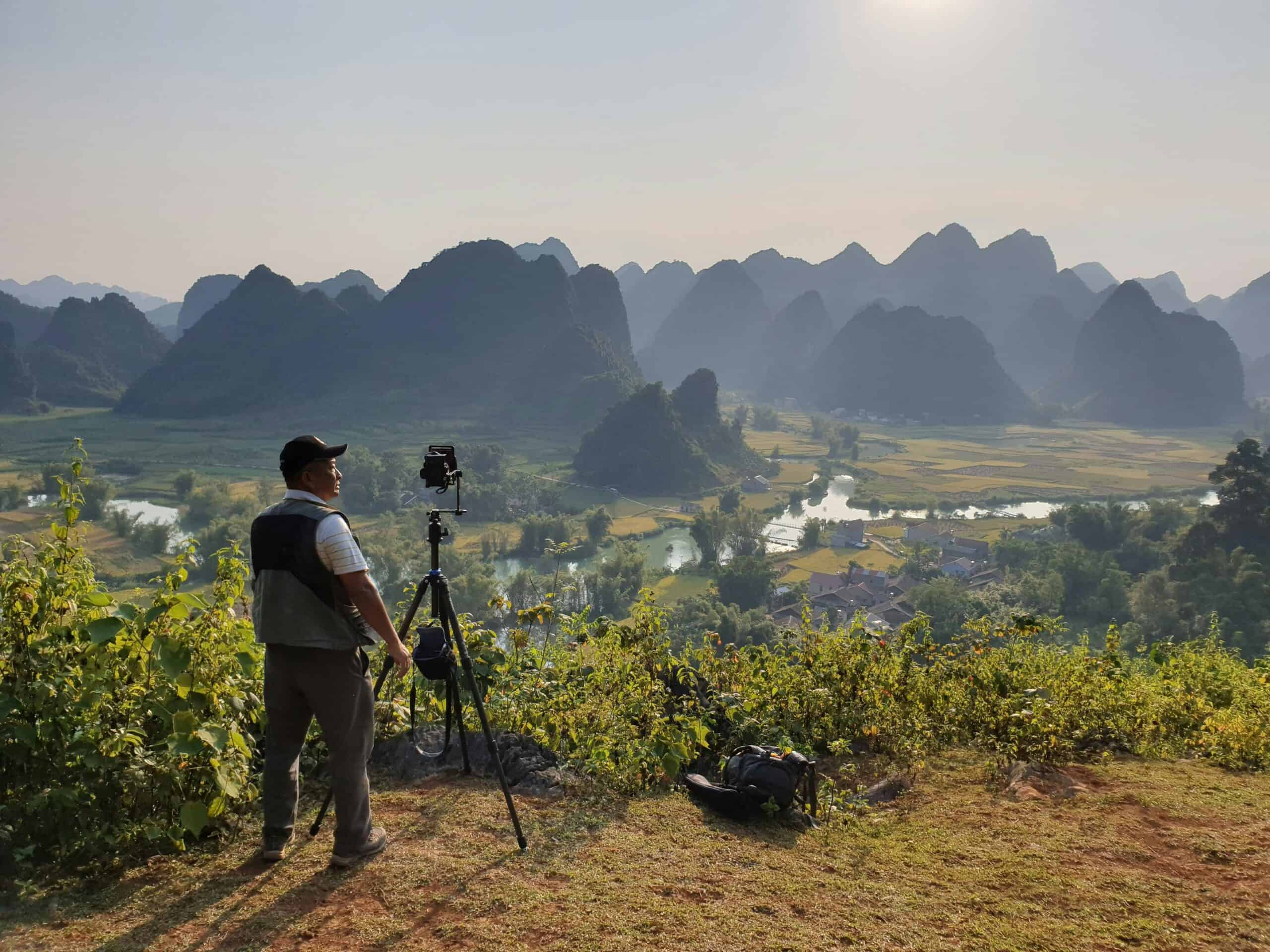
Evaluate Shooting Environment
Survey light direction, reflective surfaces, and moving subjects. Indoors, note window hotspots and mixed lighting; outdoors, watch sun position to avoid flare across multiple frames. If you must shoot through glass, keep the lens as close as possible (1–3 cm) to minimize reflections and ghosting, and use a black cloth or lens hood to block stray light.
Match Gear to Scene Goals
Why the X1D-50c & 7Artisans 10mm works: the X1D’s dynamic range preserves sky highlights and deep shadows in a single pass or HDR bracket, its 50MP files provide generous stitching latitude, and the 7Artisans fisheye minimizes the number of shots required for full coverage. For interiors or low light, stick to ISO 100–800 for the cleanest results. If you’re in mixed light (LEDs, fluorescents), remember you’re using the X1D’s Electronic Shutter with an adapted lens—test for banding and avoid fast shutter speeds around 1/50–1/125 near flicker frequencies. If banding appears, try longer exposures on a tripod and rely on ambient daylight or continuous lighting.
Pre-shoot Checklist
- Power & storage: fully charge batteries; 64–128GB cards recommended for HDR brackets.
- Clean optics: fisheye front elements attract flare; clean lens and sensor carefully.
- Tripod & pano head: level the base and confirm nodal point settings for this lens.
- Safety: on rooftops or poles, tether your camera, monitor wind, and keep a spotter.
- Backup workflow: shoot a second full round at the end—saves many rescues in stitching.
Essential Gear & Setup
Core Gear
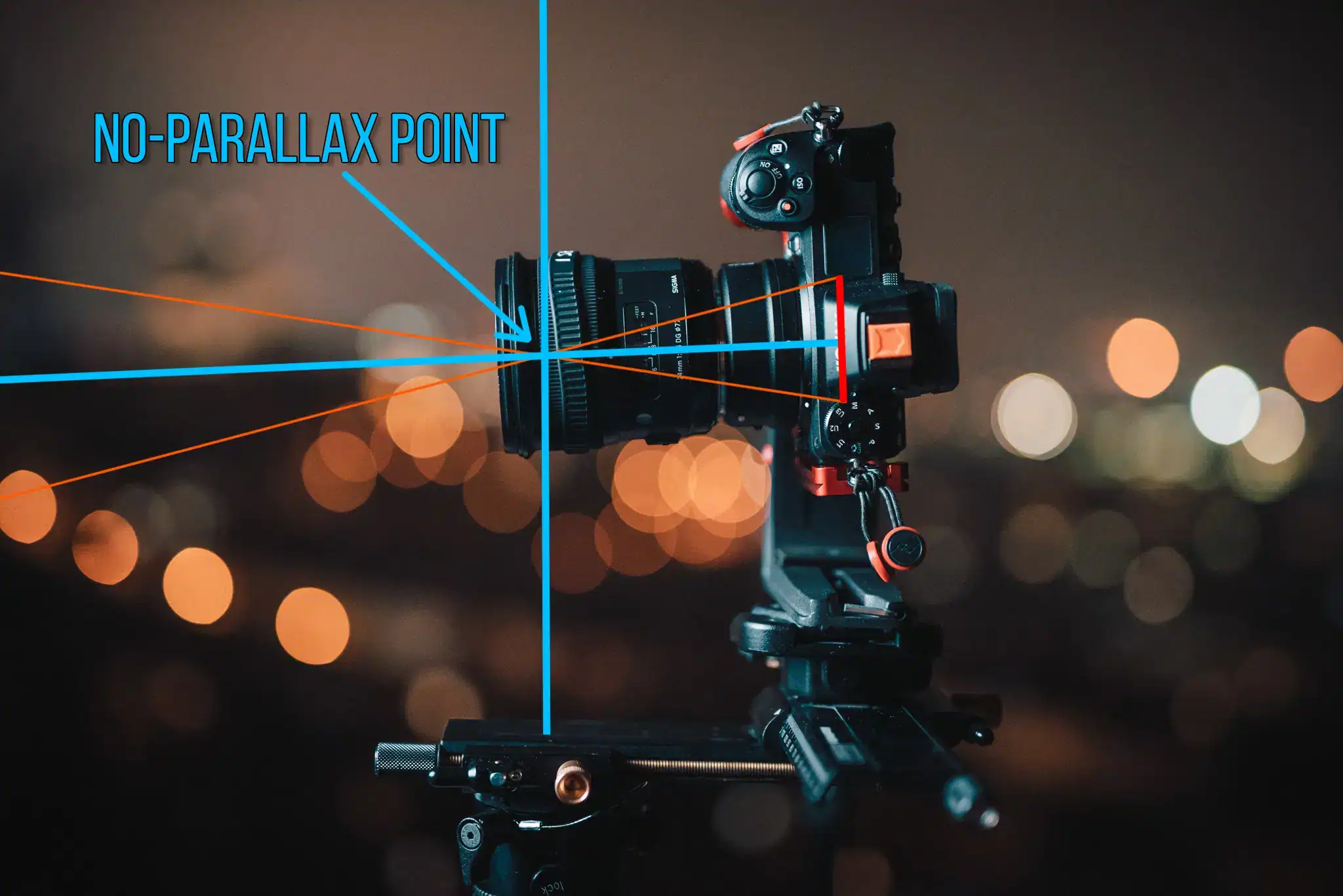
- Panoramic head: A multi-row panoramic head allows precise nodal (entrance pupil) alignment to eliminate parallax. With a fisheye, precise alignment makes stitching robust even in tight interiors with near objects.
- Stable tripod with leveling base: Level the base first, then the head. This keeps yaw rotations consistent and simplifies stitching.
- Remote trigger/app: Use self-timer, cable, or app to avoid vibrations. The X1D’s ES minimizes mechanical vibration, but a steady workflow still matters.
Optional Add-ons
- Pole or car mount: Useful for elevated or vehicle-based captures. Use safety cables, reduce speed/rotation, and avoid high winds. Inspect clamps before each session.
- Lighting for interiors: Constant lights or bounced flash can even out exposure. Watch for LED flicker with ES; continuous daylight is safest.
- Weather protection: Rain covers, silica gel packs, and a microfiber towel—especially important for the fisheye’s large front element.
If you’re new to nodal alignment, this concise panoramic head tutorial will help you visualize the process and avoid common pitfalls. Read a panoramic head tutorial.
Step-by-Step Shooting Guide
Before You Start: Adapters, Crop Mode, and ES
Mount the 7Artisans 10mm to the X1D via a suitable adapter. In the X1D menu, enable Electronic Shutter to allow exposure with adapted lenses. Consider 35mm crop mode to avoid extreme corner vignetting; you’ll still have ample resolution for a professional 360 photo. Activate focus peaking on the X1D and set the lens to manual focus—prefer hyperfocal distance, then do a quick check at 100% Live View.
Standard Static Scenes
- Level and nodal align: Level the tripod. Slide the camera on the pano head until foreground and background objects show no relative shift when panning. Mark the rail position for this combo.
- Manual exposure and WB: Set manual exposure (e.g., f/8, ISO 100–200, shutter as needed) and lock white balance (Daylight/Tungsten preset). Consistency across frames is critical.
- Capture with consistent overlap: For the 10mm fisheye on the X1D, shoot 6 around at 60° yaw spacing with 25–35% overlap. Add 1 zenith shot and 1 nadir. If the tripod head allows, you can tilt up/down for better Z/N coverage.
- Take the nadir: Either shoot a dedicated nadir after moving the tripod slightly or capture a patch frame handheld (be mindful of parallax). You’ll clone or patch in post.
HDR / High Dynamic Range Interiors
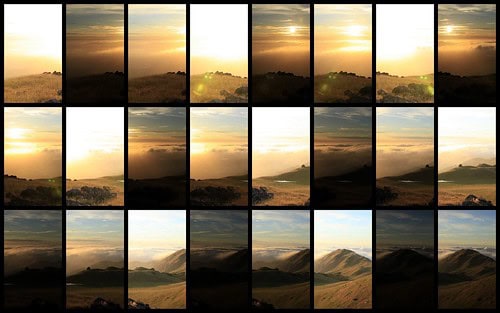
- Bracket ±2 EV (3–5 frames): This balances bright windows and dark interiors. Keep WB locked and the same aperture for all brackets.
- Workflow tip: Capture all around at 0EV first, then do a full round at −2EV and +2EV. Keep the rotation increments identical between passes for easy batch stitching.
Low-Light / Night Scenes
- Use a sturdy tripod and remote. The X1D files shine at ISO 100–400; ISO 800 is still clean. Favor longer exposures over higher ISO for best color and detail.
- Electronic Shutter cautions: Use continuous ambient light where possible; test for LED banding. Very long exposures can mitigate some flicker issues.
Crowded Events
- Two passes technique: Shoot a full set quickly, then a second pass waiting for gaps. You’ll mask the clean areas in post to remove ghosting.
- Avoid foreground parallax: Keep people away from the camera by a meter or more when possible, or elevate the camera slightly.
Special Setups (Pole / Car / Drone)
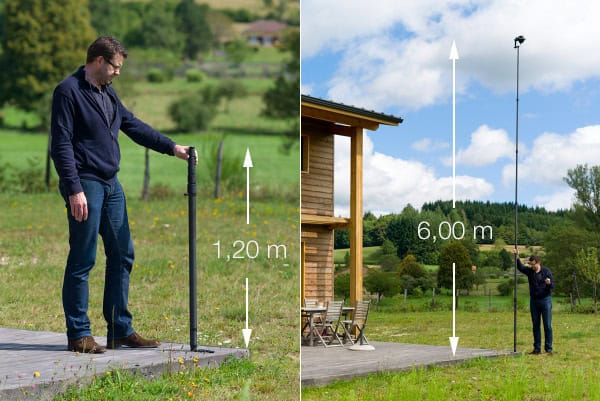
- Pole: Use a carbon pole with a compact panoramic head. Tether the camera; don’t exceed safe wind conditions. Rotate slower to reduce motion and rolling-shutter artifacts.
- Car: Suction mounts and safety cables are must-haves. Shoot when the vehicle is stationary; avoid ES under street LED lights if possible.
Recommended Settings & Pro Tips
Exposure & Focus
| Scenario | Aperture | Shutter | ISO | Notes |
|---|---|---|---|---|
| Daylight outdoor | f/8–f/11 | 1/100–1/250 | 100–200 | Lock WB to Daylight; avoid sun flares if possible |
| Low light/night | f/4–f/5.6 | As needed (tripod) | 100–800 | Use remote; watch for ES banding with LEDs |
| Interior HDR | f/8 | Bracket ±2 EV | 100–400 | Keep WB fixed; consistent increments across passes |
| Action / moving subjects | f/5.6–f/8 | 1/200+ | 400–800 | Faster shutters reduce motion artifacts; plan double pass |
Critical Tips
- Manual focus at hyperfocal: At f/8 on a 10mm fisheye, set focus a bit short of infinity; check peaking and magnified Live View.
- Nodal calibration: With the 7Artisans 10mm, start with the entrance pupil roughly above the tripod axis, then fine-tune by panning and aligning a near and far vertical edge. Mark your rail for repeatability.
- White balance lock: Use a preset; avoid Auto WB since it can shift across frames and complicate stitching.
- RAW capture: The X1D’s 16-bit RAW gives tremendous latitude for HDR and color grading—always worth it for 360 photo work.
- Stabilization: X1D has no IBIS; if you ever use a stabilized adapter or support, disable stabilization on tripod to avoid micro-blur.
For a deeper dive on high-end 360 capture and pano head setup, see this guide from Meta/Oculus after you practice the steps above. Set up a panoramic head for high-end 360 photos.
Stitching & Post-Processing
Software Workflow
Import RAWs and apply uniform basic adjustments (lens profile off for fisheye, consistent WB). Merge HDR brackets first if applicable, then stitch. PTGui is the most popular for 360/fisheye work thanks to its robust fisheye model, control point editing, and masking tools. Hugin is a capable open-source alternative. With fisheye, you’ll need fewer images and the solver will usually find control points easily. Aim for 25–35% overlap between neighbors. Export an equirectangular projection (2:1 aspect) for VR/360 platforms.
For an overview of PTGui’s capabilities in a pro workflow, this review is a helpful reference. PTGui reviewed for high-end panoramas.
Cleanup & Enhancement
- Nadir patch: Export a down-looking view and patch the tripod using content-aware fill or a logo plate. Many AI tools can speed this up.
- Color consistency: Apply global color correction, and fine-tune local white balance in mixed lighting if needed.
- Noise reduction: Apply gentle NR on shadow regions—X1D files tolerate careful NR well without losing micro-contrast.
- Horizon leveling: Use the stitching software’s horizon tool to set pitch/roll and ensure a level horizon in the viewer.
- Output: Export 12000×6000 (or higher) JPEG/8-bit for the web, or 16-bit TIFF for archive/retouch.
Video: Panorama Head Basics
Sometimes it helps to see the whole process in motion. The video below covers core principles you’ll practice with this setup.
Want to estimate theoretical pano resolution for different sensors and focal lengths? The PanoTools wiki is a classic reference. DSLR spherical resolution reference.
Useful Tools & Resources
Software
- PTGui panorama stitching
- Hugin open source
- Lightroom / Photoshop
- AI tripod/nadir removal tools
Hardware
- Panoramic heads (Nodal Ninja, Leofoto)
- Carbon fiber tripods
- Leveling bases
- Wireless remote shutters
- Pole extensions / car mounts
Disclaimer: Names provided for search/reference. Check official sites for specs and compatibility, especially for XCD adapters and ES behavior on the X1D.
Field-Proven Scenarios with This Combo
Indoor Real Estate (Mixed Light)
Set camera in 35mm crop mode to avoid harsh vignetting. Use f/8, ISO 100–200, and bracket ±2 EV across each pano position. Keep the lens close to windows when needed to minimize reflections. If LED banding appears in ES, rely more on daylight and dim problematic fixtures, or use longer exposures to average flicker cycles.
Outdoor Sunset (High DR)
The X1D’s DR shines at sunset. Use f/8, ISO 100, and take a single manual exposure for the sky and a second for shadow lift if necessary. Alternatively, do a 3-frame ±2 EV bracket. Shield the fisheye from direct sun between frames to reduce flare. A lens hood or your hand (kept out of frame) can help.
Events & Crowds
People near the lens will shift position between frames, producing ghosting. Raise the camera slightly (monopod or short pole), shoot two fast passes, and mask moving subjects in post. Keep your shutter speed high enough (1/200+) if people are moving quickly, but prefer ISO 400–800 rather than going much higher.
Rooftop / Pole Capture
Use a robust pole with a compact head. Tether the X1D and keep one hand under the rig to control sway. Rotate slower to minimize rolling-shutter skew. Consider 4–5 around with extra overlap if the wind is gusty, then add generous zenith and nadir coverage for a clean stitch.
Common Mistakes & How to Avoid Them
- Parallax error → Always align the entrance pupil. Recheck after moving the rig or changing the adapter position.
- Exposure flicker → Manual mode and locked white balance only. No auto ISO or Auto WB for panos.
- Tripod shadows/footprint → Capture a dedicated nadir and patch in post.
- Ghosting from moving subjects → Shoot double passes and mask in the stitcher.
- Noise at night → Use long exposures on tripod at ISO 100–400; avoid pushing ISO too far.
- LED banding with ES → Favor daylight or continuous non-flickering lighting and longer exposures; test before full capture.
Frequently Asked Questions
- Can I shoot handheld panoramas with the Hasselblad X1D-50c?
You can, but it’s risky with this combo. The Electronic Shutter plus fisheye distortion demands consistent rotation around the nodal point. For quality 360 photos, use a tripod and panoramic head. Handheld can work for quick single-row panos if subjects are distant and you keep overlap very high.
- Is the 7Artisans 10mm f/2.8 II wide enough for a single-row 360?
For a full spherical 360, plan 6 around + zenith + nadir. The single-row “around” captures the horizon, but you’ll still need up/down coverage. In spacious scenes you can sometimes stitch zenith from overlap, but a dedicated zenith shot is safer.
- Do I need HDR for interiors with bright windows?
Yes, in most real estate scenarios. Bracket ±2 EV (3–5 frames) per position to retain outside view and interior detail. The X1D’s DR helps, but HDR ensures cleaner windows and balanced rooms.
- How do I avoid parallax issues with this fisheye?
Use a pano head and align the entrance pupil. Slide the camera forward/back until near/far objects stay aligned while panning. Mark your rail for the 7Artisans 10mm position and always return to that setting.
- What ISO range is safe on the X1D-50c in low light?
ISO 100–400 is excellent; ISO 800 remains very usable. Above that, noise and color fidelity decline. Prefer longer tripod exposures over pushing ISO, especially for print/VR-quality outputs.
- Can I make custom settings for pano on the X1D?
Save a user preset with Electronic Shutter on, 35mm crop mode (if you prefer), manual exposure, manual WB, RAW, and a neutral picture style. This speeds up repeatable pano sessions.
- How can I reduce flare with a fisheye?
Avoid direct sun across frames if possible. Use your hand just outside the frame to shade the lens, rotate to the next position, and repeat. Clean the front element often; even small smudges can rainbow-flare on fisheyes.
- What panoramic head should I choose?
Look for a compact, rigid head with fore-aft and lateral adjustments, degree markings, and a detent ring for repeatable yaw increments. Nodal Ninja and Leofoto make excellent options. If you’re new, this DSLR/mirrorless 360 overview is a great orientation. Using a mirrorless camera for 360 capture.