
Why This Camera & Lens Are Great for Panoramas
If you’re looking for a practical, high-resolution workflow for 360 photos and multi-row panoramas, the Fujifilm X‑T5 paired with the Tamron 17–28mm f/2.8 Di III RXD can deliver clean, detailed stitches with manageable shot counts. The X‑T5’s 40.2MP APS‑C X‑Trans CMOS 5 HR sensor (approx. 23.5×15.6mm, ~3.0µm pixel pitch) captures a ton of detail and has excellent base-ISO dynamic range (~13–13.5 EV at ISO 125). That means more room to balance bright windows and deep shadows in HDR panoramas, and sharper results when you zoom in on tiny details in virtual tours.
The Tamron 17–28mm f/2.8 is a compact, fast, rectilinear ultra-wide zoom. Rectilinear geometry keeps straight lines straight—an advantage for architecture and interiors. At 17mm on APS‑C (25.5mm full-frame equivalent), expect a diagonal FOV around 79° with low distortion for a non-fisheye, plus good flare control for sunset cityscapes. This lens is also sharp stopped down to f/5.6–f/8 and handles lateral CA well, which matters at the frame edges where stitching software needs clean, consistent overlaps.
Compatibility note: The Tamron 17–28mm f/2.8 Di III RXD (Model A046) is natively Sony E‑mount (full frame). Direct, non-optical adaptation to Fujifilm X isn’t generally feasible due to flange distance constraints. If you already own this lens, you’ll need a specialized optical E‑to‑X adapter (rare and may compromise image quality/AF). If not, consider functionally similar native options (e.g., Fujifilm XF 10–24mm f/4 OIS WR, Tamron 11–20mm f/2.8 Di III‑A RXD for X) and apply the same techniques below. The rest of this guide focuses on field-proven panorama methods and shot counts that map 1:1 to rectilinear ultra-wide zooms like the 17–28mm.
Quick Setup Overview
- Camera: Fujifilm X‑T5 — APS‑C (23.5×15.6mm), 40.2MP, ~13–13.5 EV DR at base ISO, 5‑axis IBIS (up to 7 stops), robust mechanical shutter.
- Lens: Tamron 17–28mm f/2.8 Di III RXD — rectilinear ultra-wide zoom; sharp by f/5.6–f/8; low distortion for architectural lines; 67mm filter thread; fast, quiet RXD AF motor.
- Estimated shots & overlap (tested guidelines):
- At 17mm (APS‑C): multi‑row spherical = 8 shots at −45°, 8 at 0°, 8 at +45° + 1 zenith + 1–3 nadir patch (about 26–28 total) with ~30% overlap.
- At 20–24mm: 10–12 per row × 2–3 rows + zenith + nadir (approx. 26–38 total), 25–30% overlap.
- At 28mm: 12 per row × 3 rows + zenith + nadir (≈ 38–40 total), 25–30% overlap.
- Difficulty: Intermediate. Rectilinear multi‑row work is slower than fisheye, but results are highly detailed and natural-looking.
Planning & On-Site Preparation
Evaluate Shooting Environment
Walk the scene before setting up. Identify strong light sources, reflections (glass and polished floors), moving elements (people, cars, trees), and vibrations (bridges, rooftops in wind). If shooting through glass, press a rubber lens hood against the pane and stay as close as possible (1–2 cm) to reduce internal reflections and ghosting. Avoid mixed light flicker by shooting at slower shutter speeds for LEDs or switching lights off when practical.
Match Gear to Scene Goals
The X‑T5’s high pixel density lets you produce 12K–16K equirectangular outputs from multi-row captures at 17–24mm with excellent fine detail. Its IBIS helps when you have to run slower shutters outdoors, but on a tripod, turn IBIS off to prevent micro‑jitter. Indoors, ISO 125–400 preserves maximum DR; in darker spaces, ISO 640–1250 still looks clean once you denoise RAW. The Tamron 17–28’s rectilinear projection minimizes edge curvature—great for real estate and interiors—but requires more frames than a fisheye. That tradeoff is worth it when straight lines and edge detail matter.
Pre-shoot Checklist
- Power & storage: two charged batteries minimum; fast UHS‑II SD cards; format in‑camera.
- Optics clean: lens front/rear and sensor; smudges ruin overlap seams.
- Tripod & head: level base; pano head calibrated to the no‑parallax (nodal) point for 17–28mm.
- Wind & safety: add a weight bag to tripod; tether pole/rigs; avoid edges and overhead hazards.
- Exposure safety: shoot an extra full pass; bracket if DR is high; log your row angles and shot counts.
- White balance: set a fixed Kelvin (e.g., 5200–5600K daylight, or custom measured) to keep colors consistent.
Essential Gear & Setup
Core Gear
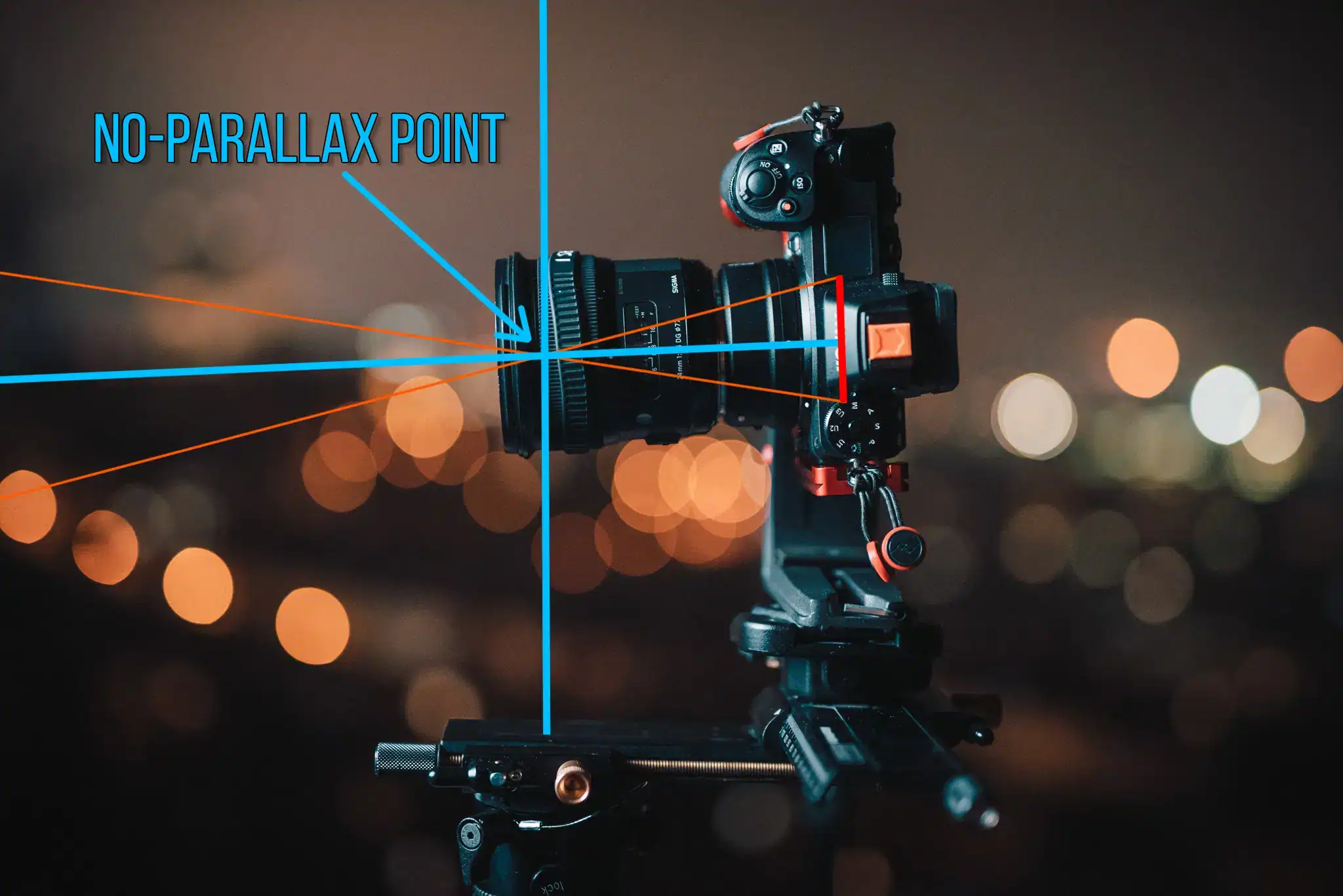
- Panoramic head: A proper pano head lets you rotate around the lens’s no‑parallax (entrance pupil) point, preventing parallax shifts that cause stitching errors. Use fore‑aft and left‑right slides to align precisely.
- Stable tripod with leveling base: Level once at the base, and your rows will stay clean across the sweep. A 3/8” leveling bowl speeds setup.
- Remote trigger/app: Use a cable release or app to avoid touching the camera. A 2‑sec timer is a good fallback.
Optional Add-ons
- Pole/car mount: For rooftops or overhead views, use a rigid carbon pole and strong clamps; tether everything. In vehicles, isolate vibration and use faster shutter speeds (1/250–1/500s).
- Lighting aids: LED panels bounced off ceilings for interiors; keep lighting consistent across rows.
- Weather protection: Rain covers, microfiber cloths, silica gel. Salt spray and dust can ruin a session.
Step-by-Step Shooting Guide
Standard Static Scenes
- Level and calibrate: Level the tripod via the leveling base. Set your panoramic head’s rotator detents (e.g., 45° for 8‑around). Adjust the rail to align the no‑parallax point at your chosen focal length (start at 17mm; mark the rail once you find it).
- Manual exposure and WB: Meter the brightest part you need to keep (e.g., sky), then expose to protect highlights. Set manual exposure and a fixed Kelvin WB (e.g., 5600K). Disable auto ISO and auto WB.
- Focus and shoot: Use manual focus at hyperfocal distance (e.g., 17mm at f/8 ≈ 1.2–1.5 m on APS‑C; verify with a chart) and take your around row(s) with 25–30% overlap. For multi‑row, shoot bottom row first (−45°), then 0°, then +45°, then zenith.
- Nadir coverage: Tilt down and shoot a dedicated nadir (ground) shot or two to make tripod removal easier in post.
HDR / High Dynamic Range Interiors
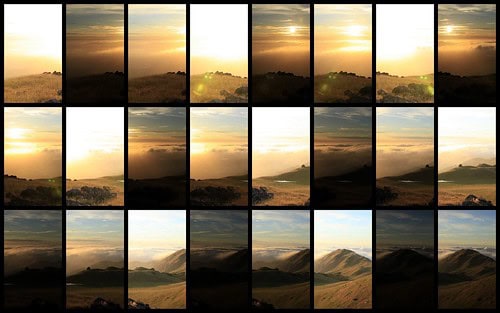
- Bracket exposures: Use ±2 EV (3 or 5 frames). For extremely bright windows, consider ±3 EV if shutter time allows.
- Lock WB and focus: Keep both fixed across brackets and rows. Use a remote to avoid shaking during long exposures.
- Consistency: Shoot the same bracket order (e.g., 0, −2, +2) for each position to simplify batch processing later.
Low-Light / Night Scenes
- Stability first: IBIS off on tripod; use 2‑sec delay or remote. Start at f/4–f/5.6, ISO 200–800, and drag shutter as needed (1–8 sec typical).
- Noise management: The X‑T5 stays clean through ISO 800–1250 with modern denoise; prefer longer shutter over pushing ISO too high.
- City light flicker: Avoid very fast shutter speeds under LED/fluorescent lights; test a bracket to confirm clean frames.
Crowded Events
- Two‑pass method: First pass quickly for coverage; second pass waits for gaps in traffic. You’ll mask in post to remove duplicates.
- Higher shutter: 1/200–1/500s at f/5.6–f/8, ISO 400–800 to freeze people and flags. Keep overlap generous (~35%).
Special Setups (Pole / Car / Drone)
- Pole work: Keep the rotation slow and deliberate; tether the camera; use 17mm to reduce shot count. A safety assistant is highly recommended.
- Car mounts: Choose faster shutter (1/250–1/500s), turn off IBIS, and avoid bumpy surfaces mid‑sweep. Park if possible.
Recommended Settings & Pro Tips
Exposure & Focus
| Scenario | Aperture | Shutter | ISO | Notes |
|---|---|---|---|---|
| Daylight outdoor | f/8–f/11 | 1/100–1/250 | 100–200 | Lock WB (daylight 5200–5600K) |
| Low light/night | f/4–f/5.6 | 1/30–8s | 200–800 | Tripod + remote; IBIS off |
| Interior HDR | f/8 | Bracket ±2 EV | 100–400 | Protect highlights in bright windows |
| Action / moving subjects | f/5.6–f/8 | 1/200+ | 400–800 | Freeze motion; consider two-pass capture |
Critical Tips
- Manual focus at hyperfocal: At 17mm f/8 on APS‑C, set focus ~1.2–1.5 m; everything from ~0.8 m to infinity stays sharp. Confirm with magnified live view.
- Nodal alignment: Use a near/far object test. Slide the lens along the rail until foreground and background stay aligned while panning.
- White balance consistency: Don’t let AWB drift between frames. Use fixed Kelvin or a custom preset.
- RAW capture: 14‑bit RAW maximizes DR and color latitude, crucial for HDR merges and clean seam blending.
- IBIS on/off: Off on tripod; on only if shooting handheld or monopod/pole with vibration. Test both if unsure.
Stitching & Post-Processing
Software Workflow
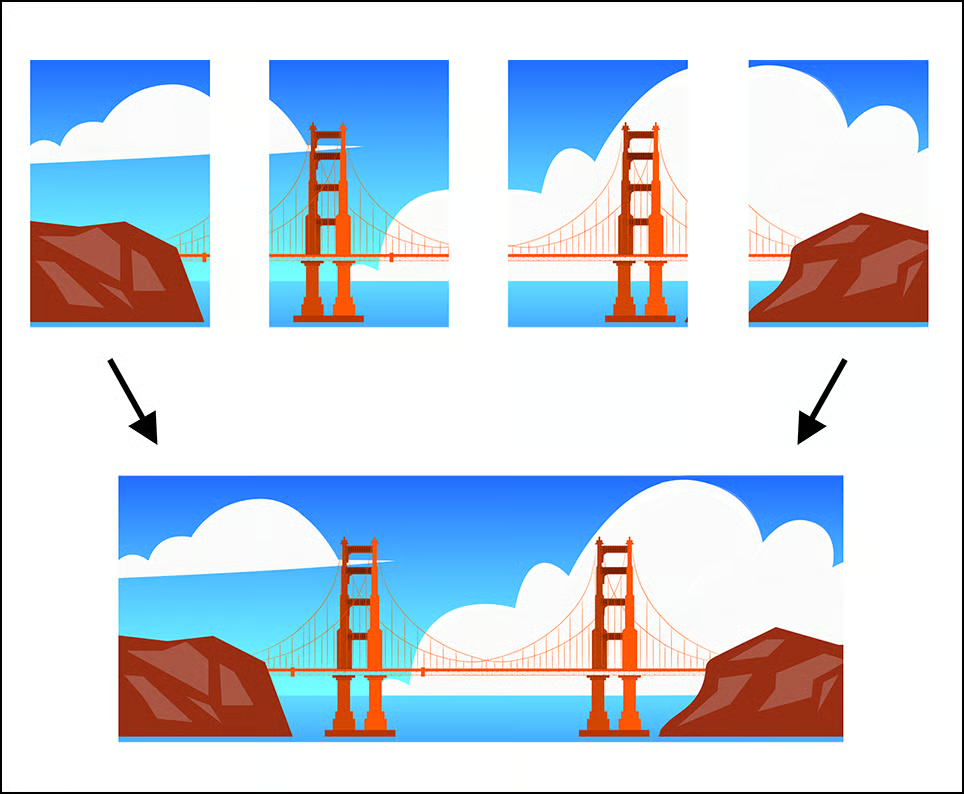
Import and cull in Lightroom or your preferred DAM, then stitch in PTGui (fast, robust control points), Hugin (free), or Photoshop’s Photomerge for simple single-row sets. With rectilinear lenses, plan for 20–30% overlap. Fisheye setups can use 25–30% overlap with fewer shots, but rectilinear keeps lines straight and edges cleaner—best for real estate and architectural work. For a deep dive on professional panoramic head setup and capture discipline, see Oculus’s guide to using a DSLR/mirrorless for 360 photos. Using a mirrorless to shoot and stitch a 360 photo (Oculus)
Cleanup & Enhancement
- Nadir patching: After stitching to equirectangular (2:1), patch the tripod using a cloned patch, logo, or AI fill tools.
- Color and noise: Sync color corrections across brackets; apply noise reduction to shadow brackets before stitching if needed.
- Leveling: Ensure horizon level and correct roll/pitch/yaw within the stitcher; use vertical line constraints for architecture.
- Output: Export 8K–16K equirectangular JPEG/TIFF for VR and virtual tour platforms. Use 16‑bit TIFF if heavy retouching remains.
If you’re evaluating stitcher options, this review explains why PTGui remains a top choice for complex multi‑row work. PTGui for advanced panoramas (Fstoppers review)
Useful Tools & Resources
Software
- PTGui panorama stitching
- Hugin open source stitcher
- Lightroom / Photoshop for RAW prep and finishing
- AI tripod/nadir removal tools
Hardware
- Panoramic heads (Nodal Ninja, Leofoto, Sunwayfoto) with rail scales
- Carbon fiber tripods with leveling bases
- Wireless remotes or intervalometers
- Pole extensions and vehicle mounts with tethers
Want a visual walkthrough of panorama shooting fundamentals? This video covers key principles you’ll use with the X‑T5 + 17–28mm workflow:
For a step-by-step panoramic head setup tutorial, this guide breaks down the no‑parallax alignment process with diagrams and checklists. Panoramic head tutorial (360 Rumors)
Disclaimer: software/hardware names provided for search reference; check official sites for details.
Common Mistakes & How to Avoid Them
- Parallax error: Calibrate the no‑parallax point and keep the camera rotating around it—especially at 17–24mm with foreground elements.
- Exposure flicker: Manual exposure and fixed WB. Don’t let auto modes shift between frames.
- Insufficient overlap: Aim for 25–30% horizontally and 25–30% vertically to give your stitcher robust control points.
- Tripod shadows and footprints: Capture clean nadir shots for easy patching.
- High ISO noise at night: Prefer longer exposures at ISO 200–800 with a sturdy tripod and remote.
- Wind wobble: Hang a weight from the tripod, lower the center column, and reduce the sail area of your setup.
Field‑Tested Scenarios
Indoor Real Estate (Mixed Light)
Set 17mm, f/8, ISO 125–200, and bracket ±2 EV (3–5 frames). Shoot multi‑row: 8 around per row at −45°, 0°, +45°, then zenith and nadir. Kill warm lamps if daylight dominates, or set a custom WB so lamps and window light balance predictably. Expect a 12K–16K equirectangular after stitching and leveling verticals.
Outdoor Sunset Cityscape
Lock exposure for the sky (e.g., f/8, ISO 160, 1/125s), shoot a second bracketed pass if you want extra shadow detail. Use a lens hood and avoid pointing straight into the sun unless you want flare artifacts. Consider a final blue‑hour pass for cleaner window lights and blend later if needed.
Event Crowd
Increase shutter to 1/250s, shoot two passes to catch gaps in foot traffic, and use PTGui’s masking to hide ghosts. Overlap at 30–35% gives more wiggle room for masks on moving subjects.
Rooftop or Pole
At 17mm, you can get a complete spherical pano with around 26–28 shots. Keep the pole vertical, rotate slowly, and use a remote app. Safety first: tether the rig and avoid high winds. Expect to do more cleanup in post from minor misalignments.
Frequently Asked Questions
- Can I shoot handheld panoramas with the Fujifilm X‑T5?
Yes for single‑row, but expect imperfect stitches. Use high shutter speeds (1/250s+), IBIS on, and generous overlap (35–40%). For multi‑row 360s, use a tripod and pano head for reliable, parallax‑free results.
- Is the Tamron 17–28mm wide enough for a single‑row 360?
No. At 17mm on APS‑C, a single row won’t cover the full vertical field (180°). Plan multi‑row: typically three rows (−45°, 0°, +45°) plus zenith and nadir.
- Do I need HDR for interiors with bright windows?
Often, yes. Bracket ±2 EV at each position to preserve window highlights and interior shadows, then merge exposures before or during stitching in PTGui/Hugin.
- How do I avoid parallax issues with this setup?
Calibrate the no‑parallax point at 17mm using a near/far object test and mark the rail position. Keep the camera level and rotate only around the vertical axis of the entrance pupil.
- What ISO range is safe on the X‑T5 in low light?
For tripod‑based panoramas: ISO 125–400 for maximum DR; ISO 640–1250 remains very usable with modern denoise. Prefer longer shutter over high ISO when the camera is locked down.
- Can I set up Custom Shooting Modes for pano?
Yes. Save Manual exposure, fixed WB, RAW, AF off/manual focus, IBIS off, and drive mode to a C1/C2 slot so you can recall pano settings instantly.
- What’s a good tripod head for this combo?
A 2‑axis panoramic head with fore‑aft and lateral rail adjustment (e.g., Nodal Ninja, Leofoto) and a precise rotator (15°/30°/45° detents) makes multi‑row work fast and repeatable.
Technical Notes for Power Users
- Spherical resolution: With 26–28 images at 40MP RAW (and ~30% overlap), final equirectangulars of 12K–16K are typical depending on framing, overlap, and lens sharpness toward the edges. For background reading on resolution math, see the Panotools wiki. DSLR spherical resolution (Panotools)
- FOV and shot counts: At 17mm APS‑C, HFOV ≈ 69°, VFOV ≈ 49°. With 30% overlap, 8 shots around per row is robust; 3 rows cover zenith/ground with dedicated nadir/zenith frames.
- Diffraction and sharpness: On the X‑T5’s ~3.0µm pixels, diffraction softening is noticeable past f/11. Aim for f/5.6–f/8 for maximum overall sharpness.
- Lens behaviors: The 17–28mm is well-controlled for distortion/CA; stop down to f/5.6–f/8 for cleaner edges in overlaps. Use lens profiles during RAW conversion to normalize geometry across the sweep.
Safety, Reliability & Data Hygiene
- Wind management: Lower the center column, use a tripod stone bag, and avoid extending tiny leg sections in gusts.
- Rooftops and poles: Use a safety tether and keep a spotter. Don’t overreach for a zenith—move your feet and re‑compose.
- Backup workflow: Shoot a second full pass. Keep a dual‑slot card strategy (RAW to Slot 1, backup JPEG to Slot 2) when speed matters.
- Version control: Export layered TIFFs from your stitcher if you plan to re‑mask later.
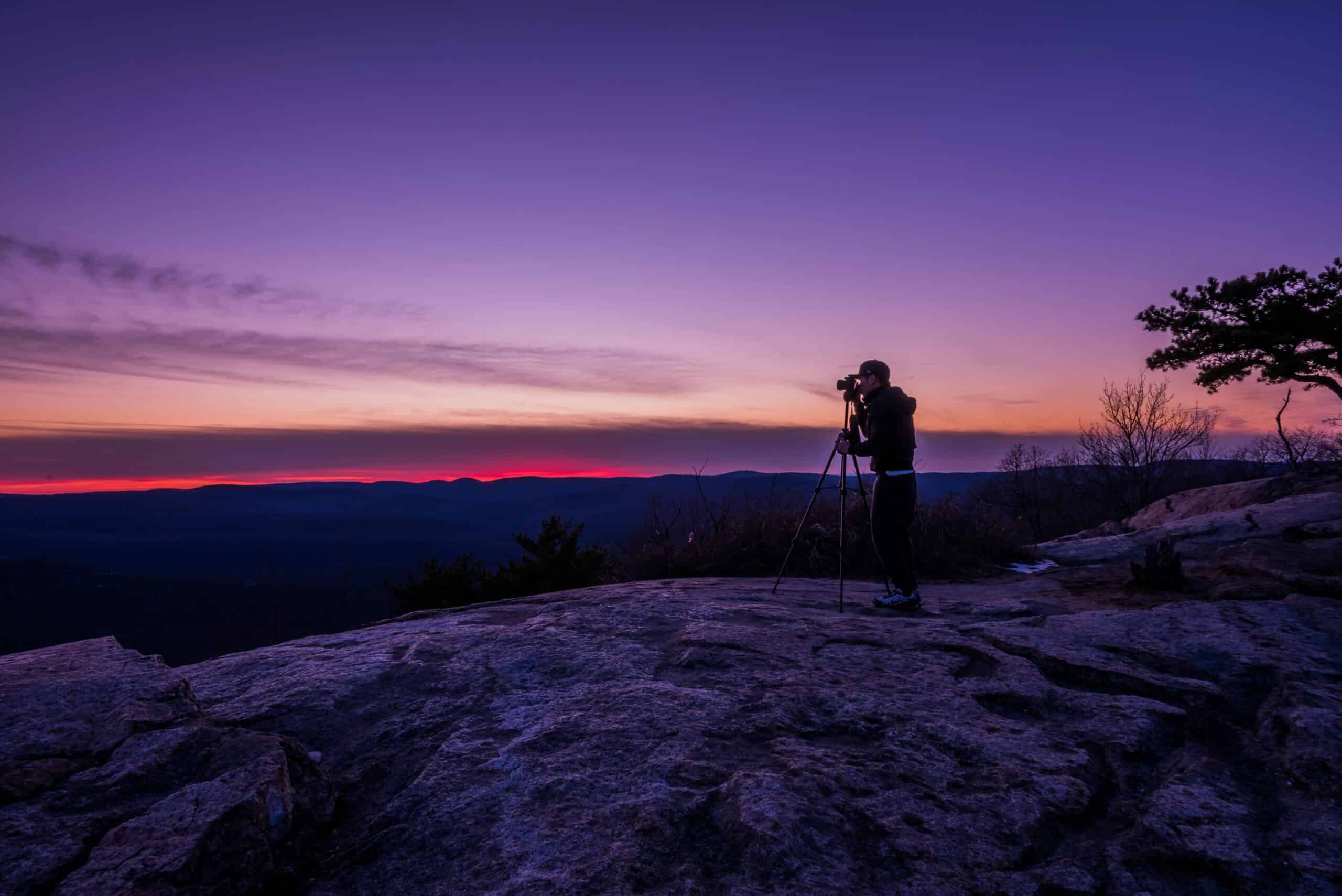
Want more on pano technique from different perspectives? This Q&A thread compiles best practices and gotchas many shooters run into as they scale up. Best techniques to take 360 panoramas (StackExchange)
Wrap-Up: How to Shoot Panorama with Fujifilm X‑T5 & Tamron 17–28mm f/2.8 Di III RXD
For photographers who value clean lines and high resolution, a rectilinear ultra‑wide like the 17–28mm on the 40MP X‑T5 is a powerful choice. The keys are precise nodal calibration, consistent manual exposure and white balance, adequate overlap (25–30%), and a thoughtful, repeatable shot pattern. Expect around 26–28 images at 17mm for a full spherical with excellent detail. If the exact lens/camera mount pairing requires an adapter, test thoroughly for infinity focus and optical quality—or use a native ultra‑wide with similar FOV. With disciplined capture and a solid stitcher, you’ll be publishing crisp 12K–16K virtual tours and 360 photos in no time.