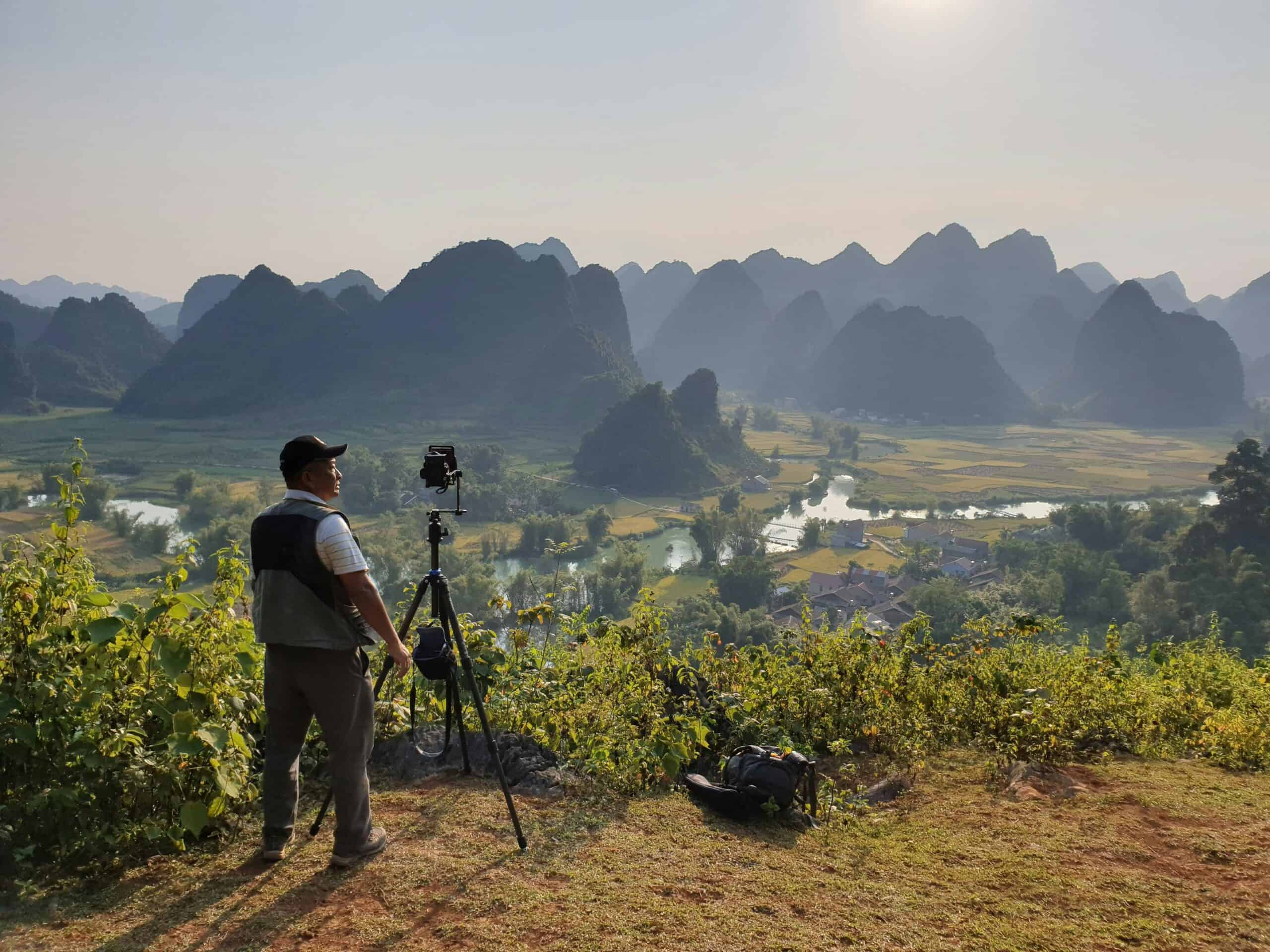
Why This Camera & Lens Are Great for Panoramas
If you’re learning how to shoot panorama with Fujifilm X-T5 & Sony FE 14mm f/1.8 GM, this guide gives you a professional, field-tested roadmap. The X-T5’s 40.2MP APS‑C X-Trans CMOS 5 HR sensor captures incredibly fine detail with a pixel pitch of about 3.04 µm. At base ISO (125), you can expect excellent dynamic range (around 13 stops in practical use), clean shadows, and flexible RAWs—ideal for 360 photo workflows that often require shadow recovery and color balancing.
The Sony FE 14mm f/1.8 GM is a full-frame rectilinear prime renowned for superb corner-to-corner sharpness, low coma, and controlled chromatic aberration. On an APS‑C body like the X‑T5, its angle of view approximates a 21mm equivalent (about 80° horizontal, 58° vertical). While not a fisheye, it is still very wide for a rectilinear lens, which keeps lines straight—useful in architecture and interiors where distortion control matters.
Important compatibility note: Sony FE is E‑mount; the X‑T5 uses Fuji X‑mount. There is no widely available, reliable electronic adapter that preserves AF and aperture control from FE to X‑mount at this time. If you do not already own a working electronic adapter that can control the Sony lens’ aperture on the X‑T5, consider using a native Fujifilm wide lens with similar coverage (e.g., XF 14mm f/2.8, XF 8‑16mm, XF 10‑24mm) or pairing the FE 14mm with a Sony body. The techniques, nodal setup, and stitching steps in this article apply equally to a native 14–21mm equivalent rectilinear lens on the X‑T5.
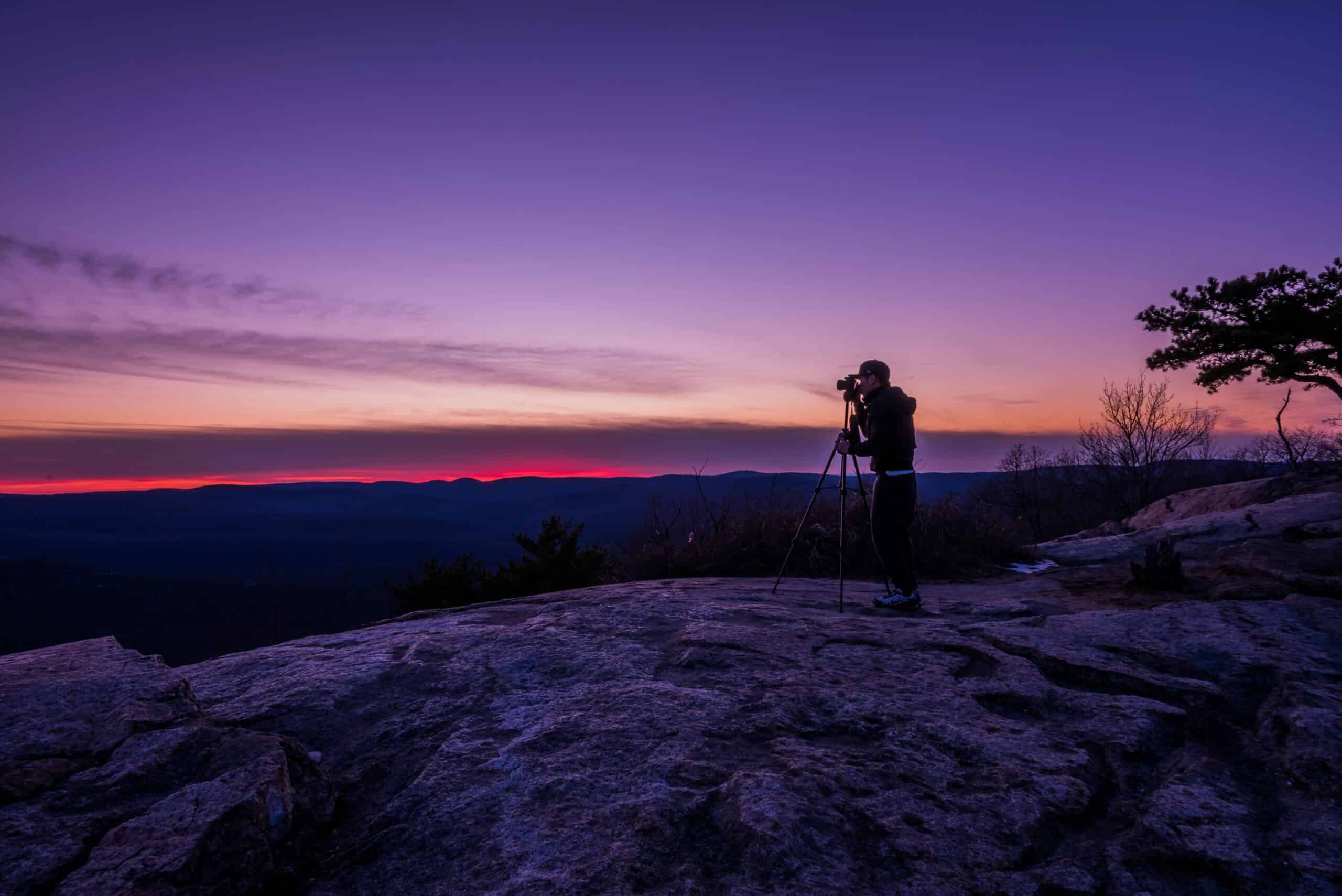
Quick Setup Overview
- Camera: Fujifilm X‑T5 — APS‑C (23.5×15.6 mm), 40.2MP X‑Trans, base ISO 125, IBIS up to ~7 stops, excellent DR at low ISO.
- Lens: Sony FE 14mm f/1.8 GM — rectilinear ultra-wide; sharp across frame by f/5.6–f/8; low coma and CA; note E‑mount compatibility caveat.
- Estimated shots & overlap (rectilinear, APS‑C):
- Efficient: 2 rows × 6 shots per row (±30–35° tilt), plus 1 zenith + 1–2 nadir (≈14–16 frames total, ~25–30% overlap).
- Safe: 2 rows × 8 shots per row, plus zenith + nadir (≈18–20 frames total, ~40–45% overlap for robust stitching).
- Difficulty: Intermediate (precise nodal calibration recommended).
Planning & On-Site Preparation
Evaluate Shooting Environment
Before you set up, assess the light, wind, and scene motion. Reflective surfaces (glass, polished floors, cars) amplify ghosting and flare—use a lens hood and avoid direct strong backlight when possible. If you must shoot against glass, place the lens as close as safely possible (1–3 cm) and shade with your hand or a rubber lens hood to reduce reflections. For moving crowds, anticipate gaps or plan for masking in post.
Match Gear to Scene Goals
The X‑T5’s strong low‑ISO dynamic range helps with high-contrast scenes like interiors with bright windows. The 14mm rectilinear field of view (≈21mm equivalent on APS‑C) offers straight lines and low distortion—ideal for architecture, real estate, and landscapes. With the Sony FE 14mm, you’d normally rely on electronic aperture control; if that’s not available on the X‑T5 due to adapter limitations, use a native Fujifilm wide prime or zoom. For indoor shoots, ISO 125–400 and bracketing are optimal; outdoors at golden hour, expect to shoot at f/8–f/11 for maximum edge-to-edge sharpness.
Pre-shoot Checklist
- Charge batteries, clear/high-speed cards, clean front element and sensor.
- Level the tripod and verify panoramic head calibration (nodal point set).
- Safety: check wind on rooftops; use sandbags, a safety tether, and avoid overextended center columns.
- Backup: shoot a second full pass (and a third if it’s a one-time scene) in case of stitching issues.
Essential Gear & Setup
Core Gear
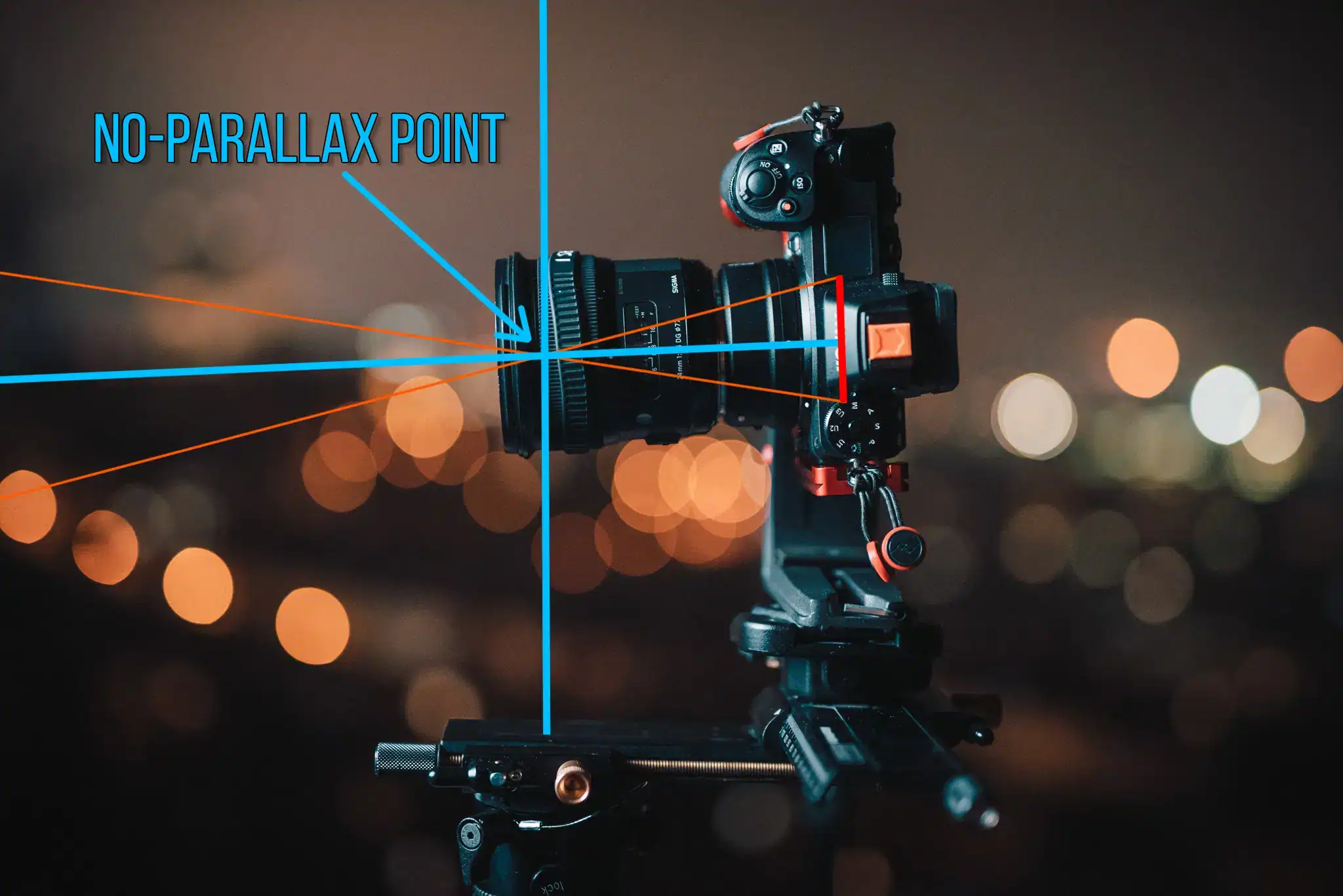
- Panoramic head: Allows rotation around the lens’ no‑parallax (entrance pupil) point to eliminate parallax errors, which is crucial for interiors with near objects.
- Stable tripod with a leveling base: Fast leveling reduces cumulative errors across rows.
- Remote trigger or app: Minimize vibrations. On the X‑T5, use a 2 s timer or remote app if you don’t have a cable release.
Optional Add-ons
- Pole or car mount: Great for elevated or moving perspectives. Always use a safety line, inspect clamps, and account for wind load.
- Lighting for interiors: Small LED panels or bounced flashes to lift deep shadows when bracketing is not allowed or time is limited.
- Weather covers: Sudden drizzle or sea spray can ruin a session—carry a simple rain cover or microfiber towel.
Step-by-Step Shooting Guide
Standard Static Scenes
- Level and center: Level the tripod using a leveling base or the head’s bubble level. Ensure the pano head’s rotator is level so rows don’t drift.
- Align the nodal point: Place a light stand or pole close to the camera and a distant object in frame. Rotate the camera—if the near and far objects shift relative to each other, slide the rail forward/backward until they stay aligned while rotating. Mark the rail scale for this combo (or your native Fuji 14–21mm equivalent).
- Set manual exposure and lock white balance: Meter a mid-tone in the scene and dial manual settings so they won’t change mid-pan. Set a fixed white balance (Daylight, Cloudy, or a custom Kelvin). This prevents color and exposure shifts that complicate stitching.
- Focus: Use manual focus and set near the hyperfocal distance. At 14mm and f/8 on APS‑C, the hyperfocal is about 1.2–1.3 m; focusing there keeps everything from ~0.7 m to infinity acceptably sharp.
- Capture sequence: For the “safe” method, shoot:
- Top row: +30–35° tilt, 8 shots around (45° steps).
- Middle row: 0° tilt, 8 shots around.
- Zenith: 1 shot straight up.
- Nadir: 1–2 shots for tripod removal (use viewpoint correction in PTGui later).
If you want efficiency and are confident in alignment, try 6 shots per row at 60° steps (two rows + zenith + nadir).
HDR / High Dynamic Range Interiors
- Bracket exposure: Use ±2 EV or 3–5 frames total per angle, depending on how bright the windows are. Keep WB locked.
- Sequence discipline: Shoot all brackets at each angle before rotating to maintain consistent overlap. X‑T5’s auto bracketing can speed this up—just ensure your timer or remote prevents shake.
- Keep ISO low: ISO 125–200 maintains the X‑T5’s DR headroom for window pulls and shadow recovery.
Low-Light / Night Scenes
- Stability first: Use a solid tripod and turn IBIS off when on a tripod to prevent sensor micro-movement. Enable electronic front curtain shutter (EFCS) or use a 2 s timer to reduce vibration.
- Exposure: f/4–f/5.6, shutter 1/15–1/60, ISO 200–800. The X‑T5 remains very clean up to ISO ~800; ISO 1600 is usable with good noise reduction.
- Check flare: Streetlights can cause ghosts on ultra-wide glass. Slightly adjust angle to keep bright sources just off the frame edge when possible.
Crowded Events
- Two passes: First, a fast full sweep to capture coverage. Then, a second sweep where you wait for gaps or reposition to minimize motion overlap.
- Mask in post: Use the best frames at each angle when stitching. PTGui’s masking tool lets you paint in the cleanest people positions.
Special Setups (Pole / Car / Drone)
- Pole: Use a carbon pole with a compact rotator and safety tether. Avoid high winds; keep exposures short (1/200 s+) to minimize sway. Consider shooting fewer frames with more overlap to tolerate slight movement.
- Car mount: Only on private property or where legal. Use vibration-damped suction rigs, safety lines, and high shutter speeds. Plan a route with steady speed to reduce frame‑to‑frame background shifts.
- Drone: If applicable, ensure manual exposure and consistent white balance. Parallax is less of an issue at altitude but still use sufficient overlap.
Recommended Settings & Pro Tips
Exposure & Focus
| Scenario | Aperture | Shutter | ISO | Notes |
|---|---|---|---|---|
| Daylight outdoor | f/8–f/11 | 1/100–1/250 | 125–200 | Lock WB to Daylight; maximize edge sharpness |
| Low light/night | f/4–f/5.6 | 1/15–1/60 | 200–800 | Tripod + remote; IBIS off on tripod |
| Interior HDR | f/8 | Bracket ±2 EV | 125–400 | Recover windows while keeping shadows clean |
| Action/moving crowds | f/5.6–f/8 | 1/200+ | 400–800 | Shorter shutter to minimize motion blur |
Critical Tips
- Manual focus: Set near hyperfocal; at 14mm f/8 on APS‑C, ~1.3 m is a solid target for sharpness across the frame.
- Nodal point calibration: Spend 10 minutes to dial this in and mark your rail—it pays off with perfect stitches, especially indoors.
- White balance lock: Never leave WB on auto for panoramas. Use a fixed preset or Kelvin value to avoid color discontinuities.
- RAW over JPEG: The X‑T5’s 14‑bit RAW files give more latitude for HDR merges and shadow recovery.
- IBIS on/off: On tripod, turn off IBIS to avoid micro-blur. Handheld panos (not ideal) can use IBIS to stabilize individual frames.
- Shutter mode: EFCS or electronic shutter reduces vibration, but watch for LED banding under artificial light—switch to mechanical if needed.
Stitching & Post-Processing
Software Workflow
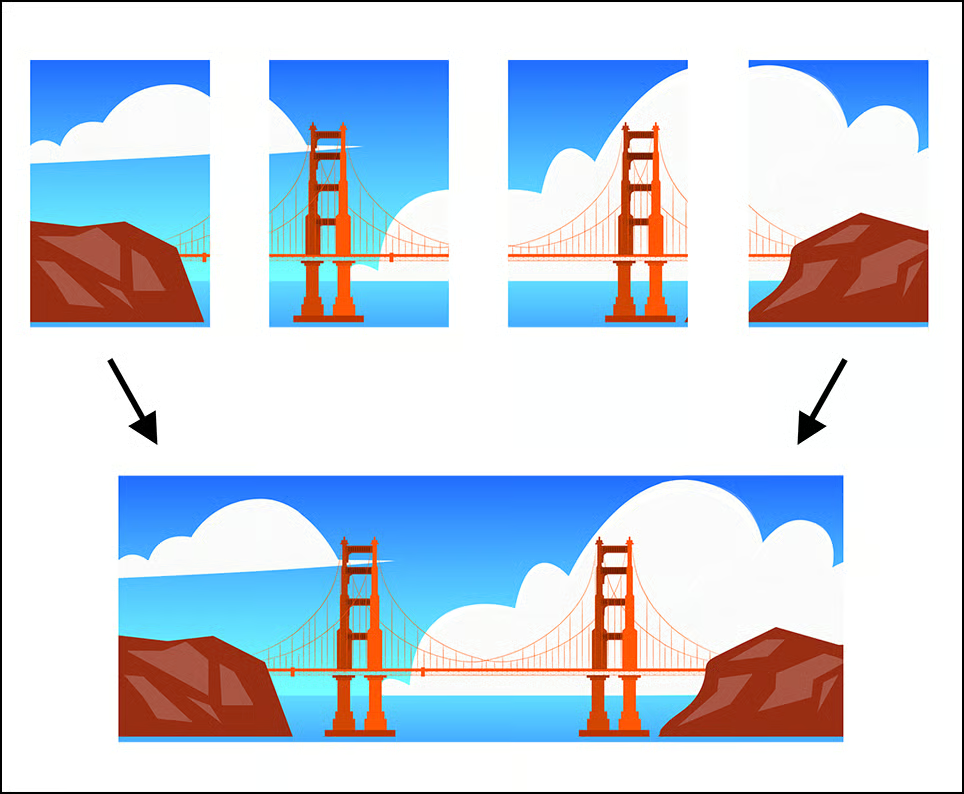
For 360×180 equirectangular output, PTGui is a gold standard for speed and control—set lens type to rectilinear, input EXIF focal length (14 mm), and use enough overlap so the optimizer finds strong control points. Hugin is an excellent open‑source alternative. Rectilinear lenses need more frames than fisheyes, but produce straighter lines and predictable geometry in architecture. Industry norms: 25–30% overlap for fisheye, 20–30% for rectilinear—use the higher end if you have foreground objects or complex textures. For a concise overview of panoramic head setup and shooting principles, see this panoramic head tutorial by 360 Rumors. Panoramic head tutorial
Cleanup & Enhancement
- Nadir/tripod removal: Use PTGui’s Viewpoint Correction or clone/patch in Photoshop. A dedicated nadir shot taken after moving the tripod helps.
- Color and noise: Apply global WB tweaks first, then gentle noise reduction for night shots. Keep micro‑contrast natural to avoid seam emphasis.
- Horizon leveling: Use straight architectural lines or PTGui’s vertical line tool to correct roll/pitch/yaw.
- Output: Export 2:1 equirectangular. Common sizes: 8192×4096 or 10000–12000 px width for web VR. For best compatibility, export sRGB JPEG for web and a high‑bit TIFF master for archive.
If you’re new to PTGui, this review and walkthrough is a helpful companion. PTGui review for creating panoramas
Want a platform‑agnostic guide for DSLR/mirrorless 360 capture and stitching for VR? Meta’s Creator documentation has a clean workflow overview. Using a mirrorless to shoot and stitch a 360 photo
Useful Tools & Resources
Software
- PTGui panorama stitching (fast, powerful optimizer and masking)
- Hugin open source (free, capable for rectilinear and fisheye)
- Lightroom / Photoshop (HDR merge, color, cleanup)
- AI tripod removal tools (content‑aware fill, generative fill)
Hardware
- Panoramic heads (Nodal Ninja, Leofoto, Sunwayfoto)
- Carbon fiber tripods with leveling bases
- Wireless remote shutters
- Pole extensions / car mounts with safety tethers
Disclaimer: Brand names are for search reference. Verify specifications and compatibility on official sites.
Common Mistakes & How to Avoid Them
- Parallax error: Not rotating around the entrance pupil. Solution: Calibrate and mark nodal settings on your rail.
- Exposure flicker: Auto exposure/WB changes per frame. Solution: Manual exposure and fixed WB.
- Tripod shadows and clutter: Missed nadir shot. Solution: Shoot a separate nadir frame and patch it.
- Ghosting from movement: People, trees, or waves shifting. Solution: Take multiple passes and mask the cleanest frames.
- Noise at night: High ISO on a dark scene. Solution: Use tripod, longer shutter, and keep ISO under ~800–1600 on the X‑T5.
- Adapter surprises: With FE to X‑mount, you may lack aperture control. Solution: Verify your adapter supports electronic aperture or use a native Fuji lens.
Field-Proven Scenarios
Indoor Real Estate
Use f/8, ISO 125–200, and bracket ±2 EV to keep window detail. Set a custom WB to avoid flicker from mixed lighting. Two rows of 8 around plus zenith and nadir ensure reliable stitches with clean verticals. Avoid placing the camera too close to furniture edges; give yourself at least 1 m of clearance to reduce parallax challenges.
Outdoor Sunset Landscape
Lock exposure for the sky and consider a 3‑frame bracket if foreground is very dark. For silhouettes, single exposure at ISO 125, f/8, 1/125 s is often enough. Watch flare—slight re‑framing between shots can hide ghosts behind solid objects.
Crowded Plazas or Events
Shoot two complete rotations. In PTGui, mask and blend the least crowded tiles for each angle. Keep shutter at 1/200 s+ to avoid blur and push ISO to 400–800 if needed—the X‑T5 handles this well with minimal noise.
Rooftop/Pole Shooting
Use a lightweight panoramic head and pole, keep exposures short (1/250 s+), and enable a 2 s timer to damp vibrations. Be mindful of wind; don’t overextend the pole if gusts exceed safe limits. Always tether the pole.
Frequently Asked Questions
- Can I shoot handheld panoramas with the Fujifilm X‑T5?
Yes, but it’s a compromise. Use high shutter speeds (1/250 s+), IBIS on, and overlap generously (40–50%). Expect more stitching cleanup. For professional 360s, a tripod and pano head are strongly recommended.
- Is the Sony FE 14mm f/1.8 GM wide enough for single-row 360?
No. At 14mm on APS‑C (~21mm equiv.), vertical coverage is ~58°, so you’ll need at least two rows plus zenith and nadir for a full 360×180. Fisheye lenses can do single-row panoramas, but rectilinear 14mm cannot on APS‑C.
- Do I need HDR for interiors with bright windows?
Usually yes. Bracketing ±2 EV (3–5 frames) preserves window views and shadow detail. Combine brackets per angle before stitching or use PTGui’s built‑in HDR fusion.
- How do I avoid parallax issues?
Calibrate the no‑parallax (entrance pupil) point on your panoramic head and mark the rail for this lens (or your Fuji equivalent). Keep foreground objects at least 1 m away when possible, and increase overlap in tight spaces.
- What ISO range is safe on the X‑T5 in low light?
For critical image quality, aim for ISO 125–800 on a tripod. ISO 1600 is still usable with careful noise reduction. When motion requires faster shutter, ISO 800–1600 is a reasonable ceiling.
- Can I set up Custom Shooting Modes for panoramas?
Yes. Store a “Pano” custom set with manual exposure, fixed WB (e.g., 5600K), RAW, IBIS off (for tripod), EFCS on, MF with focus at hyperfocal, and a 2 s timer. It speeds up field work and keeps settings consistent.
- Does the FE 14mm f/1.8 GM work natively on the X‑T5?
No. It’s a Sony E‑mount lens. Without a reliable electronic adapter that supports aperture control, you cannot effectively use it on the X‑T5. Consider a native Fuji wide-angle alternative for the same workflow.
- What’s the best tripod head for this setup?
A two‑axis panoramic head with fore‑aft and lateral rails (e.g., Nodal Ninja/Leofoto) makes nodal alignment easy. A rotator with click stops (e.g., 45° or 60°) speeds consistent coverage.
For more foundational reading about DSLR/mirrorless panoramas, technique, and lens choices, see this practical Q&A from 360 Rumors. DSLR/mirrorless 360 virtual tour FAQ
Extra Optimization Tips
- File handling: Back up cards after each location. Keep a separate copy of RAWs and stitched masters.
- Color management: Use sRGB for web delivery (VR) and keep a ProPhoto/Adobe RGB master for print work.
- Templates: Save PTGui templates per focal length and head settings; it speeds repeatable results.
- Seam control: Use masks to remove seams on featureless surfaces (blue sky, blank walls) where automatic control points are sparse.
- Resolution planning: For spherical coverage math and optimal sampling, see the PanoTools spherical resolution guidelines. DSLR spherical resolution