
Why This Camera & Lens Are Great for Panoramas
In this guide, we’ll walk through how to shoot panorama with Fujifilm X‑T5 & Pentax DA 10–17mm f/3.5–4.5 ED Fisheye. This combo is compact, high-resolution, and cost‑effective for 360 photos. The X‑T5 brings a 40.2MP APS‑C X‑Trans CMOS 5 HR sensor (approx. 23.5 × 15.6 mm) with ~3.0 µm pixel pitch, 14‑bit RAW, and strong dynamic range (~13.5–14 EV at base ISO). It also has 7‑stop IBIS, excellent for handheld framing and low‑light focusing (turn IBIS off on a tripod).
The Pentax DA 10–17mm is a diagonal fisheye designed for APS‑C. At 10mm it provides ~180° diagonal FOV—perfect for reducing shot count in spherical panoramas. Expect pronounced fisheye distortion by design, but professional stitchers (PTGui/Hugin) handle fisheye projection easily, and you can “defish” to rectilinear outputs later if needed. On the X‑T5, you’ll use a K‑mount to X‑mount adapter. Because the DA 10–17 lacks an aperture ring, pick an adapter with a mechanical aperture control lever, or you’ll be stuck shooting wide open. Manual focus operation is straightforward and recommended for consistent pano sharpness.
This setup balances speed (fewer shots with fisheye), high resolution for detailed VR output, and portability. You get quick capture outdoors and flexible HDR interior work without huge rigs.
Quick Setup Overview
- Camera: Fujifilm X‑T5 — APS‑C 40.2MP X‑Trans CMOS 5 HR; base ISO 125 (extended ISO 64–51,200); 7‑stop IBIS; 14‑bit RAW.
- Lens: Pentax DA 10–17mm f/3.5–4.5 ED Fisheye — diagonal fisheye for APS‑C; very wide FOV at 10mm; moderate CA and purple fringing at edges (improves stopped down to f/8–f/11).
- Estimated shots & overlap (tested starting points):
- 10mm: 6 around at 0° pitch (60° yaw steps) + 1 zenith + 1 nadir (25–30% overlap). For critical interiors, consider 8 around for safer stitching.
- 12–14mm: 8 around + zenith + nadir (25–30% overlap).
- 17mm: 10–12 around + zenith + nadir (30% overlap).
- Difficulty: Intermediate (fisheye workflow is fast, but nodal alignment matters).
Planning & On-Site Preparation
Evaluate Shooting Environment
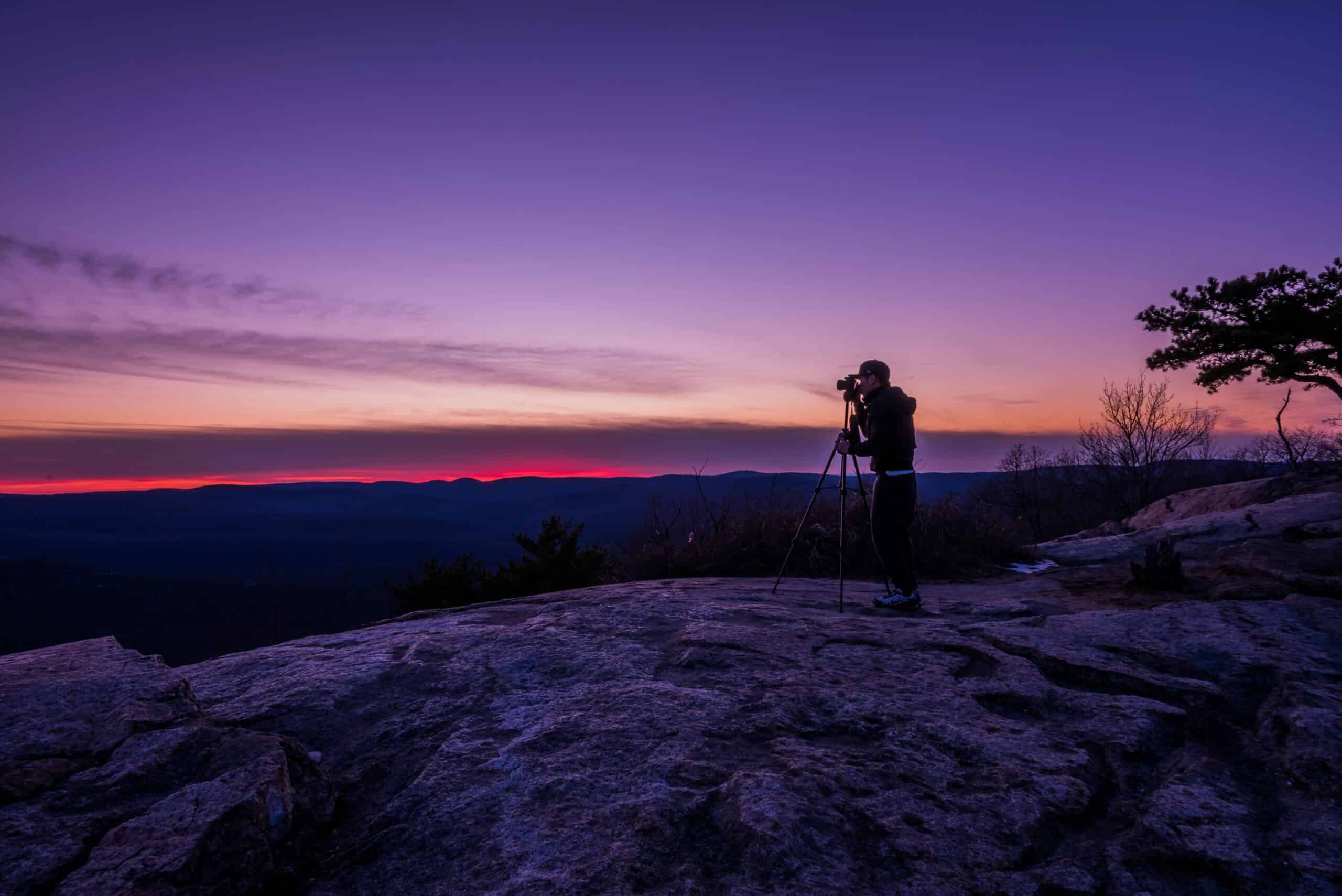
Before you shoot, scan the scene for lighting extremes, reflectivity, and movement. For interiors with windows, plan HDR bracketing. Around glass (offices, showrooms), minimize reflections by placing the lens as perpendicular to the glass as possible and keeping at least a few centimeters away to avoid contact and vibration. Watch for moving people, trees, flags, or traffic that can cause ghosting. Outdoors, note sun position to avoid flare; with a fisheye, even slight backlight can bloom across the frame.
Match Gear to Scene Goals
The X‑T5’s ~14 EV dynamic range at base ISO protects highlights outdoors and preserves shadow detail indoors when you bracket. The Pentax 10–17 fisheye reduces the total frames needed for a full 360, cutting capture time and decreasing the chance of subject movement between frames. Indoors, aim for ISO 125–400 for cleanest files; outdoors, ISO 125 (or ISO 160) yields maximal DR. The fisheye’s distortion is not a problem for stitching—it’s expected and correctly modeled by PTGui/Hugin—but straight lines near the frame edge will bend. If absolute straight edges are essential (e.g., architecture), consider shooting at 12–14mm with more frames or defishing the result in post.
Pre-shoot Checklist
- Batteries charged, large/fast cards formatted; clean front element (fisheyes see everything).
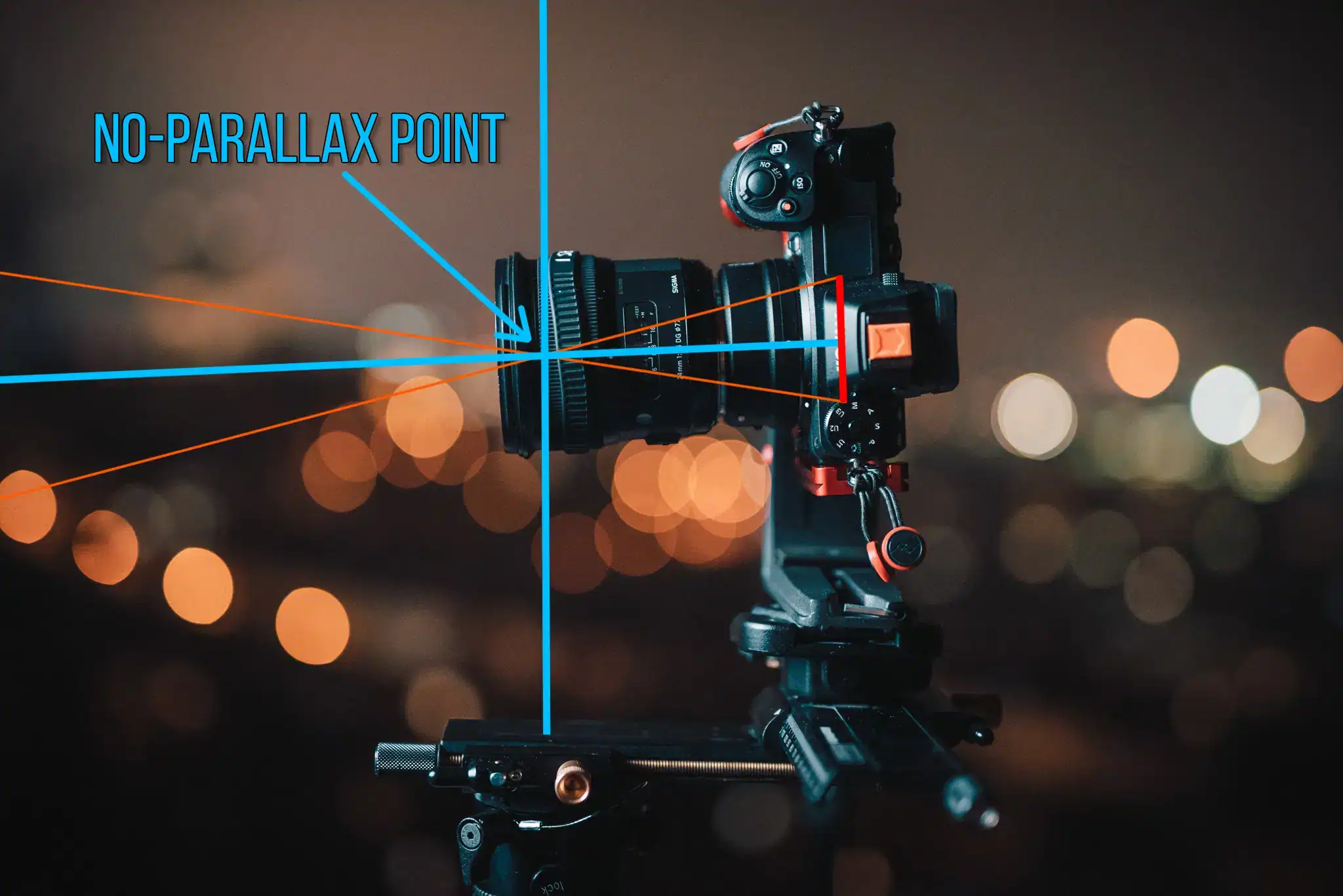
- Tripod leveled; panoramic head calibrated to the lens’s no‑parallax (entrance pupil) point.
- Safety: check wind loads, rooftop railings, pole/car mount tethering. Wear a harness where required.
- Backup workflow: shoot a second safety round (especially for client work or complex interiors).
Essential Gear & Setup
Core Gear
- Panoramic head: lets you rotate around the lens’s entrance pupil to eliminate parallax. For this combo, use an Arca rail to slide the camera so the rotational axis passes through the lens’s entrance pupil at your chosen focal length (10mm recommended for fastest 360).
- Leveling base + stable tripod: fast leveling keeps horizons true and stitching simple.
- Remote trigger or Fujifilm app: fire without touching the camera to avoid shake.
Optional Add-ons
- Pole or car mount: keep the rig light, use a safety tether, and mind wind. Slow, deliberate rotations help.
- Lighting aids: constant lights to lift shadows in dim interiors; avoid mixed color temperatures when possible.
- Weather protection: lens hood ring, rain cover, microfiber for droplets; fisheyes are prone to flare and smudges.
Need a deeper primer on panoramic heads and why the entrance pupil matters? See this panoramic head tutorial for a solid visual walkthrough. Panoramic head basics and tutorial
Step-by-Step Shooting Guide
Standard Static Scenes
- Level tripod & align nodal point: On your rail, adjust until foreground and background points stay in register while you pan. With the X‑T5 + K‑to‑X adapter + DA 10–17 at 10mm, the rail offset typically falls in the 60–75 mm range from the lens mount to the rotation axis. Calibrate your specific adapter and plate.
- Manual exposure & WB: Set M mode, fix shutter/aperture/ISO, and lock white balance (Daylight/Cloudy/Tungsten). Consistency prevents exposure flicker and color shifts across frames.
- Capture sequence: At 10mm, shoot 6 frames around at 60° yaw intervals. Add 1 zenith (tilt up ~60–90°) and 1 nadir (tilt down ~60–90°). Overlap ~25–30% between frames. If in doubt, add two extra around‑row frames for insurance.
- Nadir shot for tripod removal: If possible, move the tripod slightly and shoot a handheld nadir patch at identical exposure to make tripod removal cleaner in post.
HDR / High Dynamic Range Interiors
- Bracket ±2 EV (3–5 frames) to balance bright windows and interior shadows. Keep the same aperture; vary shutter speed only.
- Lock WB and use manual focus to avoid shifts across brackets. Consider ISO 125–200 to maximize DR. Merge brackets per viewpoint before stitching when using PTGui’s exposure fusion or HDR workflow.
Low-Light / Night Scenes
- Use a tripod, turn IBIS off, and choose f/4–f/5.6 with shutter around 1/30–1/2 s depending on scene brightness. On the X‑T5, ISO 125–800 is a safe range; only push beyond ISO 1600 when you must (expect fine‑grain noise but still very usable with noise reduction).
- Trigger remotely; enable a 2 s self‑timer if needed. Review histograms to protect highlights (street lamps, signage).
Crowded Events
- Shoot two passes: first for coverage, second to fill gaps when people move. Ask bystanders to pause briefly if possible.
- In post, blend or mask frames to remove ghosting. Higher overlap helps you pick clean areas.
Special Setups (Pole / Car / Drone)
- Secure gear & tether: The X‑T5 is light, but a fisheye sees the pole and clamps easily—keep them below the lens and align carefully.
- Mind vibrations and wind: use faster shutter (1/200–1/500) and slightly higher ISO (400–800) to freeze motion blur when the rig moves.
Prefer a visual walkthrough? This video gives a solid overview of pano technique.
For an advanced, step-by-step process of setting up a panoramic head for pro 360 output, this guide is also helpful: Set up a panoramic head for high‑end 360 photos
Recommended Settings & Pro Tips
Exposure & Focus
| Scenario | Aperture | Shutter | ISO | Notes |
|---|---|---|---|---|
| Daylight outdoor | f/8–f/11 | 1/100–1/250 | 125–200 | Lock WB (Daylight); avoid flare by shading lens |
| Low light/night | f/4–f/5.6 | 1/30–1/2 s | 125–800 | Tripod & remote; IBIS off on tripod |
| Interior HDR | f/8 | Bracket ±2 EV | 125–400 | Keep aperture fixed; merge HDR per viewpoint |
| Action / moving subjects | f/5.6–f/8 | 1/200+ | 400–800 | Freeze motion; consider two-pass capture |
Critical Tips
- Manual focus at hyperfocal: At 10mm and f/8 on APS‑C, hyperfocal is ~0.6–0.7 m; set focus there to keep everything from ~0.35 m to infinity acceptably sharp.
- Nodal point calibration: Use two vertical objects (near/far) and pan. Adjust the rail until they don’t shift relative to each other. Mark the rail position for 10mm, 12mm, etc., on a tape strip for repeatability.
- White balance lock: Mixed lighting can vary between frames; lock WB to a fixed preset for consistent color, then fine‑tune globally in RAW.
- RAW vs JPEG: Shoot RAW (14‑bit) for maximum latitude in HDR and color grading. JPEG may introduce banding in gradients when stitched.
- IBIS: Turn off IBIS when on a tripod to avoid micro‑jitter; leave it on if you must shoot some frames handheld.
- X‑T5 ISO note: Base ISO 125 gives best DR. Extended ISO 64 can clip highlights sooner; use it only when you need the slower shutter.
Stitching & Post-Processing
Software Workflow
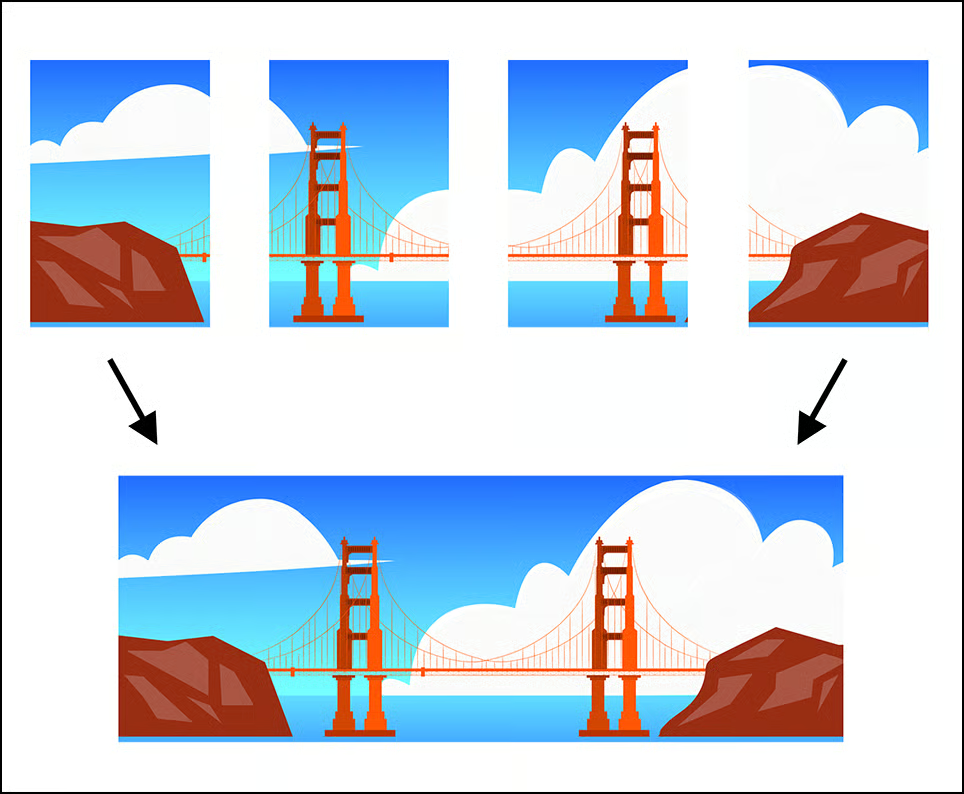
Import your RAWs to Lightroom or Capture One for basic corrections (lens CA removal, identical white balance, exposure normalization). Export 16‑bit TIFFs for stitching. PTGui is a gold standard for mixed fisheye/normal lens stitching and HDR panoramas; Hugin is a capable open‑source alternative. For fisheyes, set lens type to “fisheye” and start with ~150° horizontal FOV at 10mm (PTGui can also estimate FOV). Use 25–30% overlap. Rectilinear lenses need more frames but have straighter edges; fisheyes need fewer frames and stitch quickly, ideal for events and rooftops. PTGui review and why it excels for panos
Cleanup & Enhancement
- Tripod/nadir patch: Export a top/bottom view or use a separate nadir shot. Patch with clone/heal or AI content-aware fills.
- Color & noise: Apply global white balance tweaks; use luminance noise reduction for high‑ISO night frames.
- Leveling: Set horizon and correct roll/yaw/pitch to avoid a tilted world. Most stitchers allow interactive horizon tools.
- Output: For VR platforms, export equirectangular JPEG/TIFF (2:1 ratio). X‑T5 + 6 around usually yields a clean 12k–16k width pano. For reference on spherical resolution vs. capture, see: DSLR spherical resolution (Panotools Wiki)
Disclaimer: software evolves—verify current options and recommended steps in the latest manuals and release notes.
Useful Tools & Resources
Software
- PTGui panorama stitching
- Hugin open source
- Lightroom / Photoshop
- AI tripod removal or content-aware fills
Hardware
- Panoramic heads (Nodal Ninja, Leofoto)
- Carbon fiber tripods with leveling base
- Macro focusing rails for precise nodal alignment
- Wireless remote shutters or Fujifilm app
- Pole extensions / car suction mounts with safety tethers
Note: product names are for search convenience; check official sites for the latest specs and compatibility.
Common Mistakes & How to Avoid Them
- Parallax error → Always align to the entrance pupil; mark your rail settings for 10mm on this lens.
- Exposure flicker → Manual mode only; lock WB and focus. Disable auto‑ISO for consistent exposure.
- Tripod shadows and footprints → Shoot a dedicated nadir plate or patch in post.
- Ghosting from moving subjects → Increase overlap; shoot multiple passes; blend clean areas in post.
- Flare & fingerprints on fisheye → Shade the lens; clean often. Avoid pointing directly at the sun unless intentional.
- Adapter/aperture control → Ensure your K‑to‑X adapter can actuate the DA 10–17 aperture; otherwise you’ll be stuck wide open.
Real-World Scenarios with the X‑T5 + DA 10–17 Fisheye
Indoor Real Estate (Bright Windows)
Mount on a panoramic head, set f/8, ISO 125–200, and bracket ±2 EV (3–5 shots). Shoot 8 around at 12–14mm if you want straighter verticals, or stay at 10mm (6 around) if speed matters. Merge HDR per view, then stitch. Check for chromatic aberration at window edges; remove CA in RAW before stitching for cleaner control points.
Outdoor Sunset (High Dynamic Range)
Keep ISO at 125 for max DR, f/8–f/11, and bracket ±2 EV. Start with the sun hidden behind an object to reduce flare in at least one frame. In PTGui, blend exposures with exposure fusion to maintain sky color while keeping foreground detail.
Crowded Events (Fast Turnaround)
Set the lens to 10mm, 6 around + zenith/nadir, ISO 400–800, f/5.6–f/8, 1/200–1/500 s. Do two passes—first for coverage, second for clean background areas. This keeps shooting time per pano under a minute, minimizing motion differences.
Rooftop or Pole Shooting
Use a lightweight pole, fast shutter, and tether. Lock everything down. Expect some stitching challenges if the pole flexes—capture an extra overlap shot per direction for redundancy. Avoid strong wind; fisheyes are unforgiving with flare from city lights and reflective facades.
Frequently Asked Questions
- Can I shoot handheld panoramas with the Fujifilm X‑T5?
Yes for partial panos and quick tests, but for full 360° with clean stitching, use a tripod and panoramic head. Handheld introduces parallax and alignment errors, especially with nearby foreground objects.
- Is the Pentax DA 10–17mm wide enough for a single‑row 360?
At 10mm on APS‑C it’s a diagonal fisheye (~180° diagonal FOV). Plan 6 shots around plus zenith and nadir. For more conservative overlap or interior precision, use 8 around. Single‑row works great for most scenes.
- Do I need HDR for interiors with bright windows?
Usually yes. Bracket ±2 EV (3–5 frames) to preserve highlights outside while keeping interior detail. Merge HDR per viewpoint and then stitch.
- How do I avoid parallax issues with this combo?
Use a panoramic head and calibrate the entrance pupil at your focal length. With the X‑T5 + K‑to‑X adapter + DA 10–17 at 10mm, expect a rail offset roughly in the 60–75 mm range—fine‑tune using near/far objects until they don’t shift during rotation.
- What ISO range is safe on the X‑T5 in low light?
Stay at ISO 125–400 on a tripod for best DR; ISO 800–1600 remains very usable with modern noise reduction. Avoid extended ISO 64 if highlight protection is critical.
Safety, Limitations & Workflow Confidence
Always tether your camera on rooftops, poles, or car mounts. Check the wind and never leave the rig unattended. The DA 10–17 fisheye’s front element is exposed; protect it with a cap when moving. Accept the lens’s character: some CA and edge softness at wider apertures; stop down to f/8–f/11 for best uniformity. Build trust in your deliverables: shoot a second coverage round, back up to two cards/drives, and keep your pano head marks for quick re‑setup. If you want a deeper end‑to‑end DSLR/mirrorless 360 workflow overview, this guide is a useful read: Using a mirrorless to shoot and stitch a 360 photo
Visual Examples
Further reading on technique and troubleshooting from working pros: Best techniques to take 360 panoramas (community Q&A)