
Why This Camera & Lens Are Great for Panoramas
The Fujifilm X-T5 is a 40.2MP APS-C mirrorless camera built around the X-Trans CMOS 5 HR sensor (approx. 23.5 × 15.7 mm). With its high resolution, crisp color science, deep bracketing options, and robust in-body image stabilization (IBIS), it’s an exceptional body for high-quality panoramic and 360 photography. Its pixel pitch is roughly 3.0 µm, which translates to excellent detail capture but also means careful exposure and low-ISO discipline pay off in low light. Dynamic range is strong (over 13 EV at base ISO), giving ample latitude for HDR panoramas when needed.
The Olympus M.Zuiko Digital ED 8mm f/1.8 Fisheye PRO is a top-tier diagonal fisheye designed for Micro Four Thirds (MFT) bodies, covering 180° diagonally with excellent sharpness and a bright maximum aperture for low-light interiors and night skies. As a diagonal fisheye, it drastically reduces the number of shots required for a full 360×180, compared with rectilinear lenses.
Important compatibility note: the Olympus 8mm f/1.8 is a native MFT lens and is not directly compatible with Fujifilm X-mount. There is no mainstream electronic adapter that provides full aperture/focus control from X-T5 to MFT lenses, and the lens’s MFT image circle does not cover Fuji’s larger APS-C sensor. Practically, you have two working paths: 1) use the Olympus 8mm on an MFT body for shooting, then stitch on your X-T5 workflow machine; or 2) choose a native X-mount fisheye (e.g., Samyang 8mm f/2.8 UMC II, TTArtisan 7.5mm f/2) to achieve near-identical coverage and shot counts on the X-T5. The shooting technique, overlap logic, and stitching workflow in this guide apply identically to a diagonal fisheye in the 7.5–8mm range on APS-C.
Quick Setup Overview
- Camera: Fujifilm X-T5 — APS-C 40.2MP (X-Trans CMOS 5 HR), base ISO 125, superb DR and 7-stop IBIS for stabilization.
- Lens: Olympus 8mm f/1.8 PRO Fisheye — diagonal fisheye (180° diagonal FOV on MFT), fast aperture, excellent sharpness and low coma; note: MFT-only native mount. For X-T5, use a native X-mount fisheye with similar FOV.
- Estimated shots & overlap (diagonal fisheye 7.5–8mm on APS-C or 8mm on MFT): 6 around at 60° yaw spacing (~30% overlap), plus 1 zenith, 1–2 nadir (for tripod removal). Advanced users can manage 4 around in simple scenes but 6 is safer.
- Difficulty: Moderate — easy on location once nodal point is calibrated, moderate in post for nadir cleanup and HDR interiors.
Planning & On-Site Preparation
Evaluate Shooting Environment
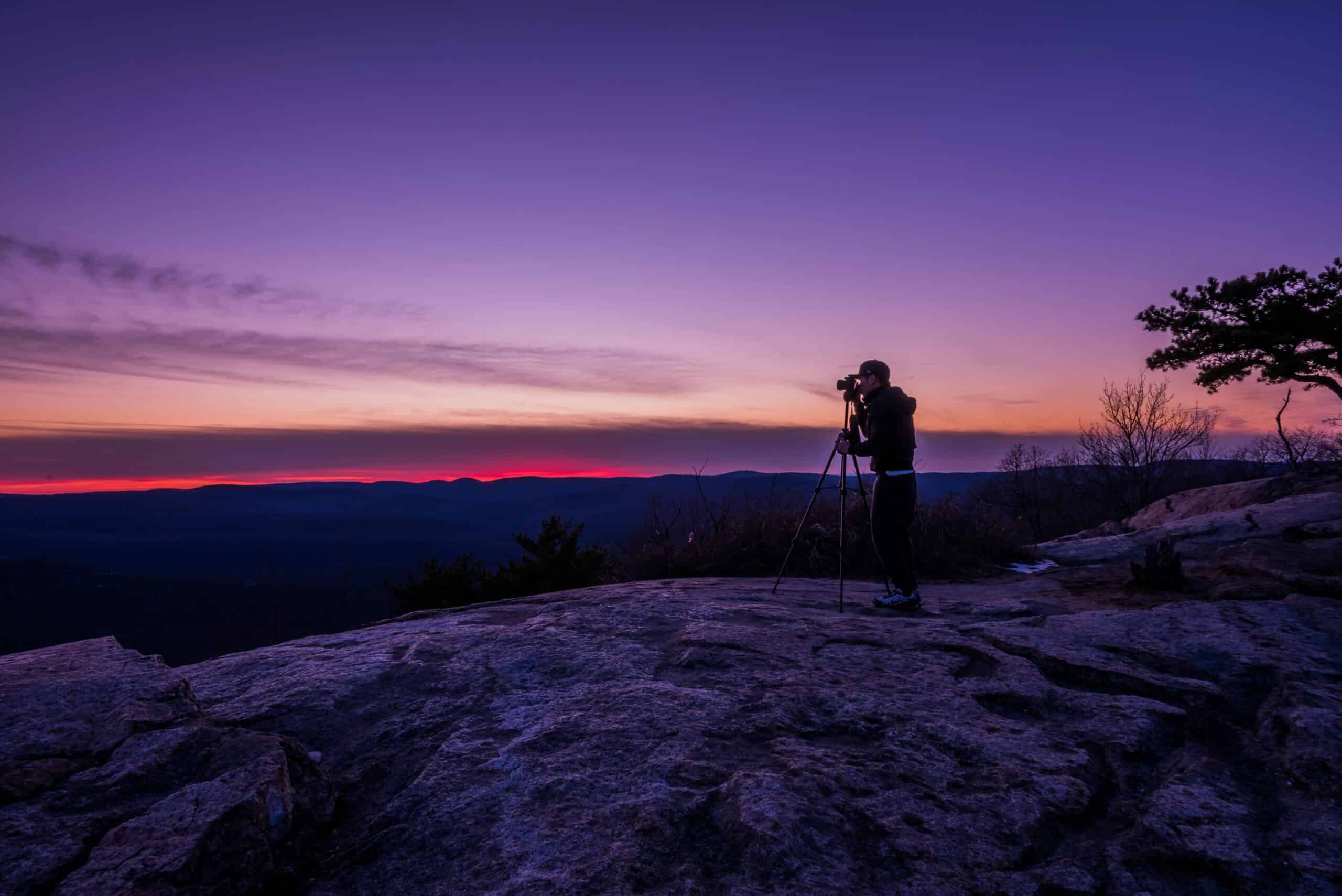
Walk the scene first. Note moving objects (people, cars, trees in wind), reflective surfaces (glass, polished floors), intense point lights (spotlights, LEDs), and the sun’s position. For glass, shoot as perpendicular as possible and keep a small gap to reduce flare. If shooting through windows, use a rubber lens hood and get as close to the glass as practical to minimize reflections. Indoors, look for mixed light sources; you’ll want to lock a consistent white balance across the entire pano.
Match Gear to Scene Goals
The X-T5’s 40MP sensor captures superb detail for big 360s and gigapixel crops. For indoor scenes and sunsets where highlight/shadow extremes occur, the sensor’s DR helps, but bracketing (HDR) is often the difference between a good and a clean, professional result. With a diagonal fisheye, you’ll shoot fewer frames—which speeds up capture and reduces ghosting risk in busy locations. The Olympus 8mm f/1.8 is superb for low light when used on an MFT body; if you’re using the X-T5, choose a comparable X-mount fisheye to maintain the same shooting logic and shot counts.
Pre-shoot Checklist
- Power and media: 2+ batteries, UHS-II cards; 40MP RAWs add up quickly.
- Optics: Clean front element; fisheye flare multiplies dust and smudges.
- Support: Leveling base, calibrated panoramic head, and remote trigger.
- Safety: Watch wind loads on rooftops and poles; use a tether/leash on high places and near traffic.
- Backup: If time permits, shoot a second full rotation; redundancy saves panos.
Essential Gear & Setup
Core Gear
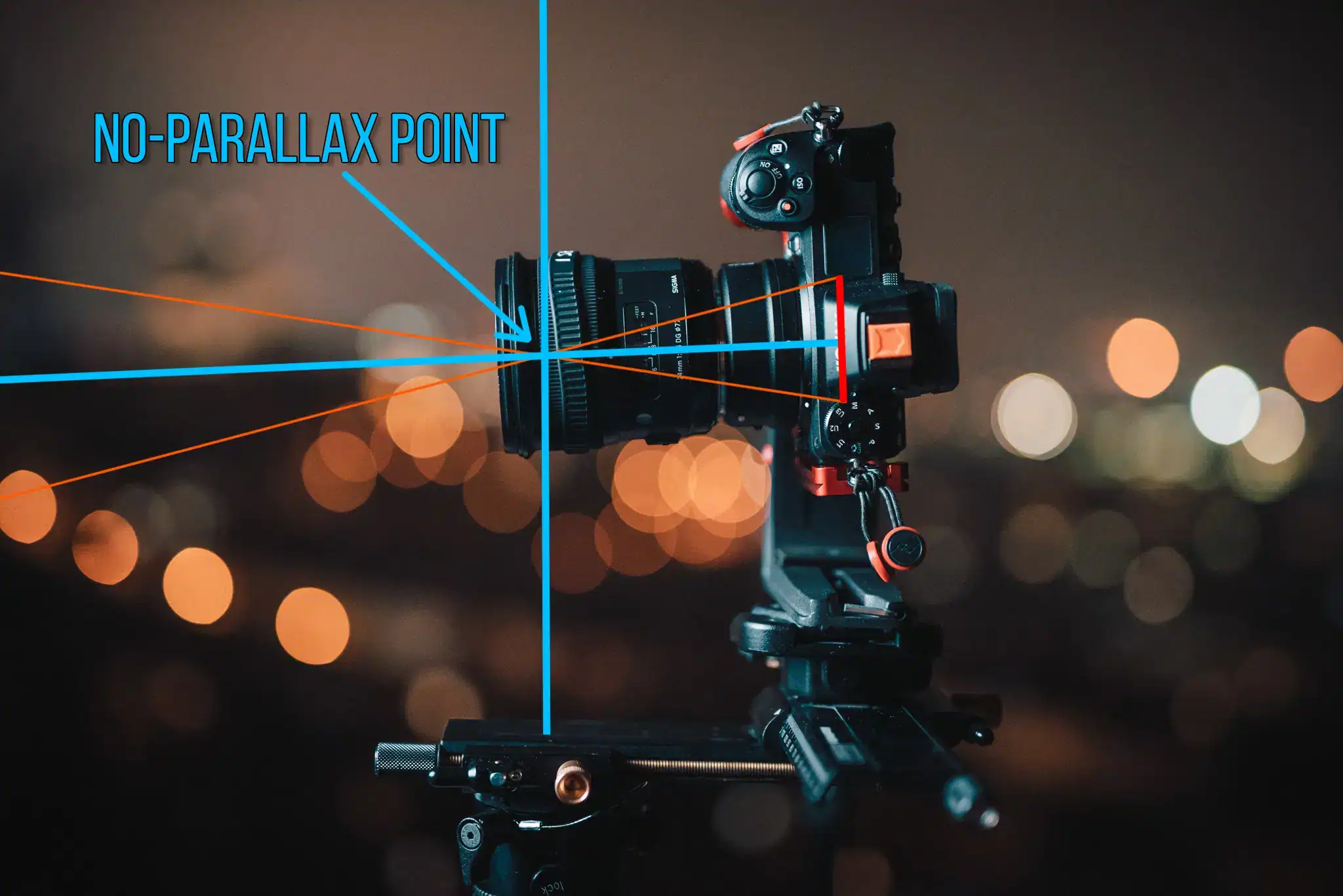
- Panoramic head: A proper pano head lets you rotate around the lens’s no-parallax point (entrance pupil) to eliminate foreground/background shifts and make stitching reliable.
- Stable tripod with leveling base: Leveling the head prevents “stair-stepping” horizons and speeds up stitching.
- Remote trigger or app: Use Fujifilm Camera Remote or a wired release to reduce vibration and maintain cadence for HDR brackets.
Optional Add-ons
- Pole or car mount: Capture above crowds or from roof racks. Always tether and check torque clamps; wind gusts can snap mounts.
- Lighting aids: Small LED panels or bounced flashes for dark interiors—avoid mixing color temps or lock WB carefully.
- Weather protection: Rain cover and microfiber cloths; fisheyes see everything, including droplets.
Step-by-Step Shooting Guide
Standard Static Scenes
- Level tripod and align nodal point: On your pano head, slide the camera forward/backward and test with a near object (1–2 m) against a distant background while panning. Adjust until the relative position of near and far elements stays fixed during rotation.
- Manual exposure and locked white balance: Set M mode, choose a fixed WB (Daylight/Cloudy or a Kelvin value). This prevents flicker and color shifts between frames.
- Capture sequence with overlap: With a diagonal fisheye 7.5–8mm, shoot 6 frames around at 60° yaw spacing with about 30% overlap. Then shoot 1 zenith (tilt up) and 1–2 nadir shots. Keep a consistent rotation rhythm; use the head’s click-stops if available.
- Nadir shot for tripod removal: Tilt down and shoot the ground. If your head allows an offset nadir (reposition camera over the tripod hole), you’ll get a cleaner patch.
HDR / High Dynamic Range Interiors
- Bracket ±2 EV (3 or 5 frames): This tames bright windows and deep shadows in one stitchable pano. For X-T5, use AE bracketing in manual exposure with fixed shutter base and ISO locked.
- Keep WB locked: Mixed bulbs and daylight cause shifts across brackets; set a fixed Kelvin (e.g., 4000–5000K) if you plan to balance later in RAW.
- Maintain cadence: Fire each bracket set in the same order at each yaw position to make bulk HDR-merge easier later.
Low-Light / Night Scenes
- Use a stable mount, longer shutters: Prefer ISO 125–400 on the X-T5 for clean files. If motion blur is a risk, compromise at ISO 800–1600. Fisheye curvature hides slight motion more gracefully than rectilinear lenses.
- Turn IBIS off on a tripod: IBIS can introduce micro-wobble with long exposures on a locked-down rig. Use a remote and the 2s timer if you’re cable-free.
- Watch for LED flicker: Prefer mechanical shutter near artificial lighting; electronic shutter may band under certain PWM frequencies.
Crowded Events
- Two-pass method: First pass quickly to “lock in” the pano. Second pass, wait for gaps in traffic and shoot replacement frames where motion was worst.
- Mask in post: In PTGui or similar, use masking tools to pick the cleanest subject from overlapping frames.
Special Setups (Pole / Car / Drone)
- Secure gear and tether: On poles, add a line to your belt or tripod; on cars, use safety straps and check all clamps before moving.
- Rotate slower, use faster shutters: Vibration smears detail. Favor 1/250s+ if you’re moving or in wind, and add redundancy frames for safety.
Recommended Settings & Pro Tips
Exposure & Focus
| Scenario | Aperture | Shutter | ISO | Notes |
|---|---|---|---|---|
| Daylight outdoor | f/8–f/11 | 1/100–1/250 | 125–200 | Lock WB (Daylight or 5600K) |
| Low light/night | f/4–f/5.6 | 1/15–1/60 | 200–800 (1600 if needed) | Tripod + remote; prefer mechanical shutter under LED lighting |
| Interior HDR | f/8 | Bracket ±2 EV | 125–400 | Balance windows vs lamps; keep cadence consistent |
| Action / moving subjects | f/5.6–f/8 | 1/200+ | 400–800 | Freeze motion; consider two-pass capture |
Critical Tips
- Manual focus at hyperfocal: For an 8mm at f/8 on APS-C, hyperfocal is roughly 0.4–0.5 m. Set focus just past 0.5 m and you’ll carry sharpness from near to infinity.
- Nodal alignment: Once you find the no-parallax point, mark your rail positions. Keep a note on your phone for quick repeatability.
- White balance lock: Avoid Auto WB for panos; it leads to color drift across frames and makes blending harder.
- RAW first: 40MP RAWs give you headroom for HDR merge and color matching. The X-T5’s detail is best preserved in RAW workflows.
- Turn off IBIS on tripod: Prevents micro-shake blur on long exposures.
- Drive mode discipline: For HDR, use exposure bracketing with continuous drive so each yaw position completes its bracket set before you rotate.
Stitching & Post-Processing
Software Workflow
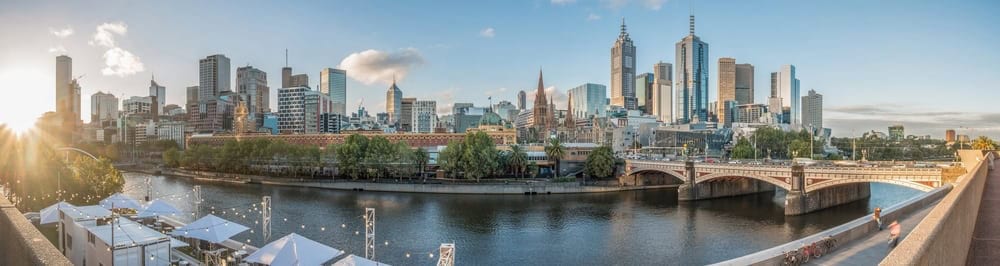
For fisheye panoramas, PTGui has industry-leading control point detection, masking, and HDR fusion tools, making it fast to stitch 6-around fisheye sets into a perfect equirectangular. Hugin is a strong open-source alternative. Lightroom/Photoshop can stitch simpler non-360 panos, but dedicated tools handle 360 projections, horizon leveling, and nadir patching more efficiently. Recommended overlap for diagonal fisheye is ~30%; for rectilinear lenses, plan 20–25% with more frames. A fisheye reduces shot count and speeds capture; rectilinear offers less distortion at the edges but requires many more frames. For tool comparisons and deep dives, see a review of PTGui’s panorama capabilities. PTGui review: strengths and workflow
Cleanup & Enhancement
- Nadir patching: After stitching, patch the tripod hole using PTGui’s Viewpoint optimization or clone/heal in Photoshop. AI cleanup tools can help but verify geometry.
- Color and noise: Match color across the full pano and apply gentle noise reduction for night scenes. X-T5 RAWs handle denoise well if you keep ISO modest.
- Level the horizon: Use the stitcher’s yaw/pitch/roll tools to straighten floors and horizons for a professional feel.
- Export formats: For VR viewers, export 8K–12K equirectangular JPEG (quality 90–95). Keep a 16-bit TIFF master for archival and future edits.
Want an end-to-end DSLR/mirrorless-to-360 workflow reference? Meta’s guide offers a concise, practical overview from capture to stitch. Using a mirrorless to shoot and stitch a 360 photo
If you’re new to pano heads, this type of tutorial makes calibrating the no-parallax point straightforward before your first real shoot. For a written primer, this panoramic head tutorial is also solid. Panoramic head setup basics
Useful Tools & Resources
Software
- PTGui panorama stitching
- Hugin (open-source)
- Lightroom / Photoshop for RAW and finishing
- AI tools for tripod/nadir removal
Hardware
- Panoramic heads (Nodal Ninja, Leofoto)
- Carbon fiber tripods with leveling bases
- Wireless remote shutters
- Pole extensions / car mounts (with safety tethers)
Disclaimer: Brand names are for search/reference; check manufacturer specs for compatibility and the latest features.
Common Mistakes & How to Avoid Them
- Parallax error: Always align the nodal point before a job. A 3–5 minute calibration saves hours in post.
- Exposure flicker: Manual exposure and fixed white balance across all frames—no exceptions.
- Tripod shadows and footprints: Shoot proper nadir frames or be ready to patch convincingly.
- Ghosting from movement: Use two-pass capture and stitcher masking to prefer the cleanest frames.
- High-ISO noise: With the X-T5’s small pixel pitch, keep ISO low on a tripod; lengthen shutter instead.
- Rushing zenith/nadir: Don’t skip them—clean caps complete the sphere and simplify viewer integration.
Real-World Case Studies
Indoor Real Estate (Bright Windows)
Set f/8, ISO 125–200. Use ±2 EV bracketing (3–5 frames). Six around plus zenith/nadir. Keep WB at a fixed Kelvin (e.g., 4800K). In PTGui, HDR-merge to a 32-bit panorama and tone map gently to retain window detail with natural interior contrast.
Outdoor Sunset Panorama
Meter for mid-tones near the sun but keep highlight headroom; bracket ±2 EV if needed. Use 6-around quickly as the sun drops. For flare, shield the sun with your hand just outside the frame and take a second clean frame; mask out flare later.
Crowded Event Floor
Use 1/200s, f/5.6–f/8, ISO 400–800. Two-pass method to capture “clean” plates. Mask in stitcher to remove duplicates and ghosting. Fisheye helps compress the workflow: fewer frames, fewer moving boundaries.
Rooftop or Pole Shooting
Favor 1/250–1/500s, f/5.6–f/8, ISO 400–800. Tether the rig, and if possible use a monopod-style pano head for quick yaw steps. Wind is your enemy—rotate slowly and shoot extra safety frames.
Compatibility: Fujifilm X-T5 with Olympus 8mm f/1.8 PRO
Honest limitation: the Olympus 8mm f/1.8 is an MFT lens with electronic aperture/focus control and a smaller image circle. On the X-T5 (APS-C, Fuji X-mount), there is no mainstream adapter that preserves full control and covers the sensor without severe vignetting. For practical work:
- Best approach: Use the Olympus 8mm on an MFT body (OM System/ Panasonic) and follow this guide’s fisheye workflow.
- Or, on the X-T5, choose a native diagonal fisheye like Samyang 8mm f/2.8 or TTArtisan 7.5mm f/2. You will get nearly identical shot counts and overlap, and full camera control.
The rest of the guide assumes diagonal fisheye behavior at ~8mm, which is what dictates the pano shot pattern and overlap.
Frequently Asked Questions
-
Can I shoot handheld panoramas with the Fujifilm X-T5?
Yes, for partial panos. For full 360×180 with a fisheye, it’s possible but risky: parallax errors and poor leveling lead to stitching issues. Use a lightweight pano head and a compact tripod whenever quality matters.
-
Is the Olympus 8mm f/1.8 wide enough for a single-row 360?
Yes—on an MFT body, expect 6 shots around plus zenith and nadir for reliable coverage with ~30% overlap. On APS-C with a native 7.5–8mm diagonal fisheye, the same 6-around pattern applies.
-
Do I need HDR for interiors with bright windows?
Usually. Bracketing ±2 EV (3–5 frames) preserves both window views and interior shadows, creating a professional, natural-looking result after tone mapping.
-
How do I avoid parallax issues?
Calibrate and mark the no-parallax point on your pano head for your specific camera+fisheye combo. Then always rotate around that point. A short refresher on pano heads can help cement the process. Panoramic head tutorial
-
What ISO range is safe on the X-T5 in low light?
On a tripod, aim for ISO 125–400 whenever possible and extend shutter time. If you must freeze motion or deal with wind, ISO 800–1600 is workable, but plan for careful denoising in post.
-
Can I set up custom shooting modes for panos?
Yes. Assign a Custom mode that locks manual exposure, fixed WB, manual focus, self-timer/remote, and your preferred bracketing. It lets you switch from “snapshot” to “pano” in seconds.
-
How do I reduce flare with a fisheye?
Avoid including the sun or strong lamps directly; shade the lens when possible. Clean the front element meticulously. If flare is unavoidable, capture a second shaded frame and mask in post.
-
Best panoramic head for this setup?
Any precise two-axis head with fore-aft and lateral adjustment (e.g., Nodal Ninja or a solid Leofoto kit) will work. Look for click-stops, Arca clamps, and a stable vertical rail.
References and Further Reading
For an end-to-end DSLR/mirrorless 360 capture and stitch overview, this is a concise guide with platform-specific best practices. Using a mirrorless to shoot and stitch a 360 photo
Want to understand different focal lengths and overlap logic more deeply? This primer helps visualize coverage trade-offs. Panoramas, focal lengths, and stitching basics