
Why This Camera & Lens Are Great for Panoramas
If you want to know how to shoot panorama with Fujifilm X-T5 & Laowa 8-15mm f/2.8 FF Zoom Fisheye, you’ve picked a powerful combo for 360 photo work. The X-T5’s 40.2MP APS-C X-Trans CMOS 5 HR sensor delivers superb detail with a pixel pitch of roughly 3.0 µm and about 13 stops of usable dynamic range at base ISO (ISO 125). That means clean files, smooth gradients in skies, and enough latitude to recover shadow and highlight detail—crucial for HDR panorama and low-light shooting. Its 5-axis IBIS (rated up to ~7 stops) helps you handhold when needed, while a rigid tripod will always be best for critical stitching.
The Laowa 8-15mm f/2.8 is a full-frame manual fisheye zoom. On the X-T5 (APS-C), it behaves as a diagonal fisheye: at the wider end you’ll approach a 180° diagonal field of view (varies slightly by focal length and projection), which drastically reduces the number of shots needed for a full 360°. Being a fisheye, it introduces intentional distortion—great for coverage, and completely manageable in stitching software that understands fisheye projection (PTGui, Hugin). The lens is fully manual (focus and aperture), which is ideal for panoramas: set-and-forget sharpness and consistent exposure across the entire sequence.
Mount compatibility note: The Laowa 8-15mm f/2.8 FF Zoom Fisheye is available in several mounts. For the X-T5, the most practical option is the Canon EF or Nikon F version adapted to Fuji X-mount via a simple mechanical adapter. Since the lens is manual, electronic communication isn’t required; just make sure the adapter maintains correct register and is well-machined to avoid tilt.
Quick Setup Overview
- Camera: Fujifilm X-T5 — APS-C (23.5×15.6 mm), 40.2MP X-Trans CMOS 5 HR, ~13 EV dynamic range at base ISO, 5-axis IBIS.
- Lens: Laowa 8-15mm f/2.8 FF Zoom Fisheye — manual diagonal fisheye on APS-C, very sharp stopped to f/5.6–f/8, low lateral CA for a fisheye, minimal focus breathing.
- Estimated shots & overlap (tested guidance on APS-C):
- At 8mm: 6 around (every 60°) + 1 zenith + 1 nadir, 30–35% overlap.
- At 10–12mm: 8 around (every 45°) + zenith + nadir, ~30% overlap.
- At 15mm: 10–12 around + zenith + nadir, 25–30% overlap.
- Difficulty: Moderate (easy once the nodal point is calibrated).
Planning & On-Site Preparation
Evaluate Shooting Environment
Look for fast-moving subjects (traffic, people), reflective surfaces (glass, polished floors, water), and bright point sources (sun, spotlights) that can create flare or stitching issues. If shooting through glass, place the front element as close as possible (1–2 cm) and shoot perpendicular to the surface to reduce reflections and ghosting. Wind and vibration matter; on rooftops or bridges, bring a heavier tripod and consider a hook-weight.
Match Gear to Scene Goals
The Fujifilm X-T5 & Laowa 8-15mm are a strong pair for 360 scenes because the X-T5 tolerates ISO 100–800 with very clean results and remains usable at ISO 1600–3200 with careful noise reduction. The fisheye advantage means fewer frames—even in tight interiors. For real estate or museums, this reduces the amount of time people can wander into the frame; for outdoor sunsets, fewer exposures minimize changing light between frames.
Pre-shoot Checklist
- Charge batteries and format fast UHS-II cards; shoot RAW+JPEG for quick field checks.
- Clean lens front element (fisheyes see everything); check the sensor for dust.
- Level your tripod; verify panoramic head scale markings and nodal alignment.
- Safety first: tether gear when working on rooftops or with a pole; check wind gusts.
- Plan a backup: capture a second full round in case someone walks through or a frame blurs.
Essential Gear & Setup
Core Gear
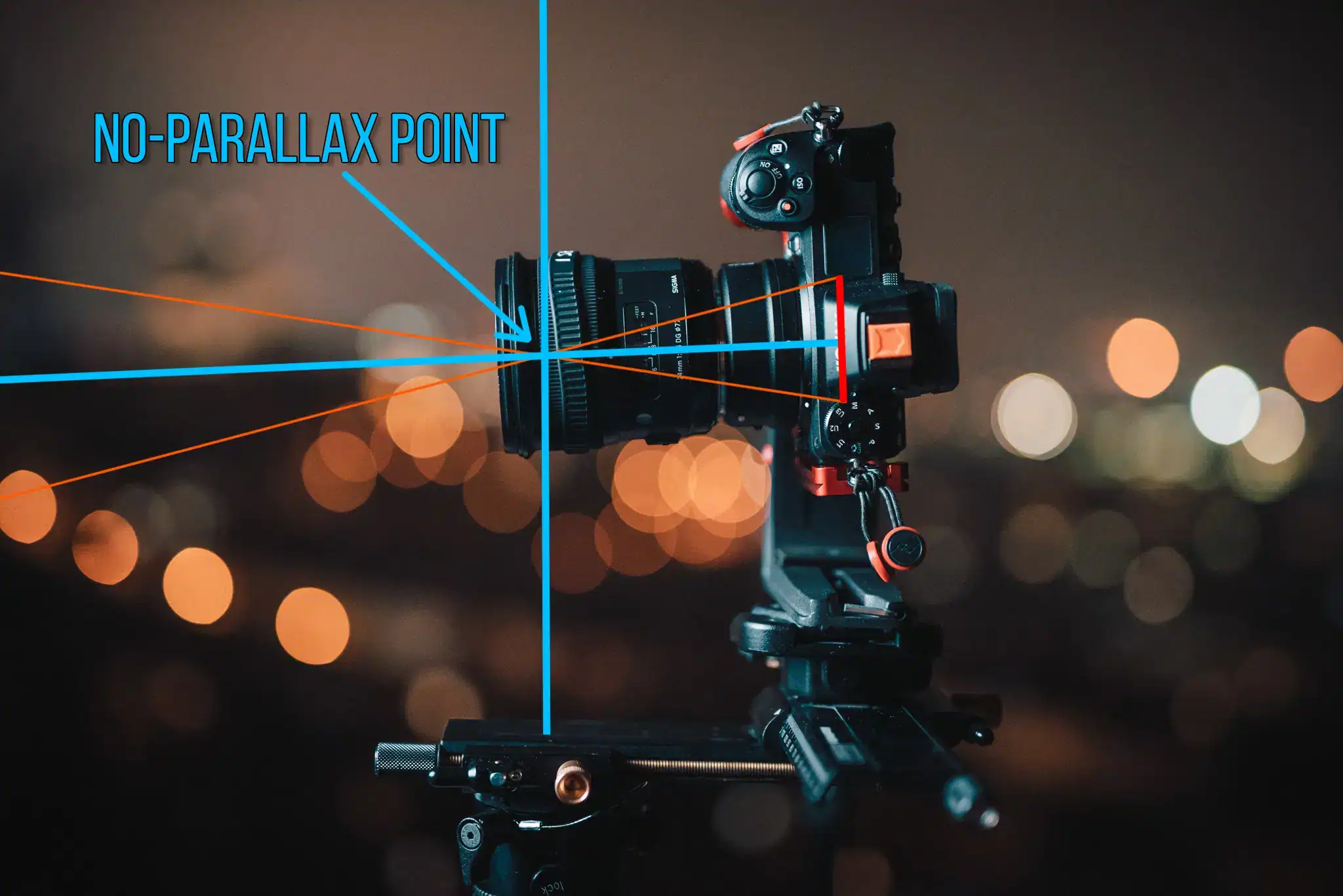
- Panoramic head: Allows rotation around the lens’s no-parallax point (aka entrance pupil) so near and far objects remain aligned across frames. This is mandatory for clean stitches in interiors or scenes with foreground elements.
- Stable tripod with leveling base: A leveling base lets you level once and rotate without re-adjusting legs—faster, safer, and more consistent horizons.
- Remote trigger or app: Use a cable release or the Fujifilm app to prevent vibration at longer shutter speeds and remove the need to touch the camera.
Optional Add-ons
- Pole or car mount: Use a safety tether; avoid high winds. For car rigs, pad contact points and drive slowly to reduce vibration.
- Lighting aids: For dark interiors, small LED panels bounced off walls/ceilings can even out contrast before bracketing.
- Weather protection: A simple rain cover and microfiber cloth are critical; fisheyes are flare-prone and water drops will show.
Step-by-Step Shooting Guide
Standard Static Scenes
- Level and align the nodal point: Use your panoramic head’s fore-aft slider. Aim at two vertical objects—one near, one far—and rotate the camera. Adjust the slider until the near object remains stationary relative to the far object, indicating minimal parallax.
- Manual exposure and white balance: Set M mode and lock a Kelvin WB (e.g., 5200K daylight outdoors, 3000–4000K indoors). Consistency prevents visible seams and color shifts.
- Capture sequence with overlap:
- 8mm: 6 around at 60° steps; then 1 zenith, 1 nadir.
- 10–12mm: 8 around at 45°; then zenith and nadir.
- 15mm: 10–12 around; then zenith and nadir.
- Take a clean nadir: After the main set, move the tripod slightly and shoot the ground with the same exposure to patch out the tripod in post.
HDR / High Dynamic Range Interiors
- Bracket ±2 EV (3 or 5 frames). The X-T5’s dynamic range is strong, but windows vs. shadows often need bracketing for natural results.
- Lock WB and focus: Keep everything manual so each bracket within a frame matches, and every frame in the panorama remains consistent.
- Keep overlap identical for each bracket. Fire in bursts per position before rotating to the next yaw angle.
Low-Light / Night Scenes
- Use longer exposures on a tripod; turn IBIS OFF to avoid micro-vibrations on rigid support. Enable Electronic First Curtain Shutter (EFCS) to reduce shutter shock.
- ISO guidelines: ISO 100–400 for clean files; ISO 800–1600 still solid; ISO 3200 usable with noise reduction and careful bracketing.
- Trigger remotely; enable a 2s timer if you must touch the camera.
Crowded Events
- Shoot two passes: First for complete coverage; second to capture empty moments for problem patches.
- Use shorter shutter speeds (1/125–1/250) and slightly higher ISO to freeze motion; mask moving subjects later in post.
Special Setups (Pole / Car / Drone)
- Pole shooting: Keep rotations slow; enable a higher shutter speed to combat sway. Always use a safety tether and avoid crowded areas.
- Car mounts: Secure suction mounts on clean surfaces; add a fail-safe tether. Park for static 360s whenever possible for higher quality.
Recommended Settings & Pro Tips
Exposure & Focus
| Scenario | Aperture | Shutter | ISO | Notes |
|---|---|---|---|---|
| Daylight outdoor | f/8–f/11 | 1/100–1/250 | 100–200 | Lock WB (daylight). Use hyperfocal manual focus. |
| Low light/night | f/4–f/5.6 | 1/30–1/60 (on tripod) | 400–800 | Remote trigger; IBIS off on tripod; consider multi-shot averaging. |
| Interior HDR | f/8 | Bracket ±2 EV | 100–400 | Prioritize base ISO and longer shutters for cleaner shadows. |
| Action / moving subjects | f/5.6–f/8 | 1/200+ | 400–800 | Two-pass strategy to simplify masking. |
Critical Tips
- Manual focus at hyperfocal: At 8–10mm, set f/8 and focus a few feet in front; enable focus peaking to confirm. Tape the ring if it’s loose.
- Nodal point calibration: Mark the panoramic rail position for 8mm, 10mm, 12mm, and 15mm on tape or with a paint marker. This saves time on location.
- White balance lock: Pick a Kelvin value. Avoid Auto WB; it causes color banding across frames.
- RAW first: The X-T5’s 14-bit RAW files give headroom for highlight recovery and better de-noising than JPEG.
- IBIS: Leave it ON for handheld tests, OFF when tripod-mounted for consistent micro-sharpness.
Stitching & Post-Processing
Software Workflow
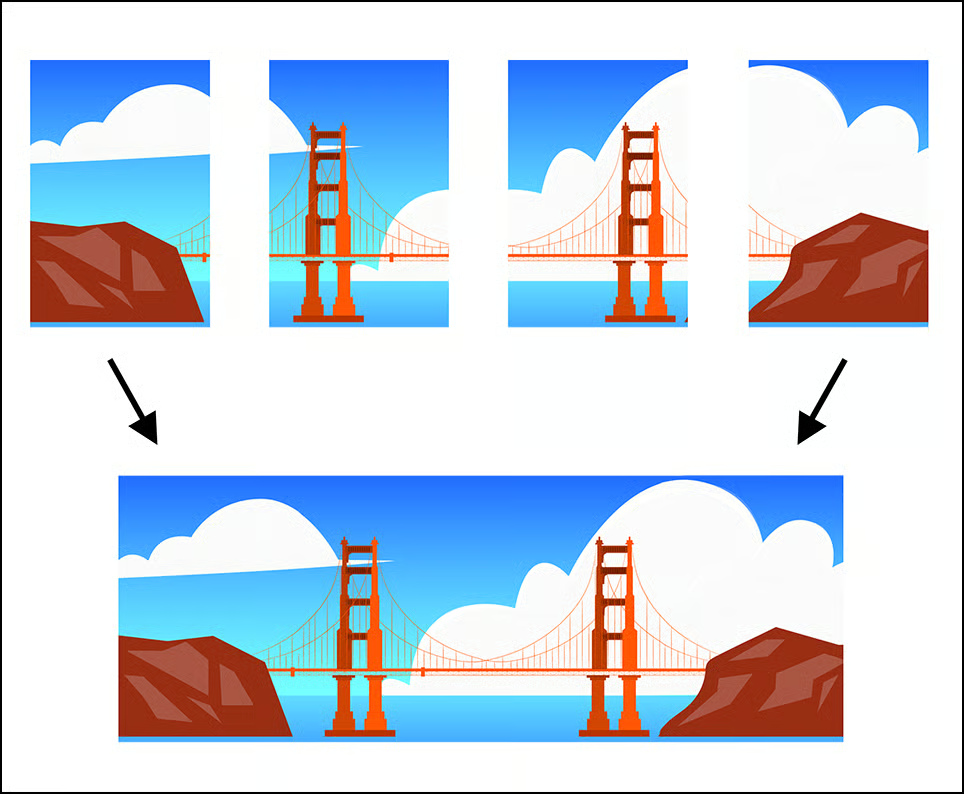
Import RAWs into Lightroom or Capture One, sync basic settings (WB, exposure, lens profile if available), and export 16-bit TIFFs to your stitching tool. PTGui is industry-standard for fisheye workflows; Hugin is a robust open-source alternative. Fisheyes stitch easier with fewer shots, but ensure at least 25–35% overlap. Rectilinear lenses typically require more frames and tighter overlap control. After stitching, output an equirectangular at your target resolution (8K, 12K, or higher) for virtual tour platforms.
Deep dive: A practical overview of panoramic heads and stitching best practices can be found in this panoramic head tutorial, and PTGui’s strengths are covered in an in-depth review. Panoramic head workflow. PTGui review and tips.
Cleanup & Enhancement
- Nadir patch: Use your clean ground shot. Many editors now offer AI-based tripod removal, or clone manually with aligned perspective.
- Color balance: Even out mixed lighting by brushing WB in RAW or using masks in Photoshop. Keep neutrals neutral; avoid over-saturation.
- Noise reduction: Use luminance NR sparingly; sharpen after stitching (not before) to avoid edge fringing.
- Level horizon: Use the stitching software’s roll/yaw/pitch optimizer; confirm with straight architectural lines.
- Export: For VR, use high-quality JPEG at 90–95% quality; for archival, keep layered PSB and 16-bit TIFF masters.
For a camera-to-VR overview using mirrorless bodies, Oculus’s guide is handy. DSLR/mirrorless 360 workflow primer.
Disclaimer: Always check the latest documentation of your chosen software; interfaces and features evolve.
Watch: Panoramic Head Setup (Video)
Seeing the no-parallax setup once makes everything easier. Here’s a concise walkthrough:
Useful Tools & Resources
Software
- PTGui panorama stitching
- Hugin (open-source)
- Lightroom / Photoshop / Affinity Photo
- AI tripod removal tools (Content-Aware Fill, Generative Fill)
Hardware
- Panoramic heads (Nodal Ninja, Leofoto, Sunwayfoto)
- Carbon fiber tripods with leveling bases
- Wireless remote shutter releases
- Pole extensions and car mounts with safety tethers
Disclaimer: Product names are for research reference. Verify compatibility with Fujifilm X-mount and your specific lens adapter.
Common Mistakes & How to Avoid Them
- Parallax error: Always align the entrance pupil. Even a few millimeters off causes ghosting around near objects.
- Exposure flicker: Manual exposure and fixed WB only. Never mix auto exposure with panoramas.
- Tripod shadows and footprints: Shoot an offset nadir or patch later with a clean plate.
- Flare: Shield the fisheye with your hand (out of frame), tilt slightly to avoid direct strong light, or time your rotation around the sun.
- Noise at night: Favor long exposures over high ISO; keep ISO ≤1600 when possible on the X-T5.
- IBIS on tripod: Turn IBIS off to avoid micro-blur on long exposures.
Field-Proven Scenarios
Indoor Real Estate
Shoot at 8–10mm to reduce frame count and visitor interruption. Use f/8, ISO 100–200, and bracket ±2 EV for windows. Turn off ceiling fans and wait for people to clear reflective areas like TVs or mirrors. Capture an extra clean nadir; interiors often require precise tripod removal.
Outdoor Sunset Cityscape
Work fast: Light changes minute-to-minute. Lock exposure a touch under midtones to preserve highlight color. Shoot your zenith early if clouds are moving quickly, then complete the horizon sweep, and finish with the nadir. Consider a second full round 2–3 minutes later for safety.
Event Crowds
Use 10–12mm to get a little more overlap for masking. Shorten shutter to 1/200–1/250 at ISO 400–800 to minimize blur. Take a second pass at each position if a person blocks a key landmark—later, you can blend the clean areas.
Rooftop / Pole Shooting
At 8–10mm, limiting shots to 6–8 around means less time in the wind. Add a weight to the pole base and keep your body braced. Always tether your camera, and avoid gusts over 20–25 mph.
Car-Mounted Capture
Whenever possible, capture static 360s with the car parked. If you must move, shoot shorter exposures and increase ISO while minimizing speed. Vibration kills sharpness more than ISO ever will.
For more insight into lens choices and 360 techniques with hybrid cameras, this guide is helpful. Camera and lens selection for virtual tours.
Frequently Asked Questions
- Can I shoot handheld panoramas with the X-T5?
Yes, in a pinch. Enable IBIS, use higher shutter speeds (1/250+), and maintain generous overlap (40–50%). However, for critical interiors or scenes with near foreground, a leveled tripod and panoramic head are strongly recommended to avoid parallax and horizon drift.
- Is the Laowa 8-15mm wide enough for single-row 360 on APS-C?
Generally yes. At 8mm on the X-T5, plan for 6 around plus zenith and nadir (sometimes 8 around in tight interiors). At 10–12mm, expect 8 around plus top/bottom. The fisheye projection provides excellent coverage with fewer frames.
- Do I need HDR for interiors with bright windows?
Often. Even with the X-T5’s solid dynamic range, interior-to-window contrast can exceed 14–16 stops. Bracket ±2 EV in 3 or 5 frames, keep WB/focus/exposure manual, then merge HDR per position before stitching in PTGui/Hugin.
- How do I avoid parallax with this lens?
Use a panoramic head and calibrate the fore-aft position for each focal length you use (8, 10, 12, 15mm). Align a near and far vertical and adjust until there’s no relative shift when panning. Mark those rail positions for fast repeatability.
- What ISO range is safe on the X-T5 in low light?
ISO 100–800 is “clean,” ISO 1600 is typically fine, and ISO 3200 is usable with careful noise reduction. Favor longer shutter times on a tripod over pushing ISO; turn off IBIS on tripod to maintain micro-contrast.
- Can I set custom modes for panoramas?
Yes. Assign a custom setting with Manual exposure, fixed Kelvin WB, RAW+JPEG, AF disabled (manual focus), IBIS off (tripod), and EFCS on. This speeds up setup in the field and prevents mistakes.
- How do I reduce fisheye flare?
Shield the front element with your hand just outside the frame, avoid direct strong backlight when possible, and clean the element frequently. Slightly change your rotation order to minimize the sun entering the frame at steep angles.
- What tripod head is best?
A multi-row panoramic head with fore-aft and lateral adjustments (e.g., Nodal Ninja or Leofoto) is ideal. Make sure it supports your camera weight, offers indexed rotation (15°, 30°, 45°, 60°), and can lock firmly to prevent yaw drift.
Safety, Limitations & Backup Workflow
Fisheyes see everything—including you, your tripod, and stray straps. Keep your strap secured or removed, and do a 360° look-around before shooting. In wind, hang a weight from your tripod, lower leg extensions, and keep your center column down. On rooftops or poles, always tether gear and never lean beyond barriers.
The Laowa 8-15mm is manual-only: it’s an advantage for consistency, but remember to double-check focus and aperture before each sequence. On APS-C, you won’t get a full circular image at 8mm (as you would on full-frame); plan your shot counts accordingly. The X-T5’s 40MP files are large—use fast UHS-II cards and consider a card-per-location strategy, plus dual-card backup if your workflow requires immediate redundancy.
After each scene, verify coverage by scrubbing through the sequence on-camera. If in doubt, shoot an extra round. Back up nightly to two different locations (e.g., laptop and SSD). These habits save shoots.
Extra Reading
For a concise, step-by-step primer on setting up a panoramic head and avoiding parallax, see this walkthrough. Panoramic head setup principles.