
Why This Camera & Lens Are Great for Panoramas
Welcome! This guide shows you how to shoot a professional 360 photo and multi-row panorama workflow with the Fujifilm GFX 50S / 50R and the Sony FE 14mm f/1.8 GM. First, a critical truth for trustworthiness: the Sony FE 14mm (E-mount, 18 mm flange) does not natively mount to Fujifilm GFX bodies (G-mount, 26.7 mm flange). There is no practical adapter that maintains infinity focus or electronic aperture control, and the FE 14mm’s full-frame image circle cannot cover GFX’s larger sensor without heavy vignetting even if adaptation were possible. If your goal is strictly “how to shoot panorama with Fujifilm GFX 50S / 50R & Sony FE 14mm f/1.8 GM,” the workable, real-world approach is:
- Use the GFX 50S/50R with a compatible ultra-wide (e.g., GF 20–35mm f/4, GF 23mm f/4, or Laowa 17mm f/4 GFX Zero-D) and follow the steps here; OR
- Use the Sony FE 14mm f/1.8 GM on a Sony full-frame body for capture, then apply the exact same capture and stitching techniques described in this article.
Why this pairing concept is powerful: the GFX 50S/50R delivers medium-format quality—43.8 × 32.9 mm sensor at 51.4 MP, ~5.3 µm pixels, and ~14+ stops of dynamic range at base ISO—producing ultra-clean files with enormous latitude for HDR panorama work. The FE 14mm f/1.8 GM is one of the sharpest rectilinear 14 mm primes available, with excellent coma control, low lateral CA, and crisp micro-contrast wide open. In practice, you’ll get the best of both worlds by following the GFX workflow with a GFX-compatible lens that offers a similar field of view, while applying all the shot planning, overlap, and nodal techniques you would use with a 14 mm rectilinear on full-frame.
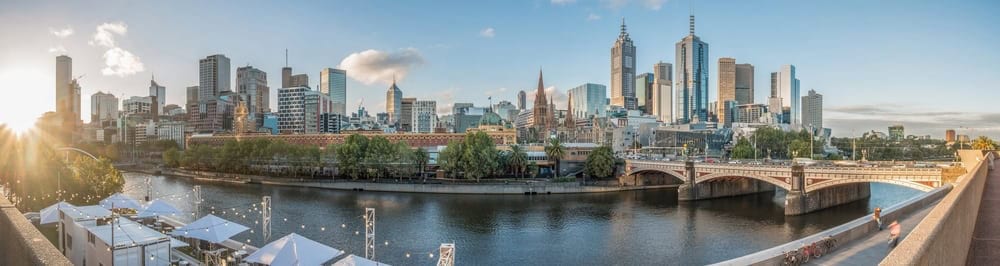
Quick Setup Overview
- Camera: Fujifilm GFX 50S / 50R — 43.8 × 32.9 mm medium-format sensor, 51.4 MP, pixel pitch ~5.3 µm, ~14+ stops DR at ISO 100. No in-body stabilization (tripod recommended).
- Lens: Sony FE 14mm f/1.8 GM (rectilinear ultra-wide). Note: not mountable on GFX. For equivalent workflow on GFX, use GF 23mm f/4 (18 mm FF eq), GF 20–35mm f/4 at 20 mm (~16 mm FF eq), or Laowa 17mm f/4 GFX Zero-D (~13 mm FF eq).
- Estimated shots & overlap (rectilinear 14 mm on full-frame):
- High-quality 360×180: two rows of 8–10 around (±30–40° pitch) + 1 zenith + 1 nadir (18–22 frames total) at ~30% overlap.
- Speed-first 360: single row of 10–12 at 0° + zenith + nadir (12–14 frames), but expect thinner zenith/nadir coverage.
- Difficulty: Intermediate. Multi-row rotation, nodal alignment, and HDR bracketing benefit from a calibrated panoramic head.
Planning & On-Site Preparation
Evaluate Shooting Environment
Look for moving subjects (people, leaves, traffic), reflective surfaces (glass, polished floors), and strong backlight. For glass, keep the lens 5–15 cm from the surface and shoot slightly off-axis to reduce reflections and flare. In interiors, identify mixed lighting and plan to lock white balance to a neutral preset to avoid stitch color shifts.
Match Gear to Scene Goals
GFX 50S/50R excels in dynamic range and color fidelity. Safe ISO ranges for clean panoramas are ISO 100–400; ISO 800 is still excellent, ISO 1600 usable with careful noise reduction. If you’re determined to use the FE 14mm, mount it on a Sony body for capture and apply the same overlaps and nodal workflow here. If you’re staying on GFX, choose an ultra-wide that approximates 14 mm FF FOV (GF 20–35 at 20 mm, or Laowa 17mm GFX). Rectilinear lenses require more frames than fisheyes but produce low-distortion edges and very natural interiors.
Pre-shoot Checklist
- Charge batteries and carry spares; format fast UHS-II cards.
- Clean the front element and sensor; dust shows up easily on blue skies.
- Level your tripod; verify the panoramic head’s nodal calibration for the chosen focal length.
- Safety: weight your tripod in wind, tether pole rigs on rooftops, and avoid car mounts in traffic or high crosswinds.
- Backup workflow: shoot a second safety round at the same exposure and a second zenith/nadir in case of motion/ghosting.
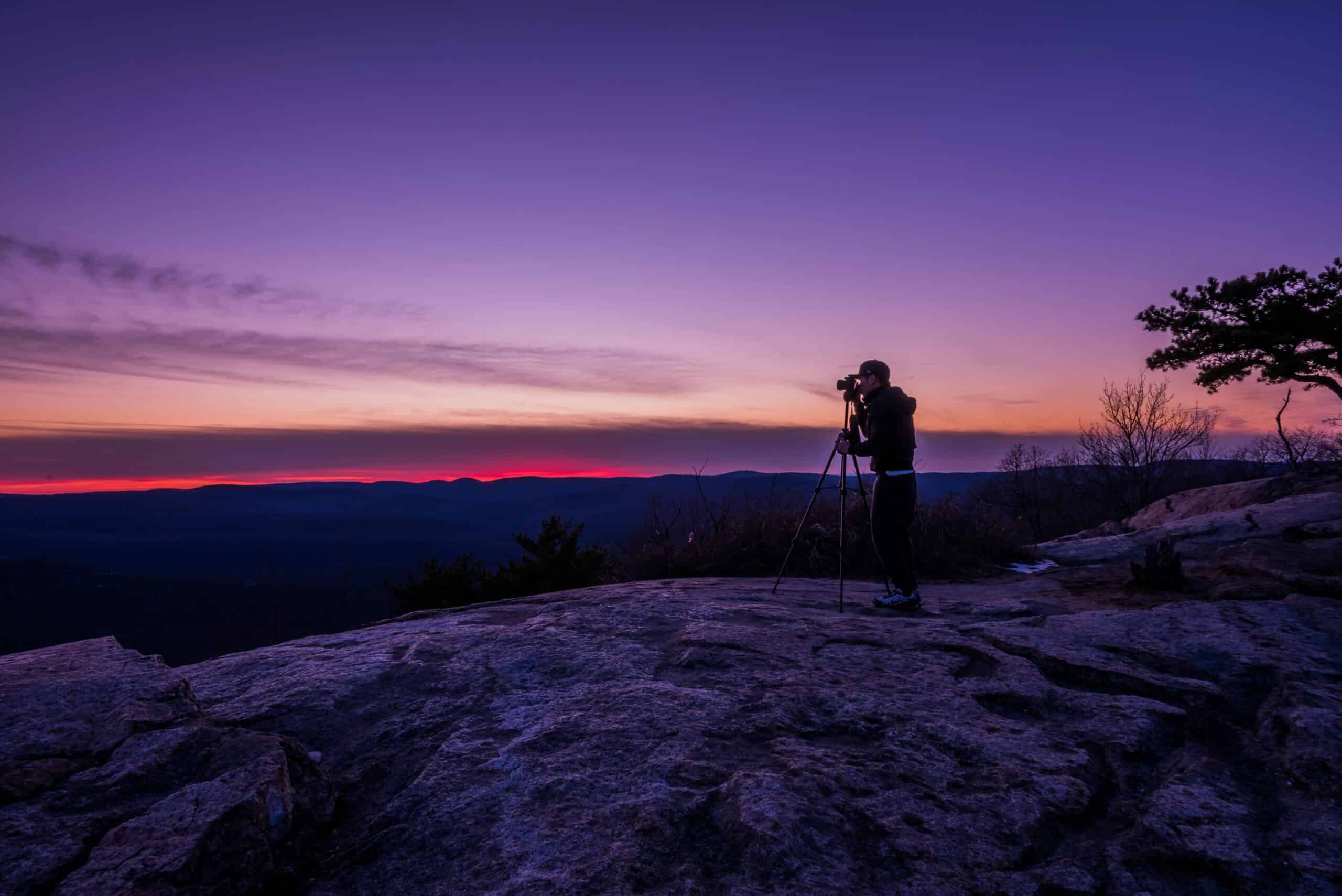
Essential Gear & Setup
Core Gear
- Panoramic head: Lets you pivot around the lens’s no-parallax point (nodal point) to eliminate foreground/background shifts. This is critical in interiors and near objects.
- Stable tripod with a leveling base: Faster to level than adjusting tripod legs; ensures your rows remain aligned.
- Remote trigger or camera app: Prevents shake; use exposure delay or electronic shutter when possible.
Optional Add-ons
- Pole or car mount: Always tether and verify weight limits. Expect vibration; use higher shutter speeds and slower rotation between frames.
- Continuous lighting for low-light interiors: small LED panels or bounced flash for consistent illumination (avoid mixed color temps).
- Weather protection: rain covers, lens hood, microfiber cloths for spray and mist.
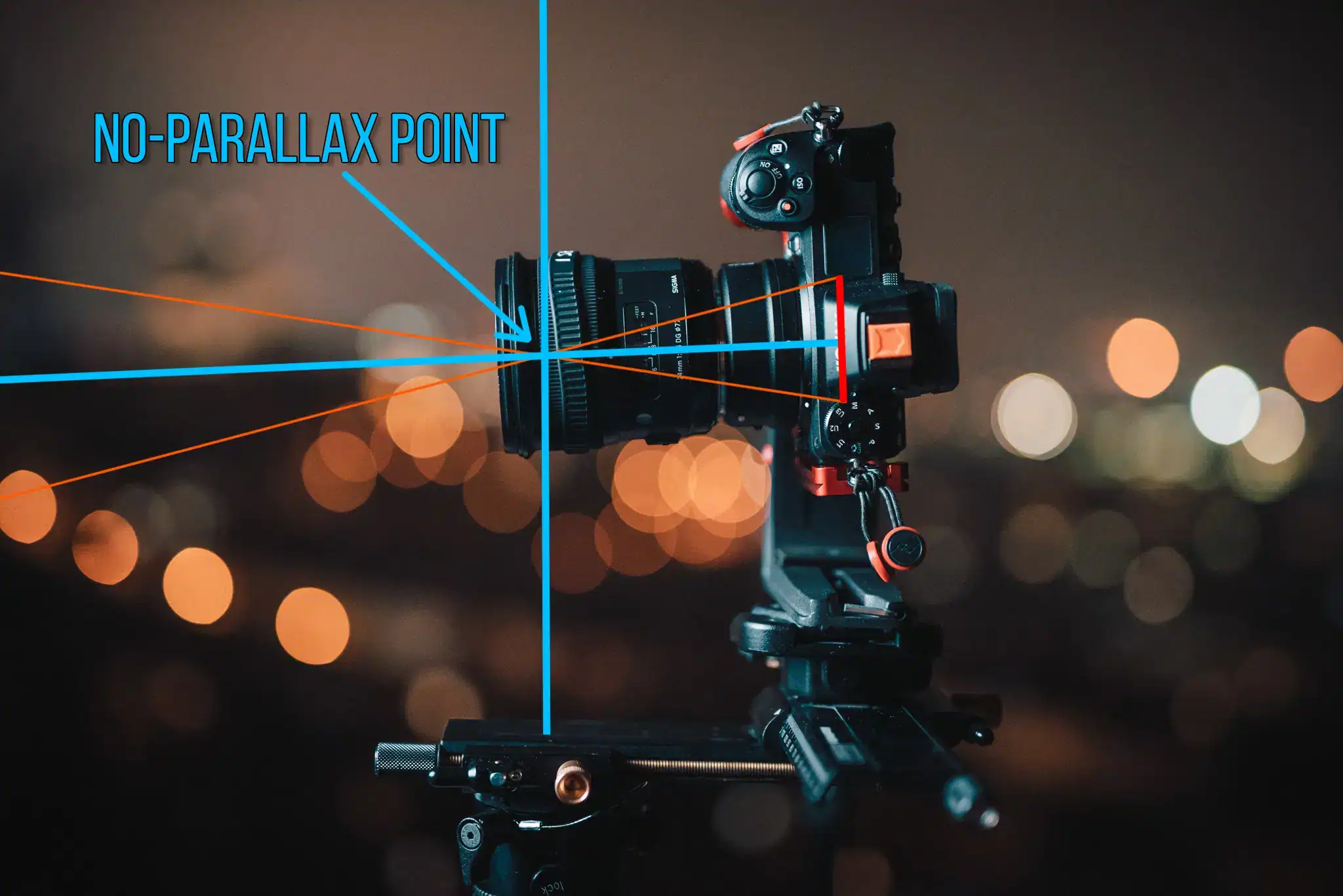
For a deeper primer on panoramic heads and why nodal alignment matters, see this panoramic head tutorial. Panoramic head basics and setup
Step-by-Step Shooting Guide
Standard Static Scenes
- Level thoroughly: Level the tripod and use the panoramic head’s bubble level. An unlevel base creates vertical drift across rows.
- Find and lock the nodal point: Place two light stands (one near, one far). Pan left-right while aligning them; adjust the rail until parallax disappears. Mark the rail position for your focal length.
- Manual exposure and white balance: Set manual mode, expose to the right without clipping important highlights, lock WB (Daylight or custom Kelvin). Shoot RAW for maximum latitude.
- Focus: Use manual focus at or near the hyperfocal distance (e.g., f/8–f/11 on ultra-wide) and turn off AF to keep focus constant.
- Capture sequence: With a rectilinear ~14 mm FF FOV, shoot two rows:
- Upper row: 8–10 frames at +30° or +35° pitch, ~30% overlap.
- Lower row: 8–10 frames at −30° or −35° pitch, same overlap.
- Zenith: one frame straight up; Nadir: one frame straight down. Consider an offset nadir with tripod shifted to patch more cleanly.
HDR / High Dynamic Range Interiors
- Bracket 3–5 frames at ±2 EV (e.g., −2/0/+2, or −4/−2/0/+2/+4) to balance bright windows and shadowed interiors.
- Keep WB and aperture constant; adjust shutter for brackets. Use the camera’s exposure delay or a remote to avoid vibrations.
- In very high DR rooms, consider two passes: one bracket set exposed for the interior, one for the windows, then blend during stitching or in post.
Low-Light / Night Scenes
- Use a heavy, stable mount; disable stabilization if your lens has it. The GFX 50S/50R lacks IBIS, so tripod stability is crucial.
- Target ISO 100–400 for clean files; ISO 800 is acceptable. Use longer shutter speeds (e.g., 1–8s). Avoid extreme ISO unless motion demands it.
- Turn on a 2s–5s exposure delay or use a remote. Wind? Add weight to the center column.
Crowded Events
- Shoot two full passes: first for composition and baseline, second when gaps appear. Keep the camera orientation identical between passes.
- Mask moving people in post. If motion is unavoidable, use faster shutter (1/200s+) and higher ISO (400–800) to freeze subjects.
Special Setups (Pole / Car / Drone)
- Pole: Tether everything. Keep exposures short (1/250s+). Rotate slowly and pause to damp vibrations before each frame.
- Car mount: Only in controlled environments. Use safety cables, watch speed and wind. Expect fewer usable frames per pass due to vibration.
- Drone: Not typical for GFX; use a lighter system. Apply the same overlap logic and stitch workflow.
Recommended Settings & Pro Tips
Exposure & Focus
| Scenario | Aperture | Shutter | ISO | Notes |
|---|---|---|---|---|
| Daylight outdoor | f/8–f/11 | 1/100–1/250 | 100–200 | Lock WB (Daylight); ensure 25–30% overlap |
| Low light/night | f/4–f/5.6 | 1/30–1/60 (tripod) or longer | 100–800 | Use remote/2s delay; weight tripod |
| Interior HDR | f/8 | Bracket ±2 EV | 100–400 | Expose for windows and shadows; constant WB |
| Action / moving subjects | f/5.6–f/8 | 1/200+ | 400–800 | Double-pass to reduce ghosting |
Critical Tips
- Manual focus at hyperfocal distance: With ultra-wides, f/8–f/11 gives ample depth. Check focus once, then disable AF.
- Nodal calibration: Mark the rail for your focal length to speed setup. Re-verify when you change lenses or focal settings.
- White balance lock: Avoid mixing Auto WB across frames; it creates color seams in skies and walls.
- RAW over JPEG: GFX RAW files retain enormous DR and color precision, ideal for HDR and sky recovery.
- Stabilization: GFX 50S/50R has no IBIS. If your lens has OIS (most ultra-wides do not), disable it on tripod to avoid micro-jitter.
Stitching & Post-Processing
Software Workflow
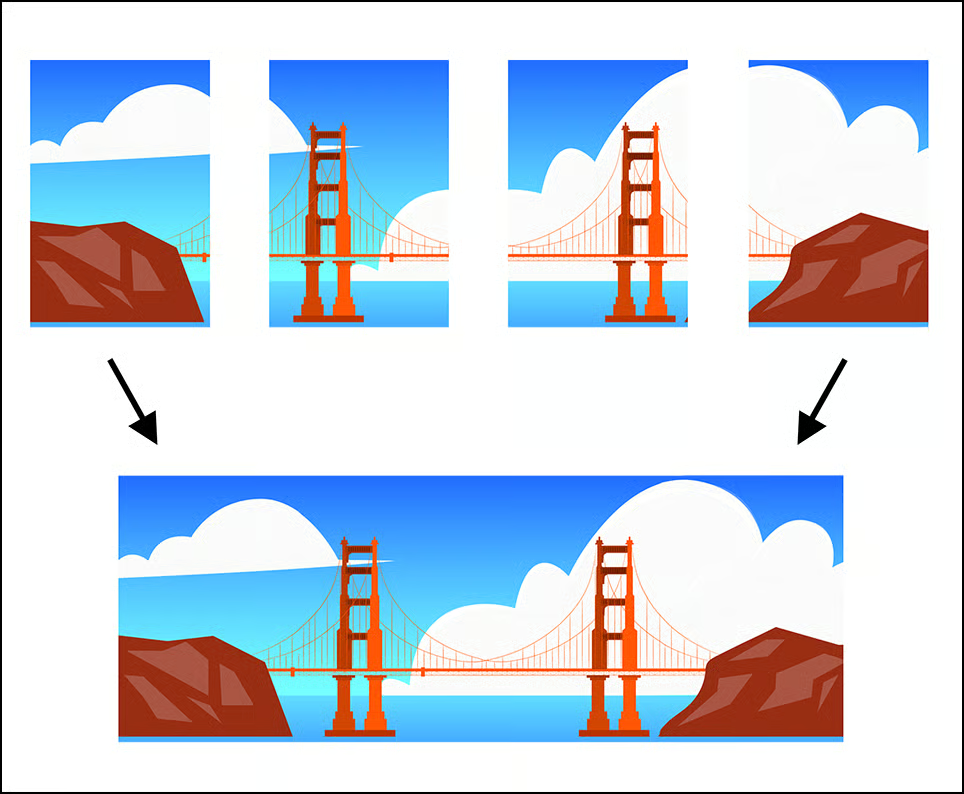
PTGui, Hugin, Lightroom/Photoshop, and Affinity Photo are popular tools. Rectilinear lenses like a 14 mm typically require more frames than fisheyes but produce natural-looking interiors. Aim for ~25–30% overlap. Start by HDR-merging brackets per viewpoint (if you bracketed), then stitch those HDR frames. PTGui is particularly strong at multi-row and HDR panoramas. PTGui review: strengths for complex panoramas
Export an equirectangular projection for 360 delivery or a rectilinear/cylindrical projection for wide prints. For VR and web, 12k–16k on the long edge is common from GFX sources; see spherical resolution references to plan your output. Reference: spherical resolution and output sizes
Cleanup & Enhancement
- Nadir patch: Capture an off-center nadir shot or use AI tools; clone or patch in Photoshop for a seamless floor.
- Color correction: Match white balance across rows; use HSL tools to unify wall and sky tones.
- Noise reduction: Apply conservative NR to shadows; medium-format files tolerate gentle luminance NR well.
- Leveling: Correct yaw/pitch/roll; align verticals for architectural work.
- Sharpening: Apply capture sharpening after stitching; avoid oversharpening sky gradients.
If you’re new to DSLR/mirrorless 360 capture and stitching, this official primer covers end-to-end concepts clearly. Shooting and stitching a 360 photo with a mirrorless camera
Disclaimer: Always check the latest documentation for your software; interfaces and features change over time.
Useful Tools & Resources
Software
- PTGui panorama stitching
- Hugin (open source)
- Lightroom / Photoshop
- AI tripod removal and object cleanup tools
Hardware
- Panoramic heads (Nodal Ninja, Leofoto)
- Carbon fiber tripods with leveling bases
- Wireless remote shutters
- Pole extensions / car mounts (with safety tethers)
Disclaimer: brand names are for reference; verify compatibility (especially lens mounts) before purchase.
Common Mistakes & How to Avoid Them
- Parallax error: Always align to the lens’s no-parallax point; re-check after changing focal length or focus distance.
- Exposure flicker: Manual exposure and locked WB across every frame. Avoid Auto ISO for multi-row panoramas.
- Tripod shadows and footprints: Shoot a proper nadir (or two) and plan room to patch.
- Ghosting from motion: Double-pass capture, then mask the cleaner subject positions in post.
- High ISO noise at night: Keep ISO at 100–800 on GFX; use longer shutter and solid support.
- Mount mismatch assumptions: The Sony FE 14mm f/1.8 GM does not mount to GFX. Plan a compatible ultra-wide for GFX or use a Sony body for that lens.
Field Notes and Case Studies
Indoor Real Estate (GFX + GF 23mm f/4)
At f/8, ISO 100, bracket −2/0/+2, I shoot two rows of 9 frames plus zenith/nadir in a small living room. Windows stay clean with +2 EV frames, and shadows come from 0 EV. The GFX files retain superb highlight detail; I tone-map gently in PTGui and finish in Lightroom.
Outdoor Sunset (GFX + GF 20–35mm at 20mm)
Sunset DR is tough. I expose at ISO 100, f/11, bracket −3/−1/+1/+3 to keep the sun and foreground. Wind? I add 2 kg to the tripod hook. I prefer 10 frames per row to ensure overlap for the bright sky band.
Event Crowd (Sony body + FE 14mm)
When I need the FE 14mm’s width, I place it on a Sony full-frame, shoot 8–10 frames per row at ±30° plus zenith/nadir, then a second pass waiting for clean gaps. Shutter at 1/250s, ISO 400–800, f/5.6–f/8 to freeze people.
Rooftop Pole (Any ultra-wide)
High risk: tether everything, check wind. I use 1/500s at ISO 400, f/5.6. I rotate very slowly and wait 1–2 seconds after each move to damp pole oscillation. Expect to discard a few frames to vibration blur.
Frequently Asked Questions
- Can I actually shoot handheld panoramas with the Fujifilm GFX 50S/50R?
Yes, for partial panos, but for 360×180 you will struggle with parallax and overlap precision. The GFX 50 bodies lack IBIS, so a tripod and panoramic head dramatically improve consistency and stitch success.
- Is the Sony FE 14mm f/1.8 GM wide enough for a single-row 360?
It covers a lot, but a single row won’t capture zenith and nadir well. For clean full spheres, use two rows (8–10 frames each) plus dedicated zenith and nadir shots.
- Do I need HDR for interiors with bright windows?
Nearly always. Bracket ±2 EV (3–5 frames) per viewpoint. The GFX’s DR helps, but windows often require at least a 3-shot bracket to avoid clipping.
- How do I avoid parallax issues in tight rooms?
Use a calibrated panoramic head and align the no-parallax point precisely. Keep the camera height consistent and avoid moving between frames. Even small shifts will show with nearby furniture.
- What ISO range is safe on the GFX 50S/50R for panoramas?
ISO 100–400 is ideal. ISO 800 remains very clean. ISO 1600 is usable with careful noise reduction. Prefer longer exposures over high ISO where possible.
- Can I set custom modes to speed up pano capture?
Yes, store a custom configuration (manual exposure, manual focus, WB, bracketing, delay timer) to a custom setting bank so you’re one dial turn away from pano mode.
- What’s the best tripod head style for this setup?
A multi-row panoramic head with fore-aft and lateral rails (e.g., Nodal Ninja) for precise nodal alignment. Add a leveling base for faster setup.
- Are there official best practices I can study further?
This panoramic head setup walkthrough is solid and complements the instructions here. Set up a panoramic head for high-end 360 photos
Important Compatibility Note
The Sony FE 14mm f/1.8 GM is an E-mount lens with a shorter flange distance than Fujifilm GFX’s G-mount. There is no practical adapter that preserves infinity focus and electronic aperture control, and the lens’s image circle is designed for full-frame, not medium-format. If your project specifically requires the FE 14mm, pair it with a Sony full-frame body and follow the same panorama technique. If you must shoot on the GFX 50S/50R, select a GFX-compatible ultra-wide (GF 20–35mm, GF 23mm, or Laowa 17mm GFX) and apply the settings and overlap guidance provided here.
Bonus: Shot Counts Quick Reference
Rectilinear Ultra-Wide (approx. 14–18 mm FF FOV)
- Quality-first 360×180: 2 rows × 9 frames (±30–35°) + zenith + nadir = 20 frames.
- Speed-first 360×180: 1 row × 12 + zenith + nadir = 14 frames (more stretching near zenith/nadir).
- Architectural (clean verticals): Keep pitch ±30°; add a third row if necessary to reduce extreme stretching.
If you’re unsure about how many pixels your final panorama needs, this primer on spherical resolution helps estimate capture requirements vs. output. How many pixels do you need for a spherical panorama?