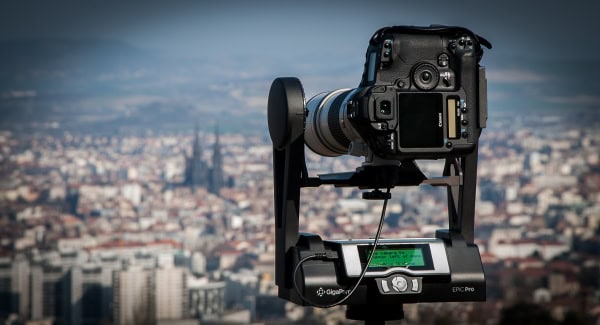
Why This Camera & Lens Are Great for Panoramas
The Fujifilm GFX 50S / 50R paired with the Samyang 12mm f/2.8 ED AS NCS Fish-Eye is a compelling combo for high-resolution 360° and ultra-wide panoramas. The GFX 50S/50R bodies use a 43.8 × 32.9 mm medium-format sensor (approx. 51.4 MP, 8256 × 6192), delivering excellent tonal depth and dynamic range at base ISO (around 14 EV at ISO 100 in independent tests). Large ~5.3 µm photosites help preserve shadow detail and keep noise low for night and interior HDR panoramas. Manual focus workflow is straightforward on these bodies, which is ideal for panorama shooting.
The Samyang 12mm f/2.8 is a diagonal full-frame fisheye. On a 35mm sensor it covers 180° diagonally, enabling fewer frames to complete a full sphere. On the GFX, you have two practical choices: shoot in 35mm crop mode (recommended for a clean, vignette-free image circle) or use the full 44×33 sensor and crop away the heavy corner vignetting in post. Either way, the fisheye’s huge field of view reduces the number of shots required, speeding up rotations in challenging environments (windy rooftops, busy streets). Distortion is expected with fisheyes, but modern stitchers like PTGui or Hugin model it well, and the result is a seamless equirectangular output for VR and web.
Mount compatibility: the Samyang 12mm fisheye comes in DSLR and mirrorless mounts (e.g., Canon EF, Nikon F, Sony FE). You’ll typically adapt it to the GFX (e.g., EF–GFX or F–GFX adapter). This lens is fully manual, so you’ll set aperture on the ring and focus manually—perfect for locking settings across a multi-shot panorama.
Quick Setup Overview
- Camera: Fujifilm GFX 50S / 50R — 43.8 × 32.9 mm (medium format), 51.4 MP; excellent DR at ISO 100–400; no in-body stabilization (IBIS) in these original models.
- Lens: Samyang 12mm f/2.8 ED AS NCS Fish-Eye — diagonal full-frame fisheye; manual focus; sharp from f/5.6–f/8; minimal lateral CA for a fisheye, easy to correct in post.
- Estimated shots & overlap:
- In 35mm crop mode: 6 shots around (every 60°) + 1 zenith + 1 nadir (≈30% overlap). Indoors with close objects: 8 around for safety.
- On a tall pole: 6 around + nadir patch later.
- Difficulty: Intermediate (simple once nodal point is calibrated).
Planning & On-Site Preparation
Evaluate Shooting Environment
Survey the scene for reflective surfaces (glass walls, polished floors), moving subjects (crowds, cars), and strong light sources (sun, spotlights). With glass, shoot close (2–5 cm) and slightly angle the camera to reduce reflections and flare; use a black cloth behind the camera if possible. For outdoor sunsets, plan a bracketed HDR sequence and watch for rapidly changing light—work quickly in a consistent order (clockwise) to avoid banding or exposure shifts across frames.
Match Gear to Scene Goals
The GFX 50S/50R’s wide dynamic range at low ISO lets you hold window highlights and deep interior shadows—ideal for real estate and architectural work. Safe ISO ranges are ISO 100–400 for critical quality, ISO 800–1600 for low light with mild noise, and ISO 3200 when the shot demands it. The Samyang 12mm fisheye dramatically reduces shot count: fewer frames mean less risk of misalignment with moving subjects and faster capture on rooftops or from a pole. Distortion is a creative tradeoff—the stitcher will normalize geometry in the final equirectangular, but straight lines at frame edges can look curved in the input images.
Pre-shoot Checklist
- Power & storage: full batteries, spacious cards; GFX RAW files are large.
- Lens/sensor clean: dust will explode in visibility after tone-mapping.
- Tripod & panoramic head: level the base; verify nodal/entrance-pupil calibration.
- Safety: assess wind (weigh down tripod or use spikes), secure tether on rooftops or car mounts, mind bystanders.
- Backup workflow: shoot an extra safety round; if doing HDR, consider two bracket sets to hedge against motion.
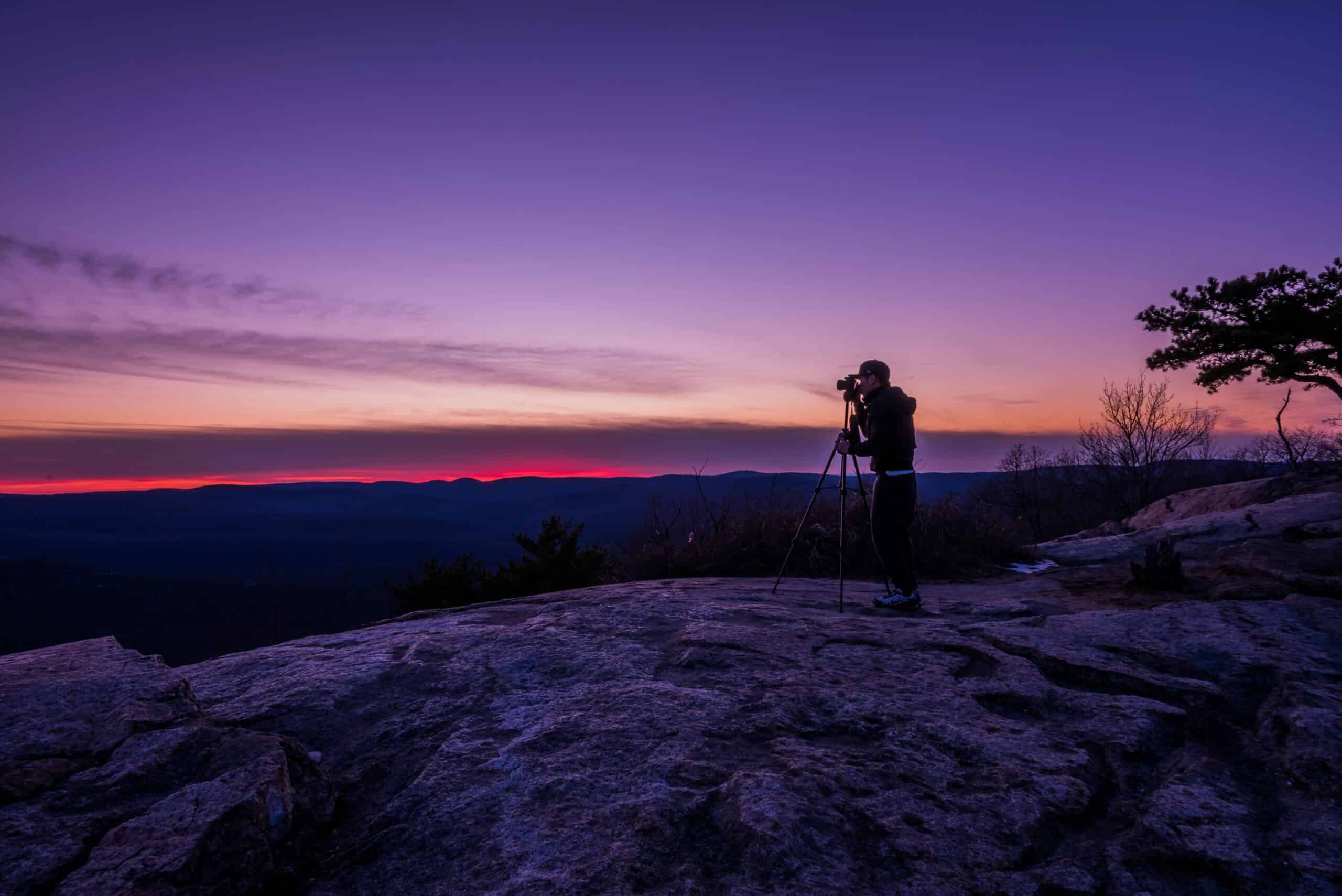
Essential Gear & Setup
Core Gear
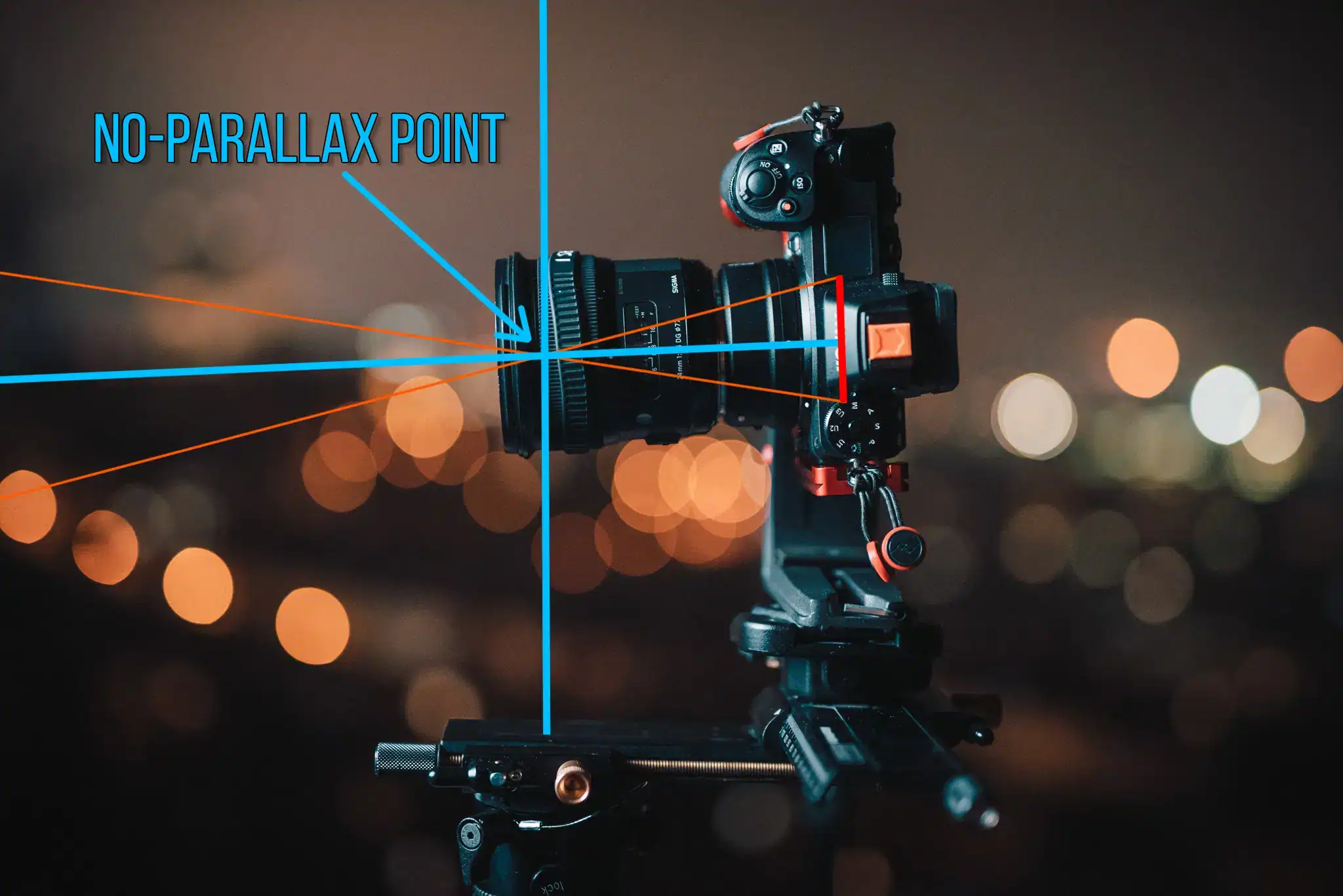
- Panoramic head: lets you align the lens’s entrance pupil (nodal point) over the axis of rotation to eliminate parallax between frames. This is crucial when foreground objects are close.
- Stable tripod with a leveling base: leveling the base means you only rotate in yaw; every frame stays on the same horizon.
- Remote trigger/app or shutter delay: the GFX shutter is gentle, but use 2 s delay or a remote to avoid vibration, especially at slower speeds.
Optional Add-ons
- Pole or car mount: great for elevated perspectives and vehicle shots. Safety first—use guy lines, a secondary tether, and avoid high winds.
- Lighting for interiors: small LEDs to fill dark corners; keep color temperature consistent to avoid mixed WB headaches.
- Weather protection: rain cover and microfiber cloths; fisheye front elements invite flare and water droplets.
Step-by-Step Shooting Guide
Standard Static Scenes
- Level tripod & align nodal point: adjust your panoramic head so the lens entrance pupil sits over the rotation axis. Use two light stands (one near, one far) and rotate—if the near stand “shifts” against the far one, adjust until the shift disappears.
- Manual exposure & white balance: set M mode, fixed ISO (100–200 daylight, up to 800 indoors), and lock WB (Daylight/Custom). Consistency prevents seams.
- Focus: switch to manual, set around the hyperfocal distance at your chosen aperture (f/8 is a sweet spot). Use focus peaking on the GFX.
- Capture sequence:
- 35mm crop mode recommended for this lens to avoid hard vignetting.
- Take 6 frames around the horizon at 60° yaw steps with ~30% overlap. Slightly tilt up (5–10°) to help cover the zenith.
- Take 1 zenith shot pointing up ~60–90°.
- Take 1–2 nadir shots (move tripod or shoot a patch handheld) to remove the tripod in post.
HDR / High Dynamic Range Interiors
- Bracket ±2 EV (3 or 5 frames). The GFX files take tonemapping well; bracket more when window views are critical.
- Keep WB locked. If you mix auto WB and bracketing, seams and color shifts are likely.
- Sequence tip: shoot all brackets at each yaw position before rotating to the next to minimize moving-object misalignment.
Low-Light / Night Scenes
- Use f/4–f/5.6, ISO 400–1600, and longer exposures (1/2–2 s) on a rigid tripod. Enable electronic front-curtain shutter and a 2 s delay.
- Turn off any lens IS (the Samyang is manual/no IS). The GFX 50S/50R lacks IBIS, so stability depends entirely on your support.
- Avoid pushing ISO beyond 3200 unless needed; noise reduction in post works, but fine textures can suffer.
Crowded Events
- Shoot two passes around: a quick framing pass, then a second pass waiting for cleaner gaps.
- Use 1/200 s+ when possible to freeze motion. In post, mask moving people to the cleaner pass.
Special Setups (Pole / Car / Drone)
- Pole: secure a safety line, keep your body as a windbreak, and rotate slower. Use 6 around and skip zenith if your tilt already covers it; patch nadir later.
- Car mount: keep shutter at 1/250 s or faster; shoot in short bursts when the car stops.
Recommended Settings & Pro Tips
Exposure & Focus
| Scenario | Aperture | Shutter | ISO | Notes |
|---|---|---|---|---|
| Daylight outdoor | f/8–f/11 | 1/100–1/250 | 100–200 | Lock WB (Daylight); use EFCS + 2 s delay |
| Low light/night | f/4–f/5.6 | 1/2–1/60 | 400–1600 | Tripod critical; avoid ISO >3200 unless necessary |
| Interior HDR | f/8 | Bracket ±2 EV | 100–400 | 3–5 brackets; keep WB locked |
| Action / moving subjects | f/5.6–f/8 | 1/200+ | 400–800 | Short exposures per frame; shoot two passes |
Critical Tips
- Manual focus at hyperfocal: at f/8 with a 12mm fisheye, focusing a few feet/meters out keeps near-to-infinity sharp. Use magnified live view to confirm.
- Nodal calibration: mark your panoramic head rails once calibrated for the Samyang 12mm + adapter + GFX. A small paint dot saves time in the field.
- White balance lock: “Daylight” outside; “Custom/Temp” indoors to match dominant lighting. Consistent WB stitches cleaner.
- RAW over JPEG: GFX RAF files hold excellent highlight headroom and color—ideal for HDR merging and stitched panoramas.
- Shutter technique: use EFCS and a 2–3 s self-timer; in wind, add weight to the center column or use ground spikes.
Stitching & Post-Processing
Software Workflow
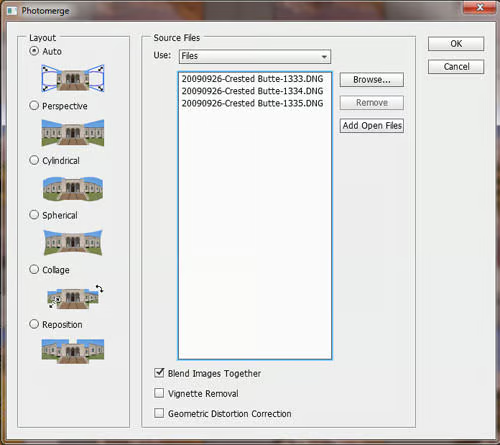
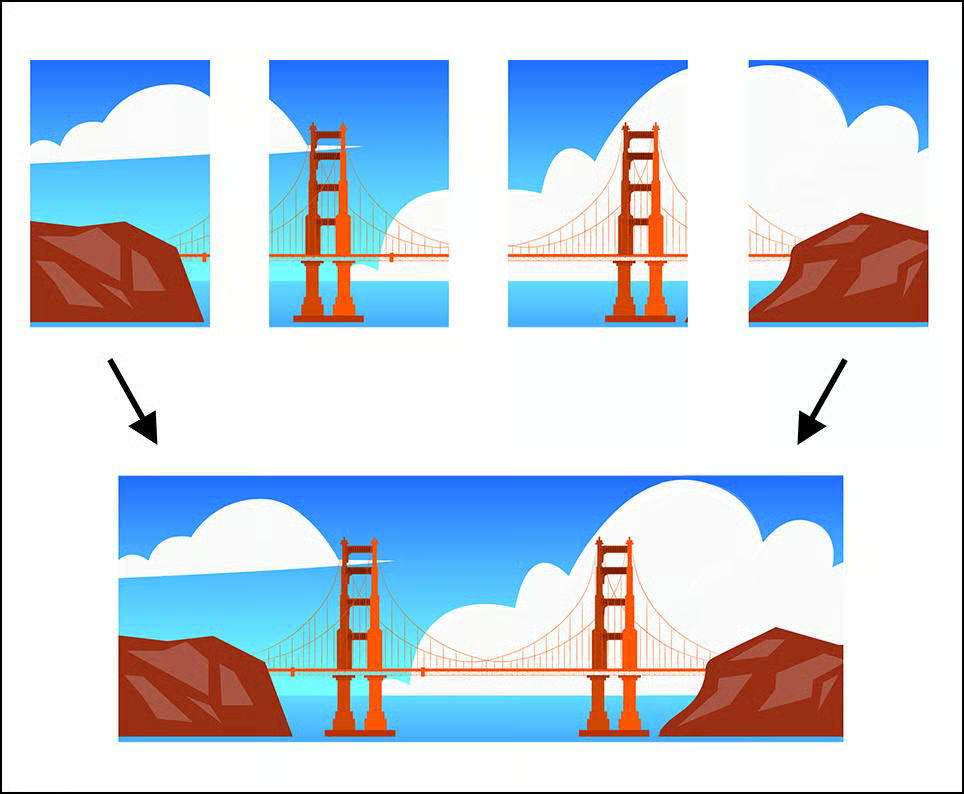
Import RAWs and apply base corrections (lens color fringing, WB, exposure) uniformly, then export to 16-bit TIFF for stitching. In PTGui or Hugin, set the lens type to “full-frame fisheye,” and let the optimizer estimate projection parameters. The 12mm fisheye frames will stitch with high tolerance to parallax if your nodal alignment is good. Aim for 25–35% overlap for fisheyes; rectilinear lenses generally need 20–30% but more frames overall. When using the GFX full sensor with vignetting, mask corners consistently or pre-crop to the usable image circle before stitching for faster control point generation. For detailed guidance on panoramic heads and technique, see this panoramic head tutorial for DSLRs and mirrorless bodies at the end of this paragraph. Panoramic head setup essentials.
Cleanup & Enhancement
- Tripod/nadir removal: export a top-down view or nadir patch from PTGui, retouch in Photoshop/Affinity, or use an AI tripod-removal utility.
- Color and noise: apply global color balance first; then gentle noise reduction for high-ISO frames to preserve fine detail.
- Horizon leveling: after stitching, use the horizon tool to correct roll/pitch. Verify verticals in architectural scenes.
- Output: export equirectangular JPEG/PNG (8K to 12K wide is common). For VR platforms, follow their maximum size guidelines and metadata requirements. For an overview on DSLR/mirrorless 360 pipelines, review this guide. Using a DSLR/MILC to shoot and stitch a 360 photo.
PTGui remains a top pick for speed and reliability with fisheyes; see this review that explains why many pros rely on it. PTGui review and workflow insights. For resolution planning and coverage math, the PanoTools wiki is a useful reference. DSLR spherical resolution (PanoTools).
Useful Tools & Resources
Software
- PTGui panorama stitching
- Hugin (open source) for robust control-point editing
- Lightroom / Photoshop / Affinity Photo for RAW and retouch
- AI tripod removal tools for quick nadir cleanup
Hardware
- Panoramic heads: Nodal Ninja, Leofoto, Really Right Stuff multi-row
- Carbon fiber tripods with leveling bases
- Wireless remote shutters or intervalometers
- Pole extensions / car suction-mount systems with safety tethers
Disclaimer: software/hardware names provided for search reference; check official sites for current features and compatibility.
Common Mistakes & How to Avoid Them
- Parallax error: not aligning the entrance pupil on the pano head. Calibrate once and mark your rails.
- Exposure flicker: using Auto ISO or Auto WB. Lock exposure and WB to keep seams invisible.
- Tripod shadows and missing nadir: plan a nadir shot or patch, especially with low sun angles.
- Ghosting from movement: shoot two passes and mask in post; increase shutter speed when possible.
- Overpushing ISO at night: the GFX handles ISO 1600 well, but beyond 3200 detail can suffer—prefer longer exposures.
- Using full-sensor mode with hard vignetting: with this lens, 35mm crop mode simplifies capture and stitching.
Frequently Asked Questions
- Can I shoot handheld panoramas with the Fujifilm GFX 50S/50R?
Yes for partial panos, but for 360×180° with a fisheye, a tripod and panoramic head are strongly recommended. The GFX 50S/50R lacks IBIS, and precise nodal alignment is crucial to avoid parallax. Handheld can work outdoors with distant subjects and fast shutter speeds, but expect more stitching cleanup.
- Is the Samyang 12mm f/2.8 wide enough for a single-row full 360?
In 35mm crop mode on the GFX, yes: 6 shots around + zenith + nadir is the reliable recipe. In very tight interiors (objects within 1 m), shoot 8 around for safer overlap. The fisheye’s wide FOV keeps shot count low and improves stitching success.
- Do I need HDR for interiors with bright windows?
Usually, yes. Bracket ±2 EV (3–5 frames) to preserve window detail and interior shadows. The GFX sensor’s dynamic range helps, but windows often exceed what a single exposure can hold cleanly, especially at midday.
- How do I avoid parallax issues with this lens on the GFX?
Use a panoramic head and align the entrance pupil. Because you’re adapting the lens, recalibrate whenever you change adapters or rail positions. Place a near object and a far object in the frame and rotate—adjust the fore-aft position until the relative position of the objects no longer shifts.
- What ISO range is safe on the GFX 50S/50R in low light?
ISO 100–400 is optimal. ISO 800–1600 remains very usable with minimal noise. ISO 3200 is acceptable when needed but expect more noise and reduced fine detail. Prefer longer exposures on a tripod over pushing ISO.
- Can I set custom modes to speed up pano shooting?
Yes. Save a “Pano” setup with M mode, fixed WB, EFCS, 2 s delay, manual focus, and your typical aperture/ISO. This accelerates on-site setup and reduces mistakes.
- How do I reduce flare with a fisheye at sunset?
Shade the lens with your hand just outside the frame, avoid pointing directly at the sun when possible, and keep the front element impeccably clean. Take an extra frame with your hand removed if it intrudes—mask in post.
- What panoramic head is best for this setup?
A compact, rigid single-row head is sufficient for a 12mm fisheye. Look for precise fore-aft adjustment, clear scale markings, and a leveling base. Multi-row heads are overkill unless you switch to longer rectilinear lenses for gigapixel work.
Real-World Use Cases
Indoor Real Estate
Set the GFX to ISO 200, f/8, tripod-mounted with the pano head. Shoot 6 around, and bracket ±2 EV to protect window views. Keep WB consistent (e.g., 4000–4500K for warm LEDs). If furniture is within 0.5–1 m, capture 8 around. In PTGui, mask people or reflections and patch the nadir with a brand logo tile.
Outdoor Sunset
Expose for mid-tones and bracket if sun is in frame. Work quickly: start opposite the sun, rotate consistently, and finish with the sun-facing frame to minimize dynamic change. Use f/8 and ISO 100–200 for maximum quality.
Crowded Event / Street
Choose 1/200–1/250 s at ISO 400–800, f/5.6–f/8. Take two passes and plan to mask motion in post. The fisheye’s fewer shots reduce the chance of subject duplication across frames.
Rooftop / Pole Shooting
On a pole, balance the rig and tether. Use 6 around, 1/250 s or faster to combat sway. Consider a nadir patch in post rather than shooting a separate nadir frame if conditions are unsafe.
Compatibility & Limitations to Know
- Image circle: the Samyang 12mm f/2.8 is designed for 35mm full-frame. On GFX, expect vignetting in full-sensor mode. Use 35mm crop mode for clean coverage.
- Manual lens: no EXIF for aperture; note your settings. Focus and aperture are manual—an advantage for consistency across frames.
- No IBIS: the GFX 50S/50R rely entirely on support stability. Use a sturdy tripod, EFCS, and a shutter delay/remote.
- Electronic shutter: avoid long electronic-only exposures with moving subjects to limit rolling shutter artifacts; EFCS is a good compromise.
Safety & Data Integrity
- Wind management: hang a weight from the tripod; avoid extending the center column.
- Rooftops/poles: use a safety tether and respect building rules; never lean over edges.
- Moisture control: carry rain covers; water on a fisheye front element ruins frames quickly.
- Backup: maintain dual cards or immediate backups afterward. Keep a second full rotation (or extra zenith/nadir) as insurance.