
Why This Camera & Lens Are Great for Panoramas
If you’re researching how to shoot panorama with Fujifilm GFX 50S / 50R & Nikon Z 14-24mm f/2.8 S, you’re likely chasing ultra-high resolution, clean dynamic range, and edge-to-edge sharpness. The GFX 50S/50R pair a 51.4MP 44×33 mm sensor (approx. 43.8 × 32.9 mm) with ~5.3 µm pixels, delivering around 14 stops of dynamic range at base ISO 100 and beautiful tonality in skies and interiors. The Nikon Z 14–24mm f/2.8 S is one of the sharpest modern ultra-wides: rectilinear rendering, excellent coma and CA control, weather sealing, and low flare for a lens this wide.
Important compatibility note: the Nikon Z 14–24mm f/2.8 S is a fully electronic Z-mount lens. Fujifilm GFX is a different mount and does not natively control Z lenses. You will need an active Z→GFX adapter that can communicate aperture and focus. As of writing, such adapters are limited—verify availability and functionality before committing. Without an active adapter, this lens cannot be practically used on GFX (no aperture control, focus-by-wire). Also, the lens is designed for full-frame; on the larger 44×33 mm sensor you may see vignetting at the wide end (14–16 mm). In field use, 18–24 mm typically provides better coverage with minimal dark corners. If coverage or control is problematic, consider a Nikon F-mount 14–24mm via a smart F→GFX adapter as a workable alternative. That said, when you can control this lens, the GFX 50S/50R + Z 14–24 S combo can produce phenomenal 360 photos and ultra-wide multi-row panoramas.
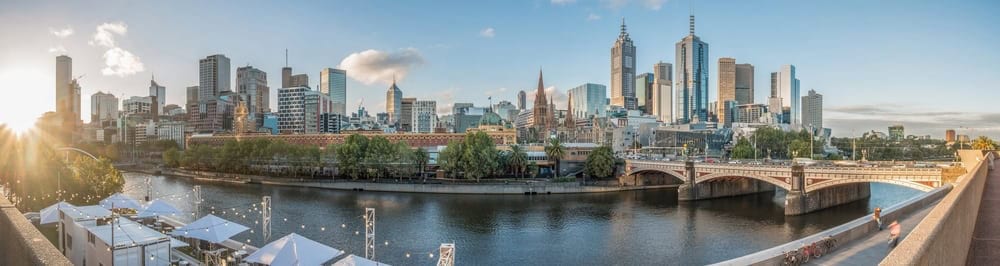
Quick Setup Overview
- Camera: Fujifilm GFX 50S / 50R — 44×33 mm medium-format sensor (approx. 51.4MP), pixel pitch ~5.3 µm, ~14 stops DR at ISO 100, 14-bit RAW. No IBIS on these models.
- Lens: Nikon Z 14–24mm f/2.8 S — rectilinear ultra-wide zoom; excellent sharpness and low CA; focus-by-wire; weather-sealed. Full electronic control required via an active Z→GFX adapter. Image circle sized for full-frame; expect vignetting <18 mm on GFX.
- Estimated shots & overlap (field-tested starting points):
- At 14 mm (if coverage allows): 8 around at 0° pitch, plus 1–2 zenith, 1–2 nadir (30–35% overlap). Expect corner darkening; multi-row is safer.
- At 18 mm: 10–12 around + zenith + nadir (25–30% overlap).
- At 24 mm: 12–14 around + zenith + nadir (25% overlap). For gigapixel, use 2-row: 10 around at +30°, 10 around at −30°, plus zenith/nadir.
- Difficulty: Intermediate (due to mount, nodal alignment, and multi-row workflow).
Planning & On-Site Preparation
Evaluate Shooting Environment
Scan the scene for fast-moving subjects, reflective surfaces (glass, polished floors), and bright light sources. Indoors, determine if window highlights will exceed the sensor’s DR—on the GFX 50-series, HDR bracketing is often recommended for real estate. For glass viewpoints, get as close as possible (1–3 cm) to reduce internal reflections; use a rubber lens hood and shield stray light. Outdoors at sunset, watch for flare and ghosting from low sun—slight re-angles can preserve contrast.
Match Gear to Scene Goals
The GFX 50S/50R shine when you need smooth gradients and deep recovery in shadows—great for cityscapes and interiors. A safe working ISO is 100–400 for critical quality; 800 is still good; beyond that, fine detail can start to soften. The Nikon Z 14–24 S gives you rectilinear geometry, which is ideal for architecture and straight lines but requires more frames than a fisheye. On GFX, favor 18–24 mm to minimize corner cutoff. If you must shoot at 14–16 mm, plan to crop or shoot multi-row to “fill in” the corners.
Pre-shoot Checklist
- Charge batteries; bring a spare. Large pano batches drain power fast.
- Use fast, reliable cards; enable backup slot if available (50R has single SD slot; plan redundancy via repeated takes).
- Clean the front/rear element and sensor; dust in skies is time-consuming to fix across many frames.
- Calibrate your panoramic head for this lens position (entrance pupil alignment).
- Level the tripod with a leveling base; it speeds consistent overlap.
- Safety: tether on rooftops, avoid pole use in strong winds, and secure car mounts with redundant straps.
- Backup workflow: shoot a second pass at the same yaw marks; that extra set can save a project if you discover a soft frame later.
Essential Gear & Setup
Core Gear
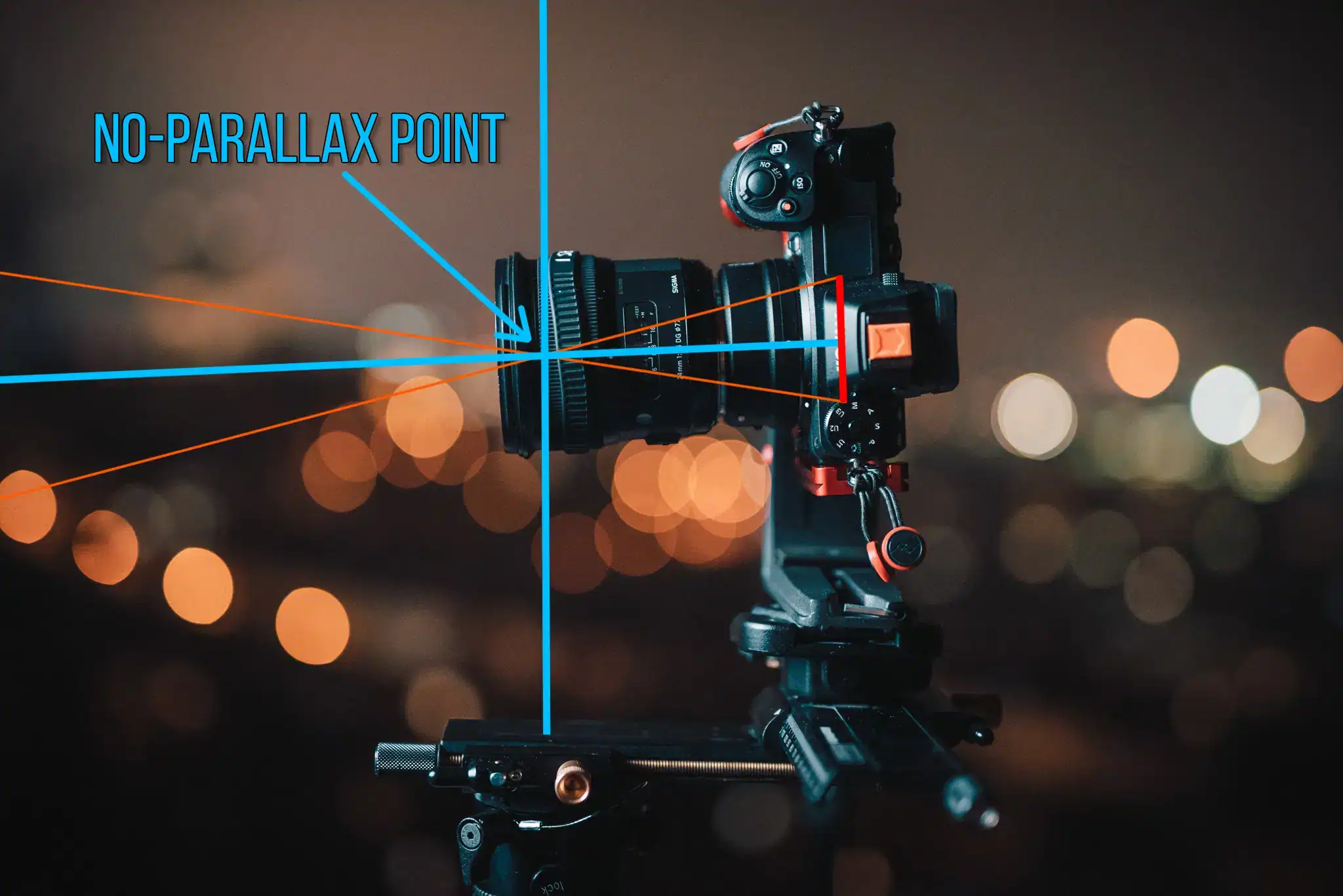
- Panoramic head: Use a proper multi-row head so the camera rotates around the no-parallax point (entrance pupil). This nearly eliminates parallax on foreground objects and is the #1 factor in easy stitching.
- Stable tripod with leveling base: Fast leveling improves stitching and horizon leveling. Carbon legs help in wind, but weight hooks or sandbags are even better.
- Remote trigger or app: Reduce vibrations. On GFX, enable electronic front curtain shutter for long exposures.
Optional Add-ons
- Pole or car mount: Great for crowds or elevated views; double-tether and keep shutter speeds high (1/250–1/500) to counter vibration and sway.
- Lighting aids: Small LED wands or bounced flash for dark interiors—avoid mixed color temps where possible.
- Weather gear: Rain covers, microfiber towels, and a lens hood to manage drizzle and flare.
Step-by-Step Shooting Guide
Standard Static Scenes
- Level and nodal alignment: Level the tripod. Mount the GFX + Z 14–24 S on a panoramic head, and slide the rail until foreground and background elements maintain alignment during a left-right pan. Mark that position on your rail for repeatability.
- Manual exposure and WB: Set M mode, lock exposure and white balance (e.g., Daylight/Cloudy). Meter the brightest frame you’ll shoot; typically expose to protect highlights. Fixing exposure/WB makes stitching and blending consistent.
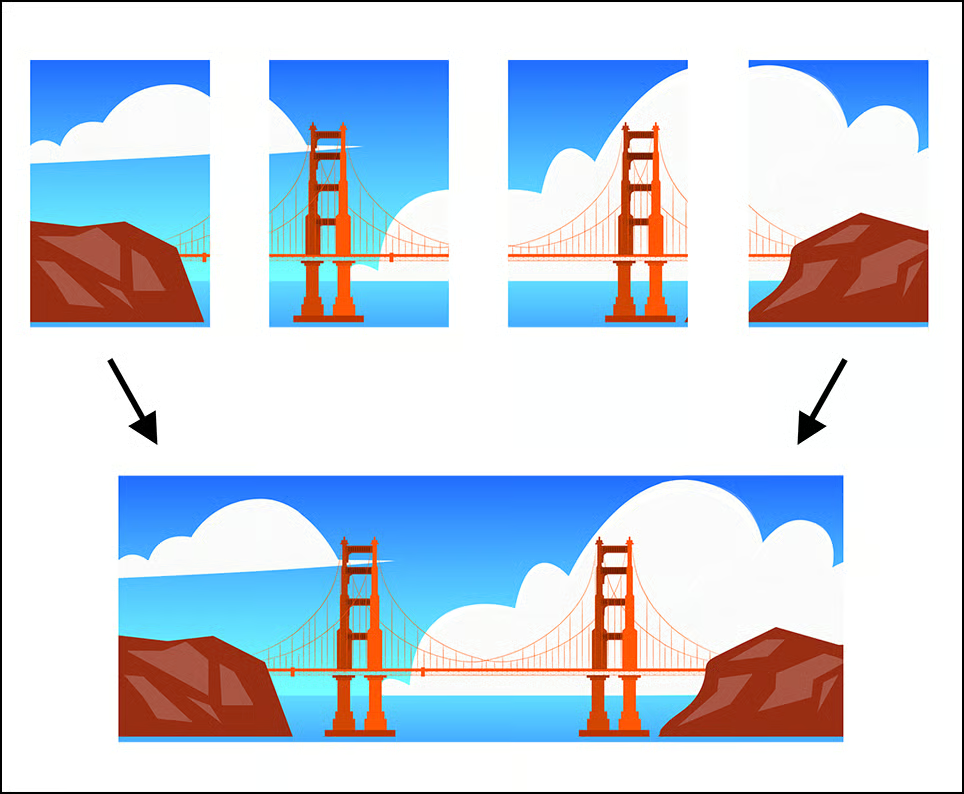
- Capture sequence and overlap: For 18–24 mm, aim for 25–30% overlap. Shoot clockwise or counterclockwise consistently, and avoid bumping the tripod. For 360, capture your around-the-horizon set first, then zenith (up) and nadir (down/ground) frames.
- Nadir shot for tripod removal: Tilt down and take one or two frames to patch the tripod in post. If needed, move the tripod slightly and shoot a “clean plate.”
HDR / High Dynamic Range Interiors
- Bracket ±2 EV (3–5 frames) to balance bright windows and interior shadows. The GFX files merge beautifully with minimal noise at ISO 100–400.
- Keep WB locked across brackets to prevent color shifts. Review histograms to ensure you catch both ends without clipping.
Low-Light / Night Scenes
- Use a tripod and remote; enable EFCS. Start around f/5.6–f/8, ISO 100–400, and adjust shutter to taste (1–30 s depending on light). The 50S/50R don’t have IBIS—stability is everything.
- Beware of star movement in long exposures when shooting multi-row. Consider shorter exposures at higher ISO (400–800) to avoid star trails across frames.
Crowded Events
- Two-pass strategy: Do a fast pass for coverage (1/200–1/500, f/5.6–f/8, ISO 400–800), then repeat select frames when people move away from seams. Later, mask the “clean” parts.
- Avoid parallax by keeping the rig anchored; don’t shift your feet between passes.
Special Setups (Pole / Car / Drone)
- Pole: Use a lightweight pano head, strong clamps, and a safety tether. Keep exposures short (1/250–1/500) and avoid strong wind. Expect more stitching cleanup.
- Car: Suction mount plus strap tether; avoid highways; shoot at low speed or stationary. Vibrations demand faster shutter speeds and more overlap.
- Drone: Not applicable to this body/lens directly, but multi-row planning principles are identical if you later fly a separate rig.
Recommended Settings & Pro Tips
Exposure & Focus
| Scenario | Aperture | Shutter | ISO | Notes |
|---|---|---|---|---|
| Daylight outdoor | f/8–f/11 | 1/100–1/250 | 100–200 | Lock WB (Daylight); prioritize consistent exposure across frames |
| Low light/night | f/4–f/5.6 | 1/30–30 s | 100–800 | Tripod + remote; enable EFCS; test for star movement |
| Interior HDR | f/8 | Bracket ±2 EV (3–5 frames) | 100–400 | Protect window highlights; merge before stitching |
| Action / moving subjects | f/5.6–f/8 | 1/200+ | 400–800 | Two-pass capture; blend the clean frames |
Critical Tips
- Manual focus at hyperfocal: On rectilinear ultra-wides, set focus ~1–2 m at f/8–f/11 to keep foreground and infinity sharp. Focus once, then switch to MF to lock.
- Find and mark the nodal point: Use a light stand or door frame as a near object; pan on the head and slide the rail until foreground and distant background don’t shift relative to each other. Mark that rail position for 14, 18, and 24 mm—focus breathing on focus-by-wire lenses can slightly alter the entrance pupil.
- White balance lock: Mixed lighting can cause color flicker. Pick a WB and stick to it; shoot RAW for latitude.
- RAW vs JPEG: Always shoot RAW on GFX; the dynamic range and color depth matter for 360 blends and sky gradients.
- Stabilization: GFX 50S/50R lack IBIS; the Z 14–24 S has no VR. Use a rock-solid tripod and remote. If you ever shoot handheld, use higher shutter speeds and overshoot overlap.
Stitching & Post-Processing
Software Workflow
Merge HDR (if used) first in Lightroom or your HDR tool, then export 16-bit TIFFs for stitching. PTGui is a gold standard for complex multi-row and mixed focal-length jobs and handles medium format files well. Hugin is an excellent free alternative. Rectilinear lenses require more frames than fisheyes but render straight lines beautifully. Aim for ~25–30% overlap at 14–18 mm and ~20–25% at 24 mm. Keep yaw increments consistent and label rows. For 360 equirectangular output, PTGui’s “Spherical” projection and auto horizon tools are efficient. For simpler single-row panos, Lightroom/Photoshop can work, but PTGui gives you superior control over control points and masking. See a detailed PTGui overview at the end of this paragraph. PTGui review: why it’s a top-tier panorama tool.
Cleanup & Enhancement
- Tripod/nadir patch: Use a clean-plate shot or content-aware fill; pano-specific tools and AI can help.
- Color and noise: Correct WB drifts and unify color casts. Apply gentle noise reduction to shadows from HDR merges.
- Horizon and leveling: Use the software’s vertical line tool or auto level; verify pitch/roll visually.
- Export: For VR, export a 2:1 equirectangular JPEG/TIFF; for prints, consider cylindrical/planar projections as needed.
For a concise overview of panoramic head setup and shooting sequence standards, the following resources are excellent starting points: Oculus guide to setting up a panoramic head and this panoramic head tutorial with best practices. Panoramic head setup: practical tips and examples.
Useful Tools & Resources
Software
- PTGui panorama stitching
- Hugin (open-source alternative)
- Lightroom / Photoshop for RAW and finishing
- AI tripod removal tools (content-aware fill/Generative tools)
Hardware
- Panoramic heads: Nodal Ninja, Leofoto, Really Right Stuff
- Carbon fiber tripods with a leveling base
- Wireless remote shutters or camera apps
- Pole extensions and car mounts with safety tethers
Disclaimer: Names are for reference; check official sites for the latest specifications and compatibility.
Field Scenarios & Settings That Work
Indoor Real Estate (Window View + Interior)
Mount on a panoramic head, set 24 mm for minimal distortion of verticals. Shoot at f/8, ISO 100–200. Bracket ±2 EV (3–5 frames). Two rows (0° and +30°) cover ceiling features; add a nadir frame. Merge HDR first, then stitch in PTGui. Deliver a 12k–20k px equirectangular for VR tours if the client requires detail.
Outdoor Sunset Cityscape
At 18 mm, f/8–f/11, ISO 100, 1/60–1/250. Lock WB to Daylight for consistent color. If dynamic range is extreme, do a 2–3 frame bracket (−2/0/+2). Wind: weigh the tripod. Consider a short multi-row for taller buildings; add zenith to capture sky gradient without a hard cut at the top of frame.
Event Crowd in a Plaza
Set 14–18 mm (verify vignetting on GFX), f/5.6–f/8, ISO 400–800, 1/250+. Capture a quick pass to freeze motion, then wait for gaps and re-shoot frames with fewer subjects where seams will be. Blend in PTGui with masking to remove duplicates/ghosts.
Rooftop / Pole Capture
Consider 18–24 mm to reduce corner cutoff. Use 1/250–1/500 at f/5.6–f/8, ISO 200–800 depending on light. Double-tether the camera. Avoid gusts; if wind picks up, lower the pole height or postpone. Expect to patch the nadir more aggressively because of the pole base.
Common Mistakes & How to Avoid Them
- Parallax error: Not rotating around the entrance pupil causes stitching glitches. Calibrate the panoramic head for each focal length.
- Exposure flicker: Auto ISO/shutter/aperture will cause visible seams. Use full manual exposure and locked WB.
- Insufficient overlap: Less than ~20–25% can confuse the stitcher. Err on the side of more overlap, especially if handholding.
- Tripod shadows and nadir issues: Always take a nadir frame; shoot a clean plate if possible.
- Night noise and blur: Keep ISO low and use a timer/remote. If wind shakes the setup, shorten shutter time and take more frames.
- Adapter assumptions: With this specific combo, confirm you can control aperture/focus via an active Z→GFX adapter. Test before critical work.
Frequently Asked Questions
- Can I shoot handheld panoramas with the Fujifilm GFX 50S/50R?
Yes, in a pinch. Use higher shutter speeds (1/250+), more overlap (30–40%), and a single-row approach. However, for 360 or multi-row work, a tripod and panoramic head are strongly recommended to avoid parallax and stitching pain.
- Is the Nikon Z 14–24mm f/2.8 S wide enough for single-row 360 on GFX?
At 14 mm, it is wide—but on 44×33 mm GFX you may see corner cutoff/vignetting at the widest settings. Practically, 18–24 mm yields cleaner coverage. For full 360, plan on 8–12 around plus zenith/nadir—or do a 2-row capture for safer pole coverage.
- Do I need HDR for interiors with bright windows?
Often yes. The GFX has strong DR, but window-to-interior contrast can exceed 14 stops. Bracket ±2 EV (3–5 frames), merge to 16-bit TIFFs, then stitch. Keep WB fixed across brackets.
- How do I avoid parallax issues with this setup?
Use a panoramic head and align the rotation around the lens entrance pupil. Calibrate at 14, 18, and 24 mm since zooms shift the entrance pupil. Lock focus and avoid moving the tripod between rows.
- What ISO range is safe on the GFX 50S/50R in low light?
ISO 100–400 is ideal. 800 is generally safe with careful exposure; beyond that, shadow noise and reduced micro-contrast become more noticeable in large prints and 360 zooms.
Additional References
For deeper dives into gear choice and techniques, these overviews are helpful: Virtual tour camera & lens guide and a practical discussion of focal lengths for panoramas. Panoramas and focal lengths explained.
Final Notes & Trust Tips
Always test your adapter and lens control before a paid job. Confirm you can set aperture and focus reliably on the Z 14–24 S from the GFX body via the adapter. Do a full rehearsal: nodal calibration, overlap spacing, and a test stitch. Back up on-site (dual cards or a duplicate pass), protect the gear from wind and impact, and keep a microfiber cloth handy for sudden flare or drizzle. When executed with care, this combo can deliver breathtaking, high-resolution 360 photos and panoramic prints with the signature tonality of the GFX sensor and the crisp rendering of Nikon’s S-line ultra-wide.