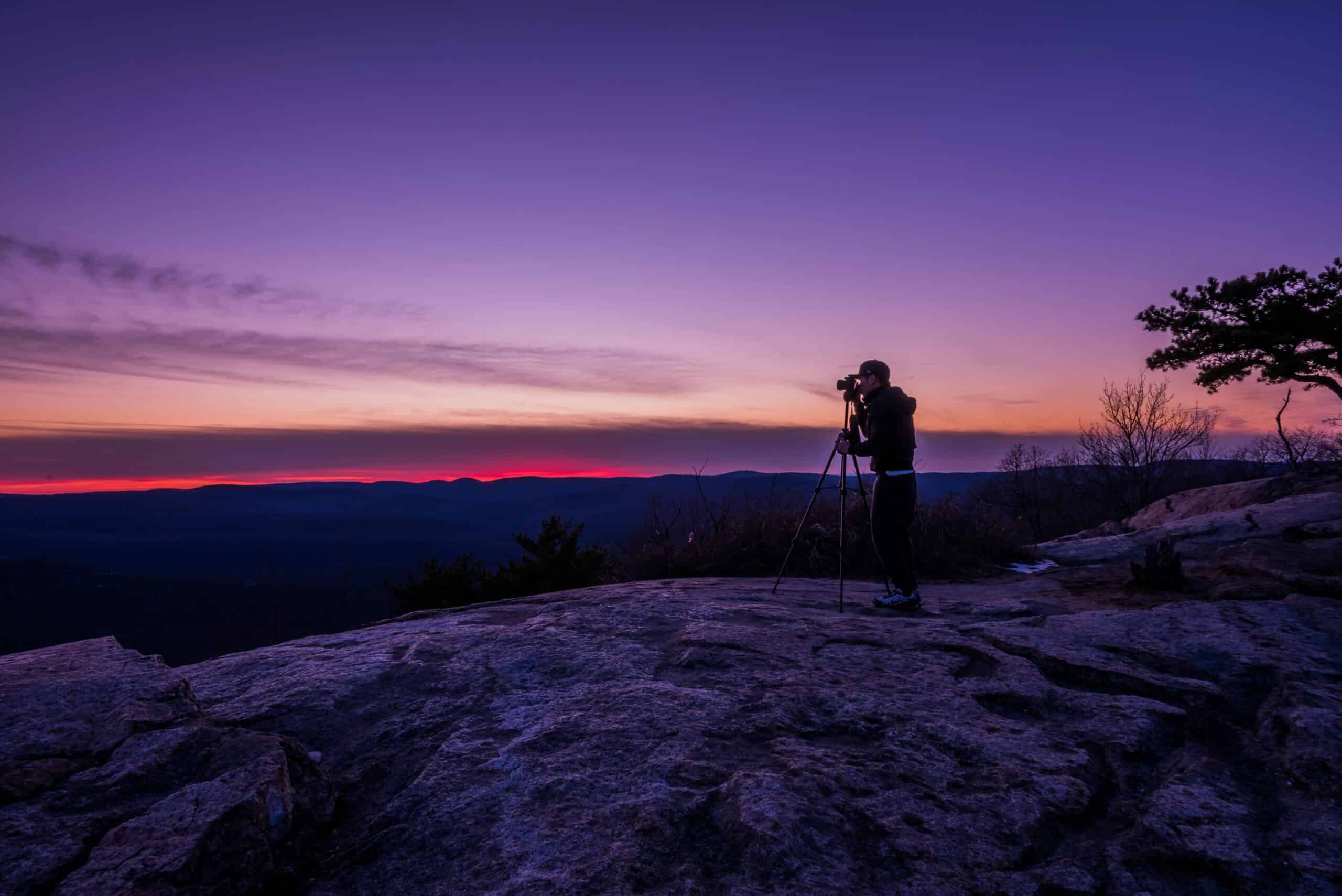
Why This Camera & Lens Are Great for Panoramas
If you want to learn how to shoot panorama with Fujifilm GFX 50S / 50R & Laowa 4mm f/2.8 Circular Fisheye, you’re pairing a high-resolution medium-format sensor with an ultra-wide, 210° circular fisheye that can complete a full 360×180 in as few as two frames. The GFX 50S/50R provides rich tonal latitude and clean color from its 51.4MP 43.8 × 32.9 mm sensor, while the Laowa 4mm f/2.8 (manual focus, manual aperture) covers an immense field of view with a tiny, lightweight body.
Key advantages:
- Resolution and dynamic range: The GFX 50S/50R’s 51.4MP sensor (pixel pitch ~5.3 µm) delivers around 14 stops of DR at base ISO, letting you recover highlights and lift shadows in complex lighting.
- Clean ISO: Practical 360 workflows typically hold ISO to 100–800 for the cleanest stitch. The GFX 50 files handle ISO 1600–3200 acceptably in emergencies, but tripod use keeps you comfortably at low ISO.
- Fisheye efficiency: The Laowa’s 210° circular projection can cover the entire sphere with only 2 shots around (180° apart). Fewer frames mean faster capture, less chance of ghosting and parallax, and quicker stitching.
- Manual control: The Laowa’s manual aperture and focus simplify consistent exposure and focus across frames—ideal for stitching reliability.
- Compatibility tip: Use the Laowa 4mm f/2.8 in Fujifilm X-mount on your GFX via a passive X-to-GFX adapter. The lens projects a circular image that will sit within the larger GFX frame, so the smaller image circle is not a problem for panoramas.
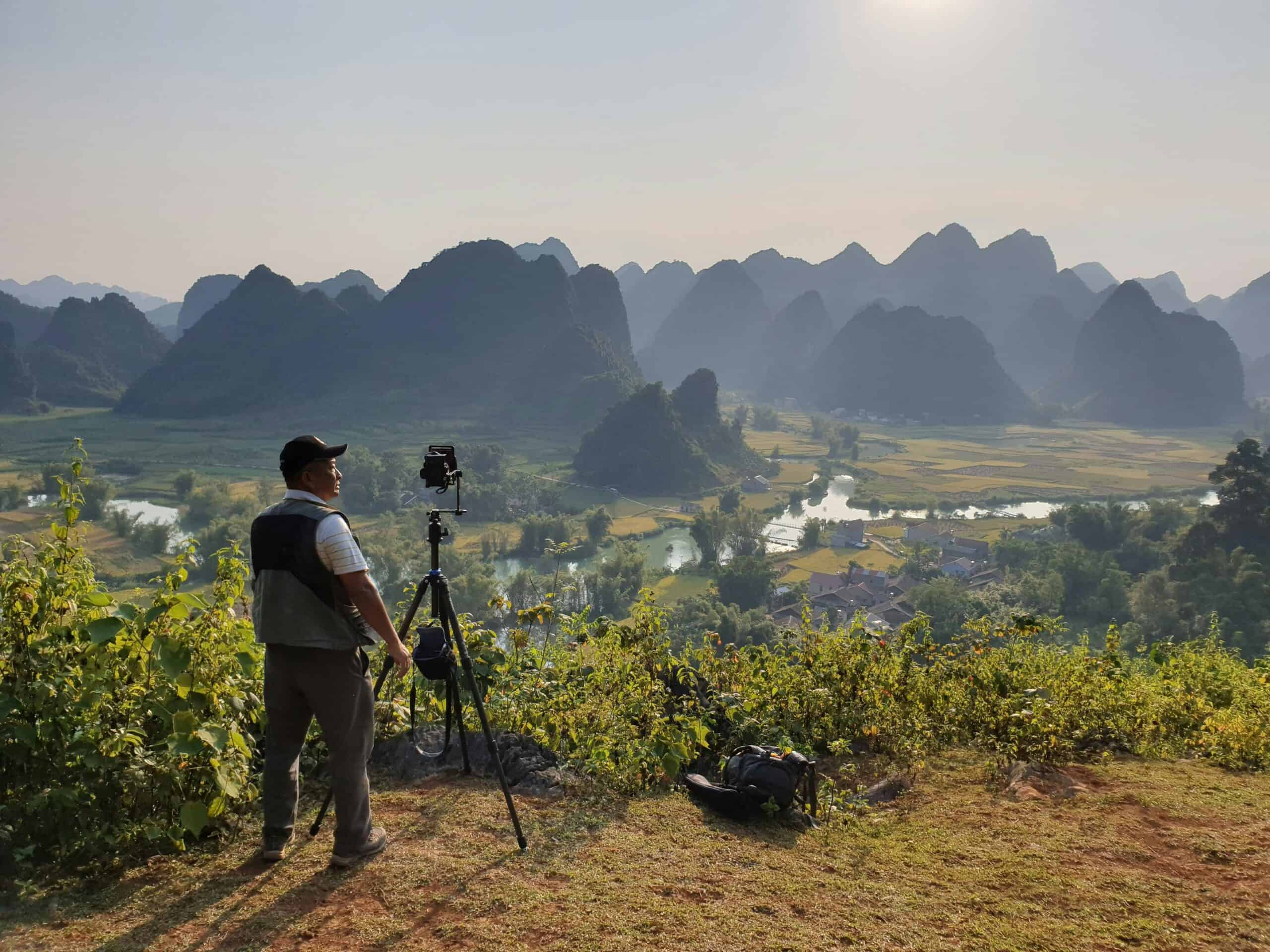
Distortion considerations: A circular fisheye intentionally bends straight lines, which is fine for equirectangular 360 photos. But for conventional flat panoramas, you’ll want to “defish” or control projection during stitching. With 210°, you’ll capture zenith and nadir within the circle—handy for full-sphere work.
Quick Setup Overview
- Camera: Fujifilm GFX 50S / 50R — 43.8 × 32.9 mm medium-format CMOS, ~51.4MP (8256 × 6192); ~14 stops DR at base ISO; pixel pitch ~5.3 µm. No IBIS on 50S/50R (use a solid tripod).
- Lens: Laowa 4mm f/2.8 Circular Fisheye (Fuji X-mount via passive X→GFX adapter) — 210° circular fisheye; manual focus and aperture; best sharpness around f/5.6–f/8; some edge CA and flare if pointed near the sun or bright fixtures.
- Estimated shots & overlap:
- 2 shots around at 180° spacing (full 360×180, ~60° horizontal overlap).
- 3 shots around at 120° spacing for safer overlap in complex scenes.
- Nadir often not required thanks to 210° vertical coverage, but a patch shot can help remove tripod.
- Difficulty: Easy–Moderate (2/5) if your nodal point is calibrated; Moderate indoors with reflective surfaces.
Planning & On-Site Preparation
Evaluate Shooting Environment
Survey light, movement, and reflective surfaces. For interiors with bright windows, plan on HDR bracketing to avoid blown highlights. With glass or glossy metal, minimize reflections by shooting a slightly darker base exposure and avoiding bright sources in the frame edges of each shot. If you must shoot through glass, get close (1–2 cm) with a rubber lens hood to reduce reflections and flare. Outdoors, watch wind and tripod stability; 2-shot panos are quick, but a gust can ruin a long exposure.
Match Gear to Scene Goals
Why GFX 50S/50R & Laowa 4mm works well: The GFX files are forgiving—underexpose slightly and recover shadows cleanly at ISO 100–400. For interiors, ISO 400–800 is safe; at night, stay on a tripod and keep ISO low, stretching shutter as needed. The fisheye drastically reduces shot count, boosting speed for events, rooftops, or time-sensitive light. The trade-off is resolution: because the image is a circular projection, your final equirectangular width typically lands around 9,000–12,000 px for a 2-shot workflow—plenty for web VR and editorial use, but not “gigapixel.” For ultra-high-res panos, use a longer focal length and multi-row approach.
Pre-shoot Checklist
- Power and storage: Fully charged batteries and two formatted UHS-II SD cards; enable dual-card backup.
- Optics clean: Front element of the 4mm is bulbous; clean smudges and dust carefully.
- Tripod and head: Leveling base and a properly calibrated panoramic head (entrance pupil aligned).
- Safety checks: On rooftops or poles, tether your camera, check wind thresholds, and avoid public walkways below.
- Backup workflow: Shoot a second pass at slightly different yaw angles for redundancy; it’s fast with a 2-shot method.
Essential Gear & Setup
Core Gear
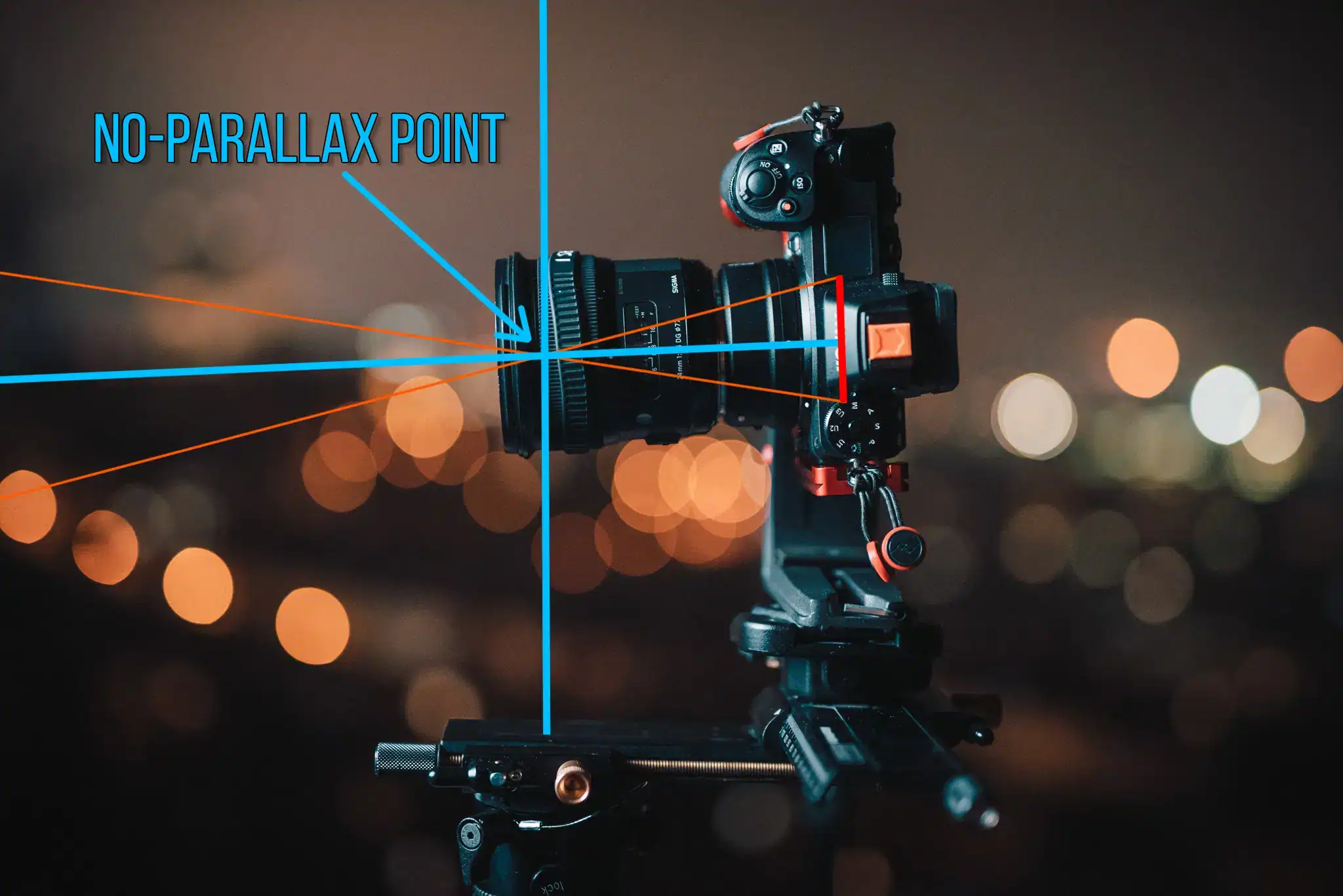
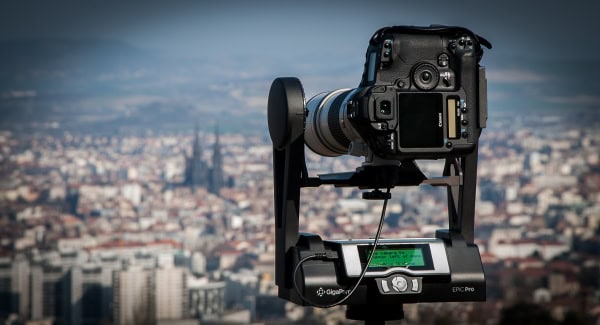
- Panoramic head: Use a head that lets you align the entrance pupil (commonly called “nodal point”) to eliminate parallax. This is critical when foreground objects are near.
- Stable tripod with leveling base: Leveling keeps your yaw increments even, reducing stitching stress.
- Remote trigger/app: Use a 2-sec timer, cable release, or the Fujifilm app to prevent vibrations. EFCS (electronic front curtain) helps reduce shutter shock.
Optional Add-ons
- Pole or car mount: Amazing perspectives, but use a safety tether and keep shutter speeds higher (1/200–1/500) to fight vibration. Avoid deploying poles in strong winds.
- Lighting: Small LED panels or bounced flash to balance dark interiors (avoid harsh hotspots that can cause stitching mismatch).
- Weather covers: The Laowa’s front element is exposed; use a rain cover in drizzle and a microfiber cloth handy.
Step-by-Step Shooting Guide
Standard Static Scenes
- Level and align: Level the tripod using the leveling base. Mount the GFX and Laowa on the panoramic head. Calibrate the entrance pupil so that foreground and background objects don’t shift relative to each other when panning.
- Manual exposure and white balance: Set Manual mode, RAW, and lock WB (e.g., Daylight or Kelvin value). Consistency prevents stitch seams and color shifts.
- Focus: Manual focus to near-infinity with the Laowa; for interiors, focus at the hyperfocal distance around f/5.6–f/8. Use focus peaking on the GFX to confirm.
- Capture:
- Option A (fast): 2 shots 180° apart. This usually covers 360×180 thanks to the 210° FOV.
- Option B (safer): 3 shots at 0°, 120°, 240° to increase overlap in tricky scenes with close objects.
- Nadir patch: Although the 210° coverage often includes the ground, grab a quick nadir patch (handheld above the tripod or after lifting the rig) for cleaner tripod removal.
HDR / High Dynamic Range Interiors
- Bracket ±2 EV (3 or 5 frames): The GFX sensor is excellent, but sunlit windows versus interior shadows still benefit from bracketing. Keep the same aperture and ISO; vary shutter speed.
- Lock WB and keep the camera still: Any movement between brackets will complicate merging. Use a remote or self-timer.
- Workflow: For each yaw angle, capture your bracket set, then rotate to the next angle. Merge HDR per angle before stitching for best control.
Low-Light / Night Scenes
- Aperture f/4–f/5.6, ISO 100–400 when possible; lengthen shutter as needed (1–10 seconds). The 50MP sensor rewards low ISO with deep tonal subtlety.
- Turn on EFCS, use a 2-sec timer or remote release. A weighted hook under the tripod can reduce sway outdoors.
- Consider a second safety pass in case a gust or passerby spoils a frame.
Crowded Events
- Two passes technique: Shoot one quick round for layout, then wait for gaps and shoot a second cleaner round.
- Use the 3-shot method (0°/120°/240°) for more overlap—this helps mask moving people during stitching.
- Short shutters (1/200+) minimize motion blur. If light is low, raise ISO to 800–1600 and fix noise in post.
Special Setups (Pole / Car / Drone)
- Pole: Keep the camera centered over the rotation axis, tether everything, and mind wind load. Use 1/200–1/500 shutter. Rotate slowly with a detented rotator if possible.
- Car mount: Avoid busy streets; park safely. Use suction mounts with safety cables. Check vibrations and shoot at faster shutter speeds.
- Drone: The GFX is not a drone payload. Instead, apply the same principles to a dedicated drone rig with a circular fisheye or capture from the ground then stitch normally.
Recommended Settings & Pro Tips
Exposure & Focus
| Scenario | Aperture | Shutter | ISO | Notes |
|---|---|---|---|---|
| Daylight outdoor | f/8–f/11 | 1/100–1/250 | 100–200 | Lock WB (Daylight or 5600K) for consistent color |
| Low light/night | f/4–f/5.6 | 1/30–10s | 100–400 | Tripod + EFCS + remote; avoid pushing ISO if you can |
| Interior HDR | f/8 | Bracket ±2 EV | 100–400 | Merge HDR per angle before stitching |
| Action / crowds | f/5.6–f/8 | 1/200+ | 400–800 (1600 if needed) | Double pass to mask people later |
Critical Tips
- Manual focus: The Laowa has a short focus throw. For most scenes, set near infinity at f/5.6–f/8 and verify with magnified live view.
- Nodal calibration: Place two vertical objects (one close, one far) and pan. Adjust the fore-aft rail until there’s no relative shift. Mark the rail position for this combo.
- White balance lock: Mixed lighting can vary frame-to-frame. Use a fixed Kelvin value or a custom WB and stick to it.
- RAW over JPEG: The GFX sensor shines in RAW. You’ll get more highlight recovery and a smoother stitch.
- Stabilization: GFX 50S/50R has no IBIS. Keep the rig stable. If using any OIS lens (not the Laowa), turn OIS off on a tripod.
- Adapter check: Use a solid X→GFX passive adapter. Confirm it doesn’t introduce tilt or light leaks.
Stitching & Post-Processing
Software Workflow
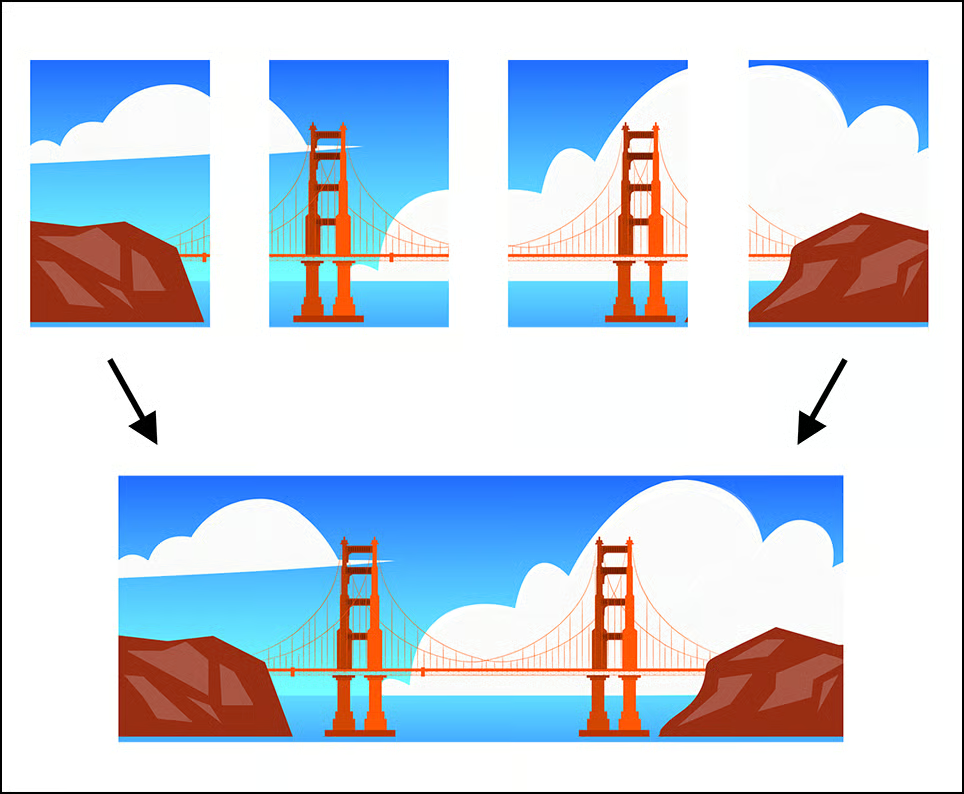
Import RAWs to Lightroom or Capture One and apply basic exposure/WB consistency. If you bracketed, merge to HDR DNGs first per yaw angle. Then stitch with PTGui (industry standard for 360), Hugin (open-source), or other pro tools. For a circular fisheye, set the input lens type to “full circular fisheye,” enter FOV near 210°, and let the optimizer run. Expect equirectangular outputs around 9–12K wide from a 2-shot workflow, depending on how many pixels the circle occupies on the GFX frame. For background reading on field-of-view and pano resolution with different lenses, see the Panotools spherical resolution notes. Reference: DSLR spherical resolution (Panotools Wiki)
Cleanup & Enhancement
- Nadir cleanup: Use a handheld nadir patch or clone/heal tools. Many virtual tour platforms support easy nadir patching.
- Level the horizon: Use the pitch/roll/yaw controls in PTGui/Hugin to align the horizon perfectly.
- Color and noise: Fine-tune WB, fix color casts from mixed lighting, and apply gentle noise reduction for ISO 800+ captures.
- Export: Save a 16-bit TIFF master and an 8-bit equirectangular JPEG for web/VR. Follow the target platform’s recommended pixel dimensions and JPEG quality.
PTGui is widely considered the most robust for complex 360 jobs; review tools and settings before a critical shoot. Reference: PTGui review (Fstoppers)
For a fundamentals refresher on panoramic heads and setup, this guide is a solid primer to reduce parallax and maximize stitch success: Panoramic head tutorial (360Rumors)
Useful Tools & Resources
Software
- PTGui panorama stitching
- Hugin (open source)
- Adobe Lightroom / Photoshop
- AI tripod/nadir removal utilities
Hardware
- Panoramic heads: Nodal Ninja, Leofoto, Really Right Stuff
- Carbon fiber tripods with leveling bases
- Detent rotators for precise yaw increments
- Wireless remote shutters
- Pole extensions / car suction mounts with safety tethers
Disclaimer: product and software names are for search/reference; consult official sites for specifications and latest workflows.
Common Mistakes & How to Avoid Them
- Parallax error: Always align the entrance pupil for the Laowa 4mm on your panoramic head. Recheck if you change aperture or focus distance significantly.
- Exposure flicker: Manual exposure and locked WB only. Don’t use auto ISO or auto WB mid-pan.
- Tripod in frame: The 210° FOV sees everything. Shoot a nadir patch or plan to clone it out.
- Ghosting: People or cars moving between frames cause ghosts—shoot faster, take two passes, and mask in post.
- Flare and CA: The circular fisheye can flare with strong backlight and show edge CA. Adjust your yaw to keep bright sources off the extreme edge and correct CA in post.
- Adapter issues: Poor adapters can tilt the plane. Use a quality X→GFX adapter and check for light leaks.
Real-World Scenarios & Field Advice
Indoor Real Estate (Mixed Light + Windows)
Use a 3-shot round at 120° for extra overlap. Bracket ±2 EV (3–5 exposures per yaw). Lock WB at a neutral Kelvin (e.g., 4000–5000K) to reduce warm lamp vs cool window shifts. Merge to HDR DNGs, then stitch. The GFX sensor lets you preserve highlight detail outside windows while maintaining clean interior shadows. Expect to patch the nadir and perform gentle vertical leveling.
Outdoor Sunset
Arrive early. Shoot a quick 2-shot capture at base ISO with the sun just off-center to reduce flare. As the sun drops, bracket a second set at each yaw. Blend the sky carefully in post. If wind is present, hang weight from the tripod and keep exposures shorter (1/60–1/250) if possible.
Event Crowds
Use 3 shots around (120°) for greater overlap. Shoot two passes: one fast for safety, another timing when individuals turn away or move to reduce duplicates. Shutter at 1/200–1/500. Use masks in PTGui/Photoshop to remove ghosting.
Rooftop/Pole Shooting
Safety first: tether the camera and avoid the edge. If using a pole, keep the rig compact and rotate smoothly with a detent rotator. Because the Laowa sees 210°, be mindful of your own body position to avoid appearing in frame. A second pass with slight yaw offsets often saves the day in high-vibration conditions.
Frequently Asked Questions
-
Can I mount the Laowa 4mm on my GFX directly?
Use the Laowa 4mm f/2.8 in Fujifilm X-mount and a passive X→GFX adapter. It projects a circular image, so the smaller image circle is expected. The lens is fully manual, so a passive adapter works fine.
-
Is the Laowa 4mm wide enough for single-row 360?
Yes. With a 210° circular fisheye, you can complete a 360×180 with 2 shots 180° apart. For complex scenes or near foregrounds, use 3 shots at 120° for more overlap.
-
Do I need HDR for interiors with bright windows?
Usually yes. Bracket ±2 EV (3–5 frames) per yaw angle. Merge HDR first, then stitch. The GFX’s dynamic range helps, but bracketing ensures clean window detail and noise-free shadows.
-
How do I avoid parallax issues with this setup?
Calibrate the entrance pupil on your panoramic head using the near/far object method. Mark the correct rail position for the Laowa 4mm so you can repeat it quickly.
-
What ISO range is safe on the GFX 50S/50R in low light?
For critical quality, ISO 100–800 is ideal. ISO 1600–3200 is usable with good noise reduction, but prefer a longer shutter on a stable tripod when possible.
-
Can I shoot handheld panoramas with the GFX and Laowa 4mm?
You can in a pinch thanks to 2-frame coverage, but expect more stitching errors. Keep shutter at 1/200+ and rotate around the lens entrance pupil. A tripod with a pano head remains far more reliable.
-
How can I reduce flare with a circular fisheye?
Avoid placing strong light sources at the very edge of the circle. Shade the lens with your hand (kept out of frame) or reposition so the sun falls just outside of the frame edges between shots.
-
What pano head is best for this combo?
Look for a compact head with precise fore-aft adjustment and a detent rotator (e.g., Nodal Ninja, Leofoto). Even with only 2–3 shots, accurate entrance pupil alignment is crucial.
Further Reading
For a practical DSLR/mirrorless 360 overview that parallels this workflow, see the Oculus guide on shooting and stitching 360 photos. Using a DSLR or mirrorless to shoot and stitch a 360 photo (Meta/Oculus)
For a deep dive on pano focal lengths and projection choices, this B&H explainer remains helpful. Panoramas, focal lengths, and Photoshop (B&H Explora)
Safety, Limitations & Backup Strategy
Medium-format bodies and rigs can be heavy. Always confirm tripod leg locks, keep the center column low, and tether the camera on rooftops, bridges, or poles. Avoid operating over crowds. The Laowa’s bulbous front element is delicate—use the cap when not shooting and avoid bumping it during rotation.
Limitations: With a circular fisheye, your final pano resolution is dictated by how many pixels the circle occupies. Expect roughly 9–12K equirect width with 2 frames on the GFX, depending on adapter tolerances and framing. For ultra-high-res gigapixel work, switch to a longer lens on a multi-row head.
Backup tips: Use dual SD slots with backup mirroring, shoot a second pass, and dump cards to two locations after the shoot (laptop + portable SSD). Keep a small notebook (or phone note) with your nodal settings and exposure recipes for faster future setups.