
Why This Camera & Lens Are Great for Panoramas
The Fujifilm GFX 50S / 50R is a 51.4MP medium‑format mirrorless system (43.8 × 32.9 mm sensor, approx. 8256 × 6192 pixels) with generous 14‑bit RAW files, excellent base‑ISO dynamic range (~14 stops at ISO 100), and large 5.3 µm pixels that retain detail and color depth. That combination makes it a fantastic capture device for high‑resolution panoramic and 360° photography, where tonal latitude and fine texture matter.
The Fujifilm XF 10–24mm f/4 OIS WR is a rectilinear ultra‑wide zoom designed for Fujifilm X‑mount APS‑C cameras. It’s sharpest around f/5.6–f/8, controls chromatic aberration well, and offers optical stabilization (OIS) that’s useful for handheld panos or pole work. However, an important compatibility note: XF lenses are not natively compatible with GFX bodies. Even with a third‑party mechanical adapter, the XF 10–24’s APS‑C image circle does not cover the GFX sensor, resulting in heavy vignetting unless you crop aggressively (to an APS‑C‑sized region in the center). This means two things:
- If you truly must use the XF 10–24 with a GFX 50S/50R, expect a significant crop, effectively reducing per‑frame resolution (often to roughly 12–20 MP of usable image area, depending on coverage and focal length). That can still be fine for panoramas, because the final stitched output often exceeds 100–300 MP.
- For a native, full‑coverage solution on GFX, consider the GF 20–35mm f/4 or GF 23mm f/4. The practical pano techniques below are identical; only the shot count and overlap change slightly.
Bottom line: the GFX 50S/50R provides class‑leading image quality for panoramic capture. The XF 10–24mm f/4 OIS WR is an excellent ultra‑wide zoom for APS‑C that can be adapted in a pinch for cropped‑area shooting on GFX, but a native GF wide lens is more straightforward. If you proceed with the XF 10–24 on GFX, the guidance below will help you capture clean, stitchable frames with professional consistency.
Quick Setup Overview
- Camera: Fujifilm GFX 50S / 50R — 43.8 × 32.9 mm medium format sensor, 51.4MP (8256 × 6192), ~14 stops DR at base ISO, 14‑bit RAW, no IBIS on 50S/50R (note: 50S II adds IBIS).
- Lens: Fujifilm XF 10–24mm f/4 OIS WR — rectilinear APS‑C ultra‑wide zoom, weather‑resistant, best at f/5.6–f/8; minor barrel distortion at the wide end; OIS helps when handheld or on a pole. Not natively compatible with GFX; expect heavy vignetting without significant cropping.
- Estimated shots & overlap (assuming rectilinear coverage comparable to APS‑C):
- At 10mm (approx. 15mm FF‑eq on APS‑C): 2 rows of 8 around (every 45°) at 0° and +45° pitch, plus zenith and nadir (≈18–20 frames). 25–30% overlap.
- At 14mm (≈21mm FF‑eq): 2 rows of 10 around (every 36°) + zenith + nadir (≈22–24 frames).
- At 24mm (≈36mm FF‑eq): 3 rows of 12 around (every 30°) + zenith + nadir (≈38–42 frames). Use only if you want very high final resolution and have time.
- Difficulty: Moderate to Advanced — requires proper nodal alignment and consistent exposure for seamless stitching.
Planning & On-Site Preparation
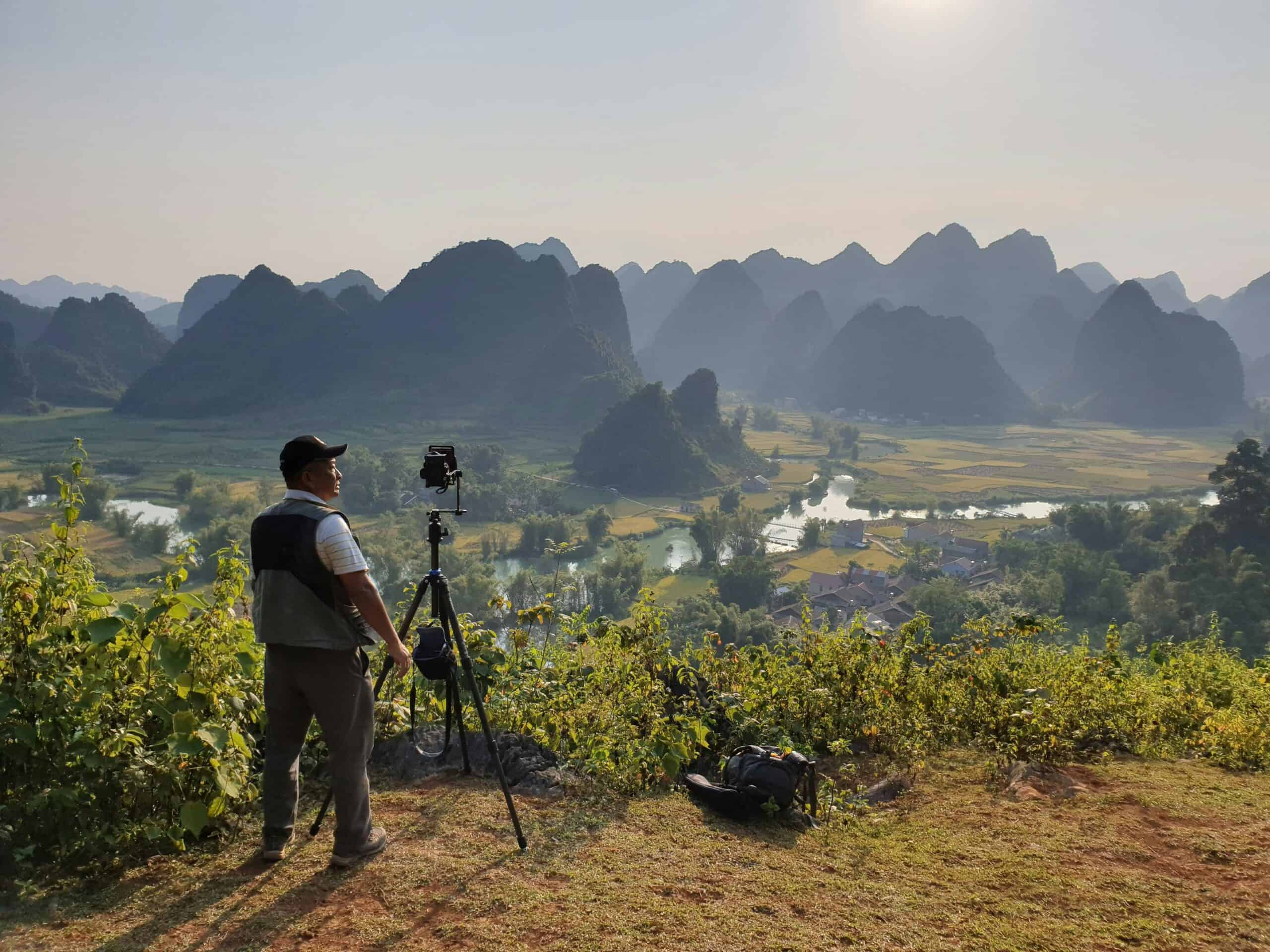
Evaluate Shooting Environment
Walk the scene and note light direction, reflective surfaces (glass, polished stone, cars), and moving elements (people, trees, traffic). If shooting near glass, keep the front element close and at a shallow angle to the surface to reduce reflections; a lens hood or a dark cloth can also help. For sunsets or night shots, identify light sources that may cause flare and adjust angles to minimize artifacts.
Match Gear to Scene Goals
The GFX 50S/50R’s large sensor delivers rich dynamic range and excellent color, crucial for intricate HDR panoramas and architectural interiors with bright windows. You can safely work at ISO 100–400 for maximum quality, pushing to 800–1600 at night if you must. The XF 10–24mm f/4 OIS WR provides flexible framing and sharp results when used within its coverage limits. For fast‑moving scenarios or pole work, OIS can help stabilize handheld frames; on a tripod, switch OIS off to avoid micro‑blur. If you need full sensor coverage, prefer a native GF wide‑angle; otherwise plan for a center crop with the XF 10–24.
Pre-shoot Checklist
- Charge batteries, format cards, and clean lens/sensor. Dust bunnies are painful to clone across 30+ tiles.
- Level the tripod and pre‑calibrate your panoramic head for this camera/lens combo (nodal point alignment).
- Safety: Assess wind, rooftops, balconies, and car mounts. Use tethers and sandbags where applicable.
- Backup workflow: When time allows, shoot a second pass (especially for critical interiors) to ensure redundancy.
Essential Gear & Setup
Core Gear
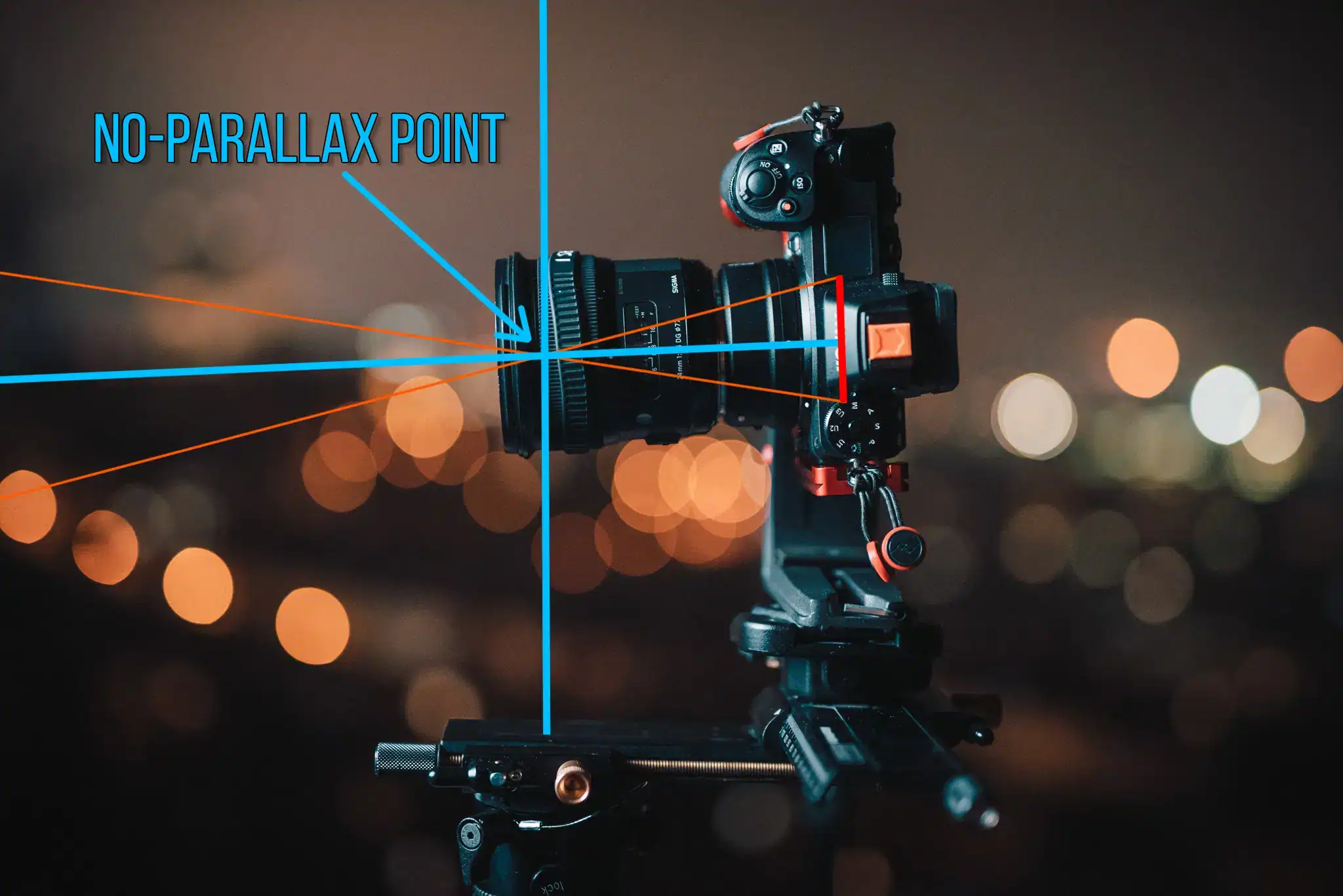
- Panoramic head: Lets you rotate around the lens’s no‑parallax (nodal) point so foreground and background align without parallax error. This is the most critical piece for high‑quality 360 photos.
- Stable tripod with a leveling base: A leveling base speeds setup, keeps yaw increments accurate, and reduces horizon tilt.
- Remote trigger or app: Minimizes vibration. The GFX self‑timer (2s) also works well on a locked tripod.
Optional Add-ons
- Pole or car mount: Great for elevated viewpoints or vehicle‑mounted captures. Use safety tethers, check local regulations, and avoid high winds that can flex poles and smear frames.
- Lighting aids: Small LED panels or bounced flash for dark interiors; shoot brackets to blend with ambient.
- Weather protection: Rain covers and microfiber cloths; avoid changing lenses in dusty wind.
For an excellent primer on panoramic heads and setup details, see this panoramic head tutorial for practical diagrams and workflow tips. Panoramic head tutorial
Step-by-Step Shooting Guide
Standard Static Scenes
- Level and align the nodal point:
- Mount the camera on the panoramic head. Place two light stands or vertical objects, one close and one far, and pan the camera. Adjust the fore‑aft position on the rail until the close object stays aligned with the far one as you pan. Mark the rail for your focal lengths (e.g., 10, 14, 24mm).
- On the XF 10–24, expect slightly different nodal offsets at each focal length. Calibrate once and save your marks.
- Manual exposure and locked white balance:
- Set M mode and meter for the brightest part of the scene you want to retain (e.g., sky or window) if not doing HDR; otherwise, prepare bracketing.
- Set fixed WB (Daylight ~5500–5600K outdoors; Tungsten ~3200K indoors). Avoid Auto WB to prevent color shifts between tiles.
- Capture with tested overlap:
- At 10mm (APS‑C coverage), shoot two rows of 8 around at 0° and +45°. If needed for zenith coverage, add a +75–90° shot. Include one or more nadir frames for tripod removal.
- Rotate in equal yaw increments (e.g., 45°). Maintain 25–30% overlap horizontally and vertically.
- Nadir (ground) shot:
- After the main sweep, tilt down and take 1–3 nadir frames. If possible, lift the camera off the head and shoot a clean patch of ground to make tripod removal easy in post.
HDR / High Dynamic Range Interiors
- Bracket ±2 EV (3–5 frames) at each yaw position to balance bright windows and interior shadows. With the GFX 50 files, a 3‑shot bracket is often enough, but 5 shots can help with extremely bright exteriors.
- Lock white balance and keep aperture fixed (e.g., f/8). Use AEB with a remote or intervalometer to minimize shake and speed up capture across the entire pano.
Low-Light / Night Scenes
- Use a solid tripod, turn OIS off, and increase exposure time rather than ISO. On the GFX 50S/50R, ISO 100–400 is best; 800–1600 is usable. Beyond ISO 1600, noise and color shifts increase noticeably.
- Use a remote trigger or the 2s timer. Enable Long Exposure NR only if you have time; otherwise, apply noise reduction in post.
Crowded Events
- Make two passes: a fast coverage pass to lock the scene and a second pass timing gaps between moving people. This gives you clean tiles for masking in post.
- Use higher shutter speeds (1/200s+) at f/5.6–f/8 and ISO 400–800 to freeze motion when needed.
Special Setups (Pole / Car / Drone)
- Pole: Secure your camera with clamps and a safety tether. Pre‑focus and pre‑lock exposure, then rotate slowly to reduce flex. Consider higher shutter speeds (1/250–1/500s) and enable OIS for handheld pole shots.
- Car mount: Use vibration‑damped suction rigs, ensure redundant safety lines, and plan slow, steady rotations while the car is stationary. Avoid public roads without permits.
Recommended Settings & Pro Tips
Exposure & Focus
| Scenario | Aperture | Shutter | ISO | Notes |
|---|---|---|---|---|
| Daylight outdoor | f/8–f/11 | 1/100–1/250 | 100–200 | Lock WB (Daylight 5500–5600K); prioritize DR |
| Low light/night | f/4–f/5.6 | 1/30–1/60 (tripod) or 1/125–1/250 (handheld/pole) | 400–800 (1600 if needed) | Tripod + remote; OIS off on tripod, on if handheld |
| Interior HDR | f/8 | Bracket ±2 EV (3–5 shots) | 100–400 | Balance windows and lamps; keep WB fixed |
| Action / moving subjects | f/5.6–f/8 | 1/200+ | 400–800 | Freeze motion; double pass for masking |
Critical Tips
- Manual focus at hyperfocal: At 10mm and f/8 (APS‑C coverage), hyperfocal is roughly ~0.6–0.7 m; focus just past that and everything from ~0.35 m to infinity stays sharp.
- Nodal point calibration: Spend 10 minutes getting this right; it eliminates parallax and makes stitching painless. Mark your panoramic rail positions for 10mm, 14mm, and 24mm.
- White balance lock: Avoid flicker and color mismatch by using a fixed Kelvin value or a custom preset per scene.
- RAW over JPEG: The GFX’s 14‑bit RAW gives you headroom for HDR merges and color correction.
- Stabilization: On a tripod, switch lens OIS off. If you must shoot handheld or on a pole, OIS can help at 1/60–1/125s.
Want a deeper dive on perfect panoramic head setup? This pro guide walks through the principles step by step. Set up a panoramic head for high‑end 360 photos
Stitching & Post-Processing
Software Workflow
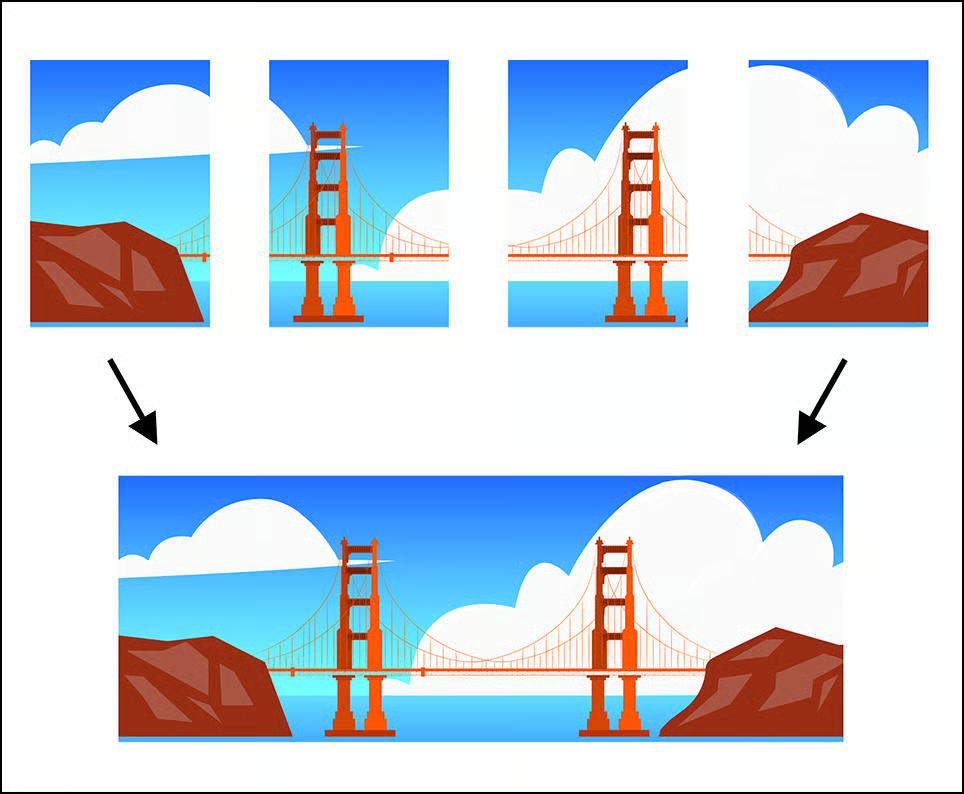
Import your RAWs and apply consistent lens corrections and color balance. For stitching, PTGui is an industry favorite for speed, control points, and masking tools; Hugin is a capable open‑source alternative. Rectilinear ultra‑wides (like the XF 10–24) typically need more tiles than a fisheye, but produce straight lines and less edge distortion across tiles. A good rule of thumb: 25–30% overlap for ultra‑wide rectilinear; 20–25% is workable once you’re very consistent with nodal alignment.
In PTGui, set the lens projection to Rectilinear for each tile source and choose Equirectangular for the panorama output. Use optimizer tools to refine yaw/pitch/roll, then mask out ghosts (people, cars) and blend brackets if doing HDR. Why PTGui is a top tool for complex panoramas
Cleanup & Enhancement
- Nadir patch: After stitching an equirectangular, patch the tripod area using a clean nadir shot or AI content fill. Clone carefully to preserve floor patterns.
- Color and noise: Apply subtle global corrections first; then selective adjustments. Use low‑frequency NR for night scenes to keep texture.
- Level and align: Ensure the horizon is perfectly level; correct yaw/pitch/roll so the 360 viewer doesn’t drift.
- Export: Save high‑quality equirectangular JPEG (2:1 ratio) at 10000 × 5000 or larger (e.g., 16384 × 8192) for VR. Keep a 16‑bit TIFF master for archival.
For more context on DSLR/mirrorless 360 workflows and stitching considerations, see this official 360 photo guide. Using a DSLR or mirrorless to shoot and stitch a 360 photo
Real-World Case Studies
Indoor Real Estate (Bright Windows + Dark Rooms)
Use a tripod with a panoramic head. Shoot at 10–12mm, f/8, ISO 100–200. Bracket ±2 EV at each yaw to retain exterior window detail. Lock WB (Tungsten or custom) to keep colors uniform between shots. In PTGui, enable HDR Merge or pre‑merge brackets in Lightroom, then stitch. The GFX 50’s DR handles highlight rolloff gracefully, minimizing halos on window frames.
Outdoor Sunset Overlook
Arrive early and shoot during golden hour at f/8–f/11, ISO 100. Make a base pano, then a second pano 10 minutes later when the sky deepens. Blend the best sky from the later pass with the base foreground in an equirectangular editor or Photoshop. Watch for lens flare; shield the front element with your hand just outside the frame if needed.
Crowded Event
At 10–14mm, f/5.6–f/8, 1/200–1/320s, ISO 400–800, do two quick rows. Markers on the panoramic head speed up precise rotations. In PTGui, use masks to keep stationary background tiles and remove ghosted people, borrowing patches from both passes.
Rooftop Pole Shot
Use a robust carbon fiber pole and a small panoramic head. Pre‑focus at hyperfocal and lock exposure. Shoot quickly at 1/250–1/500s, ISO 400–800. OIS can help here because you’re not on a rigid tripod. Always tether the gear and assess wind; flex will ruin alignment and can be dangerous.
Useful Tools & Resources
Software
- PTGui panorama stitching
- Hugin open source
- Lightroom / Photoshop for RAW and finishing
- AI tripod removal tools (Content‑Aware Fill, Generative Fill)
Hardware
- Panoramic heads (Nodal Ninja, Leofoto, Sunwayfoto)
- Carbon fiber tripods with leveling base
- Wireless remote shutters or intervalometers
- Pole extensions / vehicle suction rigs (with tethers)
Disclaimer: product names are for search reference only; check official sites for compatibility and specs.
For a broad FAQ touching gear choices and best practices for virtual tours, this overview is helpful. DSLR/virtual tour FAQ and lens guide
Watch: Panoramic Head Basics
The following video covers fundamental panoramic head setup and practical shooting tips. Use it alongside the steps above for a quick visual refresher before your shoot.
Common Mistakes & How to Avoid Them
- Parallax error → Always align the no‑parallax point with a calibrated panoramic head. Re‑check whenever you change focal length.
- Exposure or WB flicker → Use Manual exposure and fixed WB across all tiles; avoid Auto ISO/WB.
- Tripod shadows or missing floor detail → Capture separate nadir frames for patching.
- Ghosting from moving subjects → Plan double passes and mask in PTGui or Photoshop.
- Night noise and blur → Favor longer exposures over high ISO; OIS off on tripod; use a remote or timer.
Frequently Asked Questions
- Can I shoot handheld panoramas with the GFX 50S/50R?
Yes, for simple single‑row panoramas. Use 10–14mm, f/5.6–f/8, 1/125–1/250s, ISO 200–800, OIS on, and 30% overlap. For 360° virtual tours or interiors, a tripod + panoramic head is strongly recommended to avoid parallax and stitching artifacts.
- Is the XF 10–24mm f/4 OIS WR wide enough for single‑row 360?
As a rectilinear lens, you’ll usually need two rows (0° and +45°) plus zenith/nadir at the 10mm end to cover the full sphere cleanly. A single row might miss the zenith without aggressive stretching. Multi‑row is safer and yields cleaner results.
- Do I need HDR for interiors with bright windows?
Usually yes. Bracket ±2 EV (3–5 shots) so you have clean window highlights and detailed shadows. The GFX 50’s DR is excellent, but HDR brackets make blending easier and reduce noise in darker areas.
- How do I avoid parallax issues?
Mount on a panoramic head and align the lens’s no‑parallax point. Mark the rail positions for 10/14/24mm so you can return to them instantly. Keep your vertical pole level to avoid horizon tilt and coverage gaps.
- What ISO range is safe on the GFX 50S/50R for low light?
ISO 100–400 is ideal; 800–1600 is workable with careful exposure and noise reduction. Use a tripod and longer shutter speeds whenever possible to preserve detail.
- Can I create custom shooting presets to speed up pano work?
Yes. Save a custom mode with Manual exposure, fixed WB, RAW, single AF then switch to MF, and a 2s timer. This cuts setup time drastically and reduces mistakes under pressure.
- What tripod head should I choose?
Look for a panoramic head with fore‑aft and lateral rails (e.g., Nodal Ninja or similar), clear degree markings, and a leveling base. A compact 2‑axis system is faster in the field; a full multi‑row head offers more flexibility for high‑res mosaics.
Safety, Compatibility & Honest Limitations
Compatibility: The XF 10–24mm f/4 OIS WR is an APS‑C X‑mount lens and does not natively mount to G‑mount. Third‑party adapters can allow physical mounting, but the lens’s image circle won’t cover the GFX sensor. Expect strong vignetting and plan to crop to the central region, reducing per‑frame resolution. If you need the full 44 × 33 mm sensor area, use a native GF wide lens instead.
Safety: On rooftops, balconies, or pole/car setups, always use tethers and redundant clamps. Check wind before raising a pole; flex can cause blur and falling gear is dangerous. Protect the camera from rain and salt spray, and avoid swapping lenses in dust.
Backup: For critical work, shoot a second pass and maintain a 3‑2‑1 backup strategy: three copies of your data, on two different media, with one off‑site or in the cloud.
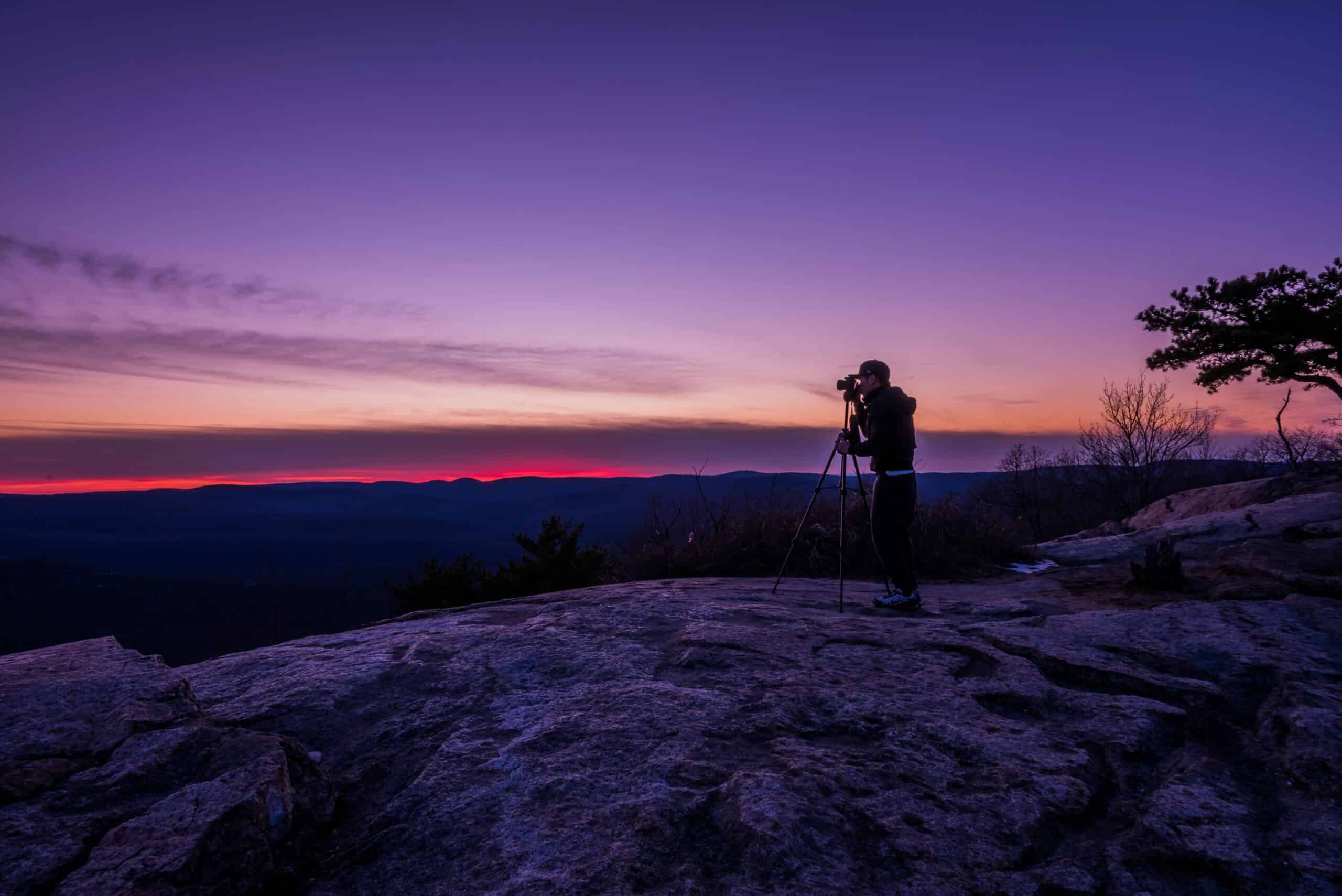
Scene and Software Visuals
Further Reading
If you want to go deeper into focal length choices and stitching behavior across different projections, this explainer provides helpful context. Panoramas, focal lengths, and stitching behavior