
Why This Camera & Lens Are Great for Panoramas
The Fujifilm GFX 50S / 50R paired with the AstrHori 12mm f/2.8 Fisheye is a surprisingly powerful 360° panorama combo when you want medium-format tonality with the speed of a fisheye workflow. The GFX 50S/50R use a 43.8 × 32.9 mm medium-format sensor (approx. 0.79× crop vs. full frame) with 51.4 MP resolution (8256 × 6192) and a pixel pitch around 5.3 μm. That means excellent dynamic range (about ~14 stops at base ISO), smooth highlight roll-off, and clean shadows at low ISO—ideal for HDR panoramas and low-light scenes when you’re on a tripod.
The AstrHori 12mm f/2.8 is a manual-focus diagonal fisheye designed primarily for full-frame sensors. On the GFX, it will typically work best in the camera’s 35mm Format Mode (crop to the 36 × 24 mm area) to avoid heavy corner vignetting. In 35mm crop, you get a diagonal fisheye covering ~180° diagonally, allowing a low shot count and fast capture. If you insist on using the full 44×33 sensor, expect strong vignetting and a near-circular image; you’ll need to crop in post. Practically, for professional results and reliable stitching, 35mm Mode is recommended.
Autofocus is irrelevant here—the AstrHori is fully manual, and for panoramas you’ll use manual focus at hyperfocal anyway. Distortion is intentional with fisheye lenses; your stitching software will remap it. The big advantages of this combo: fewer shots to cover the sphere, superior medium-format dynamic range, and excellent color depth. The tradeoffs: you must align the no-parallax point precisely, manage flare with the bulbous front element, and handle the GFX’s heavier body on a robust panoramic head.
Quick Setup Overview
- Camera: Fujifilm GFX 50S / 50R — 43.8 × 32.9 mm medium-format sensor, 51.4 MP, ~14-stop DR at base ISO, best at ISO 100–400 for maximum quality.
- Lens: AstrHori 12mm f/2.8 Fisheye — manual-focus diagonal fisheye for 35mm format. On GFX: use 35mm Format Mode for full coverage; expect heavy vignetting on full 44×33. Sharpest around f/5.6–f/8; typical fisheye CA manageable in post.
- Estimated shots & overlap:
- In 35mm Format Mode (recommended): 6 shots around at 60° yaw increments (0° pitch) + 1 zenith + 1 nadir; 25–30% overlap.
- Experienced users may pull off 4 around + zenith + nadir if carefully aligned and with generous overlap (35–40%), but stitching risk increases near zenith.
- Full 44×33 use: only if you accept vignetting and plan to crop; plan 6 around + Z + N for reliable coverage.
- Difficulty: Intermediate — the fisheye eases shot count, but precise nodal alignment and a sturdy panoramic head are essential.
Planning & On-Site Preparation
Evaluate Shooting Environment
Check the light, movement, reflections, and nearby obstacles. Fisheyes are prone to flare—keep direct sun placement in mind and use your body or a flag to shade the lens when possible. For glass interiors or observation decks, shoot as close to the glass as practical (a few centimeters) to reduce reflections and ghosting. Watch for moving elements—crowds, traffic, waving trees—that can cause stitching ghosts. For sunsets, pre-plan a bracketing sequence before the light changes.
Match Gear to Scene Goals
The GFX 50S/50R sensor offers exceptional dynamic range and color depth, especially at ISO 100–400. Indoors, you can push to ISO 800–1600 if necessary, but panoramas reward low ISO and longer tripod exposures. The AstrHori 12mm fisheye reduces the number of frames you need—excellent for fast indoor real estate or quick outdoor 360s. The tradeoff is fisheye distortion and the need for precise nodal setup to avoid parallax errors, especially around foreground objects.
Pre-shoot Checklist
- Fully charged batteries and high-speed, high-capacity cards. GFX RAW files are large; bring spares.
- Clean the lens front element and sensor. Fisheye dust shows up everywhere.
- Level the tripod and pre-calibrate your panoramic head’s nodal point for this body/lens combo.
- Safety checks: secure rooftop locations, manage wind loads, use tethers for poles and car mounts.
- Backup workflow: shoot an extra safety round, especially for high-value locations or changing light.
Essential Gear & Setup
Core Gear
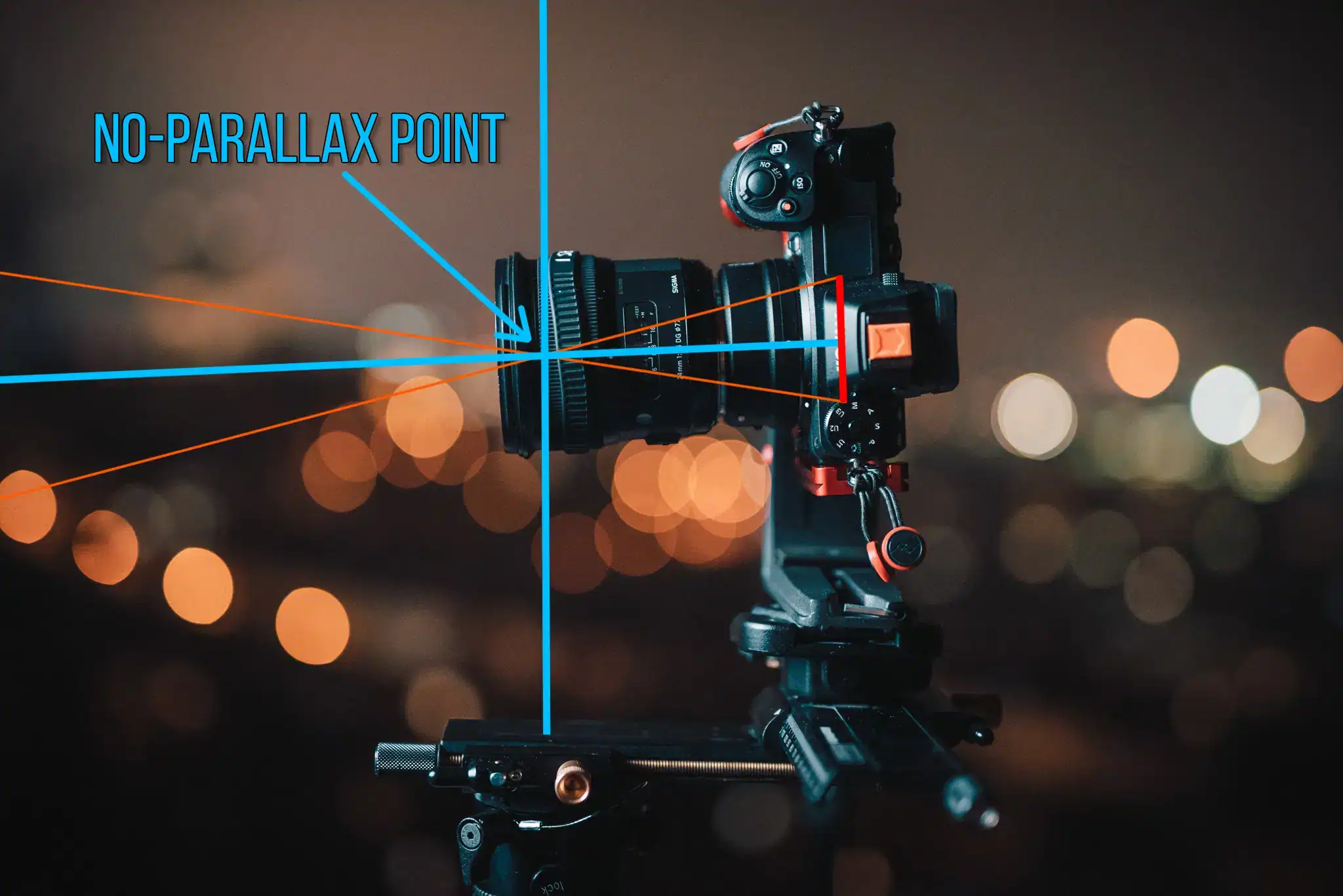
- Panoramic head with rails for fore-aft and lateral adjustment. Align the entrance pupil (no-parallax point) so foreground and background don’t shift when you rotate.
- Stable tripod with a leveling base. A bubble/spirit level speeds setup and ensures a straight horizon.
- Remote trigger or camera app. Even on a sturdy setup, avoid touching the shutter to prevent micro-shake.
Optional Add-ons
- Pole or car mount: use safety tethers, check wind, and verify all clamps. The GFX is heavier than APS-C/FF bodies—respect weight limits.
- Lighting aids: small LED panels for dim interiors; bounce lighting to avoid hot spots.
- Weather protection: rain cover and microfiber cloths. A wet fisheye front element ruins sharpness quickly.
For a deeper primer on panoramic head setup and technique, see this panoramic head tutorial by 360 Rumors. Panoramic head setup guide
Step-by-Step Shooting Guide
Standard Static Scenes
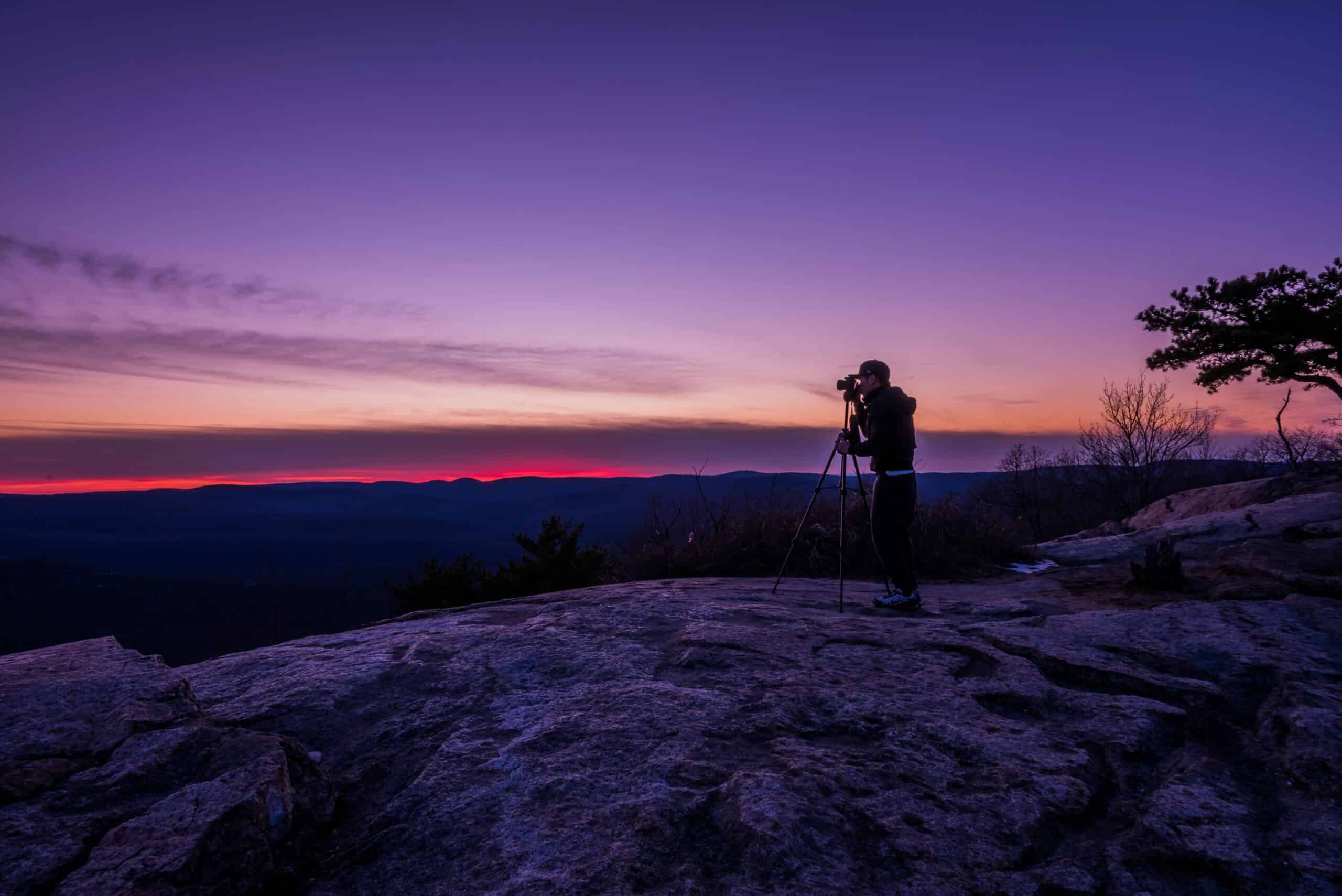
- Level and lock: Level the tripod using the leveling base. Set your panoramic head’s yaw to click at 60° if possible for 6-around capture.
- Align the nodal point: Slide the camera on the rail until near and far objects stay aligned when panning. Mark your rail position for this lens to speed future setups.
- Manual settings: Switch to Manual exposure, Manual white balance (Daylight for sun, custom WB for interiors), and Manual focus. Aim for f/5.6–f/8 on the AstrHori 12mm for best edge sharpness, then set shutter speed to expose midtones at ISO 100–200.
- Capture sequence:
- 6 shots around at 60° increments, pitch 0°, with 25–30% overlap.
- Zenith: tilt up ~60–90° and shoot 1 frame (use a second if needed).
- Nadir: tilt down and shoot 1 frame for tripod removal. A second offset nadir shot helps clean retouching.
- Double-check: If the light is changing or subjects are moving, do a quick second pass as backup.
HDR / High Dynamic Range Interiors
- Bracket exposures: Use ±2 EV bracketing (3 or 5 frames) to balance bright windows and interior shadows. The GFX sensor shines at ISO 100–200—use longer shutter speeds on the tripod.
- Lock WB and focus: Consistency across brackets prevents color casts and focus breathing. Turn off any long-exposure NR that might introduce time gaps between exposures if you’re shooting moving scenes.
- Keep the sequence consistent: For every yaw angle, fire the full bracket. A remote or intervalometer helps maintain a steady cadence.
Low-Light / Night Scenes
- Use tripod discipline: With the 50S/50R (no IBIS), rely on a solid tripod. Start at ISO 100–200; raise to 800–1600 only if absolutely necessary.
- Long exposures: Aim for f/4–f/5.6 and longer shutter speeds (1–10 seconds on static scenes). Use a 2-second self-timer or remote.
- Keep flare in check: Shield the lens from point sources; one badly flared frame can complicate stitching.
Crowded Events
- Two-pass method: Do a fast pass for coverage, then a slower pass waiting for gaps in movement. You can blend in post to minimize ghosts.
- Favor faster shutters: For moving crowds, target 1/200–1/500 at f/5.6–f/8 and ISO 400–800 in daylight.
- Avoid close foregrounds: Keep moving subjects away from the camera to reduce parallax issues across frames.
Special Setups (Pole / Car / Rooftop)
- Pole work: Use a lightweight panoramic head and secure lanyards. Rotate slowly, and use 1/250–1/500 shutter speeds to fight vibration.
- Car mount: Dual or triple suction mounts with safety tethers. Shoot at 1/500–1/1000 if the car or environment moves, and increase overlap to 35–40%.
- Rooftops and wind: Lower your center column, widen the legs, and add weight to the tripod. If gusty, wait for lulls before each exposure.
Recommended Settings & Pro Tips
Exposure & Focus
| Scenario | Aperture | Shutter | ISO | Notes |
|---|---|---|---|---|
| Daylight outdoor | f/8–f/11 | 1/100–1/250 | 100–200 | Lock WB (Daylight). Keep 25–30% overlap. |
| Low light/night | f/4–f/5.6 | 1/30–several sec. | 100–800 (1600 max) | Tripod + remote; GFX DR is best at low ISO. |
| Interior HDR | f/8 | Bracket ±2 EV (3–5 shots) | 100–400 | Balance windows vs. shadows; lock WB/focus. |
| Action / moving subjects | f/5.6–f/8 | 1/200+ | 400–800 | Freeze motion, consider two-pass capture. |
Critical Tips
- Focus: Use manual focus with focus peaking. Set to hyperfocal at f/5.6–f/8 to keep everything sharp. On a 12mm fisheye in 35mm Mode, focusing just shy of infinity is safe; verify at 100%.
- Nodal calibration: With the GFX + AstrHori 12mm, expect the entrance pupil to sit a bit behind the front element—fine-tune on your rail by aligning near/far objects at frame edges while panning. Mark your rail scale once set.
- White balance: Lock WB. Mixed lighting can vary across frames; a manual Kelvin setting or custom WB profile keeps colors consistent.
- RAW over JPEG: The GFX files grade beautifully in RAW. You’ll need that latitude for HDR merges and color-matching frames.
- Stabilization: The 50S/50R bodies lack IBIS; if you ever use an OIS lens, turn OIS off on a tripod to avoid micro-blur.
Stitching & Post-Processing
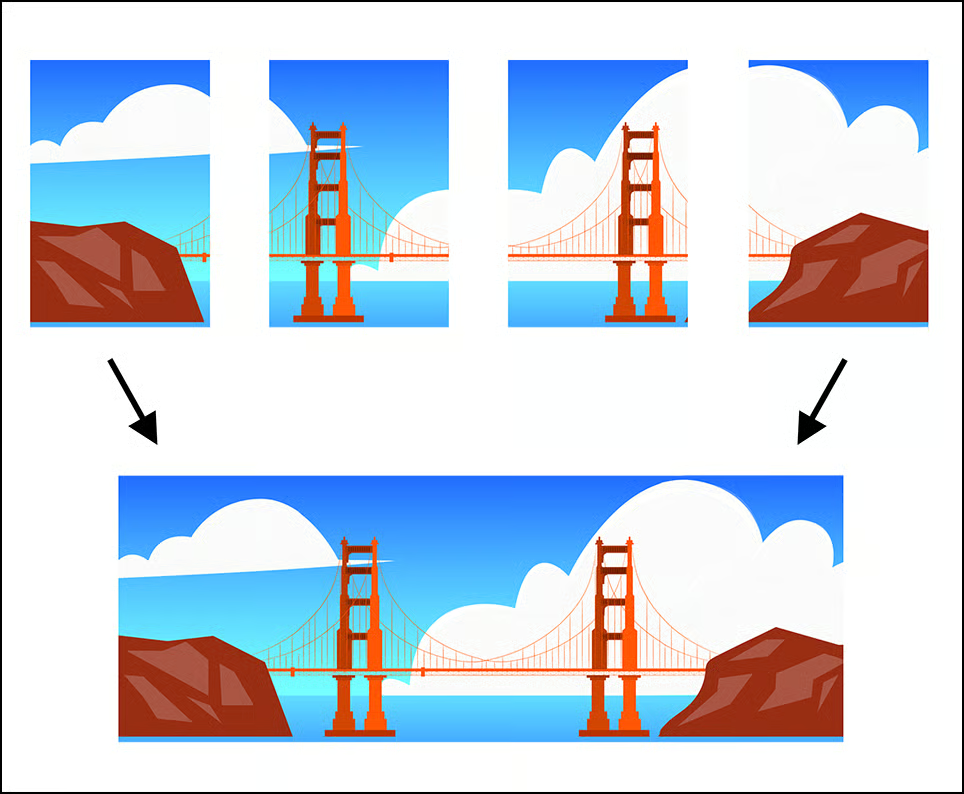
Fisheye panoramas are generally easier to stitch because fewer frames mean fewer seams. In PTGui or Hugin, set lens type to fisheye and let the optimizer estimate FOV and distortion parameters. Aim for 25–30% overlap with fisheye shots (go 35–40% if handheld or in windy conditions). Rectilinear lenses require more frames and tighter overlap control, but your AstrHori 12mm fisheye keeps frame count low and speeds throughput.
Software Workflow
- HDR first (if applicable): Merge each bracket set into 32-bit HDRs (in Lightroom/ACR) or use PTGui’s built-in HDR fusion. Keep tone mapping neutral for consistency.
- Stitch: In PTGui, load frames, set lens as Fisheye (let it auto-detect projection), generate control points, and optimize. Check control point errors around near objects.
- Masking: Use PTGui’s masks to resolve ghosts from moving people or trees. Favor frames with clean subjects.
- Leveling & horizon: Set horizontal line or use the “Straighten” tool to correct pitch/roll. Fine-tune verticals for architecture.
- Output: Export an equirectangular at full resolution (16-bit TIFF for masters; JPEG for web). For VR hosting, keep 2:1 aspect ratio and consider 8K–16K on powerful platforms.
- Retouch: In Photoshop, patch tripod/nadir (clone/heal, or use a logo patch). Apply global color corrections, gentle noise reduction for night scenes, and final sharpening.
If you’re new to stitching, this PTGui review explains why it’s the industry standard for complex 360 workflows. PTGui overview and benefits
For end-to-end guidance on shooting/stitching DSLR or mirrorless 360 photos, see this practical guide from Meta’s Creator resources. Using a mirrorless to shoot and stitch a 360 photo
Video: Panorama Head Setup & Technique
Prefer learning by watching? The video below complements the steps above and demonstrates practical head setup and shooting cadence.
Curious about the relationship between focal length, sensor size, and spherical resolution? Panotools maintains a useful reference for planning shot counts and outputs. Understanding spherical resolution
Useful Tools & Resources
Software
- PTGui panorama stitching for fisheye workflows
- Hugin (open source) for cost-effective stitching
- Lightroom / Photoshop for HDR merge, color, and nadir cleanup
- AI tripod removal or content-aware fill for nadir patches
Hardware
- Panoramic heads (Nodal Ninja, Leofoto, Sunwayfoto)
- Carbon fiber tripods with leveling bases
- Wireless remotes or apps for hands-free capture
- Pole extensions and car mounts with safety tethers
Disclaimer: brand names are for search/reference; confirm compatibility and load ratings with the manufacturer.
Field-Proven Scenarios
Indoor Real Estate (Bright Windows)
Use 35mm Format Mode, f/8, ISO 100–200, bracket ±2 EV (5 frames if contrasty). Shoot 6-around + Z + N for complete coverage. Keep verticals centered in frames to reduce stretching and ease leveling in post. The GFX files handle aggressive shadow lift well—keep ISO low and let the tripod do the work.
Outdoor Sunset
Start a few minutes before peak color and run two complete passes: one bracketed for the sky, one non-bracketed for ground if wind is moving foliage. Shade the lens from direct sun to avoid flare spikes. Consider slightly higher overlap (30–35%) to ensure robust control points as light shifts.
Event Crowds
Prioritize a quick first pass at 1/200–1/500, ISO 400–800, then a second pass when people clear sensitive areas. In PTGui, mask in the cleaner frames. Keep subjects at least 1–2 meters away to minimize parallax issues with the fisheye.
Rooftop or Pole Shooting
Mount the GFX low on the pole to keep the center of gravity balanced. Use a light panoramic head, tighten everything, and rotate slowly between frames. At 1/250–1/500, ISO 200–400, you’ll freeze minor vibrations. Always tether the rig; wind loads on a medium-format body are no joke.
Car-Mounted Capture
Use dual/triple suction mounts on clean metal or glass, plus a safety strap. Set 6-around sequence with 35–40% overlap and 1/500–1/1000 shutter to beat vibration. Avoid passing close to tall objects during rotation; parallax and motion will complicate stitching.
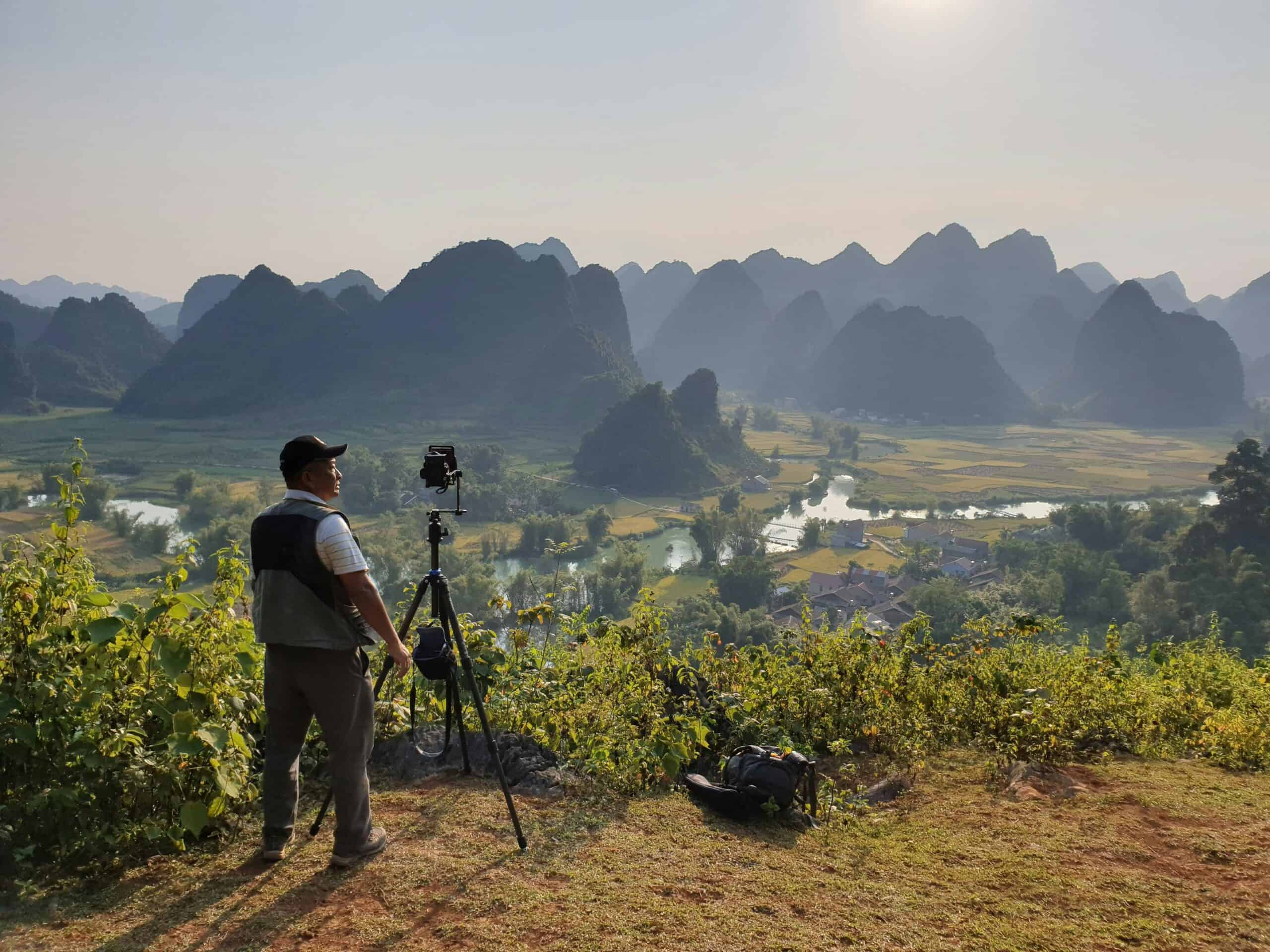
For a practical DSLR/mirrorless 360 walkthrough—from capture to VR output—this end-to-end resource is worth bookmarking. Set up a panoramic head for high-end 360 photos
Safety, Limitations & Honest Notes
On GFX 50S/50R, there’s no in-body stabilization; do not rely on handheld for professional panoramas. The AstrHori 12mm’s bulbous front element is easy to smudge—carry a protective cap and be careful near doors or crowds. In full 44×33 coverage, expect vignetting; plan to use 35mm Format Mode for a clean diagonal fisheye image circle. Wind is the top cause of soft frames—add weight to your tripod and shoot between gusts. Always use a tether for poles and car rigs, and never mount above people or traffic without proper safety controls.
Common Mistakes & How to Avoid Them
- Parallax error → Align the entrance pupil carefully; mark your rail settings and triple-check before the first frame.
- Exposure flicker → Use Manual exposure and locked WB across the full sequence (and across brackets).
- Tripod/nadir mess → Shoot an offset nadir frame for easy patching; plan where your logo patch will go.
- Ghosting from motion → Mask in PTGui and choose the cleanest parts from each frame.
- Night noise → Keep ISO low; use longer exposures; expose to the right without clipping highlights.
- Flare and veiling → Shade the fisheye during bright sun; review each frame at 100% before moving on.
Frequently Asked Questions
- Can I shoot handheld panoramas with the GFX 50S/50R?
You can for casual use, but it’s not recommended for professional 360s. The 50S/50R lack IBIS, and handheld adds parallax and overlap inconsistency. Use a tripod and a panoramic head for reliable stitches.
- Is the AstrHori 12mm f/2.8 wide enough for single-row 360?
Yes—in 35mm Format Mode it’s a diagonal fisheye. Plan 6 shots around at 60° plus zenith and nadir. Advanced users sometimes do 4-around + Z + N with higher overlap, but you risk small holes near the zenith.
- Do I need HDR for interiors with bright windows?
Usually. The GFX has excellent DR, but bright windows exceed single exposure latitude. Bracket ±2 EV (3–5 frames) per yaw angle and merge before stitching or in PTGui’s HDR mode.
- How do I avoid parallax issues with this lens?
Use a panoramic head with a fore-aft rail. Calibrate the entrance pupil by aligning a near object with a far line and panning left/right. Adjust until there’s no relative shift. Save that rail measurement for this camera/lens combo.
- What ISO range is safe on GFX 50S/50R in low light?
ISO 100–400 is ideal; 800–1600 is usable with light noise reduction. For night shots on a tripod, favor longer exposures over high ISO to preserve color and DR.
- Can I set up custom modes for fast pano work?
Yes. Program a custom mode with Manual exposure, Manual WB, RAW, focus peaking ON, self-timer/remote, and your preferred aperture (f/5.6–f/8). Save a second mode for HDR bracketing.
- How do I reduce flare with a fisheye?
Avoid direct bright sources near the frame edge, shade the lens with your hand or a flag (without entering the frame), and clean the front element frequently. If unavoidable, capture an extra frame with the sun shaded and blend in post.
- What’s the best tripod head for this setup?
A multi-row panoramic head with solid clamps and a clear rail scale (e.g., Nodal Ninja, Leofoto) is ideal. Ensure it supports the GFX weight and allows precise entrance pupil alignment.
Bonus: HDR & Low-Light Visuals
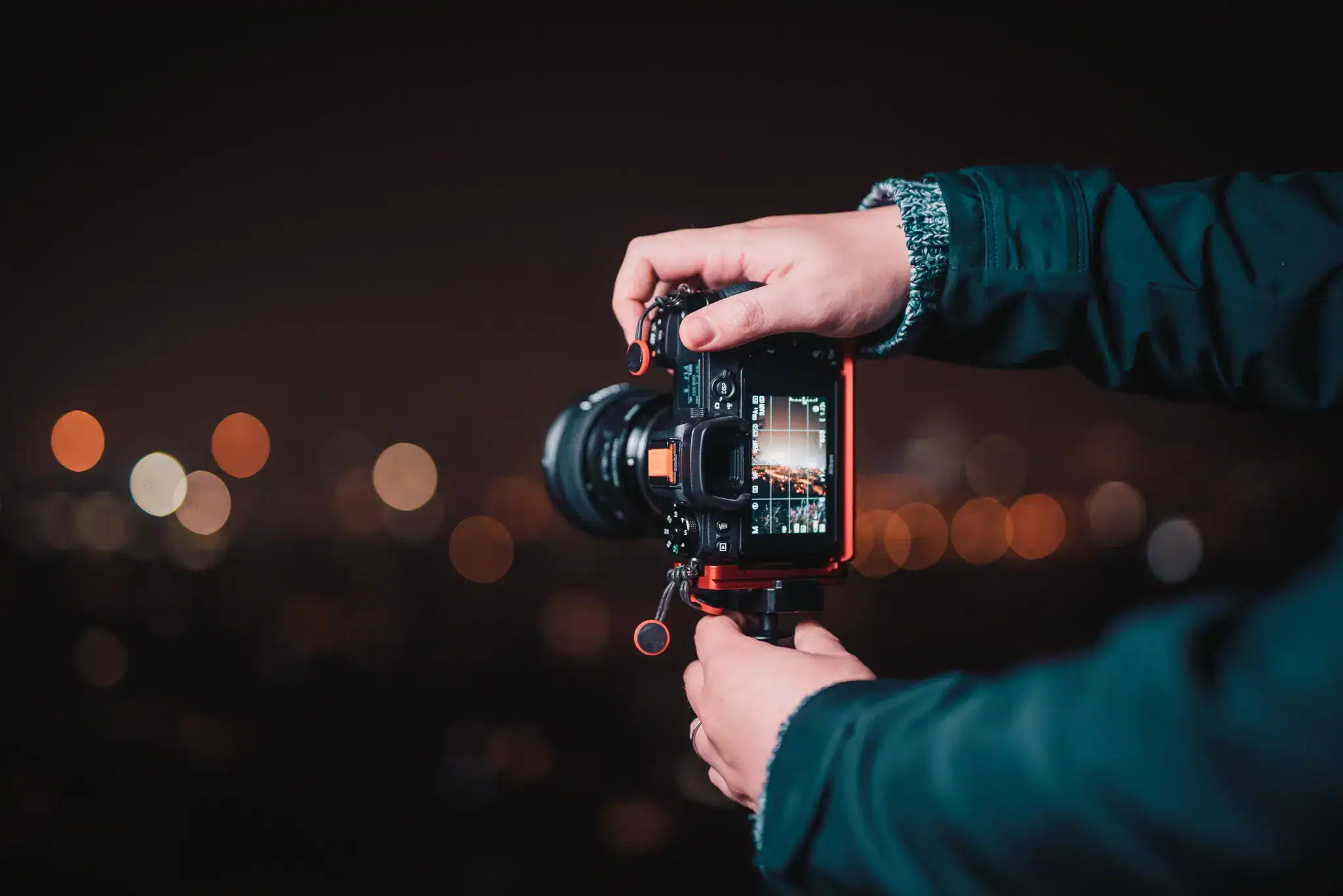
Below are visuals illustrating batch HDR capture and low-light camera setup considerations—useful when planning interiors or night 360s with your GFX.
Wrap-Up
If you want medium-format look with fisheye efficiency, the Fujifilm GFX 50S/50R plus AstrHori 12mm f/2.8 in 35mm Format Mode is a smart, cost-effective 360° solution. Align the nodal point, lock exposure and WB, run 6-around + Z + N, and stitch in PTGui or Hugin. Keep ISO low, bracket for bright windows, and carry a robust panoramic head to handle the GFX’s mass. With a careful workflow and good safety practices, you’ll produce clean, high-resolution equirectangulars ready for virtual tours and VR platforms.