
Why This Camera & Lens Are Great for Panoramas
If you want to know how to shoot panorama with Fujifilm GFX 50S / 50R & 7Artisans 10mm f/2.8 II Fish-Eye, you’re pairing ultra-high resolution medium format with a fast, ultra-wide manual fisheye. The GFX 50S/50R uses a 51.4 MP 43.8 × 32.9 mm sensor (approx. 5.3 µm pixel pitch) that delivers about 14 stops of dynamic range at base ISO 100. That means rich shadow detail, clean highlights, and plenty of latitude for HDR panorama work. The 7Artisans 10mm f/2.8 II is a diagonal fisheye designed for full-frame. On the larger GFX sensor it doesn’t fully cover corners at native 4:3, but that’s not a deal-breaker for panoramas: you can enable 35mm Format Mode on the GFX to eliminate dark corners, or simply crop the fisheye’s outer rim in post. In return, you get fewer shots per 360, generous overlap, and excellent stitching reliability.
With manual focus and aperture control, the 7Artisans 10mm makes exposure and focus locking straightforward—perfect for multi-frame panoramas. The GFX 50S/50R’s contrast-detect AF is not a limiting factor here because you’ll typically use manual focus at or near hyperfocal distance (f/8–f/11). Although the GFX 50S/50R don’t have in-body stabilization, the tripod-based nature of spherical panoramas makes that a non-issue. Mount compatibility is handled via the lens’s native mirrorless mount and an appropriate adapter to GFX, but keep in mind the lens’s image circle is optimized for 36×24 mm; plan to crop or use the camera’s 35mm mode for clean edges.
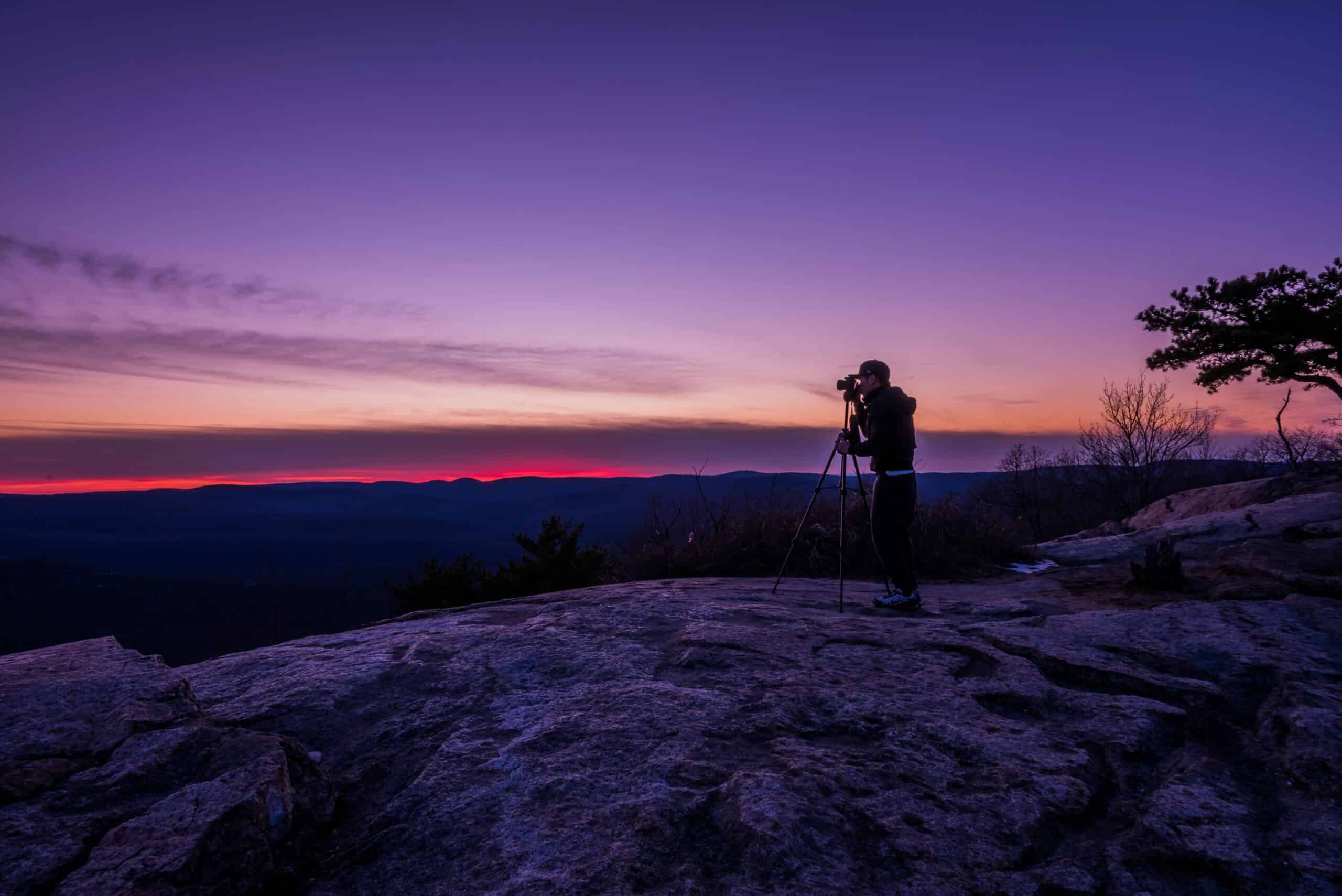
Quick Setup Overview
- Camera: Fujifilm GFX 50S / 50R — 43.8 × 32.9 mm medium-format sensor, 51.4 MP, 14-bit RAW, excellent DR at ISO 100–400, mechanical shutter up to 1/4000 s, EFCS available, contrast-detect AF.
- Lens: 7Artisans 10mm f/2.8 II Fish-Eye — diagonal fisheye, 180° on full-frame; manual focus; good sharpness from f/5.6–f/8; typical fisheye curvature with minor CA that’s easily corrected in post.
- Estimated shots & overlap (tested ranges):
- Using 35mm Format Mode (or heavy crop): 6 around at 60° yaw + zenith + nadir, ~30–35% overlap.
- Full 44×33 with vignette cropped later: 6–8 around + zenith + nadir, favor 8 shots if you see strong corner falloff.
- High-fidelity multi-row: 2 rows × 8 shots + zenith + nadir.
- Difficulty: Intermediate (manual focus & nodal alignment required).
Planning & On-Site Preparation
Evaluate Shooting Environment
Before setting up, scan the scene for moving subjects, reflective surfaces, and shifting light. In interiors with glass or mirrors, keep 1–2 m clearance where possible to reduce reflections and ghosting. For sunsets or city lights, note that dynamic range can exceed a single exposure—you’ll likely bracket for HDR. Outdoors, check wind exposure and tripod footprint so the rig remains stable through a full rotation.
Match Gear to Scene Goals
The GFX 50’s big sensor shines when you need detail-rich, clean files. At base ISO 100–200 you’ll get excellent DR; ISO 400–800 remains very usable for interiors with a tripod. The 7Artisans 10mm fisheye helps reduce shot count for a 360 photo, which is great in crowds or when you have limited time. Expect barrel curvature—that’s normal and beneficial for spherical stitching. For real estate or precise architectural lines, shoot at f/8–f/11 and keep the camera perfectly leveled to reduce burden in post.
Pre-shoot Checklist
- Charge batteries; bring spares. The large GFX EVF and long sessions can drain power.
- Use large, fast UHS-II cards and set RAW capture; shoot an extra safety round if time allows.
- Clean front/rear lens elements and the sensor; medium format is unforgiving to dust.
- Level the tripod and calibrate the panoramic head to the lens’s no-parallax point.
- Safety: tether the camera on rooftops, avoid edge gusts, and use sandbags or a weight hook.
- Backup workflow: duplicate the card on-site or carry two cards and rotate after each location.
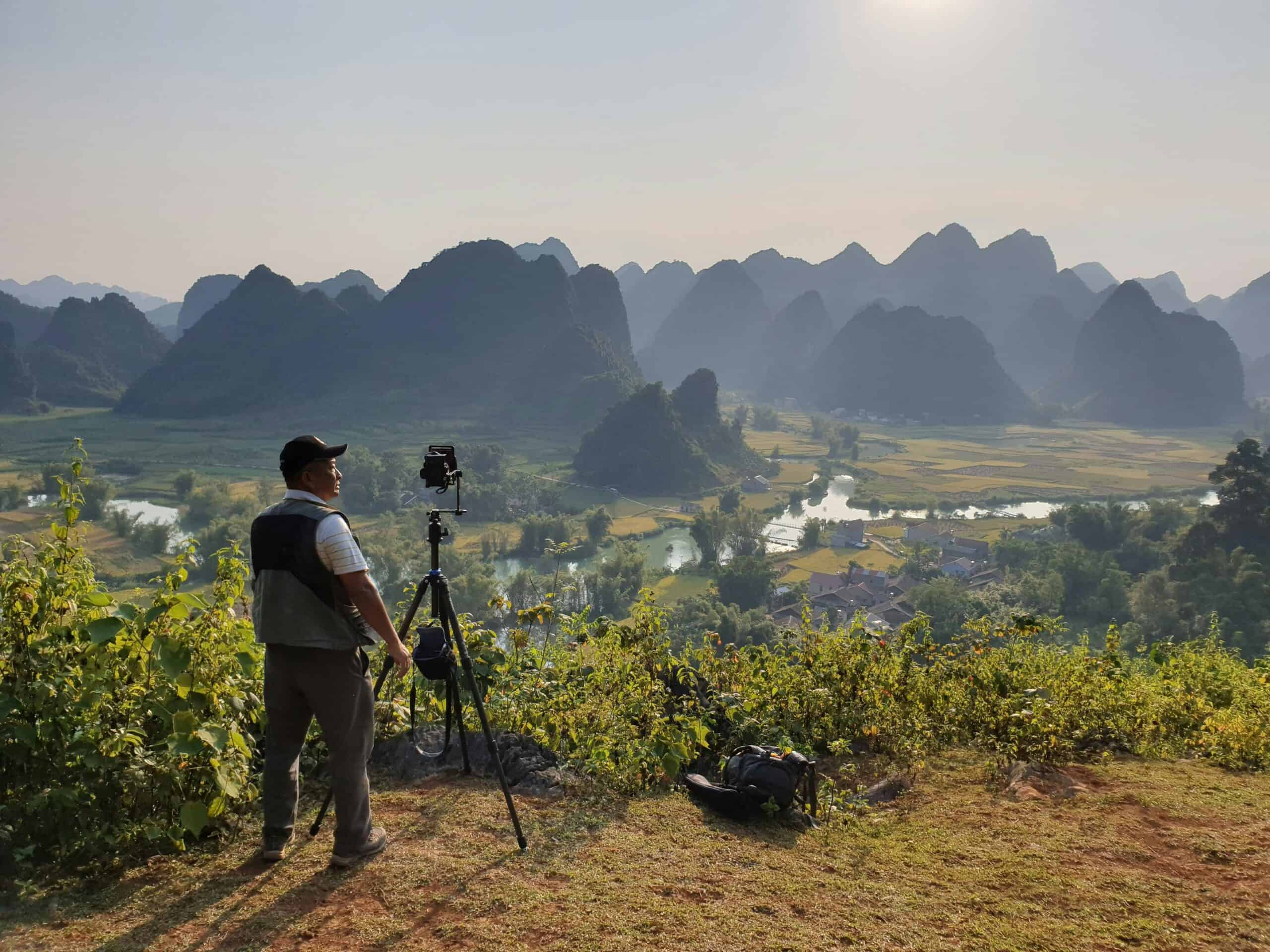
Essential Gear & Setup
Core Gear
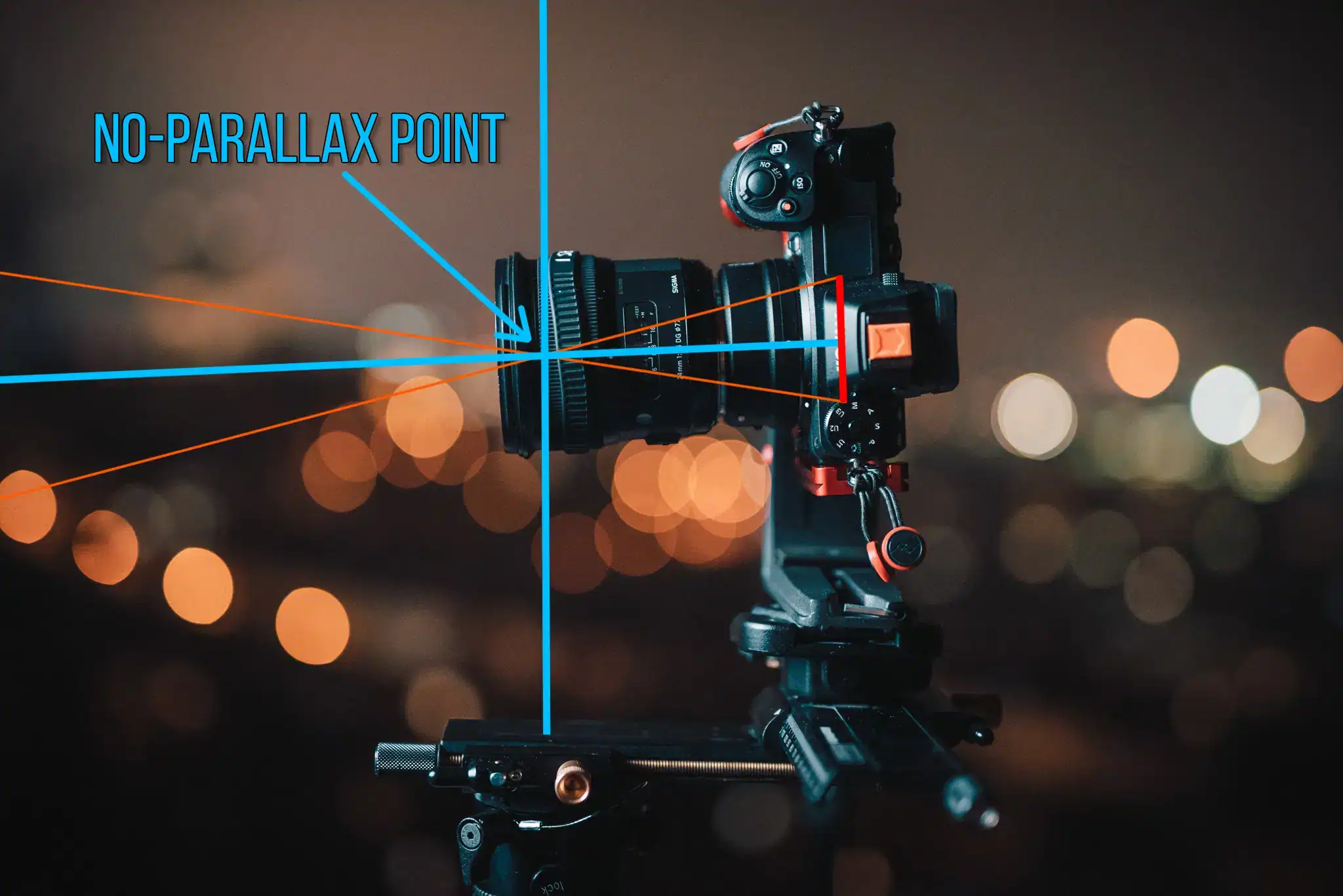
- Panoramic head: A proper pano head aligns the lens’s entrance pupil (no-parallax point) over the rotation axis to eliminate parallax, especially critical near objects. This makes stitches clean and fast.
- Stable tripod with leveling base: A leveling base saves time and keeps your sweep consistent. The heavier GFX benefits from a carbon-fiber or robust aluminum legs.
- Remote trigger (or 2 s timer) and EFCS: Prevents vibrations and ensures pixel-level sharpness with long exposures.
Optional Add-ons
- Pole or car mount: Great for elevated or vehicle-based shots. Use safety tethers and be mindful of wind loads; avoid power lines and crowded areas.
- Lighting aids: Small LED panels or bounced flash for shadow lift in interiors (use consistent white balance).
- Weather gear: Rain cover, microfiber towels, and lens hood to manage flare and droplets.
For a deeper dive into panoramic head setup theory and options, see this panoramic head tutorial by 360 Rumors at the end of this paragraph. Panoramic head fundamentals and alignment
Step-by-Step Shooting Guide
Standard Static Scenes
- Level and align: Level the tripod first, then the head. Mount the GFX and align the 7Artisans 10mm’s entrance pupil over the yaw axis. As a starting point, set the rail so the sensor plane mark (⌀ symbol on GFX) sits about 55 mm behind the rotation point, then refine using a near/far alignment test.
- Camera settings: Manual exposure, manual white balance (e.g., Daylight 5500–5600 K outdoors), RAW only, ISO 100–200. Use EFCS, 2 s timer or remote, and disable any stabilization (the 7Artisans has none).
- Focus: Switch to manual focus. At f/8, set focus ~0.5–1 m (hyperfocal for 10 mm is very close). Use focus peaking + magnification to confirm.
- Capture sequence:
- Using 35mm Format Mode: 6 shots around at 60° yaw spacing, then one zenith (+60° to +90° tilt), one nadir (−60° to −90°). Overlap ~30–35%.
- If you’re shooting full 44×33 and plan to crop corners later, consider 8 around for safer overlap.
- Take an extra nadir: After the main set, move the tripod slightly or use a handheld nadir shot to simplify tripod removal.
HDR / High Dynamic Range Interiors
- Bracket: Use ±2 EV, 3 to 5 frames per view. The GFX files handle shadows well; bracketing ensures clean windows and lamps.
- Consistency: Lock white balance, aperture, and focus for the entire sequence to avoid color/geometry shifts across brackets.
- Workflow: Either pre-merge brackets (HDR DNG) per angle before stitching or feed all brackets to PTGui and enable HDR fusion.
Low-Light / Night Scenes
- Exposure: Start at f/4–f/5.6, ISO 400–800, and shutter 1–4 s depending on scene brightness. The GFX 50’s noise is well-controlled up to ISO 1600; prefer longer shutter over higher ISO on a tripod.
- Vibration control: Use remote or 2 s timer, EFCS, and hang a small weight on the tripod to dampen wind.
- Color: Set WB to a fixed Kelvin (e.g., 3200–4000 K under sodium/LED street lights) to avoid frame-to-frame shifts.
Crowded Events
- Two passes: Shoot a fast primary pass (6 around) and a second pass where you wait for gaps in movement.
- Mask later: In post, mask people or vehicles from the cleaner pass into the primary stitch to reduce ghosts.
- Higher overlap: Use 8 around if the crowd is dense to give the stitcher more options.
Special Setups (Pole / Car / Drone)
- Pole capture: Limit height in wind to maintain stability. Always tether. Use 6 around and fast shutter (1/250 s or faster) if you’re hand-rotating.
- Car mount: Rigid suction + safety strap; avoid highways. Shoot quickly at stoplights with short shutter to reduce vibration artifacts.
- Drone: This lens/body combo is not practical on drones due to weight. For aerial work, use a lightweight mirrorless or a dedicated 360 camera.
Recommended Settings & Pro Tips
Exposure & Focus
| Scenario | Aperture | Shutter | ISO | Notes |
|---|---|---|---|---|
| Daylight outdoor | f/8–f/11 | 1/100–1/250 | 100–200 | Lock WB to Daylight (5500–5600 K) |
| Low light/night | f/4–f/5.6 | 1/4–1/30 | 400–800 (1600 max) | Tripod + remote; prefer longer shutter over higher ISO |
| Interior HDR | f/8 | Bracket ±2 EV | 100–400 | Balance window highlights and shadow rooms |
| Action / moving subjects | f/5.6–f/8 | 1/200+ | 400–800 | Freeze motion; consider two-pass method |
Critical Tips
- Manual focus at hyperfocal: At 10 mm and f/8, set around 0.5–1 m; everything from ~0.3 m to infinity will be sharp.
- Nodal calibration: Place two vertical objects (near/far), rotate ±45°, and adjust the rail until they don’t shift relative to each other. Mark your final rail position for this lens.
- White balance lock: Use Kelvin or a custom preset to avoid stitch seams caused by auto WB changes.
- RAW workflow: Maximize dynamic range and color latitude; the GFX files grade exceptionally well.
- EFCS/Mechanical: Use EFCS on a tripod to reduce shutter shock. If you notice banding with certain light sources, switch to full mechanical.
- 35mm Format Mode: Enable it to avoid heavy vignette corners from the fisheye’s image circle on the GFX sensor; it also tightens stitch consistency.
Stitching & Post-Processing
Software Workflow
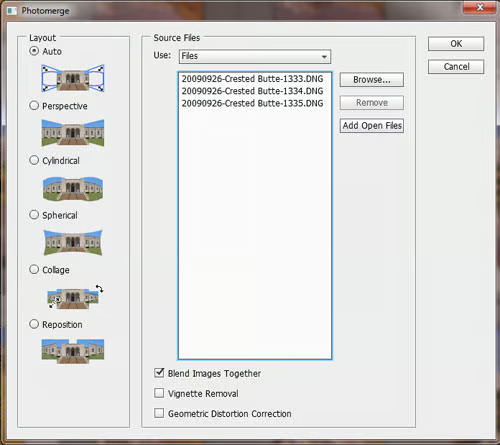
Import RAWs into Lightroom or Capture One, set a consistent white balance, enable lens CA correction (even for manual lenses you can reduce purple/green fringes), and synchronize settings. Export 16-bit TIFFs to your stitcher. PTGui remains a gold-standard for fisheye panoramas because it can model fisheye geometry precisely and merge HDR brackets. Hugin is a robust open-source alternative. With a diagonal fisheye, you can usually work with ~25–35% overlap; rectilinear lenses typically need 20–25% overlap but many more frames. If you want a thorough review of PTGui’s strengths for pro panoramas, read this Fstoppers review at the end of this paragraph. Why PTGui excels for complex panoramas
Cleanup & Enhancement
- Tripod/nadir patch: Use a handheld nadir shot or clone/heal in Photoshop. AI-based content-aware fill often works well on uniform surfaces.
- Color polish: Apply gentle global contrast and targeted HSL adjustments. For low-light shots, denoise lightly to keep texture.
- Leveling: Use the stitcher’s horizon tool to correct roll/pitch/yaw. Confirm that verticals are vertical (especially for interiors).
- Export: For VR delivery, export equirectangular 2:1 at 12K–16K on this setup. The GFX 50 + fisheye typically produces 120–200 MP equivalent spheres depending on shot count and overlap.
New to 360 distribution? Meta’s guide to shooting and stitching DSLR/mirrorless 360 photos is a practical reference. DSLR/Mirrorless 360 photo workflow
Video: Pano Head Setup Essentials
Watching a setup demo helps cement the process of finding the entrance pupil and leveling. Here’s a concise walkthrough worth viewing before your first field session.
For theoretical background on final spherical resolution versus shot count and sensor size, consult the PanoTools wiki. Estimating final panorama resolution
Useful Tools & Resources
Software
- PTGui panorama stitching (HDR fusion and excellent fisheye support)
- Hugin open source (control-point editor and optimizer)
- Lightroom / Photoshop (global edits, nadir patching)
- AI tripod removal/cloning (Content-Aware Fill, Generative tools)
Hardware
- Panoramic heads (Nodal Ninja, Leofoto, Sunwayfoto)
- Carbon fiber tripods with leveling bases
- Wireless remotes or smartphone app (Fujifilm Camera Remote)
- Pole extensions and secure car mounts (with safety tethers)
Disclaimer: software/hardware names provided for search reference; check official sites for details. For a broader buying guide and real-world tips, see this roundup of DSLR/mirrorless pano gear and techniques. Virtual tour gear and technique guide
Common Mistakes & How to Avoid Them
- Parallax error: Always align the entrance pupil. Re-check with a near/far test after transport or lens changes.
- Exposure/WB flicker: Manual exposure and fixed Kelvin WB across the entire sequence—no Auto ISO for panos.
- Tripod shadows and nadir mess: Capture an offset nadir shot for clean patching.
- Ghosting with moving subjects: Shoot two passes and mask the best bodies/frames during post.
- Excess noise at night: Prioritize longer shutter over higher ISO; on GFX 50S/50R stay ≤ ISO 1600 for clean files.
- Corner darkening from fisheye on MF: Use 35mm Format Mode or crop; increase shot count (6–8 around) to maintain overlap.
Frequently Asked Questions
- Can I shoot handheld panoramas with the GFX 50S/50R?
Yes for casual stitches, but it’s risky for full 360s. Handheld increases parallax and level errors, especially with close foregrounds. If you must, use 8 around with generous overlap and keep the camera rotating about your body’s center. For professional results, use a tripod and pano head.
- Is the 7Artisans 10mm f/2.8 II wide enough for single-row 360 on GFX?
Yes, with caveats. In 35mm Format Mode (or with a crop), 6 around + zenith + nadir works well. On the full 44×33 sensor you’ll see heavy corner vignetting; plan for 6–8 around and crop edges in post. A proper fisheye model in your stitcher handles curvature correctly.
- Do I need HDR for interiors with bright windows?
Often yes. The GFX sensor is excellent, but interiors with sunlit windows usually exceed single-shot DR. Bracket ±2 EV (3–5 frames) per position and merge as HDR DNGs or let PTGui fuse HDR during stitching.
- How do I avoid parallax issues with this combo?
Use a panoramic head and calibrate the entrance pupil. Start with the camera’s sensor plane ~55 mm behind the rotation point for the 10 mm fisheye, then refine with a near/far alignment test. Mark the rail for repeatability.
- What ISO range is safe on the GFX 50S/50R for low light?
ISO 100–400 is pristine, 800 very good, and 1600 still clean with light denoising. On a tripod, prefer longer exposures over pushing ISO beyond 1600.
- Can I set up Custom Modes for pano work?
Yes. Save a custom setup with Manual exposure, fixed Kelvin WB, RAW, EFCS, 2 s timer, and manual focus. This speeds up consistent capture on location.
- How do I reduce flare with a fisheye?
Avoid direct sun near the frame edge; shade the lens with your hand outside the field of view, or schedule the shoot when the sun is lower and behind buildings. Clean the front element carefully—smudges amplify flare.
- What’s the best tripod head for this setup?
A multi-row panoramic head with fore/aft and lateral adjustments (e.g., Nodal Ninja or Leofoto) is ideal. Ensure it supports the GFX’s weight and lets you fine-tune the entrance pupil position.
Field-Proven Scenarios
Indoor Real Estate
Set f/8, ISO 100–200, and bracket ±2 EV (5 frames). Use 6 around + Z + N in 35mm Mode for clean corners. Keep the camera at ~1.3–1.5 m height to balance ceiling and floor coverage. Turn off mixed auto lights or set all to the same temperature where possible to reduce WB conflicts.
Outdoor Sunset
Expose to protect highlights (ETTR while keeping clouds intact). Bracket if needed. Wind? Add a sandbag to the tripod, use 1/100–1/250 s at ISO 100–200, f/8. Capture a second set 2–3 minutes later as a backup in case the light improves or clouds shift.
Crowded Events
Go 8 around for more options. Shoot a quick first pass to lock the scene, then wait for gaps and re-shoot problematic sectors. In post, mask the clean frames over busy areas.
Rooftop / Pole Shooting
Always tether the camera. Keep the pole as vertical as possible; use a smartphone level. Favor faster shutter speeds (1/200–1/500 s) at ISO 400–800 to freeze micro-movements.