
Why This Camera & Lens Are Great for Panoramas
The Fujifilm GFX 100 II and the Sony FE 14mm f/1.8 GM are both exceptional in their own right for panoramic work. The GFX 100 II’s 102MP 43.8×32.9 mm medium-format sensor (approx. 3.76 µm pixel pitch) delivers huge resolving power, excellent color depth, and roughly 14+ stops of dynamic range at base ISO, giving you clean, flexible files for precise stitching and tone-mapping. Its IBIS is highly effective for handheld capture (disable on tripod), and 16-bit RAW support preserves micro-contrast and tonal nuance—especially helpful for HDR panoramas and low-light scenes.
The Sony FE 14mm f/1.8 GM is a rectilinear ultra-wide with outstanding edge-to-edge sharpness, very low coma and chromatic aberration, and minimal distortion for such a wide FOV (approx. 114° diagonal on full frame). It’s a favorite for astrophotography and architecture, meaning it also excels in panorama rigs where corner quality and predictable geometry really matter.
Important compatibility note: Sony FE lenses do not natively mount to the Fujifilm GFX (G) mount, and at time of writing there is no widely available “smart” E→GFX adapter that provides electronic aperture and focus control. Without electronic control, the FE 14mm would be stuck wide open at f/1.8—suboptimal for panoramas. Two practical paths:
- Use the FE 14mm on a Sony E-mount body for capture, then stitch as usual. The shooting/stitching techniques in this guide still apply.
- On the GFX 100 II, use a native ultra-wide alternative with similar FOV (e.g., GF 20–35mm at 20mm, or third-party MF-compatible UWA). You’ll need slightly more frames than a 14mm FF equivalent.
For the rest of this tutorial, we assume a 14mm rectilinear field of view on a properly calibrated panoramic head. Where settings differ for GFX vs full-frame, we call that out explicitly to keep you safe and consistent.
Quick Setup Overview
- Camera: Fujifilm GFX 100 II — 102MP medium format (43.8×32.9 mm), excellent DR at base ISO 80–100, robust IBIS (turn off on tripod), 16-bit RAW.
- Lens: Sony FE 14mm f/1.8 GM — rectilinear UWA, razor-sharp from wide open, low coma/CA, slight complex distortion well-corrected in post. Note: not natively mountable to GFX without an adapter that currently isn’t broadly available.
- Estimated shots & overlap (rectilinear 14mm on full-frame, portrait orientation):
- Spherical 360 (safe 2-row): 8 around at +30°, 8 around at −30°, plus 1 zenith + 1 nadir = ~18 shots, 25–30% overlap.
- Single-row 360 (not ideal): ~12 around at 0° + zenith + nadir. Expect stretching at poles; use 2-row when quality matters.
- High-res option (3-row): 10 around at +45°, 10 around at 0°, 10 around at −45°, plus zenith/nadir (~32 shots) for premium detail.
- Difficulty: Intermediate (requires nodal alignment, manual exposure discipline, and careful overlap).
Planning & On-Site Preparation
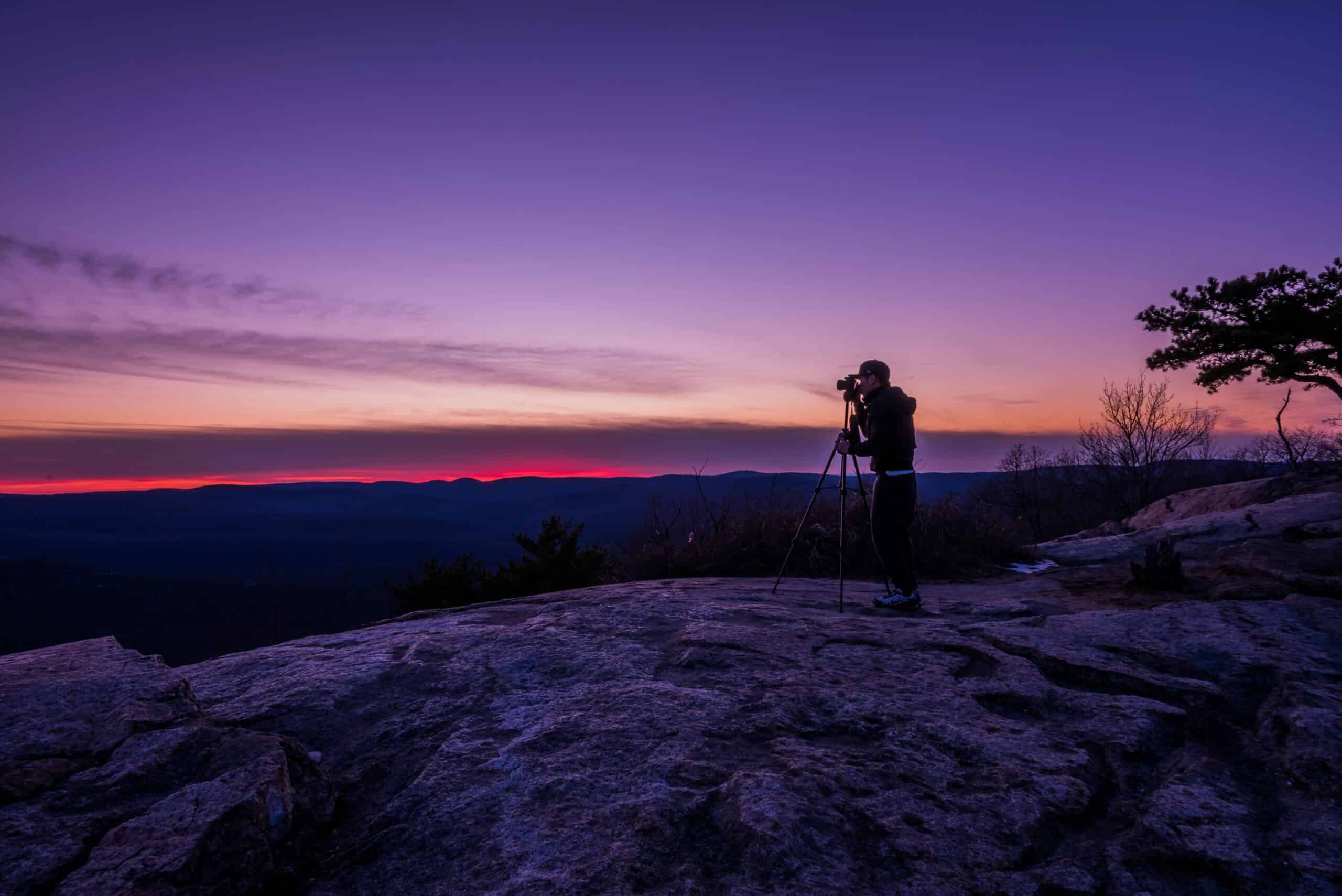
Evaluate Shooting Environment
Walk the scene before you deploy the tripod. Note moving subjects, wind, reflective surfaces (glass, water, polished floors), and light sources that can flare. If shooting through glass, place the lens as close as possible (1–2 cm) and shade stray light with a cloth or lens hood to reduce reflections. In interiors, plan for lamps, windows, and mixed color temperatures. On rooftops, evaluate wind and ensure your rig is secure with a tether.
Match Gear to Scene Goals
The GFX 100 II excels in dynamic range and resolution; at ISO 80–200 you can capture deep shadows and protect highlights for cleaner HDR merges. In low light, ISO 400–1600 remains very usable—though for tripod work, prefer base ISO and longer shutters. The FE 14mm’s rectilinear rendering keeps verticals straight, which is important for architectural panoramas. It also allows fewer frames than a narrower lens while avoiding the fisheye “bubble” look. If you shoot GFX with a native UWA instead of the FE 14mm, budget a few extra frames to compensate for the slightly narrower FOV.
Pre-shoot Checklist
- Power and storage: fully charged batteries, spacious and fast cards; bring spares.
- Optics clean: front element and sensor cleaned; carry a microfiber and blower.
- Tripod leveling: use a leveling base or bowl; double-check with the camera’s level.
- Pano head calibrated: nodal point set for your lens; lock all axes firmly.
- Safety: tether on rooftops, sandbag for wind, avoid acting as a lightning rod with poles.
- Backup workflow: complete one extra full pass (or row) as insurance against stitching gaps or motion artifacts.
Essential Gear & Setup
Core Gear
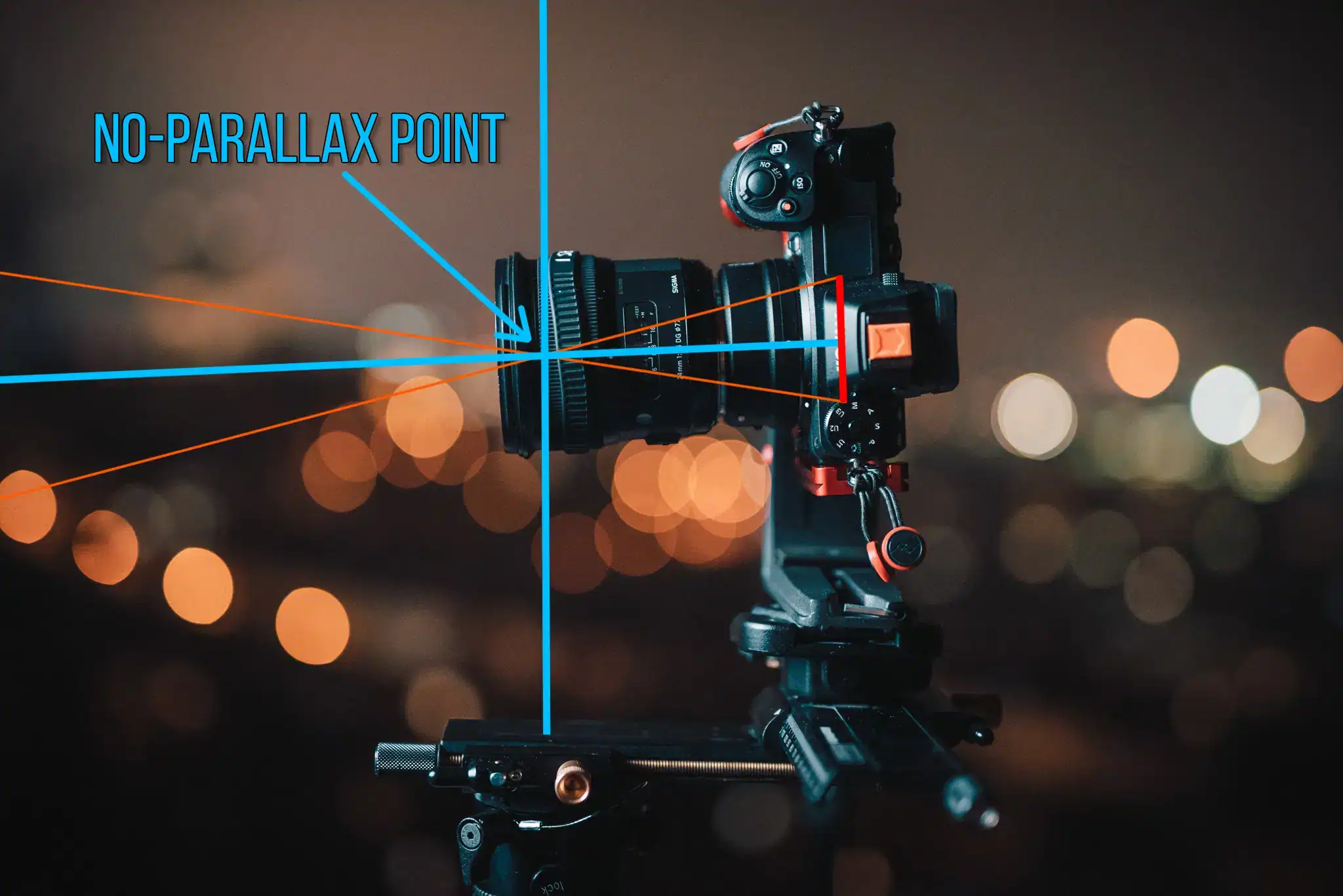
- Panoramic head: A proper pano head lets you rotate the camera around the lens’s no-parallax (entrance pupil) point, eliminating parallax and easing the stitch. Calibrate once and mark your rails.
- Stable tripod with leveling base: Fast leveling reduces setup time and ensures a straight horizon in your equirectangular output.
- Remote trigger/app: Use a cable release or FUJIFILM XApp to avoid touching the camera. Enable a 2-sec delay if needed.
Optional Add-ons
- Pole or car mount: Great for elevated or vehicle-based 360s. Use safety tethers, clamp checks, and avoid high winds—vibration smears fine detail and can wreck gear.
- Lighting aids: Small LEDs or bounced flash for interiors; keep balance consistent across frames to simplify stitching.
- Weather protection: Rain covers, lens hood/flag for flare, and desiccants for humid environments.
For a deeper primer on setting up a panoramic head and why entrance pupil alignment matters, see this thorough step-by-step from Meta Quest’s Creator resources. Set up a panoramic head to shoot high‑end 360 photos
Step-by-Step Shooting Guide
Standard Static Scenes
- Level and lock: Level the tripod via the base, then fine-tune on the head. Ensure the rotator’s index marks are readable and friction is even across clicks.
- Align the nodal point: Place a light stand or pole a few feet in front of the camera and another object far in the distance. Rotate the camera. If the foreground shifts relative to the background, slide the camera along the rail until the shift disappears. Mark that position for your lens.
- Manual exposure and white balance: Switch to manual exposure and lock WB (e.g., Daylight or custom Kelvin). This prevents flicker and color shifts between frames.
- Focus: Switch to manual focus. For a rectilinear 14mm, set roughly to hyperfocal. At f/8 on full frame, hyperfocal is around 0.8 m; focus just past 1 m to keep everything sharp from foreground to infinity. For GFX with a slightly narrower native lens, use an equivalent hyperfocal distance (most GFX UWAs at f/8 will be ~1–1.5 m for safe coverage).
- Capture sequence: Use your planned shot pattern:
- 2-row safe set: 8 around at +30°, 8 around at −30°, plus zenith and nadir.
- Or single row: ~12 around at 0° plus zenith and nadir (quality not as uniform at poles).
Maintain ~25–30% overlap, keep the horizon consistent, and pause 1–2 seconds after each rotation to dampen vibrations.
- Nadir shot: Tilt down and capture the ground for later tripod removal or patching. If needed, shift the tripod slightly and use “viewpoint correction” later in PTGui.
HDR / High Dynamic Range Interiors
- Bracket exposures: Typical is 3 frames at ±2 EV; for bright windows, 5 frames at ±2 EV can help. Keep ISO low (80–200 on GFX) to maximize DR.
- Lock everything: Manual exposure per bracket set, manual focus, and locked white balance. Shortest shutter must avoid flicker from LED lighting—adjust shutter to avoid mains frequency banding where applicable.
- Workflow: Either merge brackets first (per view), then stitch; or stitch per exposure set, then merge HDR. Both work—choose the one you know produces fewer artifacts in your software.
Low-Light / Night Scenes
- Use tripod discipline: Long exposures are fine—1–15 seconds common. Prefer ISO 80–400 on GFX for the cleanest files; ISO 800–1600 remains usable if needed.
- Disable IBIS on tripod: Prevents micro-wobble. Use a 2-second self-timer or remote shutter, and electronic first-curtain shutter if available.
- Watch flare: With point light sources, shade the lens between frames and check for internal reflections. Mask or blend problem frames during post.
Crowded Events
- Two passes strategy: First pass for coverage, second pass waiting for subject gaps.
- Mask in post: In PTGui, use masks to keep desired people from one frame and remove duplicates or moving crowds from others.
- Fast shutter: If light allows, use 1/200–1/500 at ISO 400–800 and f/5.6–f/8 for crisper moving subjects.
Special Setups (Pole / Car / Drone)
- Secure everything: Use safety tethers and double clamps. Avoid high winds with pole shots. On vehicles, use high-friction mounts and soft starts/stops to reduce vibration.
- Slower rotation: Let vibrations settle between frames; use higher shutter speeds to freeze micro-shake.
- Parallax caution: Elevated poles exaggerate near/far relationships—precise nodal alignment and overlap become even more important.
Recommended Settings & Pro Tips
Exposure & Focus
| Scenario | Aperture | Shutter | ISO | Notes |
|---|---|---|---|---|
| Daylight outdoor | f/8–f/11 | 1/100–1/250 | 80–200 | Lock WB to Daylight or a custom Kelvin |
| Low light/night | f/4–f/5.6 | 1/30–several sec | 80–800 | Tripod, remote trigger, IBIS off on tripod |
| Interior HDR | f/8 | Bracket ±2 EV | 80–400 | Merge HDR then stitch, or stitch per exposure set |
| Action / moving subjects | f/5.6–f/8 | 1/200+ | 400–800 | Two-pass capture; mask moving subjects |
Critical Tips
- Manual focus at hyperfocal: For 14mm FF at f/8, set ~1 m; for GFX with a slightly narrower lens, set ~1–1.5 m. Verify on the rear LCD with magnification.
- Nodal calibration: Use two objects at different distances; rotate and adjust until there’s no relative shift. Mark your rail stop for repeatability.
- White balance lock: Prevent mixed color casts across frames. If lighting varies, shoot a custom WB card and match in post.
- RAW over JPEG: You’ll get higher DR and more pliable colors—critical for HDR and tricky blends.
- IBIS on/off: On a tripod, turn IBIS off. Handheld or on a lightly vibrating platform, IBIS can help—test and review.
Stitching & Post-Processing
Software Workflow
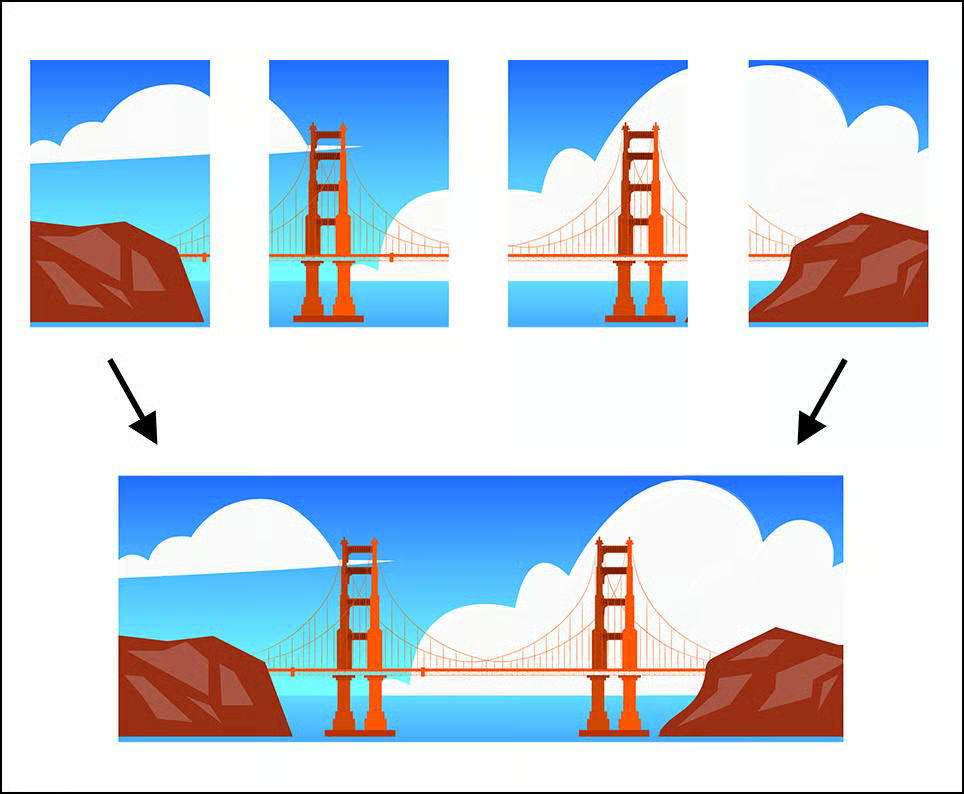
PTGui is the industry workhorse for complex panoramas; Hugin is a capable open-source alternative. For rectilinear lenses like the FE 14mm, aim for 20–30% overlap and consistent exposure—software optimizers love consistency. Typical flow: ingest and cull in Lightroom, export to PTGui for stitching (define lens type and focal length precisely), optimize, mask ghosts, level horizon, and render equirectangular TIFF/JPEG for output or VR publishing. If you’re using a native GFX UWA instead of the FE 14mm, the same principles apply; just update focal length and overlap accordingly. For an in-depth review of PTGui’s strengths, see this overview. PTGui review on Fstoppers
Cleanup & Enhancement
- Nadir patch: Shoot a clean ground plate or patch later with content-aware fill or a logo tile. PTGui’s viewpoint correction helps if you offset the tripod slightly for a patch frame.
- Color and noise: Balance color across frames before or after stitching. Apply modest noise reduction to high-ISO brackets.
- Level and straighten: Use the panorama editor to correct roll/pitch/yaw. Keep verticals vertical for architecture.
- Export: Equirectangular 2:1 for 360 viewers; 12–16k wide for high-quality VR. For web, create a downsampled copy (8–10k) to reduce load times.
Want to see a full panorama workflow step-by-step? Watch this helpful walk-through:
For additional background on pano heads and capture theory from a multi-camera/VR perspective, this overview is useful. Using a mirrorless DSLR to shoot and stitch a 360 photo
Useful Tools & Resources
Software
- PTGui (Windows/macOS) — powerful control points, masking, and viewpoint correction
- Hugin — open-source panorama suite
- Lightroom / Photoshop — RAW development and retouch
- AI tools for tripod removal — generative fill or dedicated apps
Hardware
- Panoramic heads — Nodal Ninja, Leofoto, and similar
- Carbon fiber tripods — minimize vibration, maximize stability
- Leveling bases — faster setup, fewer horizon issues
- Wireless remote shutters — or the FUJIFILM XApp
- Pole extensions / car mounts — only with proper safety tethers
Disclaimer: software/hardware names are provided for search reference; check official sites for current features and compatibility.
Common Mistakes & How to Avoid Them
- Parallax error: Not rotating around the entrance pupil. Calibrate your pano head and mark the rail stop.
- Exposure flicker: Auto exposure/auto WB between frames. Use full manual exposure and lock white balance.
- Missed coverage: Too few frames at the poles. Add a zenith and nadir, or switch to a 2-row pattern.
- Ghosting: Moving people/cars across frames. Use masks or shoot a second, cleaner pass for key sectors.
- Noise at night: High ISO when a tripod allows longer exposure. Keep ISO low, use longer shutters, and turn IBIS off on tripod.
- Lens incompatibility: FE 14mm on GFX isn’t natively supported; if no smart adapter is available, use a native UWA on GFX or shoot the 14mm on a Sony body.
Frequently Asked Questions
- Can I shoot handheld panoramas with the GFX 100 II?
Yes for quick stitches, but a tripod and pano head are strongly recommended—especially for interiors and 360s. The GFX’s IBIS helps, but handheld increases parallax and alignment errors. Keep overlap higher (30–40%) if you must go handheld.
- Is the Sony FE 14mm f/1.8 GM wide enough for single‑row 360?
Technically yes, but single-row at 14mm leaves weak coverage at the poles. It’s safer to use two rows (±30°) plus zenith and nadir. Expect ~18 images for a clean, consistent 360.
- Do I need HDR for interiors with bright windows?
Often yes. Bracket ±2 EV (3–5 frames depending on contrast). The GFX 100 II’s DR is excellent, but pure single-exposure files may clip windows or crush shadows in high-contrast rooms.
- How do I avoid parallax issues with this setup?
Use a calibrated pano head and rotate around the entrance pupil. Align two objects at different distances and adjust the rail until there’s no relative movement when you pan. Mark that position for repeatable results.
- What ISO range is safe on the GFX 100 II for low light panoramas?
For tripod work, stay at ISO 80–400 whenever possible and extend shutter time. ISO 800–1600 is usable with careful noise reduction, but lower ISO will always stitch cleaner with more latitude.
Real-World Use Cases & Field Advice
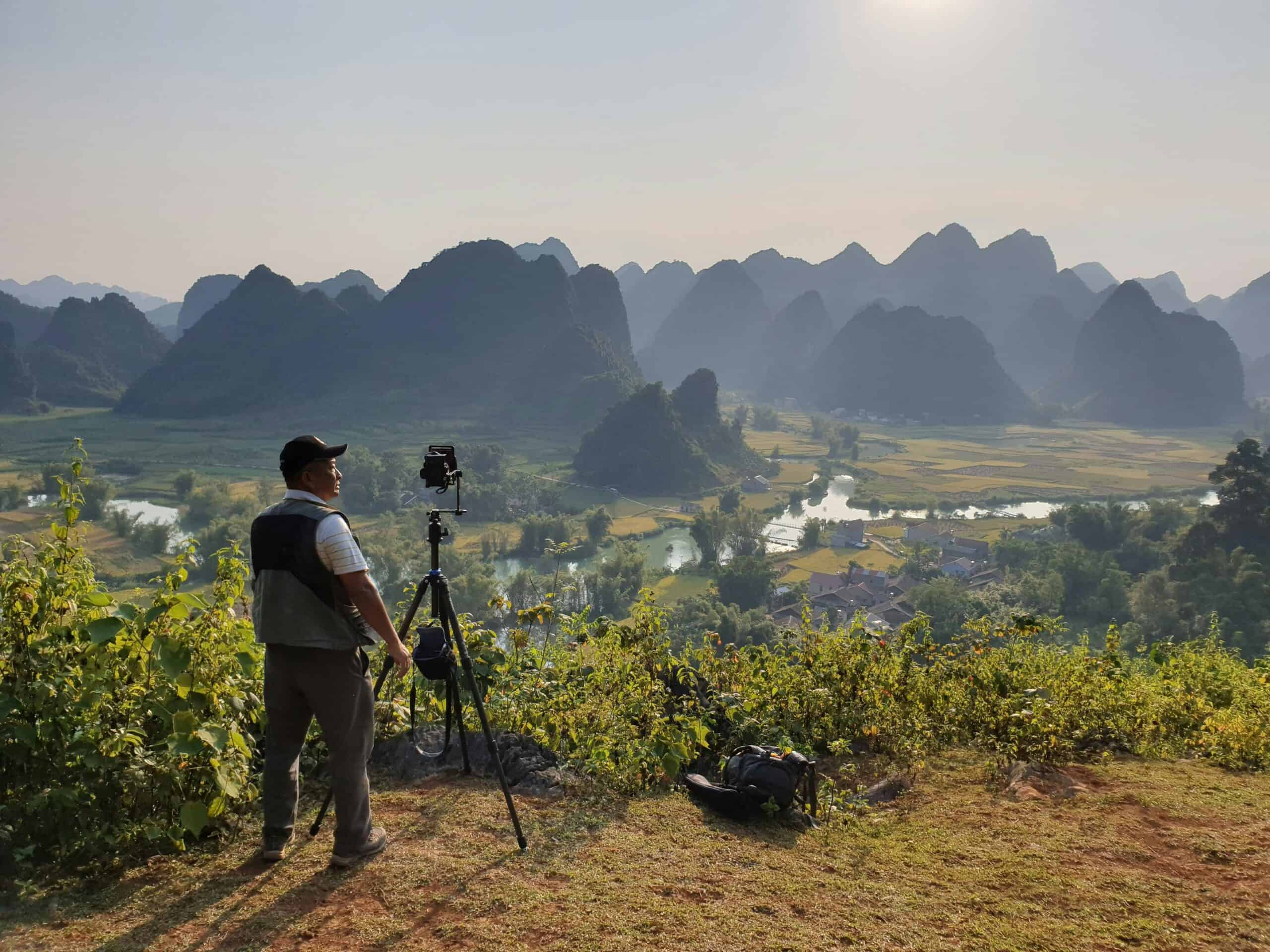
Indoor Real Estate
Shoot at ISO 80–200, f/8, and bracket ±2 EV to balance windows and interiors. Keep the camera exactly level to avoid keystone corrections later. Use 2-row capture for ceiling/floor coverage. Patch the nadir with a logo plate or a clean offset shot using viewpoint correction.
Outdoor Sunset Cityscape
Lock WB to Daylight, expose for highlights, and consider blending a darker sky pass. Wind introduces vibration; hang a small weight from the tripod’s center or use a heavier tripod. Shade the front element between frames to reduce flare streaks from low-angle sunlight.
Events and Crowds
Shoot two passes: one for geometry and one for clean “people plates.” Use masks to keep the best subjects and remove overlaps/ghosts. Keep shutter above 1/200 if possible; raise ISO to 400–800 if you need to freeze motion.
Rooftop or Pole Capture
Always use a tether. Check wind gusts—ultra-wide panoramas magnify small vibrations into stitching artifacts. Increase overlap to 30–40% and let the rig settle before each frame. If possible, add one extra safety row.
Car-Mounted
Pre-plan your route, mount low for stability, and use faster shutter speeds (1/500+) with higher ISO to reduce motion blur. Capture in bursts and mask moving artifacts later. Expect to discard frames with excessive vibration.
For a foundational primer on pano heads and shooting logic, this tutorial is a solid reference. Panoramic head tutorial (360 Rumors)
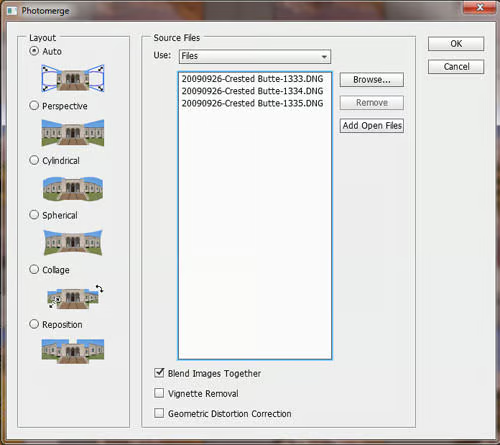
PTGui Settings Snapshot
Final Notes on This Specific Combo
Because the Sony FE 14mm f/1.8 GM doesn’t natively mount to the GFX 100 II and a widely available smart E→GFX adapter is not currently on the market, consider one of these approaches:
- Use the FE 14mm on a Sony body for capture; the techniques above still apply. You’ll benefit from the lens’s stellar optics and minimal distortion.
- Use a native or adapted ultra-wide on the GFX (e.g., GF 20–35mm at the wide end, or a third-party UWA designed for the 44×33 mm image circle). Expect a few extra frames versus a 14mm FF equivalent.
As always, verify your adapter and lens control before a paid shoot, and do a quick test stitch on-site to confirm coverage and overlap. For broader guidance on lens choice vs. panorama resolution, the PanoTools wiki is a useful resource. PanoTools: DSLR spherical resolution