
Why This Camera & Lens Are Great for Panoramas
The Fujifilm GFX 100 II paired with the Sigma 15mm f/1.4 DG DN Diagonal Fisheye Art is a powerhouse combo for immersive panoramic and 360° photography—if you can address mount compatibility (see note below). The GFX 100 II’s 102MP 43.8×32.9mm medium-format sensor delivers immense detail, excellent color depth (16-bit RAW), and class-leading dynamic range at base ISO (roughly 14+ stops at ISO 80). Its 5-axis IBIS (up to about 8 stops with supported lenses) and refined shutter options (EFCS and electronic shutter) help keep frames razor-sharp across multi-image stitches.
The Sigma 15mm f/1.4 DG DN Fisheye Art is a modern, optically excellent diagonal fisheye that reaches 180° on the diagonal of a full-frame sensor. It’s extremely sharp across the frame by f/4–f/5.6, controls lateral CA well for a fisheye, and focuses quickly. As a fisheye, it dramatically reduces the number of shots needed for a full spherical pano—often 6 around plus a zenith and a nadir—speeding up field work and minimizing stitching errors.
Mount compatibility note (read first): The Sigma 15mm f/1.4 DG DN is made for Sony E and L-Mount full-frame cameras. There is no standard mechanical adapter to mount E or L lenses onto GFX due to flange distance constraints; any solution would require specialized optical conversion or a professional mount conversion. If you don’t have that, you can still use the GFX 100 II effectively by either: (a) selecting a GFX-compatible fisheye or an adaptable full-frame fisheye (e.g., Canon EF fisheye via EF–GFX adapter), or (b) using the GFX 35mm Format Mode only if you have a custom pathway to mount the Sigma (the 35mm crop yields ~60MP images and avoids vignetting). The shooting techniques below remain the same; adapt mount choices accordingly for a reliable, professional workflow.
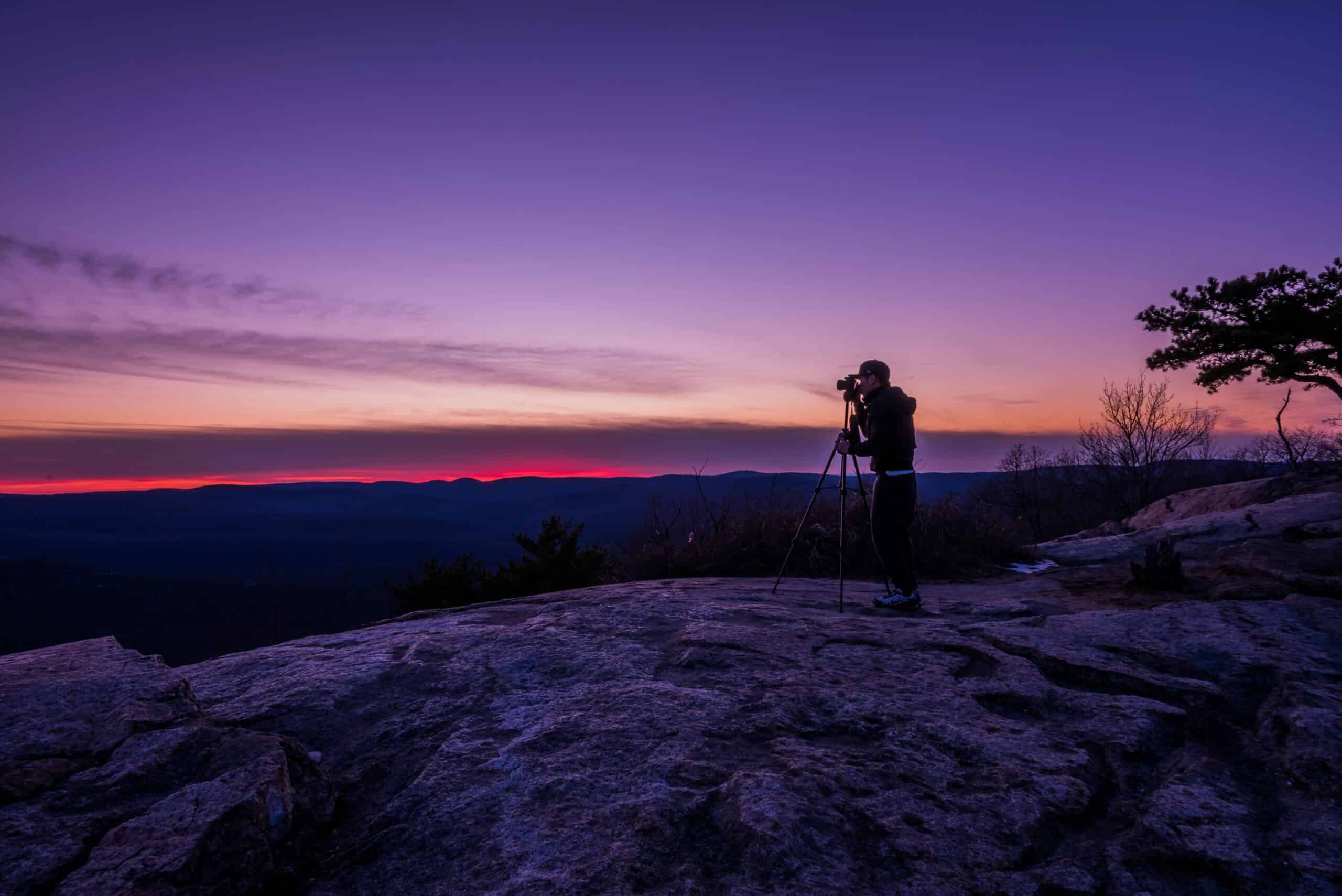
Quick Setup Overview
- Camera: Fujifilm GFX 100 II — 43.8×32.9mm medium-format sensor, 102MP, 16-bit RAW, IBIS up to ~8 stops, excellent DR at ISO 80–200.
- Lens: Sigma 15mm f/1.4 DG DN Diagonal Fisheye Art — diagonal fisheye (180° on FF diagonal), exceptionally sharp by f/4–f/5.6, low lateral CA for a fisheye, fast focusing, robust build. Note: native mounts are Sony E and L; see compatibility note above.
- Estimated shots & overlap (full-frame equivalent coverage): 6 around at 60° yaw spacing with 25–30% overlap + 1 zenith + 1 nadir. For complex interiors, 8 around increases safety. A dedicated zenith may be unnecessary if you pitch up 10–15° during the around pass, but a clean nadir is still recommended.
- Difficulty: Moderate. The fisheye reduces shot count, but precise nodal alignment and exposure control remain critical.
Planning & On-Site Preparation
Evaluate Shooting Environment
Walk the scene first. Identify strong light sources (windows, street lamps), reflective surfaces (glass, polished floors), and moving subjects (people, trees in wind). If you must shoot through glass, get the front element as close as safely possible and shield with a black cloth or lens hood to minimize reflections. Avoid pointing the fisheye directly into harsh sun when possible to reduce flare. If shooting exteriors, note wind speed—pano heads on tall poles can become sails.
Match Gear to Scene Goals
The GFX 100 II offers superb dynamic range at low ISO for sunset and interiors with mixed lighting. Indoors, you can often stay at ISO 80–400 with a tripod. The Sigma 15mm fisheye minimizes the shot count, which is invaluable in crowds or changing light. The tradeoff is fisheye distortion; for architectural work, keep the camera level and rely on proper stitching to project into an equirectangular or rectilinear view later. If you must shoot fast (events, moving traffic), the fisheye’s speed reduces time between frames and limits ghosting.
Pre-shoot Checklist
- Power and storage: fully charged batteries; ample, fast cards (UHS-II or CFexpress Type B). Bring spares.
- Optics clean: front and rear elements spotless. Clean the GFX sensor if needed.
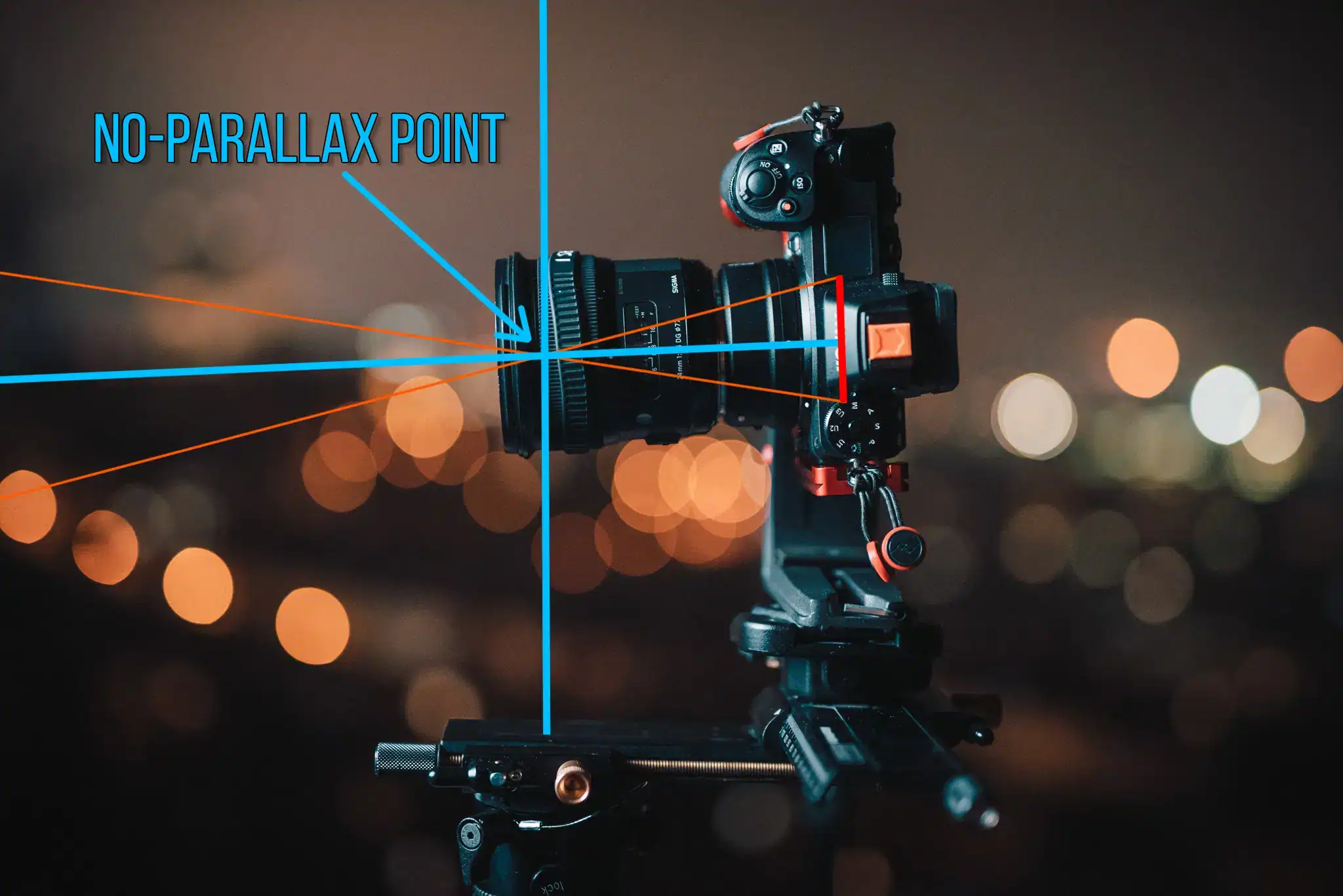
- Support: tripod leveled; panoramic head calibrated for the lens’s no-parallax point (NPP).
- Safety: check wind, rooftop edges, and car mounts. Use safety tethers for poles or vehicle rigs.
- Backup workflow: shoot a second safety round if time allows, especially for commercial work.
Essential Gear & Setup
Core Gear
- Panoramic head: Enables rotating the camera around the lens’s NPP to eliminate parallax. This is essential for clean stitching, especially in tight interiors or near foreground elements.
- Stable tripod with leveling base: Leveling at the base ensures the horizontal rotation stays true. A half-ball or leveling base speeds this up dramatically.
- Remote trigger or app: Use the Fujifilm app or a wired remote for vibration-free exposures; enable a 2s timer if you don’t have a remote.
Optional Add-ons
- Pole or car mount: For rooftop/pole shots, use a safety line and monitor wind; for cars, isolate vibration with quality suction mounts and brace the pole.
- Lighting aids: Small LED panels or bounced flash for dim interiors. Keep lighting consistent across frames.
- Weather protection: Rain covers and desiccant packs. The GFX 100 II is weather-sealed, but keep connections and pano head clamps dry.
Step-by-Step Shooting Guide
Standard Static Scenes
- Level and NPP alignment: Level the tripod with a leveling base. On your panoramic head, slide the camera forward/back until foreground and background elements stay aligned as you pan—this indicates the NPP is aligned. Mark the rail scale once found so you can repeat it next time.
- Manual exposure + locked WB: Set exposure manually (M mode). Meter for the mid-tones; with the GFX, aim for ISO 80–200 outdoors when possible. Lock white balance to a consistent preset (Daylight outside, custom Kelvin indoors) to avoid color shifts across frames.
- Capture around: With a 15mm diagonal fisheye (full-frame coverage equivalent), shoot 6 frames around at 60° yaw steps with 25–30% overlap. If you’re uncertain, shoot 8 around for safety. Keep the camera level unless you have a specific projection target.
- Zenith and nadir: Add 1 zenith (tilt up 60–90°) and 1 nadir (tilt down 60–90°). If your “around” pass includes a small upward tilt (10–15°), a separate zenith might not be needed; however, always capture a clean nadir for tripod removal.
HDR / High Dynamic Range Interiors
- Bracket ±2 EV: Use AEB to capture 3–5 frames per view when windows are bright relative to interior shadows. With the GFX 100 II’s DR, 3-shot ±2 EV often suffices; in extreme contrast, go to 5-shot series.
- WB consistency: Keep white balance fixed. Mixed lighting can cause casts; plan to correct globally in post.
- Workflow tip: For speed, shoot all frames at base exposure first around the set, then run the brackets in a second pass only where needed (windows, spotlights). That minimizes stitching drift.
Low-Light / Night Scenes
- Long exposure on tripod: Use f/4–f/5.6 and ISO 100–800 for best quality. Exposures of 1/2–10s are common; use EFCS or electronic shutter to avoid shutter shock.
- IBIS and tripod: Turn IBIS off on a locked tripod to prevent micro-blur from stabilization drift.
- Remote release: Trigger with a remote or app; add a 2s timer if needed.
Crowded Events
- Two passes: First, shoot a fast pass to lock geometry; second, wait for gaps in foot traffic and re-shoot troublesome frames for later masking.
- Faster shutter: Aim for 1/200–1/400 at ISO 400–1600 to freeze people. The fisheye’s wide FOV helps keep blur less noticeable, but frozen frames stitch cleaner.
Special Setups (Pole / Car / Drone)
- Pole: Always tether. Pre-level the head and keep rotations slow. Watch wind gusts; reduce exposure times by raising ISO modestly (to ISO 400–800) to avoid blurred frames.
- Car: Use multi-suction mounts and rigid cross bracing. Drive slowly; use faster shutter speeds (1/500+) and consider shooting at low traffic hours.
- Drone: The GFX + fisheye is not a typical drone payload; use purpose-built platforms and ensure local regulations allow it.
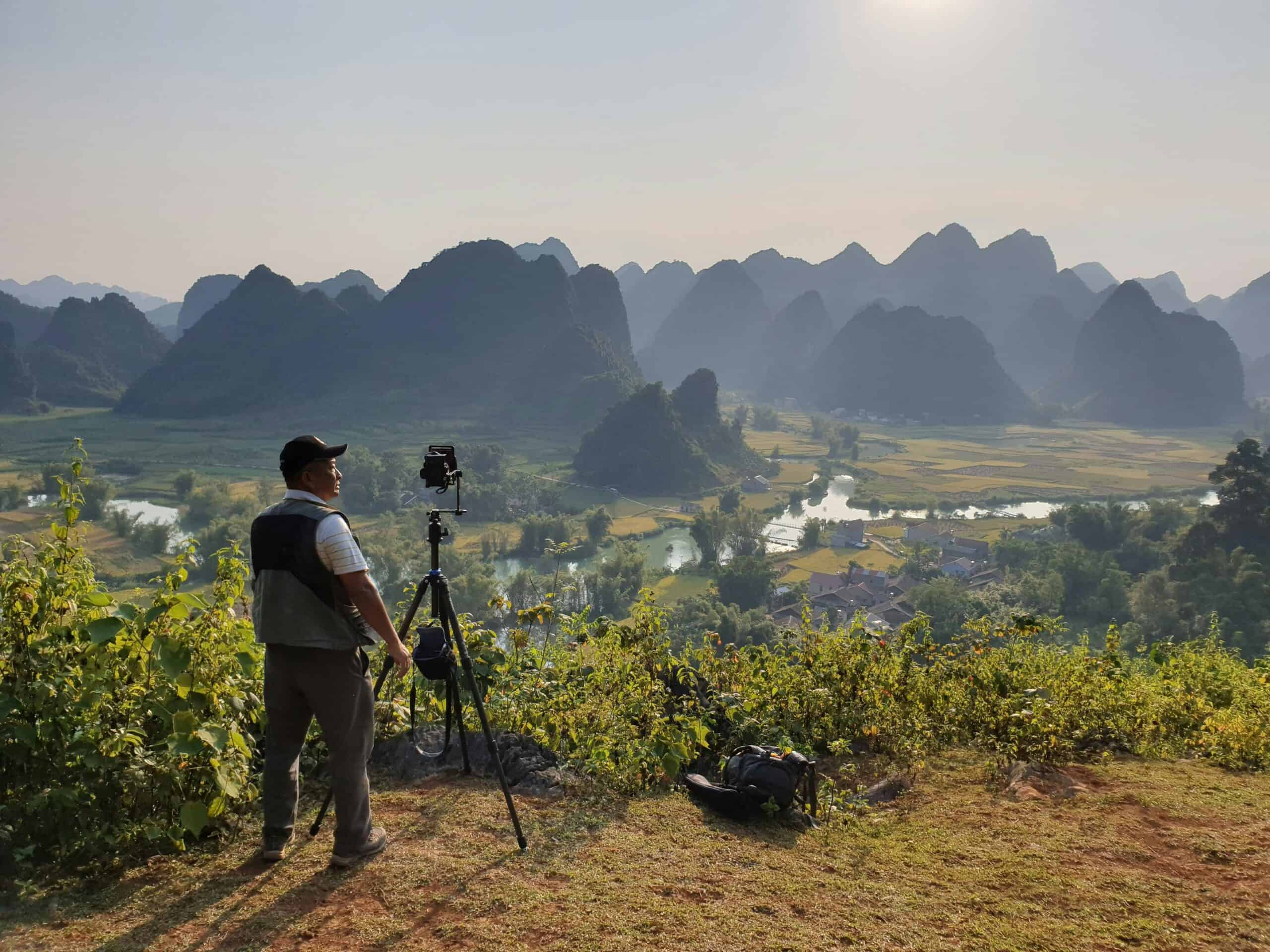
Recommended Settings & Pro Tips
Exposure & Focus
| Scenario | Aperture | Shutter | ISO | Notes |
|---|---|---|---|---|
| Daylight outdoor | f/8–f/11 | 1/100–1/250 | ISO 80–200 | Lock WB to Daylight; avoid pointing at the sun if possible |
| Low light/night | f/4–f/5.6 | 1/2–1/60 | ISO 100–800 | Tripod + remote; turn IBIS off when locked down |
| Interior HDR | f/8 | Bracket ±2 EV (3–5 shots) | ISO 80–400 | Expose to protect highlights; merge HDR before stitching |
| Action / moving subjects | f/5.6–f/8 | 1/200+ | ISO 400–1600 | Freeze motion; do a second pass for clean plates |
Critical Tips
- Manual focus at hyperfocal: With a 15mm fisheye, set focus slightly past 1m at f/8 to keep everything sharp from foreground to infinity. Confirm with magnified Live View.
- Nodal alignment: Use nearby verticals (lamp posts, door edges) against distant backgrounds to fine-tune the NPP on your pano head. Mark your rail so you can repeat the setup quickly on future jobs.
- Lock white balance: Don’t let AWB shift between frames; it creates visible seams. Pick a constant WB or set a Kelvin value.
- RAW over JPEG: The GFX’s 16-bit RAW gives you headroom to fix sky gradients, mixed lighting, and fine color transitions.
- IBIS off on tripod: Stabilization can introduce micro-movement blur during long exposures on a rigid support.
- Use 35mm Format Mode if needed: If you have a mount-converted Sigma 15mm, set the GFX to 35mm crop for full image circle coverage and easier stitching (~60MP output per frame still provides massive pano resolution).
Stitching & Post-Processing
Software Workflow
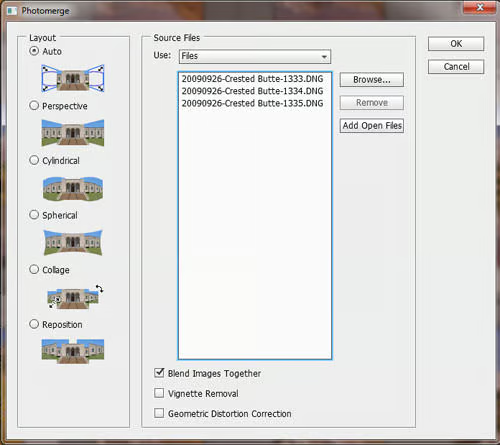
Import RAWs into Lightroom or Capture One to apply a consistent white balance and lens-agnostic basic corrections (avoid defishing here—let the stitcher handle fisheye geometry). Export as 16-bit TIFFs to PTGui or Hugin. In PTGui, set lens type to “Full frame fisheye 180°,” select control points automatically, and check optimization. For fisheye panos, 25–30% overlap is usually sufficient; rectilinear lenses typically need 20–25% overlap at many more shots. PTGui remains an industry standard for reliability and control. See a detailed PTGui overview.
Cleanup & Enhancement
- Nadir patching: Export a layered PSD from PTGui (with masks) into Photoshop and clone/patch the tripod area. You can also use AI tools to inpaint the ground convincingly.
- Color and noise: Apply gentle noise reduction to night scenes; preserve fine textures from the GFX sensor by avoiding over-smoothing.
- Leveling: Use auto-level/horizon tools in the stitcher, then refine pitch/roll/yaw so verticals are truly vertical.
- Export: For VR viewers, export equirectangular JPEG/TIFF at 8K–16K on the long side depending on your workflow. The GFX 100 II’s resolution supports ultra-high output sizes.
If you’re new to pano heads, this short tutorial explains the fundamentals of setup and rotation strategy. Panoramic head best practices.
For an end-to-end DSLR/mirrorless 360° workflow, including preparing an equirectangular image for VR, this guide is a helpful complement. DSLR/mirrorless to 360 photo workflow.
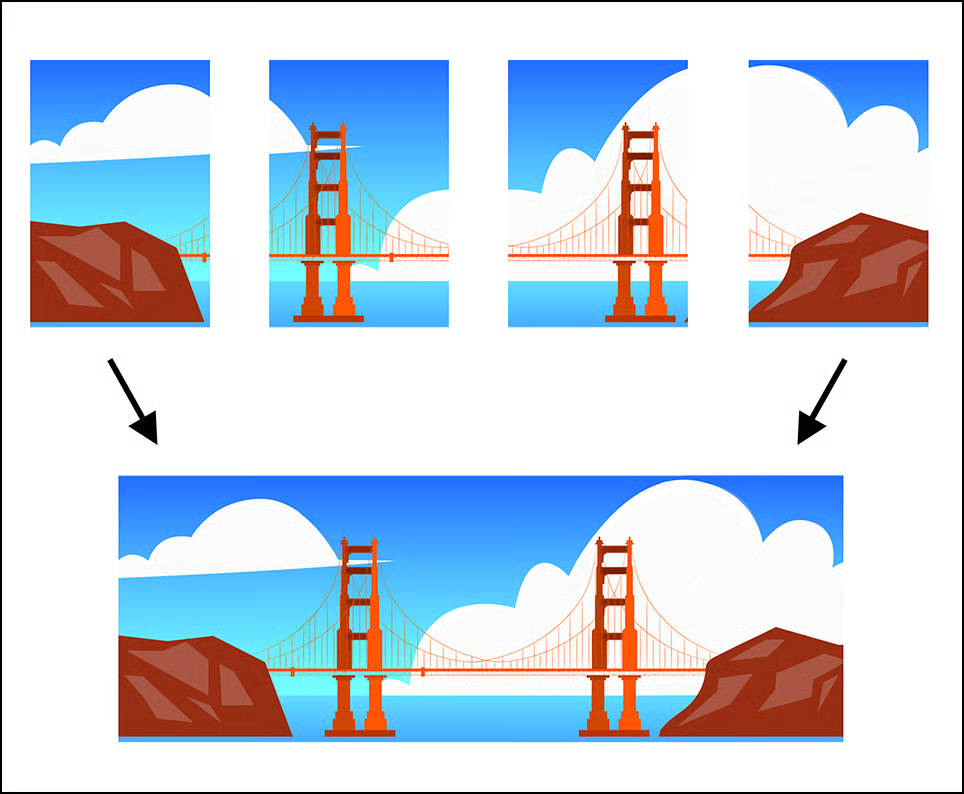
Useful Tools & Resources
Software
- PTGui panorama stitching
- Hugin (open source)
- Lightroom / Photoshop / Affinity Photo
- AI tripod/nadir removal tools
Hardware
- Panoramic heads (Nodal Ninja, Leofoto, Sunwayfoto)
- Carbon fiber tripods with leveling bases
- Wireless remote shutters
- Pole extensions / vehicle mounts with safety tethers
More foundational reading on planning, lens choice, and projection options can be found here: techniques to take 360 panoramas.
Disclaimer: software/hardware names provided for search reference; check official sites for details.
Common Mistakes & How to Avoid Them
- Parallax error: Always align the no-parallax point; even small errors cause stitching seams near foreground objects.
- Exposure flicker: Manual exposure and fixed white balance across every frame and bracket set.
- Tripod shadows and footprints: Shoot a dedicated nadir and patch later.
- Ghosting from movement: Do two passes and mask in post; prioritize frames with clean subject positions.
- Noise in night scenes: Keep ISO low (100–800), use longer exposures, and leverage the GFX’s DR instead of pushing ISO too high.
Field Scenarios and Practical Advice
Indoor Real Estate
Use f/8, ISO 80–200, and bracket ±2 EV for windows. The fisheye minimizes time per room—6 around + zenith + nadir. Keep the camera height consistent across rooms for a uniform tour. On glossy floors, raise the tripod slightly to reduce reflections of the tripod legs.
Outdoor Sunset
At civil twilight, meter for the sky highlights and keep ISO at 80–200 with a tripod. Shoot your around pass quickly to avoid gradient shifts; if the sun is in frame, do a second pass a few minutes later and choose the best-looking sky during blending.
Event Crowds
Turn AF-C off, use manual focus to avoid focus shifts across frames. Increase shutter speed to 1/200–1/400 at ISO 400–800. Ask people to pause briefly if possible, then capture the around sequence in under 10 seconds.
Rooftop/Pole Shooting
Safety first: tether gear and avoid high winds. Use shorter exposures at ISO 400–800 to combat sway. Keep rotations deliberate and smooth; consider shooting two full rounds to hedge against motion blur.
Car-Mounted Capture
Use multi-point suction rigs and a rigid pole. Pre-mark the pano head positions to click rapidly through yaw angles. Shoot at 1/500–1/1000 and ISO 400–1600 as needed; try early morning for low traffic and stable light.
For more background on camera and lens choices for virtual tours, this explainer is a solid additional read: DSLR/mirrorless virtual tour lens guide.
Important Compatibility & Workflow Notes
The Sigma 15mm f/1.4 DG DN Diagonal Fisheye Art is not natively mountable to the GFX 100 II. As of this writing, there is no commonly available E- or L-to-GFX adapter without optical elements. Practical paths:
- Use a professionally mount-converted copy or a specialty optical adapter (rare) and switch the GFX to 35mm Format Mode to avoid vignetting. Expect approximately 60MP frames.
- Choose an adaptable full-frame fisheye (e.g., Canon EF fisheye via EF–GFX smart adapter) to retain a similar workflow with proven mechanical compatibility.
- Alternatively, use a native ultra-wide rectilinear on GFX (e.g., Laowa GFX options) and increase shot count (12–24 around) to achieve full coverage.
Whatever path you choose, the techniques in this guide—nodal alignment, consistent exposure/WB, overlap discipline, and careful stitching—apply directly.
Frequently Asked Questions
- Can I shoot handheld panoramas with the GFX 100 II?
Yes, for quick partial panos. For 360° work, a tripod and pano head are strongly recommended. The high resolution of the GFX is unforgiving of parallax and framing inconsistencies.
- Is the Sigma 15mm f/1.4 DG DN wide enough for a single-row 360?
Yes—on full-frame coverage, 6 shots around (+ zenith + nadir) typically suffice with 25–30% overlap. For highly detailed interiors, do 8 around for extra control points.
- Do I need HDR for interiors with bright windows?
Often yes. Bracket ±2 EV (3–5 shots). Merge HDR per view first, then stitch. The GFX’s DR helps, but extreme window-to-interior contrast is best handled with bracketing.
- How do I avoid parallax issues?
Use a calibrated panoramic head. Align the rotation axis to the lens’s no-parallax point by observing a near and far object while panning. Mark the rail position so you can repeat it instantly on the next job.
- What ISO range is safe on the GFX 100 II in low light?
For tripod-based 360s, ISO 100–800 is a sweet spot. If you must freeze motion, 1600–3200 is usable with careful noise reduction, but prioritize longer exposures where possible.
- Can I save a custom pano setup on the GFX 100 II?
Yes. Store manual exposure, fixed WB, IBIS off, and your preferred drive/bracketing into a My Menu or custom settings bank to speed up setup on location.
- How do I reduce flare when using a fisheye?
Shade the lens with your hand or a flag outside the frame, avoid direct sun when possible, and clean the front element meticulously. Slightly reframing to keep strong sources off-axis helps.
- What panoramic head should I choose for this setup?
Look for an Arca-Swiss compatible, two-rail design with a vertical rotator and engraved scales. Nodal Ninja, Leofoto, and Sunwayfoto offer reliable options that can support the GFX’s weight.