
Why This Camera & Lens Are Great for Panoramas
The Fujifilm GFX 100 II paired with the 7Artisans 10mm f/2.8 II Fish-Eye is a powerful combination for anyone wanting to learn how to shoot panorama with Fujifilm GFX 100 II & 7Artisans 10mm f/2.8 II Fish-Eye. The GFX 100 II’s 102MP 43.8×32.9mm medium-format BSI CMOS sensor (approx. 3.76μm pixel pitch) delivers huge resolving power, smooth tonal transitions, and class-leading dynamic range at base ISO 80—excellent for high-contrast scenes like interiors with bright windows or sunset cityscapes. In-body image stabilization (up to ~8 stops) and a responsive EVF make field operation dependable.
The 7Artisans 10mm f/2.8 II is a manual-focus diagonal fisheye designed for full-frame coverage with an approximate 180° diagonal angle of view. Its big advantage for 360 photography: fewer frames are needed to cover the full sphere, which reduces stitching errors from moving subjects. While sharpness improves notably by f/5.6–f/8, expect moderate chromatic aberration and typical fisheye distortion. On the GFX 100 II, you’ll get best results by using the camera’s 35mm (full-frame) crop mode to avoid heavy corner vignetting from the lens’s full-frame image circle. The crop still yields around ~60MP files—more than enough for ultra-detailed 360° panoramas.
In short: the GFX 100 II gives you extraordinary detail and dynamic range, while the 10mm fisheye keeps your shot count low and your stitching workflow efficient. It’s a practical, high-quality way to build professional 360 photo and VR content.
Quick Setup Overview
- Camera: Fujifilm GFX 100 II — 43.8×32.9mm medium format, 102MP BSI CMOS, base ISO 80, excellent dynamic range; IBIS for stabilization.
- Lens: 7Artisans 10mm f/2.8 II Fish-Eye — diagonal fisheye for full-frame, manual focus and aperture; improved optical formula in the “II” version; moderate CA, best sharpness around f/5.6–f/8.
- Coverage & frames (tested guidance, 35mm crop mode recommended):
- Single-row 360: 6 shots around (60° yaw steps) + 1 zenith + 1 nadir; 25–30% overlap.
- Safety for complex interiors: 8 around + zenith + nadir to boost overlap in busy scenes.
- Difficulty: Intermediate (manual lens + nodal alignment + stitching).
Planning & On-Site Preparation
Evaluate Shooting Environment
Scan the location for bright light sources, reflections (especially glass, polished floors, and cars), and moving objects. For windows and glass, shoot at a slight angle and keep the front element as close as safely possible to the glass to reduce reflections. Watch for overlapping moving objects (people, trees in wind, cars) that can cause ghosting in stitches—plan your shot order to minimize overlap with moving subjects.
Match Gear to Scene Goals
The GFX 100 II’s base ISO 80 and wide dynamic range give you clean files that handle shadow recovery and highlight retention very well—ideal for real estate and architecture. Indoors, ISO 200–800 is a safe working range with excellent quality; ISO 1600–3200 is usable when needed. The 7Artisans 10mm fisheye keeps your frame count low for faster capture and fewer stitching seams. That said, fisheye distortion will curve straight lines—keep the camera level and plan on correcting projection in post where needed.
Pre-shoot Checklist
- Charge batteries and format high-speed cards (CFexpress Type B recommended); enable 35mm crop mode for the 10mm fisheye.
- Clean lens front element and check the sensor for dust (it will show in skies and walls).
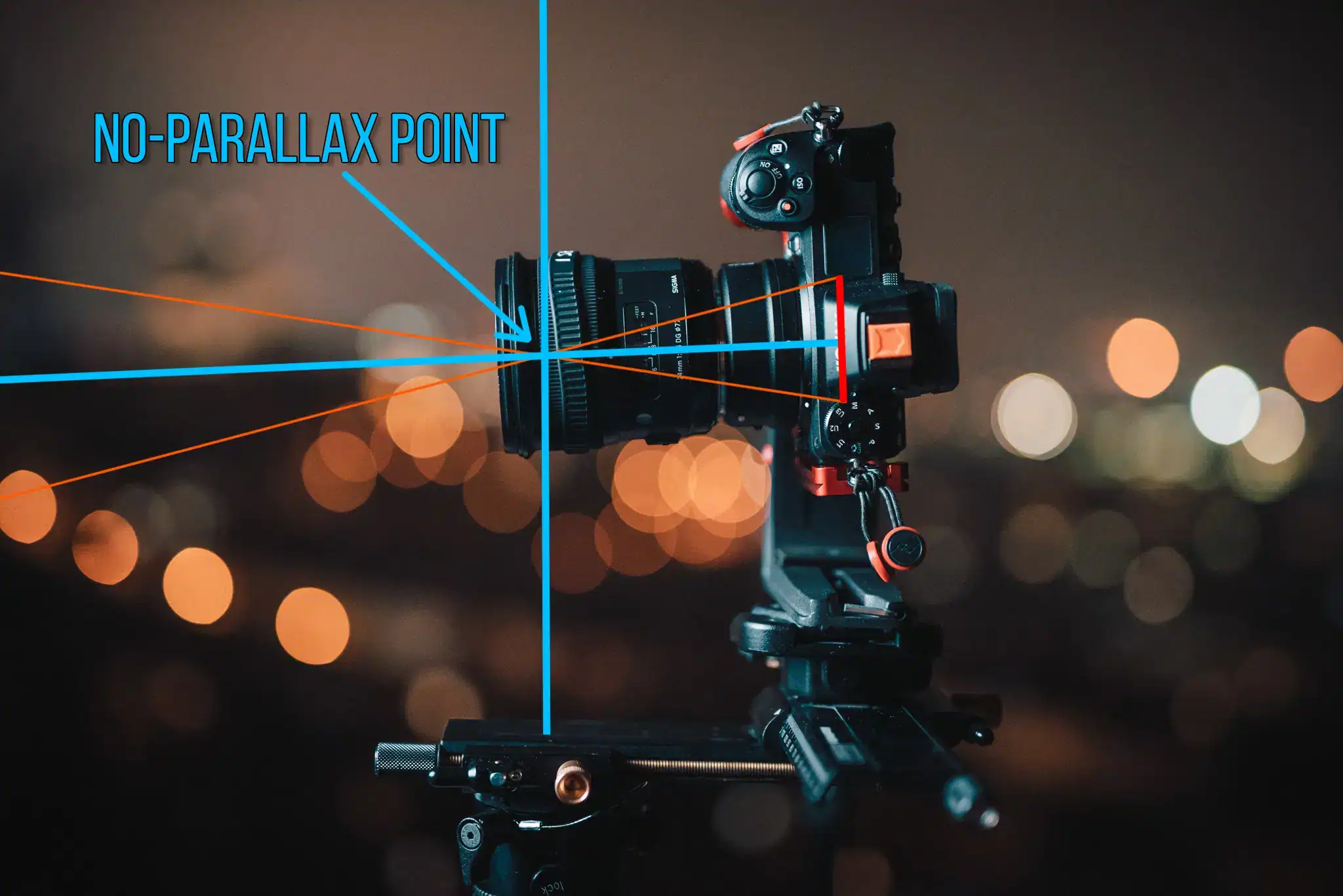
- Level the tripod; ensure your panoramic head is calibrated for the lens’s no-parallax point.
- Safety: on rooftops or windy locations, tether the tripod; on poles or car mounts, use secondary safety lines and avoid crowds.
- Backup workflow: shoot a second pass if you can—especially for critical commercial work.
Essential Gear & Setup
Core Gear
- Panoramic head: This lets you rotate the camera around the lens’s entrance pupil (no-parallax point), minimizing parallax and easing stitching. Calibrate once and mark your rails for repeatable results.
- Stable tripod with a leveling base: A leveling base speeds setup and keeps your horizon straight. It’s especially useful when shooting multiple locations in a day.
- Remote trigger/app: Use the Fujifilm app or a wired remote for shake-free shooting. Mirror lock-up or EFCS also helps prevent vibrations.
Optional Add-ons
- Pole or car mount: Great for elevated or moving vantage points. Use robust clamps, a safety tether, and keep shutter speeds high to reduce motion blur. Avoid high winds with heavy medium-format gear.
- Lighting aids: Small LED panels or bounced flash can lift shadows in dim interiors. Keep lighting consistent across frames to avoid stitching seams.
- Weather protection: Rain covers and microfiber cloths; the fisheye front element is exposed and must stay clean.
For a deeper dive on setting up panoramic heads and nodal alignment, this panoramic head tutorial is a solid reference: panoramic head setup guide.
Step-by-Step Shooting Guide
Standard Static Scenes
- Level tripod and align nodal point
Mount the GFX 100 II with the 7Artisans 10mm on your panoramic head. In 35mm crop mode, calibrate the rails so the rotation point is at the lens’s entrance pupil. Test by aligning two vertical objects (one near, one far) and rotating: if they shift relative to each other, adjust forward/backward until parallax disappears.
- Manual exposure and white balance
Switch to full manual: set ISO, shutter, and aperture; lock white balance (e.g., Daylight outdoors, custom Kelvin for interiors). Consistency across frames prevents exposure flicker and color casts in stitching.
- Capture with tested overlap
Recommended for this combo (35mm crop): 6 shots around at 0° pitch, 60° yaw steps, plus 1 zenith (+90°) and 1 nadir (−90°). Aim for 25–30% overlap between adjacent frames. For complex interiors with lots of detail near the camera, do 8 around for more overlap.
- Take a nadir (ground) shot
After the main round, take a dedicated nadir shot for tripod removal. If your head allows, offset the camera slightly over the tripod center or shoot a handheld patch shot with the tripod moved aside. Mark reference points to help alignment later.
HDR / High Dynamic Range Interiors
- Bracket ±2 EV
For scenes with bright windows and dark corners, shoot 3–5 brackets per angle (e.g., −2/0/+2 EV or −4/−2/0/+2/+4 EV). Keep WB and focus locked for all brackets and all frames.
- Keep it consistent
Use a 2-second timer or remote release to avoid shake; if your panoramic head has click stops, use them for repeatability. The GFX 100 II handles ISO 100–400 nicely for interiors; use longer shutter speeds instead of high ISO whenever possible on a tripod.
Low-Light / Night Scenes
- Long exposure on a stable mount
Use f/4–f/5.6 and shutter speeds in the 1–10s range if needed. The GFX 100 II’s files are clean at ISO 200–800; ISO 1600–3200 is usable if you must freeze motion (wind on a pole, moving crowds).
- Prevent vibration
Use a remote, EFCS, and turn IBIS off on a locked-down tripod to avoid micro-jitter. Shield the setup from wind and avoid touching the rig during exposure.
Crowded Events
- Two-pass strategy
First pass for coverage, second pass waiting for gaps. In post, mask in the clean areas from the second pass to remove moving people or to “freeze” key subjects consistently between frames.
- Shorter shutter
Use 1/125–1/250s at ISO 400–800 to keep people sharp if you want less motion blur. Accept slightly higher ISO on the GFX 100 II; its files tolerate gentle noise reduction well.
Special Setups (Pole / Car / Elevated)
- Secure everything
Use a rated pole, anti-rotation clamps, and a safety tether. Keep the rig as light as possible—medium-format bodies are heavy. Avoid strong winds and crowds. For car rigs, keep speeds low and ensure the mount is rated and redundant.
- Fast shutter, minimal rotation
Use 1/250–1/500s and pre-plan the rotation. Consider doing fewer shots around (e.g., 6 around only) to shorten capture time and reduce the chance of misalignment from motion.
Recommended Settings & Pro Tips
Exposure & Focus
| Scenario | Aperture | Shutter | ISO | Notes |
|---|---|---|---|---|
| Daylight outdoor | f/8–f/11 | 1/100–1/250 | 80–200 | Lock WB (Daylight or fixed Kelvin) |
| Low light / night (tripod) | f/4–f/5.6 | 1/2–10s | 200–800 | Remote + EFCS; IBIS off on tripod |
| Interior HDR | f/8 | Bracket ±2 EV | 80–400 | Balance windows and indoor lighting |
| Action / moving subjects | f/5.6–f/8 | 1/200+ | 400–1600 | Freeze motion; consider two-pass method |
Critical Tips
- Manual focus at hyperfocal distance: With a 10mm fisheye on 35mm crop at f/8, hyperfocal is roughly around 0.4–0.5 m; focusing near 0.5 m keeps near-to-infinity acceptably sharp.
- Nodal calibration: Find the entrance pupil by aligning near/far verticals and eliminating relative shift while rotating; mark your rail positions for this camera-lens combo to repeat quickly.
- White balance lock: Avoid auto WB. Mixed lighting becomes manageable in post if WB is consistent frame-to-frame.
- RAW over JPEG: 16-bit workflows and RAW give you the dynamic range you paid for; JPEG can snap to incorrect WB and clip highlights.
- IBIS and shutter mode: Turn IBIS off on a tripod; use EFCS to minimize shutter shock. For hand-held or pole work, IBIS can help at faster shutter speeds.
- Use 35mm crop mode: The 7Artisans 10mm II is a full-frame fisheye. On GFX, 35mm crop avoids dark corners while still capturing ~60MP per frame.
Stitching & Post-Processing
Software Workflow
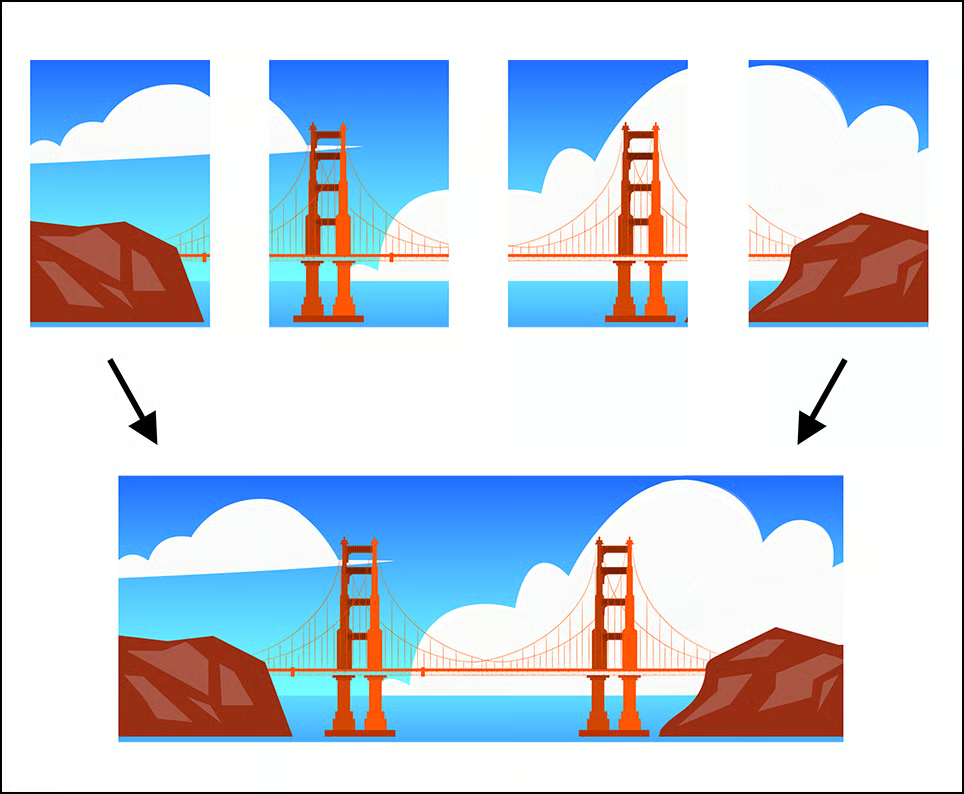
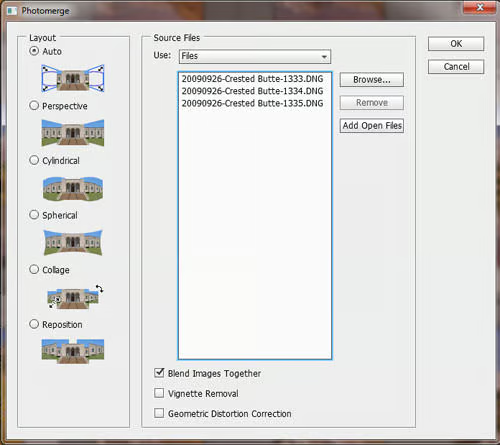
Import RAW files into Lightroom or Capture One, apply consistent basic adjustments (WB, lens CA fix, noise reduction), and export to 16-bit TIFFs. Stitch in PTGui or Hugin using a fisheye lens profile. Fisheye panoramas typically stitch faster with fewer frames; aim for ~25–30% overlap. Rectilinear lenses require more frames and careful control-point placement but yield straighter edges out-of-camera.
PTGui’s optimizer usually handles the 10mm fisheye well. If you shot HDR brackets, use PTGui’s HDR merge or pre-merge in your RAW editor to control highlight roll-off. For a software overview, this review provides useful context: PTGui for high-quality panoramas.
Cleanup & Enhancement
- Nadir patch: Export the equirectangular pano and patch the tripod area in Photoshop, or use AI-based tripod removal tools.
- Color consistency: Match tint/saturation across frames; the GFX files tolerate significant color grading without breaking.
- Noise reduction: Apply lightly at ISO 1600–3200; keep detail preservation high for textures like carpet or brick.
- Level horizon: In PTGui, adjust the verticals and horizon for a natural viewpoint before exporting.
- Export: Save as 16-bit TIFF for archive, and as an equirectangular JPEG (8,000–16,000 px width depending on needs) for web and VR platforms.
If you’re publishing for VR, the platform guidelines here are a helpful reference: shoot and stitch a 360 photo for VR.
Disclaimer: Always verify your software’s latest version and documentation for updated steps.
Useful Tools & Resources
Software
- PTGui panorama stitching
- Hugin open source
- Lightroom / Photoshop
- AI tripod removal tools
Hardware
- Panoramic heads (Nodal Ninja, Leofoto)
- Carbon fiber tripods
- Leveling bases
- Wireless remote shutters
- Pole extensions / car mounts
More background on DSLRs/mirrorless for 360 panoramas: DSLR/mirrorless 360 guide.
Disclaimer: software/hardware names provided for search reference; check official sites for details.
Common Mistakes & How to Avoid Them
- Parallax error: Not aligning the entrance pupil. Solution: calibrate and mark your rail settings; recheck when changing lenses.
- Exposure flicker: Using auto exposure/WB. Solution: lock both and use manual mode.
- Tripod shadows and footprints: Shoot a dedicated nadir patch; reposition and take a clean ground frame.
- Ghosting from moving subjects: Use two-pass capture and mask in post; increase overlap in busy scenes.
- High-ISO noise at night: Keep ISO modest (≤800 if possible); use longer shutter on a solid tripod; apply light noise reduction.
- Vignetting on GFX: Use 35mm crop mode with the 10mm fisheye to avoid black corners.
Real-World Use Cases
Indoor Real Estate
Use base ISO 80–200, f/8, and HDR brackets (−2/0/+2 EV) for crisp windows and clean shadows. 6 around + zenith + nadir usually suffices, but 8 around can save you in tight rooms with furniture near the lens. Keep the camera level to minimize curved lines from the fisheye; correct projection during editing.
Outdoor Sunset Cityscape
Expose for highlights with ISO 80–200 and blend shadows in post. Wind can cause micro-blur—use EFCS, turn IBIS off on tripod, and wait for gusts to pass. Consider taking an extra pass 10 minutes later as the light stabilizes for an easier stitch.
Event Crowd
Plan a fast 6-around sequence at 1/200s, ISO 400–800. Then do a second pass slowly to capture gaps. In post, mask in the best sections. If the crowd is heavy, expect minor ghosts and use Smart Objects and layer masks to hand-tune seams.
Rooftop/Pole Shooting
Use a lightweight pole and the smallest practical head. Pre-rotate positions with a click-stop rotator to minimize time aloft. Shutter at 1/250–1/500s and ISO 800–1600 if needed. Safety first: use a tether and avoid strong winds.
Safety, Reliability, and Honest Limitations
Medium-format bodies are heavy; a solid tripod and a rated panoramic head are non-negotiable. On poles or car mounts, always use a secondary safety line. The 7Artisans 10mm II is budget-friendly and optically capable, but expect more CA and corner softness than premium fisheyes. For critical architecture with straight lines, fisheye projection may require more post-production care to look natural.
For archival and client work, implement a redundant workflow: two capture passes, dual-card recording where possible, and offload to two separate drives on-site. Keep a small sensor swab kit handy—dust on such high-resolution files is unforgiving.
Behind-the-Scenes Visual
Frequently Asked Questions
-
Can I shoot handheld panoramas with the Fujifilm GFX 100 II?
You can for partial panos, but for full 360° with a fisheye, a panoramic head is strongly recommended to avoid parallax issues. Handheld 360s with a medium-format body are risky due to stitching errors and motion blur.
-
Is the 7Artisans 10mm f/2.8 II wide enough for single-row 360?
Yes, in 35mm crop mode it’s practical: 6 around + zenith + nadir works well at ~25–30% overlap. In complex scenes, 8 around improves reliability.
-
Do I need HDR for interiors with bright windows?
Usually yes. Bracket ±2 EV or even five frames (−4 to +4) for high-contrast rooms. Merge HDR before or during stitching to capture both window detail and clean shadows.
-
How do I avoid parallax issues with this setup?
Calibrate the entrance pupil on your panoramic head for the 10mm lens in 35mm crop mode. Align near/far verticals and adjust the rail until there’s no relative shift as you pan.
-
What ISO range is safe on the GFX 100 II in low light?
On a tripod, stay at ISO 80–400 and use longer shutter speeds. When you need to freeze motion, ISO 800–1600 remains very usable; ISO 3200 is workable with light noise reduction.
Further Reading
Learn more about how professionals build DSLR/mirrorless 360 workflows from start to finish: set up a panoramic head for high-end 360 photos.