Why This Camera & Lens Are Great for Panoramas
The Canon EOS RP paired with the Sigma 15mm f/1.4 DG DN Diagonal Fisheye Art is a powerful combo for fast, high-coverage 360° capture. The EOS RP’s 26.2MP full-frame sensor (approx. 5.76 µm pixel pitch) provides solid detail with manageable file sizes for stitching, and Canon’s Dual Pixel AF makes setup and prefocus simple. Although the RP’s base ISO dynamic range is more modest than higher-end bodies (roughly 11.5–12 EV at ISO 100), it remains more than adequate for daylight panoramas and bracketed HDR interiors.
On the lens side, the Sigma 15mm f/1.4 DG DN is a diagonal fisheye with a 180° diagonal field of view on full frame, translating to roughly ~150° horizontal and ~100° vertical FOV. This projection lets you cover a full spherical panorama with relatively few shots compared to a rectilinear ultrawide, which means faster capture with fewer seams. Stopped down to f/8–f/11, the lens is exceptionally sharp across the frame, and the fisheye distortion is well-behaved and predictable for stitching software. Note that front filters are not supported due to the bulbous front element; plan your flare control accordingly.
Mount compatibility note: Sigma currently doesn’t ship this lens in Canon RF mount. Adapting DN versions (E/L-mount) to RF is generally not feasible due to flange distance constraints. Some users commission third-party mount conversions; otherwise, consider a native RF-mount fisheye alternative or an EF fisheye via Canon’s EF–RF adapter. For this guide, the shooting workflow and nodal alignment principles are identical for any diagonal fisheye on full-frame; if you’re using a converted copy of the Sigma, you’ll follow the steps below one-to-one.
Quick Setup Overview
- Camera: Canon EOS RP — Full-frame 26.2MP sensor; Dual Pixel AF; native ISO 100–40,000; no in-body stabilization; approx. 11.5–12 EV DR at base ISO.
- Lens: Sigma 15mm f/1.4 DG DN Diagonal Fisheye Art — diagonal fisheye projection; exceptionally sharp stopped down; minimal lateral CA stopped down; no front filter threads.
- Estimated shots & overlap (tested):
- Fast single-row: 6 around at 0° yaw (every 60°) + 1 zenith + 1 nadir (handheld)
- Quality single-row: 8 around (every 45°) + 1 zenith + 1 nadir
- High-precision two-row: 6 around at +30° pitch + 6 around at −30° pitch + 1 nadir
Target overlap ~30–35% between frames.
- Difficulty: Moderate — easy capture count, but nodal alignment and flare control matter.
Planning & On-Site Preparation
Evaluate Shooting Environment
Scan for strong point light sources (sun, bare bulbs) because a fisheye’s bulbous front is prone to flare. For interiors with glass or mirrors, try to keep at least 1–2 meters from reflective surfaces and avoid placing the lens axis orthogonal to the glass to reduce ghosting. Outdoors, check wind conditions; a fisheye often means fewer frames, but gusts can induce camera shake during long exposures.
Match Gear to Scene Goals
The EOS RP’s sensor is clean up to ISO 400–800, making it suitable for indoor ambient-light panoramas with a tripod. For very bright windows against dark rooms, bracketed HDR compensates for the RP’s middling base-ISO DR. The Sigma 15mm fisheye’s huge FOV reduces shot count, saving time in changing light or in crowds. Expect more correction in post versus a rectilinear lens, but fewer seams and quicker shooting offset that tradeoff.
Pre-shoot Checklist
- Power and storage: Fully charge batteries, carry a spare; format a fast UHS-II SD card; enable file numbering continuity.
- Optics: Clean the fisheye dome meticulously; even micro smudges will scatter light across a broad FOV.
- Support: Level your tripod; verify your panoramic head’s nodal calibration for this body/lens combo.
- Safety: On rooftops or poles, use a safety tether and check wind loads. For car mounts, secure suction cups and use a safety line.
- Redundancy: Capture an extra safety round after the main set, especially if people or clouds moved.
Essential Gear & Setup
Core Gear
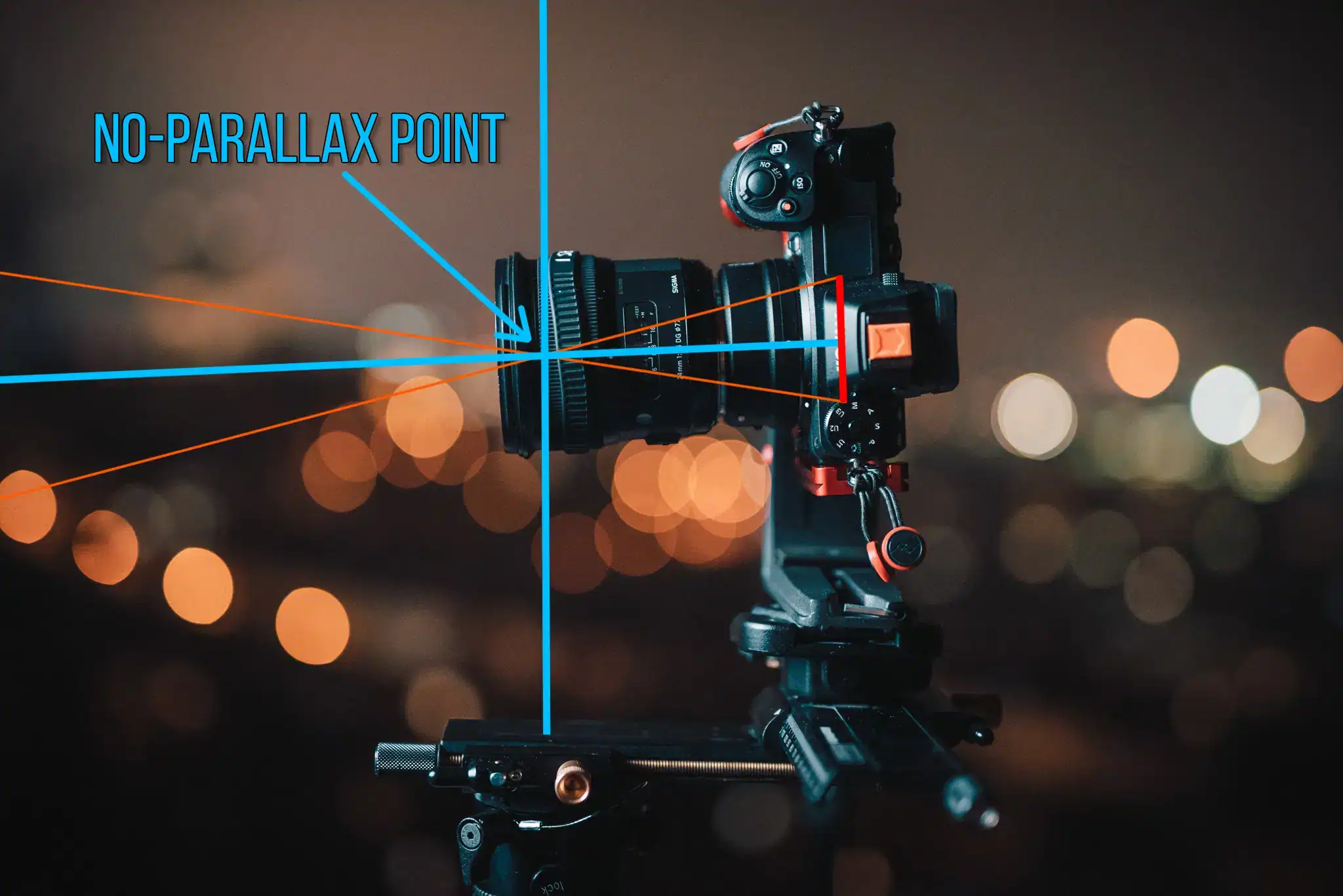
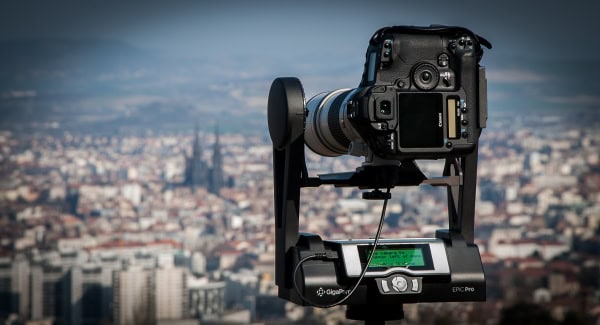
- Panoramic head: Use a head that allows fore/aft and lateral adjustment to align the entrance pupil (nodal point) of the 15mm. Proper nodal alignment removes parallax, the number one stitching killer.
- Stable tripod with leveling base: A leveling base speeds setup and ensures yaw rotation stays level across the sequence.
- Remote trigger or app: Use Canon Camera Connect or a wired remote to avoid touching the camera at each frame.
Optional Add-ons
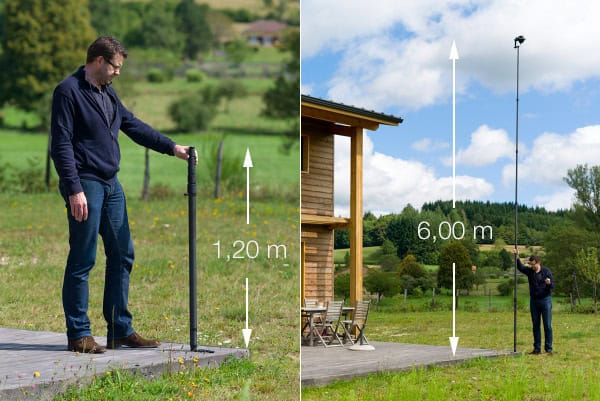
- Telescopic pole or car mount: Great for above-crowd and vehicle panoramas. Watch wind and vibrations; always tether the rig.
- Small LED panels: For dark interiors where you need gentle fill without changing scene balance.
- Weather protection: A simple rain cover and microfiber cloths; water droplets on a fisheye are very visible.
Step-by-Step Shooting Guide
Standard Static Scenes
- Level and align: Level the tripod via the leveling base. Adjust the panoramic head so the rotation axis is level. Slide the camera forward/back on the rail until near/far objects don’t shift relative to each other during a yaw test — that’s your nodal alignment.
- Exposure and white balance: Use Manual mode. Meter from a mid-tone area, then lock exposure. Set White Balance to Daylight (outdoor) or a fixed Kelvin (e.g., 3200–4000K indoors) to prevent stitching color shifts.
- Focus: Switch to Manual Focus; set around the hyperfocal distance. At 15mm and f/8, hyperfocal is close to ~1 m, keeping everything from ~0.5 m to infinity acceptably sharp. Use 10× live view magnification to confirm edge sharpness.
- Capture sequence:
- Fast set: 6 frames around at 0° pitch, every 60°.
- Add 1 zenith at +60–75° pitch.
- Take 1 nadir: tilt down, or lift the camera off the head and shoot a handheld nadir from the same no-parallax point.
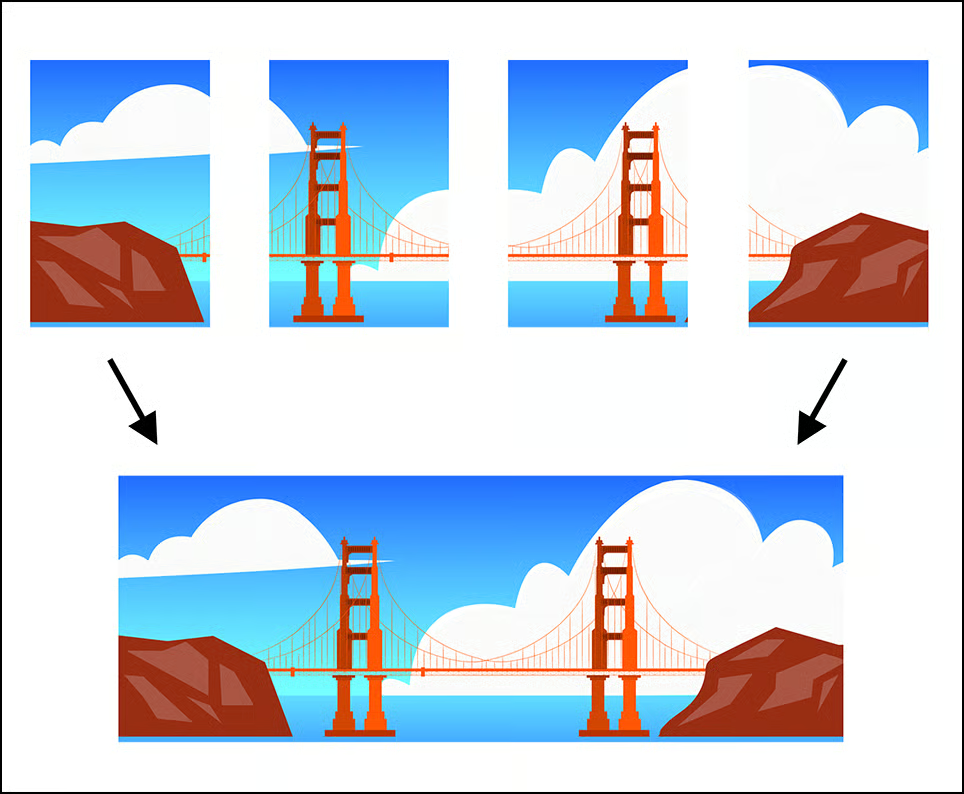
- Overlap: Aim for 30–35% overlap between adjacent frames. With a 15mm diagonal fisheye, that’s a sweet spot for robust stitching in PTGui/Hugin.
HDR / High Dynamic Range Interiors
- Bracket: Use AEB for 3–5 frames at ±2 EV (or ±1.3 EV if lights are moderate). Keep shutter speed as the only changing parameter; aperture and ISO must stay fixed.
- WB and Picture Style: Lock both. HDR only works cleanly if all brackets share identical WB and profile.
- Order: Shoot bracketed sets per yaw angle before rotating to the next angle to minimize ghosting.
Low-Light / Night Scenes
- ISO discipline: The EOS RP is clean up to ISO 400–800. Prefer long exposures over higher ISO; use your remote release and 2 s self-timer.
- Shutter strategy: Start around 1/30–1/60 s at f/4–f/5.6, ISO 400–800, then refine. For cityscapes, longer shutters smooth traffic and crowds.
- Stabilization: The RP lacks IBIS and the Sigma fisheye has no OIS; keep everything locked down. Consider mirrorless electronic first curtain shutter (EFCS) to reduce vibrations.
Crowded Events
- Two-pass method: First pass quickly for coverage. Second pass wait for gaps or better subject placement. You’ll mask people between passes during stitching.
- Short shutter: Use 1/200 s or faster when you need to freeze motion; accept a slightly higher ISO (up to 800) if necessary.
Special Setups (Pole / Car / Drone)
- Pole: Keep rotations slow; even small vibrations travel at the tip. Use a lightweight panoramic head and a safety tether.
- Car-mounted: Secure suction mounts on clean glass/metal, use a safety cable, and plan routes with minimal bumps. Shorten the exposure time to reduce motion blur.
- Drone: For legal and mechanical reasons, this specific body/lens is too heavy; consider dedicated aerial solutions. Use the same principles if you adapt the workflow.
Recommended Settings & Pro Tips
Exposure & Focus
| Scenario | Aperture | Shutter | ISO | Notes |
|---|---|---|---|---|
| Daylight outdoor | f/8–f/11 | 1/100–1/250 | 100–200 | Lock WB to Daylight; minimal noise, wide DOF |
| Low light/night | f/4–f/5.6 | 1/30–1/60 | 400–800 | Tripod + remote; prioritize longer shutters over high ISO |
| Interior HDR | f/8 | Bracket ±2 EV | 100–400 | Expose for mid-tones; rely on bracketing for windows |
| Action / moving subjects | f/5.6–f/8 | 1/200+ | 400–800 | Short shutter to freeze motion; do a second pass for clean plates |
Critical Tips
- Manual focus at hyperfocal: For 15mm at f/8, set ~1 m and verify with magnified live view.
- Nodal calibration: Mark your rail position for the EOS RP + 15mm so you can repeat it quickly on future shoots. Recheck if you add/remove L-brackets or plates.
- White balance lock: Prevent stitching mismatches by fixing WB. Mixed lighting? Choose a compromised Kelvin and correct globally in post.
- RAW capture: Use RAW for maximum DR and color latitude. JPEGs can work for fast delivery, but RAW simplifies HDR merging and color matching.
- Stabilization: No IBIS on the RP and no OIS on the Sigma fisheye — stability is entirely on your tripod and technique.
- Flare management: Shade the lens with your hand or body when the sun is near the frame edge; be careful not to intrude into the shot.
Stitching & Post-Processing
Software Workflow
Import RAWs into Lightroom or your preferred RAW processor. Apply lens-neutral settings (disable vignetting and strong clarity initially), synchronize WB and basic tone, then export 16-bit TIFFs. Stitch using PTGui for the fastest and most robust fisheye handling, or Hugin if you prefer open-source. A diagonal fisheye requires fewer shots and PTGui’s fisheye model simplifies control point generation; target 30–35% overlap for best results. Rectilinear lenses need more frames and careful control points but slightly less projection distortion near edges. For a deeper look at panorama stitching considerations, Fstoppers’ PTGui review is an excellent overview of features and workflow benefits. Read the PTGui overview on Fstoppers.
Cleanup & Enhancement
- Nadir patch: Export a layered panorama from PTGui and patch the tripod with a clean handheld nadir shot or use content-aware fill/AI tools.
- Color and noise: Apply a consistent color grade; for low light, use moderate noise reduction and sharpening restrained by the fisheye’s edge detail.
- Level horizon: In PTGui or Hugin, set verticals and re-center yaw to keep horizons straight and VR navigation pleasant.
- Export: For VR platforms, export equirectangular 2:1 at 12k–16k width when your subject warrants it; otherwise, 8k is often sufficient for EOS RP files.
For a fundamentals refresher from a VR-platform perspective, Meta’s creator docs outline practical DSLR 360 photo workflows. See DSLR 360 photo workflow guidance.
Useful Tools & Resources
Software
- PTGui panorama stitching
- Hugin open source
- Lightroom / Photoshop for RAW and finishing
- AI tripod removal and content-aware fill tools
Hardware
- Panoramic heads: Nodal Ninja, Leofoto, 360Precision
- Carbon fiber tripods with leveling bases
- Wireless remotes or mobile app triggers
- Pole extensions and vehicle mounts (with safety tethers)
Need a primer on setting up a panoramic head? This tutorial covers nodal alignment fundamentals with clear visuals. Panoramic head setup guide.
Disclaimer: software/hardware names provided for search reference; verify features and compatibility on official sites.
Common Mistakes & How to Avoid Them
- Parallax error: Always calibrate the nodal point for your EOS RP + 15mm rail position. Recheck if you change plates.
- Exposure flicker: Manual mode and locked WB are mandatory; avoid auto ISO for stitched work.
- Tripod shadows or footprints: Capture a nadir shot for patching or reposition slightly to minimize obstructions.
- Ghosting in crowds: Use the two-pass method and mask in post; prioritize frames with minimal subject overlap.
- Flare: Shade the lens, avoid strong backlight near the frame edge, and consider re-shooting frames where flare dominates.
- Insufficient overlap: With fisheye, 30–35% overlap is a good target; less can cause control point failures.
Frequently Asked Questions
- Can I shoot handheld panoramas with the EOS RP?
Yes for partial panos; for full 360° with clean stitches, use a tripod and pano head. Handheld sets will suffer parallax, especially near objects, but you can succeed in open outdoor scenes if you keep the camera centered and rotate around your body’s vertical axis.
- Is the Sigma 15mm f/1.4 DG DN wide enough for a single-row 360?
Yes. Expect 6–8 shots around at 0° pitch plus a zenith and nadir. For premium results, add a second row at +30° or −30° pitch to increase overlap and edge quality.
- Do I need HDR for interiors with bright windows?
Often yes. The EOS RP’s base-ISO DR is decent, but windows can be 6–10 EV brighter than interiors. Bracket ±2 EV (3–5 frames) per yaw angle and merge to HDR before stitching or use PTGui’s built-in HDR workflow.
- How do I avoid parallax issues with this setup?
Use a panoramic head and align the entrance pupil for the 15mm fisheye. Slide the camera on the rail until near/far objects remain stationary relative to each other during a yaw test. Mark the rail so you can repeat it every time.
- What ISO range is safe on the EOS RP in low light?
ISO 100–400 is ideal; ISO 800 is usable with careful noise reduction. Prefer longer exposures on a sturdy tripod over pushing ISO beyond 800.
- Can I set Custom Shooting Modes (C1/C2) for panoramas?
Yes. Save Manual exposure, fixed WB, manual focus, drive mode (self-timer), and EFCS to C1. Save an HDR/bracketing setup to C2 for interiors to speed up your workflow.
- How can I reduce flare with a fisheye?
Avoid placing the sun or bare bulbs near the frame edge; shade the lens with your hand (keeping it out of the frame), and reshoot any frame with severe ghosts for later substitution during stitching.
- Best tripod head choice for this setup?
A two-axis panoramic head with fore/aft sliding rails (e.g., Nodal Ninja, Leofoto) is ideal. Ensure it supports the weight of the RP and the 15mm Art lens, locks firmly, and has degree markings for repeatable rotations.
Want broader context on DSLR/mirrorless 360 capture? This guide covers requisites and pitfalls from a VR delivery viewpoint. Panoramic head setup essentials.
Real-World Scenarios & Field Notes
Indoor Real Estate
Mount the RP on a leveling base and pano head at roughly 1.4–1.6 m height. Lock WB to 3700–4000K for mixed tungsten/LED interiors. Shoot 6 around + zenith, bracketing ±2 EV. Use a clean handheld nadir to patch the tripod in post. The 15mm fisheye’s quick coverage keeps tours efficient while the HDR set equalizes windows and lamps.
Outdoor Sunset
Start with f/8, ISO 100–200, 1/100–1/250 s. Time your capture so the sun is just below the horizon to reduce flare. If you must shoot into the sun, shoot two versions of affected frames: one shaded (hand/flag) and one unshaded; choose the cleaner set during stitching.
Crowded Events
Height helps. Use a short pole to elevate above heads and shoot 8 around quickly at 1/200 s, ISO 400–800. Then wait for gaps and shoot a second pass for cleaner background plates you can mask in.
Rooftop / Pole Shooting
Attach a safety tether to the camera plate and the pole/tripod. In winds above 10–12 m/s, avoid elevated poles. Keep exposures short (1/125–1/250 s) to reduce wind-induced blur.
Car-Mounted Capture
Use three-point suction mounts with a safety line. Park the car for stationary capture to avoid motion blur, or if you must roll, choose very short exposures and shoot at safe, low speeds on smooth tarmac. Always comply with local laws and safety guidelines.
For a concise Q&A-style primer on pano techniques and typical pitfalls, this community thread is a helpful companion. Best techniques to take 360 panoramas.