Why This Camera & Lens Are Great for Panoramas
The Canon EOS RP paired with the Laowa 8–15mm f/2.8 FF Zoom Fisheye is a compact, budget-friendly, and highly capable combo for 360° panoramas. The EOS RP is a 26.2MP full-frame mirrorless body with a 35.9×24.0mm sensor and a pixel pitch of roughly 5.7µm—large pixels that deliver solid noise performance and workable dynamic range for real estate, landscapes, and night cityscapes. Expect about 11–12 stops of usable dynamic range at base ISO in RAW with careful exposure, and clean files through ISO 800; ISO 1600–3200 is usable with good noise reduction.
The Laowa 8–15mm f/2.8 is a manual-focus fisheye designed for full frame. It’s unique because it gives you both circular fisheye at the wide end (8mm, around 185° FoV) and diagonal/full-frame fisheye at the long end (15mm, around 180° diagonal FoV). Why that matters: with a fisheye, you need fewer shots to complete a 360×180° sphere, which saves time on site and reduces the chance of parallax issues, moving subjects, and exposure inconsistency across frames. The trade-off is the characteristic fisheye distortion, which is expected and handled easily by pano stitchers.
Mount compatibility is native RF (adapter versions vary by mount), and the lens is fully manual, which suits pano work: you’ll set and lock focus, aperture, and exposure. The EOS RP lacks in-body stabilization (IBIS), and the Laowa has no optical stabilization—so a solid tripod and panoramic head are highly recommended. In return, you get a lightweight kit that is fast to set up and easy to carry to rooftops, trails, and interiors.
Quick Setup Overview
- Camera: Canon EOS RP — Full-frame 26.2MP, approx. 5.7µm pixel pitch, good base ISO DR, Dual Pixel AF (for setup), no IBIS.
- Lens: Laowa 8–15mm f/2.8 FF Zoom Fisheye — manual focus, circular-to-diagonal fisheye, very wide coverage, minimal focus breathing, typical fisheye CA that’s easy to remove in RAW.
- Estimated shots & overlap:
- 8mm (circular fisheye): 3 around at 120° + zenith + nadir (sometimes 4 around if you want more overlap). ~30–35% overlap.
- 10–12mm: 4–6 around + zenith + nadir. ~30% overlap.
- 15mm (diagonal fisheye): 6 around + zenith + nadir; for ultra-clean stitches you can do 8 around. ~25–30% overlap.
- Difficulty: Easy to Moderate (fisheye is forgiving; precise nodal setup still required for flawless interiors).
Planning & On-Site Preparation
Evaluate Shooting Environment
Before setting up, walk the scene. Note the light direction, moving subjects, and reflective surfaces (glass, glossy floors, mirrors). In interiors, back away from glass when possible; if you must be close, plan for a higher overlap and use a carefully aligned nodal point to minimize ghosting. Avoid pointing the lens directly at the sun unless you want flares—fisheyes can catch stray rays easily. For sunsets, frame your rotation to keep the sun at consistent angles to reduce stitch seams.
Match Gear to Scene Goals
The EOS RP’s sensor handles ISO 100–400 beautifully; ISO 800 is still very workable for interiors and twilight. For indoor real estate with bright windows, bracketed HDR on a sturdy tripod is your friend. The Laowa fisheye drastically reduces the number of shots you need, speeding up capture in crowds or windy rooftops. If you’re prioritizing speed and reliability, shoot at 8–12mm. If you need slightly more detail and less fisheye stretching at the edges, go toward 15mm and increase the number of shots.
Pre-shoot Checklist
- Charge batteries, carry a spare; format and verify memory cards.
- Clean the front element carefully (fisheyes see everything; smudges and dust are obvious).
- Level your tripod; calibrate your panoramic head for the lens focal length you’ll use.
- Safety: on rooftops or poles, use tethers; check wind; avoid overhanging edges; secure everything before lifting.
- Backup workflow: when in doubt, do a second full rotation. It costs seconds, saves headaches later.
Essential Gear & Setup
Core Gear
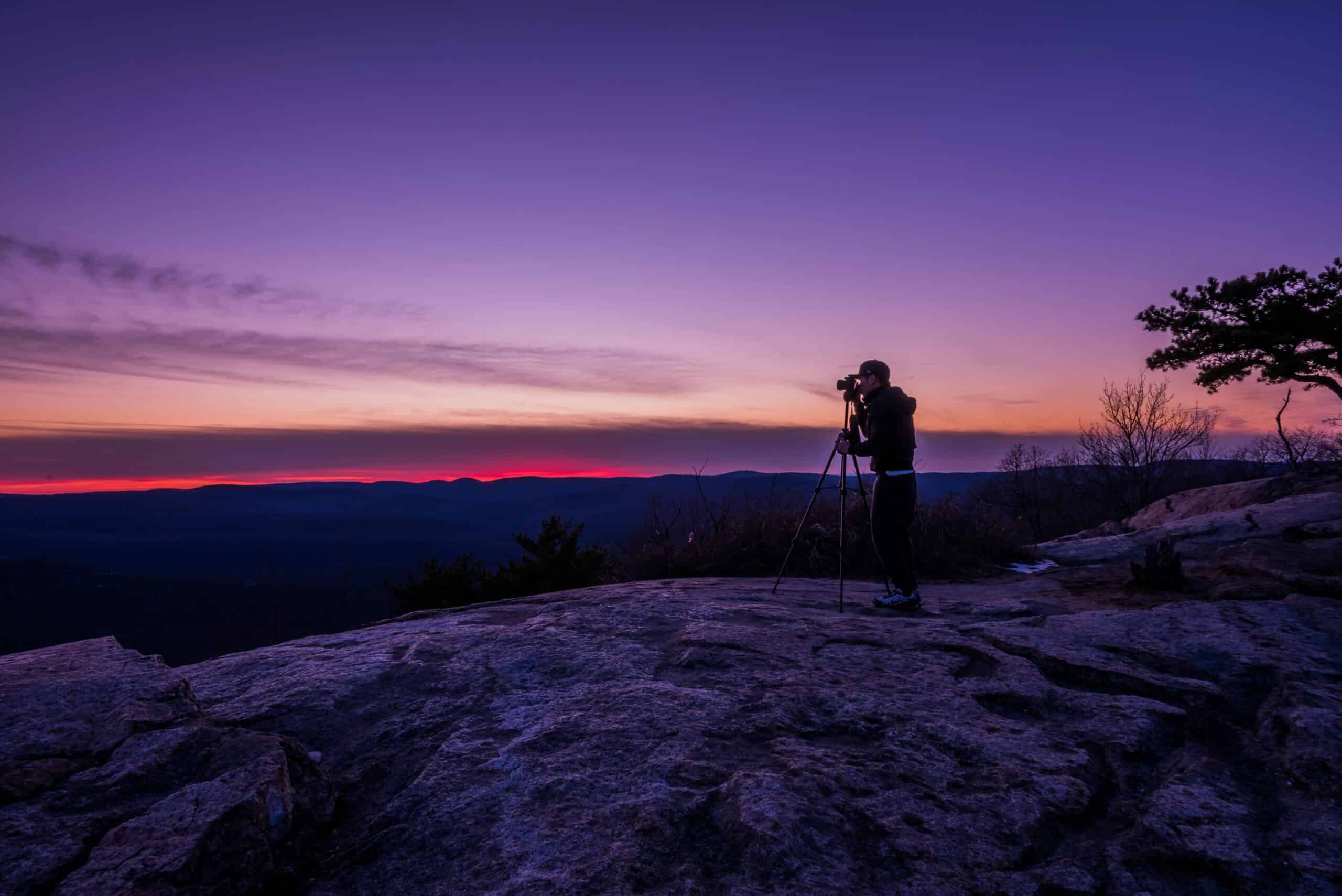
- Panoramic head: This aligns the lens’ entrance pupil (nodal point) over the rotation axis to eliminate parallax. With fisheyes, you can sometimes get away with less-than-perfect alignment outdoors, but interiors with foreground objects demand accuracy.
- Stable tripod with leveling base: A leveling base speeds up setup and keeps your rows consistent. The EOS RP is light; a carbon fiber tripod is ideal for hiking but ensure it’s stiff enough in wind.
- Remote trigger or Canon Camera Connect app: Prevents vibration when shooting long exposures or brackets.
Optional Add-ons
- Pole or car mount: For elevated perspectives, a pole works great with a fisheye. Always tether the camera, watch wind gusts, and avoid over-rotating quickly; vibrations cause blurry frames.
- Small LED panel or bounce flash: For dark interiors, lift shadows gently; keep lighting consistent across frames.
- Rain cover and microfiber cloths: Fisheyes collect raindrops and spray easily—wipe often and shield the lens.
Finding and Marking the Nodal (No-Parallax) Point
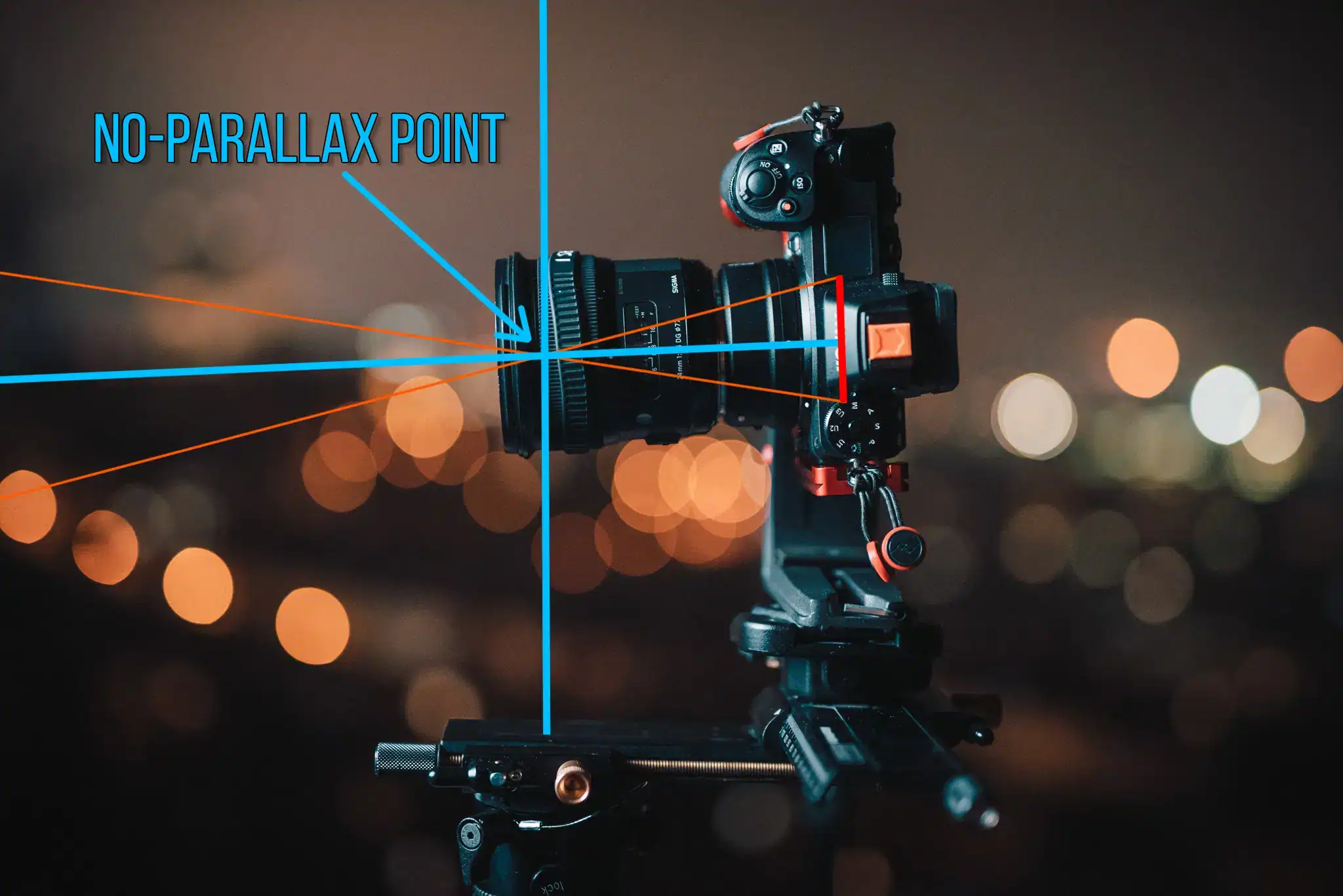
Place two vertical objects (light stands, door edges) a few feet apart, one close and one far. Rotate the camera on your pano head and adjust the fore-aft position of the lens until the two objects do not shift relative to each other during rotation. Repeat at your working focal length (8, 12, or 15mm) and typical focus distance (1–2 m for interiors; infinity for landscapes). Mark those rail positions with tape or a paint pen. Expect the entrance pupil to shift slightly across the zoom range; mark at least two commonly used focal lengths.
Want a deeper dive on head alignment? See this panoramic head setup tutorial for illustrations and workflows. Panoramic head tutorial
Step-by-Step Shooting Guide
Standard Static Scenes
- Level tripod and align nodal point: Use the leveling base bubble and your pano head detents. Check your no-parallax alignment at the chosen focal length.
- Set manual exposure and lock white balance: Shoot RAW; set WB to Daylight or a fixed Kelvin value. Use Manual mode so exposure remains consistent across frames.
- Focus: Set manual focus just beyond the hyperfocal distance. At 8–12mm f/8, depth of field is enormous; focus near 1–1.5 m indoors or to infinity outdoors. Tape the focus ring if needed.
- Capture sequence with overlap:
- 8mm circular: 3 frames around (120° apart), then one zenith, one nadir.
- 12mm: 4–6 frames around (90–60° apart), zenith, nadir.
- 15mm: 6 frames around (60° apart), zenith, nadir. Add a second row if you see thin seams around the horizon.
- Nadir shot: Tilt down to capture a clean floor plate for tripod removal later. If you can, shift the tripod slightly and shoot a patch plate.
HDR / High Dynamic Range Interiors
- Enable bracketing (AEB) for ±2 EV (3–5 frames per angle). The EOS RP handles bracketing smoothly; use a remote to prevent shake.
- Lock WB and aperture (f/8 is a sweet spot). Let shutter time vary across brackets.
- Merge exposures before stitching (preferred), or stitch brackets in PTGui using exposure fusion/true HDR, then tone map consistently.
Low-Light / Night Scenes
- Use a tripod; turn off any lens stabilization if present (Laowa has none). The EOS RP has no IBIS, so rely on stability.
- Start at f/4–f/5.6, ISO 400–800; lengthen shutter to 1–10s as needed. Use a 2s delay or remote trigger.
- Avoid pushing ISO past 1600 unless necessary; it’s usable but will need more noise reduction in post.
Crowded Events
- Shoot two passes: one quick pass to get coverage, then a second pass waiting for gaps in movement near each seam.
- Consider 8–12mm to reduce shot count and people movement between frames.
- In post, mask moving people using layers from the second pass for clean seams.
Special Setups (Pole / Car / Elevated)
- Secure gear with tethers. Balance the camera as close to the pole axis as possible to reduce sway.
- Use 8–10mm so you need fewer frames; rotate slower to minimize motion blur. Watch wind and avoid overhead lines.
- Pre-focus and use a fast shutter; even 1/250s at f/5.6, ISO 400 can be a good starting point in daylight.
Field Case Studies
Indoor Real Estate (Windows + Mixed Light)
At 12mm f/8, ISO 100, bracket ±2 EV, 5 shots around + zenith + nadir. Close curtains slightly to reduce extreme contrast, and turn off mixed-color accent lights if possible. Expect a clean 8000–10000 px wide equirectangular output.
Outdoor Sunset (Windy Rooftop)
At 8mm circular, 3 around + Z/N minimizes time in wind. Lock WB to 5600K, shoot RAW at ISO 100–200 with 1/125–1/250s. Take a second pass 30 seconds later in case clouds move—use the best frames per seam.
Event Crowds (Street Fair)
At 10–12mm, 6 around + Z/N. Shoot two rotations; in post, mask the cleanest subject positions. Keep shutter above 1/200 to freeze people near the camera.
Recommended Settings & Pro Tips
Exposure & Focus
| Scenario | Aperture | Shutter | ISO | Notes |
|---|---|---|---|---|
| Daylight outdoor | f/8–f/11 | 1/100–1/250 | 100–200 | Lock WB (Daylight or 5600K) |
| Low light/night | f/4–f/5.6 | 1/30–10s | 400–800 | Tripod & remote; favor lower ISO on EOS RP |
| Interior HDR | f/8 | Bracket ±2 EV | 100–400 | Merge HDR then stitch for consistent tonality |
| Action / moving subjects | f/5.6–f/8 | 1/200+ | 400–800 | Freeze motion; consider two-pass method |
Critical Tips
- Manual focus near hyperfocal: At 10–12mm, f/8 focused ~1–1.5 m covers from ~0.7 m to infinity. Tape the focus ring.
- Nodal calibration: Mark rail positions for 8, 12, and 15mm. Re-check if you change focus distance significantly; the entrance pupil can shift slightly.
- White balance: Lock WB to avoid color shifts across frames; mixed lighting is best handled with RAW and local adjustments.
- RAW vs JPEG: Shoot RAW for dynamic range and color latitude; JPEG bakes WB/contrast and limits stitch blending.
- Stabilization: EOS RP has no IBIS; if you use a stabilized lens in the future, turn IS off on a tripod to prevent micro-blur.
Expected Resolution by Method
With 8mm circular (3-around + Z/N), expect roughly 8000×4000 equirectangular output after cropping. With 12–15mm (6-around + Z/N), 10,000–14,000 px width is typical depending on overlap and stitch. Use more shots if you need ultra-detailed gigapixel panos; the Laowa at 15mm diagonal is a great balance of speed and detail.
Recommended Learning Video
For a quick visual refresher on panoramic workflow and capture discipline, this video pairs well with the steps above:
Stitching & Post-Processing
Software Workflow
PTGui is industry-standard for fast, reliable fisheye stitching with excellent control-point generation and masking. Hugin is a capable open-source alternative. Lightroom/Photoshop can stitch simple single-row pans, but for 360×180°, dedicated stitchers give better control, especially with fisheyes and HDR brackets. For fisheye, plan 25–35% overlap; for rectilinear lenses, 20–25% per frame works well. A detailed PTGui review helps you evaluate why it’s a favorite among pros. PTGui review and why it excels
Suggested Stitching Steps
- Pre-merge HDR brackets to 32-bit or tone-mapped TIFFs (per angle) for consistent exposure, or let PTGui handle exposure fusion.
- Load images, set lens type to Fisheye (circular or full-frame diagonal as appropriate), and specify focal length.
- Optimize control points; manually add points in low-texture areas if needed. Use masks to remove people or tripod legs.
- Level the horizon, correct roll/yaw/pitch in the preview until the scene looks even.
- Output as equirectangular 2:1 (e.g., 10,000×5,000) for web/VR.
Cleanup & Enhancement
- Tripod/nadir patch: use a patch shot; or clone in Photoshop; or use AI-based patching tools for speed.
- Color correction: balance mixed lighting by local adjustments in RAW; gently apply noise reduction on EOS RP higher ISO files.
- Sharpening: mild output sharpening after resizing for web; avoid halos on high-contrast edges.
- Export formats: 16-bit TIFF master; JPEG at 90–95 quality for web; ensure correct metadata for 360 platforms.
For a full DSLR-to-VR pipeline overview (from capture to equirectangular), Meta’s Creator guide is concise and practical. Using a DSLR/mirrorless to shoot and stitch a 360 photo
Useful Tools & Resources
Software
- PTGui panorama stitching
- Hugin open source
- Adobe Lightroom / Photoshop
- AI tripod/nadir removal tools
Hardware
- Panoramic heads (Nodal Ninja, Leofoto)
- Carbon fiber tripods
- Leveling bases
- Wireless remote shutters
- Pole extensions / car mounts (with safety tethers)
Disclaimer: software/hardware names provided for reference; check official sites for current specs and compatibility.
If you want another perspective on pano heads and best practices, this overview is thorough and beginner-friendly. DSLR/mirrorless virtual tour FAQ and gear guidance
Common Mistakes & How to Avoid Them
- Parallax error: Always align the entrance pupil; re-check when you change focal length or focus distance.
- Exposure flicker: Manual mode, fixed WB, and consistent aperture. Avoid auto-ISO for 360 capture.
- Tripod shadows and footprints: Shoot a clean nadir patch and clone in post.
- Ghosting from moving subjects: Take a second rotation and mask the best frames.
- Night noise and blur: Keep ISO ≤800 when possible and extend shutter on a solid tripod; use a remote trigger.
Frequently Asked Questions
- Can I shoot handheld panoramas with the Canon EOS RP?
Yes for quick single-row pans, but for full 360×180° spheres with the Laowa fisheye, a tripod and pano head are strongly recommended. The EOS RP has no IBIS, and the fisheye’s extreme FoV exaggerates small alignment errors. Handheld is possible outdoors with distant subjects, but expect more stitching fixes.
- Is the Laowa 8–15mm f/2.8 wide enough for single-row 360?
At 8–12mm, yes—3 to 6 shots around usually cover the horizon, and you add zenith and nadir shots. At 15mm, 6 shots around + Z/N is typical. Fewer shots = faster capture, great for events and windy rooftops.
- Do I need HDR for interiors with bright windows?
Often yes. The EOS RP has decent DR, but bright windows can exceed 12 stops. Bracket ±2 EV (3–5 frames), merge, and then stitch for clean window detail and natural interiors.
- How do I avoid parallax issues with this combo?
Use a pano head and align the entrance pupil at your chosen focal length. Mark rail positions for 8, 12, and 15mm. Keep foreground objects away from the camera if possible. Re-check alignment after changing focus distance.
- What ISO range is safe on the EOS RP in low light?
ISO 100–400 is ideal; ISO 800 is typically clean in RAW with light noise reduction; ISO 1600–3200 is usable but expect more NR and detail loss. Prefer longer shutter times on a tripod to keep ISO down.
- Can I set Custom Modes (C1/C2) for panoramas?
Yes. Save Manual exposure, fixed WB, manual focus, and bracketing settings to a Custom mode for fast recall. It speeds setup especially when moving between rooms or locations.
- How can I reduce flare with a fisheye?
Avoid direct sun in the frame where possible; shade the lens with your hand outside of the frame; clean the front element meticulously. Rotate so the sun falls near overlaps rather than mid-frame.
- What’s the best tripod head for this setup?
A compact panoramic head with fore-aft rail adjustment (e.g., Nodal Ninja style) is ideal. Look for detents (e.g., 60°/90°) for consistent spacing, a vertical arm for zenith/nadir shots, and a leveling base under the head.
Safety, Reliability, and Quality Control
Rooftops and poles demand tethers and conservative exposure choices. In wind, shoot fewer frames (go wider), raise shutter speed, and do two passes. Protect the lens with a hood or hand when moving between shots. Validate coverage: after the first rotation, quickly review images to confirm you have complete 360° overlap. Back up files immediately—maintain redundant copies on two cards/devices whenever possible.
For a structured, step-by-step pro workflow for high-end 360 capture, this panoramic head setup guide expands on best practices. Set up a panoramic head for high-end 360 photos
Scene Inspiration & Sample Use-Cases