Why This Camera & Lens Are Great for Panoramas
The Canon EOS RP paired with the Canon RF 15-35mm f/2.8L IS USM is a strong, lightweight combo for high-quality panoramic and 360 photos. The EOS RP’s full-frame 26.2MP Dual Pixel CMOS sensor (approx. 36×24mm; pixel pitch ~5.76 µm) delivers clean detail with good color depth and a measured dynamic range around 11.8–12 EV at ISO 100. That’s enough headroom to hold skies and shadows in most outdoor scenes, while the lens’s constant f/2.8 aperture and optical IS help when light drops.
The RF 15-35mm is a rectilinear ultra-wide zoom (not a fisheye), which means it preserves straight lines. Rectilinear rendering is ideal for architecture and real estate where you want walls to stay straight, but it needs more frames than a fisheye to complete a full 360×180° sphere. Distortion at 15mm is well controlled for an ultra-wide, with moderate vignetting wide open and minimal lateral chromatic aberration. On the EOS RP, autofocus is fast and confident for setup, but you’ll usually switch to manual focus for the actual pano sequence to keep focus consistent across frames. The RF mount’s rigidity and the lens’s robust build suit accurate nodal alignment on a panoramic head.
Quick Setup Overview
- Camera: Canon EOS RP — Full-frame 26.2MP; Dual Pixel CMOS AF; 14‑bit RAW; base ISO 100; practical DR ~11.8–12 EV; top shutter 1/4000s; no in-body stabilization (IBIS).
- Lens: Canon RF 15-35mm f/2.8L IS USM — Rectilinear ultra-wide zoom; sharp from f/4–f/8; excellent central sharpness; good control of CA; optical IS (turn off on tripod); weather-sealed.
- Estimated shots & overlap (field-tested, 25–30% overlap):
- At 15mm: 2 rows × 8 around (pitch ≈ +35° and −35°) + 1–2 zenith + 1–2 nadir = ~18–20 frames for a clean 360×180°.
- At 24mm: 3 rows × 10 around + zenith + nadir = ~32 frames (higher resolution, more precise edges).
- At 35mm: 4 rows × 12 around + zenith + nadir = ~50+ frames (gigapixel-level detail, slower workflow).
- Difficulty: Moderate (rectilinear multi-row). Easier if shooting partial/cylindrical panos; more advanced for full 360×180°.
Planning & On-Site Preparation
Evaluate Shooting Environment
Before you shoot, assess light direction, contrast, and potential flare sources. Watch reflective surfaces (glass, polished floors, cars) that can cause ghosting between frames. If shooting through glass, place the lens hood as close as possible (1–2 cm) to minimize reflections. For moving subjects (people, trees in wind, waves), plan two quick passes or higher shutter speeds to reduce motion differences between adjacent frames.
Match Gear to Scene Goals
The EOS RP handles ISO 100–800 cleanly; ISO 1600 is usable with careful noise reduction. Indoors, the RF 15-35’s f/2.8 helps keep shutter speeds reasonable, but for 360s you’ll typically stop down to f/8 for consistent sharpness. Compared with a fisheye, this rectilinear lens requires more shots but gives straighter lines—ideal for real estate, interiors, and architecture. Outdoors at sunset, leverage the RP’s RAW headroom and bracket ±2 EV if the dynamic range is beyond 12 EV.
Pre-shoot Checklist
- Charge batteries; bring extra cards; clean the lens and sensor (dust shows up when you stitch).
- Level the tripod; calibrate the panoramic head for this camera-lens combo; verify nodal (no-parallax) alignment.
- Safety: secure on rooftops and windy locations; use a tether or safety strap for pole/car mounts; mind bystanders.
- Backup workflow: shoot a second safety round, especially for client work or rapidly changing skies.
Essential Gear & Setup
Core Gear
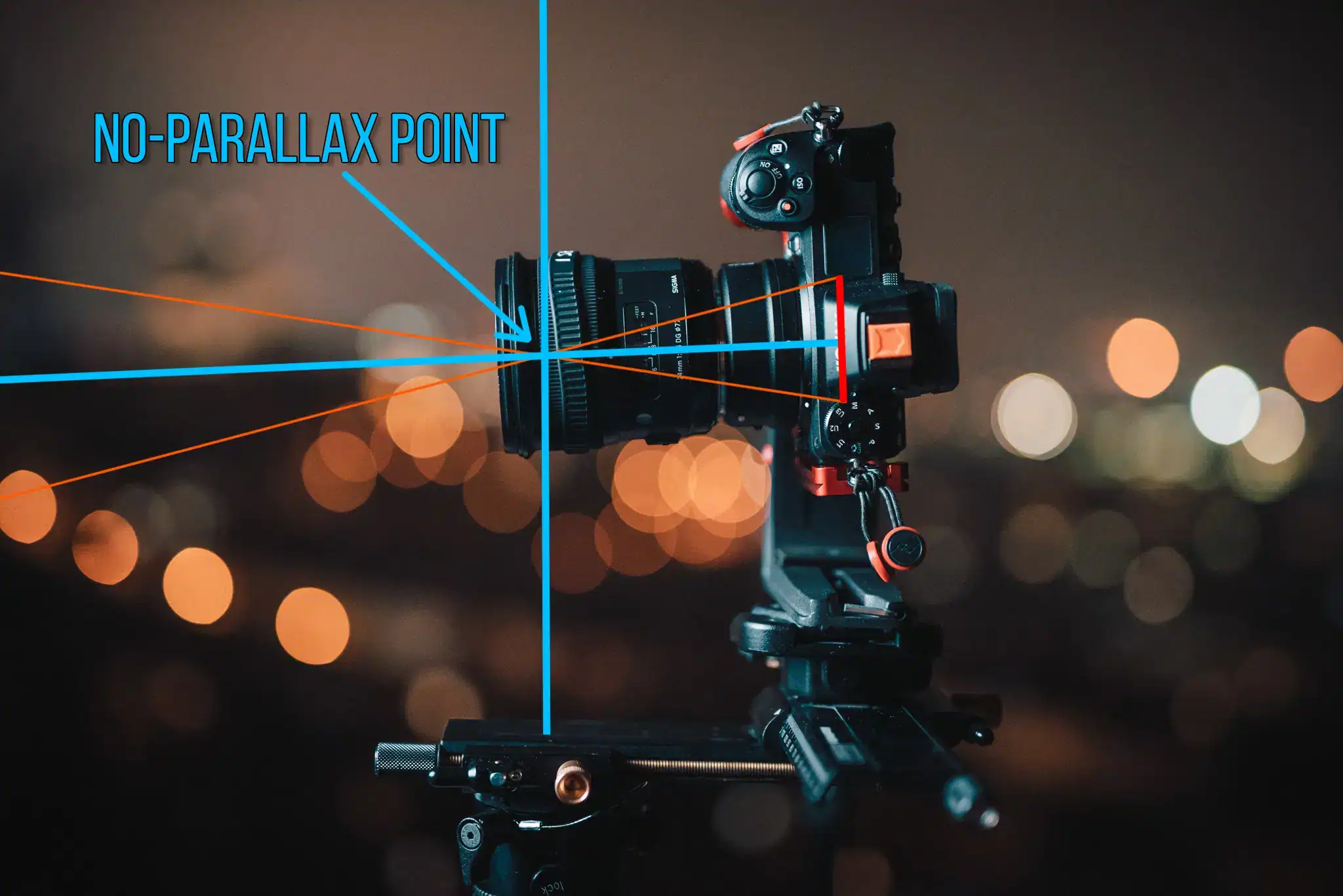
- Panoramic head: This lets you rotate around the lens’s entrance pupil (nodal point) to eliminate parallax between frames. Accurate nodal alignment is critical for interiors and near objects.
- Stable tripod with a leveling base: A built-in level or half-ball leveling base makes horizon leveling fast and keeps your rows consistent.
- Remote trigger or Canon Camera Connect app: Prevents vibration when pressing the shutter. Use a 2s timer if you don’t have a remote.
Optional Add-ons
- Pole or car mount: Always add a safety tether. Watch wind loads; use higher shutter speeds (1/250s+) to mitigate vibration blur.
- Lighting aids: Small LED panels for interiors. Keep color temperatures consistent (use gels) to avoid mixed WB headaches.
- Weather protection: Lens hood, rain cover, microfiber cloths. When it’s misty, wipe between frames to avoid inconsistent haze.
For a deeper primer on panoramic head setup and entrance pupil alignment, see this panoramic head tutorial. Panoramic head tutorial
Step-by-Step Shooting Guide
Standard Static Scenes
- Level and anchor: Set the tripod on firm ground. Use the leveling base to nail your bubble level. Ensure the pano head’s yaw axis is perfectly vertical.
- Align the nodal point: With the RF 15–35mm at your chosen focal length (15mm recommended for efficiency), slide the camera plate until foreground and background features panned left/right show no relative shift. Mark this setting on your rail for repeatability.
- Manual exposure and WB: Switch to M mode. Meter the brightest view and protect highlights; at base ISO 100–200, set f/8 and choose a shutter that avoids clipping. Lock white balance to a fixed preset or Kelvin (e.g., 5200K daylight) to keep color uniform.
- Manual focus: Use focus magnification. For 15mm at f/8, a hyperfocal of ~0.95 m means focusing around 1 m keeps everything sharp to infinity. For 35mm at f/8, focus ~5–6 m for deep DoF.
- Capture sequence: For 360×180° at 15mm, shoot two rows (pitch +35° and −35°), 8 shots per row (~45° increments), then 1–2 shots for zenith and 1–2 for nadir with 25–30% overlap. If you see stitching gaps in the sky, add an extra zenith frame.
- Nadir (ground) shot: After the main set, move the tripod slightly or tilt the camera to capture a clean ground plate for tripod patching in post.
HDR / High Dynamic Range Interiors
- Bracket: Use AEB ±2 EV (3 or 5 frames if needed). Keep aperture and ISO fixed; vary shutter speed only.
- Consistency: Lock WB and focus. Shoot bracketed sets for each yaw position before rotating to the next to simplify batch alignment later.
- Windows vs interiors: Expose to preserve window highlights in the bright frame; the darker frame will reveal interior details. Merge to 32-bit HDR during stitching or pre-merge per view.
Low-Light / Night Scenes
- Settings: f/4–f/5.6, shutter 1/30–1/60s on tripod, ISO 400–800 on the EOS RP is typically clean; ISO 1600–3200 is usable with careful noise reduction.
- Stability: Turn off lens IS on tripod to prevent drift; use a remote or 2s self-timer; avoid touching the rig during exposure.
- Check for star trails: If you include stars, keep shutter times short (10–20s at 15mm) to prevent trailing; consider stacking for noise reduction.
Crowded Events
- Two-pass method: First pass quickly for coverage; second pass wait for gaps to reduce ghosting. At stitch time, mask in the clean portions.
- Shutter speed: 1/200s+ reduces subject blur. At 15mm you can often manage 1/125s with minimal motion blur.
- Ethics & safety: Respect privacy and keep your rig clear of foot traffic.
Special Setups (Pole / Car / Rooftop)
- Secure everything: Use a safety tether, double-check clamps, and mind wind. For car mounts, prioritize redundant mounting points.
- Short exposures: Use higher ISO if needed to keep 1/250s+ for pole/car shots; vibration is the enemy.
- Rotate slower: Let vibrations settle between frames, and consider oversampling (more overlap) to help the stitcher.
Recommended Settings & Pro Tips
Exposure & Focus
| Scenario | Aperture | Shutter | ISO | Notes |
|---|---|---|---|---|
| Daylight outdoor | f/8–f/11 | 1/100–1/250 | 100–200 | Lock WB (daylight or 5200K); protect highlights |
| Low light/night | f/4–f/5.6 | 1/30–1/60 | 400–800 | Tripod, remote; turn lens IS off on tripod |
| Interior HDR | f/8 | Bracket ±2 EV | 100–400 | Balance windows and lamps; keep WB fixed |
| Action / moving subjects | f/5.6–f/8 | 1/200+ | 400–800 | Freeze motion; two-pass capture for clean masking |
Critical Tips
- Manual focus at hyperfocal: ~1 m at 15mm f/8; ~5–6 m at 35mm f/8. Use focus magnification for precision.
- Nodal calibration: Mark your rail setting for 15mm and 24mm. Test with a near object (1–2 m) against a far background.
- White balance lock: Use Kelvin or a preset; avoid Auto WB to prevent stitch color shifts.
- RAW over JPEG: 14‑bit RAW on the EOS RP preserves more DR for HDR merges and color correction.
- Stabilization: EOS RP has no IBIS; disable the lens’s IS on tripod. Re-enable IS for handheld or pole/car work.
- Shutter mode: Use Electronic First Curtain (EFCS) to minimize vibration; avoid full electronic in flickering LED light.
- Lens corrections: For consistency, disable in-camera vignetting/distortion corrections when shooting RAW; apply uniformly in post.
Stitching & Post-Processing
Software Workflow
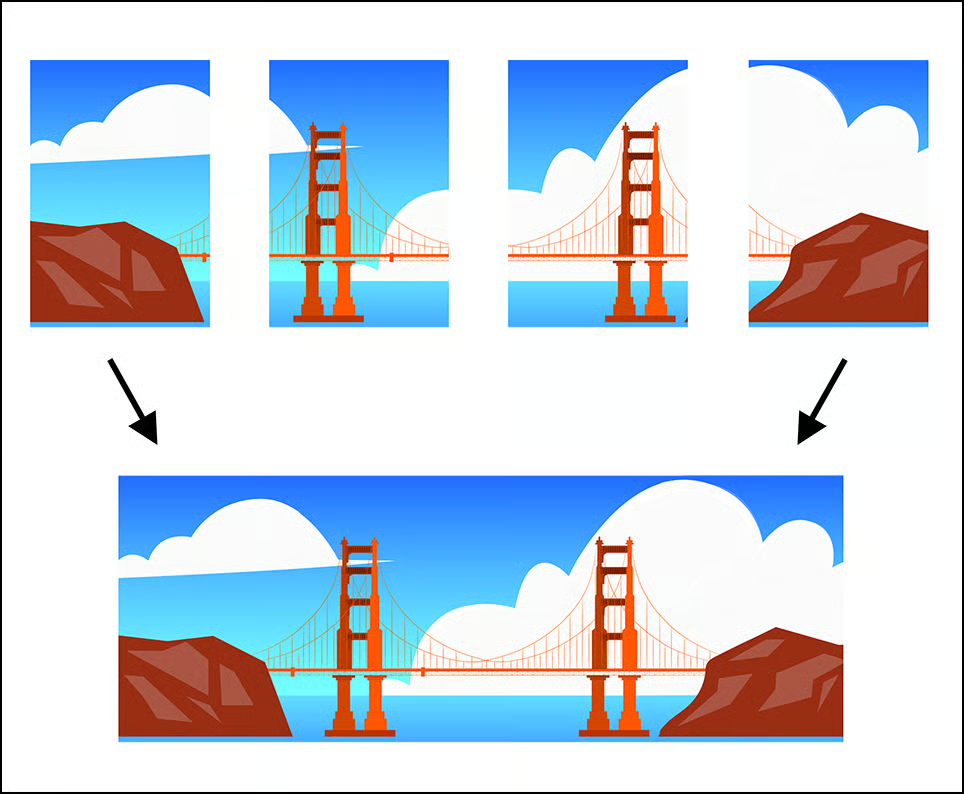
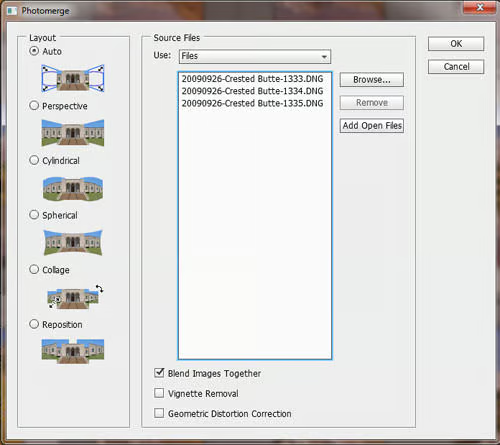
Import your RAW files into Lightroom, adjust a neutral baseline (exposure, WB, lens profile off or uniform), then sync across the set. For HDR, either pre-merge each yaw position to 32-bit HDR, or let PTGui handle bracketed merges during stitching. Fisheye lenses need fewer frames but require defishing; rectilinear lenses like the RF 15–35mm need more shots but preserve architecture lines and often need less edge correction. Industry overlap guidance: 25–30% for fisheye sequences; 20–30% for rectilinear. PTGui is the industry workhorse for complex multi-row and HDR panos; Hugin is a powerful open-source alternative. PTGui review and insights
Cleanup & Enhancement
- Nadir patch: Use a clean ground shot; patch with PTGui Viewpoint correction or clone in Photoshop. Specialized AI tools can remove the tripod quickly.
- Color & contrast: Apply gentle curves; check for sky banding; keep color casts consistent across the sphere.
- Noise reduction: For EOS RP night shots, apply luminance NR selectively to shadows; retain detail in midtones.
- Leveling: Use the “straighten horizon” and adjust yaw/pitch/roll so the horizon is flat. Verify verticals in interiors.
- Export: For VR platforms, export an equirectangular 2:1 image (e.g., 12000×6000px JPEG). Keep a 16‑bit TIFF master for archival and future edits.
For publishing panoramas to VR/360 viewers and best practices, this DSLR/Mirrorless 360 guide is an excellent reference. Guide to shooting and stitching a 360 photo with a DSLR/mirrorless
Useful Tools & Resources
Software
- PTGui (multi-row, HDR, viewpoint correction)
- Hugin (open source, advanced control point tuning)
- Lightroom / Photoshop (RAW baseline, cleanup and patching)
- AI tripod removal tools (nadir patch automation)
Hardware
- Panoramic heads: Nodal Ninja, Leofoto, Sunwayfoto (solid rails and indexed rotators)
- Carbon fiber tripods with leveling bases
- Wireless remote shutter releases
- Pole extensions / car mounts with safety tethers
Disclaimer: software/hardware names provided for search reference; check official sites for details.
Real-World Case Studies
Indoor Real Estate (Small Apartment)
Use 15mm at f/8 for minimal frame count and strong corner sharpness. Meter to protect window highlights; shoot 3–5 shot brackets ±2 EV. Expect 2×8 around + zenith/nadir. Keep the camera exactly at room center to minimize perspective conflicts and reflections in mirrors. Shoot a second safety round if people or pets wander in and out.
Outdoor Sunset (City Rooftop)
Set WB to ~6000K to keep warm tones. Expose for the sky and bracket ±2 EV if the foreground is very dark. Wind can shake lightweight tripods—hang a weight from the center column and use 1/125s+. Always tether the rig on tall buildings. Consider one extra sky frame post-sunset to blend in richer color if clouds move slowly.
Event Crowds
At 15–20mm, use 1/200s+ and ISO 400–800. Shoot two rotations: a fast coverage pass, then a second pass waiting for gaps. In PTGui, mask in the clean people from the “gap” pass to avoid ghosting. Keep the tripod footprint minimal and avoid obstructing traffic.
Rooftop Pole Capture
Use the lens at 15mm to minimize frames; bump ISO to keep 1/250s+. Keep rotations slow and deliberate. Avoid large pitch changes that amplify wind-induced vibrations. A safety tether is mandatory; never lean over unsafe edges.
Car-Mounted Drive-by
Stick to partial/cylindrical panos or fast multi-row sequences in open areas. Set 1/500s, f/5.6–f/8, Auto ISO capped at 1600. Expect some stitching compromises around moving cars and trees; oversample overlap (40%) to give the stitcher more options.
For a practical, step-by-step virtual tour primer (gear choices and pitfalls), this guide is helpful. DSLR virtual tour FAQs and gear guidance
Common Mistakes & How to Avoid Them
- Parallax error: Rotate around the entrance pupil; verify with a near/far alignment test before the real shoot.
- Exposure flicker: Manual mode with fixed WB and ISO; avoid Auto ISO for multi-row 360s.
- Tripod shadows and legs: Shoot a nadir patch or move the tripod for a clean ground plate.
- Ghosting from moving subjects: Use two-pass capture and mask in post.
- Night noise: Keep ISO ≤800 when possible on the EOS RP; use longer exposures and a steady rig.
- IS drift on tripod: Disable lens IS when mounted; re-enable for handheld, pole, or car use.
Frequently Asked Questions
- Can I shoot handheld panoramas with the Canon EOS RP?
Yes for simple single-row or cylindrical panos in good light. Use 1/250s+, overlap 30–40%, and keep the camera pivoting around the same point. For full 360×180°, use a tripod and panoramic head to avoid parallax.
- Is the RF 15-35mm f/2.8L wide enough for single-row 360s?
Not for full spherical 360×180°—you’ll need multi-row at 15mm. A single row at 15mm covers a wide horizontal sweep but won’t capture zenith and nadir completely.
- Do I need HDR for interiors with bright windows?
Often, yes. The EOS RP’s ~12 EV DR is good, but window-to-interior contrast can exceed that. Bracket ±2 EV (3–5 frames) and merge during stitching to preserve both highlights and shadows.
- How do I avoid parallax issues with this combo?
Calibrate the entrance pupil for 15mm on your pano head. Place a near object ~1 m in front with a distant background; adjust the rail until relative motion disappears while panning. Mark the rail for repeatable setup.
- What ISO range is safe on the EOS RP in low light?
ISO 100–800 is very clean; 1600–3200 is usable with careful noise reduction. Prefer longer shutter times on a tripod and keep the lens at f/4–f/8 for sharpness.
- Can I set up a Custom Shooting Mode for pano?
Yes. Program a Custom Mode (e.g., C1) with Manual exposure, fixed WB (Kelvin), RAW, EFCS, manual focus, and IS off. This speeds up field setup dramatically.
Safety, Reliability & Backup
Wind, rooftops, and crowded spaces demand extra caution. Always secure your rig with a tether, keep the footprint compact, and never leave the setup unattended. In rain or sea spray, protect the camera and lens with a cover, and wipe the front element between frames. For client work, duplicate your sequence once, back up cards on-site, and keep a consistent file naming convention for stress-free stitching.
Final Thoughts
If you’re learning how to shoot panorama with Canon EOS RP & Canon RF 15-35mm f/2.8L IS USM, start at 15mm for efficiency and reliability, then step up to 24–35mm when you want more resolution. With solid nodal calibration, consistent manual settings, and a disciplined capture workflow, this compact full-frame kit produces clean, high-resolution 360 photos suitable for real estate, architecture, and immersive VR experiences.