
Why This Camera & Lens Are Great for Panoramas
The Canon EOS R6 Mark II paired with the Tokina ATX-i 11–20mm f/2.8 is a surprisingly capable combo for high-quality 360° and ultra-wide panoramas. The R6 Mark II is a 24.2MP full-frame mirrorless body with strong dynamic range (roughly ~13–14 stops at base ISO), excellent high-ISO performance, fast bracketing, and dual UHS-II card slots. When you adapt the Tokina (Canon EF/EF-S mount) via the EF–RF adapter, the camera automatically switches to 1.6× crop mode because the lens is designed for APS-C. You’ll capture ~9.5MP frames per shot, which multiplies into very high-resolution stitches in multi-row workflows.
The Tokina ATX-i 11–20mm f/2.8 CF is a rectilinear ultra-wide zoom: no fisheye distortion, straight lines stay straight, and you get consistent sharpness when stopped down (f/5.6–f/8). It uses an 82mm filter thread, has decent CA control (lateral CA is easy to fix), and good flare resistance for a fast ultra-wide. Rectilinear lenses require more frames than fisheyes for a full 360×180, but they produce natural-looking interiors and architecture—great for real estate, museums, and VR tours where straight geometry matters.
Quick Setup Overview
- Camera: Canon EOS R6 Mark II — Full-frame 24.2MP sensor (36×24mm), robust dynamic range, strong AF, 5-axis IBIS. With EF-S/APS-C lenses, the camera uses 1.6× crop (~9.5MP per frame).
- Lens: Tokina ATX-i 11–20mm f/2.8 — rectilinear APS-C ultra-wide zoom, constant f/2.8, 82mm filter thread, good sharpness at f/5.6–f/8; some barrel distortion at 11mm and minor lateral CA (easily corrected).
- Estimated shots & overlap (tested guidelines):
- Spherical 360×180 at 11mm: 6 shots around at 0°, 6 at +45°, 6 at −45° + zenith + nadir = ~20 frames (25–30% overlap).
- Spherical 360×180 at 20mm: 8 around at 0°, 8 at +45°, 8 at −45° + zenith + nadir = ~26 frames (30% overlap).
- Cylindrical single-row at 11mm (for web headers/banners): 10–12 shots around (30% overlap).
- Difficulty: Intermediate (easy once the nodal point is calibrated; HDR and multi-row add complexity).
Planning & On-Site Preparation
Evaluate Shooting Environment
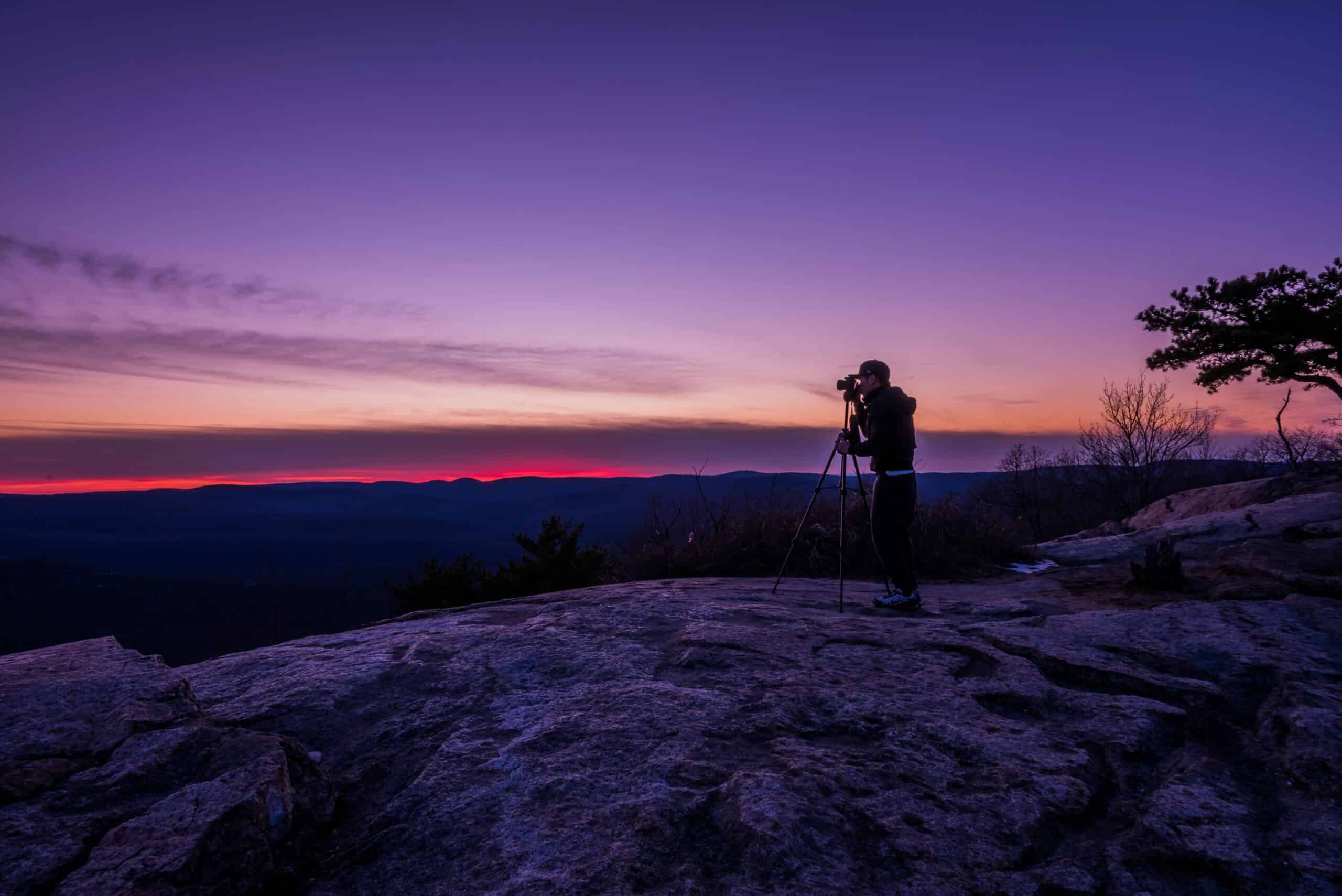
Before you set up, scan the scene for moving elements (people, foliage, traffic), reflective surfaces (glass, glossy tiles), and strong light sources. If shooting through glass, keep the front element close (2–3 cm) and slightly angle the camera to avoid reflections. Watch the sun position outdoors—ultra-wide lenses can catch flare if the sun grazes the frame; hand shade or a flag can help.
Match Gear to Scene Goals
The R6 Mark II’s dynamic range and clean ISO let you shoot interiors and sunsets with confidence. For indoor real estate, the Tokina’s rectilinear rendering keeps walls and door frames straight—an advantage over fisheyes. Plan to bracket ±2 EV when windows are bright; the R6 Mark II handles 3 or 5-frame AEB quickly. Indoors, ISO 100–400 keeps noise pristine; outdoors, ISO 100 is ideal. In low light, ISO 400–800 remains very usable on the R6 Mark II with a tripod.
Pre-shoot Checklist
- Charge batteries; bring a spare. Format dual UHS-II cards and set “Record to multiple” for instant backup.
- Clean front/rear elements and the sensor; dust shows in skies and walls.
- Level the tripod and verify panoramic head calibration (nodal/entrance pupil alignment).
- Safety checks: if on rooftops or with a pole/car mount, use tethers, check wind gusts, and keep people clear.
- Backup capture: shoot a second full round if the light is changing or people move—gives options in post.
Essential Gear & Setup
Core Gear
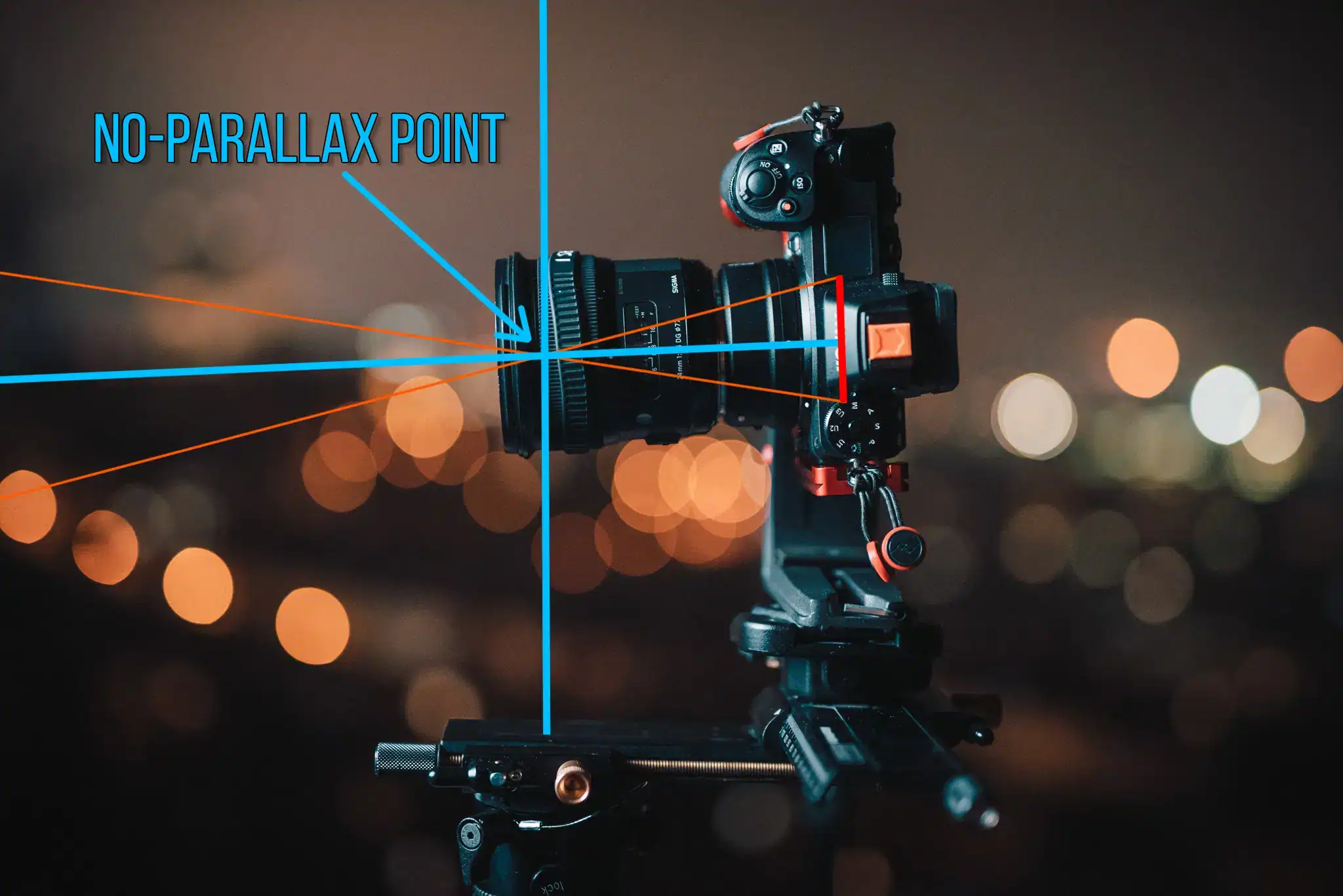
- Panoramic head: A two-axis pano head lets you rotate around the lens’s entrance pupil (nodal point) to avoid parallax. Calibrate once for 11mm and 20mm and mark the rails for speed.
- Stable tripod with leveling base: A leveling base speeds setup so your azimuth rotations stay flat. Keeps the horizon from drifting.
- Remote trigger or Canon Camera Connect app: Eliminates vibrations. A 2-second timer is a workable fallback.
Optional Add-ons
- Pole or car mount: Use guy lines and safety tethers; avoid high winds and watch for vibration. Slow the rotation and use faster shutter speeds.
- Lighting aids: Small LED panels or bounced flash for dark interiors (keep lighting consistent across frames).
- Weather protection: Rain covers and microfiber cloths. Moisture on ultra-wide front elements ruins consistency.
Step-by-Step Shooting Guide
Before You Start: Camera and Lens Prep
- Attach the Tokina via the Canon EF–RF adapter. The R6 Mark II will auto-switch to 1.6× crop mode (confirm in the Cropping/Aspect menu).
- Set RAW capture, Manual exposure (M), and lock White Balance (Daylight outdoors; custom WB or Kelvin indoors).
- Disable IBIS when on a rigid tripod to avoid sub-pixel drift. Use Electronic First Curtain (EFCS) to minimize shutter shock.
- Lens corrections: for consistency across frames, either turn them off in-camera and correct in the stitcher, or keep them consistently on—just don’t mix.
Standard Static Scenes
- Level tripod and align the nodal point. Do a quick parallax test: place two objects (near and far) in overlap; rotate. Adjust the fore-aft rail until the relative position stays fixed through rotation.
- Manual exposure and WB. Meter the mid-tones (not the window highlights), then set shutter/aperture/ISO manually so every frame is identical. Lock WB to prevent color shifts during stitching.
- Capture sequence with overlap:
- At 11mm, multi-row spherical: 6 frames at 0°, 6 at +45°, 6 at −45°, then zenith and nadir. Aim for 25–30% overlap.
- At 20mm, multi-row spherical: 8 frames per row at 0°, +45°, −45°, plus zenith/nadir with ~30% overlap.
- Nadir shot for tripod removal: either lean the tripod and shoot the ground where the head was, or use an offset nadir adapter for a clean patch.
HDR / High Dynamic Range Interiors
- Set AEB for ±2 EV (3 or 5 frames). Keep aperture fixed (e.g., f/8), vary shutter speed, and keep ISO low (100–200) to preserve quality.
- Lock WB; shoot bracketed sets for each pano position before rotating. Use the 2-second timer or remote to avoid shake.
Low-Light / Night Scenes
- Use longer exposures: f/4–f/5.6, ISO 200–800, shutter 1–8 seconds as needed. The R6 Mark II stays clean through ISO 800; ISO 1600 is usable with good noise reduction.
- Disable IBIS on tripod and use a remote. Watch for moving lights/people; take two passes to help with de-ghosting later.
Crowded Events
- Two-pass strategy: first pass for composition and coverage; second pass when gaps appear in the crowd.
- In post, mask people between passes to reduce ghosts. Faster shutter speeds (1/200+) help freeze motion if light allows.
Special Setups (Pole / Car / Rooftop)
- Secure everything with tethers and safety lines. Check wind; even a light breeze can oscillate a pole. Use higher shutter speeds (1/250–1/500) to combat vibration.
- Limit rotation speed, and consider shooting fewer, overlapping frames rather than rushing through a pass.
Recommended Settings & Pro Tips
Exposure & Focus
| Scenario | Aperture | Shutter | ISO | Notes |
|---|---|---|---|---|
| Daylight outdoor | f/8–f/11 | 1/100–1/250 | 100–200 | Lock WB (Daylight); avoid clipping highlights |
| Low light/night | f/4–f/5.6 | 1/30–8s | 200–800 | Tripod + remote; IBIS off on tripod |
| Interior HDR | f/8 | Bracket ±2 EV | 100–400 | Balance windows & lamps; consistent WB |
| Action / moving subjects | f/5.6–f/8 | 1/200+ | 400–800 | Shorten shutter; consider two-pass capture |
Critical Tips
- Manual focus at hyperfocal: at 11mm, f/8 in APS-C crop, hyperfocal ≈ 0.8–1.0 m. Focus ~1 m and switch to MF to lock.
- Nodal (entrance pupil) calibration: expect the rail to be forward of the tripod socket by several cm; fine-tune using a near/far parallax test. Mark your 11mm and 20mm positions on the rail.
- White balance lock: mixed lighting causes color shifts between frames—use a custom Kelvin or a gray card for consistent WB.
- Shoot RAW: maximizes dynamic range and lets you equalize exposure/WB across frames prior to stitching.
- Stabilization: turn off IBIS on a tripod. If shooting handheld cylindrical panos, IBIS can help, but keep your rotation smooth around your body’s axis.
- Use vertical orientation when possible on the pano head to increase vertical coverage per row.
- Use dual card recording on the R6 Mark II for immediate backups in the field.
Stitching & Post-Processing
Software Workflow
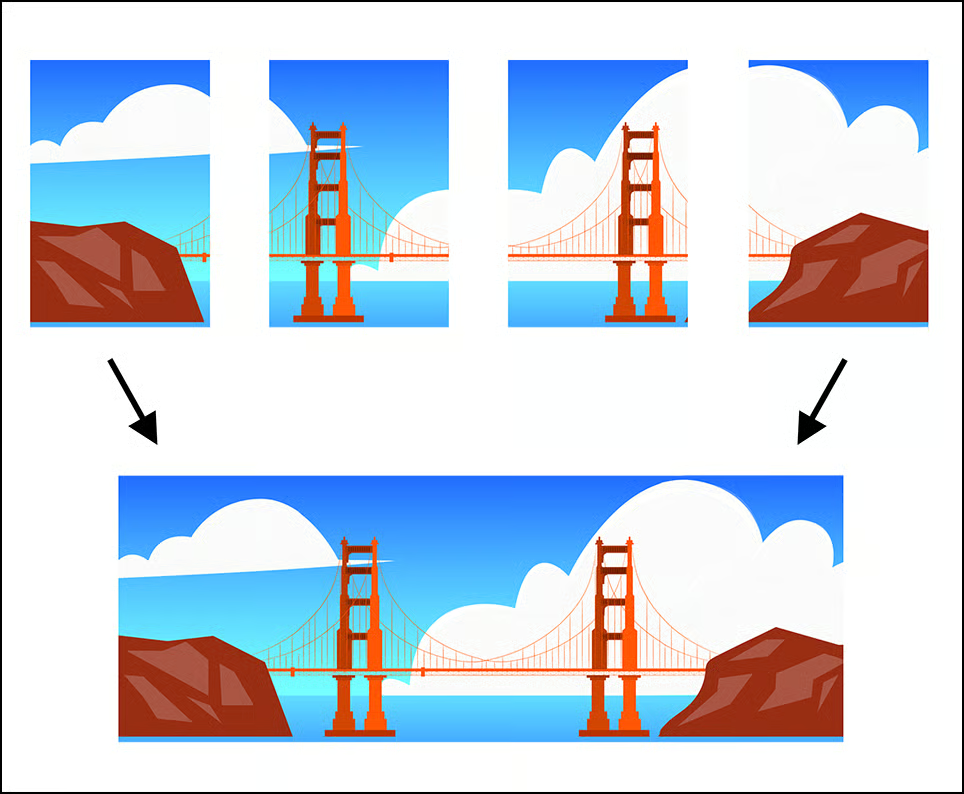
For rectilinear ultra-wide frames, PTGui and Hugin are industry standards. Import RAWs and pre-sync WB and lens corrections in Lightroom, then export to the stitcher. In PTGui, define the lens as “rectilinear,” set the crop factor (1.6×), and let the optimizer place control points. For spherical panos, ensure enough overlap (25–30%). Multi-row templates save time for repeated shoots and client workflows. A tool like PTGui often handles complex interiors and HDR blending more robustly than generic editors. For more on PTGui’s strengths, see this review at Fstoppers: PTGui for creating incredible panoramas.
Cleanup & Enhancement
- Nadir patch: export the equirectangular pano and use a logo patch, AI fill, or manual clone to remove tripod remnants.
- Global color and tonal balance: match brightness between frames before stitching where necessary; then apply overall contrast, clarity, and selective color corrections.
- Noise reduction: apply moderate NR for ISO 800+ night scenes; don’t over-smooth textures like carpets or bricks.
- Leveling: fix horizon and correct yaw/pitch/roll so the pano is level in VR.
- Export: equirectangular JPEG (8-bit) for web VR, or 16-bit TIFF masters for archival/clients. Keep a stitched master before compression.
If you’re new to pano heads and alignment, this concise tutorial is helpful: Panoramic head setup tutorial. For platform-specific 360 publishing tips, see Meta’s guide to using a mirrorless camera for 360 photos: Using a DSLR/mirrorless camera to shoot and stitch a 360 photo.
Useful Tools & Resources
Software
- PTGui panorama stitching
- Hugin (open source)
- Lightroom Classic / Photoshop for RAW prep and finishing
- AI tripod removal or logo patches for nadir
Hardware
- Panoramic heads (Nodal Ninja, Leofoto) with fore/aft and lateral adjustment
- Carbon fiber tripods for reduced vibration and easier travel
- Leveling bases and quick-release clamps
- Wireless remote shutters or intervalometers
- Pole extensions / car suction mounts with safety lines
Disclaimer: product and software names are for reference; always check the manufacturer’s current specifications and manuals.
Common Mistakes & How to Avoid Them
- Parallax error: occurs when you rotate around the tripod socket instead of the entrance pupil. Calibrate your pano head and mark your settings.
- Exposure flicker: fix exposure and WB manually before starting; don’t change mid-shoot.
- Tripod shadows/reflections: capture a dedicated nadir shot or patch in post; be mindful of reflective floors.
- Ghosting from moving subjects: shoot a backup pass and mask frames in post to replace problematic regions.
- High ISO noise: use tripod, low ISO, and longer shutter times; only push ISO when necessary.
- Insufficient overlap: maintain at least 25–30% overlap, especially with rectilinear lenses.
Real-World Scenarios and Field Advice
Indoor Real Estate (Bright Windows)
Use f/8, ISO 100–200, and AEB ±2 EV for each angle. Keep window frames vertical by leveling the head carefully. Shoot multi-row (6/6/6 + Z/N) at 11mm to get a high-resolution, geometry-true 360. In post, blend HDR first (either inside PTGui or pre-merge in Lightroom), then stitch. Apply subtle vertical perspective correction if needed.
Outdoor Sunset
Plan for the sun’s position—start near the sun while the dynamic range is manageable. Use f/8, ISO 100, 1/100–1/250. Consider a quick second pass as the light changes to reduce exposure variance across the pano. Use a hand or flag to shield flare at 11mm; it makes a noticeable difference in contrast.
Event Crowds
Elevate the camera slightly (tripod at eye level or on a short pole) and shoot a fast primary pass (1/200–1/500) at ISO 400–800. Then wait for gaps to clean up key areas and shoot a secondary pass for masks. Keep your nodal alignment accurate to avoid ghosting on near objects like railings.
Rooftop or Pole Shooting
Use a rigid pole with a compact pano head. Shorten exposure to 1/250–1/500 to reduce motion blur from wind. Consider fewer, more overlapped frames for stability. Always use a safety tether and avoid overhanging edges—prioritize safety.

Frequently Asked Questions
-
Can I shoot handheld panoramas with the Canon EOS R6 Mark II?
Yes, for single-row cylindrical or quick 180° panos. Keep shutter fast (1/200+), use IBIS, and rotate around your body axis. For full 360×180 with clean parallax-free results, a tripod and pano head are strongly recommended.
-
Is the Tokina ATX-i 11–20mm f/2.8 wide enough for single-row 360°?
For a true 360×180 sphere, no—at 11mm (APS-C crop) you’ll want multi-row (e.g., 6/6/6 + zenith + nadir). Single-row can cover a cylindrical pano for banners and wide scenes, but not the full sphere.
-
Do I need HDR for interiors with bright windows?
Most interiors benefit from bracketing ±2 EV (3 or 5 frames). It preserves window detail and clean interior shadows, especially with mixed lighting. The R6 Mark II handles bracketing quickly and reliably.
-
How do I avoid parallax issues with this lens?
Mount a panoramic head and calibrate the entrance pupil at your chosen focal length (11mm or 20mm). Use a near/far alignment test and mark the rail position once dialed in. Consistency is key across all frames.
-
What ISO range is safe on the R6 Mark II for low light panoramas?
On a tripod, aim for ISO 100–400 and extend shutter time. ISO 800 is still quite clean; ISO 1600 is usable with careful noise reduction. Keep ISO consistent across the entire set.
Authoritative References
For deeper dives on pano head setup and stitching best practices, these vetted resources are excellent follow-ups: Panoramic head tutorial and alignment and Meta’s guide to shooting and stitching 360 photos with a mirrorless camera. For PTGui-specific insights from working pros, see this review on Fstoppers.
Safety, Care, and Honest Limitations
With a crop-only Tokina on a full-frame body, you’ll be limited to the camera’s 1.6× crop output (~9.5MP per frame). That’s not a problem for multi-row stitches—final equirectangulars are still high-resolution—but it’s good to know if you expected full-frame coverage per shot. Also, ultra-wide rectilinears demand careful nodal alignment to avoid parallax, especially indoors with nearby furniture and door frames. Treat the pano head, rails, and locking knobs as critical: check tightness before each shoot. On rooftops/poles, prioritize safety—secure a tether, avoid windy edges, and never work alone. Back up as you go: the R6 Mark II’s dual-card mirroring plus a fast field backup (to a phone or SSD) saves client shoots when the unexpected happens.