Why This Camera & Lens Are Great for Panoramas
If you want to learn how to shoot panorama with Canon EOS R6 Mark II & Peleng 8mm f/3.5, you’re pairing a modern, highly capable full‑frame mirrorless body with a classic circular fisheye that excels at 360° capture with minimal shots. The Canon EOS R6 Mark II uses a 24.2 MP full‑frame sensor (approx. 36 × 24 mm) with large ~6.0 µm pixels, giving excellent noise control and roughly 13 stops of usable dynamic range at base ISO for clean, flexible edits. Canon’s IBIS (in‑body image stabilization) is rated up to 8 stops for handheld work, while the crisp EVF and responsive touch UI make field adjustments quick and reliable.
The Peleng 8mm f/3.5 is a manual, circular fisheye. On full frame, it projects a 180° circular image—perfect for fast, robust 360° panoramas. Manual aperture and focus keep exposure consistent across frames, and the 180° field of view means you can often cover the entire sphere with 3–4 shots around plus a nadir. Distortion is intentional with fisheyes, and modern stitching software handles it gracefully. On the R6 Mark II, you’ll use an RF adapter for the Peleng (often via EF or M42), and you may need to enable release without lens. The combo is compact, light, and field‑proven for real estate, tourism, events, and fast outdoor 360s.
Quick Setup Overview
- Camera: Canon EOS R6 Mark II — Full Frame 24.2 MP sensor, ~6.0 µm pixel pitch, excellent high‑ISO performance and IBIS.
- Lens: Peleng 8mm f/3.5 — circular fisheye, manual focus/aperture, 180° FOV, moderate CA toward edges, best sharpness around f/8.
- Estimated shots & overlap (field‑tested):
- 3 around at 120° yaw, pitch 0° (tilt up ~5°) + 1 nadir — fast, works outdoors with clean sky.
- 4 around at 90° yaw + zenith + nadir — safer coverage for interiors/complex scenes.
- Overlap target: 25–30% for circular fisheye.
- Difficulty: Easy–Medium (manual lens; nodal alignment required for clean stitches).
Planning & On-Site Preparation
Evaluate Shooting Environment
Look for bright windows, reflective surfaces (glass, polished floors), moving subjects, and wind. For glass viewpoints, place the front element as close as safely possible to the glass (1–2 cm) to reduce reflections and ghosting, and shoot at an oblique angle if flare is an issue. In busy scenes, plan for two passes so you can mask moving people later. Outdoors, note the sun’s position — circular fisheyes are prone to flare if the sun is near the frame edge.
Match Gear to Scene Goals
The R6 Mark II’s sensor handles mixed lighting and HDR work well. In interiors, ISO 200–800 remains clean for 360 output, and bracketing extends dynamic range to capture bright windows without blowing highlights. The Peleng 8mm’s circular projection lets you get a full spherical panorama with very few shots, minimizing parallax risk and shortening on‑site time. Distortion is expected; the stitcher remaps it into equirectangular output. Use f/8 for crisp results; the lens remains serviceable at f/5.6 in low light.
Pre-shoot Checklist
- Charge batteries, clear storage, clean front element (fisheyes show dust easily).
- Calibrate your panoramic head for the Peleng’s no‑parallax point (NPP).
- Level your tripod with a leveling base; verify the rotator clicks are precise at 90° or 120°.
- Safety: on rooftops or poles, tether gear; watch for wind. In cars, secure mounts and avoid excessive speed due to vibration.
- Backup: shoot an extra full rotation; if crowds or wind cause issues, a second pass often saves the project.
Essential Gear & Setup
Core Gear
- Panoramic head: Lets you rotate around the lens’s entrance pupil (NPP) to prevent parallax. This is critical for interior scenes with foreground objects.
- Stable tripod with leveling base: A leveled rig keeps horizons straight and speeds up stitching alignment.
- Remote trigger or Canon Camera Connect app: Eliminates vibrations and helps when the rig is high or awkward.
Optional Add-ons
- Pole or car mount: Great for rooftops or above crowds. Use a guy‑line, safety tether, and keep shutter speeds higher to fight vibration.
- Lighting aids: Small LED panels for dark interiors; avoid mixing multiple color temperatures or lock a custom white balance.
- Weather protection: Rain covers and microfiber cloths; fisheyes get sprayed easily and show droplets across the frame.
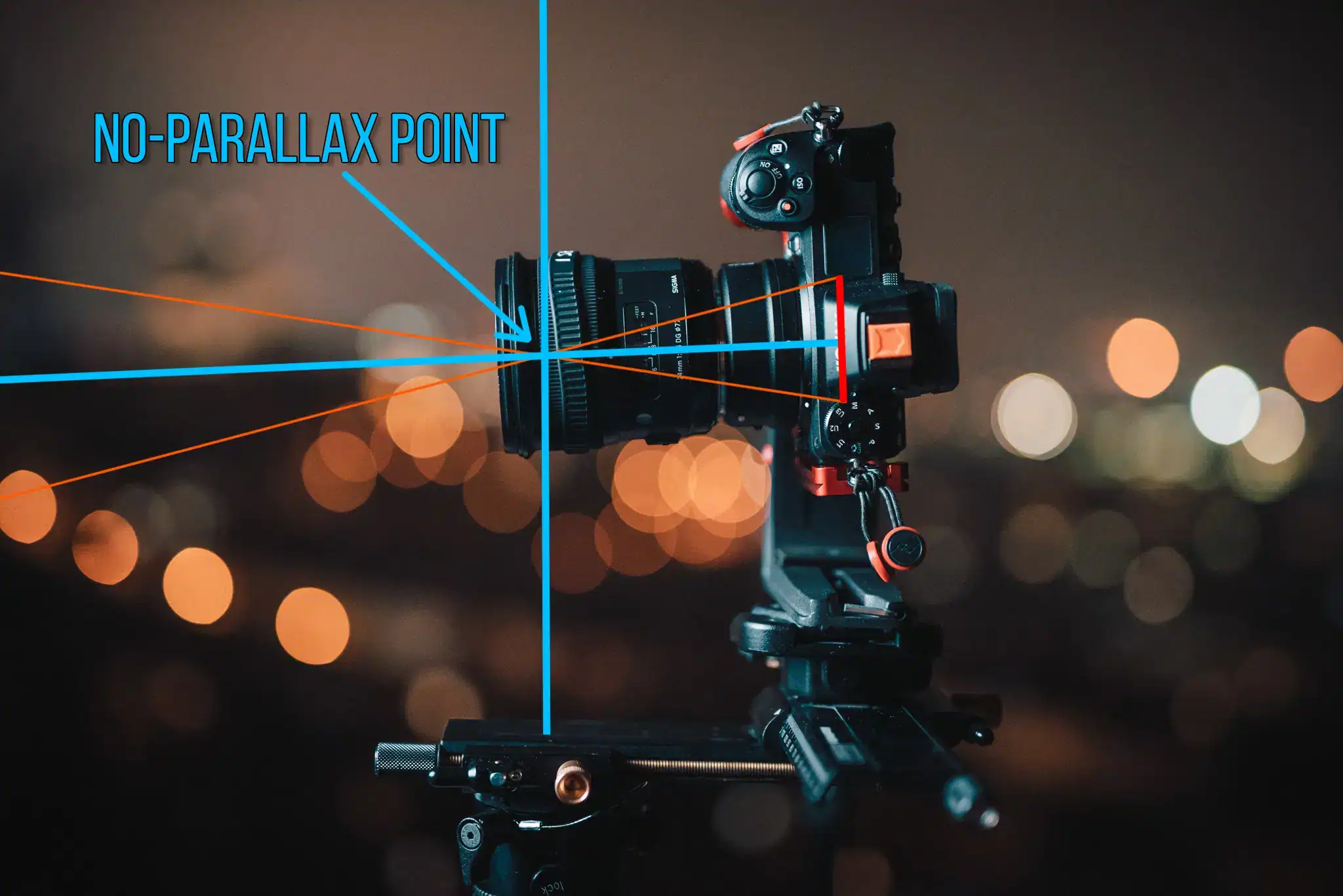
For an in‑depth primer on panoramic head setup and why the no‑parallax point matters, see this panoramic head tutorial on 360Rumors. Panoramic head tutorial
Step-by-Step Shooting Guide
Standard Static Scenes
- Level the tripod and align the nodal point. With the Peleng 8mm, the NPP is near the front element. Use a foreground object and background line test; adjust the fore‑aft rail until parallax vanishes during rotation.
- Set exposure and white balance manually. Suggested start: RAW, f/8, ISO 100–200 for daylight, daylight WB. Use EFCS or mechanical shutter on tripod; turn IBIS off to avoid micro‑shifts.
- Capture around the horizon:
- Fast/clean outdoor: 3 shots at 120° yaw, pitch 0° or slightly up ~5°.
- Safer coverage: 4 shots at 90° yaw, pitch 0°.
- Zenith and nadir: If the ceiling or sky coverage isn’t complete, add a zenith shot by pitching up ~60–90°. Take 1–2 nadir shots after shifting the tripod or using a handheld method for a clean floor patch.
HDR / High Dynamic Range Interiors
- Bracket ±2 EV or use 3–5 shots AEB. The R6 Mark II supports up to 7‑shot AEB with ±3 EV. Start with 3 or 5 frames at ±2 EV for bright windows.
- Lock WB (e.g., 4000–4500K for warm interiors) so the brackets stitch cleanly. Avoid auto ISO and auto WB across frames.
- Keep the sequence consistent at each yaw position (e.g., 0°, 90°, 180°, 270°) to simplify batch stitching.
Low-Light / Night Scenes
- Use a sturdy tripod, turn IBIS off, and use a remote. Start around f/4–f/5.6, ISO 400–800, and drag the shutter 1/5–1 sec depending on motion in the scene.
- The R6 Mark II remains quite clean up to ISO 1600; for virtual tours, aim for ISO 100–800 when possible to retain maximum detail.
- Enable Long Exposure NR only if you can afford the time; otherwise, do noise reduction in post.
Crowded Events
- Shoot two passes. First pass fast for coverage; second pass wait for subject gaps. You’ll mask moving people during stitching.
- Keep shutter speeds above 1/125–1/250 if you want crisper people; otherwise accept a bit of motion blur as part of the scene.
Special Setups (Pole / Car / Drone)
- Pole: Use a lightweight carbon pole and guy‑line; keep exposures short (1/250+), and use 3 shots around + zenith. Always tether the camera body.
- Car: Mount on a suction rig with safety line; avoid high speeds and strong crosswinds. Increase overlap (4 around) to cushion against vibration.
- Drone: The R6 Mark II is heavy for most drones; consider alternative capture approaches or specialized aerial platforms.
Recommended Settings & Pro Tips
Exposure & Focus
| Scenario | Aperture | Shutter | ISO | Notes |
|---|---|---|---|---|
| Daylight outdoor | f/8–f/11 | 1/100–1/250 | 100–200 | Lock WB (daylight); IBIS off on tripod; EFCS/mechanical shutter |
| Low light/night | f/4–f/5.6 | 1/5–1/60 | 400–800 | Tripod + remote; avoid excessive ISO if you plan HDR |
| Interior HDR | f/8 | Bracket ±2 EV | 100–400 | Balance windows & lamps; consistent bracket order for all frames |
| Action / moving subjects | f/5.6–f/8 | 1/200+ | 400–800 | Freeze motion; consider two passes for masking |
Critical Tips
- Manual focus: With the Peleng 8mm, set focus near 1 m and stop down to f/8; everything from ~0.5 m to infinity will be acceptably sharp. Confirm with magnified live view if needed.
- Nodal calibration: Use two light stands (near/far) and rotate. Adjust the fore‑aft rail until their alignment doesn’t shift. Mark this setting on your rail for the Peleng + adapter combo.
- White balance lock: Choose a fixed WB to avoid color seams, especially when bracketing.
- RAW vs JPEG: Always shoot RAW for maximum dynamic range and better CA and highlight recovery.
- IBIS: Turn IBIS off on a tripod to prevent sensor drift; for handheld tests, set IS focal length to 8 mm if available.
- Canon body setup: Consider enabling “Release shutter without lens” when using a dumb adapter. Program C1/C2 with your pano presets (manual exposure, RAW, WB, drive mode).
Stitching & Post-Processing
Software Workflow
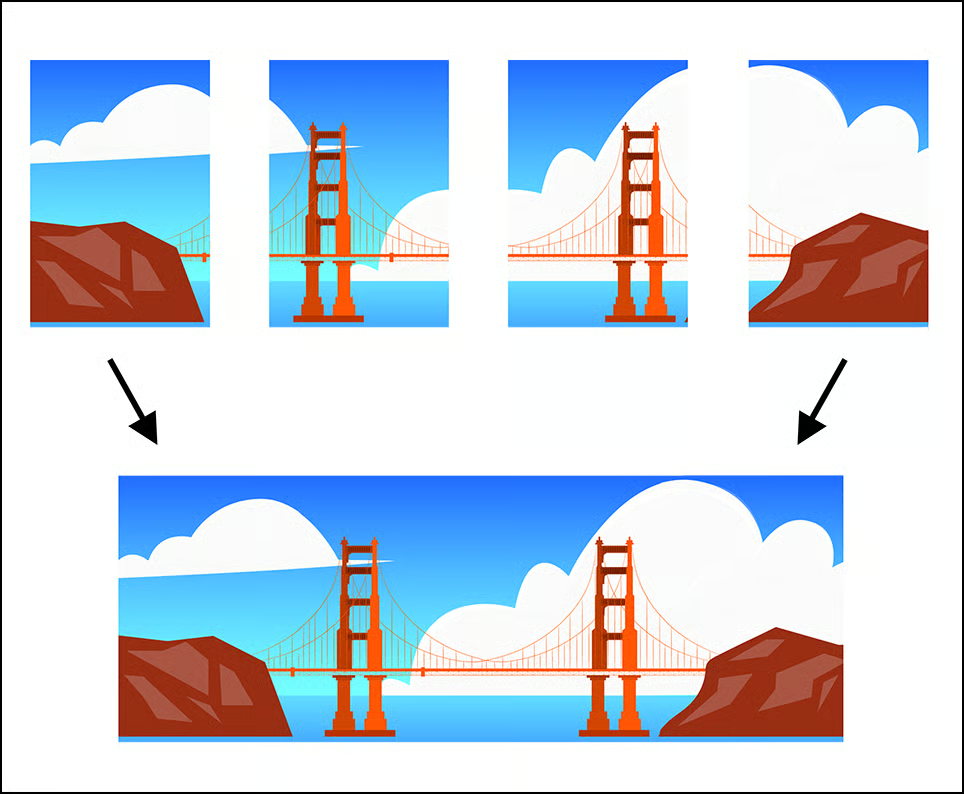
Import your RAW files and apply basic corrections (WB, exposure, chromatic aberration). For stitching, PTGui and Hugin both handle circular fisheye inputs very well. In PTGui, set Lens Type to Circular Fisheye and approximate HFOV to 180°. Use 25–30% overlap and run Align Images. For the Peleng 8mm, you may need to adjust the crop circle and mask out the tripod in the nadir. Export equirectangular at 2:1 (e.g., 8192×4096 or 10240×5120) depending on your target platform and the number of shots captured. PTGui is an industry favorite for speed and control; see this review for perspective on why it’s popular with pros. PTGui overview and review
Cleanup & Enhancement
- Nadir patch: Shoot a clean plate (camera moved aside) and patch, or use AI content‑aware tools to remove the tripod.
- Color work: Match color temperature between brackets and shots; reduce noise selectively in shadow areas, especially for night scenes.
- Geometry: Level the horizon; set yaw/pitch/roll so the main subject is well framed. Many VR viewers read XMP horizon metadata.
- Output: Export high‑quality JPEG (e.g., 90–95%) or 16‑bit TIFF for archival edits; deliver 8K–12K width for high‑end web VR.
Resolution depends on sensor, lens FOV, and number of shots; this panotools wiki page explains typical spherical resolution trade‑offs. Spherical resolution considerations
Video: A fast panorama workflow in practice
Prefer to watch? This short video demonstrates a practical panorama workflow from capture to stitch. Note: specific menus differ, but the principles are the same.
If you are new to 360 capture with interchangeable-lens cameras, Meta’s DSLR 360 guide outlines a complete capture and stitching pipeline with helpful diagrams. Using a DSLR/Mirrorless to shoot and stitch a 360 photo
Useful Tools & Resources
Software
- PTGui panorama stitching
- Hugin open source
- Adobe Lightroom / Photoshop for RAW and retouching
- AI tripod removal tools (Content‑Aware Fill, generative fill)
Hardware
- Panoramic heads (e.g., Nodal Ninja, Leofoto)
- Carbon fiber tripods and leveling bases
- Wireless remote shutters or Canon Camera Connect
- Pole extensions / vehicle mounts with safety tethers
Disclaimer: Product names are provided for search reference; verify compatibility and specs on official sites.
Real-World Case Studies
Indoor Real Estate (Mixed Light, Tight Rooms)
Use the 4‑around pattern (90° yaw), f/8, ISO 100–200, and 3–5 bracketed exposures ±2 EV. Lock WB at a custom value that splits the difference between daylight and warm lamps (e.g., ~4300K). The Peleng’s circular frame minimizes the number of shots so you can work quickly from room to room. When furniture is close, accurate NPP alignment is essential to avoid stitching seams on table edges and door frames.
Outdoor Sunset (High DR, Flare Control)
At sunset, flare can show within the circular image. Shade the lens with a hand or flag, re‑shoot the affected frame, and blend in post. Consider 3 around + zenith to capture the sky gradient cleanly. Start ISO 100, f/8, and bracket ±2 EV. The R6 Mark II’s RAW files have enough latitude to recover highlight color in the sky while keeping shadow detail.
Crowded Event (Motion Management)
Use 4 around at 1/250, f/5.6–f/8, ISO 400–800. Do a second pass and wait for gaps in the crowd. In PTGui, mask moving people from the first pass and keep clean areas from the second. You’ll get a natural, lively ambiance without obvious ghosting.
Rooftop / Pole (Safety & Stability)
Keep the rig light; use 3 around to reduce time aloft. Set faster shutter speeds (1/250–1/500) to fight sway. Always tether the camera and watch wind gusts. If the pole flexes, increase overlap or do a second rotation to ensure sufficient control points.
Common Mistakes & How to Avoid Them
- Parallax error → Calibrate the nodal point; use a panoramic head and avoid shifting the camera between frames.
- Exposure flicker → Manual exposure and locked WB; avoid Auto ISO and AWB across the set.
- Tripod in frame → Shoot a nadir patch or use a handheld nadir shot; patch later with cloning or AI.
- Ghosting from moving subjects → Shoot multiple passes and mask during stitching.
- High ISO noise → Favor lower ISO with tripod; if needed, bracket rather than pushing ISO.
- IBIS micro‑shake → Turn IBIS off on a tripod; use EFCS or mechanical shutter.
- Lens flare on fisheye → Watch the sun position; flag the lens and re‑shoot affected frames.
Frequently Asked Questions
-
Can I shoot handheld panoramas with the Canon EOS R6 Mark II?
Yes for quick tests, but a tripod and panoramic head dramatically improve stitch quality. Handheld works outdoors with distant subjects (less parallax). Use high shutter speeds, 3 around with the Peleng, and keep rotation around your vertical axis as much as possible.
-
Is the Peleng 8mm f/3.5 wide enough for a single‑row 360?
Yes. As a circular fisheye on full‑frame, it covers 180° per shot. You can often do 3 around + nadir for simple scenes; for interiors or complex ceilings, use 4 around + zenith + nadir for safety.
-
Do I need HDR for interiors with bright windows?
Usually. The R6 Mark II has good dynamic range, but bracketing ±2 EV (3–5 frames) preserves highlight color in windows and clean shadow detail. Keep WB locked across brackets to avoid color mismatches.
-
How do I avoid parallax issues with this setup?
Use a panoramic head and align the entrance pupil. With the Peleng 8mm, the NPP is near the front element; run a near/far alignment test and mark the rail position for repeatable results.
-
What ISO range is safe on the R6 Mark II in low light?
For high‑quality virtual tours, ISO 100–800 is the sweet spot. You can push 1600–3200 if needed, but prefer a tripod and longer exposures or HDR bracketing to maintain detail and color depth.
-
Can I set up Custom Shooting Modes (C1/C2) for pano?
Yes. Save a pano profile: Manual exposure, RAW, fixed WB, single shot or 2‑sec timer, EFCS/mechanical shutter, IBIS off. You’ll be able to recall consistent settings instantly.
-
How do I reduce flare with a circular fisheye?
Avoid direct sun near the edge of the circle; shade the lens with a hand or flag and re‑shoot that frame. Clean the front element carefully—smudges flare easily on fisheyes.
-
What’s the best tripod head for this setup?
A dedicated panoramic head with fore‑aft adjustment (e.g., Nodal Ninja or a compact two‑rail system). Look for a reliable rotator with 90°/120° detents and a sturdy leveling base.
Safety, Limitations & Trustworthy Practices
Rooftops and poles introduce risk—always tether your camera and confirm rail clamps are tight. The Peleng 8mm has manual aperture and focus; double‑check the aperture ring hasn’t shifted during rotation. On tripods, disable IBIS to avoid tiny frame shifts. Keep a backup rotation for every critical scene; if a frame misfires or a person blocks a view, that extra pass saves the day. Finally, maintain a clean, versioned archive: original RAWs, stitched masters (TIFF), and delivery JPEGs. This pipeline is standard among professional 360 photographers and ensures clients can request updates or new exports later.
For more background on DSLR/mirrorless 360 capture and panorama principles, this Q&A and tutorial library is a helpful deep‑dive. Best techniques to take 360 panoramas
Bonus Visuals