
Why This Camera & Lens Are Great for Panoramas
If you’re wondering how to shoot panorama with Canon EOS R6 Mark II & Nikon AF-S 8-15mm f/3.5-4.5E ED Fisheye, the short answer is: this combo can deliver fast, clean, and highly stitchable 360° results when set up correctly. The EOS R6 Mark II offers a 24.2MP full-frame sensor (approx. 36×24 mm) with excellent high-ISO performance and in-body image stabilization (IBIS). Its pixel pitch is roughly 5.9–6.0 μm, which contributes to strong signal-to-noise performance and rich color depth. Dynamic range at base ISO is solid for interiors and sunsets, and Dual Pixel CMOS AF II makes pre-focus quick and reliable before you lock focus for the pano.
The Nikon AF-S 8–15mm E fisheye is a versatile circular/diagonal fisheye zoom. At 8mm on full-frame, it projects a circular fisheye image (up to 180° in all directions), letting you cover a full sphere with very few images. At 15mm, it becomes a diagonal fisheye (180° corner-to-corner), offering more usable pixels across the frame and gentler stretching near the zenith/nadir. Fewer shots mean faster capture and fewer moving-object conflicts during stitching—ideal for events, tight interiors, and quick pole work.
Important compatibility note: this is a Nikon F-mount “E” lens (electromagnetic diaphragm). To use it on the Canon EOS R6 Mark II (RF mount), you’ll need an electronic Nikon F to Canon RF adapter that supports “E” aperture control. AF support varies by adapter. If your adapter does not provide aperture control, you will be limited to shooting wide open—fine for night scenes, but not ideal for maximum sharpness. Always verify your adapter’s compatibility list and test before an important job.
Quick Setup Overview
- Camera: Canon EOS R6 Mark II — Full Frame (24.2MP), Dual Pixel CMOS AF II, IBIS up to ~8 stops with native RF lenses (IBIS still helps with adapted glass, but functionality may vary).
- Lens: Nikon AF-S 8–15mm f/3.5–4.5E ED Fisheye — circular at 8mm, diagonal fisheye by 15mm. Sharpness peaks around f/5.6–f/8, good control of CA when stopped a bit.
- Estimated shots & overlap (field-tested):
- 8mm (circular): 4 around at 0° tilt (90° yaw steps) + 1 zenith + 1 nadir (safe workflow). Skilled operators can do 3 around + Z + N in open spaces.
- 12mm (diag fisheye): 5–6 around + Z + N with ~30% overlap.
- 15mm (diag fisheye): 6 around (60° yaw steps) + Z + N for robust coverage.
- Difficulty: Easy–Moderate (fisheye reduces shot count; adapter setup adds a learning curve).
Planning & On-Site Preparation
Evaluate Shooting Environment
Assess light, reflective surfaces, moving subjects, and your working space. For interiors with glass or polished stone, expect reflections—keep a microfiber cloth handy and avoid standing too close to glass (at least 30–60 cm off) to reduce ghosting from your own reflections. Outdoors, note sun position: fisheyes see everything, so lens flare from low sun can be inevitable. Use your body or a flag to shade the lens when possible.
Match Gear to Scene Goals
The EOS R6 Mark II’s base-ISO dynamic range and low-noise performance let you hold highlights and lift shadows gracefully, essential for HDR panoramas inside bright-windowed rooms. Safe, clean ISO ranges are typically 100–800; ISO 1600 remains usable for web output. Pairing the Nikon 8–15 fish simplifies coverage with fewer shots—perfect when people are moving or you’re on a pole. Keep in mind: fisheye distortion is expected and handled by pano software; the key is consistent overlap and precise nodal alignment.
Pre-shoot Checklist
- Power & storage: Full batteries, multiple cards. The R6 Mark II’s 24MP RAWs add up fast—plan capacity.
- Clean optics: Front element of a fisheye shows everything. Clean lens and sensor to avoid cloning dust across a full sphere.
- Tripod & pano head: Level base and pre-calibrate the entrance pupil (nodal point) for 8, 12, and 15mm marks.
- Adapter test: Confirm aperture control on the adapter with this “E” lens. Test IBIS behavior and AF (if supported).
- Safety: Check wind on rooftops or poles; use tethers. For car mounts, verify all clamps and use secondary safety lines.
- Backup capture: Shoot one extra safe round if the scene allows—saves projects when one frame fails or gets bumped.
Essential Gear & Setup
Core Gear
- Panoramic head: Lets you rotate around the lens entrance pupil, minimizing parallax so objects stitch cleanly. Use a two-axis head to easily tilt for zenith/nadir.
- Stable tripod with leveling base: Leveling keeps your yaw rotation true, reducing vertical stitching stress and horizon fixing later.
- Remote trigger or Canon Camera Connect: Prevents micro-shake, especially in low light and during bracketing.
Optional Add-ons
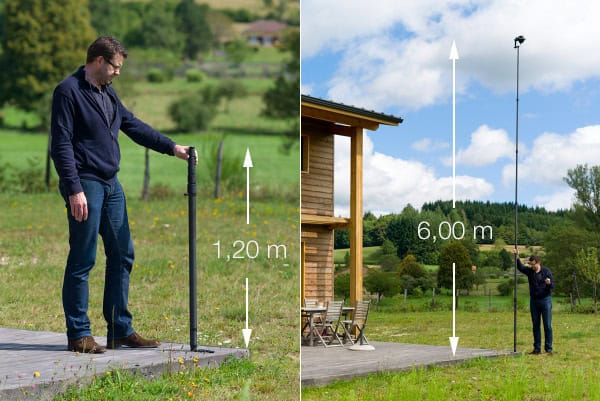
- Pole or car mount: Great for unique perspectives. Safety first—tether the camera, watch wind gusts, and keep rotation smooth and deliberate.
- Lighting aids: Small LED panels for interior corners; avoid mixed color temperatures when possible.
- Weather protection: Rain covers and a microfiber towel. Salt spray and fisheye glass don’t mix—wipe gently and often.
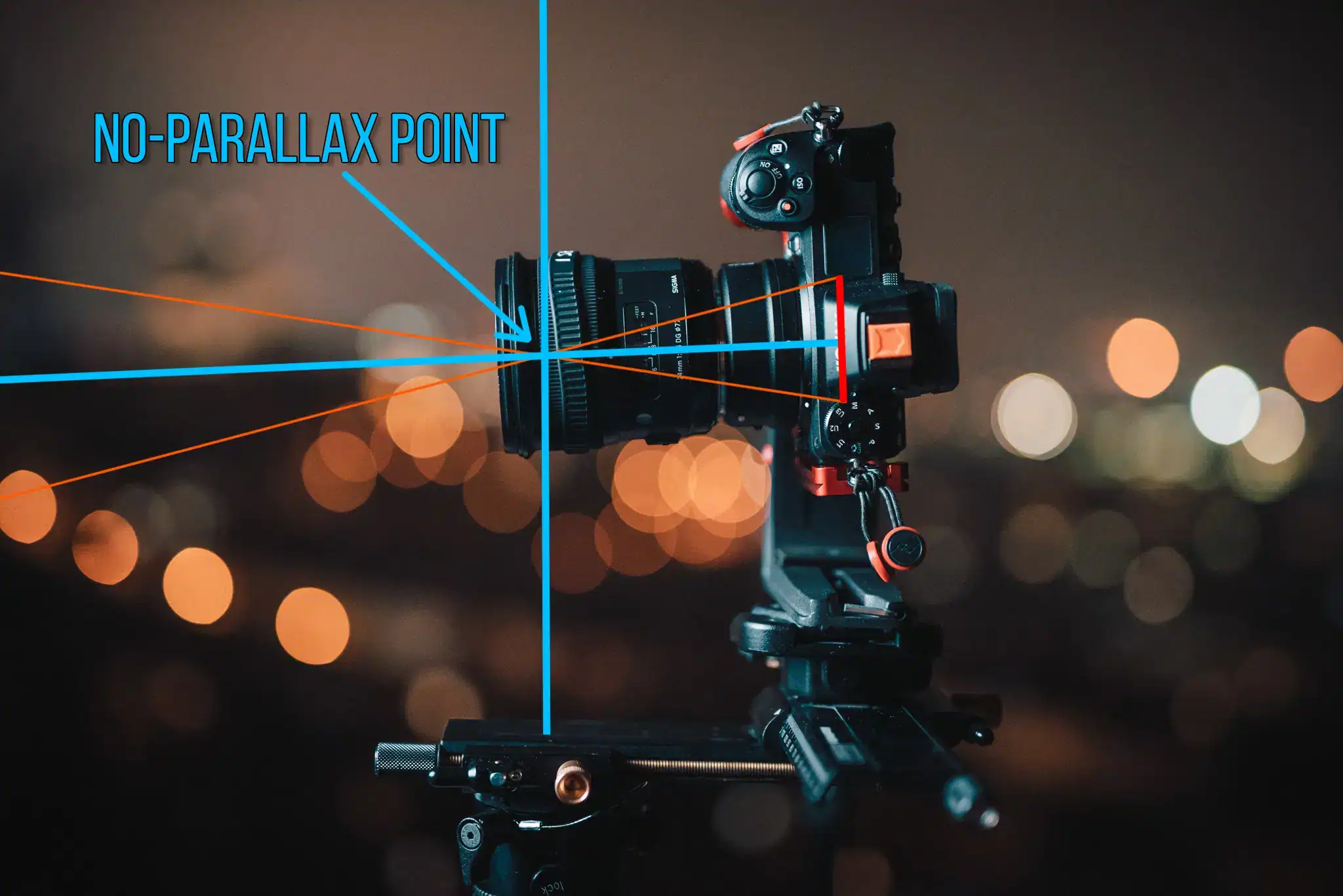
Need a deeper primer on nodal alignment and panoramic heads? This concise guide to panoramic heads and techniques explains the core principles and cutting-edge tips for minimizing parallax on location. Panoramic head tutorial and setup tips
Step-by-Step Shooting Guide
Standard Static Scenes
- Level and lock: Level the tripod via the leveling base. Confirm your pano head’s yaw is bubble-level so every frame sits on the same horizontal plane.
- Nodal alignment: With the Nikon 8–15, the entrance pupil shifts slightly across the zoom range. Calibrate and mark your rail for 8mm and 15mm. To calibrate, align two vertical objects (near/far) and rotate: adjust the rail until relative motion disappears.
- Manual exposure & WB: Switch to M mode. Meter a midtone and set a shutter/aperture/ISO you can keep across the entire rotation. Lock white balance to a Kelvin value (e.g., 5200–5600K for daylight, or use a custom preset) to prevent stitching color shifts.
- Focus: Use AF to grab a nearby infinity-bearing subject, then switch to MF and don’t touch the ring. For safety, use focus peaking to double-check.
- Capture sequence:
- 8mm circular workflow: 4 around at 0° tilt (90° yaw steps) → 1 zenith (point up) → 1 nadir (point down). Aim for 30–35% overlap.
- 15mm diagonal workflow: 6 around at 0° tilt (60° steps) → zenith → nadir, ~30% overlap.
- Nadir cleanup: Take an extra handheld nadir patch shot by moving the tripod out and shooting down from the same point. This helps remove tripod legs perfectly in post.
HDR / High Dynamic Range Interiors
- Bracket ±2 EV: For bright windows, shoot 3–5 bracketed exposures per angle (e.g., -2/0/+2 EV, or -4/-2/0/+2/+4 in extreme cases). Keep the same bracket pattern at every yaw step.
- Lock WB: Don’t use Auto WB; it will change per frame and create stitching seams. Stick to a Kelvin value or preset.
- Stabilize: Use a timer or remote and disable IBIS for tripod shots to avoid micro-corrections during exposure.
Low-Light / Night Scenes
- Exposure: Start at f/4–f/5.6, ISO 400–800, and shutter 1/30–1/60 s for scenes with some ambient. For stars or very dark scenes, drop shutter longer and keep ISO as low as practical (100–400) to maintain clean shadows.
- Vibration control: Use a remote or 2-sec timer. Shield the tripod from wind; hang a small weight from the center column to add mass.
- Flare management: Fisheyes catch stray lights; use your body to block direct light sources between frames if possible.
Crowded Events
- Two-pass strategy: First pass captures the full coverage rapidly. Second pass, wait for gaps to fill problematic zones. You’ll choose the cleanest frames when masking in post.
- Shutter speed: Use 1/200 s or faster at ISO 400–800 to freeze motion in critical seams.
- Keep people away from the tripod: A small cordon or a quick verbal “one second please” can save retakes.
Special Setups (Pole / Car / Drone)
- Pole: Use the 8mm circular mode for minimal frames. Keep rotations slow to reduce sway. Always tether the rig; consider a spotter.
- Car mount: Avoid high speeds; vibrations cause micro-blur and misalignment. Stabilize with suction plus safety straps. Pre-plan a safe route and time with minimal traffic.
- Drone: The R6 Mark II is too heavy for most off-the-shelf drones. If aerial is critical, use a dedicated 360 camera or specialized heavy-lift platform operated by licensed pilots.
Recommended Settings & Pro Tips
Exposure & Focus
| Scenario | Aperture | Shutter | ISO | Notes |
|---|---|---|---|---|
| Daylight outdoor | f/8–f/11 | 1/100–1/250 | 100–200 | Lock WB (Daylight 5200–5600K). Max edge-to-edge sharpness. |
| Low light/night | f/4–f/5.6 | 1/30–1/60 | 400–800 | Tripod + remote. Consider longer shutter before raising ISO. |
| Interior HDR | f/8 | Bracket ±2 EV | 100–400 | Balance windows & lamps. Keep bracket consistent across frames. |
| Action / moving subjects | f/5.6–f/8 | 1/200+ | 400–800 | Capture a fast base pass, then a cleanup pass for masking. |
Critical Tips
- Manual focus at hyperfocal: At 8mm and f/8, focusing ~0.4–0.5 m keeps near-to-infinity acceptably sharp. Focus once, then switch to MF.
- Nodal calibration: Make marks on your rail for 8mm and 15mm. Re-check if you change zoom. Even a few millimeters off can cause parallax on chairs, doorframes, or railings.
- White balance lock: Avoid Auto WB for panoramas; it’s a common cause of color seams. Use Kelvin or a custom white card reading.
- RAW over JPEG: Shoot RAW for better highlight recovery and cleaner HDR merges. The R6 Mark II’s files handle shadow lifting well at ISO ≤800.
- IBIS on/off: Turn IBIS off when mounted solidly on a tripod to prevent sensor micro-motions during long exposures. Keep it on for handheld capture.
- Adapter quirks: With a Nikon “E” lens, verify you can stop down. If aperture control fails, compensate with ISO/shutter and be mindful of corner sharpness wide open.
Stitching & Post-Processing
Software Workflow
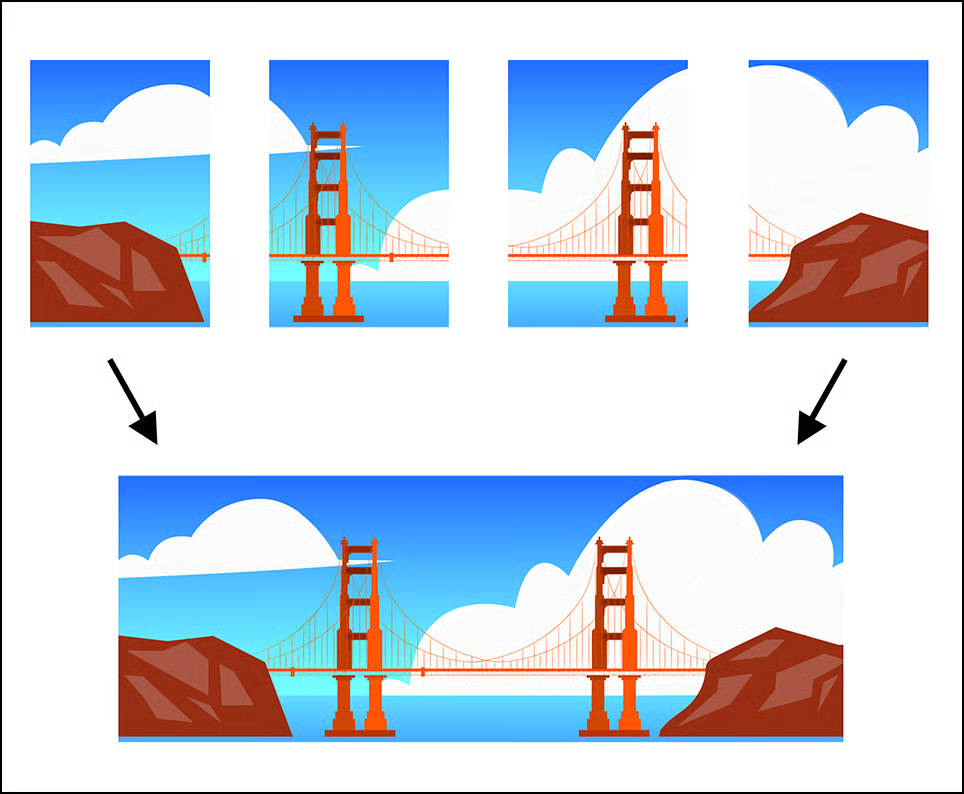
Import and pre-select your best frames. If you bracketed, first merge each view to an HDR exposure (in Lightroom/ACR) or let PTGui handle HDR merging on stitch. Fisheye images are straightforward for advanced stitchers—set lens type to “Fisheye” and input focal length/FF sensor. Aim for 25–35% overlap for fisheyes and keep horizons consistent to minimize correction later. PTGui is a favorite among pros for speed and control; Hugin is an excellent open-source alternative. Why many pros rely on PTGui for complex panoramas
Export format for VR is a 2:1 equirectangular. With 24MP and fisheye coverage, expect an 8K (8000×4000) equirectangular to be realistic for most scenes, depending on shot count and overlap efficiency. For theory on spherical resolution and lens coverage, see the classic reference on DSLR spherical resolution. Understanding spherical resolution for panoramas
Cleanup & Enhancement
- Nadir patching: Use a handheld nadir shot to replace the tripod footprint. You can patch in Photoshop or with specialized AI tripod removal tools.
- Color & noise: Match color temperature across frames, then apply gentle noise reduction for low-light scenes to preserve detail.
- Level and straighten: Most stitchers let you set the horizon and verticals. Use line constraints for architectural accuracy.
- Export: For web VR, JPG 8–10 quality is fine; keep a 16-bit TIFF master if you plan major adjustments later. For platform-specific guidance, see the Oculus Creator documentation for DSLR/mirrorless stitching. VR platform guidelines for 360 photos (DSLR/Mirrorless)
Watch: A Practical Panorama Stitching Walkthrough
Prefer to see it done? This video walks through a modern panorama workflow, including planning, capture, and stitch check:
Useful Tools & Resources
Software
- PTGui panorama stitching
- Hugin (open source)
- Lightroom / Photoshop for HDR merges and cleanup
- AI tools for tripod removal and object cleanup
Hardware
- Panoramic heads (Nodal Ninja, Leofoto)
- Carbon fiber tripods with leveling bases
- Wireless remotes or app-based triggers
- Pole extensions and vehicle mounts (with safety tethers)
Disclaimer: brand names are examples for search reference; check official specs and compatibility lists—especially for Nikon F to Canon RF adapters with “E” aperture control.
Common Mistakes & How to Avoid Them
- Parallax error: Always align the entrance pupil (no-parallax point). Even small misalignment ruins near-field seams.
- Exposure flicker: Use Manual exposure and locked WB. Avoid Auto ISO in mixed lighting.
- Tripod shadows and footprints: Shoot a dedicated nadir frame for clean patching.
- Ghosting from moving subjects: Use a fast first pass and a cleanup pass; mask strategically in post.
- High ISO noise: Favor longer shutter on a stable tripod over pushing ISO—R6 Mark II files stay clean at ISO 100–800.
- Adapter oversight: Test aperture control with this Nikon E lens on the RF adapter before the job. Bring a backup plan.
For a broader pano FAQ and gear selection principles (useful if you later consider alternative bodies or lenses), this detailed DSLR/virtual tour guide is a good read. Virtual tour camera & lens FAQ
Frequently Asked Questions
- Can I shoot handheld panoramas with the EOS R6 Mark II?
Yes, for quick 360s in good light. Use 8mm with 3–4 shots around plus zenith/nadir and keep shutter at 1/200 s or faster. IBIS helps, but a tripod and pano head still produce more precise stitches—especially indoors or in low light.
- Is the Nikon 8–15mm fisheye wide enough for a single-row 360?
Absolutely. At 8mm circular, you can cover with 3–4 shots around plus zenith and nadir. At 15mm diagonal, 6 around + Z + N is a reliable single-row.
- Do I need HDR for interiors with bright windows?
Usually yes. Bracket ±2 EV (3–5 frames). The R6 Mark II has good dynamic range, but HDR keeps window detail and reduces noise in shadows. Consistency across all yaw steps is critical for a clean stitch.
- How do I avoid parallax issues with this fisheye?
Calibrate the entrance pupil using a panoramic head: align near/far verticals and adjust the fore-aft rail until relative movement disappears during yaw. Make and use marks for 8mm and 15mm, and always keep the tripod perfectly level.
- What ISO is “safe” on the R6 Mark II for low light panoramas?
ISO 100–800 is the sweet spot for clean, flexible files. ISO 1600 is usable for web/social. Prefer longer shutters on a tripod over higher ISO when possible.
Field-Proven Scenarios & Settings
Indoor Real Estate (Bright Windows)
Lens at 12–15mm (diagonal fisheye), f/8, ISO 100–200. Bracket -2/0/+2 EV across all yaw steps. Lock WB to 5000–5500K. Keep lights either all on or all off to avoid mixed temperatures. Use a handheld nadir patch after moving the tripod.
Outdoor Sunset Overlook
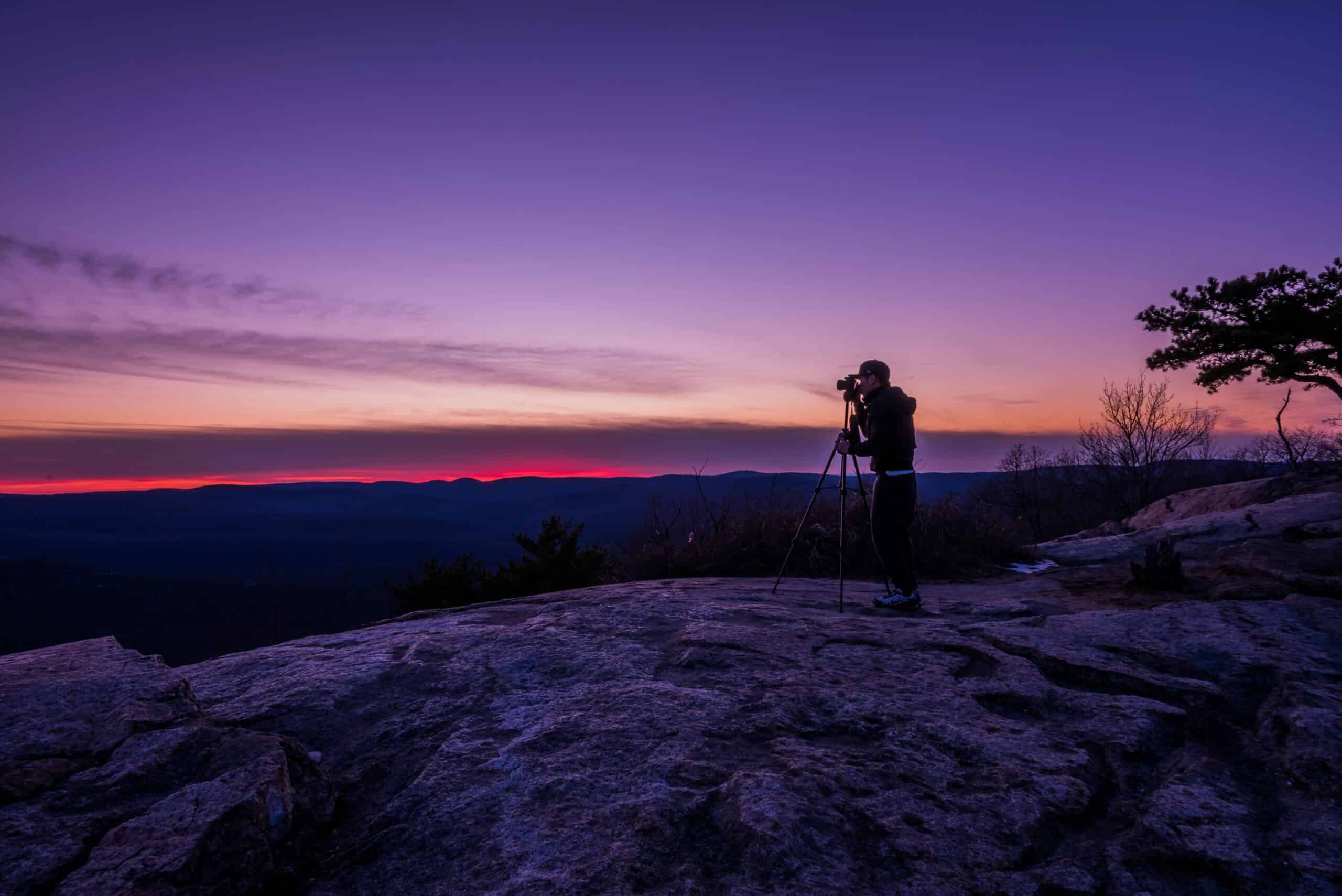
Lens at 8mm (circular) for speed: 4 around + Z + N, f/8, ISO 100, 1/125–1/250 s. For very high contrast, bracket ±2 EV. Watch for sun flare—use your body to shade the lens for frames where the sun is just outside the FOV.
Event Crowds
Lens 8–12mm; target 1/200 s at ISO 400–800, f/5.6–f/8. Do a fast base pass, then a second pass to fill gaps. Keep the crowd away from the tripod legs to minimize near-field parallax issues.
Rooftop or Pole Capture
Lens at 8mm to minimize frame count. Use a short shutter to freeze sway (1/200–1/500 s) and ISO 400–800 if needed. Tether everything. Rotate slowly and pause to let the rig settle before each shot.
Safety, Limitations & Trustworthy Practice
Adapting a Nikon “E” fisheye to a Canon RF body requires an electronic adapter for aperture control; AF reliability and EXIF reporting can vary. Always run a full dry rehearsal before paid work. In winds or on poles, prioritize safety: tether the camera, stabilize your stance, and never overextend near edges. Keep a second memory card set, and consider duplicating your base pass if time allows—one corrupt or bumped frame can derail the stitch. Finally, follow industry best practices for panoramic head setup and overlap; they exist because they work consistently across diverse scenes and gear.