
Why This Camera & Lens Are Great for Panoramas
The Canon EOS R6 Mark II paired with the Canon RF 15–35mm f/2.8L IS USM is an extremely capable combo for panoramic and 360 photo work. The R6 Mark II’s 24.2MP full-frame sensor (36 × 24 mm) offers excellent image quality, ~14 stops of dynamic range at base ISO, and low noise with a pixel pitch of roughly 6.0 µm. The in-body image stabilization (IBIS) can coordinate with the lens’s optical IS for up to 7–8 stops of stabilization, which helps when you need slower shutter speeds during low-light panoramas. Autofocus is quick and accurate, but for panoramas you’ll often switch to manual focus for consistency.
The RF 15–35mm f/2.8L IS USM is a rectilinear ultra-wide zoom. At 15mm it delivers a very wide field of view (diagonal ~110°) with straight lines (no fisheye curve), making it ideal for architectural and real estate panoramas where geometry matters. It’s sharp edge-to-edge by f/5.6–f/8, has well-controlled chromatic aberration, and focuses internally. While a fisheye lens would reduce the number of shots needed for a full 360, the 15–35mm keeps straight lines straight and produces cleaner architectural results—albeit with more frames to stitch.
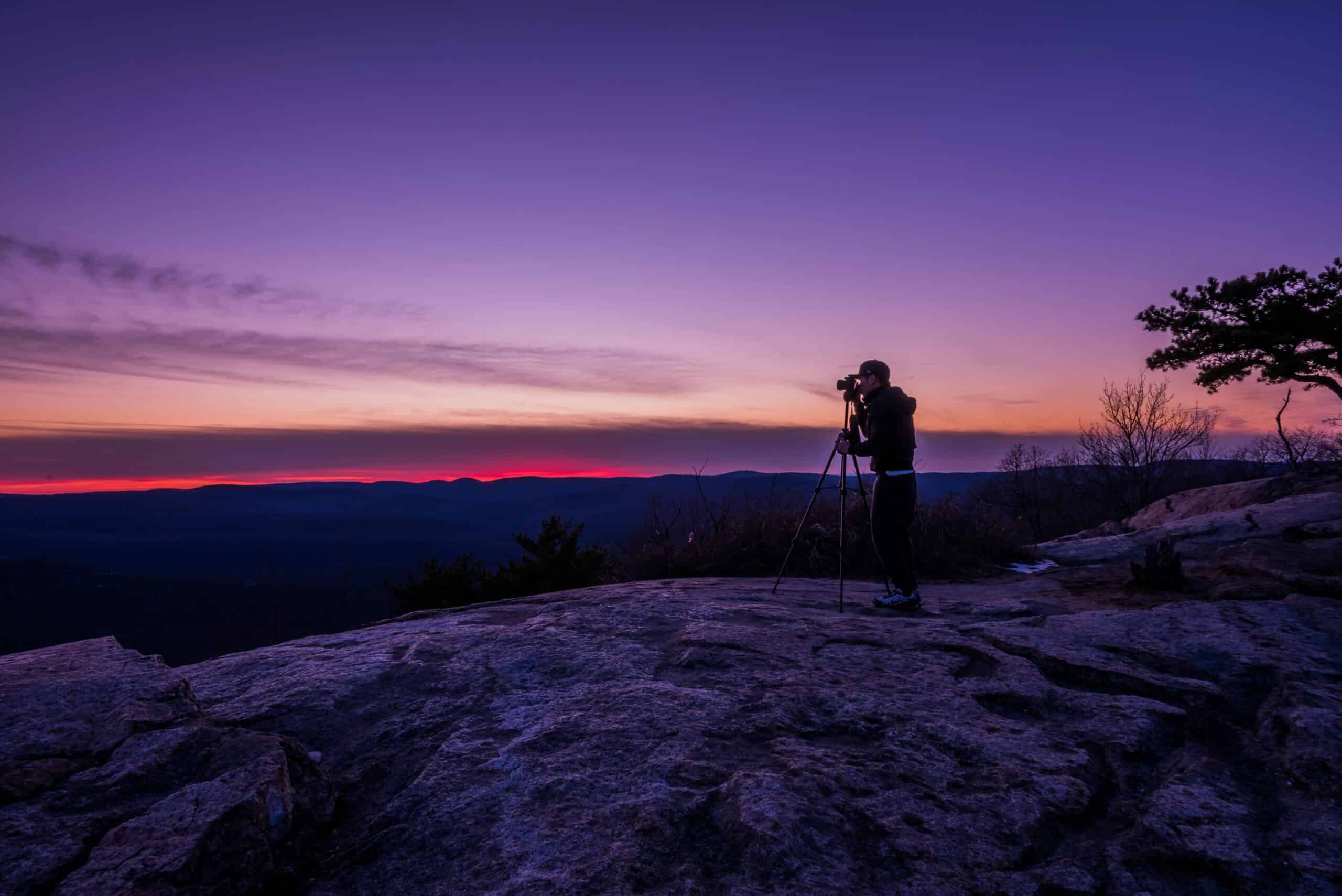
Quick Setup Overview
- Camera: Canon EOS R6 Mark II — Full-frame (36 × 24 mm), 24.2MP, ~14-stop DR at ISO 100, excellent low-light performance.
- Lens: Canon RF 15–35mm f/2.8L IS USM — Rectilinear ultra-wide zoom; sharpest around f/5.6–f/8; good CA control; optical IS.
- Estimated shots & overlap (tested patterns):
- At 15mm for full 360×180: 6 shots per row × 3 rows (−50°, 0°, +50°) + zenith + nadir = ~20 shots with ~30% overlap.
- At 15mm, safety pattern for busy scenes: 8 shots per row × 3 rows + Z/N = ~26 shots (more overlap, easier stitches).
- At 24–35mm for high-res: expect 8–9 shots per row × 3–5 rows + Z/N = ~26–47 shots (gigapixel potential).
- Difficulty: Moderate (rectilinear ultra-wide is straightforward if you align the nodal point; more frames than fisheye).
Planning & On-Site Preparation
Evaluate Shooting Environment
Walk the scene first. Note light direction, moving objects (trees, people, vehicles), reflective or transparent surfaces (glass, polished stone), and potential stitching challenges like repeating textures. For windows or glass walls, shoot at a slight angle and keep the front element a reasonable distance away (10–30 cm) to reduce flare and ghosting. If shooting into the sun, plan your rotation so you bracket near the brightest area to manage dynamic range.
Match Gear to Scene Goals
If your goal is crisp indoor real estate or architectural 360 photos, the RF 15–35’s rectilinear rendering prevents bowing lines. The R6 Mark II’s dynamic range gives you flexibility in bright-window interiors—bracket ±2 EV when needed. In low light, ISO 100–400 is optimal; ISO 800 remains very usable on the R6 Mark II with careful exposure. For event or city scenes with movement, consider the 8-around safety pattern per row for more overlap and easier masking of moving subjects.
Pre-shoot Checklist
- Power & storage: fully charged batteries, ample high-speed cards. Format cards before the session.
- Optics & sensor: clean lens front/rear; check sensor for dust (f/16 test shot on plain wall/sky).
- Tripod & pano head: level the base; verify nodal point calibration marks for 15mm and a mid-zoom setting (e.g., 24mm).
- Safety: on rooftops or windy areas, weigh the tripod and use a safety tether. Avoid extending the center column if possible.
- Backup workflow: shoot a second pass (especially for client work) and keep a redundant card or backup drive.
Essential Gear & Setup
Core Gear
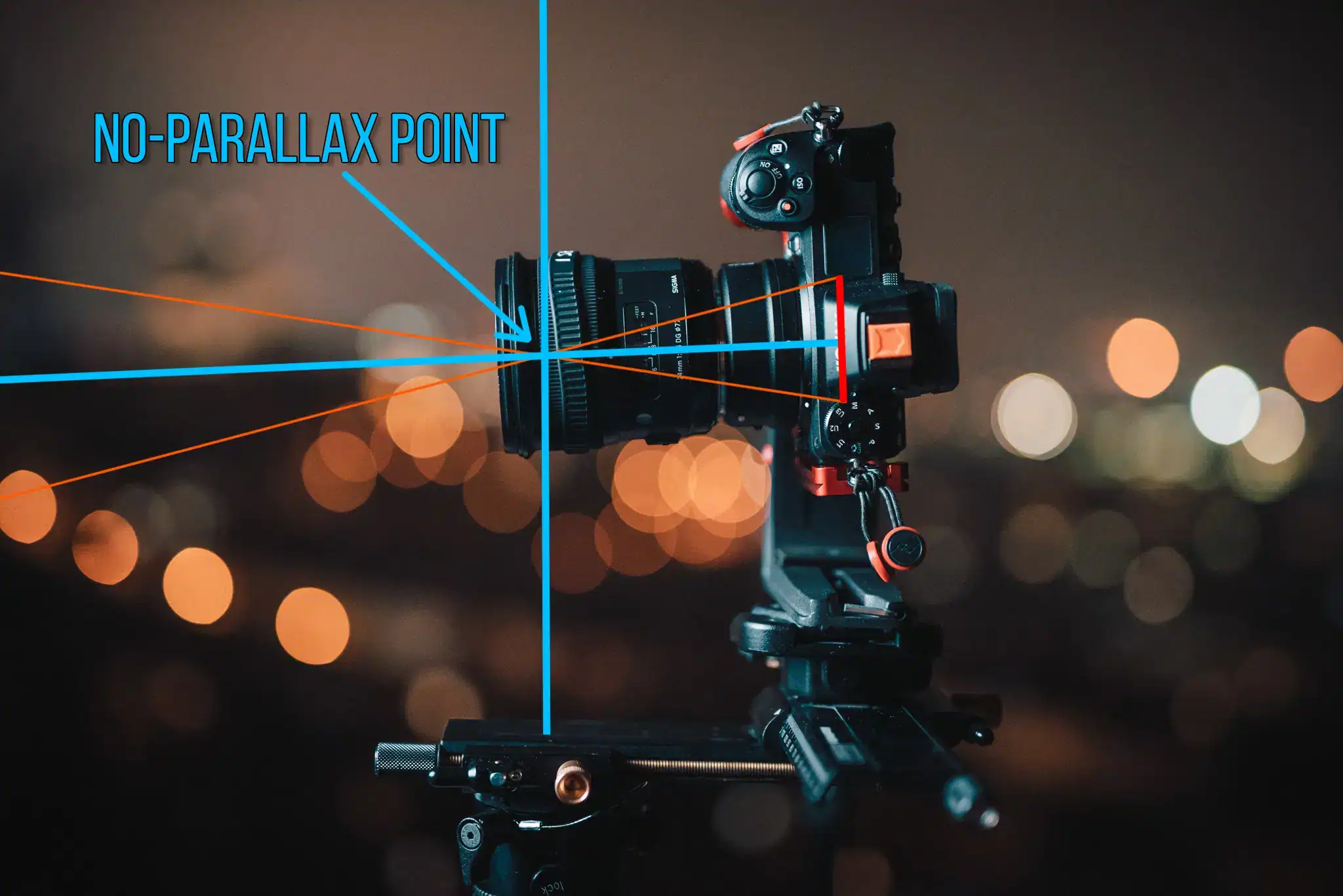
- Panoramic head: A proper panoramic head lets you align the lens’s entrance pupil (nodal point) over the rotation axis to minimize parallax. This is critical for stitching indoor scenes with near objects and straight lines.
- Stable tripod with leveling base: A leveling base speeds up setup and helps maintain even rows, reducing corrections later.
- Remote trigger or Canon Camera Connect app: Trigger shots without touching the camera to prevent micro-vibrations.
Optional Add-ons
- Pole or car mount: Great for rooftop, street or elevated shots. Always tether the camera, check wind gusts, and keep rotations smoother and slower due to vibration risk.
- Lighting aids: LED panels or flash for interior shadows; keep lighting consistent across frames.
- Weather protection: Rain cover, microfiber cloths, and a small blower for dust or drizzle.
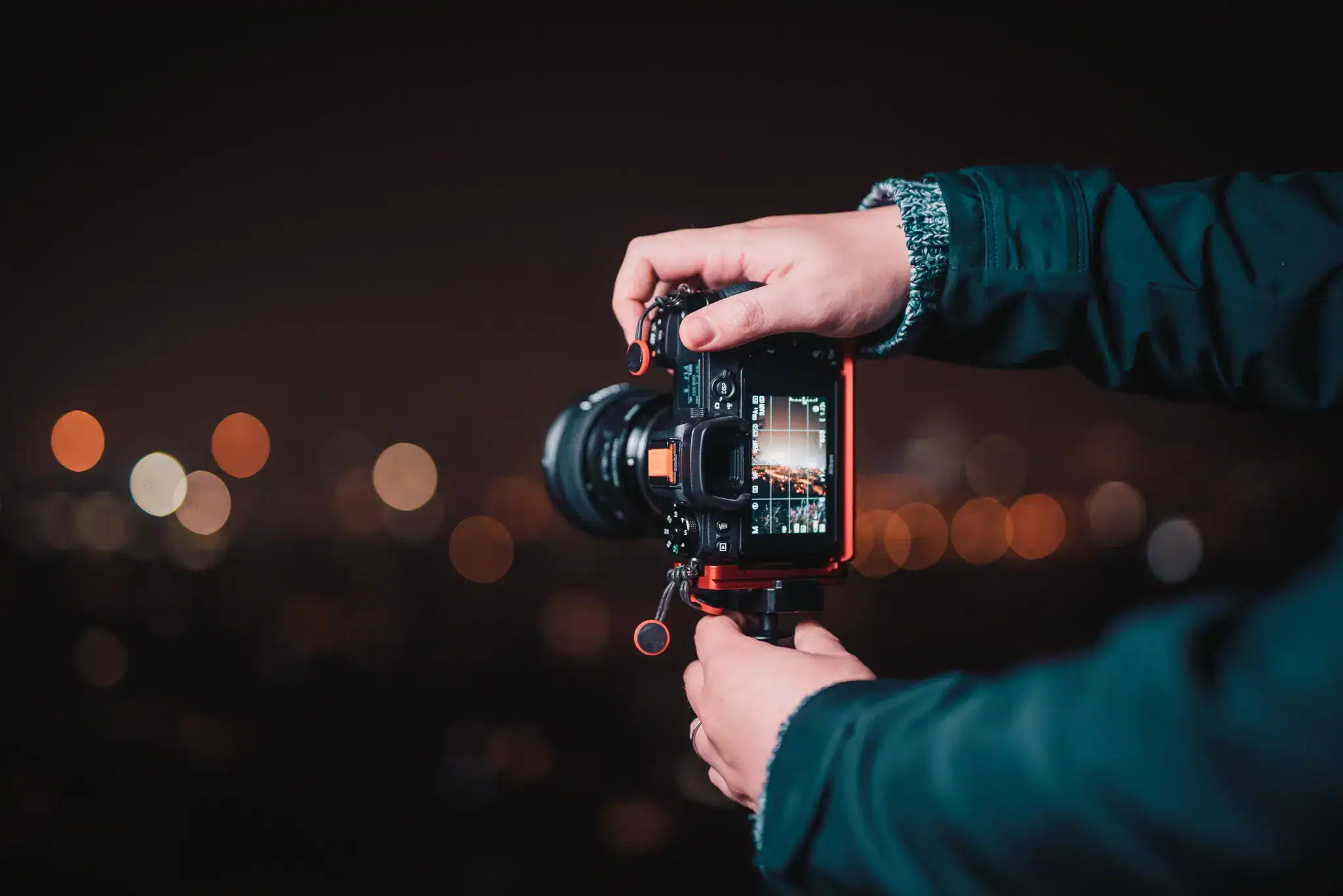
Video: Setting Up a Pano Head
Seeing nodal alignment done in real time helps. The walkthrough below shows the practical steps and what to look for while adjusting.
For a deeper dive into panoramic heads and alignment, this panoramic head tutorial provides solid fundamentals. Panoramic head tutorial
Step-by-Step Shooting Guide
Standard Static Scenes
- Level and align: Level the tripod with the leveling base. Mount the panoramic head and adjust fore-aft so the lens’s entrance pupil sits exactly over the rotation axis. Use two light stands or poles to verify parallax—objects should not shift relative to each other when you pan.
- Manual exposure & WB: Set Manual mode and lock white balance (e.g., Daylight, Tungsten) to avoid exposure or color flicker. Shoot RAW for maximum latitude.
- Focus: Switch to MF. At 15mm and f/8, set focus just shy of the hyperfocal (≈0.9–1.0 m) to keep near-to-infinity sharp. Confirm with magnified live view.
- Overlap & capture: At 15mm, capture 6 frames per row with ~30% overlap: one row at 0°, then +50° and −50°. Finish with zenith (straight up) and nadir (straight down). If the scene is complex or windy, use 8 frames per row for extra overlap.
- Nadir shot: After the main rotation, tilt down for a clean nadir shot that you can use for tripod removal or patching.
HDR / High Dynamic Range Interiors
- Bracketing: Use AEB with ±2 EV (3 or 5 frames) to balance bright windows and interior shadows. Keep interval short to reduce movement between brackets.
- Consistency: Keep WB locked and disable any auto lighting optimizer. Use the same aperture (e.g., f/8) across all frames and only vary shutter speed.
Low-Light / Night Scenes
- Long exposures: Use the tripod; turn off both lens IS and IBIS to prevent micro jitter. On the R6 Mark II, enable electronic first curtain shutter (EFCS) for minimal vibration.
- ISO guidance: ISO 100–400 is ideal; ISO 800 remains clean on the R6 Mark II. If you must push to ISO 1600–3200, expose to the right and apply gentle noise reduction later.
- Remote triggering: Use a remote or 2-second self-timer; avoid touching the camera during the rotation.
Crowded Events
- Two passes: Make one fast pass for coverage, then a second pass waiting for gaps in the crowd. More overlap (8 around) makes it easier to mask people later.
- Masking: In PTGui or similar, use masks to remove duplicates or ghosting from moving subjects.
Special Setups (Pole / Car / Elevated)
- Secure everything: Use clamps rated for your gear, safety tethers, and test for vibrations. Keep ISO a touch higher to maintain faster shutter speeds and limit motion blur.
- Rotate slower: When the mount is not perfectly rigid (poles, vehicles), rotate more slowly and consider shooting extra overlap for safety.
Field-Tested Scenarios
Indoor Real Estate
Use f/8 at ISO 100–200; bracket ±2 EV for windows. 6 around per row works, but 8 around is safer for glossy floors and glass reflections. Watch for tripod reflections in mirrors—shoot a separate frame with the head rotated away for patching.
Outdoor Sunset
Expose the sky just to the right without clipping highlights, then keep the same settings across the set. If the sun moves rapidly or clouds race by, prioritize speed: fewer rows or slightly higher ISO (400–800) helps maintain consistency.
Event Crowds
Keep shutter at 1/200–1/250 to freeze people on the first pass. On the second pass, wait for gaps to simplify masking. Avoid parallax by ensuring nodal alignment, especially with near subjects.
Rooftop / Pole Shooting
Wind is your enemy. Shorten the pole, add guy lines if possible, and use 8-around per row for extra redundancy. Lock focus at a distance and avoid re-focusing mid-set.
Car-Mounted Capture
Do not shoot while moving if you need perfect stitches. Park safely, shut off the engine, let vibrations settle, then shoot with higher overlap. Use a safety tether and check local regulations.
Recommended Settings & Pro Tips
Exposure & Focus
| Scenario | Aperture | Shutter | ISO | Notes |
|---|---|---|---|---|
| Daylight outdoor | f/8–f/11 | 1/100–1/250 | 100–200 | Lock WB (Daylight); RAW for latitude |
| Low light/night | f/4–f/5.6 | 1/15–1/60 | 400–800 | Tripod; IBIS/IS OFF on tripod; use remote |
| Interior HDR | f/8 | Bracket ±2 EV | 100–400 | Balance windows & lamps; keep aperture fixed |
| Action / crowds | f/5.6–f/8 | 1/200+ | 400–800 | Freeze motion; extra overlap helps masking |
Critical Tips
- Manual focus at hyperfocal: At 15mm, f/8, hyperfocal ≈ 0.9–1.0 m; set focus slightly before 1 m for front-to-back sharpness.
- Nodal calibration: Place two vertical objects (one near, one far) and pan. Adjust fore-aft on the rail until no relative shift is seen. Mark your rail for 15mm and a mid-zoom point (e.g., 24mm).
- White balance lock: Consistent WB prevents color seams in stitching. RAW still benefits from a steady starting point.
- RAW over JPEG: RAW retains dynamic range and color depth, crucial for interior HDR or night scenes.
- Stabilization on tripod: Turn off IBIS and lens IS when mounted solidly. Use EFCS to avoid shutter shock; avoid full electronic shutter under flickering lights.
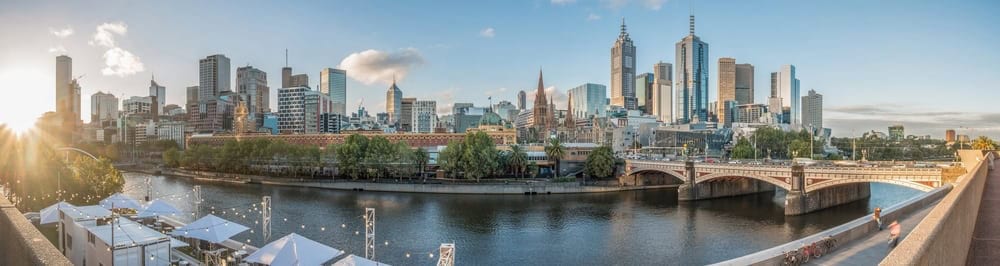
Stitching & Post-Processing
Software Workflow
For this rectilinear ultra-wide setup, PTGui is a top choice thanks to robust control point optimization, masking, and viewpoint correction. Hugin is an excellent open-source alternative. Lightroom/Photoshop can stitch simpler single-row panoramas, but complex multi-row spheres with HDR brackets are best handled by dedicated pano tools. Typical overlap recommendations: ~20–25% for rectilinear lenses and ~25–30% for fisheye. With the RF 15–35mm, aim for ~30% to give the solver more data around edges. For an overview of why PTGui is widely used in pro workflows, see this review. PTGui review and features
Cleanup & Enhancement
- Nadir patch: Use PTGui’s Viewpoint Correction or export to Photoshop for content-aware fill. Several AI tools can remove tripods cleanly.
- Color and noise: Sync white balance and basic tone settings across frames; apply conservative noise reduction for night scenes.
- Leveling: Use horizon tools in PTGui/Hugin to correct roll/pitch/yaw; verify your verticals in interior spaces.
- Export: For VR platforms, export equirectangular 2:1. Common sizes are 8K (7680×3840), 12K, or 16K depending on your frame count and overlap.
For end-to-end 360 publishing basics with DSLR/mirrorless, including upload requirements, this official guide is handy. Using a mirrorless to shoot and stitch a 360 photo
Useful Tools & Resources
Software
- PTGui panorama stitching
- Hugin (open source)
- Lightroom / Photoshop (basic pano and finishing)
- AI tripod removal tools (content-aware fill and inpainting)
Hardware
- Panoramic heads (Nodal Ninja, Leofoto, Sunwayfoto)
- Carbon fiber tripods with leveling base
- Wireless remote shutters or Canon Camera Connect app
- Pole extensions / car mounts with safety tethers
Disclaimer: brand names provided for research; always verify compatibility and follow the manufacturer’s instructions.
For general best practices and community knowledge, this Q&A thread remains a classic resource. Techniques to take 360 panoramas
Common Mistakes & How to Avoid Them
- Parallax error → Carefully align the entrance pupil; verify with near/far objects before shooting.
- Exposure or color flicker → Use Manual exposure and locked white balance across all frames.
- Tripod shadows and reflections → Shoot extra nadir/alternate frames for patching; watch for mirrors and glass.
- Ghosting from moving subjects → Use more overlap and mask in post; shoot double passes if needed.
- Night noise and blur → Keep ISO low, use a remote, disable IS on tripod, and consider ETTR (expose to the right).
- Insufficient overlap → Err on the side of more overlap (30%+), especially at 15mm where edges can be complex.
Frequently Asked Questions
- Can I shoot handheld panoramas with the Canon EOS R6 Mark II?
Yes for simple, single-row panos, but for full 360×180 and precise interiors, use a tripod and panoramic head. Handheld introduces pitch/roll variations and parallax, making stitching less reliable.
- Is the RF 15–35mm wide enough for a single-row 360?
Not for true 360×180. At 15mm rectilinear, you’ll need multi-row capture to cover zenith and nadir cleanly. A fisheye can do single-row 360s with fewer shots, but will distort straight lines.
- Do I need HDR for interiors with bright windows?
Often yes. Bracket ±2 EV (3 or 5 frames) to retain highlight detail in windows while keeping interior shadows clean. Keep aperture and WB fixed; vary shutter speed only.
- How do I avoid parallax issues with this lens?
Calibrate the entrance pupil at 15mm on your panoramic head. Use two vertical reference objects and pan; adjust the rail until no relative shift occurs. Mark the correct fore-aft position for quick setups next time.
- What ISO range is safe on the R6 Mark II for low light panoramas?
ISO 100–400 is optimal; ISO 800 is still very clean. You can push to 1600–3200 for handheld or event work, but use careful noise reduction in post.
Safety, Limitations & Backup Strategy
Wind and crowds can turn a simple pano into a hazard. Always weigh down the tripod, keep the center column retracted, and use a tether on rooftops or bridges. For pole or car-mounted work, check mounts frequently, add safety lines, and confirm local laws and permits. On the technical side, remember that rectilinear 15mm requires more frames than a fisheye; plan extra time on site and in post. For mission-critical jobs, shoot a full backup set—especially the nadir and any glass-heavy angles—and maintain a 3-2-1 backup of your files after the shoot.
Final Notes: How to shoot panorama with Canon EOS R6 Mark II & Canon RF 15–35mm f/2.8L IS USM
To summarize how to shoot panorama with Canon EOS R6 Mark II & Canon RF 15–35mm f/2.8L IS USM: level the tripod, align the nodal point, lock exposure and white balance, focus manually near the hyperfocal, and capture multi-row frames with ~30% overlap. Bracket when needed for windows and night scenes, and stitch in PTGui or Hugin with careful masking. This combo excels for straight-line architecture and interior work while remaining versatile for outdoor landscapes, events, and elevated shots.