Why This Camera & Lens Are Great for Panoramas
If you’re wondering how to shoot panorama with Canon EOS R5 & Tokina ATX-i 11-20mm f/2.8, you’re pairing a professional-grade full-frame body with a proven ultra‑wide rectilinear zoom. The Canon EOS R5 brings a 45MP full-frame sensor (36 × 24 mm), excellent dynamic range (~14 stops at ISO 100), and clean ISO performance that stays trustworthy up to ISO 800–1600 for most pano work. Its pixel pitch (~4.4 μm) holds fine detail well, which matters when you stitch multiple frames into a high-resolution 360 photo. The Tokina atx‑i 11–20mm f/2.8 is an APS‑C rectilinear lens; when you adapt it via EF‑EOS R, the R5 automatically switches to APS‑C crop. That means your captures are around 17–18 MP per frame, but with the advantage of a very wide field of view and minimal fisheye distortion—great for architectural lines and interiors.
Rectilinear lenses like the Tokina preserve straight lines but require more frames than a fisheye to complete a full 360×180. The constant f/2.8 aperture helps in low-light interiors, while the lens is typically sharp in the center by f/4 and across the frame by f/5.6–f/8 (on APS‑C crop). Chromatic aberration and barrel distortion at 11mm are moderate and correctable in post. With the EOS R5’s robust manual controls, excellent Live View, focus peaking, and compatibility with panoramic heads, this combo can deliver clean, detailed 360° panoramas indoors and outdoors.
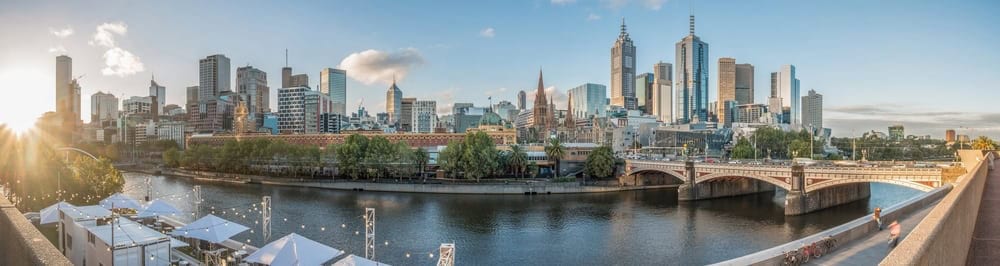
Quick Setup Overview
- Camera: Canon EOS R5 — Full‑frame 45MP sensor (~4.4 μm pixel pitch), ~14 stops DR at ISO 100; APS‑C crop engaged automatically with EF‑S lenses (~17–18 MP output per frame).
- Lens: Tokina atx‑i 11–20mm f/2.8 (APS‑C, rectilinear) — constant f/2.8, best across‑frame sharpness around f/5.6–f/8; mild barrel distortion and some CA at the wide end, correctable in post.
- Estimated shots & overlap (tested guides, 25–35% overlap):
- At 11mm (APS‑C crop): 8 around (0° pitch) + 1–2 zenith + 1 nadir; or 2 rows of 8 (±35–45°) + nadir for full coverage and cleaner zenith.
- At 15–20mm: 10–12 around + zenith + nadir; consider 2-row capture for better vertical coverage.
- Difficulty: Intermediate (nodal calibration required for best results).
For planning shot counts vs FOV and intended resolution, the PanoTools DSLR spherical resolution reference is a helpful baseline.
Planning & On-Site Preparation
Evaluate Shooting Environment
Scan for moving elements (people, cars, leaves), reflective surfaces (windows, polished floors), and bright light sources (sun, street lamps). If shooting through glass, keep the lens as perpendicular and close to the pane as possible to reduce reflections and ghosting; a few centimeters from glass can produce internal reflections—if possible, touch the hood to the glass (with a clean microfiber buffer) and shade stray light with your hand.
Match Gear to Scene Goals
The EOS R5’s dynamic range helps you retain highlight detail in windows while lifting shadows cleanly, especially if you bracket for HDR. Indoors, safe ISO is typically 100–800 on this body; 1600 is acceptable if your tripod time is limited. The Tokina at 11mm reduces the number of shots needed versus longer focal lengths and maintains rectilinear geometry—ideal for interiors, real estate, and architectural panoramas where curving straight lines is undesirable. Compared with a fisheye, you’ll shoot more frames, but get more natural edges and simpler line correction.
Pre-shoot Checklist
- Charge batteries; bring spares. Format fast UHS‑II cards; enable dual-card backup if available.
- Clean lens and sensor; inspect for dust spots that will multiply across frames.
- Level tripod and verify panoramic head calibration (nodal/entrance-pupil alignment) before the job.
- Safety: check wind gusts for rooftop or pole work, secure tethers, and avoid overhanging public paths.
- Workflow insurance: shoot a second pass if time allows (different yaw starting point), especially for critical work.
Field Case Studies
Indoor Real Estate
Use 11–13mm for maximum coverage. Bracket ±2 EV (3–5 frames) to balance bright windows and interior shadows. Lock white balance to a fixed preset (Daylight/Tungsten) to avoid color shifts across frames.
Outdoor Sunset
Meter for the highlights near the sun, then bracket or expose-to-the-right for a second pass if time permits. Expect moving elements—shoot faster shutter speeds (1/125–1/250) to minimize ghosting in trees and water.
Event Crowds
Capture two passes: one continuous around for geometry, then a second pass while waiting for gaps to reduce moving subject overlap. You’ll mask in post.
Rooftop or Pole Shooting
Wind is the enemy. Lightweight carbon tripods and a guy-line on the pole reduce sway. Use faster shutter speeds and consider ISO 400–800 to keep exposures short.
Essential Gear & Setup
Core Gear
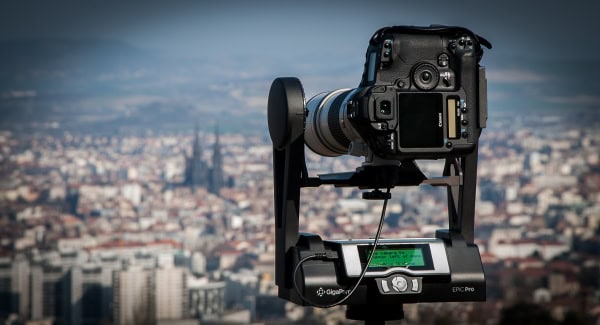
- Panoramic head: Aligns the camera’s rotation axis with the lens’s entrance pupil (nodal point) to eliminate parallax. Essential for interiors and near‑field objects.
- Stable tripod with leveling base: A leveling base speeds setup and keeps yaw increments consistent.
- Remote trigger or Canon Camera Connect app: Minimizes vibration and camera shake.
Optional Add-ons
- Pole or car mount: Use safety tethers and consider wind loading; keep speeds low and plan routes for car mounts.
- Lighting for interiors: Small LED panels to lift deep shadows in non‑HDR workflows.
- Weather protection: Rain covers and microfiber cloths to manage drizzle, sea spray, or fogging.
No-Parallax Point (Entrance Pupil) Basics
To avoid stitching errors in scenes with foreground objects (chairs, railings), the camera must rotate around the lens’s entrance pupil. With the Tokina 11–20, the entrance pupil shifts slightly with focal length—recalibrate if you change zoom. Use a rail on the pano head and the classic “near/far object” test: align a close object with a distant edge, rotate 30–45°, and slide the camera forward/back until the alignment does not shift.
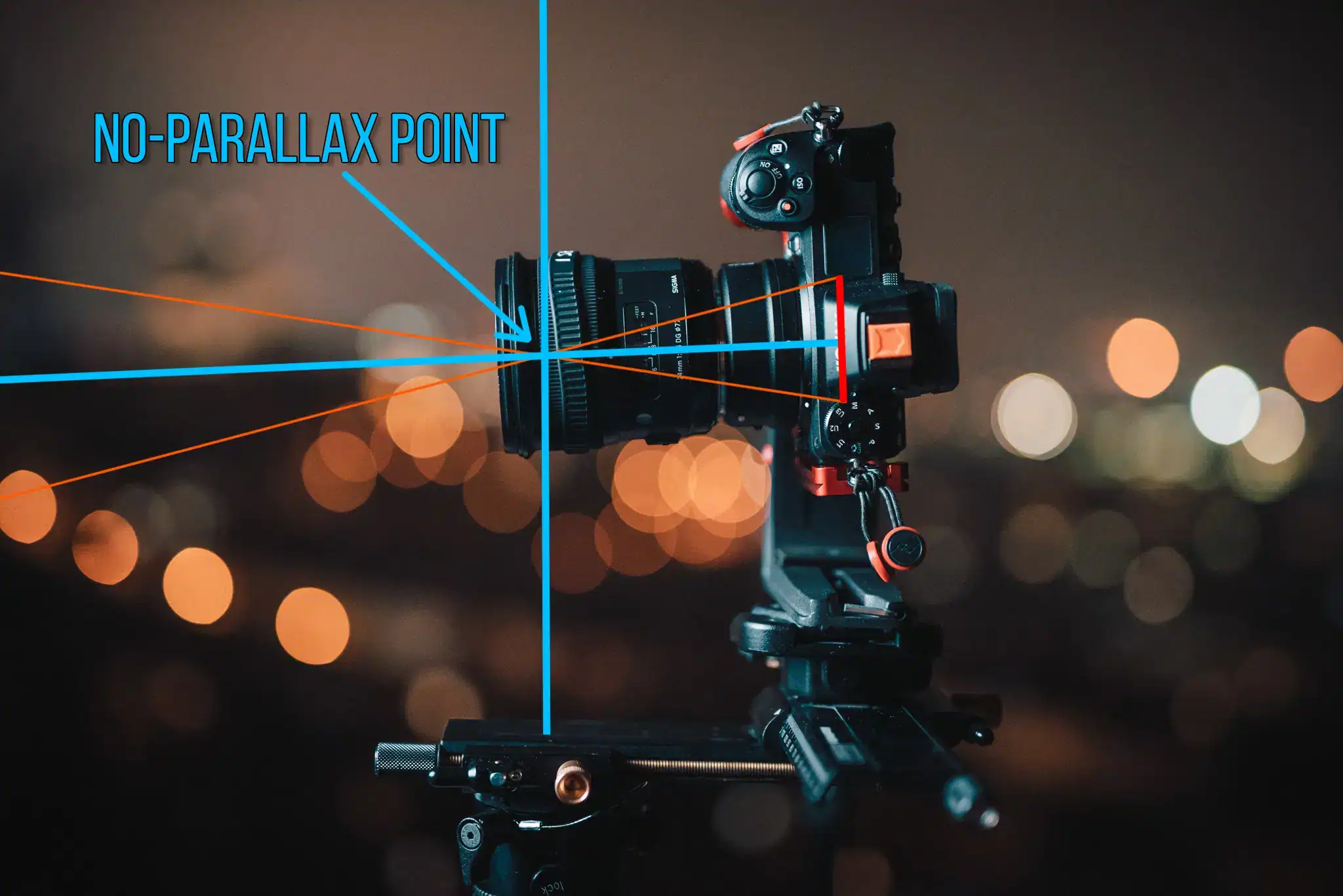
For a deeper dive on panoramic heads and entrance pupil alignment, see this practical panoramic head tutorial.
Step-by-Step Shooting Guide
Standard Static Scenes
- Level and lock: Level your tripod using the leveling base. Ensure the pano head’s yaw axis is vertical.
- Align the nodal point: Use your saved rail marks for Tokina 11mm. Re‑check alignment if you change to 15–20mm.
- Manual exposure and WB: Switch to Manual mode; meter a mid‑tone area and set exposure. Lock a fixed white balance preset. Disable Auto Lighting Optimizer and lens corrections in‑camera to maintain consistency (do in post).
- Focus: Use manual focus with focus peaking. At 11mm and f/8 on APS‑C crop, set near the hyperfocal (~0.8–1.0 m) for sharpness from ~0.5 m to infinity.
- Capture sequence:
- 11mm: 8 shots around at 45° yaw increments with ~30% overlap.
- Zenith: Tilt up +45° and take 1–2 shots to cover the ceiling/sky.
- Nadir: Tilt down and take 1 shot for tripod removal, or capture a handheld patch plate.
- Notes: Turn off IBIS on a tripod to avoid sensor micro‑drift. Use 2‑sec timer or remote release.
HDR / High Dynamic Range Interiors
- Bracket ±2 EV (3–5 frames): The R5 supports AEB; 5 frames at 2 EV spacing handles bright windows and interior lamps.
- Keep WB fixed: A single white balance across brackets prevents color flicker.
- Shoot all brackets per yaw position before rotating: This keeps motion differences easier to manage in post.
Low-Light / Night Scenes
- Exposure strategy: Use f/4–f/5.6, increase exposure time (e.g., 1–4 s), and keep ISO in the 100–800 range on the R5. Go to ISO 1600 only if wind or movement demands shorter shutter speeds.
- Stability: Use remote trigger, mirrorless silent shutter if available, and ensure the pano head clamps are tight.
- Color cleanliness: Shoot RAW; apply noise reduction and color cleanup later.
Crowded Events
- Two-pass method: First pass for structure, second pass waiting for gaps to reduce overlap of moving subjects.
- Faster shutter: 1/200–1/500 sec helps freeze motion; raise ISO to 400–800 if needed.
- Post masking: Expect to mask people between frames in PTGui/Hugin to avoid ghosts.
Special Setups (Pole / Car / Drone)
- Pole: Use a safety tether, minimize exposure time, and avoid gusty conditions. Spin slower and let vibrations settle between shots.
- Car: Secure a suction‑cup mount to clean glass/metal, double‑safety with a tether, and plan low‑speed routes to reduce motion blur.
- Drone: This lens/body combo is not for drones; use a gimbal‑stabilized drone camera with nadir coverage instead.
Watch: Solid Fundamentals of Panoramic Capture
Video primer reinforcing nodal alignment, overlap, and exposure consistency.
Recommended Settings & Pro Tips
Exposure & Focus
| Scenario | Aperture | Shutter | ISO | Notes |
|---|---|---|---|---|
| Daylight outdoor | f/8–f/11 | 1/100–1/250 | 100–200 | Lock WB to Daylight; avoid clipping highlights near sun |
| Low light/night | f/4–f/5.6 | 1/4–1 s (tripod) | 100–800 | Use remote trigger; IBIS off on tripod |
| Interior HDR | f/8 | Bracket ±2 EV | 100–400 | 5‑frame AEB simplifies window control |
| Action / moving subjects | f/5.6–f/8 | 1/200+ | 400–800 | Double pass and mask in post |
Critical Tips
- Manual focus at or near hyperfocal: At 11mm f/8 on APS‑C crop, ~0.8–1.0 m keeps most scenes sharp to infinity.
- Nodal calibration: Create and mark rail positions for 11mm, 14mm, and 20mm. Reconfirm if you change zoom mid‑shoot.
- White balance: Lock to a preset or Kelvin value. Mixed lighting? Choose a neutral Kelvin (e.g., 4200–4800K) and correct locally in post.
- RAW over JPEG: Maximizes dynamic range and color flexibility for stitching and HDR merging.
- IBIS and IS: Turn off stabilization on a tripod to avoid micro‑jitter. Handheld panos? Leave IBIS on and shoot fast.
Stitching & Post-Processing
Software Workflow
Import RAWs into Lightroom or your preferred RAW converter. Apply consistent lens corrections and color profiles across the set. Export 16‑bit TIFFs for best stitch quality, then stitch in PTGui (industry standard for complex 360°), Hugin (open source), or alternatives. Rectilinear lenses need more frames and careful control points, but they preserve architectural lines beautifully. Typical overlap: 25–35% for rectilinear (20–25% minimum). Fisheye generally needs fewer shots but introduces extreme edge stretching and a different workflow.
PTGui offers robust control point optimization, vertical line constraints, and masking tools for moving subjects—excellent for events and interiors where parallax or ghosting is likely. For a thorough overview of PTGui’s strengths, see this Fstoppers review of PTGui. For creators targeting VR delivery, Oculus provides a succinct guide to DSLR/mirrorless 360 capture and stitching best practices: Using a DSLR or mirrorless camera to shoot and stitch a 360 photo.
Cleanup & Enhancement
- Nadir patch: Clone stamp in Photoshop or use AI/object removal tools. A dedicated handheld nadir shot makes patching seamless.
- Color polish: Adjust WB globally, then selectively correct mixed lighting. Apply modest noise reduction for low‑light frames.
- Level horizon: Use vertical line constraints and roll/pitch/yaw adjustments to lock the horizon and verticals.
- Output: Export equirectangular (2:1) JPEG/TIFF—common sizes range from 8000×4000 to 16000×8000 depending on your stitch and intended platform.
Tip: Document any exposure or focus variations in your metadata or notes; it speeds troubleshooting later. Always verify your chosen software’s latest features and workflow documentation, as updates can change steps and options.
Useful Tools & Resources
Software
- PTGui panorama stitching
- Hugin (open source)
- Lightroom / Photoshop for RAW processing and retouching
- AI tripod/nadir removal tools (Content-Aware Fill, Generative AI)
Hardware
- Panoramic heads (Nodal Ninja, Leofoto)
- Carbon fiber tripods & leveling bases
- Wireless remote shutters or intervalometers
- Pole extensions / car mounts with safety tethers
For a practical grounding in pano theory and technique, the Q&A on best techniques to take 360 panoramas is also worth a read.
Common Mistakes & How to Avoid Them
- Parallax error → Calibrate nodal point and avoid shifting the tripod between shots.
- Exposure flicker → Use Manual mode and a fixed white balance; disable auto tone curves.
- Tripod shadows or self‑appearance → Shoot a nadir frame and patch later; step away from reflections.
- Ghosting from movement → Use masking in PTGui/Hugin; shoot a second pass to get clean regions.
- High ISO noise at night → Prefer longer exposures on a solid tripod; keep ISO ≤800 when feasible.
- IBIS artifacts on tripod → Turn stabilization off when the camera is locked down.
Frequently Asked Questions
- Can I shoot handheld panoramas with the Canon EOS R5?
Yes, for quick partial panos. Use fast shutter speeds (1/250+), IBIS on, and high overlap (40–50%). For perfect 360×180 panos—especially indoors—use a tripod and pano head to eliminate parallax.
- Is the Tokina ATX‑i 11–20mm wide enough for single‑row 360?
At 11mm on the R5’s APS‑C crop, you can do an 8‑around single row and add 1–2 zenith frames plus a nadir. For cleaner zenith coverage, a two‑row approach (e.g., ±35–45°) is more reliable.
- Do I need HDR for interiors with bright windows?
Usually yes. Bracket ±2 EV (3–5 frames) to preserve highlights and lift shadows cleanly. The R5’s DR is excellent, but HDR ensures consistent results in high‑contrast rooms.
- How do I avoid parallax issues with this lens?
Use a panoramic head and align the entrance pupil. Calibrate at your chosen focal length (11mm vs 20mm differ). Mark your rail positions so you can reproduce them quickly in the field.
- What ISO range is safe on the EOS R5 for low light panos?
ISO 100–800 is the sweet spot on a tripod. ISO 1600 is workable if you need to shorten exposures. Prioritize longer shutter speeds over higher ISO when possible.