
Why This Camera & Lens Are Great for Panoramas
If you’re wondering how to shoot panorama with Canon EOS R5 & Sigma 14-24mm f/2.8 DG DN Art, you’re on the right track for ultra-wide coverage and high-resolution results. The Canon EOS R5’s 45MP full-frame sensor (36×24 mm, ~4.39 µm pixel pitch) delivers excellent detail and color depth, with approximately 13–14 stops of usable dynamic range at base ISO for smooth HDR blends. Dual Pixel CMOS AF II makes quick prefocus easy before switching to manual for the pano sweep, and the body’s ergonomics and customizable controls help lock settings fast.
Important compatibility note: the Sigma 14-24mm f/2.8 DG DN Art is made for Sony E and L-mount. There is no native Canon RF version. To run a similar setup on EOS R5, most panorama shooters use the Sigma 14-24mm f/2.8 DG HSM Art (EF mount) via Canon’s EF–RF adapter. The optical behavior (sharpness, field of view, vignetting patterns) is very similar between the DN and HSM versions, so all shooting techniques and overlap recommendations below still apply. If you do have the DN version, it won’t mount on the R5 without third-party conversions; consider the EF HSM Art version or Canon RF 15-35mm f/2.8 as practical alternatives.
As a rectilinear ultra-wide zoom, the Sigma 14-24 renders straight lines without fisheye curvature, which helps architectural work. At 14mm, you’ll cover a huge field of view with good corner sharpness by f/5.6–f/8. Be mindful that rectilinear lenses stretch edges; plan your overlap generously and avoid letting important details live at the extreme frame edges if possible.
Quick Setup Overview
- Camera: Canon EOS R5 — Full Frame, 45MP, ~4.39 µm pixel pitch, excellent color and DR at ISO 100–400.
- Lens: Sigma 14-24mm f/2.8 DG DN Art — Rectilinear UWA zoom; sharp by f/5.6–f/8, minimal distortion for UWA, bulbous front element (no screw-in filters). Note: use Sigma 14-24mm f/2.8 DG HSM Art (EF) on an EF–RF adapter for actual R5 mount compatibility.
- Estimated shots & overlap (full 360×180 sphere, rectilinear):
- At 14mm: 6–8 shots around at +30°, 6–8 at −30°, plus 1 zenith, 1 nadir (total ≈ 14–18). Conservative method: 8+8+2 = 18.
- At 18–20mm: 8 shots per row × 2–3 rows + zenith + nadir (≈ 18–26 total).
- At 24mm: 7–8 shots per row × 3 rows + zenith + nadir (≈ 23–26 total).
- Recommended overlap: 25–35% horizontally and 25–35% vertically for robust stitching.
- Difficulty: Intermediate — rectilinear pano requires nodal calibration and multi-row capture.
Planning & On-Site Preparation
Evaluate Shooting Environment
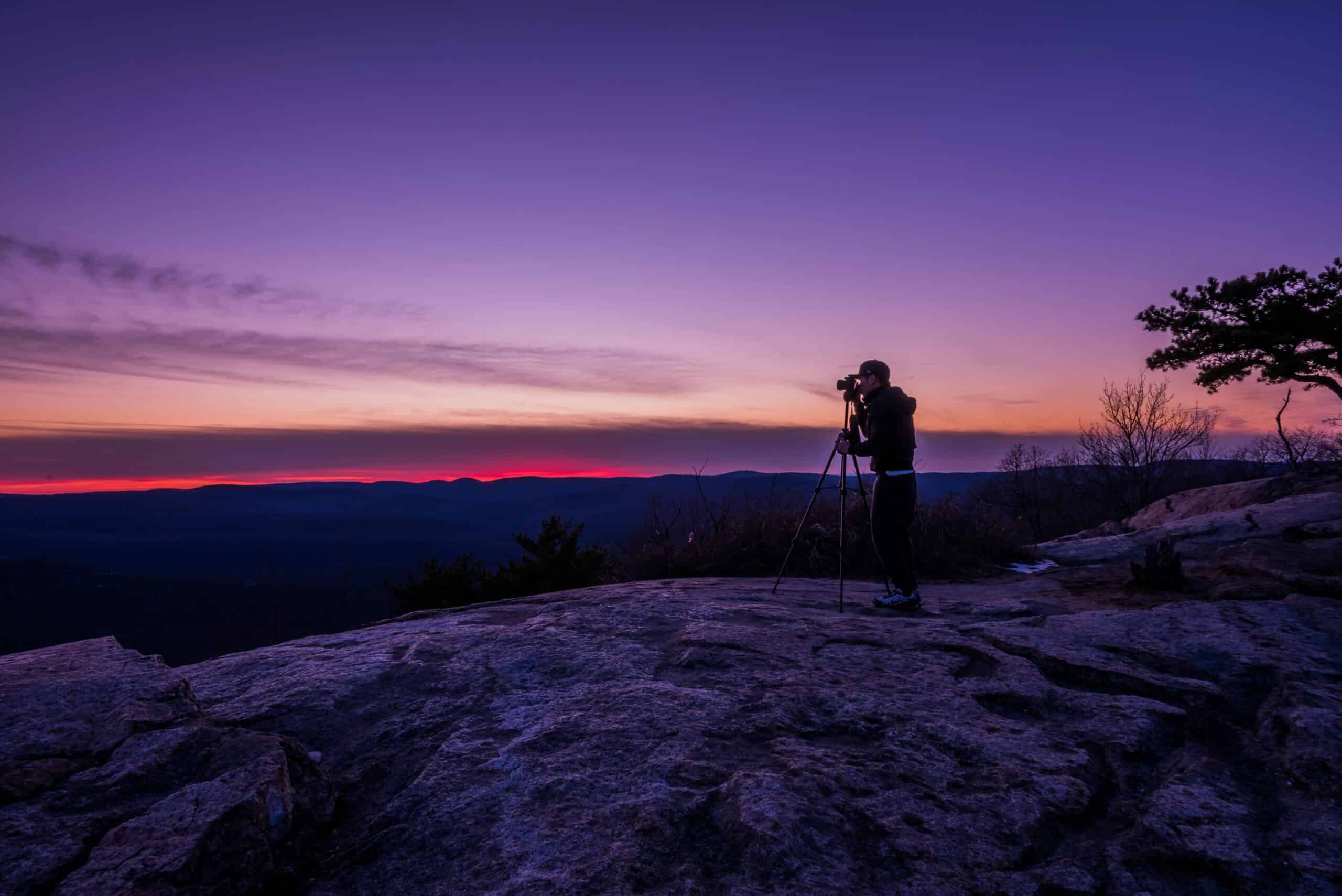
Check light direction and contrast, identify potential flare sources, and note reflective surfaces like glass or polished floors that can create ghosting across frames. If shooting through glass, get the front element close (1–3 cm) and shoot at an angle to avoid reflections. Outdoors, assess wind and tripod stability, especially on rooftops or over water. For sunsets and city lights, plan for bracketed exposures and consider when artificial lights switch on to balance ambient vs. artificial illumination.
Match Gear to Scene Goals
The EOS R5’s strong dynamic range makes it ideal for HDR panoramas where bright windows and deep shadows coexist. In interiors, ISO 400–800 remains clean enough for professional results, especially when you merge bracketed exposures. The Sigma 14-24mm’s rectilinear projection keeps architecture straight and lets you frame tight indoor spaces with fewer shots than a longer lens would require. While fisheye lenses need fewer shots for a sphere, the rectilinear look from the Sigma is more natural and preferred for real estate, venues, and design work.
Pre-shoot Checklist
- Charge batteries, format cards, clean lens and (if needed) sensor with proper tools.
- Level your tripod quickly with a leveling base; pre-mark your panoramic head rails for nodal alignment.
- Safety: weigh down tripod, tether on rooftops/poles, avoid edges and crowds; mind wind gusts.
- Backup workflow: shoot a second sweep as a safety pass (especially with people or moving clouds).
Essential Gear & Setup
Core Gear
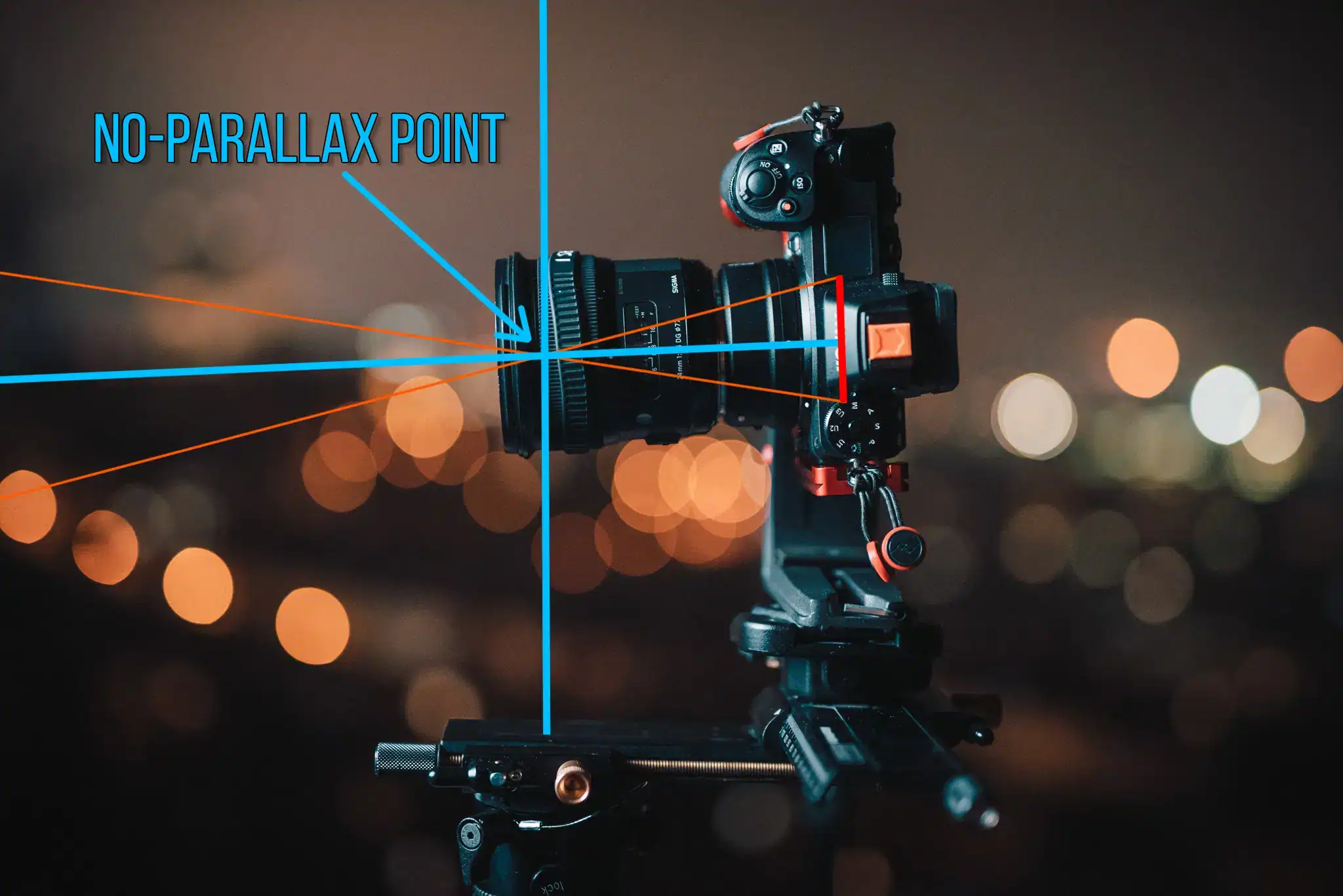
- Panoramic head: Critical for aligning the lens at the no-parallax (entrance pupil) point. This removes parallax between overlapping frames and makes stitching nearly automatic.
- Stable tripod with leveling base: Keeps your yaw axis vertical so horizons stay level and control points distribute evenly.
- Remote trigger or app: Use Canon Camera Connect or a wired remote to avoid touching the camera. On tripod, prefer EFCS or mechanical shutter to minimize shutter shock or rolling artifacts.
Optional Add-ons
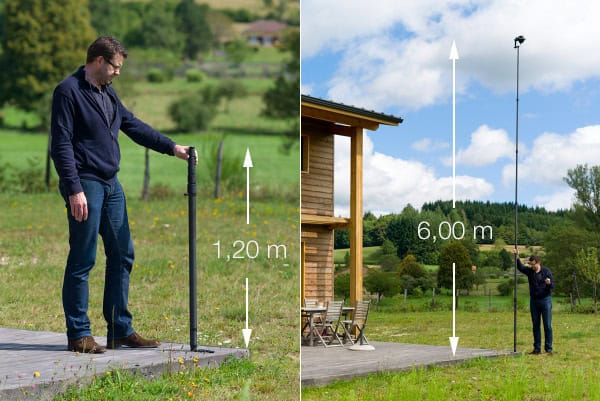
- Pole or car mount: Great for elevated or dynamic perspectives. Use a safety tether, check fasteners before each pass, and watch wind loads.
- Lighting aids: LED panels or bounced flash for dark corners; keep lighting consistent across frames.
- Weather protection: Rain cover, microfiber cloths, and a small blower for mist/spray.
Step-by-Step Shooting Guide
Standard Static Scenes
- Level and align: Level the tripod. Mount your panoramic head and slide the camera so the lens rotates about its no-parallax point. For Sigma 14-24, a good starting estimate for the entrance pupil distance is roughly 8–11 cm forward of the sensor plane at 14mm (it shifts slightly with zoom); refine by aligning two vertically offset objects and rotating to eliminate relative motion.
- Manual everything: Switch to manual exposure, manual white balance (Daylight/Tungsten/Kelvin), and manual focus. Prefocus using AF, then switch to MF. For 14mm at f/8–f/11, a hyperfocal of ~0.6–0.8 m keeps near-to-infinity sharpness.
- Capture order and overlap: For 14mm, shoot two rows: +30° pitch (6–8 shots around), −30° pitch (6–8 shots around), then a zenith (+90°) and a nadir (−90°). Use a 45–60° yaw step for 6–8 frames per row. Keep 25–35% overlap horizontally and vertically.
- Nadir frame: After the main sweep, tilt down and take a dedicated ground shot for clean tripod removal later. If possible, shift the tripod slightly or handhold the nadir shot from the same lens position.
HDR / High Dynamic Range Interiors
- Bracketed exposures: Use ±2 EV (3–5 frames) to capture window highlights and interior shadows. The R5’s base ISO HDR latitude is excellent; keep ISO 100–200 when possible.
- Consistent color: Lock white balance. Mixed lighting can vary frame-to-frame if WB is left on auto, causing banding or color shifts in the stitch.
- Timing: If people are present, shoot two HDR passes per view and choose the cleanest individuals per frame when masking.
Low-Light / Night Scenes
- Exposure strategy: Aim for f/4–f/5.6 with longer shutter speeds. On R5, ISO 400–800 remains clean; if necessary, ISO 1600–3200 with modern denoising is workable but try to keep it lower for multi-frame consistency.
- Stability: Use a remote trigger and consider disabling IBIS on a tripod to avoid micro-wobble with long exposures. Enable IBIS if shooting handheld or on a pole where micro-vibrations occur.
- Light pollution and flare: Shade the front element with your hand or a flag when light sources are just out of frame; check for ghosts and re-frame if necessary.
Crowded Events
- Two-pass method: First pass for structure, second pass for clean plates as gaps open in the crowd. Keep camera height and yaw steps identical in both passes.
- Fast shutter and overlap: Use 1/200–1/500s to minimize subject motion blur; slightly increase overlap to make masking easier.
Special Setups (Pole / Car / Elevated)
- Safety first: Tether gear, avoid overhead lines and crowds, and use a spotter. On vehicles, secure all clamps and consider a vibration-damping mount.
- Technique: Rotate slower between frames to allow vibrations to settle. Use higher shutter speeds (1/250–1/500) when possible to counter movement and wind.
Recommended Settings & Pro Tips
Exposure & Focus
| Scenario | Aperture | Shutter | ISO | Notes |
|---|---|---|---|---|
| Daylight outdoor | f/8–f/11 | 1/100–1/250 | 100–200 | Lock WB to Daylight or 5200–5600K |
| Low light / night | f/4–f/5.6 | 1/30–1/60 (or longer on tripod) | 400–800 (1600 if needed) | Remote trigger, consider IBIS off on tripod |
| Interior HDR | f/8 | Bracket ±2 EV (3–5 frames) | 100–400 | Expose for highlights; merge before stitch or in PTGui |
| Moving subjects | f/5.6–f/8 | 1/200+ | 400–800 | Two-pass capture; mask in post |
Critical Tips
- Manual focus and hyperfocal: At 14mm, f/8–f/11, set MF near 0.6–0.8 m to keep close foregrounds and infinity sharp.
- Nodal calibration: Mark your rail positions for 14mm and 24mm. Re-check after zoom changes; the entrance pupil shifts with focal length.
- White balance lock: Use Kelvin or a fixed preset to avoid frame-to-frame color shifts.
- Shoot RAW: Maximizes dynamic range and color latitude; apply lens corrections consistently in post, not mid-shoot.
- IBIS and shutter mode: On tripod, IBIS OFF and use EFCS or mechanical shutter for sharp long exposures. Handheld or on a pole, IBIS ON can help.
- Lens notes: The Sigma 14-24 has a bulbous front element—avoid fingerprints and stray light; consider a rear gel ND if needed (check your specific version’s compatibility).
Stitching & Post-Processing
Software Workflow
Import RAW files into Lightroom or your preferred RAW processor. Synchronize exposure, WB, and lens profile corrections across the set. For stitching, PTGui is a high-end standard, while Hugin is a capable open-source option. Rectilinear lenses often need more frames than fisheyes but deliver architecture-friendly geometry. Target ~25–35% overlap. Export an equirectangular 2:1 image for VR or virtual tours.
For deeper dives and best practices, see a panoramic head setup primer and PTGui-focused reviews to refine your workflow. Set up a panoramic head (Oculus). PTGui review and tips.
Cleanup & Enhancement
- Nadir patch: Replace the tripod area with a clean plate or logo patch; many use AI-assisted tools or manual cloning/healing.
- HDR merge: Either pre-merge brackets to 32-bit before stitching or let PTGui handle bracketed stacks. Keep consistency through the entire set.
- Noise and sharpening: Apply moderate noise reduction for high-ISO night shots; sharpen globally, then locally for texture-rich features.
- Leveling: Correct horizon, roll, yaw, and pitch. Re-center your pano on the key subject using the panorama editor.
- Export: For the web, 8–12k pixels wide JPEG is common; for premium tours, 12–16k equirectangular TIFF/JPEG. Keep master TIFFs archived.
Industry references on focal lengths, resolution, and performance can help you plan shot counts and output sizes. DSLR spherical resolution (Panotools Wiki).
Useful Tools & Resources
Software
- PTGui (pro-grade stitching, HDR and mask blending)
- Hugin (open-source alternative)
- Lightroom / Photoshop (RAW prep, retouching, nadir patch)
- AI tripod removal tools (content-aware fill, generative tools)
Hardware
- Panoramic heads: Nodal Ninja, Leofoto, Sunwayfoto
- Carbon fiber tripods with leveling base
- Wireless remotes and L-brackets
- Pole extensions / car mounts with safety tethers
Disclaimer: Brand names are provided for research; verify specifications and compatibility on official sites. For panoramic head fundamentals, see this tutorial: panoramic head tutorial.
Common Mistakes & How to Avoid Them
- Parallax error: Always align to the lens’s no-parallax point; re-check after changing focal length.
- Exposure flicker: Manual exposure and locked WB prevent banding and color shifts.
- Tripod shadows and nadir mess: Capture a dedicated nadir shot for easy patching.
- Ghosting from movement: Shoot two passes and mask the clean parts in post.
- Edge softness and stretching: Stop down to f/8–f/11 and keep critical details away from extreme edges.
- Overreliance on IBIS on tripod: Disable IBIS for long exposures to avoid micro jitter.
Real-World Use Cases
Indoor Real Estate
At 14mm, two rows (+30° and −30°) plus zenith/nadir typically cover a medium room. Use ISO 100–200 with bracketed exposures ±2 EV to control bright windows. Lock WB to 3200–4000K for tungsten-heavy interiors or set a custom Kelvin to neutralize mixed lighting. The rectilinear rendering keeps walls straight—ideal for professional listings and VR tours.
Outdoor Sunset
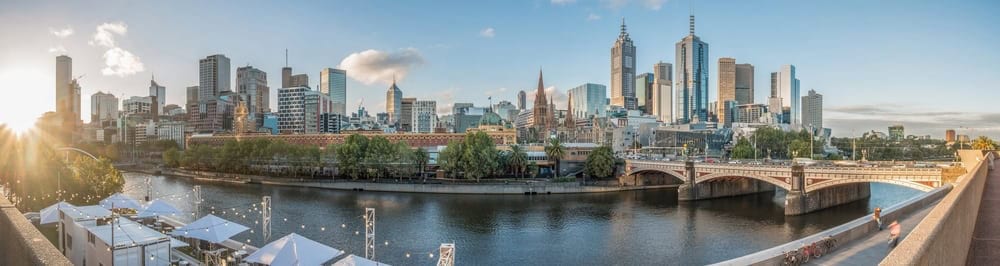
Start just before golden hour. Keep ISO 100–200, f/8, and adjust shutter as the sun drops. If the sun is in-frame, shade the lens when it’s just outside the frame to prevent flare. Consider a second pass after the city lights come on for a dusk blend that balances sky color with illuminated buildings.
Event Crowds
Use faster shutter (1/200–1/500s) to freeze motion and increase overlap (30–40%). Shoot two passes and replace frames with moving people using masks in PTGui or Photoshop. Keep the camera height consistent between passes.
Rooftop / Pole Capture
Secure all clamps, use a tether, and avoid high winds. At 14mm, shoot 8 around per row to compensate for any movement. Use 1/250s or faster and a higher ISO (400–800) if needed. Wait a second between frames to let the pole settle. For safety and best practice with heads and techniques, this DSLR and mirrorless 360 guide is helpful: Using a DSLR/Mirrorless for 360 photos.
Compatibility & Alternatives
Because the Sigma 14-24mm f/2.8 DG DN Art isn’t available for Canon RF mount, use the Sigma 14-24mm f/2.8 DG HSM Art (EF mount) with Canon’s EF–RF adapter for the EOS R5. The handling and optical results for panoramas are closely comparable, and all nodal, overlap, and HDR tips above apply. If you prefer native RF glass, the Canon RF 15-35mm f/2.8 or RF 14-35mm f/4 are excellent substitutes—adjust shot counts slightly based on their field of view.
Frequently Asked Questions
- Can I shoot handheld panoramas with the Canon EOS R5?
Yes, for partial panos and even 360s in a pinch, but expect more stitching errors. Use high shutter speeds (1/250+), IBIS ON, and generous overlap (40–50%). For professional 360×180 results, a tripod and panoramic head are strongly recommended.
- Is the Sigma 14-24mm f/2.8 wide enough for single-row 360s?
Not reliably for a full 360×180 sphere because the vertical coverage at 14mm (~81°) isn’t enough to capture zenith/nadir in one row. You generally need two rows plus zenith and nadir. For partial panoramas (wide horizontals), a single row is fine.
- Do I need HDR for interiors with bright windows?
Usually yes. Bracketing ±2 EV (3–5 exposures) helps retain both window detail and interior shadows. The R5’s dynamic range is strong, but HDR is the cleanest way to balance extremes without lifting noise.
- How do I avoid parallax issues?
Mount the camera on a panoramic head and align the lens to its entrance pupil. Calibrate at your chosen focal length (e.g., 14mm and 24mm) and mark the rails. Re-check if you change zoom or add filters/hoods.
- What ISO range is safe on the EOS R5 in low light?
ISO 100–400 is ideal. ISO 800 is still very clean, and 1600–3200 can work with modern denoising, but aim lower when shooting multi-frame panoramas to maintain consistent quality across the stitch.
- Can I use Custom Shooting Modes (C1/C2/C3) for panoramas?
Yes. Save a pano preset with Manual exposure, Manual WB, MF, EFCS/mechanical shutter, IBIS OFF (for tripod), and your typical f-stop/shutter/ISO. This speeds up field work and consistency.
- What’s the best panoramic head for this setup?
Look for a two-axis head with precise fore-aft and lateral rails and clear scales (e.g., Nodal Ninja, Leofoto). A built-in rotator with click-stops at 30–60° helps with consistent yaw steps.
Safety, Storage & Backup Workflow
Use a weighted tripod or sandbag outdoors. Keep one hand on the rig in wind. On rooftops or poles, always tether gear and keep a safe distance from edges. After each pano, review a couple of overlaps at 100% to verify sharpness and exposure. Back at base, copy cards to two separate drives and keep the card safe until delivery. Save your PTGui project files and export an equirectangular master TIFF for future re-edits.
For more vetted best practices and pano fundamentals, community discussions are helpful: techniques to take 360 panoramas.